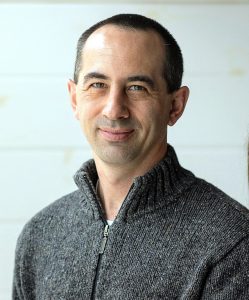
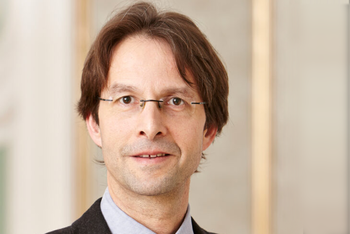
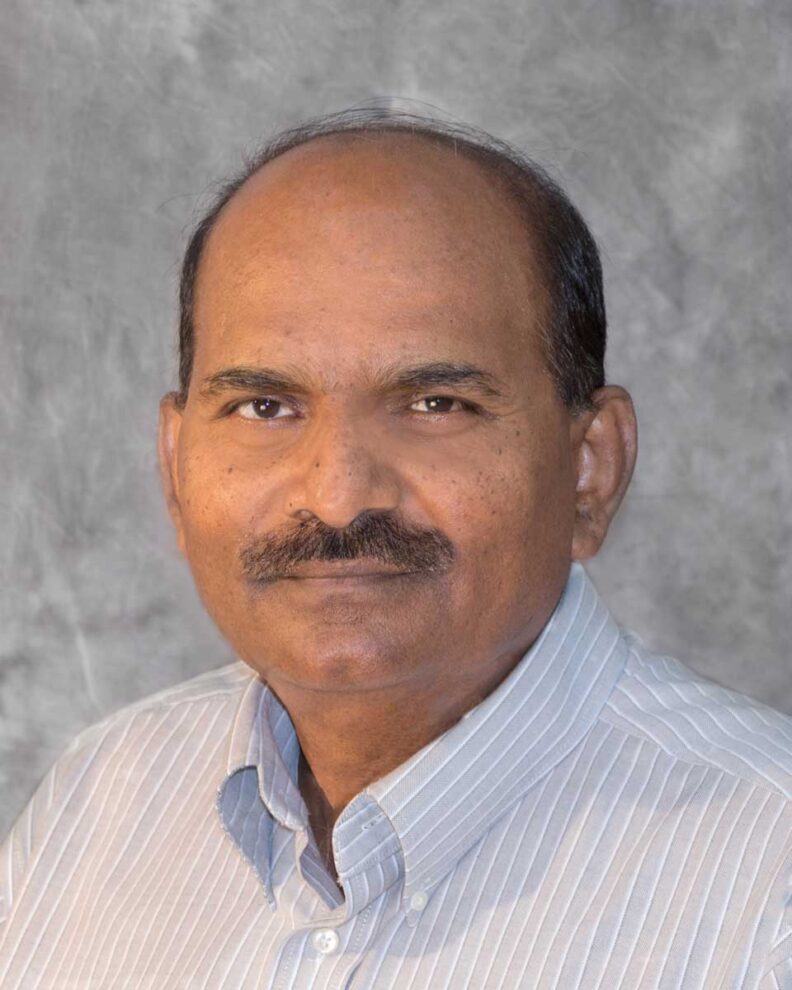
Dr. Robert Sean McCann is an Assistant Professor in the Department of Medicine at the University of Maryland School of Medicine (UMSOM), with a secondary appointment in Microbiology and Immunology. He is affiliated with the Center for Vaccine Development and Global Health (CVDGH), leading the Malaria Research Program. His research focuses on malaria vector ecology, transmission dynamics, and intervention strategies. Education & Training: B.S. in Biology, University of North Dakota (2002–2006) Ph.D. in Entomology & EEBB (Ecology, Evolutionary Biology & Behavior), Michigan State University (2009–2013) Postdoctoral Researcher, Wageningen University & Research (2014–2019) Postdoctoral Fellow, UMSOM (2019–2020) Research Interests: Dr. McCann investigates spatial and temporal patterns of malaria vectors (Anopheles mosquitoes) and parasite transmission using field, lab, and computational tools. Key areas include: Vector habitat use and environmental drivers Genomic analysis of Anopheles populations Evaluation of vector control interventions (e.g., larval source management, house improvements) Human-to-mosquito transmission determinants Integration of geostatistical methods for high-resolution monitoring Advising & Grants: He leads the IRSDA/K01 Fogarty International Center award studying vector diversity impacts on intervention efficacy. His work emphasizes interdisciplinary collaboration to translate research into scalable malaria control strategies. Labs/Teams: Active in the Malaria Research Program at CVDGH, collaborating with global teams in Africa (e.g., Malawi, Kenya) on field-based studies.
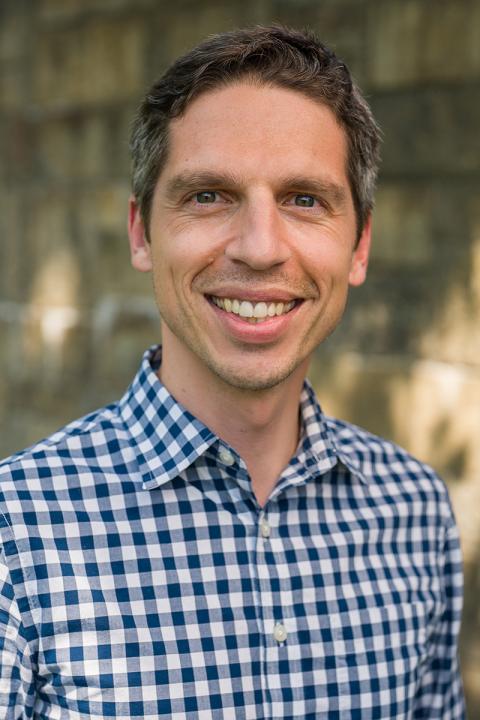
Dr. Tamas Mona is a Postdoctoral Research Associate in the Department of Plant Sciences at the University of Cambridge , affiliated with the Epidemiology and Modelling Group . His work focuses on environmental suitability models for large-scale epidemiological forecasting, particularly in wheat rust outbreaks across Africa, the Middle East, and Asia. Collaborations include the UK Met Office, CIMMYT, and institutions in Ethiopia, Kenya, Bangladesh, and Nepal. PhD in Environmental Sciences (2019), Eötvös Loránd University MSc in Meteorology (2013), Eötvös Loránd University BSc in Physics with Meteorology (2011), Eötvös Loránd University Research interests integrate meteorological applications with epidemiological models to predict crop disease outbreaks. Key projects involve tracking transmission pathways for stem rust pathogens and analyzing how irrigation creates green bridges for intercontinental pathogen spread. Publications emphasize environmental science and computational epidemiology . Current collaborations span Sub-Saharan Africa (EIAR, ATI, KARLO) and South Asia (BWMRI, NARC) through initiatives like the Global Food Security IRC . Modeling frameworks developed by Mona contribute to policy advisory systems for emerging pest threats, aligning with DEFRA and UK government strategies.
Marek Petrik is an Associate Professor in the Department of Computer Science at the University of New Hampshire, where he is also a member of the artificial intelligence research group. Prior to joining UNH, he was a Research Staff Member at IBM’s T. J. Watson Research Center. He received his Ph.D. in Computer Science from the University of Massachusetts Amherst in 2010 under the supervision of Shlomo Zilberstein. In 2022–2023, he was a visiting faculty researcher at Google Research. Education: Ph.D. in Computer Science, University of Massachusetts Amherst, 2010 His research focuses on robust, data-driven decision making , particularly in reinforcement learning with limited data, risk aversion, and Bayesian models of uncertainty. His work spans theoretical advances in robust Markov decision processes (MDPs), policy optimization, and imitation learning, with applications in natural resource management, agriculture, renewable energy, and space systems. Recent publications emphasize provable robustness, percentile optimization, and safe offline reinforcement learning. His recent work (2023–2025) demonstrates strong trends in risk-averse reinforcement learning , robust policy gradients , offline learning under uncertainty , and Bayesian approaches to decision-making . He frequently publishes in top venues such as NeurIPS, ICML, UAI, AAAI, and journals like JMLR and Mathematics of Operations Research. Scientific Awards: Best Student Paper Award, Uncertainty in Artificial Intelligence (UAI), 2015 Marek Petrik has advised numerous students and collaborators, particularly in the areas of robust RL and safe decision-making. His research has been supported by academic and industry collaborations, including IBM and Google. He is not currently accepting new PhD students. He is actively involved in developing methods for controlling invasive species , pest monitoring , and optimizing environmental systems . Labs and Research Groups: Artificial Intelligence Research Group, University of New Hampshire Former member: Mathematical Sciences Department, IBM T. J. Watson Research Center Visiting researcher: Google Research, 2022–2023
Anton Bekkerman is a Professor in the Department of Agriculture, Nutrition, and Food Systems at the University of New Hampshire, serving as Associate Dean for Research and Director of the New Hampshire Agricultural Experiment Station. He holds a Ph.D. and M.S. in Economics from North Carolina State University and a B.B.A. from Loyola University Maryland. His research spans agricultural marketing, price forecasting, policy analysis, and risk management, with specific expertise in: Commodity price dynamics (grain and fertilizer markets) Agricultural insurance and policy design Farm decision-making and risk analysis Spatial economic modeling Recent publications examine quality-based wheat pricing, biofuel policy impacts on fertilizer markets, crop insurance distributions, and economic dimensions of pest management. His work integrates economic theory with empirical analysis of agricultural systems. Dr. Bekkerman leads research initiatives addressing agricultural sustainability and economic resilience in changing climates.
Dr. Matt Castle is a Researcher affiliated with the University of Cambridge , specializing in interdisciplinary approaches to food security and plant sciences. He serves as the Head of Bioinformatics Training and Head of PSLS Biostatistics Initiative within the Department of Plant Sciences . His work spans multiple domains, including plant disease modelling, infectious disease dynamics, and global governance of food systems. Research Themes: Modelling for Food Security, Plant Disease Modelling, Food Landscapes, Political Economy of Hunger His recent publications highlight expertise in ecological and agricultural modelling, with a focus on: Aflatoxin contamination in maize Urban forest pest dynamics Climate-driven range expansions Size-structured ecosystem resilience While his work intersects with food supply chains, land resources, and health, no specific scientific awards or student advisement details were listed in available public records.
Distinguished Professor Philip Hulme is a leading biosecurity scientist at Lincoln University's Department of Pest-Management and Conservation. With over 33,000 Web of Science citations and an H-index of 87, he ranks among Clarivate's Highly Cited Researchers for eleven consecutive years. His work spans international biosecurity policy, including coordination of the UN Intergovernmental Science-Policy Platform on Biodiversity and Ecosystem Services' Invasive Alien Species Assessment. His research focuses on developing solutions for biosecurity threats through fundamental ecological understanding of invasive species, human dimensions of invasions, and socio-ecological drivers of antimicrobial resistance. Key interests include: Trade and transport networks in biosecurity threats Population dynamics of invasive species Evolution of herbicide resistance Economic/social drivers of ornamental plant invasions His publication analysis reveals strong emphasis on One Biosecurity frameworks, invasion prediction modeling, and integrated human-environment systems. Recent work increasingly connects biosecurity with One Health principles and sustainable development goals. Major scientific recognition includes: Hutton Medal (2019) Leonard Cockayne Lecture Award (2018) Te Tohu Taiao Ecological Excellence Award (2022) Miegunyah Distinguished Visiting Fellowship (2022) Clarivate Highly Cited Researcher (11 years) Professor Hulme actively supervises six PhD students while advising national and regional bodies including the NZ Biosecurity Ministerial Advisory Committee, Environment Canterbury Biosecurity Advisory Group, Canterbury-Aoraki Conservation Board, and Zespri Biosecurity Advisory Group. His leadership extends to the Royal Society New Zealand Biological Panel and IUCN Invasive Species Specialist Group.
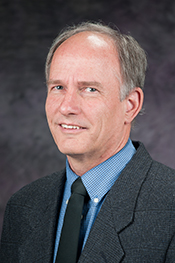
Mitchell L. Neilsen is a Professor in the Department of Computer Science at Kansas State University's College of Engineering, where he also serves as the graduate program director. He holds the Warren and Gisela Kennedy - Carl and Mary Ice Keystone Research Scholar position and maintains an active research program with multiple ongoing projects. His educational background includes a Ph.D. in Computer Science (1992), M.S. in Computer Science (1989), and M.S. in Mathematics (1987), all from Kansas State University, plus a B.S. in Mathematics Education from the University of Nebraska-Kearney (1982). After beginning his career as an assistant professor at Oklahoma State University, he returned to K-State in 1996. Research Interests: Cyber-Physical Systems: Design, Analysis, Verification of systems integrating computing, networking, and physical processes Distributed Systems: Algorithms, design, and analysis of distributed computing systems Scientific Computing: Computational Fluid Dynamics, Finite Element Analysis, High Performance Computing, and Simulation Application Areas: Agriculture technology, Dam safety analysis, Mobile applications, Natural resources management, and Real-time Embedded Systems His research program shows clear evolution toward agricultural technology applications, particularly high-throughput phenotyping, while maintaining strong foundations in cyber-physical systems and scientific computing. Recent publications indicate increasing integration of machine learning and computer vision techniques into traditional research areas. Research Funding: National Science Foundation U.S. Department of Agriculture Sandia National Laboratories Department of Homeland Security Private industry partners Dr. Neilsen has mentored numerous graduate students through their M.S. and Ph.D. programs, with recent advisees focusing on applications in agricultural technology, dam safety, and embedded systems. His advising approach emphasizes practical applications of theoretical computer science concepts. Current Teaching (Fall 2024): CIS 450 - Computer Architecture and Operations CIS 625 - Concurrent Software Systems CIS 720 - Advanced Operating Systems
Professor Nicola Randall is a Professor of Evidence Synthesis and Agroecology at Harper Adams University, where she leads the Centre for Evidence-Based Agriculture (CEBA) and the Agroecology for Sustainable Agri-food (AFS) research group. She holds a BSc (Hons), PhD, and a CertTHE in higher education. Her research focuses on agricultural ecology, sustainable food systems, and evidence-based decision-making in environmental and agricultural policies. She chairs the EU-NESA Network (CA23107 2024-2028) and serves on advisory boards for organizations such as the Food Standards Agency and Ceres2030. Her work emphasizes systematic reviews, evidence synthesis methodologies, and bridging gaps between research and policy. She has secured over £1 million in research funding, collaborating with bodies like BBSRC, DEFRA, and EU H2020. Education: BSc (Hons), PhD, CertTHE Teaching Roles: Course leader for Agroecology MSc, module leader for Fundamentals of Agroecology and International Agroecology Professional Memberships: British Ecological Society (Agroecology Committee), Society for Conservation Biology Her research spans topics like regenerative agriculture, pollinator ecology, and humane slaughter practices. She advises on international projects, including FAO initiatives and smallholder farming interventions in Africa. Her work bridges academic research with practical applications for sustainable agriculture and environmental governance.
Aaron Weiskittel is a Professor of Forest Biometrics and Modeling and the Irving Chair of Forest Ecosystem Management at the University of Maine’s School of Forest Resources. He directs the Center for Advanced Forestry Systems and the Center for Research on Sustainable Forests . His research focuses on developing quantitative tools for forest management, including growth and yield modeling, climate change impacts, and sustainable forestry practices. He holds a PhD (2007), MS (2003), and BS (2001) in forest resources from Oregon State University and The Ohio State University, respectively. Research interests include: Forest biometrics and modeling Climate change effects on forest productivity Stem taper equations and volume estimation Old-growth forest structure analysis Commercial thinning impacts on stand dynamics Key contributions include: Development of growth models for the Acadian Region Evaluation of climate change on forest productivity and species distribution Advancements in forest biomass and carbon estimation Collaborative studies on northern white-cedar silviculture His work integrates field data, remote sensing, and computational modeling to address complex forest management challenges. Ongoing projects focus on carbon MRV frameworks, forest carbon markets, and stakeholder-driven climate adaptation strategies.
Peter Brown is an Associate Professor in the School of Life Sciences at Anglia Ruskin University (ARU), Faculty of Science and Engineering. His research focuses on ladybird ecology, invasive species, and citizen science, with strong collaborations across the UK (especially the UK Centre for Ecology & Hydrology and University of Hull), Europe, and Chile. Education: PhD: The spread of the harlequin ladybird Harmonia axyridis (Coleoptera: Coccinellidae) in Europe and its effects on native ladybirds – Anglia Ruskin University (2010) BSc (Hons) Ecology and Conservation – Anglia Ruskin University (2004) Peter's research interests include ladybird ecology, the impacts of non-native species on native biodiversity, intraguild predation among arthropods using molecular tools, and the use of citizen science in ecological research, particularly through the UK Ladybird Survey and COST Action CA17122. He investigates the global spread and ecological effects of the harlequin ladybird (Harmonia axyridis) and evaluates the benefits and risks of exotic biological control agents. As director of the Citizen Science Research Group and member of the Applied Ecology Research Group, he emphasizes public engagement in science. His recent publications reveal a consistent focus on citizen science, invasive species monitoring, and conservation biology. Themes include volunteer motivations, digital tools for data collection, policy implications of alien species, and recovery strategies for native ladybirds. This body of work demonstrates a strong integration of field ecology, molecular techniques, and public participation. Scientific Awards and Memberships: Fellow, Royal Entomological Society Honorary Fellow, British Naturalists' Association Co-leader, UK Ladybird Survey Editorial board, Nature in Cambridgeshire Member, British Ecological Society Peter supervises postgraduate research in ladybird and insect ecology and welcomes PhD applications. He has secured collaborative research opportunities and leads projects involving citizen science data. He has also contributed to policy and management frameworks for invasive species in Europe. Peter leads the undergraduate module 'Invertebrate Biology' and postgraduate modules in conservation and biodiversity, including field-based learning. He directs the Citizen Science Research Group and is actively involved in public outreach, having appeared on BBC programs such as The One Show, Countryfile Diaries, and The Today Programme, enhancing public understanding of ecology and invasive species.
Lucia Zappalà is a Full Professor of General and Applied Entomology at the University of Catania's Department of Agriculture, Food and Environment (Di3A) since 2020. She serves as University Delegate for International Relations since 2019 and President of the European University Alliance EUNICE since 2024. Her research focuses on Hymenoptera parasitoids, integrated pest management (IPM), and pesticide effects on natural enemies. She is a member of the Italian Entomological Society's Agricultural Entomology section and the Italian National Academy of Entomology. PhD in Agricultural Entomology (University of Naples Federico II, 2001) Postdoctoral fellowship at University of Florida (2003) University of Catania faculty since 2006 Visiting professor at UC Berkeley (2015) Her research spans biological control agent discovery, pesticide risk assessment, and invasive pest management across Mediterranean agroecosystems. She has published over 300 indexed articles (h-index 37) on parasitoid-pest interactions and sustainable control strategies. Recent work examines botanical extract compatibility with natural enemies and essential oil-based plant defenses . She contributes to Phytoparasitica and European Journal of Entomology editorial boards. Scientific awards include a 2003 postdoctoral fellowship. She has served as Principal Investigator for national (FIR, PRIN) and international (FP7, ARIMNET 2) projects, and contributes to EFSA's Plant Health Panel. Her laboratory (Biocontrol Lab, Di3A) conducts applied entomology research on invasive Hemiptera and quarantine pest evaluations .
Prof. Dr. Christian Lippert is a Professor at the University of Hohenheim's Department of Production Theory and Resource Economics. He specializes in agricultural economics, resource management, and sustainable farming systems. His research focuses on organic agriculture, risk analysis in farming, and climate change impacts on agriculture. He leads projects such as the NOcsPS and ReBioBW initiatives and collaborates with institutions in Bhutan and Colombia. Research interests include crop portfolio optimization, yield stability, organic conversion strategies, and social networks in farming communities. His work combines economic modeling with field trials to address production risks and sustainable practices. Major publications include studies on Bhutan's organic sector, pesticide use alternatives, and climate change adaptation in German agriculture. He teaches courses in farm economics, environmental resource economics, and value chain development at the M.Sc. and B.Sc. levels. His team includes researchers like Dr. Tatjana Krimly and Dr. Isabell Pergner. Advising and grants focus on organic farming transitions and resource optimization. He leads a research group exploring lignocellulosic perennials and Ricardian climate impact analyses. His office is located at Containerbau südlich des Biogebäudes in Stuttgart.
Dr. Naidu Rayapati is a Professor of Virology at Washington State University (WSU), where he serves as Director of the Prosser Irrigated Agriculture Research and Extension Center. He is affiliated with the Department of Plant Pathology within the College of Agricultural, Human, and Natural Resource Sciences. Dr. Rayapati leads the Grape Virology program at WSU-IAREC in Prosser, focusing on management strategies for virus diseases impacting fruit quality and vine health in Washington's wine grape industry. Dr. Rayapati's research focuses on virus diseases of horticultural, vegetable and food crops, with particular emphasis on virus characterization, diagnostics, plant-virus-vector interactions, and development of integrated crop improvement strategies. His current work centers on virus diseases of grapevines and vegetables, addressing critical challenges for Washington State's agricultural industry. He has established an integrated program of research, extension, and education through the Grape Virology program at WSU-IAREC. Analysis of Dr. Rayapati's recent publications reveals a strong focus on grapevine viruses, particularly Grapevine leafroll-associated viruses and Grapevine red blotch virus. His research spans molecular characterization of plant viruses, epidemiology of viral diseases, development of diagnostic tools, and management strategies for virus diseases in agricultural settings. There is also significant work on emerging viruses in legumes and other vegetable crops, reflecting his broader interest in plant virus diseases across multiple cropping systems. Scientific Awards: CAHNRS Land Grant Mission Award (2020) WSU's Top Industry Engaged Researchers (2017) International IPM Excellence Team Award, The 6th International IPM Symposium (2009) International Service Award, American Phytopathological Society (2007) Dr. Rayapati actively mentors graduate students and postdoctoral researchers, with current lab members including Sridhar Jarugula, Sudarsana Poojari, Tefera Mekuria, Linga Reddy Gutha, and Olufemi Alabi. His research program has received funding from various sources, supporting interdisciplinary collaborations that draw expertise from multiple institutions. Through his extension work, Dr. Rayapati translates scientific knowledge into practical applications for the grape and wine industry stakeholders and regulatory agencies. Dr. Rayapati leads the Grape Virology Program at WSU-IAREC, which employs a 3-D approach: Discovery of knowledge, Development of tools and techniques, and Deployment of knowledge-based strategies. The program works closely with the Washington State Grape and Wine Industry to address virus disease management as a key research priority for achieving the industry's goal of tripling economic value. His team conducts fundamental and applied research on wine grape virus diseases through interdisciplinary collaborations, creating experiential education opportunities for Viticulture and Enology students.
Dr. Christoph Müller is a leading scientist at the Potsdam Institute for Climate Impact Research (PIK), Germany, where he has served as working-group leader of the Land Biosphere Dynamics group since 2012. He also co-leads the Global Biosphere and Water Modeling team and acts as the scientist-in-charge for the internationally renowned LPJmL global vegetation and crop model. Additionally, he is Co-lead of the Ag-GRID initiative within the Agricultural Model Intercomparison and Improvement Project (AgMIP) and serves as Topical Editor for Geoscientific Model Development . Education Diploma in Geoecology, University of Potsdam (2002) PhD in Geoecology, University of Potsdam & International Max Planck Research School (IMPRS) (2007) Research Interests Dr. Müller’s research centres on understanding and modelling the interactions between climate, land use, and the biosphere to support sustainable food-system transformations. His work integrates global-scale vegetation and crop models with climate projections, socio-economic scenarios, and observational data to assess: Impacts of climate change and extreme events on crop yields and food security Carbon, nitrogen, and water cycles in managed and natural ecosystems Land-based climate-mitigation strategies and their co-benefits or trade-offs Adaptation options for agriculture under global change He promotes open science and reproducible modelling workflows, exemplified by the LPJmL open-source ecosystem model and associated toolkits. Publication Profile & Trends Since 2014 he has authored or co-authored more than 200 peer-reviewed articles. Recent work (2024-2025) highlights three dominant themes: (1) quantifying underestimated negative impacts of climate extremes on crop yields, (2) assessing the sustainability of large-scale land-based mitigation measures, and (3) advancing model intercomparison frameworks (e.g., AgMIP, ISIMIP) to reduce uncertainty in global yield projections. His studies increasingly integrate economic and health perspectives, examining how dietary shifts and food-system transformations can achieve climate, environmental, and social co-benefits. Scientific Awards & Recognition While no formal awards are explicitly listed, several publications have received notable recognition: “Soil quality both increases crop production and improves resilience to climate change” (Nature Climate Change, 2022) – listed among China’s top ten major advances in agricultural science in 2023. “Large potential for crop production adaptation depends on available future varieties” (Global Change Biology, 2021) – top-downloaded article. “Climate change impacts on global agriculture emerge earlier in new generation of climate and crop models” (Nature Food, 2021) – widely cited in IPCC AR6. Leadership, Grants & Collaboration Dr. Müller leads or co-leads multiple international projects and working groups: Working Group Leader – Land Biosphere Dynamics, PIK Research Department 2 Co-Lead – Ag-GRID, Agricultural Model Intercomparison and Improvement Project (AgMIP) Scientist-in-Charge – LPJmL model development and application Topical Editor – Geoscientific Model Development journal These roles involve coordinating multi-institutional consortia, securing competitive grants, and mentoring early-career researchers. Laboratory & Data Resources Dr. Müller’s “team” is essentially the LPJmL modelling group at PIK, comprising post-docs, doctoral researchers, and software engineers who maintain and extend the LPJmL code-base, develop satellite-data fusion products, and provide model-driven policy support to governments and international organisations such as the IPCC, FAO, and World Bank.
Lars J. Olson is a Professor in the Department of Agricultural and Resource Economics at the University of Maryland, College Park , within the College of Agriculture and Natural Resources . His research and teaching focus on the intersection of economics and environmental policy, particularly in the areas of natural resource management, invasive species economics, and uncertainty in environmental decision-making. Education: Ph.D. in Economics (1988), Cornell University M.A. in Economics (1985), Cornell University B.A. in Mathematics and Economics (1981), Eckerd College Research Interests: Professor Olson’s research spans several critical areas of environmental and resource economics. He has made significant contributions to understanding how economic policies can mitigate the risks of invasive species, particularly through trade regulation and phytosanitary standards. His work also delves into the economics of uncertainty, exploring how precautionary principles and dynamic modeling can inform environmental policy. Additionally, he examines the long-term impacts of resource depletion and technological substitution under uncertainty. Publications Overview: His recent publications reflect a strong focus on applied and theoretical environmental economics. Topics include the design of precautionary buffers in environmental policy, the role of tariffs in managing invasive pest risks, and the effectiveness of international phytosanitary standards. These works often combine empirical analysis with theoretical modeling to provide actionable insights for policymakers. Editorial and Review Service: Associate Editor, Journal of Environmental Economics and Management (1996–1999) Editorial Council, Journal of Environmental Economics and Management (1994–1995, 2001–2004) Referee for over 20 leading journals including American Economic Review , Econometrica , and Journal of Public Economics Grant Reviewing: Binational Agricultural Research and Development Fund (BARD) Social Sciences and Humanities Research Council of Canada (SSHRC) National Sea Grant College Program USDA Economic Research Service UC Water Resources Center And others Labs and Teams: While no specific lab is mentioned, Professor Olson is deeply embedded in the academic and policy community through his editorial roles, grant reviewing, and collaborative research across institutions and disciplines.