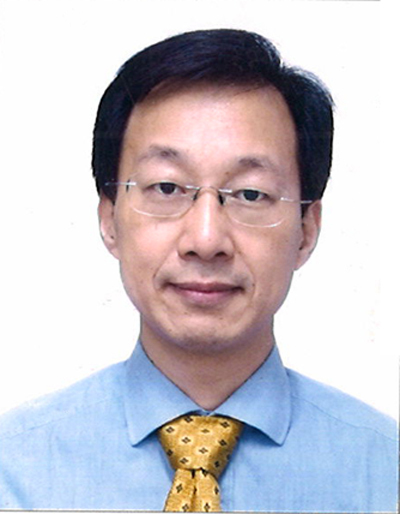
Zhang Daqing is a Professor at Peking University (Boya Chair Professor since 2014) and Full Professor at Telecom SudParis, France (2007–present). Previously, he held roles such as Department Head at the Institute for Infocomm Research (2004–2007) and Research Scientist positions in Singapore and Italy. He earned his Ph.D. in Physics from the University of Rome 'La Sapienza' in 1996. His research focuses on urban computing, context-aware systems, wireless sensing, and big data analytics. His work has been cited over 14,400 times with an H-index of 59. Key awards include the IEEE Fellow (2019) and multiple best paper awards at conferences like ACM UbiComp and IEEE UIC. Zhang has served as General Chair for 17 international conferences and is an associate editor for journals such as IEEE Pervasive Computing and ACM Transactions on Intelligent Systems. His contributions to context modeling have significantly impacted pervasive computing and service computing communities.
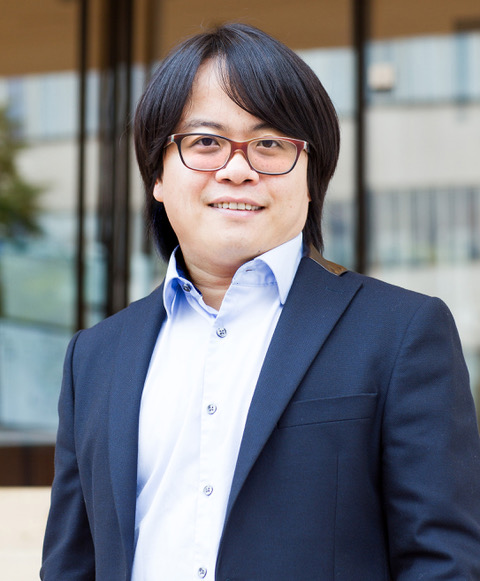
Hui Pan is a distinguished academic holding dual positions as Nokia Chair in Data Science and Professor of Computer Science at the University of Helsinki, and Chair Professor of Computational Media and Arts at the Hong Kong University of Science and Technology (HKUST). His research spans networking, mobile computing, augmented reality, and computational social science. He earned his Ph.D. in Computer Science from the University of Cambridge in 2007. His work bridges social networks with mobile systems, pioneering fields like mobile social networks and opportunistic forwarding algorithms. Research interests include data science, complex networks, and innovative applications of augmented reality. His recent publications focus on low-latency AR frameworks, blockchain for computation offloading, and mobile web visualization. He has received prestigious awards, including IEEE Fellow (2018), ACM Distinguished Scientist (2016), and the Nokia Chair Endowment (2017). He has supervised over 15 PhD and 12 MPhil graduates, with 13 current Ph.D. students and 2 MPhil students. His editorial roles include Associate Editorships at IEEE Transactions journals and guest editorships at top venues like IEEE JSAC and ACM Transactions. He has organized conferences such as WWW Track Chair and ExtremeCom General Chair.
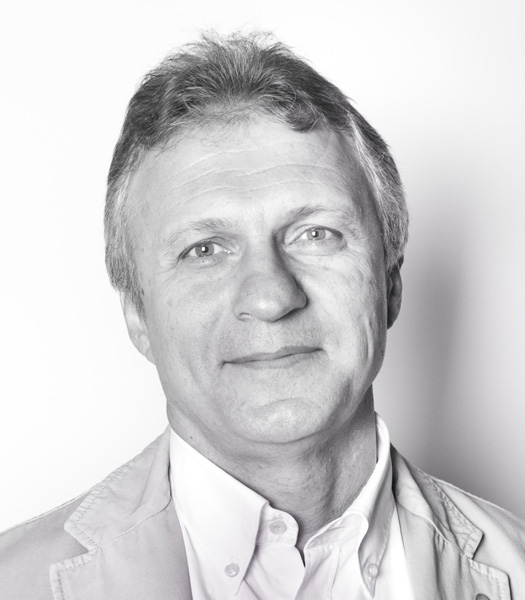
Aaron Quigley is the Science Director and Deputy Director of CSIRO’s Data61, and an Adjunct Professor of Computer Science at the University of New South Wales (UNSW) in Sydney, Australia. He previously served as Head of the School of Computer Science and Engineering and Deputy Dean of Engineering at UNSW (until 2023), and as Chair of Human Computer Interaction at the University of St Andrews (until 2020). He holds a PhD from the University of Newcastle and a first-class honours degree from Trinity College Dublin. Research Focus: AI-HCI, discreet computing, pervasive and ubiquitous computing, information visualization, and augmented reality. Awards: ACM Distinguished Scientist (2020), ACM SIGCHI Lifetime Service Award, and ACM Distinguished Member. Professional Roles: Served as General Chair for ACM CHI, UIST, and MobileHCI; member of the Australian Academy of Science’s National Committee; and co-founder of DataLab. His research has been supported by organizations such as EPSRC, AHRC, and industry partners like Intel and Microsoft. He has held academic and industry roles across Australia, the UK, Japan, and the U.S.
Mohamed Khamis is an Associate Professor at the University of Glasgow , specializing in Human-Computer Interaction (HCI) with a focus on Human-centered Security and Eye Tracking for privacy protection. His research spans Pervasive Displays , Usable Security , and User Privacy in immersive environments. PhD from Ludwig Maximilian University of Munich (LMU) Supervised by Florian Alt and Andreas Bulling Research Interests: Usable Security and Privacy Designing Gaze-based Systems Thermal Attacks and Shoulder Surfing Mitigation Security in Public Displays and Virtual Reality Recent Publications demonstrate expertise in: Drone Interaction and Proxemics Privacy Scales for Measuring Granular Constructs Gaze-enabled Mobile Authentication Multimodal Security Systems Deepfake Privacy Applications XR Dark Patterns Analysis Scientific Contributions: Recipient of multiple Honorable Mention Awards at CHI and MobileHCI Funding from EPSRC for thermal imaging research Keynote speaker at ECCV 2020 Open Eyes Workshop Co-organizer of ETRA workshops on Eye-Gaze for Security
Caroline Bassett is Professor of Digital Humanities at the University of Cambridge and Director of Cambridge Digital Humanities. She previously held positions at the University of Sussex as Lecturer (2000-2008), Reader (2008-2016), and Professor of Digital Media and Communications (2016-2019), where she co-founded the Sussex Humanities Lab. Her career began in technology journalism before transitioning to academia. Her research critically examines computational technologies' societal and cultural impacts. Key interests include digital media theory, AI's transformation of knowledge cultures, feminist analyses of technology, media archaeologies, automation studies, and the intersection of science fiction with technological utopianism. Recent work explores sound studies, mobile media, gender politics in tech, and everyday digital practices. Bassett's publications consistently engage with digital culture through critical, feminist, and historical lenses. Major thematic clusters include: technological feminism and gender politics (35%), automation histories and anxieties (25%), media archaeology and theory (20%), digital humanities methodologies (15%), and sound/silence studies (5%). Her work increasingly addresses AI ethics and explainability in recent years. Honors and Awards: Helsingin Sanomat Foundation Fellow, Helsinki Collegium for Advanced Studies (2015-2017) IGSF Visiting Fellow, McGill University (Jan-Sept 2010) Leverhulme-funded Associate Visiting Faculty, George Mason University (2002-2003) She directs Cambridge Digital Humanities, a major interdisciplinary research initiative. Previously, she established the Sussex Humanities Lab, fostering digital research collaborations across arts, humanities, and social sciences.
Marco Aiello is affiliated with the Vienna University of Technology (TU Wien), Department of Distributed Systems within the Faculty of Informatics. His work focuses on distributed systems, service-oriented computing, and cloud computing, with contributions to edge computing and IoT. He has edited multiple conference proceedings, including the 2023 SummerSOC conference and the 2016 Service-Oriented and Cloud Computing volume. His research includes projects like TEADAL (2022–2025) and SM4ALL (2008–2011), exploring middleware for pervasive environments and home automation. Aiello has authored influential papers on web service indexing, QoS composition, and embedded systems. He received the 2006 Web Service Challenge award for his indexing work. Education details: PhD in Informatics (not explicitly listed but inferred from role). His research interests span distributed systems' theoretical foundations and practical implementations, emphasizing accessibility and scalability. Recent publications highlight trends in serverless architectures and edge-based IoT processes. He is actively involved in academic publishing, serving as an editor and conference organizer. Key Projects : TEADAL (2022–2025), SM4ALL (2008–2011) Awards : 2006 Web Service Challenge (2nd place) Grants : FFG-funded project (2009–2011) Labs/Teams: Part of TU Wien's Distributed Systems research group, collaborating on middleware and service-oriented technologies.
Laurence Tianruo Yang is a distinguished academic holding dual roles as National Distinguished Professor at Huazhong University of Science and Technology (China) and W.F. James Research Chair at St. Francis Xavier University (Canada). He has been a Tenured Professor since 2009 and has held progressively senior positions since 1999. His expertise spans cyber-physical-social systems, big data analytics, and cloud computing. Education: B.E. in Computer Science (Tsinghua University), B.Sc. in Applied Physics (Tsinghua University), Ph.D. in Computer Science (University of Victoria). Research focuses on parallel/distributed computing, embedded systems, and IoT. He has published over 400 journal papers with 26,463 citations and an H-index of 80. Notable recognitions include IEEE Fellowships, the John B. Stirling Medal, and multiple best paper awards. He actively leads IEEE technical committees and has secured CAD$5M+ in research funding from NSERC, CFI, and Chinese national programs. Editorial roles include IEEE Transactions on Computers, IEEE Systems Journal, and Elsevier journals. He has organized over 10 international conferences and authored/co-authored 25+ books.
Oliver Höftberger is affiliated with TU Wien's Institut für Technische Informatik , part of the Faculty of Informatics. His research focuses on Cyber-Physical Systems , Real-Time Systems , Embedded Systems , and Resilient Systems-of-Systems . He has contributed to frameworks for self-healing cyber-physical systems and resilient master clocks, emphasizing fault tolerance and dynamic reconfiguration. Publications highlight work on emergence phenomena in systems-of-systems, ontology-based runtime adaptation, and multi-core processor architectures like the ACROSS MPSoC for safety-critical applications. He has advised multiple PhD and Master’s students, including Denise Ratasich, Nazir Alakhras, and Julian Grahsl. Key projects include the universAAL platform for Ambient Assisted Living and sensor fusion packages for robotics (ROS). His research bridges theoretical systems modeling with practical implementations in complex, safety-critical domains.
Elisabeth André is a Full Professor of Computer Science and Chair of Multimedia Concepts and Applications at University of Augsburg, where she has been faculty since 2001. She previously served as Managing Director of the Institute for Computer Science at Augsburg University from 2004 to 2006. Professor André has received multiple prestigious professorship offers, including W3-Professorships in Human-Computer Interaction and Cognitive Systems from University of Stuttgart and Human-Machine Interaction from Otto-Friedrich-Universität Bamberg in 2009. Her academic journey began with a Diploma in Computer Science (1988) and Dr. rer. Nat. (1995) from Saarland University. Before joining Augsburg, she spent over a decade as a Scientific Researcher at DFKI GmbH (German Research Center for Artificial Intelligence), where she rose to Principal Researcher and was appointed a DFKI Research Fellow. Professor André's research focuses on designing and evaluating interactive multimodal user interfaces, experimental learning environments with animated characters, and affective computing. She is internationally recognized as a pioneer in embodied conversational agents, having organized one of the first international workshops on the topic in 1997. Her work stands out for its empirical foundation, including extensive corpus studies of human behaviors to inform virtual agent behavior modeling. Notably, she has conducted significant cross-cultural research with Japanese partners to develop culture-specific behaviors in virtual agents. Her publication record shows a consistent trajectory of innovation in human-computer interaction, with particular emphasis on multimodal analysis, gaze behavior simulation, and emotion recognition systems. The research trends in her recent work demonstrate increasing sophistication in input recognition methods and the development of practical toolboxes (AuBT, EmoVoice, SSI) that have been adopted by research institutions worldwide. 2007 Alcatel-Lucent Fellowship at Universität Stuttgart Best Paper Finalist at International Conference on Intelligent Virtual Agents (2007-2009) 2005 Convivio Best Demo Award 2000 Best Paper Award at International Conference on Intelligent User Interfaces 1998 RoboCup Scientific Award Multiple student projects winning international awards including GALA Awards and TEI conference awards Professor André has supervised 2 completed dissertations and is currently guiding 11 PhD students and 1 Habilitation candidate. Her leadership extends to major research projects including EU-funded initiatives (METABO, E-Circus, IRIS, DynaLearn, CALLAS) and DFG projects (CUBE-G, OC-Trust). She serves on numerous editorial boards and has held significant organizational roles in major conferences including IUI, IVA, and CASA. Her laboratory has developed multiple software toolkits that are used internationally in large-scale research projects, demonstrating the practical impact of her work. Current research directions include advanced emotion recognition systems, culture-adaptive virtual agents, and applications of her technology to educational and healthcare domains.
Jakob Bleier is a PreDoc Researcher at the Institute of Security and Privacy, part of the Faculty of Informatics at Technische Universität Wien. His work focuses on mobile and IoT security, with an emphasis on Android and iOS application analysis, malware lifecycle assessment, and reverse engineering techniques. He contributes to projects such as IoTIO (2020–2025) and W4MP (2023–2027), addressing challenges in software attribution and cross-platform security. Research Interests: Mobile application security (Android/iOS) Static and dynamic malware analysis Binary code analysis and disassembly IoT security and exploit lifespan quantification Software attribution and provenance tracking His publications highlight advancements in cross-platform app comparison, Android disassembly evaluation, and IoT malware lifecycle studies. He has supervised diploma theses on topics like framework identification in Android apps and PII leakage analysis in IoT companion apps. Current Projects: IoTIO: Investigating IoT security and privacy challenges W4MP: Exploring mobile security methodologies SPFBT: Security in pervasive and future networks
Clemens Holzmann is a Professor at the Upper Austria University of Applied Sciences (FH OÖ), affiliated with the Research Center Hagenberg and its Centers of Excellence in Automotive/Mobility and Smart Production. His research focuses on Human-Computer Interaction, Pervasive Computing, and their applications in automotive systems, augmented reality (AR), and visual analytics. He has led or contributed to multiple projects, including AutoSimAR (enhancing AR usability in automated driving) and X-PRO (user-centered cross-virtuality analytics methods). Holzmann has received notable awards, including the FH OÖ Forschungspreis 2013 and Excellence in Teaching Award (2017). He actively participates in academic activities, serving on committees for conferences like the International Conference on Advances in Mobile Computing & Multimedia Intelligence (MoMM) series and the International Conference on Human Computer Interaction Theory and Applications. His research outputs analyze AR and VR technologies in automated driving contexts, emphasizing user experience, safety, and traffic flow optimization. Projects like AutoWSD investigate windshield display complexity and user interface design, while Digitally Connected Industry Network explores industrial value chains and smart production systems.
Cem Ersoy is a Professor at Bogazici University 's Department of Computer Engineering, with a career spanning over 30 years. He has held visiting positions at the University of Trento, Italy, and previously served as Department Head at Bogazici University multiple times. Education : Ph.D. in Electrical Engineering (Polytechnic University, 1992), M.S. in Electrical Engineering (Bogazici University, 1986), B.S. in Electrical Engineering (Bogazici University, 1984) His research focuses on computer networks , pervasive computing , edge computing , and wireless networks . Recent work highlights AI integration in air computing, stress monitoring with wearables, and edge network optimization. Articles span applications of multi-agent DRL, probabilistic tracking, and network slicing. Scientific awards : Elected to the Academy of Sciences of Turkey (2022) Bogazici University Research Excellence Awards (Junior 2007, Senior 2014) He has supervised 24 PhD and 58 MS theses. As principal investigator, he led 35 funded research projects by agencies such as the EU, TUBITAK, and Bogazici University Research Fund. His Google Scholar profile shows 11,856 citations, h-index 43, and i10-index 130.
Ass.-Prof. Dr. Pascal Knierim is an Assistant Professor at the Department of Computer Science, University of Innsbruck. He leads the Interactive Graphics and Simulation Group , focusing on Extended Reality (XR), Human-Computer Interaction (HCI), and privacy in digital environments. His research explores the societal impact of emerging technologies, including thermal imaging, drones, and AI integration with XR. Key areas of investigation include user perception in content blocking (e.g., 'Ad-Blocked Reality'), social behavior in VR (e.g., 'Navigating the Virtual Gaze'), and ethical design of mixed reality systems. His work bridges theoretical research with practical applications, such as privacy-aware smart home interfaces ('PriKey') and biometric identification via thermal imaging ('HotFoot'). Knierim’s publications often highlight trends in XR’s ethical implications, such as dark patterns in MR, and the intersection of AI with immersive technologies. His lab emphasizes collaboration, evidenced by contributions to frameworks like 'Lenssembly' for AR-based assembly instructions. His office hours are Monday to Friday, 09:00–13:00, and he is located at ICT 3N08, Technikerstraße 21a, Innsbruck.
Christopher Krügel is a Professor at Technische Universität Wien, affiliated with the Department of Automation Systems (E191-03). His research focuses on Security, Intrusion Detection, Malware Detection, Operating Systems, and Networks. He leads multiple research projects and has supervised 20+ graduate students. His research explores malware analysis techniques, web security vulnerabilities, hardware-level attacks (e.g., Rowhammer), and privacy threats in mobile/social systems. Recent work examines ARM TrustZone security and machine learning limitations in malware detection, while earlier publications cover P2P networks, phishing defenses, and binary analysis. Awards: Wirtschaftskammerpreis (2005) EIB Scientific Award for Excellent Diploma Thesis (2000) Grants & Projects: Includes SECoverer (web app security, 2008-2011), WOMBAT (malware observatory, 2008-2011), Pathfinder (malware analysis, 2007-2009), and 5+ other funded initiatives focusing on binary analysis, pervasive security, and malware detection. He leads the Automation Systems research group, collaborating with institutions like European Commission and Austrian Science Fund.
Manfred Siegl serves as University Lecturer in Information Systems Engineering and Computer Engineering at Technische Universität Wien. His teaching portfolio includes Computer Networks, Network Engineering, and Pervasive and Mobile Computing courses. Siegl supervises student research on server application optimization for renewable energy data centers and ITIL configuration management systems. Professional interests focus on network infrastructure and distributed computing frameworks.