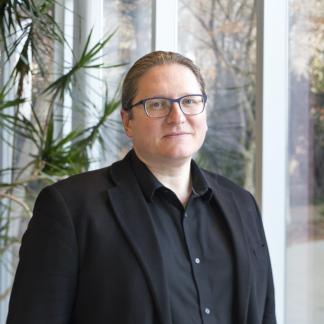
Joseph Kable is the Jean-Marie Kneeley President's Distinguished Professor of Psychology at the University of Pennsylvania's Department of Psychology within the School of Arts and Sciences. His research integrates experimental economics, cognitive neuroscience, and personality psychology to investigate the neural and psychological mechanisms underlying decision-making. He explores how subjective value is represented in the brain, deviations from rational choice theory, and individual differences in decision processes. His lab employs fMRI and interdisciplinary methods to study topics like risk tolerance, impulsivity, and neural plasticity. Education: BS in Chemistry from Emory University (undergraduate), PhD in Neuroscience from the University of Pennsylvania (doctoral). Research focuses on behavioral and cognitive neuroscience mechanisms of choice, including studies on temporal predictions, value signals, and brain structure-function relationships. His recent work examines how neural markers correlate with decision-making variability across individuals. He currently advises graduate students in Psychology and has post-doctoral researchers in his lab. Associated with MindCORE, Penn's hub for integrative mind research. Lab activities include undergraduate research programs and active studies exploring decision neuroscience and neuroeconomics.
Professor Chris Holmes is a Professor of Biostatistics at the University of Oxford, where he moved from Imperial College London in February 2004. He is a Fellow at St Anne's College and works in the Department of Statistics. His research focuses on applications and statistical methods development in genomic sciences and genetic epidemiology, holding a prestigious Programme Leaders Grant in Statistical Genomics from the Medical Research Council. Prior to his position at Oxford, Professor Holmes completed his doctorate in Bayesian statistics at Imperial College London, investigating novel nonlinear pattern recognition methods. This was followed by a post-doctoral position and then a lectureship at Imperial. Before his academic career, he worked in industry for several years in scientific computing, developing techniques for real-time pattern recognition models in defense and SCADA systems. Professor Holmes has a broad interest in the theory, methods and applications of statistics and statistical modeling, with a particular foundation in Bayesian statistics which he views as providing a unified framework for stochastic modeling and information processing. His specific research interests include: Bayesian statistics and stochastic simulation Markov chain Monte Carlo methods Pattern recognition and nonlinear, nonparametric methods Spatial statistics Statistical genetics and genomics Genetic epidemiology His recent publications (2023-2025) demonstrate a strong focus on the intersection of biostatistics, artificial intelligence, and healthcare applications. His work spans multiple domains including AI-driven disease classification in neurology, genomic data analysis for health equity, machine learning tools for healthcare prediction, and addressing bias in medical AI systems. A notable trend across his research is the application of advanced statistical methods to solve pressing problems in genomics, epidemiology, and medical diagnostics, with an increasing emphasis on health equity and the ethical implications of AI in healthcare. Professor Holmes currently supervises PhD students Oscar Clivio, Sahra Ghalebikesabi, and Natalia Garcia Martin. His research is supported by multiple grants, including the MRC Programme Leaders Grant in Statistical Genomics which funds his work in statistical genomics. He is actively involved in three research groups at Oxford that reflect the breadth of his scholarly interests: Computational Statistics and Machine Learning Statistical Genetics and Epidemiology Statistical Theory and Methodology
Adriana Tapus is a Full Professor at ENSTA Paris, affiliated with Institut Polytechnique de Paris, leading the Autonomous Systems and Robotics Laboratory (SAR) within the Computer Science and Systems Engineering Unit (U2IS). She holds an HDR (Habilitation) and a PhD from EPFL, Switzerland, with postdoctoral experience at USC. Her research focuses on socially assistive robotics, human-robot interaction (HRI), and personalized therapy for individuals with physical/cognitive impairments. She directs the IP Paris Doctoral School and coordinates national/international projects like the EU-funded ENRICHME and SWEET. Education: PhD in Mobile Robotics, EPFL (2005) Habilitation (HDR), ENSTA Paris (2011) M.S. Computer Science, University Joseph Fourier Engineer, Politehnica University of Bucharest Research Interests: Tapus pioneers socially assistive robotics, integrating machine learning, human modeling, and multimodal communication (verbal/non-verbal/para-verbal). Her work addresses adaptive therapies for vulnerable populations using robotics, physiological data interpretation, and context-aware interaction. Key themes include: Human-robot cooperation and trust Emotion recognition and expression Personalized rehabilitation systems AI ethics and human-centered design Publications: Over 150 articles, with recent work exploring humor in HRI, teleoperation trust models, and cross-cultural intelligent vehicles. Notable 2025 contributions include studies on robot laughter efficacy and multimodal facial expression frameworks. Awards: 2025: 4 IROS papers accepted 2016: 25 Women in Robotics recognition 2010: Romanian Academy Award Multiple conference best paper awards (RO-MAN, ICRA, etc.) Advising & Grants: Supervised over 20 PhD students and led projects like EU Horizon 2020 ENRICHME. Current students focus on teleoperation dynamics, robot humor, and haptic interfaces. Active in editorial roles (IJSR, THRI) and conference organization (HRI General Chair 2019). Labs/Teams: Founder of RoboticsByDesign lab and co-initiator of the Hi! Paris interdisciplinary AI center. The SAR lab develops systems for healthcare, education, and human-robot collaboration.
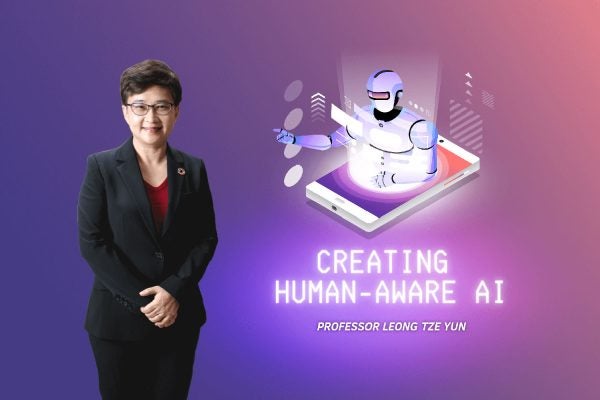
LEONG Tze Yun is a Professor in the Department of Computer Science at the School of Computing, National University of Singapore (NUS). She holds S.B., S.M., and Ph.D. degrees in Computer Science from the Massachusetts Institute of Technology (MIT). Her academic career spans both research and industry experience, with significant contributions to the fields of artificial intelligence and health informatics. Dr. Leong's educational background includes: Ph.D. in Electrical Engineering & Computer Science, Massachusetts Institute of Technology S.M. in Electrical Engineering & Computer Science, Massachusetts Institute of Technology S.B. in Computer Science & Engineering, Massachusetts Institute of Technology Her primary research interests focus on responsible AI, dynamic decision-making, neurocognitive modeling, reinforcement learning, artificial general intelligence, and biomedical and health informatics. Her work bridges the gap between theoretical AI development and practical healthcare applications, with an emphasis on ethical considerations and human-centered design. She directs the Medical Computing Laboratory at NUS, a multidisciplinary research program exploring human-aware decision modeling in complex environments. Analysis of her recent publications reveals a strong trend toward responsible AI development, with significant contributions to reinforcement learning techniques, causal inference methods, and applications of AI in healthcare. Her work increasingly integrates ethical considerations with technical AI development, particularly evident in her 2024 publications on medical AI and human values. Her scientific recognition includes: Fellow of the American College of Medical Informatics (ACMI) Founding Fellow of the International Academy of Health Sciences Informatics (IAHSI) Member of Eta Kappa Nu (Honor Society for Electrical Engineers) Dr. Leong has supervised numerous doctoral and master's students throughout her career, many of whom have gone on to prominent positions at institutions like Google, Netflix, Mayo Clinic, and academic institutions worldwide. Her advisory work extends to significant policy development, including contributions to WHO guidance on ethics and governance of AI for health. She currently serves on the World Health Organization (WHO) Expert Group on Ethics and Governance of AI for Health, the World Economic Forum (WEF) AI Governance Alliance, and the Advisory Council on AI in Uzbekistan. Her laboratory work focuses on developing adaptive systems that evolve with changing technical functionalities, system infrastructures, usage patterns, and operational contexts, with applications spanning prediction and decision analytics, human-aware robotics, game artificial intelligence, personalized education, and assistive care for elderly with neurocognitive disorders.
Alexis Battle is an Associate Professor at Johns Hopkins University with appointments in Biomedical Engineering , Computer Science , and Genetic Medicine (secondary). She directs the Malone Center for Engineering in Healthcare and serves as Deputy Director of the Data Science and AI Institute . Educated at Stanford University (PhD in Computer Science, 2013), Battle transitioned to academia after leadership roles at Google. Research Focus: Battle’s work bridges genomics and machine learning , emphasizing the impact of genetic variation on human health. Her lab develops tools like Watershed to predict functional effects of rare variants, aiming to enhance rare disease diagnosis. Key themes include non-coding DNA analysis , personalized genomics , and systems biology , with applications in cardiovascular disease and neurodegenerative disorders . Publications & Awards: Over 60 peer-reviewed articles in journals like Nature , Science , and Genome Biology , with recent emphasis on single-cell transcriptomics , multiomics integration , and telomere biology . Recipient of the President’s Frontier Award (2022), Microsoft Investigator Fellowship (2019), and Searle Scholar (2016). Scientific Awards: 2022 President’s Frontier Award 2019 Microsoft Investigator Fellowship 2019 Johns Hopkins Discovery Award 2017 Johns Hopkins Catalyst Award 2016 Searle Scholar Advising & Funding: Mentors 11 PhD students, 3 undergraduates, and postdoctoral fellows. Her research is funded by NIH, Searle Scholars, and institutional grants. The Battle Lab collaborates on projects like the GTEx Consortium , focusing on gene regulation and clinical genomics .
Colleen Conley is a Clinical Professor in the Department of Psychology at Loyola University Chicago, specializing in clinical psychology with a focus on adolescent and emerging adult mental health. She directs the IMPACT (Improving Mental-health and Promoting Adjustment through Critical Transitions) Lab, which conducts research on psychological well-being during developmental transition periods. Dr. Conley earned her Ph.D. from the University of Illinois at Urbana-Champaign and her B.A. from Lawrence University. Her research program blends observational studies, meta-analyses, and intervention development to improve well-being, particularly during critical life transitions like the college years. Her work examines psychological trajectories in adolescence and emerging adulthood, with special attention to gender issues and LGBTQIA+ well-being. Her research interests center on developmental psychopathology, examining the interplay between individuals and their contexts over time. She investigates how biological, psychological, cognitive, and social factors interact to influence psychological distress and well-being. Much of her work focuses on college student mental health, including trajectories of well-being during the transition to college and interventions to address mental health challenges. Analysis of her recent publications reveals a strong focus on college student mental health, with emphasis on developmental trajectories, intervention effectiveness (particularly peer-led and technology-delivered approaches), and the impact of transition periods on psychological functioning. Her work increasingly incorporates digital interventions and examines moderators of intervention effectiveness across diverse student populations. Research Mentoring Award Program recognition for mentoring award-winning students Heckler Summer Research Fellowship recognition for mentoring fellowship recipients Dr. Conley mentors numerous graduate students in the clinical psychology program, with many completing dissertations on topics related to mental health interventions, student well-being, and developmental transitions. Her IMPACT Lab collaborates with university staff, administrators, and other researchers to develop practical interventions that address student mental health needs. Current projects include Honest, Open, Proud (HOP) for stigma reduction, Wellness Advising with Motivational Interviewing (WAMI), Students Taking on Effective Post-Graduate Skills (STEPS), and Supportive Accountability Methods for Mentoring Young Adults (SAMMY-A). The lab also partners with commercial entities like Headspace for mindfulness research.
Amadeus Gebauer is a Researcher at the Chair of Computational Mechanics within the Institute for Computational Mechanics at the Technical University of Munich (TUM), serving as a Research Associate since 2019. His work specializes in computational biomechanics with emphasis on cardiac mechanics modeling, growth and remodeling processes, and multi-physics simulation frameworks. Education: Master of Science (M.Sc.) in Mechanical Engineering, Technical University of Munich, 2019 Research Interests: Gebauer's research centers on cardiac mechanics modeling, including growth and remodeling of cardiac tissue, cardiac active tissue mechanics, and medical image processing. He develops advanced computational methods for parallel and high performance computing, particularly through the 4C multi-physics simulation framework. His work integrates constrained mixture models to simulate organ-scale biological processes, bridging computational mechanics with clinical cardiology applications and focusing on mechanobiological stability in cardiac systems. Publication Trends: Gebauer's publications (2018-2025) demonstrate consistent innovation in computational cardiology, primarily using constrained mixture models to address cardiac growth and remodeling. His recent work introduces adaptive integration techniques for history variables and homogenized modeling approaches, while expanding into software benchmarking for cardiac elastodynamics and gastric motility simulations. These contributions highlight his expertise in developing robust numerical methods for multi-physics biomedical problems, with increasing focus on patient-specific applications and high-performance computing solutions. Teaching and Advising: Gebauer teaches core computational mechanics courses including Finite Elemente and Numerische Festkörpermechanik across multiple semesters. He has supervised diverse student projects ranging from term papers to Master's theses, with notable collaborations including Maximilian Grill's shoulder biomechanics research (2020) and Janina Datz's artery geometry framework development (2021). His advising consistently focuses on cardiac mechanics, computational modeling, and medical device simulation. Research Environment: As part of Professor Wolfgang A. Wall's Institute for Computational Mechanics (LNM) at TUM, Gebauer contributes to a leading research group in computational solid/fluid mechanics. The LNM develops the 4C simulation framework for complex engineering and biomedical challenges, with current emphasis on cardiac growth modeling, multi-physics integration, and high-performance computing applications in personalized medicine.
Professor Alexander Ilin-Tomich serves as an Acting Professor at the Institute of Egyptology within the Department of History and Cultural Studies at the Free University of Berlin. His academic career spans multiple prestigious institutions including Johannes Gutenberg-Universität Mainz and the Russian Academy of Sciences. His educational background includes: 2022: Habilitation in Egyptology at Johannes Gutenberg-Universität Mainz with thesis "Egyptian name scarabs from the 12th to the 15th Dynasty: Geography and chronology of production" 2007-2011: Doctoral studies at Lomonosov University Moscow, earning "kandidat istoriceskich nauk" (equivalent to PhD) 2002-2007: Undergraduate studies in Ancient History (including Egyptology) at Lomonosov University Moscow Professor Ilin-Tomich specializes in Egyptian stelae, offering tables, scarabs, personal names, prosopography, and administration during the Middle Kingdom and Second Intermediate Period. His research combines philological, archaeological, and historical approaches to examine ancient Egyptian society, with particular focus on administrative structures, material culture, and regional variations. His work on scarab production and distribution has established him as a leading expert in this specialized field. His publication record demonstrates consistent focus on Middle Kingdom administration, with recent expansion into material analysis of Egyptian blue pigment and methodological approaches to studying small archaeological finds. He has developed significant digital resources including the open-access "Personen und Namen des Mittleren Reiches" database. Professor Ilin-Tomich has secured multiple competitive research grants: Fritz Thyssen Foundation project "Ancient Egyptian titles in official and familial contexts, 2055-1352 BC" (2021-2024) Fritz Thyssen Foundation project "Transformation and variability in the corpus of ancient Egyptian personal names 2055-1550 BC" (2017-2021) Alexander von Humboldt Foundation postdoctoral fellowship (2015-2017) Russian Foundation for the Humanities research grant (2013-2015) He actively contributes to the academic community through editorial work, including co-editing the 2023 Festschrift "Schöne Denkmäler sind entstanden. Studien zu Ehren von Ursula Verhoeven," and has established himself as a key researcher in Middle Kingdom studies through his monographs and numerous journal articles.
Elizabeth A. Simpson is an Associate Professor in the Department of Psychology at the University of Miami's College of Arts and Sciences. She serves as Associate Director of the Child Division and directs the Social Cognition Laboratory, focusing on infant social and cognitive development through interdisciplinary methodologies. Education: Ph.D. in Psychology (unspecified institution) Key Research Areas: Developmental Psychology, Autism, Social Cognition, Primate Studies, Visual Attention, Infant Behavior Her research investigates individual differences in infant visual attention, social motivation, and physiological markers like salivary oxytocin. Recent studies demonstrate: Stability of attentional patterns from newborn to 14 months Sex differences in early face detection Links between oxytocin levels and social affect in infants Neurophysiological markers in newborns later diagnosed with ASD Scientific awards include the NSF CAREER grant for neonatal imitation research. She contributes to open science initiatives through the ManyBabies consortium and develops remote eye-tracking methods for broader accessibility. Current lab work explores: Parent-infant affective interactions during still-face episodes Predictive power of early attentional biases Development of pathogen avoidance behaviors Cross-species comparisons of social cognition
Susanne Weis is a Research Professor and Group Leader of the 'Variability of the Brain' group at the Department of Brain and Behavior (INM-7), part of the Institute of Neuroscience and Medicine (INM) at Research Center Jülich GmbH. Her work focuses on understanding brain variability through advanced neuroimaging techniques and machine learning, with particular emphasis on sex differences, hormonal influences, and clinical applications in mental health. Her research interests include neuroimaging methodologies, machine learning applications in cognitive neuroscience, and the structural-functional relationships underlying brain variability. She investigates how factors like sex hormones and naturalistic stimuli (e.g., movies) affect brain connectivity and cognitive performance, aiming to improve diagnostic and predictive tools for disorders such as schizophrenia and Alzheimer’s disease. Publications highlight her contributions to developing datasets (e.g., SpEx), analyzing confound leakage in ML models, and exploring meta-analytic networks during naturalistic viewing. Her work bridges basic science and clinical impact, addressing challenges in interpreting neuroimaging data and advancing personalized medicine approaches. In her role as a group leader, Weis oversees research projects and collaborates with interdisciplinary teams. She is affiliated with the Helmholtz Association and contributes to the broader scientific community through her research in neuroimaging and computational neuroscience.
Kelly Arnold is an Associate Professor in the Department of Biomedical Engineering at the University of Michigan. Her research integrates systems engineering principles with immunology to investigate variability in immune responses across infection, vaccination, and injury, with a focus on computational modeling and clinical translation. Research Focus Systems-level immune response modeling Vaccination and antibody functionality Vaginal microbiome-host interactions Chronic lung disease progression Computational serology and proteomics Recent Work Her 2025 studies examine SARS-CoV-2 vaccination responses in cancer patients and computational frameworks for vaginal probiotics. Earlier works (2024-2007) span COPD progression, lupus fibrosis, HIV susceptibility, and tissue engineering for fertility preservation. Methodologies include proteomic profiling, network modeling, and microfluidic systems.
Brent W. Roberts is a Professor of Psychology at the University of Illinois , affiliated with the Social-Personality-Organizational Division. He serves as Chair of the Social and Behavioral Sciences Research Initiative and holds the Edward William and Jane Marr Gutgsell Professorship. Education: Ph.D. in Personality Psychology (1994), University of California, Berkeley Research focuses on personality development across adulthood, personality assessment (especially conscientiousness ), and personality-health relationships . Methodologically, he emphasizes IRT and contextualized assessments. Scientific contributions include: Over 235 research outputs Highly Cited Researcher (Thomson Reuters 2016-2017) Key publications on BESSI, CONIC model, and longitudinal personality analysis Award-winning scholar: J. S. Tanaka Dissertation Award (1995) Carol & Ed Diener Mid-Career Award Theodore Millon Mid-Career Award Henry Murray Award Honorary Doctorate, University of Basel As academic advisor, he has mentored numerous graduate students and postdoctoral fellows in personality psychology, with lab alumni now at institutions like University of Houston and Carleton University.
Dr. Jiaqi Gong serves as Associate Professor in Computer Science and Adjunct Associate Professor in Mechanical Engineering at The University of Alabama's College of Engineering, while directing the Alabama Center for the Advancement of Artificial Intelligence. His academic foundation includes: B.S. in Engineering, China University of Geoscience (2004) Ph.D. in Engineering, Huazhong University of Science and Technology (2010) Dr. Gong's research pioneers human-AI convergence through cyber-physical systems and smart health technologies, developing mobile/wearable platforms to enhance human perceptual, cognitive, and physical capabilities. His work spans artificial intelligence, machine learning, computer vision, and IoT with applications in healthcare, environmental monitoring, and education. The Sensor-Accelerated Intelligent Learning (SAIL) laboratory he founded drives innovation in behavior change interventions, human movement modeling, and educational data mining. Recent publications reveal strong interdisciplinary trends: healthcare AI dominates with medication adherence prediction and surgical classification systems, while environmental applications feature flood-risk communication and drought analysis. His work increasingly integrates generative AI and LLMs across domains, demonstrating methodological innovation in federated learning, knowledge graphs, and explainable storytelling frameworks. Notable recognitions include: Best Student Paper Award, IEEE/ACM Connected Health Conference (2022) Best Student Paper Award, Body Sensor Networks Conference (2019) Data Challenge Win, IEEE Biomedical Health Informatics (2018) Best Paper Award, Body Area Networks Conference (2014) Best Demonstration Award, IEEE Wireless Health Conference (2014) Dr. Gong leads significant funded projects including a $2M CDC/NIOSH grant for first responder safety and $3M NSF funding for hydrologic research. As SAIL laboratory director, he mentors students in developing clinically deployed technologies for multiple sclerosis, dementia, and mental health. Future work focuses on scaling AI applications in chronic disease management and climate resilience through the Alabama AI Center. The SAIL laboratory (founded 2017) operates as a multidisciplinary hub developing wearable/mobile systems for health applications, with active collaborations across medical clinics and engineering departments for real-world deployment of behavior change interventions and movement analysis tools.
Karoline Faust is an Associate Professor at KU Leuven, affiliated with the Laboratory of Molecular Bacteriology (Rega Institute) and the Faculty of Medicine . She contributes to the iSi Health and Leuven One Health institutes, and serves on senior academic councils. Her research spans microbial systems biology, focusing on community dynamics and network analysis. Education: PhD in bioinformatics (2010, KU Leuven) Affiliations: KU Leuven, ISME Journal editorial board, Belgian Society for Microbiology Her research investigates microbial community dynamics , systems biology approaches to microbiomes, and bioinformatics tool development . She specializes in modeling human gut microbiota , synthetic microbial communities , and environmental microbiomes (e.g., microplastic impacts on Daphnia microbiomes). Her work integrates metabolic modeling , network analysis , and experimental systems to understand microbial interactions. Recent publications highlight her contributions to microbial network inference , 16S rRNA sequencing protocols , microfluidics , and ecological modeling of microbiomes. She develops tools like manta , miaSim , and CoNet to analyze community structures. Teaching: Karoline co-teaches courses in microbiology, bioinformatics, and network analysis at KU Leuven, and has contributed to international workshops on microbial network inference. Scientific Engagement: She serves as Senior Editor at ISME Journal and Secretary of the Belgian Society for Microbiology .
Sandy J. Wayne serves as Dean of the College of Business Administration and Professor of Management at the University of Illinois Chicago (UIC), where she leads academic initiatives while maintaining an active research program. An internationally recognized expert in workplace leadership, her work focuses on developing high-performing employees through effective team leadership and organizational practices that enhance motivation and performance. She also investigates systemic barriers affecting the upward mobility of women and people of color in corporate environments. Dr. Wayne earned her academic credentials from: PhD in Management, Texas A&M University MBA, Illinois State University BS in Business Administration, Illinois State University Her research program spans leadership dynamics, organizational behavior, and diversity science. She examines how manager-employee relationships impact engagement and performance, with particular emphasis on work-family balance and career trajectory barriers for underrepresented groups. Her work bridges theoretical rigor with practical applications for organizations seeking to build inclusive, high-performance cultures through evidence-based leadership development. Analysis of her recent publications (2014-2024) reveals three dominant research streams: leader-member exchange theory (particularly LMX differentiation effects), servant leadership measurement and outcomes, and diversity dynamics in advancement pathways. Her work consistently appears in top-tier journals like Journal of Applied Psychology and Academy of Management Journal , demonstrating methodological sophistication through multi-level analyses and cross-cultural investigations. Dr. Wayne's scientific contributions have earned significant recognition: Decennial Influential Article Award for 2015 publication (2025) University Scholar, University of Illinois System (2020-2023) Faculty Impact Award, UIC Business (2019) Fellow, Academy of Management (2019) Decennial Influential Article Award for 2008 publication (2018) As Director of the Institute for Leadership Excellence and Development since 1996, she has cultivated a robust research ecosystem while leading institutional initiatives like the UIC Business Cohort Program and Business Scholars Program. Her administrative leadership extends to faculty development through her former role as Associate Dean for Faculty Affairs (2014-2022), demonstrating sustained commitment to academic excellence and organizational growth.