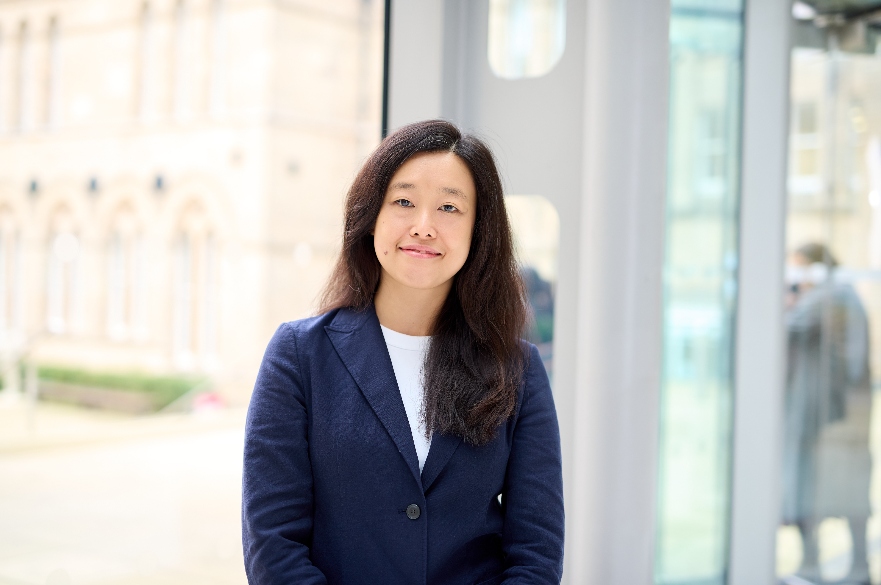
Rik Crutzen is a Full Professor at the Faculty of Health, Medicine and Life Sciences, Maastricht University, specializing in health promotion and digital interventions. His research focuses on leveraging technology to improve health behaviors across diverse populations, including adolescents, older adults, and immigrant communities. He leads projects in the CAPHRI research group for Promoting Health & Personalised Care. Research trends include: Digital health innovations (e.g., helplines, apps, algorithms) Chronic disease management (post-COVID-19, dementia risk) Health equity in immigrant populations (cervical cancer, maternal care) Behavioral interventions (physical activity, sleep, STI prevention) Systematic reviews and mixed-methods studies He has supervised 22 academic works and contributed to datasets on activity patterns and sleep-activity correlations. His work spans public health policy, health education, and technology integration.
Dr Virginia Hagger is a Senior Lecturer in Nursing at Deakin University's School of Nursing & Midwifery, part of the Faculty of Health and the Institute for Health Transformation. She specializes in diabetes education, self-management, and psychological wellbeing. Her research focuses on structured education programs, diabetes distress, and workforce development. She holds a PhD and Master of Public Health from Deakin University. Dr Hagger has led numerous national and international studies, including interventions targeting diabetes distress, insulin therapy barriers, and telehealth support. She is affiliated with the Quality and Patient Safety (QPS) Strategic Research Centre and the Australian Centre for Behavioural Research in Diabetes . Awards include the 2019 Alfred Deakin Medal and 2017 Vice-Chancellor's Award for Teaching Excellence. Her teaching spans undergraduate and postgraduate nursing, including units on diabetes pathophysiology and psychosocial contexts. Current doctoral students focus on diabetes distress, social support in Ethiopia, and autonomy in insulin management. Over 30 peer-reviewed articles and grants (e.g., MRFF-funded HypoPAST and LISTEN trials) underscore her contributions to diabetes care innovation and workforce training.
Ralf Bierig joined Maynooth University's Computer Science Department in 2017, teaching topics including information retrieval, software testing, interaction design, and virtual reality. He is the programme director of the Higher Diploma in Human-Computer Interaction (HCI) and User Experience (UX). He earned his BSc (2002) from University of Furtwangen and PhD (2008) from Robert Gordon University. Research Interests His work spans information retrieval, interactive information retrieval, personalisation, information search behavior, usability (UX), and virtual reality (VR). Recent publications focus on multimodal concept indexing, hybrid IR approaches, and contextual adaptation in search systems. Publication Trends His research combines statistical semantics, graph modeling, and multimodal data analysis across academic collaborations in Austria, Germany, and international venues like ECIR and SIGIR.
Michela Bertolotto is a Professor in the School of Computer Science at University College Dublin (UCD). Her research focuses on spatio-temporal data modeling, GIScience, and applications of geospatial technologies in fields like urban planning and health informatics. She leads a research group and has supervised 19 PhD and 8 MSc students. Her work includes innovations in LiDAR-based flood risk visualization, semantic web quality assurance, and open-source spatial data analysis. Bertolotto has held roles including College Lecturer at UCD (2000–2006) and postdoctoral research positions at the University of Maine and University of Genoa. Education: BSc and PhD in Computer Science from the University of Genoa (1993, 1998). Professional achievements include over 100 publications, 24 grants (e.g., Science Foundation Ireland-funded Urban ARK project), and editorial roles at journals like the International Journal of Geographical Information Science. Awards include the UCD President's Research Award (2001) and NATO Postdoc Fellowship (1998–1999). Research interests span map personalization, volunteered geographic information (VGI), and geospatial data quality. Her lab develops tools like the LAMSkyCam (low-cost sky imaging system) and dynamic flood risk viewers. She chairs international conferences and serves on program committees for GIScience events.
Kylie King is a Senior Lecturer at the School of Psychological Sciences at Monash University and affiliated with the Turner Institute for Brain and Mental Health. She joined Monash University in November 2019 as an Impact Fellow and transitioned to her current Senior Lecturer role in February 2023, where she focuses on fostering research connections with industry, community, and people with lived experience. Her educational background includes a Doctor of Psychology from Deakin University (2001) and a PhD completed in early 2020 focusing on suicide prevention. Prior to joining Monash, she worked as a psychologist specializing in addictions and spent ten years (2009-2019) as a Research Fellow at the Melbourne School of Population and Global Health at the University of Melbourne. Dr. King's research primarily centers on suicide prevention, with particular emphasis on males and communities experiencing disproportionate suicide rates. Her work integrates program evaluation methodologies to develop targeted interventions and suicide prevention education. She leads research teams focused on creating evidence-based approaches to address mental health challenges in vulnerable populations. Her research aligns with UN Sustainable Development Goals related to health and wellbeing. Analysis of her recent publications reveals a strong focus on gender-specific suicide prevention, particularly for men and older males, as well as attention to culturally specific approaches for Indigenous communities. Her work bridges clinical psychology with public health interventions, examining how societal factors, occupational environments, and cultural contexts influence mental health outcomes and suicide risk. Associate Editor, Australian Psychologist Journal (2020-present) Associate Editor, Australian Psychologist Journal (2021-present) Guest Editor, Frontiers in Public Health (2020) Dr. King is actively involved in peer review responsibilities and currently leads significant research projects including "Preventing suicide in boys and men" (2020-2026), "Formative evaluation of suicide prevention gatekeeper training for aged care workers" (2023-2025), and "Zest – A personalised, digital intervention for sleep and wellbeing in Australian shift workers" (2023-2026). She is accepting PhD students for research supervision through Monash University's Supervisor Connect platform. Her research team operates at the intersection of clinical psychology and public health, developing evidence-based interventions for vulnerable populations with strong emphasis on community-centered approaches and collaboration with individuals with lived experience of mental health challenges.
Francesco Maisano, MD , is Full Professor of Cardiac Surgery at Vita-Salute San Raffaele University (Milan) since 2021, where he also serves as Director of the Cardiac Surgery Clinic and of the Valve Center at IRCCS San Raffaele Hospital. From 2014 to 2020 he held the Chair of Cardiac Surgery and directed the Department at University Hospital Zurich. Education & Training 1990 – MD, Catholic University of Rome 1994 – Clinical Fellowship, University of Alabama at Birmingham 1995 – Specialization in Cardiac Surgery, La Sapienza University of Rome Research Interests Professor Maisano’s work centres on innovative therapies for heart-valve disease, spanning surgical reconstruction, catheter-based interventions (TAVI, MitraClip, transcatheter tricuspid devices), and hybrid approaches. He leads translational programmes in biomedical engineering, multimodality cardiac imaging, and artificial-intelligence-guided interventions, with emphasis on the multidisciplinary “Heart Team” model for complex cardiovascular disease. His recent publications (2024-2025) demonstrate intense activity in transcatheter mitral and tricuspid repair, long-term durability of surgical mitral repair, AI-driven procedural guidance, and renal protection strategies during mechanical circulatory support. A dominant theme is translating imaging innovations and device concepts into first-in-human studies and large-scale registries. Scientific Awards & Recognitions European Society of Cardiology Silver Medal (2018) ICI Lifetime Achievement in Research & Teaching (2018) ICI Best Technology Parade Presentation (2010) C. Walton Lillehei Young Investigator Award (1999) Leadership & Grants He directs multiple postgraduate programmes, including Certificate of Advanced Studies (CAS) tracks at the University of Zurich in multimodality imaging, aortic valve, and mitral–tricuspid interventions. He is principal investigator on investigator-initiated grants, coordinates industry-partnered device trials, and mentors numerous doctoral and post-doctoral researchers. His team has filed >24 patents and spun off several cardiovascular start-ups. Labs & Teams At IRCCS San Raffaele he leads the Valve Science Center , a multidisciplinary hub integrating cardiac surgeons, interventional cardiologists, imaging specialists, biomedical engineers, and data scientists focused on next-generation valve repair/replacement technologies and personalised cardiovascular medicine.
Magnus Boman is a Professor of AI and Health at the Department of Medicine, Solna, Karolinska Institutet (KI), where he leads the AI@KI initiative to support researchers in AI integration. He is affiliated with the Chronic Inflammatory Disease Epidemiology research group under Johan Askling. His research focuses on AI applications in precision medicine, multimodal prediction, ethical norms in AI systems, energy-efficient computing, and quantum sensor data interpretation. Research Interests: Artificial Intelligence in healthcare and precision medicine Multimodal data analysis for disease prediction and treatment Machine learning for clinical decision support systems Ethical and societal implications of AI Grants: Swedish Research Council: Improving breast cancer histology image classification (2024-2026) Scalable Federated Learning (2022-2025) Ai in sustainable cities (VINNOVA, 2019) Advising & Students: Supervised over 50 PhD and Master's students across KI, KTH, and Stockholm University, focusing on AI applications in healthcare, machine learning, and computational epidemiology. Notable projects include predictive modeling for mental health outcomes and variant filtering in genetic data. Labs & Teams: Leads AI@KI, fostering AI adoption in medical research. Collaborates with the Johan Askling group on epidemiology and chronic disease studies.
Dr Andrew Richardson is a Senior Lecturer in Social Work at the Faculty of Health , specialising in relationship-based social work practice with adults. He holds a Professional Doctorate in Social Work and serves as Branch President of the Australian Association of Social Workers (AASW) since June 2023. His research focuses on psychodynamic practice, social policy, strengths-based approaches, and participatory methods, with a particular emphasis on adult social care personalisation in the UK and Europe. Richardson contributes to UN Sustainable Development Goals through his work. Key achievements include editing a Special Issue of the Journal of Social Work Practice on adult social care personalisation and authoring a doctoral thesis on lived experiences in social care. He is a Fellow of the Royal Society of Arts (FRSA) and Royal Society of Public Health (FRSPH). Richardson is registered to supervise postgraduate research and actively collaborates on international research networks, particularly in social work practice contexts. Education: Professional Doctorate in Social Work External Roles: Branch President, AASW (2023–present) Key Research Areas: Psychodynamic practice, policy analysis, participatory methodologies, and personalisation frameworks His recent work explores professional identity reconstruction using Indigenous wisdom, university student wellbeing interventions, and social work practice in Australia's Northern Territory.
Carine J.M. Doggen is a Full Professor in Health Technology & Services Research at the TechMed Centre, University of Twente. She also serves as Scientific Director at Rijnstate Hospital since October 2017. Her academic career includes previous positions as Senior Researcher at Leiden University Medical Center (2000-2009), University of Washington, Seattle (2002-2003), and Sanquin Blood Bank (2006-2009). Her research focuses on evaluating healthcare innovations, particularly technologies enabling the transition of care from hospitals to home settings. Dr. Doggen specializes in assessing the implementation, reliability, and effectiveness of new medical technologies including wearable sensors and remote monitoring systems. Her work examines measurement validity and incorporates perspectives from both healthcare providers and patients. Analysis of her recent publications reveals strong expertise in cardiovascular technology evaluation, digital health interventions, and quality of life assessment. Her research shows particular strength in randomized clinical trials of medical devices, health technology assessment methodologies, and post-COVID health outcomes research. Dr. Doggen has presented her work at numerous conferences, with recent oral presentations including 'Towards personalised medicine: the potential of intensive longitudinal data to assess the interplay of chronic diseases' (2024) and 'Prognostic markers for acute heart failure in Chronic Obstructive Pulmonary Disease' (2021). She has also contributed to media discussions about healthcare innovations through the Rijnstate Collegetour series.
Chris Freeman is a Professor of Robotics and Control at the University of Southampton's Electronics and Computer Science (ECS) school. His research focuses on iterative learning control theory, biomedical engineering, and robotics with applications in industrial automation and healthcare. As Deputy Head of School (Equity, Diversity and Inclusion) and Chair of the ECS Belonging, Inclusion, Diversity and Equity (BIDE) Committee, he drives initiatives promoting inclusive academic environments. Freeman leads multidisciplinary research projects such as "Towards intelligent, pervasive, high performance control system architectures" "Elder Athletes: building incidental interaction at home" "Low-cost personalised instrumented clothing with integrated FES electrodes" . His work combines robotics, functional electrical stimulation (FES), and wearable technologies to develop rehabilitation systems for stroke patients and industrial automation solutions. His recent publications demonstrate expertise in iterative learning control (ILC), model predictive control, and biomedical applications. Research groups include: Digital Health and Biomedical Engineering Institute for Life Sciences Centre for Health Technologies Centre for Robotics
Jörg Fachner is a Professor of Music, Health, and the Brain at Anglia Ruskin University (ARU), serving as Co-Director of the Cambridge Institute for Music Therapy Research. His research focuses on translational issues in interdisciplinary topics between medical, humanities, and music sciences. He holds a Dr. rerum medicinalium (Medical Sciences) from the University of Witten/Herdecke and a Diplom Pädagoge (Master in Education) from the University of Dortmund. **Research Interests:** Music therapy in neurorehabilitation, addiction treatment, dementia care, and mental health. Specializes in social neuroscience, EEG-based studies of therapeutic processes, and the neural dynamics of music-induced emotions. **Grants & Consultancy:** Major grants include the Josef Ressel Centre for Personalised Music Therapy Research in Neurorehabilitation (€1.1M), UKRI funding for RadioMe dementia technology (£35k), and collaborations with institutions like Aalborg University and Jyväskylä University. Consulted on projects such as depression and music therapy (NHS) and art therapies in addiction treatment (Germany). **Awards:** None explicitly listed, but recognized for contributions to music therapy research and clinical practice. **Labs/Teams:** Leads the Cambridge Institute for Music Therapy Research, collaborating on interdisciplinary projects like RadioMe and EEG hyperscanning studies. Supervises a global cohort of PhD students in music therapy and neuroscience.
Andrew Currie is a Professor and Associate Dean (Research & Innovation) at Murdoch University's School of Medical, Molecular and Forensic Sciences, within the College of Environmental and Life Sciences. He leads the Sepsis Diagnostics Research Group at the Centre for Molecular Medicine and Innovative Therapeutics and co-heads the Neonatal Infection and Immunity Team with Clinical Professor Tobias Strunk at the Wesfarmers Centre of Vaccine & Infectious Diseases at Telethon Kids Institute. His research focuses on immunology and infectious diseases in pediatric populations, particularly sepsis diagnostics and neonatal immunity. Education: PhD (Immunology, University of Western Australia, 2001); BSc (Biotechnology with Honors, Murdoch University, 1997). Research Interests: Sepsis diagnostics, innate immunity mechanisms in neonates, medical biotechnology for diagnostics (e.g., biosensors), and translational research in pediatric infections. Collaborates internationally with institutions in Canada, Denmark, the UK, US, and China. Aims to reduce sepsis burden in vulnerable populations through advanced molecular methods and interdisciplinary partnerships. Key Affiliations: Lead of Sepsis Diagnostics Research Group (Murdoch University), Senior Lecturer in Immunology, Honorary Associate at Kids Research Institute Australia. Past roles include leadership in the Centre for Molecular Medicine and Innovative Therapeutics. Scientific Contributions: Over 100 peer-reviewed articles focusing on sepsis biomarkers, neonatal immunity, tick-borne diseases, and clinical trials for interventions like vitamin C and probiotics in critical illness. Active in developing precision medicine approaches for neonatal sepsis. Grants & Funding: Co-leads major projects on sepsis diagnostics and neonatal infection, supported by national and international grants. Collaborates on multi-institutional initiatives. Labs/Teams: Sepsis Diagnostics Research Group (Murdoch) and Neonatal Infection and Immunity Team (Telethon Kids Institute). Works closely with the Personalised Medicine Centre and Health Futures Institute.
Dario Carugo is an Associate Professor of Biostimulation and Immunological Engineering at University College London (UCL), School of Pharmacy, Department of Pharmaceutics. Previously, he held positions at the University of Oxford (Botnar Research Centre) and University of Southampton. His academic foundation includes a BSc and MSc in Biomedical Engineering from Politecnico di Milano (specializing in Biological Fluid Dynamics & Bio-Machines), and a PhD in Bioengineering Sciences from the University of Southampton. His research spans acoustofluidics , microfluidic drug delivery systems , and biofilm eradication technologies . Key interests include ultrasound-activated drug carriers, mechanistic models for therapeutic physical stimuli, and nano/micro-scale systems for chronic wound treatment, implant infections, and musculoskeletal disorders. His work integrates computational fluid dynamics with experimental models to optimize interventional treatments. Recent publications (2023-2025) reveal a strong trend toward biofilm-targeted therapies using ultrasound-responsive carriers (microbubbles/nanodroplets), oxygen delivery systems for bone healing, and 3D-printed devices for precision drug delivery. Interdisciplinary collaborations span microbiology, urology, and tissue engineering, with emphasis on translating lab innovations to clinical applications for chronic wounds and implant-associated infections. Awards: Italian National Bioengineering Group award IMechE Biomedical Engineering Division award EPSRC Doctoral Prize award FP7 European project funding BBSRC award Junior Research Fellowship at Jesus College, Oxford Carugo teaches Biofluids (Engineering Science) and Micro- & nano-technologies for personalised medicine (MSc Pharmacology), alongside supervising MSc Musculoskeletal Sciences laboratory activities. His Botnar Research Centre lab pioneers vortical flow devices for ultrasound-activated drug delivery and high-speed imaging systems (>1 million fps) to quantify cellular responses to mechanical stimuli.
Dr. Elaine Chen serves as Senior Lecturer in Business Analytics and Course Leader for the MSc Business Analytics and Artificial Intelligence at Nottingham Business School, Nottingham Trent University. Her teaching emphasizes practical applications of data and AI technologies for business decision-making, with dedicated focus on accessibility for diverse student backgrounds across technical and strategic domains. Her academic credentials include: PhD in Computing Science MSc in Business Information Technology Postgraduate Certificate in Academic Practice BTech (Hons) in Business Information Systems Chen's research bridges educational and business contexts through data-AI integration: Generative AI adoption in higher education, particularly for neurodivergent/disabled students Human-AI collaboration frameworks in organizational settings SME applications for AI-driven efficiency and competitiveness Workforce analytics and talent management systems Her work consistently connects technical AI capabilities with real-world implementation challenges. Publication analysis (2023-2025) reveals accelerating focus on generative AI's educational impact and business strategy integration, evolving from her foundational work in social recommender systems (2014-2020) which established methodologies now applied to contemporary AI challenges in business contexts. Her professional recognition includes: Senior Fellow of the Higher Education Academy (HEA) Chen actively supervises PhD candidates in AI education, human-AI collaboration, and workforce analytics domains. Her pedagogy leadership includes designing accredited business analytics curricula and securing teaching innovation projects with documented outcomes in student engagement metrics. Prior industry experience as an automation engineer at Intel informs her practical approach to AI implementation. Current initiatives focus on generative AI ethics frameworks and longitudinal SME adoption studies, extending her established research trajectory into emerging business technology challenges.
Dr John Owens is a Senior Lecturer in the School of Education, Communication & Society at King's College London. He co-directs the Centre for Public Policy Research and previously founded the BA Social Sciences programme. His research focuses on applying philosophical and sociological theories to policy challenges in education, healthcare, and environmental sectors, emphasizing critical realism and the capabilities approach. He teaches modules on social justice, environment-society relations, and education policy at undergraduate and postgraduate levels. Research Interests: John explores ethical, social, and political dimensions of public policy through interdisciplinary lenses. His work addresses autonomy, equity, and justice in contexts like environmental pedagogy, healthcare professionalism under austerity, and disability service personalization. He has led projects funded by the Health Foundation and Wellcome Trust, investigating topics like self-management support for long-term conditions and interdisciplinary bioethics training. Publications: His recent works include studies on wearable technology's impact on autonomy, medical professionalism in challenging environments, and the financialization of public services. He has contributed to journals like *Health Care Analysis*, *BMJ Leader*, and *Frontiers in Education*, with over 30 peer-reviewed articles and book chapters. Advising & Grants: John supervises doctoral research on topics like pediatric professionalism and environmental youth engagement. He co-led projects on healthcare ethics and self-management strategies, supported by major health foundations. His work aligns with UN Sustainable Development Goals on health, education, and climate action. Labs/Teams: Active in King's Climate & Sustainability Research and the Centre for Public Policy Research, focusing on policy analysis for social justice in education, healthcare, and environmental policy.