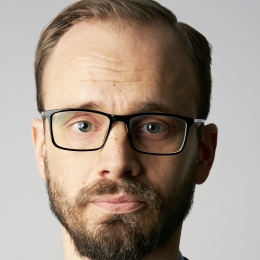
Karl Gustafsson is a Professor at Stockholm University within the Department of Economic History and International Relations. His work bridges security studies , collective memory , and digital research methods in international relations. Current Role: Professor of International Relations, Stockholm University Previous Positions: Post-Doc at Lund University, Researcher at Swedish Institute of International Affairs Visiting Appointments: University of Tokyo, Osaka University, Keio University, Academia Sinica, Nordic Institute of Asian Studies Research Focus: Karl specializes in memory politics , ontological security , and anxiety-driven international dynamics , particularly in Sino-Japanese relations and digital platforms . His studies explore how historical narratives and online memory construction influence state identity and policy. Awards & Grants: Recipient of the Wang Gungwu Prize (2014) and Stockholm University Association’s award (2011). Holds Swedish Research Council and Marianne & Marcus Wallenberg Foundation grants for projects on apologies in international politics and digital memory in East Asia . Publications: His work appears in journals such as International Studies Quarterly , European Journal of International Relations , and Memory Studies , addressing topics like narrative power in East Asia, anxiety’s role in policy change , and digital humanities applications in IR.
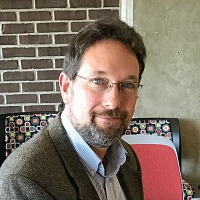
Leo J. Garofalo is the Virginia Eason Weinmann '51 Professor of History at Connecticut College, where he joined in 2002. He coordinates the Social Justice and Sustainability Pathway and co-directs the Mellon Mays Undergraduate Fellowship program. His scholarship focuses on colonial Latin America with emphasis on racial dynamics and cultural exchange. Education: B.A. in History and Hispanic Studies from Brown University M.A. from Boston College Ph.D. from University of Wisconsin at Madison Research Focus: Garofalo investigates the intersection of African and Indigenous cultures in colonial Peru, examining how marketplaces, taverns, and religious practices shaped Afro-Andean identities. His current work traces West African diaspora routes to the Andes and analyzes Afro-Iberian influences on witchcraft traditions. He utilizes Inquisition records and Spanish imperial archives to reconstruct transatlantic cultural networks. Awards: Virginia Eason Weinmann '51 Professorship (endowed chair) Social Science Research Council Grant Fulbright-Hays Research Grant Academic Leadership: Garofalo has organized campus events featuring Afro-Peruvian performers (Negrura Peruana) and activists like former Colombian Governor Luis Murillo. In 2010, he co-led a Study Away Teach Away program in Oaxaca, Mexico, examining immigration and indigenous rights movements.
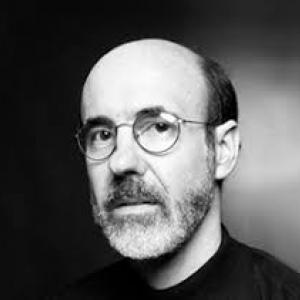
Jay David Bolter holds the Wesley Chair of New Media and serves as Professor and Director of Computational Media at the Georgia Institute of Technology, where he is affiliated with the School of Literature, Media, and Communication within the Ivan Allen College of Liberal Arts. A foundational figure in digital media studies, he is renowned for his influential theoretical works and practical contributions to new media forms. His research spans Augmented Reality , Virtual Reality , Digital Culture , and the History of Media , with particular emphasis on remediation theory (developed with Richard Grusin) and the evolution of digital writing. As an active member of the Augmented Environments Lab, Bolter creates narrative-driven AR applications for cultural heritage sites and educational contexts, blending theoretical rigor with experimental design. His work consistently examines how new media technologies reshape human perception and cultural practices. Recent publications reveal a concentrated exploration of reality media (AR/VR) as narrative spaces, with articles addressing biofeedback integration in VR fitness, agency-driven interactive storytelling, and theoretical frameworks for understanding immersive experiences. His scholarship bridges historical media analysis with cutting-edge technical implementation, demonstrating how remediation processes continue to evolve in mixed reality environments. This trajectory reflects his lifelong investigation into the interplay between technological capabilities and human expression. Bolter maintains significant collaborative partnerships, including co-authoring seminal texts like Remediation and developing the Storyspace hypertext system with Michael Joyce. His leadership in the Augmented Environments Lab drives interdisciplinary projects that merge humanities perspectives with technological innovation, particularly in creating culturally resonant AR experiences. Teaching responsibilities include advanced courses in mixed reality design, computational media, and digital media theory, shaping the next generation of media scholars and practitioners.
Sarah Sharma is a Professor of Media Theory at the University of Toronto’s Faculty of Information and Director of the Institute of Communication, Culture, Information and Technology (ICCIT). Her work interrogates intersections of technology, temporality, and labor through a feminist lens. She has held leadership roles in the McLuhan Centre (2017–2022) and is recognized for advancing critical media theory. Research focuses include: • Temporality’s role in cultural politics • Feminist reimaginings of McLuhan’s media theory • Digital platforms’ socio-political impacts • Labour dynamics in gig economies (e.g., TaskRabbit). Her upcoming book Insufferable Tools: Big Tech and the Broken Machine critiques tech industry failures. Key achievements: • 2024 Desmond Morton Research Excellence Award • 2014 NCA Critical Cultural Book of the Year for In the Meantime: Temporality and Cultural Politics . Her edited volume Re-Understanding Media (2022) exemplifies feminist extensions of media theory. Recent engagements include keynote addresses at the Canadian Communication Association (June 2025) and University of Michigan’s Digital Ideas Workshop (June 2025). She critiques ‘accelerationist’ narratives about technology and advocates for rethinking media through marginalized perspectives.
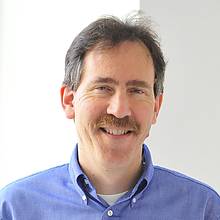
Alan Sussman is a Professor and Associate Chair of Undergraduate Education in the Computer Science department at the University of Maryland. His research focuses on databases, high-performance computing, parallel systems, and educational curriculum development for computing disciplines. He holds a Ph.D. from Carnegie Mellon University (1991) and a B.S.E. from Princeton University (1982). His educational contributions include integrating parallel and distributed computing concepts into early undergraduate courses, supported by NSF-funded initiatives like the CyberTraining program. He has advised students such as Harshit Soora (Master's) and Xiaolong Tian (PhD). His research spans compiler optimizations for parallel programs, distributed data management systems, and scientific workflow frameworks like DYFLOW. He collaborates with UMIACS and contributes to interdisciplinary projects like the TASCS center. Key innovations include VeloxDFS for distributed dataset streaming, compiler techniques for irregular memory access in PGAS programs, and NetCDFaster for geospatial data optimization. His work emphasizes productivity improvements for high-performance applications and curriculum modernization to address emerging computational challenges. Awards: No individual awards explicitly listed; however, collaborator Jik-Soo Kim received a best paper award in 2006. Grants: NSF CyberTraining, TCPP Curriculum Initiative, and Center for Technology for Advanced Scientific Component Software (TASCS). Labs/Teams: Active in UMIACS and interdisciplinary collaborations, including the TASCS center and InterComm framework development.
Jay Crisostomo is an Associate Professor and Director of Graduate Studies at the University of Michigan's Department of Ancient Near Eastern Civilization and Languages and Civilizations within the College of Literature, Science, and the Arts. He holds the George G. Cameron Professorship. His research focuses on the languages and intellectual histories of ancient Mesopotamian cuneiform cultures, with emphases on sociolinguistics, multilingualism, translation, and scribal practices. He earned a Ph.D. from the University of California, Berkeley in 2014. Teaching encompasses courses on ancient Middle Eastern history, languages, and cultures, including 'Science and Technology in the Ancient Middle East' and 'Madness, Medicine, and Magic in the Middle East.' He also teaches on sport history and language in the ancient Mediterranean. As Director of Graduate Studies, he supports MES program students, advising prospective PhD candidates in ancient Middle East history/Assyriology. Research highlights include his book Translation as Scholarship: Language, Writing, and Bilingual Education in Ancient Babylonia and ongoing projects on the 3,000-year history of Sumerian language use, Babylonian scholars, and Sumerian-Akkadian linguistic contact. Current efforts involve editing 150 lexical tablets in Germany's collections. His work bridges ancient textual analysis with broader themes in cultural transmission and knowledge systems. He collaborates on critical editions of cuneiform texts and maintains affiliations with international research networks. Contactable via cjcrisos@umich.edu, his office is located at 202 South Thayer Street, Ann Arbor.
John Finn serves as Associate Professor and Department Chair of the Department of Sociology, Social Work and Anthropology at Christopher Newport University's College of Arts and Sciences. He holds joint appointments with the Honors Program, Center for Crime Equity and Justice Research and Policy, and Center for Sustainability in Education. PhD in Geography, Arizona State University MA in Geography, University of Missouri BA in International Studies, University of Missouri Finn's research examines the socioeconomic, environmental, and health consequences of persistent racial segregation in the United States, with particular focus on Hampton Roads, Virginia and Latin American contexts including Cuba and Brazil. His work integrates urban geography, environmental justice, and human-environment interaction through field research methods. His 2024 solo exhibition 'Living Apart: Geography of Segregation in the 21st Century' at the Virginia Museum of Contemporary Art demonstrates his innovative approach to translating academic research into public engagement. Finn's recent publications reveal strong thematic focus on urban renewal impacts, environmental justice mapping, and Latin American geographies, with increasing emphasis on climate gentrification and spatial epidemiology. 2024 SCHEV Outstanding Faculty Award (Virginia's highest faculty honor) 2021 Alumni Society Award for Teaching and Mentoring 2020 Faculty Excellence Award in Scholarship Class of 2013 Faculty Development Award (2019) Finn has secured over $200,000 in research funding and delivered more than 100 invited lectures across North America, Latin America, and Europe. His work bridges academic research and practical applications through partnerships with medical schools, planning associations, and environmental organizations. He maintains active research teams focused on mapping segregation patterns and analyzing environmental health disparities in coastal Virginia.
Oksana Levkovych is an LSE Fellow in the Department of International Relations at the London School of Economics and Political Science (LSE). She specializes in International Political Economy, focusing on systemic power transitions such as UK-US and US-China dynamics, and the interplay between economic ideas and policy decisions. She is affiliated with the International Political Economy Research Cluster and holds a PhD in International Relations from LSE, supervised by Dr James Morrison and Professor Peter Trubowitz. Her master’s degrees include Political Economy from King’s College London and English Culture from the University of Lisbon. Her research critically examines structural explanations of power shifts by emphasizing political contingency, leveraging archival methods to explore historical and contemporary debates on trade and global political economy. Notably, she investigates the UK and US-led post-war liberal order reconstruction, mercantilism's persistence, and drivers shaping US-China relations. Oksana has been recognized with prestigious awards, including the LSE Excellence in Education Award (2023-4) and dual Class Teacher Awards for Inspiring Teaching and Learning Development (2023-4 and 2024-5). She is actively involved in teaching courses such as The Politics of Economic Policy , International Political Economy , and The Political Economy of China’s Technological Rise . She is committed to academic mentoring and pastoral care but is currently unavailable to supervise MPhil/PhD students. Her expertise extends to qualitative research, historical archives, and the analysis of pivotal actors in systemic change.
Professor Vitali Wachtel of Bielefeld University's Faculty of Mathematics specializes in advanced stochastic processes, probability theory, and their applications in mathematical modeling. Since 2021, he holds a W3 Professorship and serves as Principal Investigator in CRC 1283 'Taming uncertainty and profiting from randomness and low regularity in analysis, stochastics and their applications' since 2023. Chaired Examination Boards for Bachelor & Master Business Mathematics Member, Bielefeld Graduate School in Theoretical Sciences Research focus: Markov processes, random walks in cones, branching processes Research Trends: His recent work spans critical multitype branching in random environments (2025), asymptotic expansions for conditioned random walks (2024), and invariance principles for integrated processes. He explores connections between stochastic processes, combinatorial structures, and risk modeling with level-dependent premiums. Awards: Feodor Lynen Research Fellowship (2017), Alexander von Humboldt Foundation Teaching: Coordinates modules including 'Stochastic Processes' (24-M-PT-STP) and 'Introduction to Probability Theory' (24-B-EW-5). Active in curriculum development and academic governance through multiple university committees.
Kristen A. Harkness is a Professor at the School of International Relations, University of St Andrews, specializing in ethnic politics and conflict studies focused on Africa. Her research combines political instability, military sociology, and democratization challenges. Research Areas: Ethnic conflict dynamics, military loyalty patterns, African political systems, and democratization failures. Methodologically focused on dataset creation through archival research. Selected Publications: When Soldiers Rebel: Ethnic Armies and Political Instability in Africa (2018) Ethnic Stacking Dataset (Conflict Management and Peace Science, 2022) Awards: Multiple teaching recognitions from University of St Andrews and African Politics Conference Group. Projects: Ongoing research on ethnic politics in dictatorships and military democratization challenges funded by ESRC and British Academy.
Christine Kooi is the Lewis, Katheryn and Benjamin Price Professor of European History at Louisiana State University (LSU), affiliated with the College of Humanities & Social Sciences and the Department of History. Her work focuses on the Reformation in the Low Countries (1500-1620), religious tolerance in early modern Europe, and Catholic-Protestant dynamics. She teaches courses on early modern Europe, the Dutch Republic, and gender history. Education: B.A. summa cum laude, The College of Saint Rose (1987) M.A. and Ph.D., Yale University (1993) Her research explores religious coexistence in Calvinist-dominated regions, particularly Catholic survival strategies in Dutch Golden Age society. She has held prestigious fellowships at the H.H. Meeter Center for Calvin Studies (2021) and Amsterdam’s Protestant Heritage Centre (2019), and received the Carl Meyer Prize (1993). Her book Calvinists and Catholics during Holland’s Golden Age (2012) examines interconfessional relations, while recent work addresses the legacy of the Synod of Dordrecht (2020). Her publications span journals like Archive for Reformationsgeschichte and Sixteenth Century Journal , with chapters in major edited volumes such as Cambridge Companion to the Dutch Golden Age . She serves on the editorial board of the Sixteenth Century Journal . Awards & Grants: Netherlands Institute for Advanced Study Resident Fellow (2003) Louisiana Board of Regents ATLAS Grant (2007–2008) Her work bridges local case studies (e.g., Leiden’s church discipline debates) with broader themes of religious conflict, conversion, and state-religion interactions in early modern Europe.
Daniele Apiletti is an Associate Professor at the Polytechnic University of Turin , affiliated with the Department of Control and Computer Engineering (DAUIN). He serves as a member of the Interdepartmental Center SmartData@PoliTO and acts as Academic Advisor for the Master's degree program in Data Science and Engineering. Research Groups: DBDM - Database and Data Mining Group (DAUIN) ERC Sectors: Algorithms, Artificial Intelligence, Machine Learning, Web and Information Systems Research Interests span Big Data Analytics, Data Science, Machine Learning, Computer Vision, and Quantum Computing. His work focuses on integrating data-driven and theory-guided approaches for heterogeneous data querying, cloud continuum machine learning, and spatio-temporal models for crisis management. Recent Publications highlight trends in medical image segmentation, predictive industrial modeling, and fault-tolerant data systems. Key subfields include AI in healthcare, scalable manufacturing analytics, and vision-language models for game tutorials. Teaching roles include course ownership of Big Data: Architectures and Data Analytics and Internships across multiple academic years. He has collaborated on courses in Data Science, Database Technologies, and Data Management. PhD Students Supervised: Etibar Vazirov (Cloud Continuum Machine Learning) Gabriele Scaffidi Militone (Cloud Storage Microservices) Daniele Rege Cambrin (Spatio-Temporal Ecology Models) Simone Monaco (Theory-Guided Data Science) Research Projects include commercial contracts on: - Natural language querying of corporate research archives - National tourism ecosystem platforms - AI for thermotechnical system design - Machine Learning in clinical trials and supply chains
Prof. Henning Hintzsche is a Professor at the University of Bonn's Institute of Nutrition and Food Sciences. His research focuses on genotoxic effects of food-derived substances, employing methods such as DNA damage analysis and micronucleus assays. Key interests include understanding mechanisms of genotoxicity, developing protective strategies, and improving regulatory risk assessment frameworks. Notable work includes studies on micronucleus dynamics in cell models and toxin mixtures' effects in zebrafish and human cells. Research topics span synthetic dyes (e.g., Alizarin Red S), perfluoroalkyl substances (PFAS), and natural compounds like pyrrolizidine alkaloids. Findings have been published in journals like Archives of Toxicology and Scientific Reports . Collaborations emphasize translational applications in food safety and regulatory science. No awards or grants are explicitly listed, though his work contributes to EU policy frameworks. His lab's interdisciplinary approach bridges basic toxicology with real-world risk mitigation strategies.
Professor Tobias Nipkow is a leading researcher in formal methods and interactive theorem proving at the Technical University of Munich (TUM), affiliated with the School of Computation, Information and Technology and the Department of Computer Science. He is a core developer of the Isabelle proof assistant and leads the Theorem Proving Group. His work has profoundly influenced program verification, semantics, and formalized mathematics. University: Technical University of Munich School: School of Computation, Information and Technology Department: Department of Computer Science Research Group: Theorem Proving Group Key Projects: Isabelle, Archive of Formal Proofs, Concrete Semantics His research focuses on formal verification, higher-order logic, semantics of programming languages, and verified algorithms. He has pioneered the formalization of textbook algorithms, data structures like B+-trees and quadtrees, and logical systems. His work bridges theoretical foundations with practical tools for software correctness. The most recent publications show a strong trend in verifying classical algorithms (e.g., Gale-Shapley, Earley parser), data structures (B+-trees, deques), and decision procedures, primarily using Isabelle/HOL. His contributions span foundational logic, program analysis, and educational approaches to formal methods. Best Paper Award at CADE 28 (2021) Tobias Nipkow has made extensive contributions to advising and collaborative research, co-authoring with numerous researchers and students. He has secured support for large-scale formalization efforts and contributed to major projects like the Flyspeck proof of the Kepler conjecture. His work is supported by ongoing development of the Isabelle framework and the Archive of Formal Proofs. He leads the Theorem Proving Group at TUM, which is central to the development and application of Isabelle. The group fosters international collaboration, contributes to the Archive of Formal Proofs, and advances research in automated reasoning, semantics, and verified systems.
Christopher Carter is the John L. Nau III Assistant Professor of the History and Principles of Democracy in the Department of Politics at the University of Virginia. He is also a Research Associate at the Center on the Politics of Development at UC Berkeley and a Fellow at the Governance and Local Development Institute, reflecting his broad scholarly engagement across institutions. Education: PhD in Political Science, University of California, Berkeley (2020) MPhil in Latin American Studies, University of Cambridge (Gates Cambridge Scholar) BA in Political Science and History, University of North Carolina at Chapel Hill (Morehead-Cain Scholar) Christopher Carter’s research focuses on the historical evolution of indigenous-state relations in Latin America, particularly how historical experiences with land and labor extraction shape contemporary demands for autonomy. His work sits at the intersection of comparative politics, historical political economy, and democratization, employing multi-method approaches including field experiments, natural experiments, archival research, and ethnographic interviews. He investigates themes such as national identity formation, party system erosion, communal property rights, and the legacies of colonialism. His recent publications reveal a strong trend toward analyzing institutional legacies, state-society relations, and the political behavior of marginalized groups, especially indigenous populations. His work frequently uses innovative methodologies to uncover causal mechanisms in long-term political development, with a geographic focus on Peru, Bolivia, and broader Latin America. He contributes to top-tier journals such as American Journal of Political Science , American Political Science Review , and Comparative Political Studies . Scientific Awards: 2020 APSA Best Fieldwork Award 2021 Juan Linz Prize for Best Dissertation in the Comparative Study of Democracy Leon Weaver Best Paper Award (APSA Representation and Electoral Systems Section) Honorable Mention for the Sage Best Paper Prize (APSA Comparative Politics Section) Christopher Carter has been actively involved in teaching and mentoring. As a graduate student instructor at UC Berkeley, he taught courses in quantitative methods and African politics, receiving the Outstanding Graduate Student Instructor Award. At UVA, he teaches courses such as Latin American Politics, Indigenous Politics in the Americas, and graduate seminars on ethnicity and democracy. He has also led math camps and workshops on natural experiments for PhD students. His research has been supported through fellowships including the Harvard Academy Scholar program and the Gates Cambridge Scholarship. He is currently finalizing a book contract with Princeton University Press titled The Long Shadow of Extraction: The Origins of Indigenous Autonomy Demands . He is affiliated with research centers including the Center on the Politics of Development (UC Berkeley) and the Governance and Local Development Institute, where he contributes to collaborative projects on governance, state expansion, and democratic inclusion.