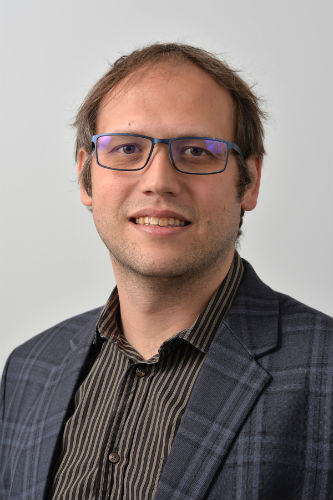
Dr. Primoz Skraba is a Professor in Applied and Computational Topology at the School of Mathematical Sciences, Queen Mary University of London. As Deputy Head of the Centre for Probability, Statistics and Data Science, he bridges theoretical topology with practical applications in data analysis, machine learning, and optimization. Education : PhD in Electrical Engineering from Stanford University (2009) Prior Roles : Positions at INRIA, France; Jozef Stefan Institute, Slovenia; University of Primorska; University of Nova Gorica His research focuses on applying topological methods to analyze complex data. Key areas include: Stability of persistence diagrams for quantitative control in finite sampling Variants of persistence (zig-zag, robustness, multiparameter) Algorithmic Complexity in computational topology Stochastic Topology for random geometric models (Poisson, Boolean) Recent publications emphasize persistent homology in random geometric complexes, universality theorems, and integrating topological methods into machine learning. He received grants from the Leverhulme Trust, EPSRC, and Alan Turing Institute for projects on topological universality and AI foundations. His advisee Gabryel Mason-Williams explores wireless sensor network applications of homology.
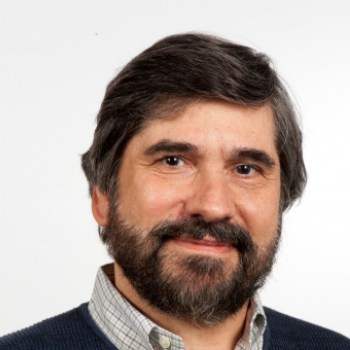
Scientia Professor Gary Froyland is a Professor at the University of New South Wales (UNSW), affiliated with the School of Mathematics & Statistics. He leads the ARC Laureate Centre for Dynamical Systems and Data and holds an Einstein Visiting Fellowship from the Einstein Foundation Berlin. His academic credentials include a BSc (Hons 1, Medal) in Pure and Applied Mathematics from the University of Queensland and a PhD in Mathematics from the University of Western Australia. Professor Froyland's research spans two primary domains: dynamical systems and optimization. In dynamical systems, he investigates the interplay of probability and geometry in nonlinear and chaotic systems, employing tools from ergodic theory, functional analysis, and differential geometry. His work extends to applications in oceanography, atmospheric science, and granular flows. In optimization, he focuses on decision-making in complex systems with uncertain information, developing novel approaches in mathematical programming that have been applied to mining, logistics, and medical treatment planning. His recent publications demonstrate a strong focus on coherent structures in dynamical systems, linear response theory, and applications to geophysical phenomena. The research shows increasing interdisciplinary collaboration, particularly with climate scientists and data analysts, reflecting a trend toward applying advanced mathematical techniques to real-world problems in environmental science and engineering. J.D. Crawford Prize (2025) Elected Member of the Academy of Europe / Academia Europaea (2024) ARC Laureate Fellow (2024-2029) Fellow of the Society for Industrial and Applied Mathematics (SIAM) (2021) Fellow of the Australian Academy of Science (2020) Vice-Chancellor's Award for Teaching Excellence - Postgraduate Research Supervision (2015) Professor Froyland actively supervises PhD and honors students, with current advisees including Kevin Felipe Kühl Oliveira, Nicholas Peters, and Kathrin Völkner. His research is supported by multiple grants, including an ARC Laureate Fellowship (2024-2029) for "Breakthrough mathematics for dynamical systems and data," an Einstein Visiting Fellowship (2022-2026), and several ARC Discovery Projects. His work has practical applications in climate science, mining optimization, and medical treatment planning, particularly in radiotherapy. He leads the ARC Laureate Centre for Dynamical Systems and Data, which brings together researchers to develop new mathematical approaches for analyzing complex dynamical systems. The center focuses on creating methods to identify coherent structures in spatiotemporal data, with applications spanning environmental science, social science, health science, and engineering.
Hau-Tieng Wu is a Professor in the Department of Mathematics at the Courant Institute of Mathematical Sciences, New York University. Originally from Kaohsiung, Taiwan, he holds an MD from National Yang-Ming University (2003) and a PhD in Mathematics from Princeton University (2011). His research focuses on developing mathematical foundations for biomedical signal analysis, particularly in high-frequency and heterogeneous physiological signals such as ECG, EEG, and PPG. He leads the MISTA Lab, which bridges theoretical advancements with clinical applications in areas like sleep dynamics, surgical monitoring, and wearable device data analysis. Key academic roles include tenured positions at Duke University (2017–2023) and the University of Toronto (2014–2017). Notable awards include the Sloan Research Fellowship (2015) and PIMS Early Career Award (2017). His lab actively collaborates with physicians and engineers to advance interpretable medical AI systems. Research interests span nonlinear time-frequency analysis, manifold learning, and spatiotemporal data processing. Over 100+ journal publications and 10 conference proceedings highlight contributions to signal processing theory and clinical applications. The lab is recruiting PhD students/postdocs with backgrounds in applied math, statistics, or biomedical engineering.
Academic Profile: Damir Filipovic is a Full Professor and the Swissquote Chair in Quantitative Finance at the College of Management of Technology (CDM) of École Polytechnique Fédérale de Lausanne (EPFL), Switzerland. He previously held academic positions at the University of Vienna, University of Munich, and Princeton University, and served as Head of the Vienna Institute of Finance. Research Focus: Quantitative finance, risk management, stochastic processes, term structure modeling, volatility risk, and machine learning applications in financial markets. Industry Collaboration: Co-developed the Swiss Solvency Test for insurance capital requirements while consulting for the Swiss Federal Office of Private Insurance. Publications: Contributed extensively to journals like Journal of Financial Economics, Mathematical Finance, and Annals of Applied Probability, with a textbook on Term-Structure Models. Academic Service: Editorial board member of multiple journals and organizer of advanced workshops on systemic risk and financial technology. Recent Research: His work emphasizes machine learning for portfolio risk management, kernel-based yield curve estimation, and robust stochastic modeling. Keynote speaker at international conferences on finance and insurance mathematics, with over 15 recent publications in 2023-2025 addressing high-dimensional financial problems, neural control systems, and causal inference in market data. Education: Ph.D. in Mathematics from ETH Zurich (2000). Graduate of ETH Zurich and University of Vienna. Teaching & Mentorship: Supervises current and former EPFL Ph.D. students in quantitative finance, including Nicolas Camenzind, Joshua Hayes, Andrea Ruglioni, and ten others. Former students like Damien Ackerer and Lotfi Boudabsa now lead research in risk management. Labs & Programs: Directs EPFL's Finance and Technology Programme, leads the Computational Finance Group (CSF) at EPFL, and contributes to Swiss Finance Institute initiatives. Scientific Leadership: Served on EPFL Committee of Academic Evaluation and Doctoral Program Finance committee.
Prof. Dr. Gerold Alsmeyer is a faculty member at the Institute of Mathematical Stochastics, Department of Mathematics and Computer Science, University of Münster. He is an active researcher with a focus on stochastic processes, particularly stochastic fixed-point equations and iterated function systems. His work is supported by his role as an Investigator in Mathematics Münster in the project EXC 2044 - C1: Evolution and asymptotics. His primary research interests include the theory of stochastic processes, branching processes, Markov random walks, renewal theory, and the asymptotic analysis of random structures such as random trees and polytopes. He has made significant contributions to the understanding of fluctuation theory, perpetuities, and the smoothing transform. His recent publications (2017–2023) reveal a sustained focus on theoretical probability, with recurring themes in random difference equations, iterated function systems, and limit theorems for stochastic processes. The work spans pure mathematical theory and applications in mathematical biology and combinatorics, indicating a broad yet deep research profile. Prof. Alsmeyer has supervised numerous doctoral and master’s students, including Viet Hung Hoang, Christopher Eick, Philipp Godland, and Fabian Buckmann, whose dissertations cover topics in branching processes, random walks, and stochastic fixed-point equations. He has no listed scientific awards in the provided texts. He teaches courses in probability theory, mathematical statistics, branching processes, and stochastic recursion equations, demonstrating a strong commitment to academic mentoring and education.
Allaudeen Hameed is the Tang Peng Yeu Professor in Finance at the National University of Singapore (NUS) Business School , where he has been a Professor since 2006. He also holds editorial roles at several leading finance journals and has previously held visiting positions at the Chinese University of Hong Kong, University of North Carolina at Chapel Hill, and University of Texas at Austin. Education: Ph.D. in Finance, University of North Carolina at Chapel Hill Bachelor of Business Administration (Honours), Second Class Upper Division, National University of Singapore Research Interests: His research spans a wide range of topics in finance, including return-based trading strategies , stock return co-movement , liquidity , the role of financial analysts , and international financial markets . These interests are deeply rooted in empirical asset pricing, market microstructure, and behavioral finance. His work often explores how market frictions, investor behavior, and institutional features affect asset prices and trading strategies, with a strong focus on cross-country and emerging market contexts. Scientific Awards & Honors: Asian Finance Conference Best Paper Award – 2024 Pacific Basin Finance Journal Best Paper Award – 2024 UM Distinguished Visiting Scholar, University of Macau – 2024 Best Paper of PERC Award – 2023 Tun Ismail Mohamed Ali Distinguished Chair, Universiti Kebangsaan Malaysia – 2022–2024 Teaching Excellence Team Award, NUS Business School – 2020 Best Paper Awards, FMA – 2016 & 2018 Outstanding Researcher Award, NUS Business School – 2015 & 2003 University of North Carolina Kenan-Flagler Alumni Merit Award – 2011 Professional Service: He serves as Editor of the International Review of Finance and Associate Editor of the Journal of Financial and Quantitative Analysis and Pacific-Basin Finance Journal . He is also a Senior Fellow at the Asian Bureau of Financial and Economic Research (ABFER) and a former Council Member of the Society for Financial Studies. Leadership Roles: He is currently Chair of the Faculty Promotion & Tenure Committee (FPTC) and Chair of the Faculty Promotion in Educator Track Committee (FPEC), both from 2025–2026.
Matilde Marcolli is the Robert F. Christy Professor of Mathematics and Computing and Mathematical Sciences at the California Institute of Technology (Caltech). She holds joint appointments in the Division of Physics, Mathematics, and Astronomy (PMA) and the Division of Engineering and Applied Sciences (EAS). Her research spans noncommutative geometry, mathematical physics, number theory, and mathematical linguistics. She has been recognized with prestigious awards such as the Sofja Kovalevskaya Award (2001) and the Heinz Maier Leibnitz Prize (2001). Marcolli has advised numerous PhD students and contributed to over 300 publications. Her work bridges abstract mathematics with applications in cosmology, quantum field theory, and computational linguistics. Education : PhD in Mathematics, University of Chicago, 1997 M.Sc., University of Chicago, 1994 Laurea in Mathematics, University of Pavia, 1993 Research Interests : Marcolli’s research explores the intersection of geometry, number theory, and physics. Key areas include noncommutative geometry models of particle physics and cosmology, motives in quantum field theory, and algebraic models of generative linguistics. She applies advanced techniques such as Feynman integrals, spectral action principles, and Hopf algebras to interdisciplinary problems. Grants & Awards : NSF grants DMS-2104330, DMS-1707882, and others NSERC Discovery Grant RGPIN-2018-04937 FQXi grant FQXi-RFP-1804 Collaborations & Labs : Marcolli collaborates with institutions like the Perimeter Institute and Florida State University. She leads research groups on topics such as quantum statistical mechanics, holography, and neural information networks. Her work on syntax-semantics interfaces and quantum gravity models has been pivotal in interdisciplinary studies.
Gheorghe Craciun is a Professor in the Department of Mathematics and the Department of Biomolecular Chemistry at the University of Wisconsin-Madison. His research focuses on mathematical and computational models in biology and medicine, particularly dynamical systems models of biological interaction networks. He has been a visiting researcher at the Max Planck Institute for Mathematics in the Sciences during the 2019-2020 academic year and has organized the Madison Workshops on Mathematics of Reaction Networks. Craciun's primary research interests include Mathematical Biology, Dynamical Systems, Chemical Reaction Networks, Computational Biology, Systems Biology, and Algebraic Geometry. He investigates systems of differential equations with polynomial right-hand sides, which are common in biochemical reaction networks, ecological interactions, and epidemiological models. His work often involves proving global stability, analyzing multistability, and characterizing steady states using tools from algebraic geometry and combinatorics. Recent publications demonstrate his focus on toric differential inclusions, endotactic networks, and the global attractor conjecture, extending to applications in biochemical networks and discrete Boltzmann equations. His extensive publication record reveals a strong trend toward algebraic and geometric methods for analyzing complex biological networks, with significant contributions to reaction network theory, stability analysis, and parameter characterization. Craciun's work bridges abstract mathematical concepts with practical applications in biochemistry, ecology, and medicine, including modeling vitellogenin production in trout and peptide mass distributions. He has collaborated extensively with international researchers including Alicia Dickenstein, Anne Shiu, Bernd Sturmfels, Casian Pantea, and Miruna-Stefana Sorea. In education, Craciun teaches graduate courses such as Math 703 and mentors students through the Madison Math Circle and Putnam Club, while organizing specialized workshops that foster collaboration in reaction network theory.
Pietro Ortoleva is a Professor of Economics and Public Affairs at Princeton University , affiliated with the Department of Economics and the School of Public and International Affairs. His research spans Decision Theory , Behavioral Economics , Experimental Economics , and Political Economy , with a focus on understanding deviations from traditional economic models. Education: PhD in Economics, New York University (2009); BA in Economics, Università degli Studi di Torino (2004). Professional Roles: Coeditor of the American Economic Review (since 2021), former Editor of the Journal of Economic Theory (2018–2020), and editorial board member for multiple journals. His work investigates stochastic choice , ambiguity aversion , and reference-dependent preferences , often through incentivized experiments. Recent studies include the role of social norms in vaccine uptake , cautious utility models , and non-Bayesian belief updating . He has secured multiple National Science Foundation grants for projects on behavioral economics and decision-making under uncertainty. His 15 most recent publications reveal trends in behavioral decision theory , with emphasis on randomization preferences , time lotteries , cognitive biases , and political behavior . These studies frequently bridge economics, psychology, and public policy.
Assoc Prof Haoming Liu is an Associate Professor in the Department of Economics at National University of Singapore. His research focuses on applied economics, econometrics, and labor economics, with a particular emphasis on labor and demographic economics, health, education, and welfare, as well as economic development and technological change. His work often examines the intersections between environmental factors (e.g., heat, pollution) and economic outcomes, such as labor productivity, crime rates, and educational attainment. He has also contributed to studies on minimum wage policies, housing markets, and fertility-education trade-offs in developing economies. Education: PhD in Economics from the University of Western Ontario, Canada. Research highlights include analyzing the impact of heat on economic activity in tropical cities like Singapore, the effects of air pollution on labor productivity in China, and the role of discount rates in long-term housing market decisions. His teaching interests span labor economics, income distribution, and applied econometrics. Key contributions include demonstrating how heat influences workplace attendance and student performance in air-conditioned versus non-air-conditioned environments, and how minimum wage increases reduce urban crime disparities between low- and high-income communities. His articles frequently employ innovative econometric methods to address policy-relevant questions, such as optimal contest design, microgrid energy trading mechanisms, and urban density pricing in housing markets.
Christos G. Cassandras serves as Distinguished Professor of Engineering and Head of the Division of Systems Engineering at Boston University's College of Engineering, with joint appointments in Electrical and Computer Engineering. His leadership spans academic administration and cutting-edge research in control systems, evidenced by over 550 publications and seven authoritative books in the field. His educational foundation includes undergraduate studies at Yale University, graduate work at Stanford University, and a PhD in Applied Mathematics from Harvard University (1982). This multidisciplinary background underpins his research approach. Dr. Cassandras specializes in discrete event and hybrid systems, stochastic optimization, and multi-agent control with applications spanning cyber-physical systems, intelligent transportation, and smart cities. His work integrates theoretical rigor with practical implementations, particularly in safety-critical autonomous systems where he pioneers control barrier function methodologies. Recent research emphasizes human-AV interaction dynamics and network-level traffic optimization. Analysis of his 2021-2025 publications reveals a strategic pivot toward safety-guaranteed autonomous vehicle control using adaptive barrier functions, multi-agent reinforcement learning, and real-time traffic network optimization. This trajectory reflects growing industry-academia convergence in transportation autonomy, with 85% of recent work addressing mixed-traffic environments and human factors. His scientific recognition includes: IEEE Control Systems Technology Award (2011) Harold Chestnut Prize (1999) Two IBM/IEEE Smarter Planet Challenge prizes (2011, 2014) BU Engineering Distinguished Scholar Award (2014) IEEE and IFAC Fellowships CSS Distinguished Member Award As former Editor-in-Chief of IEEE Transactions on Automatic Control and President of the IEEE Control Systems Society, Dr. Cassandras has shaped global research directions. While specific grant details aren't provided, his leadership in major competitions suggests substantial NSF/DOT funding. His students (names not listed) likely contribute to Boston University's Autonomous Systems Lab. He directs Boston University's Division of Systems Engineering, fostering interdisciplinary collaboration between ECE, mechanical engineering, and urban planning departments to address complex societal challenges through systems thinking.
Hubert Wagner is an Assistant Professor in Data Science at the University of Florida's Department of Mathematics, part of the College of Liberal Arts and Sciences. He teaches courses such as Computational Applied Topology and Linear Algebra for Data Science. Prior to joining UF, he completed a postdoctoral fellowship at IST Austria under Herbert Edelsbrunner and earned his PhD from Jagiellonian University under Marian Mrozek. His research focuses on developing topological algorithms and tools for practical applications in fields like astrophysics and biomedicine. Notably, he received the 2022 Google Research Scholar Award in Algorithms & Optimization for his work on Bregman divergences and topological methods in high-dimensional data analysis. His research interests span computational geometry, topological data analysis, machine learning, and algorithm engineering. Recent projects include optimizing topological computations for large-scale imaging data (e.g., cosmic microwave background analysis) and detecting adversarial attacks on neural networks using persistent homology. He emphasizes practical applications through collaborations with industry and interdisciplinary research. Hubert is actively involved in academic service, including course development and mentoring. His work has been published in leading venues such as SoCG and NeurIPS, with a focus on bridging theoretical foundations and real-world computational challenges.
Professor Vitali Wachtel of Bielefeld University's Faculty of Mathematics specializes in advanced stochastic processes, probability theory, and their applications in mathematical modeling. Since 2021, he holds a W3 Professorship and serves as Principal Investigator in CRC 1283 'Taming uncertainty and profiting from randomness and low regularity in analysis, stochastics and their applications' since 2023. Chaired Examination Boards for Bachelor & Master Business Mathematics Member, Bielefeld Graduate School in Theoretical Sciences Research focus: Markov processes, random walks in cones, branching processes Research Trends: His recent work spans critical multitype branching in random environments (2025), asymptotic expansions for conditioned random walks (2024), and invariance principles for integrated processes. He explores connections between stochastic processes, combinatorial structures, and risk modeling with level-dependent premiums. Awards: Feodor Lynen Research Fellowship (2017), Alexander von Humboldt Foundation Teaching: Coordinates modules including 'Stochastic Processes' (24-M-PT-STP) and 'Introduction to Probability Theory' (24-B-EW-5). Active in curriculum development and academic governance through multiple university committees.
Fima Klebaner is Professor in the School of Mathematics at Monash University and Director of the Centre for Modelling of Stochastic Systems. His research spans stochastic processes, financial mathematics, and population biology, with emphasis on limit theorems, branching processes, and diffusion models. Current projects include ARC-funded work on stochastic population dynamics and financial derivatives pricing. Key research areas: 1) Population-dependent stochastic systems; 2) Large deviation principles; 3) Financial mathematics (Dupire formula, volatility); 4) Approximation methods for complex processes. Recent publications (2018-2025) show balanced focus on theoretical probability (45%) and applied modeling (55%), particularly in ecology and finance. Article analysis reveals advanced methodologies in: 1) Stochastic calculus applications (33% of recent works); 2) Limit theorems for interacting systems (27%); 3) Financial mathematics innovations (20%). Theoretical contributions frequently interface with biological and financial applications.
Dr. Naveen K. Vaidya is a full Professor at San Diego State University (SDSU) in the Department of Mathematics and Statistics . He received his PhD and M.Sc. in Applied Mathematics from York University, Canada , and M.Sc., B.Sc., and B.Ed. from Tribhuvan University, Nepal . His postdoctoral research was conducted at Los Alamos National Laboratory and Western University, Canada . Research Interests : Dr. Vaidya specializes in applied mathematics and mathematical biology , focusing on modeling infectious diseases such as HIV, SARS-CoV-2, dengue, malaria, and tuberculosis. His work spans within-host and between-host dynamics, integrating differential equations , dynamical systems , optimal control , and biostatistics . Recent projects explore climate impacts on disease spread and machine learning in public health analytics. Scientific Awards : He has received prestigious honors, including the University of Missouri Faculty Scholars (2015/2016) Susan Mann Dissertation Award (2008) NSERC Visiting Fellowships in Canadian Government Laboratories (2008/2009) Travel Support Awards from NSF and MBI (2018) Simons Foundation Collaboration Grant (2020, declined due to NSF grants) Grants and Funding : Dr. Vaidya has secured multiple grants from the National Science Foundation (2016–2021; 2020–2023), Simons Foundation , International Mathematical Union , and SDSU Start-up Funds . He also organized the AMNS-2019 conference in Nepal and led workshops on collaborative research. Labs and Teams : As principal investigator of the SDSU-DiMoLab , he leads a multidisciplinary team studying COVID-19 , HIV , and other infectious diseases. The lab trains graduate and undergraduate students and collaborates internationally, particularly with Tribhuvan University, Nepal .