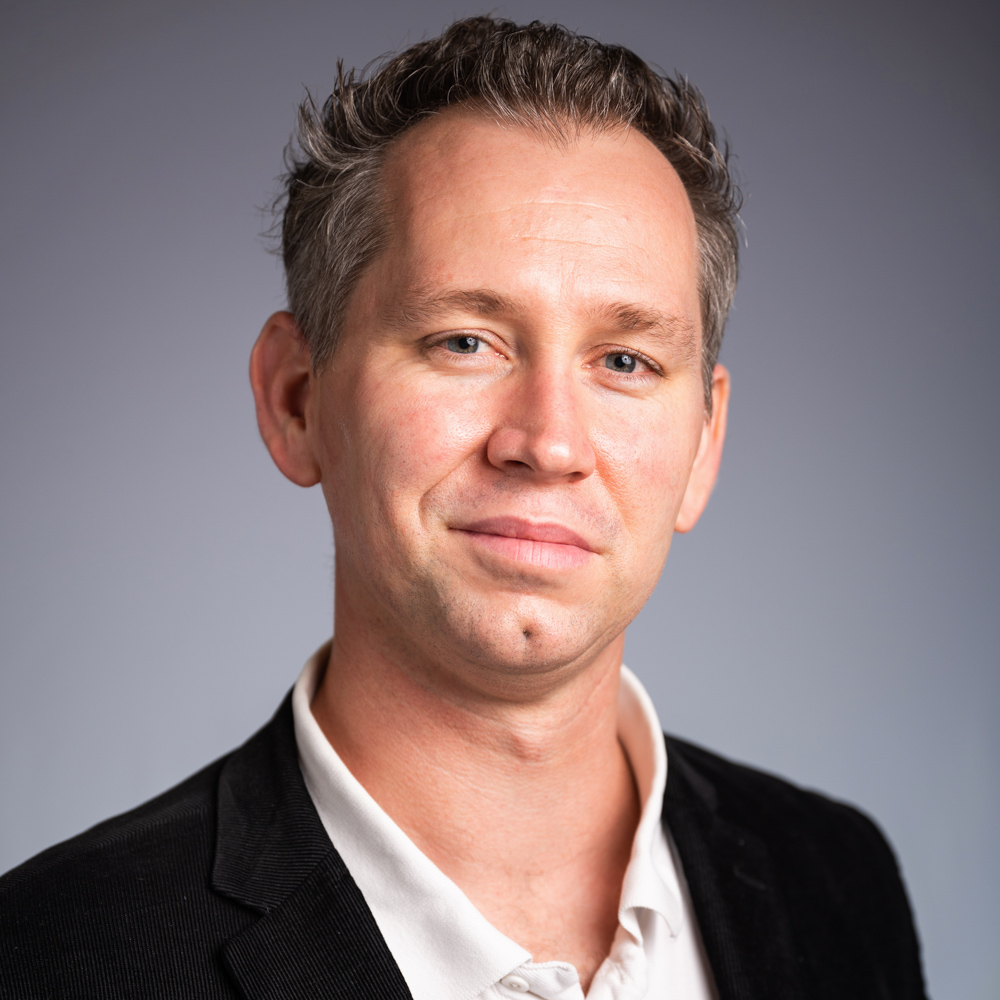
Ehsan Doostmohammadi is a Researcher at the Artificial Intelligence and Integrated Computing Systems (AIICS) department of Linköping University . His work focuses on Natural Language Processing (NLP) and Language Model Optimization , with particular interest in Retrieval-Augmented Models , Multimodal Learning , and Low-Resource Language Processing for Persian and Swedish. Research Interests : Retrieval-Augmented Language Models Swedish Language Processing Persian Language Technology Medical Text Analysis Cross-lingual Transfer Learning Publications : 15 recent articles spanning 2018–2025 Key themes: AI , NLP , Language Model Efficiency
Jessamyn Schertz is an Associate Professor in the Department of Linguistics at the University of Toronto's Language Studies division. She is affiliated with both the Graduate Linguistics Program and Graduate Psychology Program. Education: PhD in Linguistics, University of Arizona MS in Human Language Technology, University of Arizona BA in Classical Languages, Carleton College Research Interests Speech perception and production mechanisms Perceptual adaptation to multi-accented speech Cue integration in bilingual phonetic processing Acoustic analysis of laryngeal contrasts Phonetic convergence in imitation tasks Key Article Trends Investigates VOT dynamics in accent imitation Explores heritage language phonetics Examines cross-linguistic cue competition Studies gendered speech development Focuses on abstract phonological representations Analyzes listener-talker variability interactions Scientific Awards NSERC Discovery Grant (2020–2025) UTM Research and Scholarly Activity Fund (2021) SSHRC Insight Development Grant (2017–2020) NSF Doctoral Dissertation Research Grant (2013) Grant Leadership Principal investigator for multi-accent perception studies Co-developer of interdisciplinary graduate workshops Recipient of UTM Decanal Graduate Expansion Fund
Matthew Thomas Miller is an Assistant Professor of Persian Literature and Digital Humanities at the Roshan Institute for Persian Studies, University of Maryland, College Park. He serves as Director of the Roshan Initiative in Persian Digital Humanities (PersDig@UMD) and co-PI for the Open Islamicate Texts Initiative (OpenITI) and the Persian Manuscript Initiative (PMI). His research spans Sufism, digital humanities, and the history of sexuality in premodern Islamic contexts. He has secured major grants from Mellon Foundation, NEH, and NSF. Research Interests: Sufi epistemology and affect theory Medieval Persian poetry and rogue lyric traditions Open-source Arabic/Persian OCR advancements Digital tools for manuscript studies Critical engagement with Orientalism Grants/Awards: Lead on $2.6M+ in Mellon grants for OpenITI projects NEH HTR grant for Persian/Arabic manuscript transcription NSF support for machine learning in Islamic manuscript analysis Labs/Teams: OpenITI multi-institutional initiative Roshan Institute digital humanities projects Maryland Institute for Technology in the Humanities (MITH)
Sina Houshmand, MD is an Assistant Professor of Radiology at the University of California, San Francisco (UCSF), within the School of Medicine. His academic career includes postdoctoral research at the University of Pennsylvania, residency training at the University of Pittsburgh Medical Center, and an abdominal imaging/ultrasound fellowship at UCSF. He specializes in molecular imaging, particularly using PET techniques for oncology, cardiovascular diseases, and pediatric disorders. Education and Training: Earned his MD from Shahid Beheshti University of Medical Sciences (Tehran, Iran), followed by an internship in Internal Medicine at Albert Einstein College of Medicine/Montefiore Medical Center. Completed diagnostic radiology residency at UPMC and abdominal imaging fellowship at UCSF. Research: Focuses on novel applications of PET imaging, including 18F-NaF and 18F-FDG as molecular probes for atherosclerosis and calcium metabolism biomarkers. Recent work explores AI-driven diagnostic tools and multimodal imaging approaches for cancer and neurological disorders. Awards: Received the Radiology Resident Distinguished Achievement Award (2021) for scholarly contributions and innovation. His research spans over 60 peer-reviewed publications, emphasizing PET quantification, AI in radiology, and clinical imaging applications. Labs/Teams: Active in UCSF's abdominal imaging and molecular imaging research groups, collaborating on projects involving AI integration and advanced contrast agents.
Associate Professor Laetitia Nanquette is a scholar specializing in modern and contemporary Middle Eastern literatures, particularly Persian literature, at the University of New South Wales (UNSW) in the School of Arts, Design & Architecture. She has been at UNSW since 2013 after completing academic training in France, the United Kingdom, Iran, and the United States (as a Fulbright Visiting Fellow at Harvard University). Her primary research interests include: Modern and contemporary Persian literature Print Culture and Publishing Book History World Literature Sociology of literature Digital Humanities Contemporary Iranian culture Literature and globalization Migrant cultural studies Nanquette's scholarly work focuses on the production and circulation of Iranian literature in Iran and globally, with special attention to the post-Islamic Revolution period. Her major 2021 book "Iranian Literature after the Islamic Revolution. Production and Circulation in Iran and the World" (Edinburgh UP) analyzes how Iranian literary works are produced, circulated, and received both within Iran and internationally. Her recent publications consistently examine censorship mechanisms, diaspora literary production, and the global circulation of Iranian texts, reflecting her expertise in book history and sociological approaches to literature. Among her notable achievements: Australia Research Council DECRA Fellow (2015-2019) Associated EUME Fellow of the Forum Transregionale Studien, Berlin (2023/2024) Associate Editor for Iranian Studies (Cambridge UP) Editor for the Modern Persian literature section of Abstracta Iranica Nanquette has successfully supervised multiple PhD students to completion, including award-winning theses on topics ranging from contemporary Iranian romance novels to Iranian horror cinema. She is also active in translation work, having published translations of Iranian short stories into French and Persian texts into English.
David A. Broniatowski is a faculty member in the Department of Engineering Management and Systems Engineering at the George Washington University's School of Engineering and Applied Science. His research spans systems engineering, computational social science, cognitive science, and public health, with a focus on analyzing social media to understand misinformation, decision-making, and public health communication. His research interests include systems engineering, natural language processing, fuzzy-trace theory, public health informatics, social media analytics, and misinformation detection. He investigates how people process risk and make decisions online, particularly in health-related contexts such as vaccine hesitancy and pandemic response, using computational models grounded in cognitive theory. His recent publications demonstrate a strong trend in analyzing the spread of misinformation, particularly during the COVID-19 pandemic, using NLP and machine learning. He has developed tools for measuring gist in text, detecting biases and prejudice online, and evaluating the impact of content moderation policies. His work frequently involves large-scale analysis of Twitter data and collaboration with experts in public health and computer science. Notable scientific contributions include: Developing the Twitter Social Mobility Index to measure social distancing. Creating the GisPy tool for measuring gist inference in text. Leading the creation of a large, annotated corpus of COVID-19 tweets. Applying fuzzy-trace theory to model online information spread. He has advised or collaborated with numerous researchers and students on projects related to bot detection, narrative analysis, causal reasoning in social media, and the impact of foreign influence operations. His work is supported by interdisciplinary grants focused on public health surveillance, cognitive modeling, and social computing. Dr. Broniatowski leads or is a key member of a research team that integrates systems engineering principles with data science to address complex societal challenges, particularly in the domain of public health communication and online behavior.
Dr. Nafise Sadat Moosavi is a Lecturer in Natural Language Processing at the University of Sheffield's School of Computer Science, and a Deputy School Head of ED&I. She holds a PhD from Heidelberg University, with prior postdoctoral research at the Technical University of Darmstadt's UKP Lab. Her research focuses on NLP and machine learning, including end-to-end reasoning, robustness, coreference resolution, text generation, sustainability, and evaluation metrics. Her academic journey includes bachelor's and master's degrees in computer science from Alzahra University and Sharif University of Technology, Iran. She leads projects like the Royal Society-funded 'Geometric Representations of Uncertainty for Foundation Models' (2025–2028). Her work emphasizes ethical AI, bias mitigation, and improving model generalization. Grants: £193,560 Royal Society Grant (PI) for foundational model uncertainty research Research Groups: Member of the University of Sheffield's NLP research group Key Themes: Debiasing NLU models, sustainable NLP practices, and advancing coreference resolution techniques Her publications span 2020–2025, addressing topics like hate speech detection, LLM limitations, and evaluation metric design. She co-organized workshops including SustaiNLP and contributed to datasets like PeerQA and SciGen.
Neda Maleki is a Senior Lecturer at the Faculty of Technology, Department of Computer Science and Media Technology, Linnaeus University, starting in September 2024. Her research focuses on Applied IoT, Edge-Cloud Computing, Distributed Systems (Hadoop/Spark), Artificial Intelligence, and Machine Learning for data analysis. PhD in Computer Engineering (2014–2021), Science and Research Branch of Islamic Azad University, Tehran, Iran Master of Science in Computer Engineering (2009–2013), Ghazvin Islamic Azad University Bachelor of Science in Hardware Engineering (2004–2008), Ghazvin Islamic Azad University Her research explores IoT applications in energy forecasting, environmental conservation, and SME digital transformation. Key contributions include frameworks for power-aware Hadoop acceleration, energy-efficient IoT data formats, and predictive models for fuel consumption and city load forecasting. Recent publications highlight collaborations with industry partners in Sweden and international conferences across Qatar, Italy, Denmark, and the Netherlands. She teaches courses in Data Structures, Algorithms, IoT, and programming at the bachelor's and master's levels. 1DV018: Data Structures and Algorithms 1DV501: Introduction to Programming 4DV119: Applied IoT Competence (Master level) Final Thesis supervision
Raul Aranovich is an Associate Professor in the Department of Linguistics at the University of California, Davis, where he has been a faculty member since 2001. Prior to his appointment at UC Davis, he held faculty positions at the Ohio State University and the University of Texas in San Antonio. He received his Ph.D. in Linguistics from UC San Diego in 1996 under the direction of Professors S.-Y. Kuroda and John Moore. Professor Aranovich is a theoretical linguist whose research focuses on the interfaces between syntax, morphology, and semantics, with particular attention to grammatical mismatches across these linguistic levels. His work spans both theoretical and empirical approaches, utilizing natural language processing and corpus linguistics tools. His primary language specializations include Spanish and other Romance languages, as well as Fijian and Shona, representing significant cross-linguistic diversity in his research portfolio. His recent publications demonstrate an expanding interdisciplinary focus, bridging traditional linguistic theory with computational applications, including work in cybersecurity and neural machine translation. This reflects his evolving research trajectory from purely theoretical syntax and morphology toward computational and applied linguistics. His work on computer-mediated communication represents a contemporary extension of his longstanding interest in language structure and variation. Among his notable recognitions is being named a Fellow of the Linguistic Society of America, highlighting his contributions to the field. Fellow, Linguistic Society of America Professor Aranovich's research demonstrates remarkable breadth across linguistic subfields and languages, connecting historical linguistic theory with contemporary computational approaches. His work on Romance languages maintains a strong theoretical foundation while his more recent cybersecurity and machine translation publications show successful adaptation to emerging interdisciplinary opportunities. His continued publication record through 2024 indicates active ongoing research contributions across multiple linguistic domains.
Masoud Jasbi is an Assistant Professor in the Department of Linguistics at the University of California, Davis, specializing in experimental and theoretical approaches to natural language semantics and pragmatics. His research focuses on: Semantic and pragmatic interpretation of logical connectives (negation, conjunction, disjunction) Cross-linguistic studies across English, Persian, Mandarin Chinese, Spanish, and Hungarian Language acquisition in child and adult populations Integration of generative linguistics with artificial intelligence Experimental methodologies for testing linguistic hypotheses Recent publications demonstrate consistent emphasis on scalar implicature, context effects, and frequency-dependent processing, with increasing exploration of AI-linguistics intersections. His work bridges formal theory with empirical validation through experimental paradigms, examining how prior beliefs and contextual factors shape linguistic meaning across diverse populations. No scientific awards are documented in available sources. Information regarding student advising, research grants, laboratory facilities, or collaborative teams is not publicly specified in current materials.
Dr. Mahsa Khorasani is a Postdoctoral Researcher at Aalto University's Department of Energy and Mechanical Engineering. She actively contributes to the Marine and Arctic Technology research group, focusing on advanced analytics in engineering systems and social media data. Current affiliation: Aalto University Department: Energy and Mechanical Engineering Research group: Marine and Arctic Technology Her research spans multiple domains including: Mechanical Engineering: Anomaly detection in machinery plants using Bi-LSTM-DVAE frameworks. Arctic Operations: Process modeling and qualitative analysis of icebreaker operations. AI & Social Media: Multi-view learning for autism detection and bipolar disorder identification on social media. Data Science: Concept drift detection in business processes via trace embedding techniques. Recent publications highlight her expertise in predictive maintenance, Arctic logistics, and mental health diagnostics through computational methods. Her laboratory affiliations include Aalto University's Marine and Arctic Technology group, where she applies cutting-edge machine learning techniques to complex engineering and social challenges.
Behrooz Mansouri is an Assistant Professor of Computer Science at the University of Southern Maine. He holds a Ph.D. (2022) in Computer Science from the Rochester Institute of Technology (Rochester, NY), an M.Sc. (2017) in Software Engineering from the University of Tehran, and a B.Sc. (2013) in Software Engineering from Shahid Beheshti University. His roles include Director of the Michael E. Dubyak Center, Director of the Artificial Intelligence and Information Retrieval (AIIR) Lab, and Graduate Program Director. He previously worked on the Parsijoo Persian search engine project and co-organized the ARQMath lab during his Ph.D. Education: Ph.D., Computer Science, Rochester Institute of Technology, USA (2022) M.Sc., Software Engineering, University of Tehran, Iran (2017) B.Sc., Software Engineering, Shahid Beheshti University, Iran (2013) His research focuses on Information Retrieval (IR) , Natural Language Processing (NLP) , and Mathematical Information Retrieval (MIR) . He leads the AIIR Lab, which develops systems like MathMex (a conversational math search engine) and explores cross-lingual math retrieval, legal question classification, and cloud detection in satellite imagery. Recent projects include NSF-funded work on conversational math search and participation in CLEF SimpleText labs. His lab's work has been recognized, including a Best Lab Paper at SimpleText'24 and an NSF CRII Grant (2024). He advises students on projects like legal case search, math definition extraction, and AI ethics in STEM education. Grants & Awards: NSF CRII Grant: 'Towards Conversational Search Systems for Math' (2024) Best Lab Paper at SimpleText'24 (2024) Outstanding Reviewer at ECIR 2024 Doctoral Consortium Co-chair at SIGIR 2025 The AIIR Lab collaborates on interdisciplinary projects, including MathMex (math definition search), Cloud Detection in Satellite Images , and Tree Classification . Prospective students are encouraged to align with these research themes and apply via specific guidelines outlined on his website.
Arya Rahgozar is an Adjunct Professor at the School of Electrical Engineering and Computer Science , University of Ottawa, and a scientist at the Ottawa Hospital Research Institute. He holds a PhD in Digital Transformation and Innovation from the University of Ottawa, specializing in NLP for multilingual semantic tasks, alongside M.Eng. (University of Waterloo, Management Sciences) and B.A.Sc. (Tehran Polytechnic, Engineering Design). His research focuses on Natural Language Processing (NLP) applications in healthcare, medicine, epidemiology, and digital humanities. Notable projects include AI-driven systematic reviews in the Brain-Heart Interconnectome, NLP-based osteoporosis detection via eConsult, and dementia identification systems using Explainable AI (XAI). He has pioneered work on poetry chronology (e.g., Hafez’s works) and led initiatives in primary care recommender systems. Rahgozar has over 20 years of industrial experience in decision science and analytics, with expertise in banking, healthcare, and supply chain optimization. As a Mitacs Principal Investigator and startup partner, he co-developed chatbot-based recommendation systems and advanced AI tools for e-health applications. His current work emphasizes improving syncope management and frailty prediction in geriatrics using NLP and LLMs. He collaborates across disciplines, bridging computational methods with clinical and literary domains, and actively contributes to healthcare innovation through partnerships with hospitals and academic institutions.
Scott Dexter is a Lecturer in the Department of Computer Science and Engineering (CSE) at the University of Michigan, Ann Arbor, where he joined in 2024. Previously, he held academic roles at Brooklyn College and the Graduate Center of the City University of New York, as well as Alma College. His professional experience includes leadership roles as Director of General Education and Director of the Center for Teaching and Learning at Brooklyn College. Dr. Dexter earned his PhD in Computer Science from the University of Michigan in 1998. His teaching philosophy emphasizes inclusive pedagogy, incorporating strategies like Team-Based Learning (TBL), specifications grading, and principles from Grading for Equity and Inclusive Teaching . At Michigan, he has taught EECS 376 (Foundations of Computer Science) and EECS 203 (Discrete Mathematics), with upcoming courses in professional development and special topics. His teaching portfolio spans computer science fundamentals, ethics, and digital humanities. Research interests include ethics in computing, free and open-source software (FOSS), software aesthetics, and innovative teaching methodologies. Notable work includes studies on FOSS's role in creativity, ethics education for graduate students, and the application of learning theories in mathematics education. He has published extensively on pedagogy, including analyses of student feedback in linear algebra curricula and the design of collaborative learning tools. Outside academia, Dexter studies Persian music (kamancha and radif) and serves on the board of the CodeLab Foundation, a nonprofit advancing programming education. His interdisciplinary scholarship bridges technical fields with humanities, exemplified by his 2025 article exploring trans futurity in mid-century literature.
Stefan Müller is a Full Professor of German Linguistics specializing in syntax and Head-driven Phrase Structure Grammar (HPSG) at Humboldt University of Berlin. He also held professorships at Free University Berlin and Bremen, focusing on German grammar and computational linguistics. His research spans syntax of German, Danish, Persian, Mandarin, and Maltese, with a strong emphasis on formal grammar development and theoretical linguistics. Education: Humboldt University of Berlin and University of Edinburgh (1989–1993); PhD (1997) and Habilitation (2001) from Saarland University. Research interests include HPSG, complex predicates, particle verbs, and computational grammar implementation. His publications explore syntactic phenomena like depictive predicates, fronting, and resultative constructions. Müller is a member of Academia Europaea (since 2014) and leads projects on cross-linguistic grammar engineering. He teaches syntax, HPSG, and computational linguistics at the graduate and undergraduate levels.