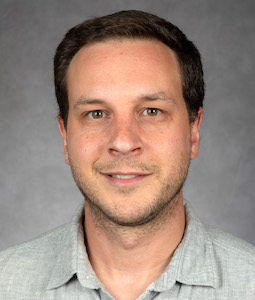
Sean Hallgren is a Professor in Computer Science and Engineering, specializing in quantum algorithms and computational complexity. His research spans both theoretical and applied aspects of quantum computing, cryptography, and mathematical optimization. Research Interests Hallgren's work focuses on: Quantum algorithm design and complexity Cryptographic reductions under quantum models Number-theoretic problems in cryptography Quantum linear algebra techniques Computational complexity of combinatorial problems Recent Publications Hallgren's 15 most recent articles (5 shown) demonstrate expertise in quantum algorithm limitations, cryptographic hardness reductions, and isogeny-based cryptography. His 2023 study in Quantum analyzed the Macaulay matrix approach for solving polynomial systems using quantum linear solvers. Grants & Projects Current and past projects include: Exponential Speedups and Limitations of Quantum Computation (U.S. Navy, 2018–) NSF Convergence Accelerator: Scalable Quantum Artificial Intelligence for Discovery (2020–2023) SaTC: CORE: Small: Classical and quantum algorithms for number-theoretic cryptography (2020–2025) AF: Small: Quantum Algorithms and Complexity (2016–2020, PI)
Eranda Dragoti-Cela is an Associate Professor at the Department of Optimization and Discrete Mathematics, Graz University of Technology. She specializes in combinatorial optimization, focusing on polynomially solvable special cases of NP-hard problems like the Quadratic Assignment Problem (QAP), portfolio optimization, and algorithmic graph theory. Education: M.Sc. in Applied Mathematics, University of Tirana (1992) Ph.D. in Technical Sciences, Graz University of Technology (1995) Habilitation in Applied Mathematics (2001) Her research spans combinatorial optimization (QAP, assignment problems, location problems), portfolio optimization (risk-return models, ordinal information integration), and graph theory (edge intersection graphs, network flows). Recent work includes linearization of quadratic shortest path problems and data arrangement on trees. She supervises bachelor's and master's theses in discrete mathematics and teaches courses like Combinatorial Optimization 1 and Risk Theory and Management , emphasizing algorithmic rigor and practical applications in finance and engineering.
Karl Liechty serves as Professor and Associate Chair in the Department of Mathematical Sciences at DePaul University's College of Science and Health. He joined DePaul in 2014 after completing his PhD at Purdue University (2010), a postdoc at the Mathematical Sciences Research Institute, and three years at the University of Michigan. Promoted to Associate Professor with tenure in 2018 and full Professor in 2025, he maintains an active research program in mathematical sciences. His educational background includes: PhD in Mathematical Sciences, Purdue University (2010) Liechty's research centers on random matrix theory with deep connections to probability, statistical physics, and integrable systems. He specializes in asymptotic analysis of orthogonal polynomials and determinantal processes, particularly examining non-intersecting paths, six-vertex models, and Painlevé equations. His work bridges theoretical mathematics with physical applications, focusing on universal behavior in critical systems and phase transitions. Methodologically, he employs Riemann-Hilbert techniques and Fredholm determinant analysis to derive asymptotic expansions for complex systems. His 15 most recent publications (2013-2025) demonstrate consistent focus on asymptotic methods in integrable probability, with increasing emphasis on multi-component systems like the k-tacnode process and boundary statistics in lattice models. Key themes include universality class transitions, singular behavior propagation, and connections between random matrices and statistical mechanical models. Scientific recognition includes: Gabor Szego Prize (SIAM, 2015) for contributions to orthogonal polynomials and special functions Simons Collaboration Grant (2015) supporting collaborative research in mathematics Liechty actively mentors through the Chicago Math Teacher's Circle and Math Circles of Chicago, developing K-12 enrichment programs. His research collaborations span institutions including the University of Michigan, Purdue, and international partners in Belgium and Russia. Current work focuses on boundary effects in integrable systems and finite-temperature fermion models, supported by ongoing Simons Foundation collaboration. He maintains leadership through his Associate Chair role, overseeing curriculum development and faculty coordination in the Mathematical Sciences department while sustaining high-impact publications in top probability and mathematical physics journals.
Dr. Danni Novakovic serves as a part-time Senior Lecturer Practitioner at Anglia Ruskin University within the Faculty of Science and Engineering, specializing in Computing and Information Science. She joined ARU in 2019 after holding leadership roles including Head of School of Computer Science at the University of Bedfordshire and Head of Computing at the University of West London, with an academic career spanning since 1994. Her educational background comprises: PhD in Mathematics PgCert in Teaching and Learning in Higher Education BSc in Computer Science and Mathematics Research focuses on cryptography-combinatorics intersections for security applications, formal methods, and computational theory. Recent expansions include computer music generation via genetic algorithms and self-configuring security frameworks for mobile devices, reflecting an evolution from theoretical mathematics to applied interdisciplinary security solutions. Publication trends demonstrate foundational work in permutation mathematics (1995-2000), system dynamics for institutional management (2009-2010), and contemporary security applications including EEG biometrics and smartphone anomaly detection (2014-2018), showcasing consistent contributions to cryptographic theory and practical security engineering. Professional recognition includes: Fellow of the British Computer Society Fellow of Higher Education Academy She actively supervises postgraduate research across mathematics, cryptography, and cybersecurity domains while contributing to academic leadership through program committee roles at major conferences including IEEE CIT and WEBIST, alongside extensive curriculum development and quality assurance experience.