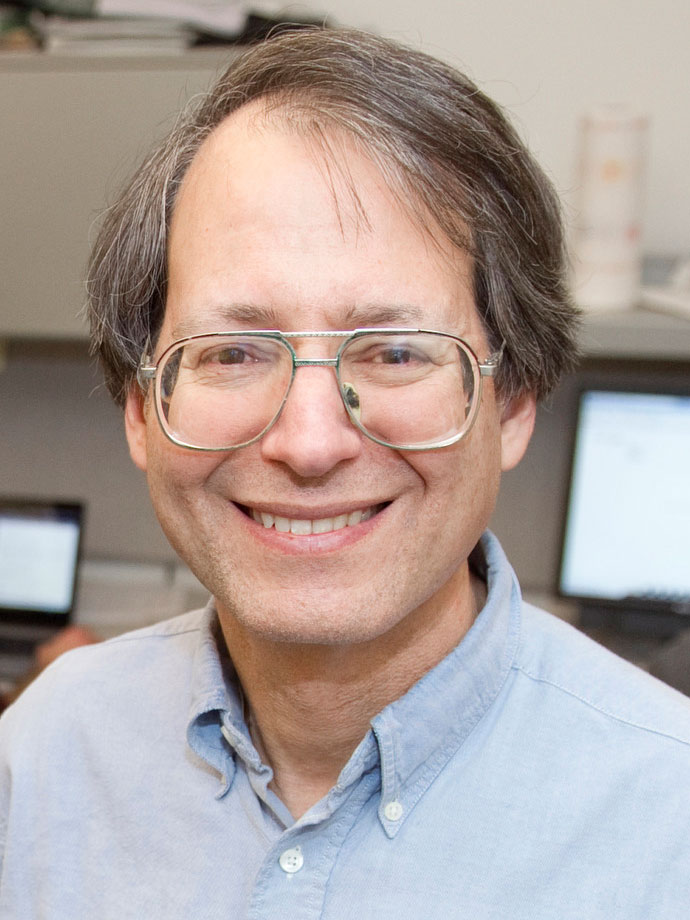
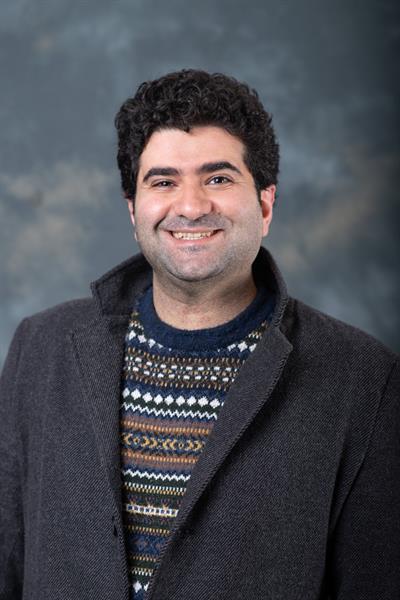
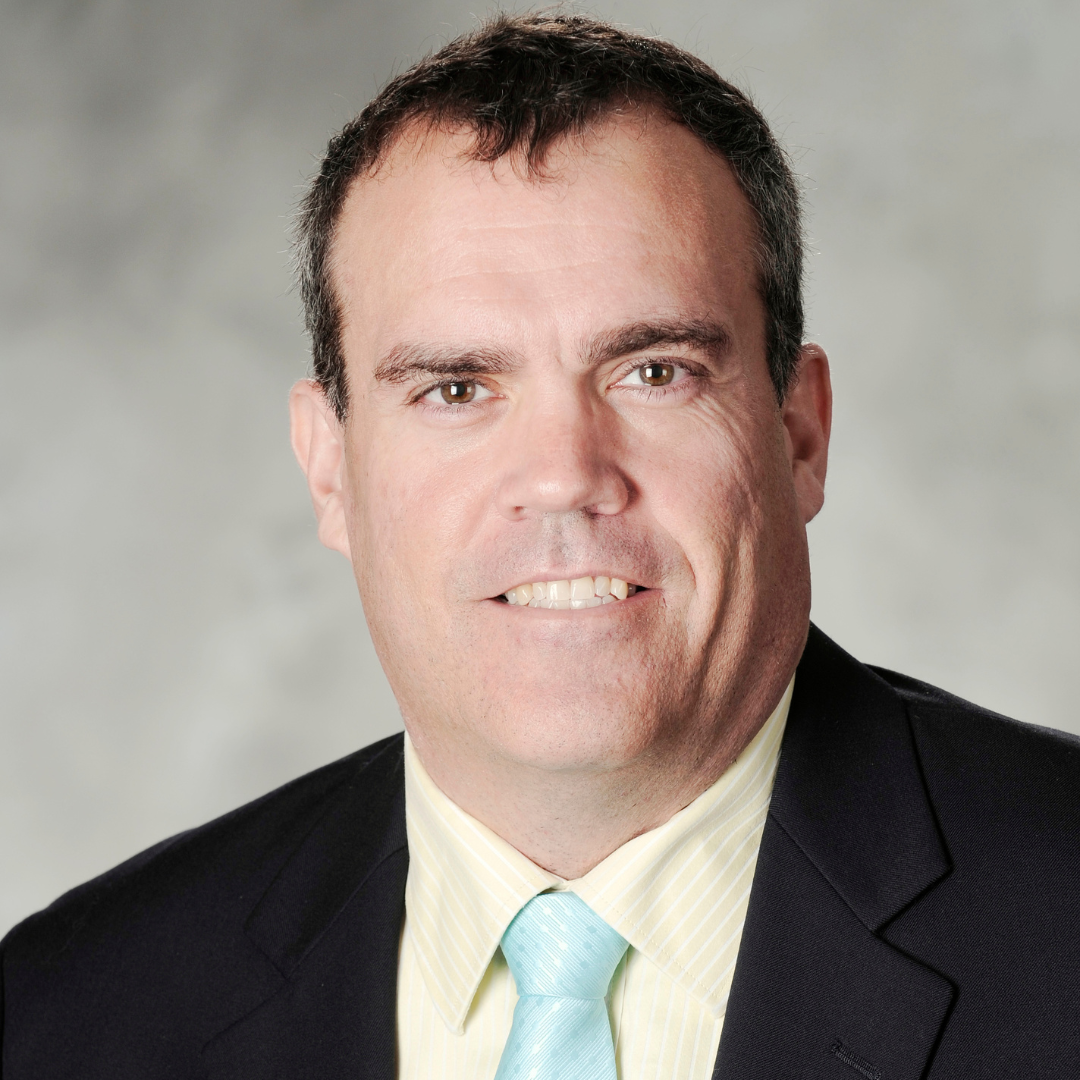
Gene Cooperman is a Professor at the Khoury College of Computer Sciences at Northeastern University, with an affiliation in the College of Engineering. His research focuses on high-performance computing (HPC), transparent checkpoint-restart systems, and model checking. He leads the High Performance Computing Laboratory, where he explores checkpointing technologies like DMTCP, MANA for MPI, and CRAC for CUDA, aiming to enhance HPC workflows on supercomputers such as NERSC's Perlmutter. His work bridges distributed computing, parallel algorithms, and system software to address challenges in fault tolerance, scalability, and resource management. Cooperman has advised 10 PhD students and co-authored over 125 refereed publications, contributing to projects like Geant4-MultiThreaded and Roomy for disk-based computation. His teaching includes courses on computer systems and HPC seminars. Education: Background in computational algebra and parallel computing, transitioning to HPC systems and checkpointing. Research Themes: Transparent checkpointing, MPI agnostic solutions, CUDA integration, and HPC resource optimization. Recent articles emphasize MPI checkpointing, reversible debugging (FReD), and CUDA support, reflecting trends in distributed and GPU-accelerated systems. His grants include NSF, NERSC/DOE, and MemVerge funding. Cooperman collaborates with institutions like CERN and NERSC, advancing applications in particle physics simulations and supercomputing. Current students include Aayushi Gautam, Jiajun Cao, Rohan Garg, and Twinkle Jain.
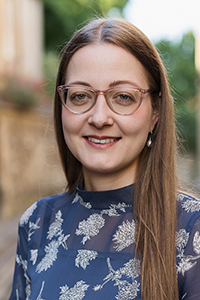
Melanie Weber is an Assistant Professor of Applied Mathematics and Computer Science at Harvard University's John A. Paulson School of Engineering and Applied Sciences (SEAS), leading the Geometric Machine Learning Group. Her research focuses on leveraging geometric structures in data for designing efficient machine learning and optimization algorithms with theoretical guarantees. She holds a PhD from Princeton University (2021) and has held fellowships at the Mathematical Institute of Oxford, Brasenose College, and the Simons Institute. Her work bridges geometry, optimization, and machine learning, with funding from NSF, Sloan Foundation, and Harvard initiatives. Education : PhD in Applied Mathematics, Princeton University (2021) BSc/MSc in Mathematics and Physics, University of Leipzig (2016) Research Interests : Dr. Weber's research integrates geometric principles into machine learning and optimization, focusing on non-Euclidean spaces, graph structures, and manifold-based methods. Key areas include optimization on Riemannian manifolds, curvature-based analysis (e.g., Ricci curvature), and developing algorithms resilient to data geometry challenges like over-smoothing in graph neural networks. Her work emphasizes theoretical foundations while addressing practical scalability in high-dimensional data. Awards & Recognition : 2024 Sloan Research Fellowship 2023 Leslie Fox Prize in Numerical Analysis 2023 NSF Grant for Geometric Optimization Grants & Funding : Supported by National Science Foundation (NSF), Alfred P. Sloan Foundation, Aramont Foundation, Harvard Dean’s Fund, and Harvard Data Science Initiative. Labs & Collaborations : Leads the Geometric Machine Learning Group at SEAS, collaborating with institutions like MIT, Max Planck Institute, and industry labs (Facebook, Google, Microsoft). Active in organizing workshops on geometric methods and curvature analysis.
Vasu Tewari is an Assistant Professor (CLTA) at the University of Toronto, working across both the Downtown Toronto (St. George) and Mississauga (UTM) campuses. Their office is located at HU1015 (215 Huron), and they can be reached at vasu.tewari@utoronto.ca. As a member of the Department of Mathematics within the Faculty of Arts and Science, Professor Tewari contributes to both teaching and research activities at the university. Professor Tewari's research focuses on advanced topics in algebraic combinatorics, with particular expertise in: Quasisymmetric functions and their geometric interpretations Schubert polynomial theory and related structures Representation theory of symmetric groups and related algebras Combinatorial aspects of algebraic geometry Enumerative combinatorics with connections to symmetric functions Algebraic structures arising from combinatorial objects Analysis of Professor Tewari's recent publications reveals a consistent focus on the interplay between combinatorial structures and algebraic frameworks. Their work often explores generalizations of classical symmetric function theory through the lens of quasisymmetric functions, providing new insights into Schubert calculus, permutation statistics, and geometric combinatorics. A notable trend in their research is the investigation of stability phenomena in combinatorial structures and the development of new algebraic tools for studying these phenomena. Professor Tewari has made significant contributions to understanding the geometry of combinatorial objects through algebraic methods, particularly in the areas of permutahedral varieties, zonotopal algebras, and quiver representations. Their work bridges pure mathematics with potential applications in theoretical physics and computer science.
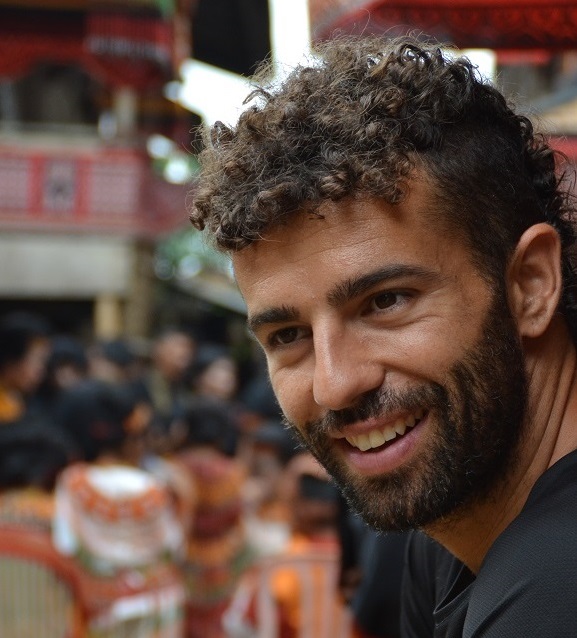
Alexey Bufetov is a Professor at Leipzig University, holding an ERC Starting Grant for his research in Integrable Probability (2022-2027). Previously, he served as a W2-Professor ("Bonn Junior Fellow") at the Hausdorff Center for Mathematics (2018-2021) and as a CLE Moore Instructor at Massachusetts Institute of Technology (2015-2018). His research centers on Probability Theory , with deep connections to Mathematical Physics and Combinatorics . Key areas include integrable probability, stochastic particle systems (ASEP/TASEP), random tilings, Schur generating functions, and representation-theoretic aspects of probability. His work often bridges abstract mathematical structures with physical models from statistical mechanics. Bufetov's recent publications reveal a strong focus on integrable systems and asymptotic analysis , particularly exploring connections between Mallows measures, vertex models, and random matrix theory. His 2025 work on Aztec diamond domino tilings exemplifies his signature approach combining combinatorial structures with probabilistic methods. His primary recognition is the ERC Starting Grant "Integrable Probability" (2022-2027), supporting his cutting-edge research program. Bufetov has maintained a prolific collaborative network, frequently publishing with leading researchers including Alexei Borodin, Vadim Gorin, Leonid Petrov, and Kailun Chen. His work appears in top journals such as Advances in Mathematics , Duke Mathematical Journal , and Communications in Mathematical Physics .
Michalis Vazirgiannis is a Professor at LIX, École Polytechnique (France) leading the Data Science and Mining (DaSciM) group. With academic backgrounds in Physics (Athens University), AI (Heriot-Watt University), and Informatics (Athens University), he has conducted research at Fraunhofer, Max Planck MPI, and INRIA/FUTURS while teaching at institutions across Greece, France, China, and Spain. His research spans Machine/Deep Learning for Graphs (GNNs, graph kernels, embeddings) Text Mining & NLP (Graph-of-Words, biomedical text analysis) Combinatorial Optimization for pandemic forecasting and energy systems Event/Anomaly Detection in time series and sensory data Industrial collaborations with Airbus, Google, Tencent, and BNP . He has supervised 29 completed PhD theses, published over 250 papers, and received prestigious awards including Marie Curie and Tencent Rhino-Bird Fellowships. His team leads the ANR-HELAS Chair (2020-2025) focusing on heterogeneous data deep learning.
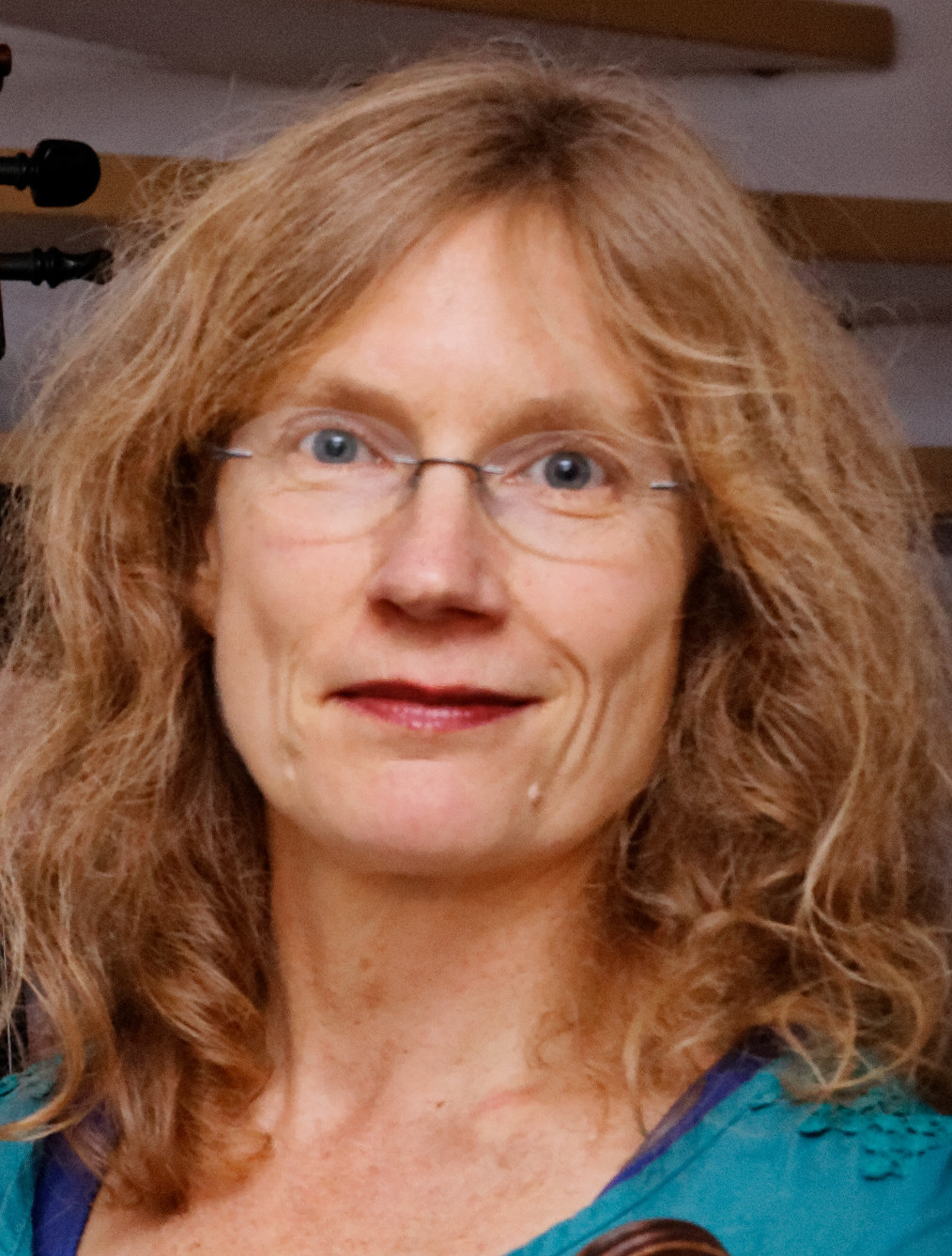
Professor Katrin Tent is a distinguished mathematician specializing in mathematical logic at the University of Münster, where she holds a professorship in the Faculty of Mathematics and Computer Science within the Institute for Mathematical Logic and Foundations Research. She is an active researcher in Mathematics Münster, an investigator in CRC 1442 Geometry: Deformations and Rigidity, and contributes to multiple research projects including Topics in Mathematics Münster T3: Models and universes, T4: Groups and actions, and T8: Random discrete structures and their limits. PhD in Linguistics, Christian-Albrechts-Universität zu Kiel (1988) Diplom in Mathematics, Christian-Albrechts-Universität zu Kiel (1989) PhD in Mathematics, University of Notre Dame (1994) Habilitation, "Model theory of groups and BN-pairs" (2000) Professor Tent's research bridges model theory, group theory, and geometry, with particular focus on finite Morley rank structures, BN-pairs, and sharply multiply transitive groups. Her work often combines methods from these areas to prove unexpected results, either constructing groups or incidence geometries with surprising model theoretic properties or using model theory to construct new and interesting geometries or groups. Her recent publications reveal a consistent trajectory connecting model theory with group-theoretic structures. She has made significant contributions to understanding sharply 2- and 3-transitive groups, finite Morley rank geometries, and the model theory of generalized polygons. Her work demonstrates how model-theoretic techniques can solve deep problems in group theory and geometry, particularly through the study of BN-pairs and incidence structures. DFG Research Fellowship (1996-1998) Bayerischer Habilitationsförderpreis (1998-2001) Heisenberg-Stipendium (2001-2004) ERC Consolidator Grants expert panel (2016, 2018) Elected to DFG Senate (2019) Professor Tent leads an active research group with current members including Marco Amelio, Dr. Benjamin Brück, Anna Cascioli, Lukas Jonuska, Silke Meissner, Zahra Mohammadi Khangheshlaghi, and Dr. Sam Shepherd. Her former research group members include Dr. Simon Andre, Dr. Isabel Müller, and Dr. Tim Clausen, among others. Her supervisory work spans both theoretical foundations and specific applications in geometric group theory and model theory. Her research group operates within the Institute for Mathematical Logic and Foundations Research at the University of Münster, collaborating closely with other researchers in the Mathematics Münster cluster. The group participates in various projects including CRC 1442 - C04: Group theoretic aspects of negative curvature, contributing to the vibrant mathematical research environment at one of Germany's leading mathematics institutions.
David E Speyer is a Professor in the Department of Mathematics at the University of Michigan . His research focuses on algebraic problems with combinatorial flavors , particularly in tropical geometry , cluster algebras , and geometry of Lie groups . He has supervised multiple PhD students, including Shelby Cox, Will Dana, and John Wiltshire-Gordon, and collaborated on projects with undergraduates like Grant Barkley and Benjamin Branman. Education: PhD in Mathematics from UC Berkeley under Bernd Sturmfels; undergraduate at Harvard. Research: Key areas include tropical geometry , cluster algebras , and flag manifolds . His work often bridges combinatorics, algebraic geometry, and representation theory. Publications: Over 40 papers, including breakthroughs in cluster algebras , affine weak order , and braid variety cluster structures . Awards: Clay Research Fellow (2005-2010). Teaching: Coordinates courses like Math 593 (graduate algebra) and Math 214 , with a focus on inquiry-based learning .
Dr. Guillem Müller Rigat is a Postdoctoral Researcher at the Institute of Photonic Sciences (ICFO), working in the Quantum Optics Theory research group. He holds a PhD in Photonics from the Universitat Politècnica de Catalunya (Spain). His research focuses on quantum information theory and quantum optics, with a particular emphasis on entanglement, Bell inequalities, and many-body quantum systems. He explores topics such as quantum resource certification, symmetry in quantum states, and applications of machine learning in quantum tomography. Müller Rigat’s work bridges fundamental quantum theory and experimental feasibility, addressing challenges in quantum metrology, nonlocality, and chaos. His recent studies include developing methods to infer quantum correlations from observable data and enhancing protocols for entanglement detection in complex systems. He contributes to advancing theoretical frameworks for certifying quantum systems with minimal experimental resources. He is affiliated with ICFO’s Quantum Optics Theory group, where he collaborates on projects involving Bell inequalities, spin-nematic squeezing, and quantum Fisher information. Despite his postdoctoral focus, he actively publishes in high-impact journals, with a strong emphasis on interdisciplinary approaches combining quantum foundations and applied quantum technologies.
Joseph P. Romano is a distinguished Professor of Statistics and Economics at Stanford University, where he has been on the faculty since 1986. He holds joint appointments in both the Department of Statistics and the Department of Economics, reflecting his interdisciplinary research that bridges statistical theory with economic applications. Romano has established himself as a leading scholar in mathematical statistics with significant contributions to econometrics, climate science, and multiple testing methodologies. Ph.D. in Statistics, University of California, Berkeley (1986) M.S. in Statistics, University of California, Berkeley (1983) A.B. in Statistics, Princeton University (1982), Summa Cum Laude Romano's research focuses on the theoretical foundations and practical applications of statistical methods, particularly in nonparametric statistics, bootstrap and resampling techniques, and multiple testing procedures. His work addresses the challenges of analyzing massive datasets with complex structures, such as those found in biotechnology, clinical trials, and econometrics. He has developed universal statistical tools applicable across diverse fields including climate science, genetics, finance, and education. His recent work emphasizes methods for multiple testing and multivariate inference driven by the availability of massive datasets, where he tackles issues like unknown dependence structures, heterogeneity, and high dimensionality. Analysis of Romano's recent publications reveals a consistent focus on developing robust statistical methodologies for complex data structures. His work spans theoretical advances in U-statistics with growing dimensions, practical applications in seroprevalence studies, and innovative approaches to ranking inference across various domains. The interdisciplinary nature of his research is evident in publications spanning economics journals, statistics journals, and even behavioral science preprints, demonstrating the broad applicability of his methodological contributions. 2021 LGBTQ+ Scientist of the Year, Out to Innovate Fellow, International Association of Applied Econometrics (2020) Fellow, Institute of Mathematical Statistics Presidential Young Investigator Award, National Science Foundation The Canadian Journal of Statistics Award Romano has mentored dozens of doctoral students throughout his career at Stanford, serving as dissertation advisor, co-advisor, and committee member for numerous PhD candidates in Statistics. His research has been consistently supported by National Science Foundation grants, including recent funding for computer-intensive inference with applications to social sciences (2020-2023) and randomization inference for contemporary statistical problems (2013-2016). He has served in various administrative roles at Stanford including Associate Chairman and Chair of Committee on Faculty Affairs. Beyond his academic pursuits, Romano is actively involved in the 500 Queer Scientists visibility campaign and maintains a balanced life with passions in music (having performed at Carnegie Hall), competitive tennis (ranked nationally in his age group), cooking, and architecture.
Prof. Tobias Müller is a Professor at the Bernoulli Institute for Mathematics, Computer Science and Artificial Intelligence at the University of Groningen. His academic journey includes previous positions at Utrecht University, CWI (Centrum Wiskunde & Informatica), Tel Aviv University, and Eindhoven University of Technology, with a doctorate from the University of Oxford under Colin McDiarmid. His research focuses on combinatorics, probability theory, random graphs, percolation, discrete and stochastic geometry, and combinatorial game theory. He has contributed extensively to understanding complex networks, hyperbolic models, and geometric random structures. Research Interests: Random Graphs and Percolation Theory Discrete and Stochastic Geometry Hyperbolic Network Models Probabilistic Combinatorics Geometric Probability Graph Algorithms and Connectivity Notable Contributions: Analysis of Voronoi and Poisson-Voronoi percolation in hyperbolic planes. Studies on Mallows random permutations and their cycle structures. Research on component games and logical limit laws in graph theory. Investigations into the geometry and properties of random geometric graphs. Grants & Collaborations: Active in organizing workshops and conferences on random graphs and geometric networks, including the BIRS Workshop on Random Geometric Graphs and the STAR Workshops series. Labs/Teams: Member of the Bernoulli Institute’s research groups, focusing on stochastic studies, combinatorics, and algorithmic methods.
Ignasi Sau Valls is a Directeur de Recherche (DR2) at CNRS, affiliated with the LIRMM laboratory at Université de Montpellier, France. He is a member of the AlGCo team, focusing on algorithms for graphs and combinatorics. His academic background includes dual degrees in Mathematics and Telecommunications Engineering from UPC (Barcelona), a PhD in joint supervision between UPC and Projet Mascotte (Sophia Antipolis), and a postdoctoral position at the Technion (Israel). He has been with CNRS since 2010 and was promoted to his current role in October 2024. He also served as a Visiting Professor at UFC (Brazil) from 2016–2017. His research interests lie primarily in Graph Theory and Parameterized Complexity , with a focus on structural graph properties, kernelization, and algorithm design. He has made significant contributions to problems involving minor-closed graph classes, treewidth, and graph modification. His work bridges theoretical foundations with algorithmic applications, particularly in discrete optimization and network problems. The recent articles highlight a strong trend in parameterized algorithms, especially for graph modification, kernelization, and structural graph problems. Topics such as hitting minors, dynamic programming on tree decompositions, and edge contractions reflect a deep engagement with structural parameterizations and fixed-parameter tractability. His publications frequently appear in top-tier journals like SIAM Journal on Computing, Journal of Combinatorial Theory, and Algorithmica, as well as major conferences such as ICALP, SODA, and IPEC. Best paper award of Track C of ICALP'10 Best student paper award of WG'09 Ignasi Sau has been a principal investigator of the ANR JCJC project ELIT (ANR-20-CE48-0008-01), funded with 169k€ from 2021 to 2026. He serves as an editor for DMTCS and Information and Computation , and has held significant organizational roles, including PC member of numerous conferences (MFCS, WG, IPEC, COCOON) and as co-chair and main organizer of WG 2019, ICGT 2022, and JCALM 2023. He has delivered invited courses at international schools in France, Argentina, and Brazil. He is actively involved in the research community through editorial duties, conference organization, and collaborative research. His lab affiliation is the AlGCo team at LIRMM, a leading group in algorithmic graph theory and combinatorics.
Saeed Mehraban is an Assistant Professor of Computer Science at Tufts University's School of Engineering and an Assistant Professor in the Department of Physics & Astronomy within the School of Arts and Sciences. He joined Tufts University in June 2022 as an Assistant Professor after serving as a Visiting Assistant Professor from June 2021 to May 2022. Prior to his position at Tufts, he was an IQIM Postdoctoral Scholar at the California Institute of Technology and a research fellow at the Simons Institute for the Theory of Computing during spring 2020. Doctor of Philosophy in Electrical Engineering and Computer Science from MIT (2019) Master of Science from MIT (2015) B.Sc. in Physics from Sharif University of Technology, Iran (2013) B.Sc. in Electrical Engineering from Sharif University of Technology, Iran (2013) Saeed Mehraban's research focuses on quantum computation and information, exploring the profound connections between computer science and physics. His work particularly addresses quantum computational complexity and continuous variable systems. A significant portion of his recent research concerns delineating the boundary between classical and quantum computing in noisy intermediate-scale quantum devices. His research bridges theoretical computer science with quantum physics, examining fundamental questions about what quantum computers can and cannot efficiently solve, with particular emphasis on mathematical foundations and computational complexity aspects of quantum information processing. Mehraban's publication record demonstrates a strong focus on quantum computing theory, with particular emphasis on quantum complexity, quantum algorithms, and the mathematical foundations of quantum information. His recent work (2021-2023) has explored topics like unitary t-designs, holomorphic representations of quantum computations, and quantum-inspired identities. Earlier publications (2015-2020) examined computational complexity in quantum theories, approximation algorithms for matrix problems, and connections between classical algorithms and quantum many-body systems. His research consistently sits at the intersection of theoretical computer science and quantum physics, addressing fundamental questions about computational advantages of quantum systems. Gold Medalist, National Physics Olympiad (2007) Bronze Medalist, National Astronomy Olympiad (2005) Identified as Exceptional Talent by the Iranian Educational System (2004) Mehraban teaches dissertation research courses at Tufts University, indicating his involvement in mentoring graduate students. His teaching activities include specialized courses in quantum information science, quantum computer science, and quantum complexity theory. His professional activities show invitations to speak at prestigious institutions including Microsoft Research Station Q, Mila Institute in Quebec, and the Simons Institute, suggesting recognition of his research contributions. His postdoctoral work at Caltech's Institute for Quantum Information and Matter (IQIM) demonstrates his connection to leading quantum research groups. While specific lab affiliations at Tufts aren't explicitly detailed in the provided information, Mehraban's teaching of specialized quantum courses and his research profile suggest he likely contributes to quantum computing research initiatives at Tufts University. His background at Caltech's IQIM and involvement with the Simons Institute's Quantum Wave in Computing Program indicate strong connections to the broader quantum information science community.
Nicole Wein is an Assistant Professor in the Department of Electrical Engineering and Computer Science at the University of Michigan, where she is a member of the Theory of Computation Lab within the Computer Science and Engineering Division. Her research focuses on theoretical computer science, particularly graph algorithms and lower bounds across various domains including distance-estimation, dynamic, parameterized, distributed, and online algorithms. Education: PhD in Computer Science from MIT, advised by Virginia Vassilevska Williams Master's in Computer Science from Stanford University B.S. in Computer Science/Mathematics from Harvey Mudd College Nicole's research centers on theoretical aspects of graph algorithms and computational complexity. She investigates fundamental questions about how algorithms can efficiently handle changing data, extract information from graphs in linear time, and understand the structure of shortest paths, especially in directed graphs. Her work spans multiple algorithmic paradigms including dynamic algorithms that adapt to changing inputs, parameterized approaches for hard problems, and fine-grained complexity that establishes precise relationships between problem difficulty. Analysis of Nicole's recent publications reveals a strong focus on graph algorithms, particularly shortest path problems, spanners, and hardness results. Her work often bridges theoretical insights with practical implications, developing novel techniques for distance estimation, dynamic graph processing, and approximation algorithms. A significant portion of her research examines the structural properties of graphs that enable or constrain efficient computation, with applications across computer science. Nicole actively mentors students at various levels. She currently advises PhD student Jubayer Nirjhor and has worked with undergraduate researchers including Sam Hiken (now a pre-doc at MIT), Michael Wang, and Tony Zhang. Her teaching includes foundational courses like EECS 376: Foundations of Computer Science and specialized courses such as EECS 598: Graph Algorithms. Nicole contributes to the academic community through service as a program committee member for major conferences including SOSA 2025, FOCS 2025, SODA 2025, and others. She co-organized the June 2023 DIMACS workshop on Modern Techniques in Graph Algorithms and previously organized Algorithms Office Hours at MIT to improve communication between theory and applications of algorithms.
Igor Kortchemski is a CNRS researcher at the Department of Mathematics and Applications (DMA) at École Normale Supérieure, Paris, and a lecturer in the Department of Applied Mathematics at École Polytechnique. His primary research focuses on the continuous limits of random discrete models, particularly examining how discrete combinatorial structures converge to continuous objects under appropriate scaling. His educational background includes a PhD in Mathematics (2012) under Jean-François Le Gall at École Normale Supérieure and a Habilitation à diriger des recherches (HDR) in Mathematics (2016). Kortchemski's research spans several interconnected areas: Random trees and Galton-Watson processes with heavy-tailed distributions Random planar maps and their geometric properties Growth-fragmentation processes and their connections to Lévy processes Scaling limits of combinatorial structures and their continuous counterparts His publication record shows a consistent focus on the geometric properties of random discrete structures, with recent work (2023-2025) exploring uniform attachment processes with freezing, critical tree phenomena, and the mesoscopic geometry of sparse random maps. His research often involves sophisticated probabilistic analysis combined with combinatorial insights. Scientific recognition includes: prix de thèse solennel Perrissin-Pirasset / Schneider de la chancellerie des Universités de Paris (2012) Kortchemski actively contributes to academic service: Examiner for the minor math exam at École Polytechnique (FUF) since 2023 Member of the mathematics jury for ENS International Selection (2023) Member of the jury for the external mathematics competitive examination (Agrégation) since 2021 Member of the jury for the Arts and Economic and Social Sciences Bank (B/L) mathematics exams (2015-2018) He mentors the next generation of researchers as co-director of Antoine Aurillard's and Vanessa Dan's theses (both since 2023), and previously directed Etienne Bellin's (2020-2023) and Paul Thevenin's (2017-2020) theses.
Vincent John Mooney III is an Associate Professor at the School of Electrical and Computer Engineering and an Adjunct Associate Professor at the School of Computer Science, Georgia Institute of Technology. His research focuses on Hardware-Software Co-Design , Cyber Physical Systems Security , and Low-Power Architectures . He has authored numerous publications on topics such as probabilistic computing, hardware security, and embedded systems design. Dr. Mooney has received prestigious awards including the NSF Career Award , National Semiconductor Fellowship , and ARCS Best Paper Award . Education: Ph.D. in Electrical Engineering (1998), Stanford University MA in Philosophy (1997), Stanford University MS in Electrical Engineering (1994), Stanford University Certificate of Graduate Study (1992), University of Navarra BS in Electrical Engineering and Computer Science (1991), Yale University Research interests span hardware/software codesign, cybersecurity in embedded systems, and synthesis of reconfigurable architectures. His recent work includes Gridtrust for decentralized supply chain cybersecurity and COPPER for computation obfuscation. Dr. Mooney has supervised numerous Ph.D. students and held leadership roles in conferences such as HOST and CASES . Scientific awards include NSF Career Award (2000) National Semiconductor Fellowship (1997-1998) AT&T Engineering Scholarship Program (1987-1991) NCAA Postgraduate Scholar (1991) Senior Member, IEEE (2003) ARCS 2012 Best Paper Award Advising and grants highlight his mentorship of students like Jun Cheol Park and Yudong Tan , along with grants such as the U.S. Air Force Summer Faculty Fellowship (2007). He leads the Hardware/Software Codesign for Security Group at Georgia Tech and has contributed to advancements in real-time operating systems and deadlock detection algorithms.