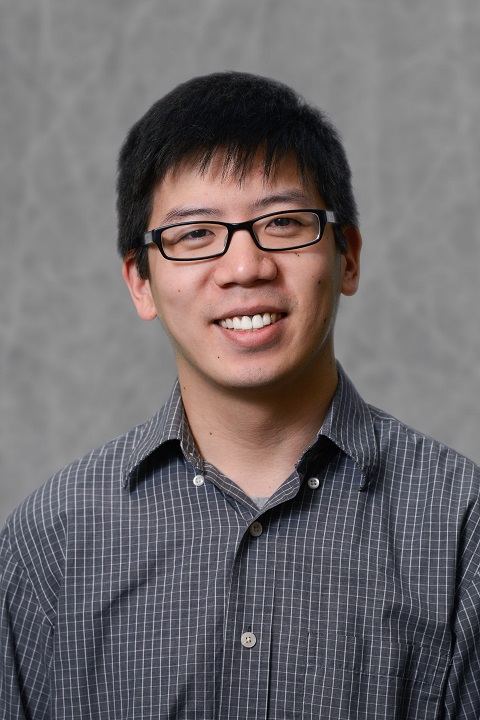
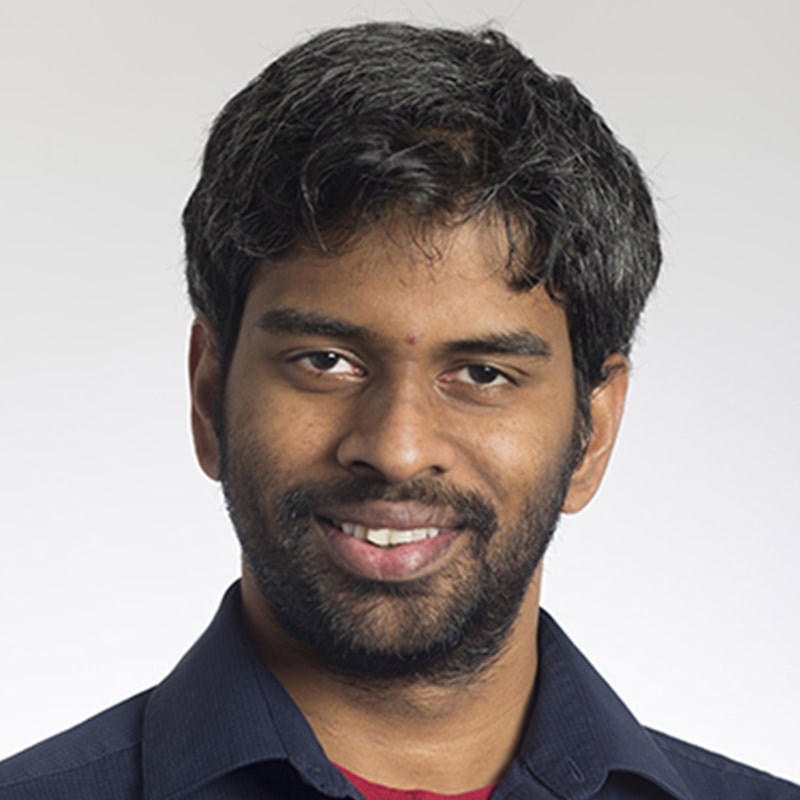
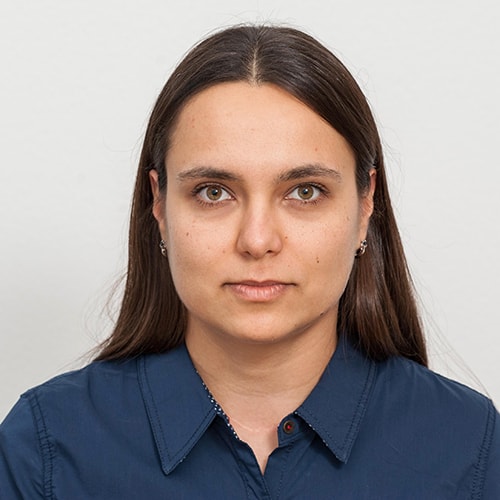
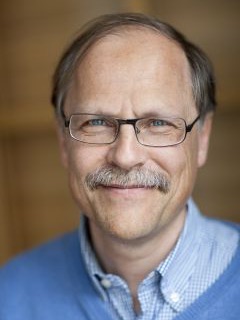
Ricky Ini Liu is an Associate Professor in the Department of Mathematics at the University of Washington. Previously, he held positions at North Carolina State University, the University of Michigan, and the University of Minnesota. He earned his Ph.D. in Mathematics from MIT in 2010 under Alexander Postnikov. His research focuses on algebraic combinatorics, particularly its intersections with algebraic geometry, combinatorial geometry, and representation theory. Key interests include Schubert polynomials, polytopes, Hopf algebras, and Kronecker coefficients. He has contributed to foundational work on birational rowmotion, Gelfand-Tsetlin polytopes, and Fomin-Kirillov algebras. Liu has taught a wide range of courses at UW, including special topics in dynamical algebraic combinatorics, combinatorial theory, and problem-solving. He has also been a key instructor at the Mathematical Olympiad Summer Program since 2007 and mentored undergraduates in research programs at the University of Minnesota, Duluth. His publications span high-impact journals like Selecta Mathematica and Journal of Combinatorial Theory , with recent work addressing topics such as determinantal formulas for Schubert polynomials and applications of flow polytopes to diagonal harmonics. Though no specific awards are listed, his extensive publication record and academic roles reflect significant contributions to combinatorial mathematics.
Timothy M. Hospedales is a Professor of Artificial Intelligence at the Institute of Perception, Action and Behaviour within the School of Informatics at the University of Edinburgh . He also serves as VP AI and Head of Samsung AI Research Centre Europe . His research focuses on efficient and robust AI , emphasizing meta-learning , lifelong transfer-learning , and domain adaptation in both probabilistic and deep learning frameworks. Applications span computer vision , vision and language , reinforcement learning for robotics , and finance . Professor at University of Edinburgh (2020–present) ELLIS Fellow (2021) Head of Samsung AI Research Europe (2020–present) Founding Director of Applied Machine Learning Lab at QMUL (2012–2016) His work includes pioneering contributions to meta-learning , few-shot learning , and self-supervised methods , with notable awards such as the Best Paper Prize at ICML AutoML 2018 and Best Student Paper at ICPR 2018 . He has co-authored 15+ recent papers on topics like Vision-Language Models , Medical AI Fairness , and Diffusion Model Optimization . He served as Program Co-Chair for BMVC 2018 and AAAI 2022 , and authored a book on Visual Adaptation in the Deep Learning Era (2022). Co-Chair, BMVC 2018 Guest Editor, IET CV Special Issue (2016) Keynote Speaker at TASK-CV Workshop (ECCV 2016) Special Issue on Fewer Labels (IEEE PAMI 2020) His leadership extends to organizing workshops like the Learning-to-Learn Workshop at ICLR 2021 , Meta-Learning Workshop at NeurIPS 2020 , and Domain Generalisation Workshop at ICLR 2023 . Current projects include Meta-Omnium (CVPR 2023) for general-purpose meta-learning and MetaAudio (ICANN 2022) for few-shot audio classification benchmarks.
Siva Balakrishnan is an Associate Professor at Carnegie Mellon University with a joint appointment in the Department of Statistics and Data Science and the Machine Learning Department . He holds an affiliation with the Dietrich College of Humanities and Social Sciences. Previously, he was a postdoctoral researcher at UC Berkeley's Department of Statistics, advised by Martin Wainwright and Bin Yu, and earned his Ph.D. in Computer Science from CMU's Language Technologies Institute under Jaime Carbonell. His research focuses on statistical machine learning, causal inference, and high-dimensional statistics, with notable contributions to domain adaptation, optimal transport, and robust statistics. Education: Ph.D. in Computer Science, Carnegie Mellon University (Language Technologies Institute) Postdoctoral Researcher, University of California, Berkeley (Department of Statistics) Research Interests: His work bridges theoretical foundations and algorithmic development, emphasizing robust statistical methods and their applications in causal inference, public policy, and machine learning. Key areas include nonparametric methods, optimization, and high-dimensional data analysis. He has pioneered techniques in domain adaptation, such as the RLSbench framework for relaxed label shift scenarios. Awards & Grants: Amazon Research Award (2021) Google Research Scholar Award (2021) NVIDIA Pioneer Award (2018) IMS Lawrence D. Brown Student Award (2020, 2022) National Science Foundation Grants (CCF-1763734, DMS-1713003, etc.) Professional Activities: He serves as an Associate Editor for JASA and on the editorial boards of Foundations and Trends in Statistics . His work has been featured in top venues like NeurIPS, ICML, and the Annals of Statistics. He currently holds a sabbatical at UC Berkeley's Department of Statistics (Spring 2025). Labs & Collaborations: He actively participates in the Statistics and Machine Learning Reading Group and the Causal Inference Working Group , fostering interdisciplinary research in CMU's vibrant academic community.
Olga Saukh is an Associate Professor at the Institute of Technical Informatics, Graz University of Technology (TU Graz), and a Faculty member at the Complexity Science Hub Vienna (CSH). She leads the Embedded Learning and Sensing Systems research group, which operates across both institutions, focusing on the design and deployment of efficient AI-based systems on edge and mobile platforms. Her work bridges deep learning and embedded systems, with applications in environmental monitoring, precision agriculture, and digital health. Ph.D. in Computer Science, University of Bonn (2009) Habilitation in Embedded Systems, TU Graz (2020) Postdoctoral Training, ETH Zurich (2010–2016) B.Sc. in Applied Mathematics, Taras Shevchenko National University of Kyiv (2002) M.Sc. in Applied Computer Science, University of Freiburg (2004) Her research centers on efficient machine learning, particularly model optimization, neural network pruning, and contrastive learning for resource-constrained devices. She is deeply engaged in solving real-world challenges in IoT, sensor networks, and cyber-physical systems. Her work emphasizes data privacy, sustainability, and practical deployment of AI at the edge. The 15 most recent publications highlight a strong trend in efficient deep learning, including model compression, pruning, and transfer learning, applied to diverse domains such as environmental sensing (air quality, pollution tracking), digital agriculture (cattle farming), and embedded AI (sensor calibration, on-demand sensing). Her work frequently appears in top-tier venues like NeurIPS, ICLR, and IEEE/ACM IPSN, reflecting her leadership at the intersection of machine learning and embedded systems. Scientific awards include: CONET Ph.D. Academic Award (2010) Multiple Best Paper Awards at IEEE PerCom, ACM/IEEE IPSN, IEEE ICPADS, IEEE SECON, and UrbCom Spotlight and Oral presentations at ICML and CoLLAs workshops Ph.D. scholarship from IPVS, University of Stuttgart (2004–2005) Prizes in Ukrainian national mathematics competitions (1996–1998) Olga Saukh actively serves on program committees of leading international conferences in machine learning and embedded systems. She has advised multiple students and leads a collaborative research group spanning TU Graz and CSH Vienna. Her group develops practical AI systems for real-world deployment, with a focus on sustainability and privacy. She co-organizes the public EfficientML reading group and has secured recognition through numerous grants and awards. Her future work continues to explore the theoretical and practical challenges of deploying efficient, trustworthy AI in mobile and embedded environments. Her research group, Embedded Learning and Sensing Systems, operates jointly between TU Graz and CSH Vienna, fostering interdisciplinary collaboration across institutions. The team develops AI solutions for edge computing, sensor networks, and cyber-physical systems, with a strong emphasis on environmental sustainability and data privacy. Members work on joint challenges using advanced collaboration tools, reflecting the distributed nature of modern academic research.
Kurt Johansson is a Full Professor of Mathematics at KTH Royal Institute of Technology, Sweden. His academic journey includes roles as Associate Professor at KTH (1993-2001) and Uppsala University (1988-1993), alongside research funded by the Swedish Natural Science Research Council (1998-2003). His primary affiliations are within the Department of Probability, Mathematical Physics & Statistics at KTH, where he also coordinates courses on Differential Equations and Fourier Analysis. Education: BSc in Physics (1982) and PhD in Mathematics (1988), both from Uppsala University. Research interests focus on Probability Theory , Mathematical Physics , and Random Matrix Theory , with contributions to stochastic models, determinantal processes, and universality in statistical mechanics. Key Awards: Wallenberg Prize (1995), Rollo Davidson Prize (2000), Göran Gustafsson Prize (2002), Fellow of the American Mathematical Society (2012), and multiple Wallenberg Scholar grants (2011-2023). Grants: Major funding from the Swedish Research Council (VR), K&A Wallenberg Foundation, and others. His research group explores Random Matrices, Stochastic Models, and Analysis , with notable work on the Arctic Circle Theorem and KPZ universality class. Recent publications analyze Brownian directed percolation and domino tilings of the Aztec diamond, reflecting his focus on interdisciplinary applications of probability and mathematical physics.
Professor Martin Liebeck is a Professor of Pure Mathematics and Head of the Pure Mathematics Section at the Department of Mathematics, Imperial College London. He is affiliated with the Algebra and Algebraic Combinatorics research groups and is part of the Mathematics research and teaching staff within the Faculty of Natural Sciences. His research interests span Pure Mathematics, with a focus on group theory, algebraic combinatorics, Lie groups, and representation theory. His work often involves the structure and properties of finite simple groups, algebraic groups, and their applications to permutation groups and character theory. Recent publications explore topics such as the actions of simple groups, unipotent classes in algebraic groups, character ratios, and the classification of permutation groups. His work frequently intersects with combinatorial and algebraic structures, with implications for both theoretical and applied mathematics. Professor Liebeck’s contributions include foundational studies on group generation, covering numbers, and character bounds, reflecting his deep engagement with the interplay between algebraic structures and combinatorial problems. His research has been published in leading mathematics journals, and he maintains an active academic profile through his personal webpage at http://www.ma.ic.ac.uk/~mwl/ .
Melanie Weber is an Assistant Professor of Applied Mathematics and Computer Science at Harvard University's John A. Paulson School of Engineering and Applied Sciences (SEAS), leading the Geometric Machine Learning Group. Her research focuses on leveraging geometric structures in data for designing efficient machine learning and optimization algorithms with theoretical guarantees. She holds a PhD from Princeton University (2021) and has held fellowships at the Mathematical Institute of Oxford, Brasenose College, and the Simons Institute. Her work bridges geometry, optimization, and machine learning, with funding from NSF, Sloan Foundation, and Harvard initiatives. Education : PhD in Applied Mathematics, Princeton University (2021) BSc/MSc in Mathematics and Physics, University of Leipzig (2016) Research Interests : Dr. Weber's research integrates geometric principles into machine learning and optimization, focusing on non-Euclidean spaces, graph structures, and manifold-based methods. Key areas include optimization on Riemannian manifolds, curvature-based analysis (e.g., Ricci curvature), and developing algorithms resilient to data geometry challenges like over-smoothing in graph neural networks. Her work emphasizes theoretical foundations while addressing practical scalability in high-dimensional data. Awards & Recognition : 2024 Sloan Research Fellowship 2023 Leslie Fox Prize in Numerical Analysis 2023 NSF Grant for Geometric Optimization Grants & Funding : Supported by National Science Foundation (NSF), Alfred P. Sloan Foundation, Aramont Foundation, Harvard Dean’s Fund, and Harvard Data Science Initiative. Labs & Collaborations : Leads the Geometric Machine Learning Group at SEAS, collaborating with institutions like MIT, Max Planck Institute, and industry labs (Facebook, Google, Microsoft). Active in organizing workshops on geometric methods and curvature analysis.
Alan Hammond is a Professor in the Department of Statistics at the University of California, Berkeley. His research focuses on rigorous mathematical probability techniques applied to problems in statistical mechanics, including percolation theory, polymer models, and random growth processes. He has contributed to understanding critical phenomena, phase transitions, and universality classes in stochastic systems. Hammond's work spans topics such as KPZ universality, Brownian motion, and the geometry of random media. He has investigated models like last passage percolation, self-avoiding walks, and tug-of-war games, often uncovering deep connections between stochastic processes and nonlinear PDEs. His teaching includes courses on stochastic processes and statistical theory at both graduate and undergraduate levels. Notable research highlights include studies on fractal properties of Airy processes, stability in dynamical last passage percolation, and the behavior of geodesics in random environments. His contributions bridge probability theory with applications in physics and combinatorics.
David E Speyer is a Professor in the Department of Mathematics at the University of Michigan . His research focuses on algebraic problems with combinatorial flavors , particularly in tropical geometry , cluster algebras , and geometry of Lie groups . He has supervised multiple PhD students, including Shelby Cox, Will Dana, and John Wiltshire-Gordon, and collaborated on projects with undergraduates like Grant Barkley and Benjamin Branman. Education: PhD in Mathematics from UC Berkeley under Bernd Sturmfels; undergraduate at Harvard. Research: Key areas include tropical geometry , cluster algebras , and flag manifolds . His work often bridges combinatorics, algebraic geometry, and representation theory. Publications: Over 40 papers, including breakthroughs in cluster algebras , affine weak order , and braid variety cluster structures . Awards: Clay Research Fellow (2005-2010). Teaching: Coordinates courses like Math 593 (graduate algebra) and Math 214 , with a focus on inquiry-based learning .
Prof. Tobias Müller is a Professor at the Bernoulli Institute for Mathematics, Computer Science and Artificial Intelligence at the University of Groningen. His academic journey includes previous positions at Utrecht University, CWI (Centrum Wiskunde & Informatica), Tel Aviv University, and Eindhoven University of Technology, with a doctorate from the University of Oxford under Colin McDiarmid. His research focuses on combinatorics, probability theory, random graphs, percolation, discrete and stochastic geometry, and combinatorial game theory. He has contributed extensively to understanding complex networks, hyperbolic models, and geometric random structures. Research Interests: Random Graphs and Percolation Theory Discrete and Stochastic Geometry Hyperbolic Network Models Probabilistic Combinatorics Geometric Probability Graph Algorithms and Connectivity Notable Contributions: Analysis of Voronoi and Poisson-Voronoi percolation in hyperbolic planes. Studies on Mallows random permutations and their cycle structures. Research on component games and logical limit laws in graph theory. Investigations into the geometry and properties of random geometric graphs. Grants & Collaborations: Active in organizing workshops and conferences on random graphs and geometric networks, including the BIRS Workshop on Random Geometric Graphs and the STAR Workshops series. Labs/Teams: Member of the Bernoulli Institute’s research groups, focusing on stochastic studies, combinatorics, and algorithmic methods.
Ignasi Sau Valls is a Directeur de Recherche (DR2) at CNRS, affiliated with the LIRMM laboratory at Université de Montpellier, France. He is a member of the AlGCo team, focusing on algorithms for graphs and combinatorics. His academic background includes dual degrees in Mathematics and Telecommunications Engineering from UPC (Barcelona), a PhD in joint supervision between UPC and Projet Mascotte (Sophia Antipolis), and a postdoctoral position at the Technion (Israel). He has been with CNRS since 2010 and was promoted to his current role in October 2024. He also served as a Visiting Professor at UFC (Brazil) from 2016–2017. His research interests lie primarily in Graph Theory and Parameterized Complexity , with a focus on structural graph properties, kernelization, and algorithm design. He has made significant contributions to problems involving minor-closed graph classes, treewidth, and graph modification. His work bridges theoretical foundations with algorithmic applications, particularly in discrete optimization and network problems. The recent articles highlight a strong trend in parameterized algorithms, especially for graph modification, kernelization, and structural graph problems. Topics such as hitting minors, dynamic programming on tree decompositions, and edge contractions reflect a deep engagement with structural parameterizations and fixed-parameter tractability. His publications frequently appear in top-tier journals like SIAM Journal on Computing, Journal of Combinatorial Theory, and Algorithmica, as well as major conferences such as ICALP, SODA, and IPEC. Best paper award of Track C of ICALP'10 Best student paper award of WG'09 Ignasi Sau has been a principal investigator of the ANR JCJC project ELIT (ANR-20-CE48-0008-01), funded with 169k€ from 2021 to 2026. He serves as an editor for DMTCS and Information and Computation , and has held significant organizational roles, including PC member of numerous conferences (MFCS, WG, IPEC, COCOON) and as co-chair and main organizer of WG 2019, ICGT 2022, and JCALM 2023. He has delivered invited courses at international schools in France, Argentina, and Brazil. He is actively involved in the research community through editorial duties, conference organization, and collaborative research. His lab affiliation is the AlGCo team at LIRMM, a leading group in algorithmic graph theory and combinatorics.
Melanie Matchett Wood is the William Caspar Graustein Professor of Mathematics at Harvard University. Her research spans number theory, arithmetic statistics, algebraic geometry, and probability theory, with a focus on distributions of class groups, Galois groups of unramified extensions, and random algebraic structures. She has been supported by prestigious awards including the Packard Fellowship, the NSF Waterman Award, and the MacArthur Fellowship. Her work connects number theory to topology through function field analogs, studying moduli spaces of curves and their statistical properties. She has made significant contributions to understanding the universality of random matrix cokernels and their applications to sandpile groups of graphs. Her editorial roles include the Journal of the American Mathematical Society and Algebra and Number Theory . Recent publications emphasize arithmetic topology, proving universality theorems for 3-manifold groups, and developing new heuristics for class group torsion. She organizes seminars on arithmetic statistics and topology-number theory interactions. Her teaching includes advanced courses like Algebraic Number Theory and Class Field Theory, with research supervision spanning PhD and undergraduate projects. Scientific Awards: Packard Fellowship for Science and Engineering National Science Foundation Waterman Award MacArthur Fellowship
Prof. Allen Knutson is a Professor of Mathematics at Cornell University, affiliated with the College of Arts and Sciences. He earned his Ph.D. from the Massachusetts Institute of Technology in 1996. His research focuses on algebraic geometry, algebraic combinatorics, and geometric representation theory, with an emphasis on Schubert calculus, quiver varieties, and the combinatorial structures underlying geometric problems. Education: Ph.D. (1996) from MIT. His work often involves degenerating complex algebraic varieties into simpler combinatorial pieces, bridging geometry and discrete mathematics. Notable contributions include foundational results in Schubert calculus, honeycomb models, and the use of puzzles in cohomology computations. Research Interests: Algebraic geometry, algebraic combinatorics, Schubert calculus, quiver varieties, geometric representation theory, and applications to integrable systems. His interdisciplinary approach integrates algebraic, geometric, and combinatorial methods to solve problems in mathematics and theoretical physics. Advising: Current students include Portia Anderson, Raj Gandhi, and others. Past advisees have contributed to areas like flag manifolds, Frobenius splitting, and Bruhat atlases. He has taught advanced courses on topics such as symplectic resolutions, differentiable manifolds, and algebraic geometry. Labs/Teams: Collaborates widely, with contributions to projects like the ICM 2022 paper on Schubert calculus and quiver varieties. His work often involves visual tools like puzzles and pipe dreams to encode geometric invariants.
Robert Guralnick is a Professor of Mathematics at the University of Southern California’s Dornsife College of Letters, Arts and Sciences. His research focuses on finite and algebraic groups, representation theory, and arithmetic algebraic geometry. He has made significant contributions to understanding group structures, character theory, and subgroup dynamics in both finite and algebraic contexts. His work spans advanced topics such as Sylow subgroup analysis, commutator properties, and probabilistic group generation. Recent studies include investigations into invariable generation in simple groups and generic stabilizers in algebraic group actions. Guralnick’s research often bridges abstract group theory with geometric and topological methods, addressing foundational questions in algebraic structures. His publications highlight interdisciplinary approaches to group theory, including applications to cohomology, combinatorics, and representation theory. Despite no explicit mention of awards, his extensive publication record reflects sustained academic impact in pure mathematics. Guralnick’s advising and grant activities are not detailed here, though his prolific research output suggests active mentorship and funding support. No specific lab affiliations or teams are noted in the provided texts.
Adam Bouland is an Assistant Professor of Computer Science at Stanford University, where he leads the CS Theory Group. His research focuses on quantum computation, computational complexity theory, and their connections to physics. He completed his Ph.D. at MIT under Scott Aaronson, followed by postdoctoral research at UC Berkeley and the Simons Institute under Umesh Vazirani. His research explores fundamental questions in quantum computing including quantum complexity classes, quantum supremacy demonstrations, pseudorandom quantum states, quantum algorithm design, and connections to high-energy physics through AdS/CFT correspondence. Recent work investigates computational aspects of quantum systems, quantum learning theory, and noise resilience in quantum devices. Professor Bouland leads an active research group including 6 PhD students and 1 postdoctoral researcher, with joint appointments across Computer Science, Physics, and ICME departments. He regularly teaches graduate courses on Quantum Computation (CS259Q) and Quantum Complexity Theory (CS359D). His service includes program committee membership for major theoretical computer science conferences including FOCS, STOC, ITCS, and QIP.