
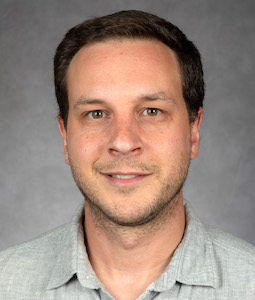
Karl Liechty serves as Professor and Associate Chair in the Department of Mathematical Sciences at DePaul University's College of Science and Health. He joined DePaul in 2014 after completing his PhD at Purdue University (2010), a postdoc at the Mathematical Sciences Research Institute, and three years at the University of Michigan. Promoted to Associate Professor with tenure in 2018 and full Professor in 2025, he maintains an active research program in mathematical sciences. His educational background includes: PhD in Mathematical Sciences, Purdue University (2010) Liechty's research centers on random matrix theory with deep connections to probability, statistical physics, and integrable systems. He specializes in asymptotic analysis of orthogonal polynomials and determinantal processes, particularly examining non-intersecting paths, six-vertex models, and Painlevé equations. His work bridges theoretical mathematics with physical applications, focusing on universal behavior in critical systems and phase transitions. Methodologically, he employs Riemann-Hilbert techniques and Fredholm determinant analysis to derive asymptotic expansions for complex systems. His 15 most recent publications (2013-2025) demonstrate consistent focus on asymptotic methods in integrable probability, with increasing emphasis on multi-component systems like the k-tacnode process and boundary statistics in lattice models. Key themes include universality class transitions, singular behavior propagation, and connections between random matrices and statistical mechanical models. Scientific recognition includes: Gabor Szego Prize (SIAM, 2015) for contributions to orthogonal polynomials and special functions Simons Collaboration Grant (2015) supporting collaborative research in mathematics Liechty actively mentors through the Chicago Math Teacher's Circle and Math Circles of Chicago, developing K-12 enrichment programs. His research collaborations span institutions including the University of Michigan, Purdue, and international partners in Belgium and Russia. Current work focuses on boundary effects in integrable systems and finite-temperature fermion models, supported by ongoing Simons Foundation collaboration. He maintains leadership through his Associate Chair role, overseeing curriculum development and faculty coordination in the Mathematical Sciences department while sustaining high-impact publications in top probability and mathematical physics journals.
جستوجوی استاد و پژوهشگر
استاد راهنما، استاد دانشگاه یا پژوهشگر مناسب برای مسیر پژوهشیتان را پیدا کنید و با او ارتباط بگیرید.
نمایش ۱۵۱-۱۵۱ از ۱۵۱ استاد راهنما
اطلاعات این پروفایلها از صفحات عمومی دانشگاهها جمعآوری شده و ممکن است بهروز نباشد.
DePaul UniversityUnited States