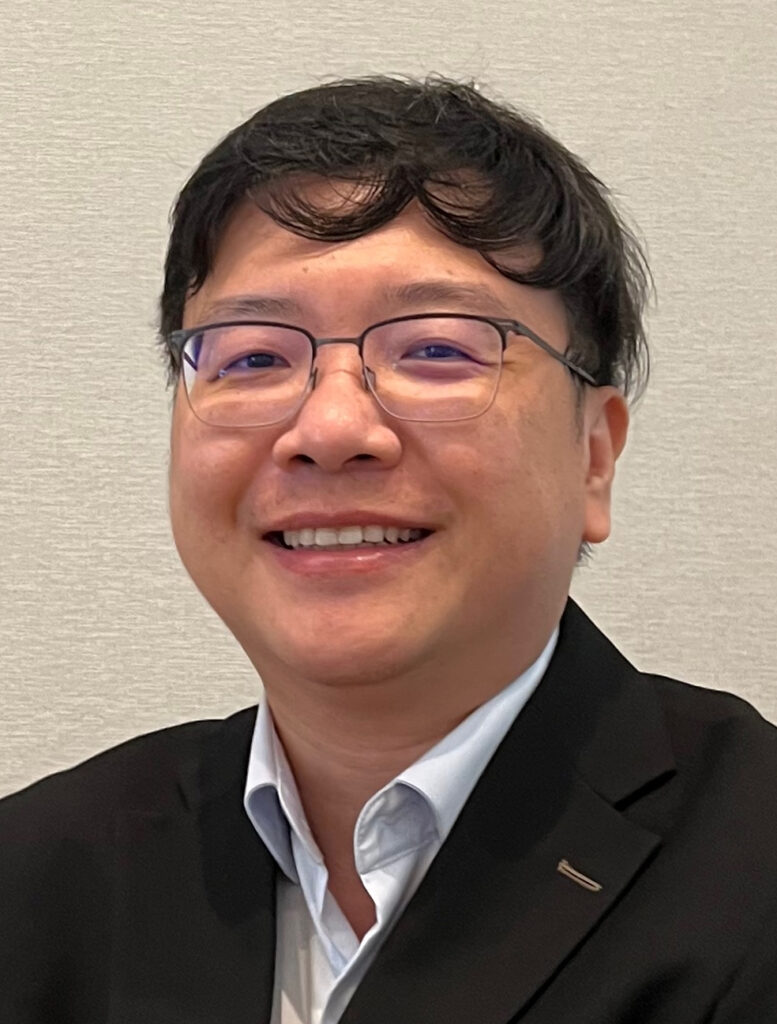
Dr. ONG Ghim Ping Raymond is an Associate Professor and Deputy Head (Research) at the Department of Civil and Environmental Engineering, National University of Singapore (NUS). He concurrently serves as Director (Operations) at the Coastal Protection and Flood Resilience Institute (CFI) Singapore. His expertise spans sustainable pavements, multimodal transport infrastructure, and urban mobility systems. Dr. Ong holds a B.Eng (Civil) with First Class Honours and a PhD from NUS, followed by postdoctoral research at Purdue University. He has authored/co-authored over 85 peer-reviewed journal articles and 120 conference papers. His research focuses on circular economy applications in infrastructure, car-lite urban design, and mega-projects like Tuas Port and Changi Airport expansions. Dr. Ong actively engages in policy advisory roles, serving on international committees for ASCE, ASTM, and EASTS. He has received prestigious awards including the Alfred Noble Prize (ASCE) and Takeuchi Yoshio Award (OCDI). His teaching accolades include multiple NUS Faculty of Engineering commendations. He advises on critical infrastructure projects for agencies like Changi Airport Group and Defence Science and Technology Agency. Dr. Ong frequently contributes to public discourse on transport and urban planning via media interviews and policy consultations.
Dr. Nicholas Brake is an Associate Professor at Lamar University's Department of Civil and Environmental Engineering, focusing on reclaimed materials, wireless power transfer applications in concrete, and fatigue fracture modeling for pavements. His research spans recycled concrete aggregate, coal ash utilization, and electromagnetic cementitious composites. Education: Ph.D., M.S., B.S. in Civil Engineering from Michigan State University Awards: Anita Riddle Fellowship (2018), Lamar Merit Award (2018), Presidential Faculty Fellowship (2015), and multiple scholarships during his studies. His research emphasizes three key areas: 1) Material reclamation using recycled concrete aggregate, coal combustion residuals, and EAF slag. 2) Electromagnetic transport properties for wireless vehicle charging applications. 3) Fatigue damage modeling in concrete pavements. Through 3D printing integration and design-build-test pedagogy, he enhances student learning outcomes. Recent publications focus on international engineering education (2020), magnetic concrete composites (2019), and advanced testing methodologies for civil infrastructure (2018). His teaching innovation includes developing nine Lamar University courses with active learning strategies that improved student design confidence (p Scientific Awards: Anita Riddle Excellence in Teaching Fellowship (2018) Presidential Faculty Fellowship for Teaching Innovation (2015) Outstanding Teaching Assistant Award at Michigan State (2011) Dr. Brake mentors undergraduate and graduate researchers, including doctoral candidates Mahdi Feizbahr and Hossein Hariri Asli (2023-2024). His lab (LUMS) houses advanced testing systems like Instron 5965/8803, MTS Insight 100SL, and thermal analyzers for material characterization.
Yuxia Hu is a Professor at the University of Western Australia, affiliated with the School of Engineering (Civil, Environmental and Mining Engineering) and the School of Social Sciences, Planning and Transport Research Centre. Her research focuses on geotechnical engineering, particularly in large deformation FE analysis, offshore foundation systems, and soil-structure interaction. She has contributed to advancements in suction caissons, plate anchors, and computational mechanics, with applications in offshore wind energy and infrastructure stability. Research Interests: Large deformation FE analysis of soils, soil-structure interaction, offshore foundation systems, soil mechanics, and pavement engineering. Awards: Telford Premium, British Geotechnical Association Prize, and Significant Junior/Senior Paper Award. Grants: Leads projects on offshore anchors, carbon capture in pavements, and road maintenance optimization. Her work addresses challenges in geotechnical design and sustainable infrastructure, with a focus on numerical modeling and experimental validation. Collaborations span academia and industry, emphasizing practical solutions for complex soil-structure systems.
Caterina Valeo is a Professor in the Department of Mechanical Engineering at the University of Victoria's Faculty of Engineering and Computer Science, holding a PhD from McMaster University. Her research focuses on environmental systems modeling with applications in forest management, urban water infrastructure, and climate resilience. Her work spans disturbance modeling in forested regions (including pine beetle infestations and forest fire impacts on watershed hydrology), sustainable urban water development through low-impact design tools like bioretention cells and permeable pavement, and climate change analysis using artificial neural networks for flood frequency prediction. She integrates hydrological, hydraulic, and water quality models to study pollutant dispersion in rivers and nearshore ecosystems, with emphasis on macrophyte-periphyton dynamics and dissolved oxygen impacts on aquatic habitats. Her research provides practical solutions for forest regeneration planning, stormwater management in Canadian climates, and climate-adaptive water infrastructure design through advanced computational approaches including fuzzy logic and neural network quantile estimation.
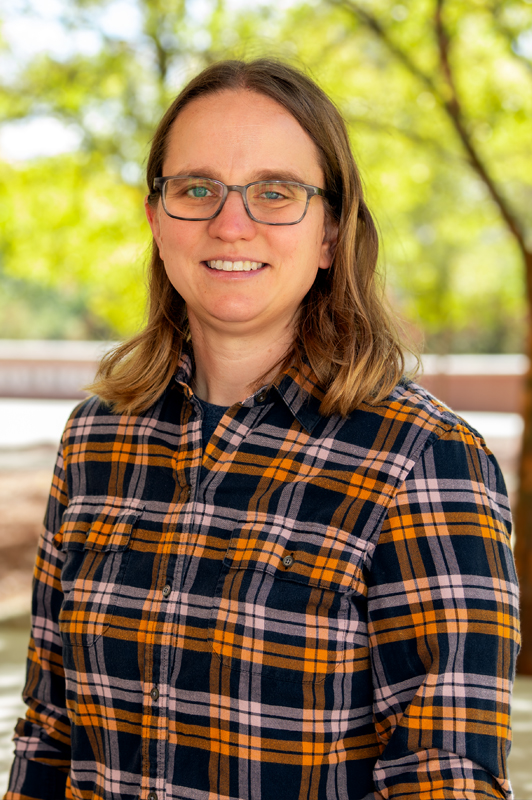
Frances O'Donnell is an Associate Professor in the Department of Civil and Environmental Engineering at Auburn University, where she leads the Auburn Ecohydrology Lab. Her research focuses on ecohydrology, emphasizing vegetation-water cycle interactions, stormwater management, and ecosystem restoration with applications in geographically isolated wetlands and transportation infrastructure resilience. Education: Ph.D. in Civil and Environmental Engineering, Princeton University B.A. in Organismic and Evolutionary Biology, Harvard University Research Interests: Dr. O'Donnell investigates soil moisture dynamics and evapotranspiration processes to develop green infrastructure solutions for stormwater management. Her work integrates field measurements, hydrological modeling, and remote sensing to quantify ecosystem services of wetlands and improve climate resilience in water systems. Key projects examine forest restoration impacts on groundwater and sustainable practices for agricultural pollution mitigation. Publication Trends: Recent publications (2023-2025) reveal three dominant themes: landslide prediction along Alabama highways using soil moisture thresholds, sediment/nutrient dynamics in agricultural wetlands under climate change, and cost-optimization tools for green infrastructure. International collaborations in Haiti address drinking water accessibility, while Arizona watershed studies analyze forest management effects on water balance. Scientific Awards and Grants: NASA Research Grant for Geographically Isolated Wetlands USDA-NIFA Foundational and Applied Science Program Grant ($500,000) Advising and Collaborations: Dr. O'Donnell mentors graduate students through thesis research with real-world applications, including permeable pavement design tools and UAV-based water quality monitoring. She collaborates with NASA, USDA, and NOAA on federal projects, and her students publish in journals like Water Environment Research while securing positions at Virginia Tech and Geosyntec Consultants. Laboratory: The Auburn Ecohydrology Lab conducts field experiments in Alabama watersheds and Haiti, utilizing sensor networks, hydrological models, and drone technology to advance understanding of water-ecosystem interactions for sustainable infrastructure planning.
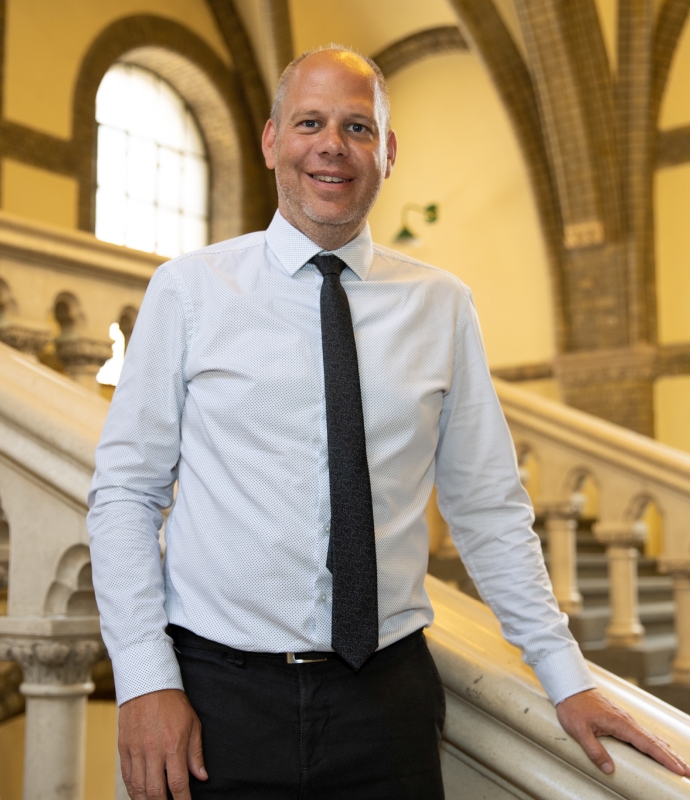
Thomas Ertl is a Professor at the University of Natural Resources and Life Sciences, Vienna (BOKU), leading the Institute of Sanitary Engineering and Water Pollution Control. His research focuses on urban water systems, emphasizing sustainable drainage, climate change adaptation, and nature-based solutions. He has coordinated 55 projects, including international initiatives in Albania and Austria, addressing stormwater management, wastewater heat recovery, and sewer infrastructure resilience. Key Projects : Analysing re-activated watercourses for urban resilience (2024–2028) Resilient rainwater management in Austria (2024–2028) Assessing pollutant emissions in Albania (2024–2027) Research Themes : Building Information Modeling (BIM) in wastewater systems Uncertainty analysis under climate change Stormwater pollution and heat island mitigation Awards : 2018: Goldene Ehrennadel des ÖWAV 1993: Best student award at AGIT 93 His recent publications highlight multidisciplinary approaches to wastewater energy recovery, spatial compatibility of nature-based solutions, and prioritization of stormwater management sites. He has supervised numerous theses and contributed to media discussions on urban climate resilience, including articles in Austrian outlets like futurezone.at and Der Kurier.
Mahler András , Associate Professor at the Faculty of Engineering (Budapest University of Technology and Economics), specializes in Geotechnical Engineering and Soil Mechanics within the Department of Engineering Geology and Geotechnics . His research integrates numerical modeling and empirical testing to address geotechnical challenges in infrastructure and construction materials. Department: Engineering Geology and Geotechnics Email: mahler.andras@emk.bme.hu Courses: Soil Mechanics, Geotechnical Finite Element Analysis, Numerical Methods in Geotechnics Research Focus Mahler's work emphasizes: Geotechnical Testing : CPT-Vs correlations, hypoplastic parameter calibration, and permeability studies. Material Behavior : Analysis of rolled asphalt, concrete seepage, and collapsible soils. Seismic Applications : Liquefaction hazard assessment and seismic fragility of embankments. His recent publications highlight advancements in soft clay characterization , asphalt modeling , and sustainable soil stabilization using sewage sludge ash. Awards Építő250 Scholarship
Jennifer Drake is a Professor and Tier II Canada Research Chair in the Department of Civil and Environmental Engineering at Carleton University, leading the Drake Stormwater Research Group. Her work focuses on sustainable stormwater solutions for Canadian urban environments, with expertise in low impact development and green infrastructure systems. Dr. Drake's educational background includes: B.Eng & Scty from McMaster University M.A.Sc. from the University of Guelph Ph.D. from the University of Guelph Her research centers on stormwater management , urban flooding mitigation , and water quality improvement through innovative technologies. She investigates diverse systems including bioretention cells, permeable pavements, and green roofs, emphasizing sustainability and interdisciplinary design for Canada's unique climate challenges. Recent publications (2020-2024) reveal strong trends toward practical field applications and climate resilience. Key themes include microplastic removal in bioretention systems, biochar-enhanced green infrastructure, winter performance of permeable pavements, and standardized reporting methodologies for long-term system evaluation. Scientific recognition includes: Tier II Canada Research Chair in Stormwater Management Dr. Drake's research program involves extensive field monitoring across Ontario communities, with collaborations spanning municipal governments and industry partners. Her group actively tests emerging technologies like blue-green roofs and regenerative street sweepers while addressing real-world challenges such as road salt pollution and urban flooding exacerbated by climate change. The Drake Stormwater Research Group operates the Sponge City Lab, conducting hands-on experiments with undergraduate and graduate students on green roof rehabilitation, bioretention performance monitoring, and permeable pavement maintenance. Current projects focus on building climate-resilient urban water infrastructure through integrated technological and ecological approaches.
Chris Cheeseman is a Professor of Materials Resources Engineering at the Department of Civil and Environmental Engineering, Imperial College London. He leads the Materials Section and directs the UKCRIC Centre for Infrastructure Materials, funded by EPSRC. His expertise lies in materials science applied to sustainability, including waste management, circular economy, and low-carbon materials. He holds affiliations with multiple interdisciplinary centers, including the Grantham Institute and the Marine and Coastal Environments Network. Chris earned his PhD in ceramics science from the University of Oxford, followed by industry experience as a Technical Manager. At Imperial since 1990, he has supervised over 120 graduate students and published 220+ papers. His research emphasizes innovation, spawning spin-off companies like Novacem (low-carbon cements) and Aeropowder (waste feather applications). Key research themes include carbon sequestration via olivine, magnesium-based cements, and recycling of industrial byproducts. His work bridges material science with environmental engineering, addressing global challenges like climate change and resource efficiency. Recent articles focus on novel cements, waste valorization (e.g., sewage sludge ash), and sustainable construction materials. Collaborative projects include EPSRC-funded infrastructure initiatives and collaborations with industry on permeable pavements and superhydrophobic surfaces. Chris has pioneered curricula in advanced materials for sustainable infrastructure and environmental engineering. His labs focus on material lifecycle analysis, industrial symbiosis, and scalable low-carbon solutions.
Erdem Coleri is an Associate Professor at Oregon State University's College of Engineering, Department of Civil and Construction Engineering. He joined OSU in 2014 after postdoctoral work at the University of California Pavement Research Center. His research focuses on sustainable pavement materials, energy-efficient design, and infrastructure health monitoring using wireless sensor networks. He directs the OSU Asphalt Materials and Pavements (AMaP) Lab, emphasizing recycled materials and pavement sustainability. Education: Ph.D., Civil and Environmental Engineering (UC Davis, 2011); M.S. and B.S., Civil Engineering (Middle East Technical University, Turkey). Research interests include asphalt characterization, pavement management systems, and wireless sensor networks for infrastructure monitoring. Notable awards include the John and Jean Loosley Faculty Fellow (2015) and Oregon State University Teaching Excellence (2020). He advises students like David Covey and Aiman Mahmoud, focusing on tack coat performance and recycled materials. His lab develops technologies to reduce environmental impact and improve pavement longevity. Key projects include the AMaP Lab's work on permeable pavements, warm-mix asphalt, and energy-efficient designs. He collaborates with ODOT and agencies on field tests and sensor systems. Recent publications address balanced mix design, recycled materials, and fuel efficiency linked to pavement roughness.
Associate Professor Kirk Vessalas is Head of School at the School of Civil and Environmental Engineering , University of Technology Sydney. He has led groundbreaking research on low-carbon concrete , supplementary cementitious materials (SCMs) , and alkali-silica reaction (ASR) mitigation since 1992. His work integrates industrial by-products like fly ash and slag into high-performance concrete systems, supporting Australia's transition to a net-zero economy . PhD in Civil Engineering (UTS, 2009) Bachelor of Applied Science in Materials Science (UTS, 1991) Research interests span: Concrete durability and decarbonisation Mechanisms of ASR and DEF (Delayed Ettringite Formation) Development of smart cement-based sensors with self-sensing and self-cleaning properties Application of nanotomography for microstructural analysis Regulatory reform in Australian and New Zealand concrete standards Recent publications highlight advancements in alkali-activated binders , DEF risk assessment , and SCM integration for sustainable infrastructure. His studies often combine chemical analysis , durability testing , and industry collaboration to address practical challenges. Supervision and grants include mentoring students like Johnson Mak and Nicholas Allan, with over $6M AUD secured from ARC Research Hub , SmartCrete CRC , and international partnerships . He actively collaborates with Cement Concrete & Aggregates Australia , Concrete New Zealand , and infrastructure agencies.
Dr. Rajesh Sathiyamoorthy is an Associate Professor in the Department of Civil Engineering at the Indian Institute of Technology Kanpur (IIT Kanpur), specialising in Geotechnical Engineering. Since joining IIT Kanpur in 2011, he has built a strong research portfolio, secured competitive funding, and received numerous accolades for his contributions to environmental geotechnology and unsaturated soil mechanics. Education PhD, Indian Institute of Technology Bombay, India (2010) M.E., College of Engineering Guindy, Anna University, India (2002) B.E., Vellore Engineering College, University of Madras, India (2000) Research Interests Dr. Sathiyamoorthy’s research is centred on the behaviour of unsaturated soils, environmental geotechnics, and innovative ground-improvement techniques. His work employs advanced numerical and physical modelling to address challenges in landfill barrier design, soil–structure interaction, and performance of geosynthetically reinforced systems. A distinctive feature of his investigations is the integration of field-scale problems with controlled laboratory and centrifuge testing, coupled with state-of-the-art computational tools. Scientific Awards & Fellowships IEI Young Engineers Award 2013-2014 (Civil Engineering) – The Institution of Engineers (India) Talented Young Scientist Fellowship 2019 – Ministry of Science and Technology, China Distinguished Alumni Award 2019 (Academic & Research) – VIT University Best Paper Awards (Environmental Geotechnology) – Indian Geotechnical Society, 2019 & 2015 Best Paper Award – International Geotechnical Engineering Conference on Sustainability 2016 IGS Prof. A.V. Shroff Biannual Award 2013 – Indian Geotechnical Society International Geosynthetics Society Student Award 2012 – IGS, USA Best Paper Award 2010 – Geotextiles and Geomembranes Research Funding & Collaborations Dr. Sathiyamoorthy has successfully led multiple sponsored projects worth several crores of rupees from agencies such as SERB-DST, BRNS-DAE, Shanghai Council of Science & Technology, RDSO Lucknow, and PAAB-MHRD. These projects span centrifuge modelling of embankments on encased stone columns, hydro-mechanical behaviour of compacted soils, reliability-based assessment of landfill slopes, and field validation of stabilised subgrade materials for pavements. His international collaboration includes joint research at Tongji University, Shanghai, under the Talented Young Scientist Fellowship. Laboratories & Teams He heads experimental activities in the Geotechnical Engineering Laboratory at IIT Kanpur, where his group maintains specialised equipment for unsaturated soil testing, geosynthetic evaluation, and centrifuge modelling. The research team comprises doctoral scholars, master’s students, and project staff working on inter-related themes of environmental geotechnology and ground improvement.
Prof. Dr.-Ing. Bernd Nolting is a faculty member at the Bochum University of Applied Sciences , where he has served since 1996 as Professor of Urban Water Management. He was Dean of the Department of Civil and Environmental Engineering from 1999–2005. His career spans international projects in Germany (Düsseldorf, Regensburg, etc.), India, Palestine, China, Russia, Romania, and Bulgaria. Education: Dipl.-Ing. in Civil Engineering (specializing in Urban Water Management, Hydrology, Hydraulic Engineering) from Technical University of Hanover Doctorate: Ruhr University Bochum His research focuses on wastewater drainage systems , sewer network calculations , rainwater infiltration , and water-sensitive urban planning . He specializes in addressing urban flash floods , rehabilitation of water supply networks , and hydraulic optimization of drainage systems . Publications from 1988–2009 reveal expertise in membrane bioreactors , nutrient removal (nitrogen, phosphorus), stormwater management , and cost-effective wastewater solutions . Key themes include biological and chemical treatment interactions , filtration systems , and sustainable urban infrastructure .
Dr. Prasad Rao Rangaraju is a Professor of Civil Engineering at Clemson University's Glenn Department of Civil Engineering. His research focuses on sustainable materials engineering, decarbonization of cement production, and concrete durability. He holds a B.Tech from Jawaharlal Nehru Technical University (India), an M.S. from Iowa State University, and a Ph.D. from Purdue University. Professional affiliations include the American Society of Civil Engineers, American Concrete Institute, and Transportation Research Board. His work emphasizes eco-friendly material innovations like geopolymer alternatives, recycled glass utilization, and additive manufacturing with cementitious materials. He teaches courses on sustainable construction, advanced concrete technology, and materials characterization techniques. Key research contributions include developing rapid testing methods for alkali-silica reactivity, optimizing ternary blends for durability, and advancing full-depth reclamation techniques for pavements. His lab explores cutting-edge solutions for infrastructure rehabilitation and low-carbon construction practices.
Dr. Sue L. Niezgoda is a Professor in the Department of Civil Engineering at Gonzaga University's School of Engineering and Applied Science. She holds a Ph.D. from The Pennsylvania State University and is a licensed Professional Engineer. Her work emphasizes water resources engineering, with a focus on stream restoration, hydraulic modeling, and sustainable infrastructure. Education: Ph.D., Civil and Environmental Engineering, The Pennsylvania State University, 2004 M.S., Civil and Environmental Engineering, The Pennsylvania State University, 1998 B.S., Civil and Environmental Engineering, The Pennsylvania State University, 1997 B.A., Engineering and Physics, Elizabethtown College, 1996 Dr. Niezgoda's research centers on river and stream restoration, particularly the use of natural solutions like beaver dam analogs, risk and uncertainty assessment in design, and low-impact development technologies such as permeable pavements. She advocates for experiential learning, integrating field projects into her courses to engage students in real-world engineering challenges. Her teaching includes Fluid Mechanics, Watershed Modeling, and Stream Restoration. Her recent publications reflect a strong trend in applying process-based, risk-informed approaches to stream restoration, with increasing emphasis on monitoring, education, and professional standards. She has contributed significantly to the development of a national body of knowledge for stream restoration certification. Professional Affiliations and Leadership: ASCE Environmental and Water Resources Institute (EWRI), Hydraulics and Waterways Council, River Restoration Technical Committee Board of Directors, River Restoration Northwest Active contributor to American Society for Engineering Education (ASEE) Dr. Niezgoda has advised numerous undergraduate students on research projects related to stormwater, stream monitoring, and pavement systems. She has led externally funded research initiatives, including the Sharp Avenue Permeable Pavement Feasibility Study for the City of Spokane. She is also an experienced instructor of professional development courses on hydrology, hydraulics, and restoration modeling. She is currently on sabbatical during the 2024–2025 academic year but remains an active researcher and educator.