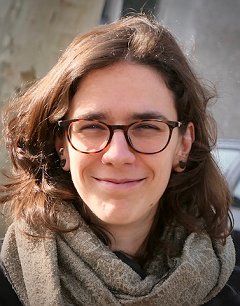
Academic Affiliation An Goris is a full professor at the Faculty of Medicine , KU Leuven, affiliated with the Department of Neuroscience and Laboratory for Neuroimmunology . She serves on the Faculty Council of Medicine and Departmental Council of Neurosciences as a ZAP member. Research Focus Her work bridges neuroimmunology and genetic epidemiology , with specific emphasis on: Mechanistic understanding of multiple sclerosis (MS) through single-cell transcriptomics Epstein-Barr virus as a causal trigger in MS Machine learning for MS prognosis prediction Immune cell dynamics under immunomodulatory treatments CNS resilience and neuroprotection in disease progression Genetic clustering of severity markers Publications Recent work demonstrates multidisciplinary approaches combining immunology, genetics, and computational methods. Key trends include: Single-cell resolution of immune subsets in neuroinflammatory diseases Integration of AI for longitudinal disease modeling Identification of genetic loci influencing MS severity Characterization of NK cell diversity in MS Exploration of viral reactivity in MS cohorts Development of genomic biobanking infrastructure Mentorship She actively supervises research projects, including co-supervision of Swinnen S. (2024) and Masrori P. (2023). Her leadership spans multiple collaborative consortiums like MultipleMS and Belgian Genomic Biobank initiatives.
Світлана Львівна Воропаєва serves as an Assistant Professor at the Department of Computer Systems and Networks within the Faculty of Physics at Yuriy Fedkovych Chernivtsi National University. Holding a Candidate of Technical Sciences degree (2012) with her dissertation on 'Computerized system of UV sources monitoring', she teaches Engineering Graphics, Computer Graphics, and Technology of Designing Computer Systems while maintaining active research in applied computer engineering. Education: Chernivtsi National University named after Yuriy Fedkovych, Faculty of Physics, Department of Electronic Computing Machines (2000) Her research centers on data compression and protection in telemetry reconfigurable information systems, with significant contributions across computer vision (handwritten text recognition, video parameter optimization), image processing (scanned document enhancement), UV radiation monitoring (Tensor-31M radiometer-dosimeter), and semiconductor photodetector systems. She specializes in hardware-software integration for real-time control applications, particularly in UV source management and smart home technologies, while developing advanced signal processing algorithms for spectral coordination and parameter stabilization. Analysis of her 15 most recent publications (2005-2018) reveals consistent focus on applied solutions bridging computer science and physical instrumentation. Her work demonstrates strong interdisciplinary collaboration, particularly with Vorobets and Dobrovolskyi teams, evolving from semiconductor interface modeling (2005-2007) toward practical implementations in computer vision (2018) and smart systems. Key thematic progression shows increasing emphasis on neural networks, parallel computing, and IoT-integrated hardware solutions while maintaining core expertise in radiation physics and optoelectronics. Professional development is evidenced by 15+ certificates (2019-2023) in digital competencies including Adobe Photoshop, project planning, active learning methods, and international conference participation (Austria, Czech Republic, Romania). Her technical leadership spans hardware-software co-design for UV monitoring systems, photodetector optimization, and embedded control modules, with consistent publication output in Ukrainian and international engineering venues.
Lorenzo Mordini serves as Associate Professor and Program Director of Postgraduate Periodontology at Tufts University School of Dental Medicine's Department of Periodontology since July 2025, following his tenure as Assistant Professor from August 2019 to June 2025. His academic credentials include an MS from Tufts University School of Dental Medicine and specialized postgraduate training in Periodontology and Dental Implants (2012-2015) at the same institution. Dr. Mordini's research focuses on critical challenges in periodontal and implant therapy, with emphasis on: Bone regeneration techniques for compromised implant sites Management of peri-implant diseases and soft tissue defects Advanced surgical protocols in the aesthetic zone Oral-systemic health interrelationships Dental traumatology in sports medicine contexts His publication portfolio (2018-2024) demonstrates methodological rigor through systematic reviews on ridge augmentation and corticosteroid applications, alongside clinical studies addressing peri-implantitis management and complex rehabilitation cases. Key thematic threads include volumetric analysis of bone grafts, long-term outcomes of trauma-related reconstructions, and evidence-based approaches to sinus augmentation procedures. As Program Director of the Postgraduate Periodontology program, he oversees advanced clinical training and research mentorship for dental specialists, integrating didactic instruction with hands-on surgical experience to develop comprehensive periodontal expertise.
Li Li is a Research Professor at Georgia Southern University's College of Health Sciences & Kinesiology, where she has worked since 2012. Her research focuses on biomechanics of human movement, aging, running injuries, and the effects of pathologies like peripheral neuropathy, diabetes, and cerebral palsy on gait and postural control. Ph.D. in Biomechanics, University of Massachusetts Amherst (1999) M.S. in Biomechanics, Tianjin Institute of Physical Education (1988) B.S. in Physics, Peking University (1982) Her research combines biomechanical analysis with clinical rehabilitation , examining how conditions like knee osteoarthritis and cerebral palsy affect mobility. She investigates Tai Chi interventions for improving postural stability and gait efficiency , while also exploring hamstring injury mechanisms and shoelace tensile dynamics . Recent publications highlight her work on dynamic stability in chronic ankle instability, EMG normalization techniques, and ultrasensitive temperature sensing for biomedical applications. The 15 most recent articles reflect her focus on neuromuscular adaptation , age-related mobility , and sports injury prevention . Key scientific contributions include: Fellow of the American College of Sports Medicine (2003) Active Fellow of the National Academy of Kinesiology (2014) Endowed Professorship (2007) She has secured multiple grants from Origin Biomed, Inc. for clinical trials on neuropathic pain, arthritis, and back disorders. Her work aligns with UN Sustainable Development Goals for healthcare innovation and aging population support .
Dr. Ke Li is a postdoctoral researcher at the University of Hamburg, working within the Human-Computer Interaction group at the Department of Informatics. She is currently leading the development of intelligent virtual human technologies as part of the European Union-funded project PRESENCE. Her work bridges computer science, human-computer interaction, and physics applications, focusing on creating immersive experiences for complex operational environments. Dr. Li received her Bachelor's of Science degree in Physics from Centre College (USA) in May 2018 and her Master's degree in Optics and Photonics from the Friedrich Schiller University Jena (Germany) in April 2021. She completed her PhD as a fellow of the Helmholtz Graduate School for the Structure of Matter (DASHH) in October 2024, successfully defending her dissertation entitled "Towards a Particle Accelerator Metaverse: Mixed Reality Interfaces for Operations of Complex Physics Facilities" under the supervision of Prof. Frank Steinicke, Dr. Reinhard Bacher, and Prof. Wim Leemans. Dr. Li has a strong technical background in mixed and augmented reality, with research interests spanning immersive head-mounted displays, computer graphics and vision (particularly Neural Radiance Fields and 3D Gaussian Splatting), intelligent virtual agents, and human-robot interaction. Her work often combines theoretical computer science with practical applications in scientific environments, particularly focusing on how immersive technologies can improve workflows in complex and hazardous conditions like particle accelerator facilities. Analysis of Dr. Li's publications reveals a clear progression from foundational work in mixed reality display technologies (2022-2023) toward increasingly sophisticated applications of neural rendering techniques and intelligent virtual agents (2024-2025). Her research consistently bridges the gap between theoretical computer graphics and practical applications in scientific environments, with particular emphasis on real-time performance, user experience, and seamless integration of virtual and physical elements. A notable trend is her growing focus on multimodal interaction frameworks that enable more natural communication between humans and intelligent virtual agents. Scientific Awards: Honorable Mention Award for the Best Design at the Student Competition at IEEE International Symposium on Mixed and Augmented Reality (ISMAR), 2023 Dr. Li serves as a reviewer for various international XR conferences and journals, including IEEE ISMAR, ACM VRST, IEEE TVCG Journal, IEEE VR, and ACM SIGCHI. She has received special recognition for outstanding review work for TVCG journal and paper reviews. Her research is supported by the European Union-funded PRESENCE project and previously by the Helmholtz Graduate School for the Structure of Matter (DASHH) with Grant-No. HIDSS-0002, and the German Federal Ministry of Education and Research (BMBF). Dr. Li is actively involved in the XR Lab at the University of Hamburg and has collaborated with researchers at the German Electron Synchrotron (DESY), the Cyber Interface Lab at the University of Tokyo, and the ARTANIM foundation. Her technical expertise spans Unity development, neural rendering implementation, sensor fusion techniques, and real-time system optimization for immersive applications.
Dr Sarah J Waugh serves as Reader in Optometry and Vision Sciences at the University of Huddersfield's Department of Optometry and Vision Sciences within the School of Applied Sciences. She is Co-Director of the Centre for Vision across the Life Span and maintains an active research program while accepting PhD students. Her academic journey spans multiple prestigious institutions including Aston University, Anglia Ruskin University, University of Melbourne, University of Houston, and McGill University. Queensland University of Technology: Diploma in Applied Science (Optometry) University of Melbourne: Master of Science University of Houston: PhD in Psychophysical Visual Mechanisms Waugh's research focuses on spatial vision mechanisms with particular emphasis on visual crowding, amblyopia detection, and pediatric vision development. Her work bridges fundamental visual neuroscience with clinical optometry applications, especially in developing improved diagnostic methods for children's vision disorders. Recent publications demonstrate her leadership in establishing crowding distance as a superior metric for amblyopia detection compared to traditional acuity measures. Analysis of her 15 most recent publications reveals consistent focus on visual crowding mechanisms across developmental stages, with increasing emphasis on clinical translation. Her work demonstrates how crowding metrics outperform traditional acuity tests in detecting amblyopia, particularly in pediatric populations, while also exploring color vision deficiencies and binocular vision disorders. Fellow of the American Academy of Optometry Active reviewer for Vision Sciences Society and international journals Grant reviewer for Biotechnology and Biological Sciences Research Council Waugh has supervised 7 PhD students to completion and 4 Postdoctoral Research Fellows while externally examining 5 PhDs internationally. Her research program is supported through multiple grants including an Evelyn Trust grant to establish clinical psychophysical testing services. She maintains active collaborations through the Centre for Vision across the Life Span and has established unique NHS pediatric ophthalmology services at university clinics. Current work explores virtual reality treatments for amblyopia and improved visual screening methods for children.
Professor Ian Humphreys is a Professor of Viral Pathogenesis at the Cardiff University School of Medicine , where he leads the Systems Immunity Research Institute as Lead Co-Director . He holds a Wellcome Trust Senior Research Fellowship and focuses on immune response regulation during viral infections, particularly cytomegalovirus (CMV) and SARS-CoV-2. His work bridges basic research and clinical applications, involving collaborations with institutions like the Wellcome Trust Sanger Institute. Education: PhD in Biochemistry (Imperial College London, 2004), BSc in Biological Sciences with Virology (University of Warwick, 2000) Career: Cardiff University (2007–Present), La Jolla Institute (2000–2004), Imperial College London (2004) Research Interests span viral pathogenesis, cytokine regulation, mucosal immunity, and vaccine development. His lab investigates mechanisms of immune suppression during chronic viral infections, including IL-10 and CD200 receptor pathways, and explores how early cytokine signals influence antiviral responses. Recent work connects IFITM3 function to personalized antiviral therapy. Scientific Contributions include seminal studies on CMV immune evasion, influenza T-cell memory decay, and SARS-CoV-2 immunopathology. Key awards: Wellcome Trust Senior Fellowship (2012, 2017) Top 10 most-read paper recognition (2019) Appointments to Wellcome Trust and British Society of Immunology committees Teaching Roles include courses on Microbial Pathogenesis (ME3030) and Advanced Immunology (ME3045), alongside student supervision. He actively engages in public outreach, delivering immunology workshops in primary schools and coordinating Science in Health Live! events.
Charlotte Usselman, PhD is an Associate Professor and Associate Investigator at the Research Institute of the McGill University Health Centre (RI-MUHC), where she leads research within the Cardiovascular Health Across the Lifespan Program. Her work bridges cardiovascular physiology and gender-specific medicine, with a particular focus on understanding how sex differences and gonadal hormones influence cardiovascular regulation and health outcomes across diverse populations. Dr. Usselman's research program centers on the neurovascular control of blood pressure and cardiovascular health, employing integrative physiology approaches to study mechanisms across various age groups and clinical conditions. Her laboratory investigates how perturbations to the gonadal hormone milieu—including conditions like polycystic ovary syndrome and postmenopause—affect cardiovascular regulation. Her work has established important connections between sex hormones, sympathetic nervous system activity, and vascular function, highlighting critical sex-specific differences in cardiovascular physiology that have implications for clinical practice and research design. Analysis of her recent publications reveals a strong emphasis on sex as a biological variable in cardiovascular research, with particular attention to women's health conditions. Her work spans multiple methodologies including direct neural recordings, vascular function assessments, and hormonal manipulations, consistently demonstrating how sex differences manifest in cardiovascular responses to stressors, exercise, and disease states. This body of work has contributed significantly to understanding why cardiovascular disease presents differently in women and men. Dr. Usselman has been instrumental in developing guidelines for incorporating sex and gender considerations into cardiovascular research, as evidenced by her 2024 invited review in the American Journal of Physiology - Heart and Circulatory Physiology . Her systematic reviews and meta-analyses on topics like physical fitness in women with polycystic ovary syndrome have helped synthesize complex findings across multiple studies. Her laboratory actively investigates the cardiovascular implications of polycystic ovary syndrome, examining how androgen excess and body composition affect endothelial function and blood pressure regulation. This work has important clinical implications for understanding the elevated cardiovascular risk in women with this condition. Additionally, her research on salivary versus blood hormone assessments has provided valuable methodological insights for researchers studying female participants.
Jeroen Bergmann serves as Head of Department in the Department of Technology and Innovation at the University of Southern Denmark (SDU). His research spans multiple interdisciplinary fields at the intersection of biomedical engineering, medical devices, and regulatory science. As department head, he leads academic initiatives focused on translating engineering innovations into practical healthcare solutions while navigating complex regulatory landscapes. Dr. Bergmann's research portfolio demonstrates expertise across several interconnected domains: Prosthetics and sensor technologies for medical applications Temperature monitoring and thermal behavior in biomedical contexts Medical device regulatory affairs and compliance frameworks Wearable biosensors and electronic skin technologies Sleep apnea diagnostics and home testing solutions Inertial measurement and position tracking systems Medical device software and AI applications in healthcare His work consistently bridges technical innovation with practical healthcare implementation, as evidenced by his fingerprint showing strong connections between engineering disciplines and clinical applications. Analysis of Dr. Bergmann's recent publications reveals a strategic dual trajectory: advancing biomedical sensing technologies while simultaneously developing frameworks for medical device regulation. His research shows increasing focus on AI-driven regulatory decision-making, particularly examining cross-jurisdictional compliance frameworks through approaches like RAG-based systems. Concurrently, his biomedical engineering work continues to refine oral cavity-based monitoring systems, temperature estimation methods, and sleep disorder diagnostics. The integration of physiological monitoring with environmental factors represents a novel approach in his recent work, suggesting movement toward more holistic health assessment systems that consider both internal and external variables. Dr. Bergmann's leadership role as Head of Department suggests significant administrative responsibilities alongside his research activities. His involvement in Health Innovation Day 2025 demonstrates engagement with broader healthcare innovation initiatives, while his international collaborations suggest a global research network. The department under his leadership appears to focus on technology innovation with direct healthcare applications, particularly in medical devices and regulatory science, positioning it at the critical intersection of engineering advancement and healthcare implementation.
Professor Matthew A. Timmis is affiliated with Anglia Ruskin University under the Faculty of Science and Engineering . As Director of Student Outcomes , he focuses on enhancing educational experiences in sport and exercise science. His work spans two primary areas: education research (student transition into higher education) and vision and performance (vision impairment impact on human movement and visual search in sports). BSc in Sports Science and Football Coaching, Liverpool John Moores University (2007) PhD in Vision and Motor Control, University of Bradford (2010) MA Education (Distinction), Anglia Ruskin University (2016) His research integrates visual attention mechanisms in sports performance and safety, including studies on cyclist hazard perception , vision impairment in athletes , and student learning experiences . Recent publications address coach education biographies , diabetes management through exercise , and VR applications for sports training . University Teaching Fellow (UTF), Anglia Ruskin University Chartered Scientist (CSci) BASES Accredited Sport and Exercise Scientist Senior Fellow of the Higher Education Academy (SFHEA) Fellow of the Higher Education Academy (FHEA) He has secured grants totaling over £120,000 from organizations like Warwickshire County Council and NIHR , supporting projects on road safety , diabetic complications , and virtual reality training . His supervised students examine topics such as vision-based classification in football and emotional responses to cyclists . Timmis also leads the Cambridge Centre for Sport and Exercise Sciences (CCSES) initiatives.
Dr. Hans Herfarth is a Professor in the Department of Medicine at the UNC School of Medicine, specializing in Inflammatory Bowel Disease (IBD) . As Director of the UNC Multidisciplinary IBD Center , he leads clinical care and research initiatives, including over 20 ongoing IBD clinical trials and registries. His work focuses on improving diagnostic and therapeutic approaches for IBD, with expertise in investigator-initiated trials and multicenter specimen/data coordination. Research interests include Clinical and translational IBD studies Microbiome and gut permeability Pouchitis and postoperative complications Biologic therapies (e.g., ustekinumab, risankizumab) AI-driven molecular pathway analysis Real-world treatment paradigms Recent publications highlight molecular clusters predicting IBD outcomes, antibiotic effects on pouchitis, and biologic therapy comparisons. He collaborates with researchers across the Center for Gastrointestinal Biology and Disease (CGIBD) , leveraging its Clinical Research Core for data management in studies like MERIT-UC and DINE-CD.
Delphine Demange is an Associate Professor in Computer Science at University of Rennes, working in the Epicure research group (formerly Celtique) at IRISA (UMR 6074 / Inria). Her research focuses on formal methods for programming languages and compilers, with particular emphasis on compiler verification, program semantics, and language-based security. Her research interests include formal semantics of programming languages, program transformations, compiler verification, static analysis, computer-aided verification, and language-based security. She has made significant contributions to the formal verification of compiler intermediate representations, particularly static single assignment (SSA) form, and has worked extensively on verified compilation techniques. Her publication record shows a consistent focus on formal verification of programming language constructs and compiler components. Recent work (2023-2025) centers on dataflow circuits and solvers, while earlier work (2015-2020) focused on SSA-based optimizations, garbage collection verification, and information-flow security architectures. Her research demonstrates a strong commitment to applying formal methods to practical compiler and language implementation problems. Her scientific awards include the EAPLS Best PhD Dissertation Award in 2012 and the Gilles Kahn PhD Thesis Award in 2013 for her thesis Semantic Foundations of Intermediate Program Representations . She serves on numerous program committees for major programming languages conferences including CC, CGO, OOPSLA, and POPL, and has held leadership roles such as Program Co-Chair for CC 2021 and General Co-Chair for JFLA 2023 and 2024. She is also a member of the CC Steering Committee (2021-2024). Her teaching portfolio includes undergraduate and graduate courses in programming, algorithmics, compilation, and program verification, with a particular focus on trustworthy programming techniques using deductive verification in Why3.
Luboš Františák serves as an Assistant Professor at the Department of Urban Design within the Faculty of Architecture at Brno University of Technology. His academic position includes teaching specialized studios in urban and landscape design, urban planning, and urban design history courses in both Czech and English. He maintains an active research profile focused on sustainable urban development and spatial planning. His research interests center on urban design methodologies, sustainable development of urban spaces, and historical urban structures. Františák investigates how urban morphology influences sustainable development, with particular attention to public spaces, city centers, and regional planning frameworks. His work bridges theoretical urban studies with practical design applications through numerous competition entries and urban studies. Analysis of his publications reveals consistent focus on sustainable urban development patterns, with recurring themes in spatial structure analysis, public space functionality, and historical urban fabric preservation. His work spans both theoretical frameworks (as seen in journal publications) and practical applications (through competition projects and urban studies). Františák has secured research funding through projects including GA17-26104S (2017-2019) on urban structure impact on sustainable territorial development, the URBANITY conference (2016), and earlier projects on urban design foundations (2001). His professional activities include substantial involvement in architectural competitions and urban studies, with over 30 documented projects between 2012-2022. These include city center revitalizations (Český Těšín, Bystřice), urban studies (Brno-Ponávka, Blansko), and exhibition projects showcasing urban design concepts. His work demonstrates strong integration of academic research with practical urban design solutions.
Chelsea Hopkins serves as a Postdoc and Guest Researcher in the Department of Drug Design and Pharmacology at the University of Copenhagen, specializing in translational and clinical pharmacology. She is actively involved in The Graduate Programme for In Vivo Pharmacology and Experimental Animals, conducting research on rare skeletal disorders and pain mechanisms. Her primary research focuses on fibrous dysplasia and McCune-Albright syndrome, with emphasis on disease pathogenesis, nociceptive pain pathways, and preclinical model development. She employs in vivo pharmacology techniques to investigate skeletal pain mechanisms and evaluate novel therapeutic interventions for rare bone diseases, bridging basic science and clinical applications. Analysis of her 2022-2025 publications reveals a concentrated trajectory in fibrous dysplasia research, evolving from systematic model reviews to mechanistic pain studies and therapeutic development. Her work demonstrates increasing translational sophistication, moving from disease characterization to targeted pain management strategies using peripherally restricted compounds. Dr. Hopkins maintains extensive international collaborations across North America and Europe, evidenced by co-authorship with leading researchers like Collins M.T. and Boyce A. Her participation in graduate training programs highlights her role in mentoring next-generation pharmacologists through The Graduate Programme for In Vivo Pharmacology and Experimental Animals.
Giorgio Bonmassar, Ph.D. serves as an Associate Professor of Radiology at Massachusetts General Hospital, where he leads research in medical imaging technology and neurostimulation techniques. His work focuses on developing innovative solutions for MRI compatibility, neural stimulation, and medical device safety, with particular emphasis on trans-spinal magnetic stimulation for pain management and ultra-focal brain stimulation technologies. Bonmassar's research interests center around biomedical engineering applications in medical imaging, with specific focus on MRI safety for patients with implants, development of novel neurostimulation devices, and integration of EEG with MRI technologies. His work bridges engineering principles with clinical applications, particularly in the areas of neuromodulation and pain management. He has developed specialized electrode designs, micro-coil systems for precise neural stimulation, and safety solutions for medical implants during MRI procedures. Analysis of his recent publications (2023-2025) reveals a strong emphasis on engineering solutions for medical imaging challenges, with recurring themes in trans-spinal magnetic stimulation for pain treatment, reduction of RF heating in medical implants during MRI, and development of advanced electrode systems for multimodal neuroimaging. His work demonstrates a progression toward increasingly precise and specialized neurostimulation technologies, with growing applications in both adult and pediatric populations. Bonmassar serves as Principal Investigator on multiple NIH-funded research projects, including: R18EB036591 (2024-2027): Transspinal Magnetic Stimulation for Neuropathic Pain Treatment R01NS128962 (2022-2027): Metamaterials Implants for MRI R01NS120594 (2021-2024): Simultaneous fMRI and Micro-Magnetic Nervous System Stimulation R01EB024343 (2017-2021): Dense Array Image Compatible EEG for Neonatal Care R01MH111875 (2016-2021): Micro-TMS Technology for Ultra-Focal Brain Stimulation His collaborative network spans multiple institutions and specialties, with frequent co-authorship with researchers in radiology, neuroscience, biomedical engineering, and cardiology. Bonmassar's work appears to be conducted through the Martinos Center for Biomedical Imaging at Massachusetts General Hospital, where he contributes to the development of advanced imaging and stimulation technologies.