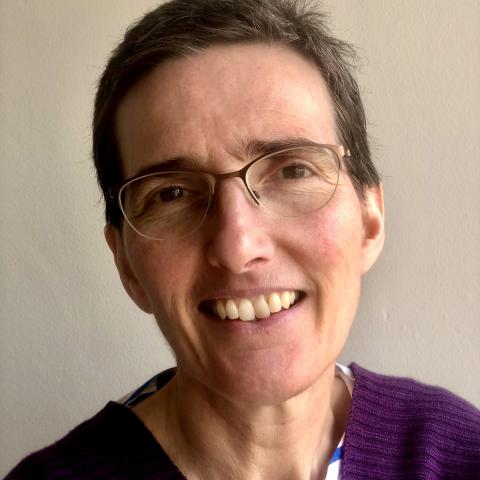
Annetta Alexandridis is an Associate Professor in the Department of History of Art and Visual Studies at Cornell University, affiliated with the College of Arts and Sciences and the Institute for European Studies. She earned her Ph.D. from Ludwig-Maximilians-Universität Munich, where her dissertation won the Munich University Association's Förderpreis and a German Archaeological Institute travel scholarship. Her research spans Roman sculpture, Greek mythological iconography, and intersections of gender/animal studies with archaeology. She examines how media like plaster casts and photographs shape archaeological knowledge, particularly through colonialist and Enlightenment discourses. Her current work investigates human-animal boundaries in antiquity and co-directs the Harvard-Cornell Sardis excavation funerary culture survey. Key publications include Destroy the Copy – Plaster Cast Collections in the 19th and 20th Centuries (2022) Mensch und Tier in der Antike (2008) Archäologie der Photographie (2004) Die Frauen des römischen Kaiserhauses (2004) Scientific honors include: 2015–16 Cornell Society for the Humanities Fellow 2005–06 Harvard Center for Hellenic Studies Junior Fellow 1997–98 German Archaeological Institute travel scholarship Munich University Association Förderpreis for dissertation She co-curates Cornell's plaster cast collection with Verity Platt, advises cross-departmental dissertations, and co-ordinates graduate exchange with Freiburg University. Her teaching integrates material analysis with theoretical approaches to antiquity.
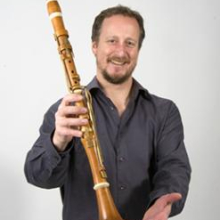
Mark Simons is an Early Clarinet Instructor at the Schulich School of Music, McGill University, and teaches at Marianopolis College. He specializes in early music performance on period instruments such as the chalumeau and classical clarinet. His expertise spans baroque, classical, jazz, and klezmer styles, with a focus on historical performance practices. Education: Studied at Marianopolis College, McGill University, and Temple University. Research interests include exploring sonorities of period instruments and chamber music collaborations. He has performed with renowned ensembles like Les Boréades, Arion Baroque Orchestra, and the Daponte String Quartet. Notable recordings include CDs on the Analekta label: Viole D’Amour and Telemann et les Gitans . No scientific awards listed. His advising and grants details are unspecified. Active in ensembles such as the Arthur Leblanc and Bozzini quartets, and regularly performs with l'Orchestre Symphonique de Québec and I Musici de Montréal.
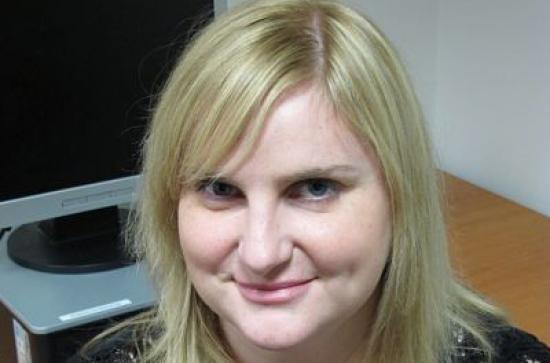
Noelle Higgins is an Associate Professor in Law at Maynooth University. She previously held academic roles at the Irish Centre for Human Rights (NUI Galway), the School of Law and Government (DCU), and served as Teaching and Learning Innovation Lead at ATU. Her academic qualifications include Master's degrees in Irish and Law, a Higher Diploma in Education, and a PhD from NUI Galway on 'Wars of National Liberation and Self-Determination.' Her research focuses on international human rights law, international humanitarian law, and international criminal law, with a current emphasis on cultural rights and cultural cleansing. She co-leads WG3 of the COST Action K-Peritia (cultural expertise in law) and is part of the Horizon2020 'ReCreating Europe' project on digital copyright law. She previously led an IRCHSS-funded project on international peace mediation. Her recent publications explore cultural heritage protection, indigenous rights, and the intersection of law and climate change. She has contributed extensively to legal education research, advocating for experiential learning tools like moot courts and field trips. Education: PhD (NUI Galway), LLM (International Human Rights Law), MA (Irish), Higher Diploma in Education Awards: None explicitly listed, but recognized for contributions to legal education and international law research Grants: Horizon2020 (2020), IRCHSS (2010) Labs/Teams: Member of the COST Action K-Peritia and ReCreating Europe Consortium.
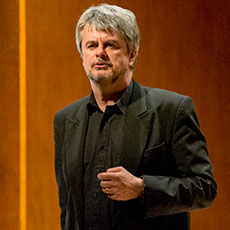
Professor Andrew Kirkman holds the Peyton and Barber Chair of Music at the University of Birmingham's Department of Music. He leads the Centre for Early Music Performance and Research, directing the University Chamber Orchestra and professional ensemble The Binchois Consort. His roles include teaching Renaissance music, 1960s music studies, and supervising PhD topics ranging from post-communist Poland to late medieval music historiography. Research focuses on fifteenth-century sacred music’s cultural context, particularly the Mass Ordinary in late medieval Europe. His 2010 book The Cultural Life of the Early Polyphonic Mass and 2020 monograph on Saint-Omer’s music culture exemplify this. Recent work explores music-alabaster intersections and late-medieval liturgical practices. His recordings with The Binchois Consort earned Gramophone awards, including the 2017 'Early Music Recording of the Year.' Notable performances include Music for the Hundred Years' War (2017) and collaborations with pianist Clipper Erickson. Awards reflect both scholarly and performative excellence. Advising emphasizes late medieval/renaissance music, while grants supported research on Saint-Omer’s musical legacy. He co-founded The Binchois Consort in 1995, producing Hyperion recordings that revive rarely performed repertoires. His work bridges performance, scholarship, and interdisciplinary cultural studies.
Bohunka Koklesová, PhD., is an Associate Professor and the Rector of the Academy of Fine Arts in Bratislava (VŠVU), a position she has held since 2019. She works at the Department of Theory and History of Art, where she has been teaching and conducting research for many years. Prior to becoming rector, she served as vice-rector for three consecutive terms. Her academic journey began at Comenius University Bratislava, Faculty of Arts, where she studied fine arts science from 1990 to 1995. She completed her doctoral studies in 2010 at the Department of Theory and History of Art at the Academy of Fine Arts Bratislava, earning her PhD in art history. In 2017, she was appointed Associate Professor. Dr. Koklesová specializes in several interconnected research areas: History and theory of photography, particularly Slovak photography 19th and 20th century art history Visual culture studies Totalitarian regimes and their relationship to art Cultural studies, with a focus on memory studies Critical periods of Czechoslovak history, especially pre-war and war years Czech-Slovak relations in historical contexts Her scholarly output reveals a strong focus on the intersection of photography, history, and political regimes, particularly examining the period of the Slovak State (1939-1945) and its aftermath. She has published extensively on how visual culture, especially photography, served as both documentation and propaganda during totalitarian periods. Her work demonstrates a consistent interest in how historical memory is constructed through visual media, with particular attention to Central European contexts. Dr. Koklesová's significant scholarly contributions include: "In the Shadow of the Third Reich, Official Photographs of the Slovak State 1939-1945" (2009) "Súmrak doby, prelamovaná história, pamäť, fotografia" (2018) Numerous articles on Slovak photography, visual culture, and art history She has received recognition for her work, most notably the Tatra Banka Foundation Prize for her collaboration on the exhibition "Dream x Reality/Art and Propaganda 1939–1945," which became the most visited exhibition of the year. As an academic leader and curator, Dr. Koklesová has advised on numerous exhibition projects and has been instrumental in shaping contemporary discourse around Slovak visual culture. She has curated or co-curated significant exhibitions including "The Eighties – Postmodernism in Slovak Fine Art," the "Zone of the Edge" series, and "In the Shadow of the Third Reich." Her curatorial work often focuses on mapping contemporary Slovak photography and examining historical periods through visual media. Dr. Koklesová is actively involved in the academic and cultural community as a member of AICA (International Association of Art Critics) since 2012 and serves on various artistic and scientific councils of important Slovak cultural institutions including the Slovak National Gallery, Slovak National Theater, and others. In 2019, she co-founded the non-profit organization Spoločnosť Jaromíra Krejcara dedicated to preserving functionalist architecture.
Professor Pamela Davidson is a distinguished scholar of Russian Literature at University College London's School of Slavonic and East European Studies (SSEES). With over four decades of academic experience, she has held various leadership positions including Head of the Russian Department (2003-2006), Head of Teaching and Graduate Tutor (2012-2014), and currently serves as Admissions Tutor for Languages & Cultures programmes. Her scholarly work has significantly shaped the field of Russian literary studies, particularly in areas of Russian Symbolism, literary prophecy, and the interaction between religion and culture. Doctor of Philosophy, University of Oxford, 1984 Undergraduate studies in Russian, French and Italian, Newnham College, Cambridge Professor Davidson's research spans several interconnected areas within Russian and comparative literature. Her work on the "construction and dynamics of literary tradition" examines how Russian writers positioned themselves within broader cultural and historical contexts. She has made significant contributions to understanding "the interaction of religion and culture," particularly through her edited volume "Russian Literature and Its Demons," which opened up new interdisciplinary research avenues. Her long-standing interest in "Silver Age poetry" has focused extensively on Viacheslav Ivanov, whose work she has studied through multiple lenses including his engagement with Dante and classical antiquity. Most notably, she has developed an extensive body of work on "the representation of the writer as prophet in Russia," tracing this tradition from its biblical and classical roots through to the Soviet period. Professor Davidson's recent publications reveal a consistent focus on the prophetic dimension of Russian literature, with particular attention to Viacheslav Ivanov and Fedor Glinka. Her scholarship demonstrates a sophisticated interweaving of literary analysis, religious studies, and cultural history. Over the past decade, her work has increasingly examined how Russian writers engaged with biblical and classical traditions, often reinterpreting them within specifically Russian contexts. The recurring themes across her publications include the tension between Athens and Jerusalem in Russian thought, the role of the writer as moral authority, and the complex relationship between religious tradition and literary innovation. Her comparative approach frequently bridges Russian literature with Western European intellectual traditions, revealing unexpected connections and influences. Travelling Junior Research Fellowship at Queen's College Leverhulme Research Fellowship (2019-2021) Director of the CEELBAS Centre for Doctoral Training (2020-2021) Member of the AHRC Peer Review College of Assessors (2003-2007) As an academic mentor, Professor Davidson has supervised numerous doctoral students in Russian literature and thought, with particular expertise in 19th and early 20th century literature, Silver Age poetry, and comparative literature. Her leadership roles have included serving as Graduate Tutor and Chair of BA and MA Examination Boards at SSEES. In terms of research funding, she has successfully secured competitive grants including the Leverhulme Research Fellowship that supported her recent work on literary prophecy. Her collaborative projects have often involved international partnerships, particularly with Russian academic institutions including the Institute of Russian Literature (IRLI) in St Petersburg. Professor Davidson has also contributed to major scholarly initiatives such as the 12-volume academic edition of Ivanov's collected works. While Professor Davidson's work is primarily in humanities rather than laboratory-based research, she has been instrumental in building academic networks and collaborative projects. She served as Director of the CEELBAS Centre for Doctoral Training, liaising with the Arts and Humanities Research Council (AHRC) and consortium members at Cambridge, Manchester and Oxford. Her long-standing collaboration with the St Petersburg Institute of Russian Literature has been particularly significant, resulting in the completion of the first comprehensive bibliography of Viacheslav Ivanov's works. Professor Davidson has also been active in the international scholarly community through her membership on the Board of Directors of the Foundation "Centro Studi e Ricerche Vjacheslav Ivanov" in Rome.
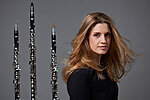
Prof. Nicola Jürgensen is a distinguished German clarinetist and Professor of Clarinet at Faculty 1 of Folkwang University of the Arts in Essen, Germany. She also serves as Dean of Faculty 1 and is a Confidential Lecturer for the German Academic Scholarship Foundation. Her career seamlessly integrates performance, education, and artistic leadership. She is the Artistic Director of WDR 3 Campus Concerts and a board member of the Folkwang University Foundation. Professor of Clarinet, Folkwang University of the Arts (2018–present) Dean, Faculty 1 Artistic Director, WDR 3 Campus Concerts Board of Directors, Folkwang University Foundation Principal Clarinet (former), WDR Symphony Orchestra Cologne (2001–2018) Regular coach, German National Youth Orchestra (2020–present) Nicola Jürgensen's research and artistic interests center on clarinet performance, chamber music, and contemporary repertoire. She is deeply committed to historical performance practice, evidenced by her recordings on basset clarinet, and to expanding the global reach of classical music through international masterclasses and festivals. Her work bridges traditional European repertoire and modern experimental works, including performances in avant-garde operatic productions. She has collaborated with leading orchestras and ensembles worldwide, from Berlin and Leipzig to New York, Bangkok, and Auckland. Her recent artistic output reveals a strong focus on rediscovered works (e.g., Wilms' concerto), contemporary compositions (e.g., Kancheli, Zwilich), and cross-cultural collaborations (e.g., German Masters Music Festival in Thailand). She emphasizes pedagogical innovation and performance excellence, mentoring students who now hold principal roles in Germany’s top orchestras. Her recordings and performances consistently highlight expressive depth, technical mastery, and scholarly engagement with historical instruments and arrangements. Scientific and Artistic Awards: Mozart Prize, Wiesbaden Mozart Society German Music Competition Soloists' Prize (1999) Germany Radio Promotion Prize (2002) Nicola Jürgensen has been instrumental in guiding numerous students into prestigious orchestral positions and leads the ensemble 'Folkwang Clarinets' with her students. She holds multiple leadership roles in academic and artistic institutions and continues to perform as a guest principal clarinetist with major orchestras like the Mahler Chamber Orchestra and NDR Elbphilharmonie Orchestra. Her involvement in grants and funding appears indirect through institutional roles and festival organization. She is actively involved with several artistic initiatives, including the 'Spannungen' festival, WDR 3 Campus Concerts, and international masterclass programs. Her ensemble collaborations and educational outreach reflect a sustained commitment to excellence, innovation, and accessibility in classical music.
James A. Millward is a Professor of Inter-societal History at Georgetown University's Edmund A. Walsh School of Foreign Service and Department of History. He holds a Ph.D. in History from Stanford University (1993), an MA from the School of Oriental and African Studies (University of London, 1985), and a BA in East Asian Languages and Civilizations from Harvard (1983). Millward specializes in Qing imperial history, the Silk Road, Xinjiang studies, and cross-cultural musical exchanges across Eurasia. Research Interests: His work critically examines Sinicization narratives, the Qing tribute system, and the impact of colonial historiography on contemporary China's ethnic policies. He also explores musical instrument diffusion along the Silk Road, comparing lutes like the pipa and oud. Publications: Notable works include Eurasian Crossroads: A History of Xinjiang (2007, 2021), The Silk Road: A Very Short Introduction (2013), and chapters in edited volumes analyzing Qing multiculturalism and cultural assimilation frameworks. Academic Leadership: As former president of the Central Eurasian Studies Society (2010) and contributor to the International Studies Association award-winning Culture and Order in World Politics (2019), Millward bridges historical analysis with modern political discourse. Media Engagement: A frequent contributor to The New York Times , Washington Post , and international media, he provides expert commentary on Xinjiang, Uyghur issues, and China-West relations. His current projects include a study of lute cultural exchange and the book Decolonizing History in China , challenging exceptionalist narratives in mainland historiography.
Dr. Li Hailong is a Chair Professor at the School of Environmental Science and Engineering, Southern University of Science and Technology (SUSTech), Shenzhen. He holds a PhD in Hydrogeology from the University of Hong Kong (2003), an MSc (1991) and BSc (1988) in Applied Mathematics from Fudan University. His academic journey includes professorships at China University of Geosciences-Beijing (2009-2020) and Anshan Normal University (1999-2009). Recipient of 2010 NSFC Outstanding Young Scientist Grant 2022 Dayu Water Conservancy Science and Technology Award 2008 Chutian Professorship (Hubei Province's highest academic honor) Dr. Li's research focuses on multi-component, multi-phase subsurface flows in coastal zones and their ecological/environmental effects. His work spans aquifer parameter estimation, ecohydrology, marine groundwater discharge, and computational fluid dynamics. Recent projects involve submarine groundwater discharge (SGD) quantification in Bohai Sea and Jiaozhou Bay using radium/radon isotopes. His publications in top journals like Nature Geoscience , Geochimica et Cosmochimica Acta , and Water Resources Research have been cited 7,072 times (H-index 49). He has led 19 research projects, including 6 NSFC grants and 973 Program subprojects. Dr. Li serves on editorial boards of Advances in Water Resources and Water Science and Engineering , and was Associate Editor for Hydrogeology Journal (2012-2015).
Dr. Gaël Kermarrec is a researcher at the Boundary Layer Meteorology Group , part of the Institute of Meteorology and Climatology within the Faculty of Mathematics and Physics at Leibniz University Hannover . His work focuses on atmospheric turbulence, GNSS applications, and remote sensing for environmental monitoring. Boundary layer meteorology Turbulence theory GNSS signal processing Terrestrial laser scanning Climate change impacts Geodetic time series analysis His research integrates advanced mathematical models like LR B-splines and Matérn covariance with large eddy simulations to study: Atmospheric turbulence effects on optical/GNSS signals Hydrospheric mass loading Deformation analysis of terrain/port infrastructure Climatic sea-level changes Machine learning for remote sensing The 15 most recent articles (2025-2023) demonstrate his focus on: GNSS-based turbulence detection AI-enhanced climate mapping Advanced surface approximation techniques Multi-sensor data fusion Stochastic modeling of geodetic observations Environmental impacts on optical measurements He has developed tools like the Klimascanner QGIS plugin for urban climate resilience and contributes to: Understanding atmospheric scale lengths Improving TLS/GNSS deformation monitoring Analyzing hydrospheric changes Wavefront modeling Ionospheric corrections
Guy G. Drijkoningen is an Associate Professor in Applied Geophysics at Delft University of Technology (TU Delft), Faculty of Civil Engineering and Geosciences. He is actively involved in teaching and research within the Department of Applied Geophysics & Petrophysics. Education: MSc, Delft University of Technology, The Netherlands PhD, Cambridge University, UK Research Focus: His work centers on Seismic Experiments & Modelling , particularly in exploration and shallow-subsurface contexts. Key areas include: Seismic data acquisition on land Continuous seismic monitoring Shallow shear-wave imaging (land and marine) Seismic wave propagation in porous media Current projects leverage advanced sensor networks (e.g., LOFAR), full-waveform inversion for tunnel-boring machines, and novel vibrator technologies. Publications Trend: Recent works (2011–2016) emphasize seismic modeling, inversion techniques, and experimental validation across marine and terrestrial environments. Topics span poroelastic wave theory, ambient-noise interferometry, and innovative seismic source design, reflecting a blend of theoretical and applied geophysics. Scientific Awards: Best-paper award Geophysics 2015 for "A seismic vertical vibrator driven by linear synchronous motors" Professional Memberships & Editorial Roles: Member: Society of Exploration Geophysicists (SEG) Member: European Association of Geoscientists and Engineers (EAGE) Associate Editor: Geophysics Teaching: He teaches undergraduate and graduate courses including Introduction to Geophysics, Reflection Seismology, and specialized PhD-level modules on seismic data analysis.
Suzy Anger serves as an Associate Professor and MA Advisor in the Department of English Language and Literatures within the Faculty of Arts at the University of British Columbia. Her academic work bridges literary studies with the history of science, focusing on how Victorian literature engaged with contemporary scientific thought. Dr. Anger received her BA from the University of California, Berkeley, followed by her MA and PhD from the University of Washington. Her educational background established the foundation for her interdisciplinary approach that connects literary analysis with scientific and philosophical inquiry. Her research primarily explores Victorian literature in relation to nineteenth-century science, psychology, and philosophy. Currently, she investigates Victorian fiction and nineteenth-century theories of consciousness, examining novels by Thomas Hardy, Charles Dickens, George Gissing, and Sarah Grand across genres including ghost fiction and scientific romance. Her scholarly work demonstrates how literary texts engaged with emerging scientific concepts of the period, particularly in the areas of mind sciences, hermeneutics, and technological understanding. She has particular expertise in how literary works processed scientific developments related to consciousness, automatism, and the relationship between humans and machines. Her publication record reveals a consistent trajectory of scholarship examining the intersection of Victorian literature and scientific thought, with recent work increasingly focused on theories of consciousness, literary automatism, and the philosophical implications of scientific developments in the nineteenth century. Her research demonstrates how literary works served as laboratories for exploring complex scientific concepts before they were fully developed in scientific discourse. Sonya Rudikoff Prize for the best first book in Victorian Studies (2006) Killam Teaching Prize, University of British Columbia (2018) Newhouse Center Faculty Fellowship, Wellesley College (2006-2007) SSHRC Faculty Research Grant (2005-2008) American Council of Learned Societies Fellowship (2000-2001) National Endowment for the Humanities Stipend (1999) As an academic leader, Dr. Anger has served as president of the Northeast Victorian Studies Association and was former co-chair of UBC's interdisciplinary graduate program in Science and Technology Studies. Her research has been supported by multiple prestigious fellowships and grants from major funding bodies including the American Council of Learned Societies, the National Endowment for the Humanities, and the Social Sciences and Humanities Research Council of Canada. Her editorial work on collections like 'Victorian Science as Cultural Authority' and 'Victorian Automata' has helped shape contemporary scholarship in the field. Through her editorial projects and interdisciplinary collaborations, Dr. Anger has been instrumental in developing the field of Science and Technology Studies within literary scholarship. Her work with colleagues across disciplines has created important spaces for examining how literature processes scientific and technological change, particularly in historical contexts where such changes were rapidly transforming society's understanding of itself.
Associate Professor Mathias Baumert is affiliated with the University of Adelaide, where he holds a position in the School of Electrical and Mechanical Engineering under the Faculty of Sciences, Engineering and Technology. He leads the Health Technology research theme in the School of Electrical Electronic Engineering and specializes in biomedical signal processing, focusing on dynamic electrocardiography and sleep-related phenomena. His work integrates clinical applications and technological advancements to address challenges in cardiology and sleep disorders. His research interests include the physiological underpinnings of ventricular repolarization variability and its clinical implications, particularly in post-myocardial infarction patients and those with sleep-disordered breathing. He also develops brain-computer interface (BCI) systems for stroke rehabilitation, leveraging real-time EEG analysis and motor function recovery techniques. Collaborations with clinical partners such as the Women’s and Children’s Hospital, Adelaide Institute of Sleep Health, and the Victor Chang Cardiac Research Institute highlight his translational research focus. His recent articles emphasize signal processing applications for risk stratification in cardiovascular disease, sleep apnea, and diabetes. Key themes include nocturnal hypoxemic burden prediction, REM sleep dynamics, and the development of novel diagnostic markers using ECG and EEG data. His work often bridges engineering and medicine, aiming to translate findings into clinical tools like adaptive servo-ventilation treatment optimization and personalized BCI systems. No scientific awards or fellowships are explicitly listed in the provided texts. He is eligible to supervise Masters and PhD students but current advisee names are not available. His research projects are supported by grants such as ARC DP110102049 (as noted in some articles). He teaches courses including Biomedical Instrumentation and Introduction to Medical Technology . His facilities include ECG equipment, polysomnogram repositories, and a BCI workstation with 64-channel EEG capabilities. He collaborates on lab-based and clinical partner studies to advance cardiac sensing algorithms and sleep-related diagnostic technologies.
Horatia Muir Watt is a Full Professor at Sciences Po's Law School, where she is a leading figure in private international law and comparative law. She is Co-Director of the Global Governance Studies program and founder of the PILAGG research group. Her scholarship is widely published in top legal journals, and she serves as Director of the Revue critique de droit international privé , the premier French-language journal in her field. She is affiliated with the Institute of International Law and the Institut Universitaire de France. PhD in Private International Law, University of Panthéon-Assas Paris 2 (1985) Agrégation in Private Law, ranked second (1986) Former faculty at University of Tours, Paris XI, and Paris I Panthéon-Sorbonne Appointed to Sciences Po in 2009, instrumental in founding its Law School Her research centers on international private law in global governance , comparative law with new theoretical approaches , and fundamental rights . She critically examines the role of law in transnational disputes, arbitration, migration, and environmental justice. Her work often explores the philosophical and cultural dimensions of legal reasoning, including alterity, translation, and ecological jurisprudence. Her recent publications, spanning 2023–2024, demonstrate a consistent focus on the evolving landscape of private international law. Key themes include jurisdiction in transnational litigation, the recognition of foreign judgments, the impact of war on family law, and the ethics of legal publishing. Her articles appear predominantly in the Revue critique de droit international privé , with additional contributions to journals like Rabels Zeitschrift and Transnational Legal Theory . The body of work reflects a blend of doctrinal precision and critical theory, engaging with EU regulations, comparative methodologies, and global legal challenges. Member of the Institute of International Law (since 2013) Member of the Institut Universitaire de France (since 2018) Horatia Muir Watt has supervised numerous PhD candidates and leads the PILAGG research group, which has produced several influential books with publishers such as Oxford University Press and Edward Elgar. She is part of the core faculty at the Institute for Global Law and Policy (IGLP) and serves on the editorial boards of multiple international legal journals, including the Journal of Private International Law and Transnational Legal Theory . Her work is supported by institutional affiliations and collaborative research projects rather than specific grant mentions in the text. She directs the PILAGG (Private International Law and Global Governance) research group at Sciences Po, which fosters interdisciplinary and critical approaches to transnational law. The group has organized collective research projects resulting in major publications and contributes to shaping contemporary discourse in private international law.
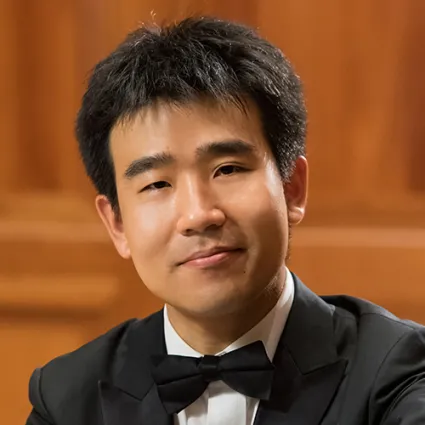
Jiayan Sun serves as Assistant Professor of Music and Associate Chair for Performance Activities at Smith College. A highly acclaimed pianist, he has performed with prestigious orchestras including the Cleveland Orchestra, the Hallé Orchestra, and the Chinese National Symphony Orchestra. His research interests focus on classical music performance, particularly piano repertoire from the Classical and Romantic periods. Sun specializes in the works of Beethoven, Chopin, and Schubert, as evidenced by his extensive performance series including 'A Beethoven Cycle,' 'Schubertiade,' and 'The Timeless Genius of Chopin.' His approach integrates historical performance practice with modern interpretive techniques, particularly in his exploration of early keyboard instruments. Sun's performance catalog reveals a strong focus on complete cycles of major composers' works, demonstrating both technical mastery and deep musical understanding. His repertoire spans from Baroque to contemporary works, with particular emphasis on German and Austrian classical traditions as well as Romantic-era compositions. Third prize at Leeds International Piano Competition Second prize at Dublin International Piano Competition Fourth prize and audience prize at Cleveland International Piano Competition First prize at CCC Toronto International Piano Competition Sun maintains an active performance schedule both as a soloist and chamber musician, frequently collaborating with other faculty members. His work extends beyond performance to include educational initiatives, such as his presentation of Beethoven's complete piano sonatas in chronological order at Smith College. He has also demonstrated commitment to community engagement through benefit concerts, including one supporting people fighting the coronavirus in Hubei Province, China.