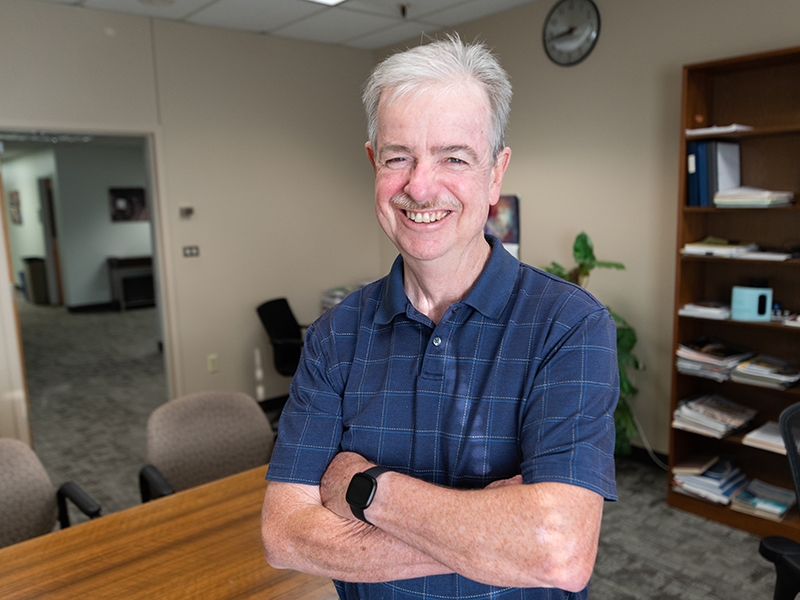
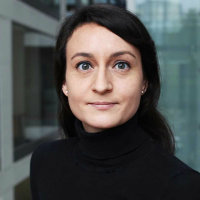
Andreas Grothey is a Senior Lecturer in the School of Mathematics at The University of Edinburgh, a position he has held since 2011. He completed his MSc in Numerical Algebra and Mathematical Computing at the University of Dundee (1995) and his PhD in Optimization at the University of Edinburgh (2001), supervised by Ken McKinnon. His research focuses on stochastic programming, interior point methods, decomposition approaches, high-performance computing, and energy systems optimization. He has contributed to energy planning, power grid reliability, and emergency response strategies for power networks. Grothey has advised seven PhD students, including work on unit commitment, top-percentile traffic routing, and power flow optimization. His projects include the OOPS solver, CESI energy integration center, and the Structured Modelling Language (SML). Recent work addresses pandemic policy optimization and exascale computational challenges. Education: MSc in Numerical Algebra and Mathematical Computing (University of Dundee, 1995) PhD in Optimization (University of Edinburgh, 2001) Research Interests: Stochastic Programming Interior Point Methods Decomposition Methods High-Performance Computing Energy Systems Optimization Advising & Projects: PhD Supervision (7 students, 2007–2022) OOPS Parallel Solver Development CESI Energy Systems Integration SML Structured Modelling Language Labs/Teams: Member of the Edinburgh Research Group on Optimization, leading projects in power grid stability and energy planning.
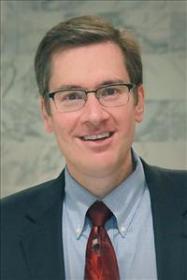
David Bogard is a Professor in the Department of Mechanical Engineering at The University of Texas at Austin, holding the Baker Hughes Incorporated Centennial Professorship. He leads research in thermal-fluid systems and turbulence, with a focus on turbine blade cooling and drag reduction. His work combines experimental and computational methods to optimize film cooling designs, thermal barrier coatings, and internal cooling channel configurations. Key contributions include studies on shaped film cooling holes, additive manufacturing applications, and crossflow effects in turbine components. Educational background: Ph.D. in Mechanical Engineering from Purdue University (1982). Joined UT Austin faculty immediately post-Ph.D. Research interests emphasize turbine aerothermal performance, with specializations in: Adjoint-optimized film cooling hole geometries Compressible flow effects on cooling efficacy Additive manufacturing for turbine cooling components Thermal degradation mechanisms and contaminant deposition Recent work includes evaluating adjoint-optimized cooling hole performance (2024), printability of additively manufactured cooling geometries (2023), and crossflow-fed shaped hole analysis (2022). His research bridges fundamental fluid mechanics with industrial turbine design challenges. Awarded the 2002 Outstanding Graduate Advisor at UT Austin. Over 130 technical publications span experimental validation, CFD modeling, and turbine cooling innovation. Active in collaborative industry projects with companies like Baker Hughes. Labs/Teams: Turbulence and Turbine Research Cooling Laboratory. Collaborates with research centers focusing on aero-thermal systems and advanced manufacturing.
Dr. Gary Glover is a Professor of Radiology (Radiological Sciences Lab) at Stanford University , with courtesy appointments in Psychology and Electrical Engineering. His work focuses on the physics and mathematics of MRI, particularly rapid scanning methods using spiral k-space trajectories for functional brain imaging and multimodal neuroimaging (fMRI/EEG/fPET/fNIRS) combined with neuromodulation techniques like TMS and transcranial ultrasound. Academic Appointments: Radiology, Psychology, Electrical Engineering Professional Affiliations: Bio-X, Stanford Cancer Institute, Wu Tsai Neurosciences Institute Research Interests include: Development of blood oxygen level-dependent (BOLD) and viscoelastic contrast in MRI Functional MR Elastography for brain activation mapping Optimization of MR-ARFI for transcranial ultrasound guidance Automated spinal cord segmentation (EPISeg) using machine learning Scientific Awards : National Academy of Engineering (2013) Gold Medal, ISMRM (2000) Steinmetz Award, General Electric (1985) Lauterbur Lecture, ISMRM (2018) Recent Publications analyze: Fast fMRI sampling and spurious signal correction Dissociated patterns in default mode network anti-correlations Neural correlates of collaborative behavior in triadic fMRI Salience network contributions to depression pathophysiology
Chris Freeman is a Professor of Robotics and Control at the University of Southampton's Electronics and Computer Science (ECS) school. His research focuses on iterative learning control theory, biomedical engineering, and robotics with applications in industrial automation and healthcare. As Deputy Head of School (Equity, Diversity and Inclusion) and Chair of the ECS Belonging, Inclusion, Diversity and Equity (BIDE) Committee, he drives initiatives promoting inclusive academic environments. Freeman leads multidisciplinary research projects such as "Towards intelligent, pervasive, high performance control system architectures" "Elder Athletes: building incidental interaction at home" "Low-cost personalised instrumented clothing with integrated FES electrodes" . His work combines robotics, functional electrical stimulation (FES), and wearable technologies to develop rehabilitation systems for stroke patients and industrial automation solutions. His recent publications demonstrate expertise in iterative learning control (ILC), model predictive control, and biomedical applications. Research groups include: Digital Health and Biomedical Engineering Institute for Life Sciences Centre for Health Technologies Centre for Robotics
George Nacouzi is a Senior Engineer at RAND Corporation and a Professor of Policy Analysis at the RAND School of Public Policy. He specializes in strategic defense research, focusing on space systems resilience, missile defense, hypersonic technologies, and nuclear command systems. His work bridges technical analysis with policy implications, particularly in integrating commercial space services into U.S. military operations. Education: Ph.D. in Mechanical and Aerospace Engineering from the University of California, Irvine. Prior to RAND, he held senior engineering roles at TRW and Northrop Grumman, analyzing space and missile defense systems. He also taught space-related courses at UC San Diego and Northrop Grumman. Research Interests: Space domain awareness, commercial space contributions to national security, orbital operations, small satellite applications, and the impact of emerging technologies on strategic stability. His work emphasizes non-materiel resilience strategies and policy frameworks for space systems. Key Article Trends: Recent publications focus on AI/ML applications for space domain awareness, commercial space integration challenges, and hypersonic missile nonproliferation. He explores how evolving technologies disrupt traditional military domains and influence global stability. Scientific Awards: None explicitly mentioned in provided texts. Advising & Grants: No formal advisees listed, but leads research projects at RAND’s Project AIR FORCE and National Security Research Division. His work is funded by U.S. Department of Defense and Congressional mandates. Labs/Teams: Affiliated with RAND’s Project AIR FORCE and National Security Research Division, collaborating with U.S. Space Force and Department of the Air Force on strategic initiatives.
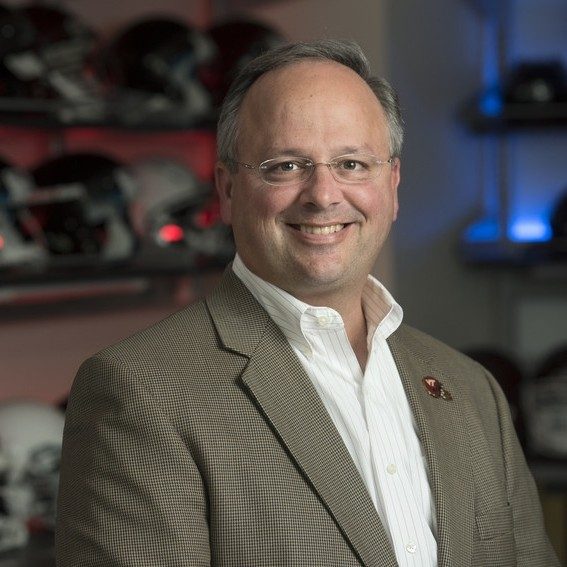
Stefan Duma is the Harry C. Wyatt Professor of Engineering and a University Distinguished Professor at Virginia Tech. He is currently serving as Interim Department Head in the Department of Biomedical Engineering and Mechanics within the College of Engineering. He also directs the Institute for Critical Technology and Applied Sciences and leads the Virginia Tech Helmet Lab. His educational background includes: Ph.D. in Mechanical Engineering from the University of Virginia (2000) M.S. in Industrial Engineering from the University of Cincinnati (1996) B.S. in Mechanical Engineering from the University of Tennessee (1995) Dr. Duma's research focuses on injury and impact biomechanics, with applications in automobile safety design , sports biomechanics (especially football and hockey), and military restraint systems . His work investigates head and neck injury mechanisms, concussion thresholds, and protective equipment performance. He has pioneered methodologies for evaluating helmet safety and individualized injury tolerance. The recent publications reflect a strong focus on head impact biomechanics , concussion prediction , and wearable sensor validation . The research spans youth and collegiate sports, drone impact risks, and automotive safety. Key themes include individual variability in injury response, helmet performance assessment, and translational safety applications. Scientific recognition includes his appointment as a University Distinguished Professor and leadership roles, though specific awards are not listed in the provided text. Dr. Duma advises a team of researchers and students, including Steven Rowson, Abigail Tyson, and Eamon Campolettano. His lab has secured significant research funding (implied by patent and publication volume), particularly in developing safety standards and injury prevention technologies. The Virginia Tech Helmet Lab is central to his research, conducting experiments with human volunteers, PMHS, and advanced instrumentation. His lab, the Virginia Tech Helmet Lab, is a leading center for impact biomechanics research, focusing on real-world safety challenges in sports, transportation, and emerging technologies like drones.
Professor Chee Yew Wong is a leading academic in supply chain management at Leeds University Business School (LUBS), where he holds the position of Professor and serves as Director for Research & Innovation in the Analytics, Technology and Operations department. He previously held a Chair in Logistics and Supply Chain Management at Hull University Business School and has served as a visiting professor in Thailand and China. His work bridges academia and industry, with over nine years of professional experience in operations and supply chain roles across multinational corporations and SMEs. His educational background includes a PhD in Supply Chain Management from Aalborg University, Denmark; an MSc in Manufacturing Management from Linköping University, Sweden; a BEng in Mechanical Engineering from the University of Technology, Malaysia; and a PG Certificate in Higher Education from Hull University, UK. Professor Wong's research centers on intelligent, responsible, and sustainable solutions for global supply chains. Key interests include digital supply chains, supply chain analytics, green logistics, human rights in supply chains, resilience, and circular economy models. He leverages technologies such as blockchain, machine learning, and IoT to enhance transparency, integration, and performance in complex supply networks. The analysis of his recent publications reveals a strong trend toward digital transformation, sustainability, and ethical governance in supply chains. His work increasingly emphasizes data-driven decision-making, environmental and social risk assessment, and the role of technology in enabling responsible global sourcing. Many projects focus on real-world applications in industries such as healthcare, fashion, retail, and manufacturing, often through Knowledge Transfer Partnerships with industry leaders. Best Reviewer Award, Operations and Supply Chain Management Division, Academy of Management Conference, Chicago, USA (2018) Prof. Xiande Zhao's Best Paper Award, International Conference on Operations and Supply Chain Management, Kaifeng, China (2017) Finalist for the Jack Meredith Best Paper Award, Academy of Management Conference, Anaheim, USA (2016) Emerald Best Paper Award, Supply Chain Management: an International Journal (2006) Professor Wong has successfully supervised 10 PhD students and 4 post-doctoral researchers, and has examined over 15 PhD dissertations internationally. He leads multiple research grants, including projects funded by Innovate UK, UKRI, ESRC, and the British Council, focusing on digital transformation, human rights, and green supply chain innovation. His collaborations span academia, government, and industry, demonstrating a strong commitment to impactful, applied research. He is actively involved in the Centre for Operations and Supply Chain Research, the Adaptation Information Management and Technology group, and the Centre for Decision Research at LUBS. These research groups support interdisciplinary work in analytics, digital technologies, and sustainable operations, fostering innovation and knowledge exchange across sectors.
Rajeev Balasubramonian is a Professor and Associate Director at the School of Computing, University of Utah. He specializes in computer architecture, with a focus on memory systems, emerging technologies, and energy-efficient computing. His research addresses challenges in DRAM/NVM architectures, security, and acceleration for big data and machine learning workloads. Education: PhD in Computer Science (University of Rochester, 2003), M.S. (University of Rochester, 2000), B.Tech in Computer Science (IIT Bombay, 1998). Research Interests: Memory reliability, near-data processing, cache hierarchies, transactional memory, and hardware-software co-design for emerging technologies. He has led projects on crossbar accelerators, secure memory systems, and resistive memory architectures. Recent Trends in Publications: Focus on encrypted inference (Hyena), data prefetching (PATHFINDER), and neuromorphic computing (SpinalFlow). His work bridges hardware and software, emphasizing practical acceleration and security solutions. Awards: IEEE Fellow (2021), Google Faculty Awards (2019/2020), Intel Research Award (2017), and multiple best paper awards (ISCA, ISPASS, PACT). Grants & Students: Over $4M in NSF/industry funding. Advised 15+ PhD students (e.g., Ali Shafiee, Karl Taht) and currently mentors researchers in resistive memory and security accelerators. His lab includes teams like Utah Arch Research Group. Labs & Teams: Leads the Utah Arch Research Group , organizing workshops on near-data processing and memory systems (e.g., ISCA, HPCA).
Jens Krause is a Professor and Head of Department at the Leibniz Institute of Freshwater Ecology and Inland Fisheries (IGB) in Berlin, leading the Research Group on Mechanisms and Functions of Group-Living. He holds a full professorship in Fish Ecology at Humboldt-Universität zu Berlin, Faculty of Life Sciences, Thaer-Institute, and since 2018 has been an Adjunct Professor at Technical University Berlin within the Excellence Cluster 'Science of Intelligence'. His research is centered on collective intelligence, social networks, decision-making, and behavioural ecology in fish and other animals. Full Professor in Fish Ecology, Humboldt-Universität zu Berlin Adjunct Professor at Technical University Berlin (since 2018) Head of Department, IGB Berlin PhD, University of Cambridge Diploma, Free University Berlin His work integrates experimental biology, network analysis, and biomimetic robotics to understand how animals make collective decisions. His expertise spans animal behaviour, evolution, and ecological physiology, with a strong focus on group-living dynamics. Recent research explores group hunting, predator evasion, social foraging, and the impact of environmental stressors on collective behaviour. The analysis of his recent publications reveals a strong trend in understanding collective behaviour in fish, including escape waves, social foraging, group hunting in marlins and sailfish, and the use of robotic agents to study social integration. His interdisciplinary approach combines marine biology, physics, robotics, and data science to uncover the mechanisms behind collective intelligence in both animal and human systems. Editorial Board, Behavioral Ecology Editorial Board, Fish and Fisheries Executive Board, Excellence Cluster 'Science of Intelligence' Advisory Board, Bimini Biological Field Station Foundation He advises numerous PhD students and postdoctoral researchers, and leads major research projects, including 'Developing exploration behaviour' funded by the Excellence Cluster. His work has been supported by extensive collaborations across Europe and North America, and he frequently publishes in top-tier journals such as Nature , Science Advances , Proceedings of the Royal Society , and Current Biology . His lab employs cutting-edge methods including automated tracking, social network analysis, and interactive robotics to study animal groups. His research group, 'Mechanisms and Functions of Group-Living', is embedded within the Excellence Cluster 'Science of Intelligence', where they investigate collective cognition, social information use, and the role of individual differences in group performance. The team combines field studies with laboratory experiments and computational modelling to understand the evolution and function of collective behaviour across species.
Dr. Anne-Kathrin Fett is a Senior Lecturer in the Department of Psychology within the School of Health and Psychological Sciences at City St George's, University of London. She is Co-director of the Research Centre for Clinical, Social and Cognitive Neuroscience (CSCN) and holds a secondary affiliation with King’s College London. Her research integrates clinical, biological, and cognitive neuroscience approaches to understand social functioning in psychosis and mental health. Research Interests: Her research focuses on the psychological, epidemiological, and neuroscientific mechanisms underlying social functioning, loneliness, and social isolation in both the general population and individuals with psychotic disorders. Key areas include student mental health, especially during the COVID-19 pandemic, and the neurocognitive basis of social cognition in psychosis. Recent Research Trends: Her recent publications highlight a consistent focus on social cognition, particularly in schizophrenia and early psychosis. Themes include emotion recognition, theory of mind, metacognition, and the impact of environmental and biological factors. There is a growing emphasis on longitudinal and population-based studies, including the mental health effects of global crises such as the pandemic. Scientific Awards and Honors: Dutch Research Council Veni Fellow Brain and Behaviour Foundation (NARSAD) Young Investigator Grant Fellow of the Higher Education Academy Teaching and Supervision: Dr. Fett leads and teaches on core psychology modules including Biological Approaches to Mind and Behaviour (PS1005) and Introduction to Clinical Psychology (PS2008), as well as the CSCN MSc program. She supervises BSc, MSc, PhD, and DPsych (counselling) dissertation projects and welcomes inquiries for PhD and internship positions. Research Leadership: She is Co-director of the Research Centre for Clinical, Social and Cognitive Neuroscience, fostering interdisciplinary research in clinical and cognitive neuroscience. She is also an editorial board member of Schizophrenia Research: Cognition and actively contributes to the Schizophrenia International Research Society, the International Early Psychosis Association, and UKRI networks on loneliness and student mental health.
Daniel J. Abadi is a prominent researcher in database systems at Yale University. With over two decades of impactful research, he has made significant contributions to the fields of distributed databases, transaction processing, and column-oriented database systems. His work bridges theoretical foundations with practical implementations that have influenced both academia and industry. Dr. Abadi's research primarily focuses on database system architecture, with particular emphasis on: Distributed and geo-replicated database systems High-performance transaction processing Column-oriented and analytical database systems Stream processing and real-time analytics Cloud and serverless database technologies Integration of machine learning with database systems His recent work shows a continued focus on addressing scalability challenges in modern database systems, with particular attention to multi-region transaction processing, automated data management, and the integration of machine learning techniques. The trend in his publications indicates a strong emphasis on practical, deployable systems that solve real-world problems faced by industry. Dr. Abadi has been instrumental in several major research initiatives and reports that have shaped the direction of database research, including the Seattle Report and the Cambridge Report on Database Research. Throughout his career, Dr. Abadi has mentored numerous students and collaborated extensively with leading researchers in the field. His work has received significant recognition through widespread citations and adoption of his ideas in both academic and industrial database systems.
Michael Brito is a Lecturer in Mass Communications and Social Media at the School of Journalism and Mass Communications, College of Humanities and the Arts, San José State University. He is also a seasoned industry leader, currently serving as the Global Head of Data + Intelligence at Zeno Group, where he leads a 50-member analytics team supporting global clients in B2B, consumer, technology, and healthcare sectors. His academic and professional work bridges digital marketing, brand strategy, and data-driven communications. Michael’s research interests include digital marketing, social media strategy, brand communications, narrative intelligence, audience segmentation, and AI applications in PR. He is a recognized thought leader with extensive publications and blog posts exploring brand archetypes, earned media, customer engagement, and the future of digital storytelling. His work emphasizes the integration of data analytics into strategic communications to enhance brand visibility and audience connection. The trends in his recent articles reflect a strong focus on artificial intelligence in public relations, media intelligence, narrative analysis, and the evolution of digital customer journeys. His writings analyze tools like Pulsar and Cision, explore generative AI in search, and critique traditional metrics like earned media value, advocating for more sophisticated, insight-driven approaches. Top 50 Social Intelligence Pioneers by The Social Intelligence Lab Dashboard 25 Class of 2022 by PRWeek Top 25 Digital PR Innovators by PRovoke Media Michael Brito mentors students in digital communications and advises on strategic brand development. He has led major initiatives in media monitoring, social intelligence, and data-informed PR outreach. He founded and contributes to a widely-read blog on social media marketing and is a frequent speaker at industry events, including TEDx. He is also a proud U.S. Marine veteran, bringing leadership and discipline to his academic and professional roles. He is actively involved in the COMM+ lab at SJSU and supports student media through his teaching and mentorship. His work continues to influence both academic curricula and industry best practices in digital communications and brand analytics.
Professor John W. O'Neill is a Professor of Hospitality Management at Pennsylvania State University's School of Hospitality Management. He serves as Director of the Hospitality Real Estate Strategy Group, focusing on real estate, asset management, and strategic management in the hotel industry. His research bridges financial analysis with operational strategies in hospitality. Education : B.S. in Hotel Administration from Cornell University M.S. in Real Estate from New York University Ph.D. in Business Administration from University of Rhode Island O'Neill's research explores hotel financial performance, debt servicing, brand affiliation, work-family dynamics, and market disruption from platforms like Airbnb. His work combines empirical analysis with strategic frameworks to address industry challenges. Leadership and Research Groups : Director, Hospitality Real Estate Strategy Group Active researcher in hotel valuation and operational risk
Massimo Canale is a Tenured Associate Professor at the Department of Electronics and Telecommunications (DET) of Politecnico di Torino , and a member of the CARS@PoliTO Interdepartmental Center for Automotive Research and Sustainable Mobility. His academic career spans over two decades, focusing on control systems engineering with applications in automotive technology. Scientific Branch: Systems and Control Engineering (IINF-04/A) ERC Sectors: Automotive Engineering, Control Engineering, Control Theory Dr. Canale's research bridges theoretical advancements in Model Predictive Control (MPC) with practical applications in autonomous vehicles , hybrid/electric propulsion , and active suspension systems . His work integrates reinforcement learning and dynamic programming for optimizing vehicle performance and energy efficiency. Recent publications demonstrate trends in autonomous driving architectures (2024), sliding mode control for highway scenarios (2024), and energy management for sustainable mobility (2023-2024). He has developed patented solutions for semi-active suspension control and autonomous vehicle guidance. Award: IEEE Transactions on Control Systems Technology Outstanding Paper Award (2011) Editorial Roles: Associate Editor, IEEE Open Journal of Control Systems (2022–present) Dr. Canale supervises PhD students like Francesco Cerrito and teaches courses on digital control technologies , automatic control , and reinforcement learning at Politecnico di Torino. His research is funded through competitive grants (e.g., MPC4AVP 2021-2022) and commercial contracts (AD Shuttle 2024).
Dr. Xiaopeng Li is the Harvey D. Spangler Professor in the Department of Civil and Environmental Engineering at the University of Wisconsin-Madison, with an affiliation in the Department of Electrical and Computer Engineering. He leads the USDOT Rural Autonomous Vehicle Program and previously directed the National Institute for Congestion Reduction. He earned his B.S. in Civil Engineering from Tsinghua University (2006), M.S. in Civil Engineering (2007), M.S. in Applied Mathematics (2010), and Ph.D. in Civil Engineering (2011) from the University of Illinois at Urbana-Champaign. His research focuses on modeling and field experiments for connected, electric, and automated vehicles (CAVs), infrastructure systems analysis, and interdependent network modeling. He has pioneered physics-enhanced machine learning frameworks for vehicle control and developed simulation tools for CAV deployment. His 2025-2024 publications highlight advancements in Connected vehicle trajectory modeling Energy consumption optimization Edge computing for autonomous operations Residual learning control systems Equity analysis in AV deployment Communication technologies for V2X Awards include: TRB Best Paper Award (2025) NSF CAREER (2015) ASCE Fellow (2024) IEEE Senior Member (2022) Multiple institution-specific fellowships He has advised 15+ graduate students, secured $35M+ in grants from NSF, USDOT, and industry partners, and chairs the IEEE ITSS Emerging Transportation Technology Testing committee. His work addresses real-world AV implementation, safety validation, and sustainable transportation systems.