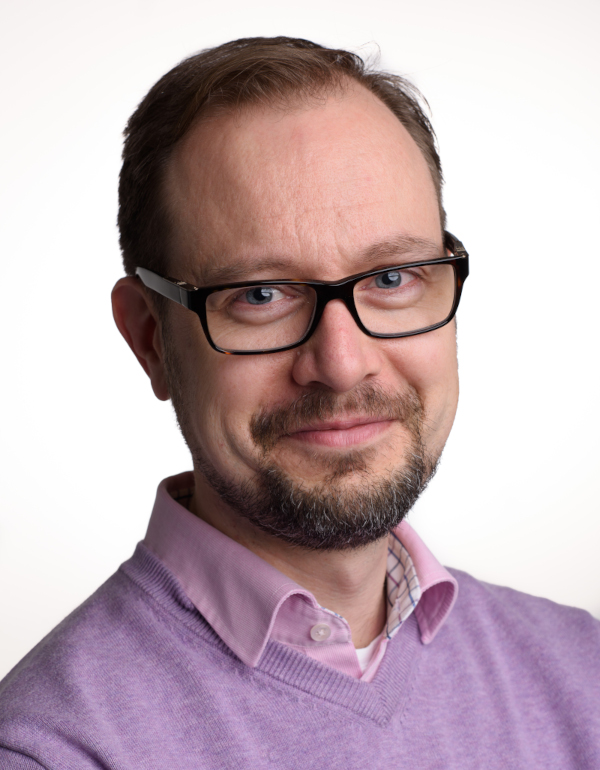
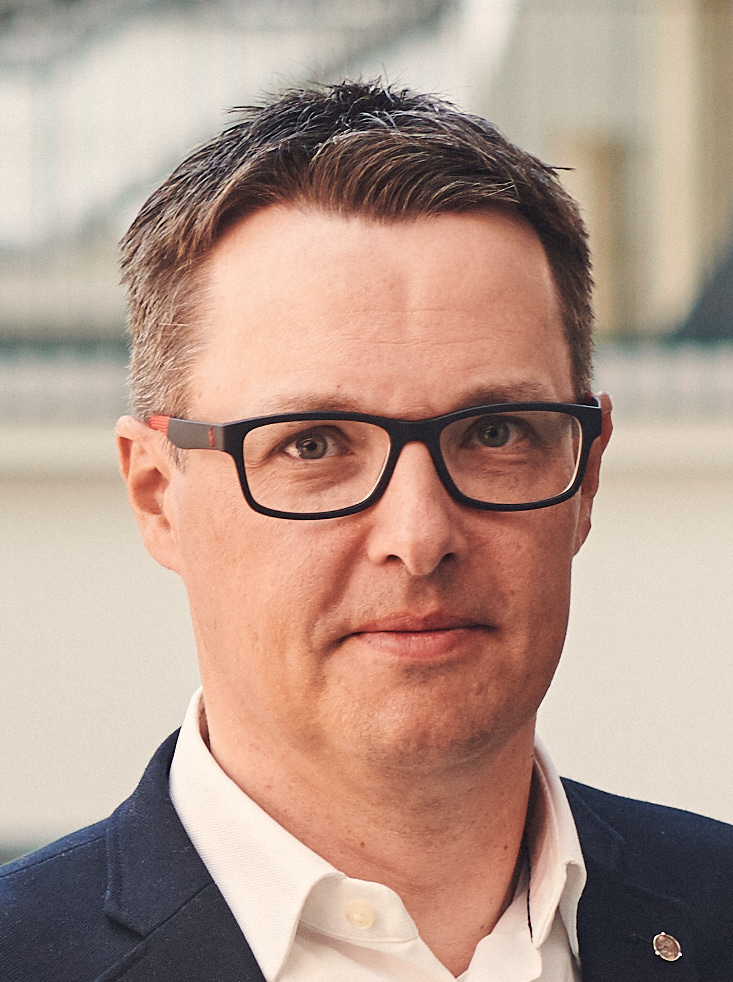
Fabian Fagerholm is an Assistant Professor in the Department of Computer Science at Aalto University. His work bridges software engineering, human-computer interaction, and empirical research methodologies. He actively participates in research groups such as Software and Service Engineering (SSE) and Human-Computer Interaction and Design (HCID). Fagerholm's research explores: Continuous experimentation in software development Developer cognition and mental models Agile methodologies and team dynamics Low-code platforms and end-user programming Software engineering education and pedagogy His publications reflect a strong empirical focus, with recurring themes of human factors in technical systems and educational innovation. He has received notable awards including: Journal of Systems and Software Best Paper Award (2018) EUROMICRO SEAA Distinguished Paper Award (2017) Teacher of the Year (2013) Nokia Foundation Scholarship (2013) Fagerholm contributes to software engineering infrastructure through tools for experimentation and boundary artifacts, enhancing collaboration in distributed teams.
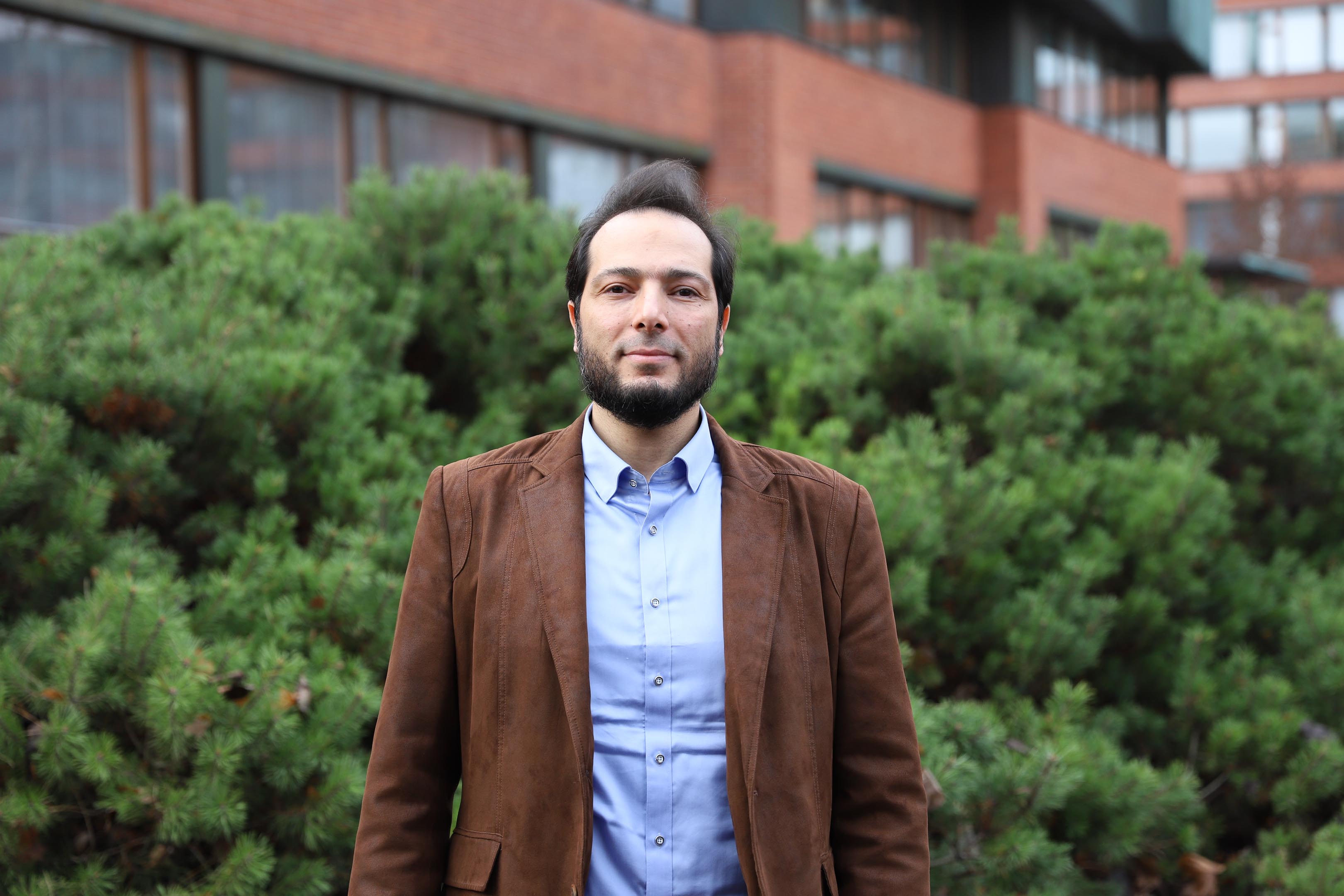
Mohamed Noureldin is an Assistant Professor at the Department of Civil Engineering, Aalto University , Finland, with prior academic roles at Sungkyunkwan University, South Korea (2015–2022). His expertise lies in integrating Artificial Intelligence (AI) with Structural Health Monitoring (SHM) , Structural Digital Twin , Predictive Maintenance , and Seismic Retrofitting . Research Focus : AI-powered sustainable structural design, smart retrofitting, predictive maintenance, structural material innovation, and next-generation performance-based seismic/wind design. Industrial Experience : 20+ years in offshore/onshore structural engineering (Hyundai Heavy Industries, Samsung Engineering, Arab-Swiss Engineering Company, Zuhair Fayez Partnership). Teaching : Courses in structural analysis, seismic design, dynamics, and reinforced concrete at Aalto and Sungkyunkwan Universities. Laboratory : Leads the Structural Design AI Lab (SDAI), focusing on AI-driven resilient infrastructure. Contact : mohamed.noureldin@aalto.fi , +358504544861. His publications explore cutting-edge applications of AI, ML, and DL in seismic retrofitting, structural durability, soil stabilization, and hybrid damping systems. Collaborative work emphasizes life-cycle cost assessment and augmented reality for predictive maintenance.
Janne Lindqvist is an Associate Professor at the Department of Computer Science, Aalto University. His research bridges security engineering, human-computer interaction (HCI), and privacy, with a focus on making security systems usable and user-centric. University: Aalto University Department: Department of Computer Science Rank: Associate Professor Email: janne.lindqvist@aalto.fi Lindqvist’s work spans security engineering , privacy systems , and user research , emphasizing practical authentication methods, password management, and human behavior in security contexts. He explores how users interact with systems like TPM APIs, gesture passwords, and mobile authentication mechanisms. Recent publications highlight trends in authentication systems , ubiquitous computing security , and mobile user behavior . Key themes include biometric authentication, gesture-based security, and balancing usability with cryptographic robustness. CHI'25 Honorable Mention Award CHI'24 Best Paper Award His research integrates empirical studies with technical implementations, such as analyzing password forgetting patterns and developing acoustic sensing for vehicle detection (e.g., Auto++, BO-Ear). Collaborative efforts span machine learning, psychology, and embedded systems.
Petri Myllymäki serves as Director of multiple prominent research entities at Aalto University's School of Science, including the Helsinki Institute for Information Technology (HIIT), the Department of Computer Science, the Finnish Center for Artificial Intelligence (FCAI), and his own research group. His leadership positions demonstrate significant influence in the Finnish and international AI research community. Dr. Myllymäki's research focuses on information discovery, Bayesian networks, information retrieval, and machine learning. His work bridges theoretical computer science with practical applications, particularly in developing systems that enhance how humans interact with information spaces. His research fingerprint prominently features Information Discovery (100%), Bayesian Networks (50%), Hashing (50%), Approximation Algorithms (50%), Information Retrieval (50%), structure learning (50%), Search Engine technology (37%), and Task Performance (33%). His recent publications (2015-2025) reveal a consistent trajectory in interactive information discovery systems, with increasing applications in diverse domains including decision science, public health, and social media analysis. Notably, his 2024-2025 work shows expansion into cognitive burden in decision-making, health outcomes research using machine learning, and political social media analysis – demonstrating how his core AI methodologies are being applied to address complex societal challenges. Recognized at AI Finland Gala 2024 for contribution reaching over 1.4 million users Featured in multiple media outlets including X (formerly Twitter) and Bluesky Work referenced in patents and Wikipedia pages Dr. Myllymäki actively hosts academic visitors and participates in collaborative research activities. His work contributes to UN Sustainable Development Goals through applications in information access and AI development. The Myllymäki Petri group (HIIT) serves as a hub for interdisciplinary research at the intersection of artificial intelligence, human-computer interaction, and information systems.
Toni Kotnik is an Associate Professor in the Department of Architecture at Aalto University, Finland. He holds dual expertise in mathematics and architecture, with a Ph.D. from the University of Zurich and a second degree in architecture. His roles include principal of d’HKL , a Zurich-based experimental architecture firm, and adjunct lecturer at institutions like Harvard University and the Bartlett School of Architecture. His research focuses on integrating science, engineering, and computation into architectural design, emphasizing structural innovation and sustainability. Education: Ph.D. in Mathematics (Dr. sc. Nat.), University of Zurich, 1999 Second degree in Architecture Research Interests: Computational design and generative systems Structural aesthetics and neuroaesthetics Sustainable urban and architectural solutions Parametric modeling and material systems Key Contributions: Advances in graphic statics and form-finding Design strategies for high-density urban environments Integration of AI and generative tools in architectural practice Recent Work Trends: Recent articles emphasize computational methods for industrial layout optimization, AI’s role in architecture, and embodied perception in structural design. His work bridges theoretical research with practical applications, such as the Singapore Hawker Centre redesign and experimental structures like hypar-combined shells. Awards: Aalto University Doctoral Thesis Awards (2022) Best Presentation Award (2019) Oscari-Vilamo Award (2023) Advising & Grants: Supervised 4 theses, including recipients of awards like the Metex Award shortlist. Active in international academic networks, serving on conference committees (e.g., International Association for Shell and Spatial Structures) and editorial roles (e.g., Automation in Construction journal). Labs & Teams: Leads the d’HKL studio, collaborating globally on projects like the AA/ETH Pavilion and the Hypercube for Gardens by the Bay. Research focuses on experimental design and material systems.
Suvi Saarikallio is a Professor of Music Education at the University of Jyväskylä, Finland , affiliated with the Faculty of Humanities and Social Sciences and the Department of Music, Art and Culture Studies . She leads interdisciplinary research bridging music psychology, education, and therapy, with a focus on youth development, emotion regulation, and well-being. Research Groups: Centre of Excellence in Music, Mind, Body and Brain (2022-2029), Musiconnect (2022-2027) Key Projects: Music and You, Stress & music listening, MPACT (Music and Sports), Music and Cross-modal Associations, SOSUS (Social Sustainability for Children) Research Trends: Her recent publications explore music's role in emotional regulation, cross-modal perception, health outcomes, and educational applications. Themes include AI's impact on music evaluation, rhythm's connection to cognitive skills, and music's influence on stress and social-emotional development. Contact: suvi.saarikallio@jyu.fi
Jari Holopainen is a Senior Lecturer at the Department of Electronics and Nanoengineering , Aalto University. His work focuses on advanced antenna systems, wireless communication, and RFID technologies, with significant contributions to broadband, tunable, and wearable antenna designs. Current affiliation: Aalto University Academic role: Senior Lecturer Research interests span antenna design for mobile terminals, microwave engineering, and machine learning applications in RF systems. His publications highlight innovations in: Bluetooth antennas for metallic smartwatches and jewelry Wideband and dual-polarized antenna arrays RFID transponders with beam steering Machine learning-driven load optimization 3D-printed and capacitive-coupling antenna structures Wave propagation and scattering analysis Scientific contributions include: 15+ peer-reviewed articles (2025-2020) Collaborations with leading researchers in electromagnetics (e.g., Ville Viikari, Pertti Vainikainen)
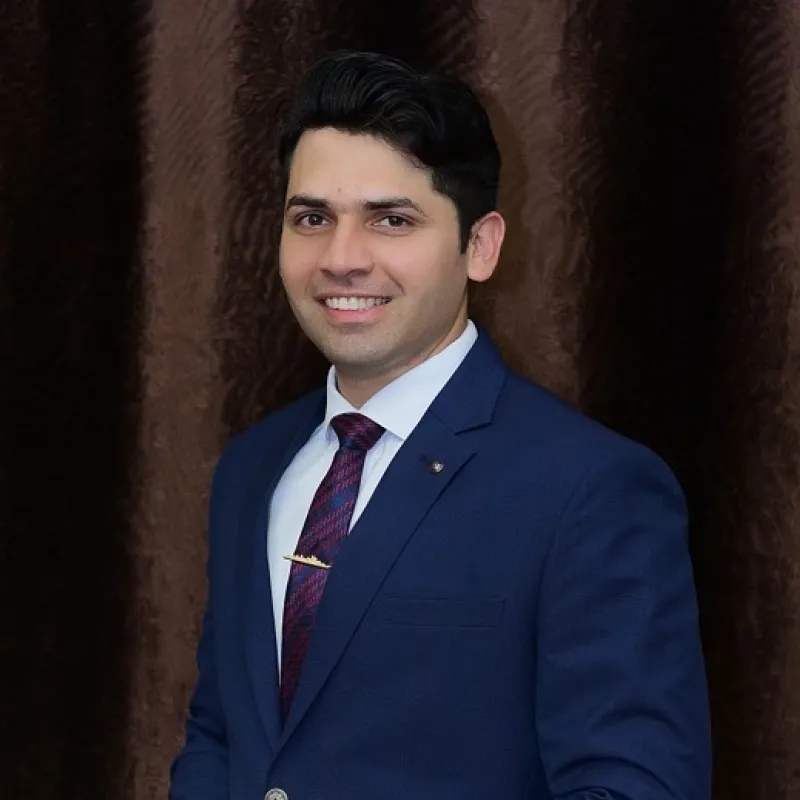
Adeel Tariq is a Post-Doctoral Researcher at the Industrial Engineering and Management department of LUT School of Engineering Sciences , Lappeenranta University of Technology, Finland. He completed his Ph.D. (2019) and MBA (2014) at the School of Management , Asian Institute of Technology, Thailand. Research Focus: Technology and innovation management, digital transformation, sustainable development, knowledge management, and leadership studies. Peer Review: Active reviewer for journals including Leadership & Organization Development Journal , Journal of Intellectual Capital , and European Journal of Innovation Management . Collaborations: Regular co-author with Waqas Tariq, Muhammad Saleem Sumbal, and Marko Torkkeli on topics like digital governance, fintech, and SME sustainability.
Weiwei Lin is an Associate Professor in the Department of Civil Engineering at Aalto University, specializing in structural engineering with a focus on bridge systems, composite materials, and structural health monitoring. His research explores fatigue behavior of steel structures, seismic performance of composite systems, and innovative repair techniques. He holds a PhD from Waseda University (2012), MSc from Southeast University (2009), and BEng from Southwest Jiaotong University (2006). Key research areas include: steel-concrete composites, bridge redundancy evaluation, replaceable energy dissipaters, and AI-driven infrastructure diagnostics. Lin leads projects like CCU Structure (EU Horizon Europe) and RCF Mobility initiatives, focusing on sustainable construction and material recyclability. He has published 120+ peer-reviewed articles and secured 6 major grants. Lin has received prestigious awards including the IABMAS Young Award (2014) and Outstanding Reviewing Award (2017). His lab collaborates globally, hosting researchers from institutions like Israel Institute of Technology and Tsinghua University. Current work emphasizes crowdsourcing-based bridge monitoring and physics-guided AI frameworks for infrastructure diagnostics.
Jukka Manner is a Full Professor (tenured) of Networking Technology at Aalto University's Department of Communications and Networking (Comnet), School of Electrical Engineering. With a career spanning over two decades in internet technologies, he leads research in networking, wireless systems, and energy-efficient ICT solutions. Dr. Manner received his MSc (1999) and PhD (2004) degrees in computer science from the University of Helsinki. His academic journey has been marked by significant contributions to internet standardization through the IETF since 1999, where he served as co-chair of the NSIS working group. Professor Manner's research focuses on networking, software and distributed systems, with particular emphasis on wireless and mobile networks, transport protocols, energy efficient ICT and cyber security. His work bridges theoretical advancements with practical applications, addressing critical challenges in modern communication systems, sustainable networking practices, and security frameworks. His research group has made significant contributions to 5G technologies, UAV communications, and energy-efficient network design. His extensive publication record shows a clear evolution toward sustainability in networking technologies, with recent work focusing on energy efficiency in 5G systems, sustainable web technologies, and the environmental impact of digital infrastructure. The research demonstrates strong interdisciplinary connections between telecommunications engineering, computer science, and environmental science, with particular emphasis on reducing the carbon footprint of digital systems while maintaining performance. Cross of Merit, Signals (2014) Medal for Military Merits for contributions in national defence and C4 (2015) Professor Manner has supervised over 200 MSc theses and more than 20 doctoral dissertations, establishing himself as a dedicated mentor in the field. He has been principal investigator and project manager for over 15 national and international research projects, including serving as Academic Coordinator for the Finnish Future Internet research programme (2008-2012). His leadership extends to conference organization, having served as local co-chair of Sigcomm 2012 in Helsinki, and active participation as a peer reviewer and member of various Technical Program Committees. As an active contributor to internet standardization through the IETF, Professor Manner's work has practical impact on global networking technologies. His research group maintains strong connections with industry partners and participates in shaping future networking standards and practices, particularly in the areas of sustainable networking, 5G evolution, and security frameworks for emerging technologies.
Juha Ojala is a Professor of Music Performance Research at the DocMus Doctoral School within the Sibelius Academy of the University of the Arts Helsinki, Finland. His research focuses on music performance practices, compositional processes, pedagogical approaches in music education, and the cognitive dimensions of musical perception and signification. He holds a central role in advancing interdisciplinary studies at the intersection of musicology, performance studies, and educational theory. Current research emphasizes how performers interpret and communicate musical meaning through embodied practices and how listeners cognitively process these artistic expressions. No specific grants, awards, or student advisement details are documented in the provided text. The DocMus affiliation indicates involvement in training doctoral candidates in music-related research disciplines.
Inigo Flores Ituarte is a Research Professor at Tampere University's Faculty of Engineering and Natural Sciences, affiliated with the Automation Technology and Mechanical Engineering department. He leads the Digital Design and Manufacturing (D2M) research lab, focusing on sustainable manufacturing and twin-transition strategies integrating digital and green technologies. His work emphasizes optimization-driven design, additive manufacturing innovations, and AI-driven expert systems to enhance energy efficiency and reduce environmental impacts. Key research pillars include: Pillar 1: Twin-transition in Engineering Design and Manufacturing Processes, addressing sustainable manufacturing and intelligent systems Pillar 2: Development of open D2M systems and Process-Structure-Property-Performance (PSPP) linkages in advanced materials His research explores multi-disciplinary optimization combining model-based simulations and data-driven techniques. Notable contributions include generative AI integration in CAD systems, cognitive manufacturing systems, and cost-effective process monitoring using CNN-based methods. Inigo's work emphasizes environmental sustainability, with a focus on reducing manufacturing's energy consumption (54% of global use) and CO2 emissions. He advocates for interconnected material systems, smart manufacturing processes, and AI-assisted decision-making to achieve cognitive intelligence in industrial operations. His D2M lab's overarching goal is to maximize product/process performance while improving cost-effectiveness and minimizing environmental footprints. Recent projects include railway bogie demonstrators via multi-material deposition and sensor systems leveraging IoT and ChatGPT integration.
Kristiina Kumpulainen is a Professor at the University of Helsinki's Faculty of Educational Sciences, leading the Learning, Culture & Interventions (LECI) research group. Currently on leave but actively engaged in research, she supervises doctoral students in both the Doctoral Program in Cognition, Learning, Teaching and Communication and the Doctoral Program in School, Education, Society and Culture. Her scholarly contributions include 270 research outputs and leadership of 27 research projects, with recent work focusing on children's digital experiences and early childhood education systems. Her research interests center on educational sciences with emphasis on early childhood education, digital literacy development, learning environments, and educational change processes. She examines how children interact with technology, develop ecological imagination, and build multiliteracy skills across different contexts. Her work bridges theoretical frameworks with practical educational interventions, particularly examining agency-structure dynamics in educational settings and the implementation of child-centric educational systems. Analysis of her recent publications reveals consistent focus on digital childhoods, educational interventions, and comparative early childhood education systems. Her work spans multiple methodologies including qualitative case studies, comparative analyses, and theoretical explorations of learning across contexts. The research demonstrates strong international collaboration, particularly within Nordic countries and global comparative studies. Member of the Finnish Academy of Science and Letters (2019) 2020 Editor's Choice Award from British Educational Research Association (2021) Nomination for Outstanding Publication Award from EARLI (2002) Nomination for best paper award at THE POWER OF MEDIA IN EDUCATION Conference (2007) Professor Kumpulainen has supervised numerous doctoral students and served on dissertation committees. Her research has been supported by significant grants including the Australian Research Council, Finnish Academy of Science, and Nordic research networks. She actively participates in academic service through editorial boards, peer review activities (over 90 manuscript reviews), and professional committees. She directs the Playful Learning Center research laboratory, which focuses on innovative approaches to children's learning through play and technology integration.
Jarno Vanne is a Professor at the Department of Computing Sciences, Faculty of Information Technology and Communication Sciences at Tampere University. His research focuses on video coding standards, real-time systems, and hardware acceleration, particularly in the context of FPGA implementations and open-source tools. He leads projects involving VVC (Versatile Video Coding), V-PCC (Volumetric Video Coding), and HEVC (High Efficiency Video Coding), with an emphasis on efficiency, low latency, and machine learning integration. Key research interests include point cloud compression, saliency-guided encoding, parallelization schemes, and real-time video communication protocols. His work often addresses challenges in multi-party video streaming, embedded systems, and encryption mechanisms for privacy protection. He has contributed to open-source projects like the UVG dataset, Kvazaar encoder, and CiThruS simulation frameworks. Recent publications highlight advancements in VVC intra encoding optimizations, machine learning-driven partitioning schemes, and FPGA-accelerated solutions for edge computing. His research bridges theoretical video coding algorithms with practical implementations, aiming to improve compression efficiency while maintaining real-time performance.
Auezhan Amanov is an Associate Professor at the Faculty of Engineering and Natural Sciences, Tampere University, specializing in the Engineering Materials Science (EMS) department. His research focuses on tribology, surface engineering, and advanced materials processing. He leads the 'Tribology and Surface Modification' research group, aiming to enhance machine element performance through surface treatments and manufacturing innovations. Dr. Amanov is an active member of international tribology societies (STLE, JAST, KTS), chairing the 'Surface Engineering' committee at STLE. His work emphasizes improving wear resistance, fatigue life, and tribological performance of materials like titanium alloys, high-entropy alloys, and thermal spray coatings. His research integrates additive manufacturing, laser-based processes, and severe plastic deformation techniques to optimize material properties. Key contributions include studies on ultrasonic nanocrystal surface modification (UNSM) for enhancing mechanical and tribological characteristics. Collaborations with industries and academic institutions globally drive his mission to translate research into practical solutions for manufacturing efficiency and sustainable development. Dr. Amanov holds an h-index of 34 (Google Scholar) and has authored numerous peer-reviewed articles on materials science and tribology advancements. Teaching responsibilities include tribology and fatigue-related courses, reflecting his expertise in both academic and applied engineering domains. His vision includes advancing circular economy practices through bearing restoration technologies and improving 'Made in Finland' manufacturing competitiveness through material science innovations.