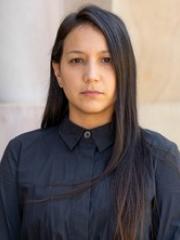
Byron Yu is a Professor in Electrical & Computer Engineering and Biomedical Engineering at Carnegie Mellon University, with affiliations to the Neuroscience Institute and Robotics Institute. He is a core faculty member of the Center for the Neural Basis of Cognition. Research focuses on computational neuroscience , neural dynamics , and brain-machine interfaces . Key contributions include dimensionality reduction techniques and neural population activity analysis. Recent publications explore topics such as neural dynamics during motor imagery, BCI optimization, and attentional processing. His work has appeared in Nature Neuroscience , Neuron , and eLife , often as cover articles. Awardees include the Gerard G. Elia Career Development Professorship and AIMBE Fellowship . His lab has mentored numerous PhD and postdoctoral researchers, many now in academic and industry leadership roles.
Snježana Babić serves as Associate Professor and Head of the Graduate Study Program Informatics - Teaching Major at the Faculty of Informatics in Pula , University of Pula. With a PhD obtained in 2016 and university affiliation since 2017, she teaches across undergraduate and graduate programs focusing on ICT fundamentals, web design, digital competencies, and informatics education methodology. Her educational background includes graduation in 1993 followed by doctoral studies culminating in 2016. Though specific institutions aren't detailed in the text, her career trajectory shows progression from foundational ICT teaching to specialized informatics education leadership. Babić's research centers on educational technology adoption with particular emphasis on programming pedagogy for young learners through the MEMA method. Her work investigates digital competencies across multiple educational contexts, from primary schools to higher education. Recent publications demonstrate rapid adaptation to emerging technologies, with 2025 studies examining ChatGPT integration in Croatian educational settings and cross-cultural applications of programming methods. Analysis of her 15 most recent publications reveals consistent focus on technology acceptance models applied to Croatian educators and students. The research trajectory shows evolution from foundational e-learning systems (2016-2020) to cutting-edge AI and robotics applications (2022-2025), maintaining strong methodological focus on teacher motivation , implementation barriers , and culturally-specific adoption factors . Her teaching portfolio demonstrates deep integration with research interests: Undergraduate: ICT Fundamentals, Web Design and Application Graduate: Digital Competencies in Education, Informatics Education Methodology, Practicum for IT Educators Cross-disciplinary: ICT in Nursing, Healthcare Informatics Babić actively contributes to institutional leadership as program head while maintaining robust research productivity. Her work bridges theoretical technology adoption frameworks with practical implementation challenges in Croatian educational contexts, particularly examining how emerging technologies like humanoid robots and AI assistants can be effectively integrated into teaching practices.
Andreas Bulling is a Professor at the Institute for Visualisation and Interactive Systems , University of Stuttgart, Germany. His research focuses on Human-Computer Interaction , Eye Tracking , and Computer Vision , with applications in Machine Learning , Virtual Reality , and Information Visualization . 2025 Publications: HOIGaze (Extended Reality), ChartQC (Data Visualization), HAIFAI (Human-AI Interaction), SummAct (Behavioral Summarization), Chartist (Chart Reading). 2024 Contributions: HumanEYEze (Multimodal AI), HOIMotion (3D Object Detection), MultiMediate'24 (Engagement Estimation), Unified Model of Saliency (Scanpath Prediction). His recent work explores gaze estimation , interactive behavior modeling , and privacy-preserving eye-tracking systems . Key subfields include Extended Reality , Neural Networks , and Behavioral Biometrics . While no explicit scientific awards are mentioned, his research has been widely cited (8,003 total citations) and downloaded (132,740 times). Andreas leads projects in Interactive Systems and collaborates with institutions such as Aalto University , KU Leuven , and National University of Singapore . His lab focuses on eye movement analysis , human motion forecasting , and task-driven input modeling .
Dr. Haneen Farah is an Associate Professor in the Department of Transport & Planning at Delft University of Technology and co-director of the Traffic and Transportation Safety Lab. She also serves as head of the Traffic Systems Engineering section. Her research focuses on road infrastructure design, road user behavior, and traffic safety, integrating transportation engineering, human factors, and econometrics. Prior to TU Delft, she was a postdoc at KTH Royal Institute of Technology and earned her M.Sc. and Ph.D. in Transportation Engineering from the Technion-Israel Institute of Technology. Her work includes national/international projects like SAMEN (mixed automated/human traffic implications), AfroSAFE (road safety in Africa), and XCARCITY (sustainable city mobility). She teaches undergraduate and graduate courses on road design and traffic safety, including online programs for low/middle-income countries. Farah supervises multiple PhD and Master students in her research areas, contributing to over 50 peer-reviewed publications. Key research themes include infrastructure design for automated vehicles, driver behavior modeling, cyclist safety, and policy implementation of the Safe System approach. Her interdisciplinary approach bridges engineering and psychology to enhance traffic safety and efficiency through advanced analytics and simulation models.
Prof. Li LU is a Professor at the Department of Mechanical Engineering, National University of Singapore (NUS). His research focuses on energy storage materials, ferroelectric systems, and advanced battery technologies. He holds editorial roles at Functional Materials Letters and Materials Technology – Advanced Functional Materials . Education: PhD from KU Leuven (Belgium), M.Eng and B.Eng from Tsinghua University (China). Research interests include thin film deposition, nanostructured materials, and solid-state electrolytes. His work addresses challenges in lithium/ sodium-ion batteries, solid-state interfaces, and high-performance energy storage systems. Recent studies emphasize aerosol deposition techniques, composite electrolytes, and interfacial stability. Publications highlight advancements in battery materials and electrolyte design. Notable contributions include ultra-stable sodium-ion batteries, ferroelectric-engineered electrolytes, and optimizing lithium metal anodes. His research bridges fundamental material science with practical energy solutions.
Bernard (Ben) Arps is Professor of Indonesian and Javanese Language and Culture at Leiden University's Institute for Area Studies within the Faculty of Humanities. His research focuses on the interface of humanities and humanistic social sciences, particularly examining how language, performance, texts, and media contribute to 'worldmaking' - the processes through which people and institutions shape realities for themselves and others. Geographically centered on Southeast Asia with a core focus on Indonesia and the Malay world, Arps specializes in Java and its diasporas. His scholarly interests include religious encounters (particularly between Islam and local vernacular traditions), philological theory as applied to performance and new media, narrativity in song and audio media, and the theoretical foundations of area studies. Arps has conducted extensive fieldwork in Indonesia since 1979, totaling over four years, primarily in Central and Eastern Java regions including Surakarta, Yogyakarta, Banyuwangi, and Cilacap. His current book projects explore the Quest narrative pattern across religious traditions (focusing on Dewa Ruci), the sociopolitical formation of languages through media and performance (using Osing in Banyuwangi as a case study), and the Asian Muslim epic of Amir Hamza. Arps teaches primarily in Leiden's BA programme in South and Southeast Asian Studies, BA in International Studies, and MA programme in Asian Studies. Former chair of the Department of Languages and Cultures of Southeast Asia and Oceania (1995, 1999/2000, 2003-2006, 2008) Previously taught at School of Oriental and African Studies, University of London (1988-1993) Held visiting positions at NIAS (2001/02), ANU (2005), University of Michigan (2006/07), NUS/ARI (2011/12), UNS (2017), and IIAS (2018/19) Arps has supervised doctoral, Master's, and Bachelor's dissertations across Indonesian, Malay, Singapore, Cambodian, and Thai studies, with particular expertise in Javanese, Sundanese, Betawi, Balinese, Sasak, Mentawai, and Minangkabau cultures and languages. His work spans religion, performance, media, literature, sociolinguistics, lexicography, and education.
Christopher Potts is Professor and Chair of Linguistics at Stanford University, with a courtesy appointment as Professor of Computer Science. He serves as Director Emeritus of the Stanford Center for the Study of Language and Information (CSLI) and leads the Pragmatic Enrichment & Contextual Interface Lab. His work bridges theoretical linguistics and computational approaches to language understanding. Education: B.A. in Linguistics from New York University (1999) Ph.D. in Linguistics from University of California, Santa Cruz (2003) Potts' research focuses on how computational methods can illuminate linguistic phenomena, particularly in the areas of semantics, pragmatics, and sentiment analysis. His work explores how emotion is expressed in language and how linguistic production and interpretation are influenced by context. He has made significant contributions to understanding conventional implicatures, sentiment analysis frameworks, and the application of neural networks to linguistic problems. His recent work has increasingly focused on the interpretability of large language models and the development of frameworks like DSPy for building reliable AI systems. An analysis of Potts' recent publications reveals a strong trend toward the intersection of linguistic theory and practical AI applications. His work spans theoretical linguistics (e.g., compositionality, preposing constructions), neural network interpretability, and practical NLP systems (e.g., ColBERT, DSPy). The research demonstrates consistent focus on making language models more transparent, controllable, and linguistically informed, with particular attention to how context shapes meaning. Scientific Awards: Best Paper Award at 2024 ACL for 'Mission: Impossible Language Models' Outstanding Paper Award at 2024 ACL for 'CausalGym' ACL Test of Time Award 2023 Dean's Award for Distinguished Teaching (2015-2016) Best New Data Set or Resource Award at 2015 EMNLP Potts has secured numerous research grants as PI or Co-PI from major organizations including Google, Amazon, NSF, Office of Naval Research, and Stanford's HAI institute. His current projects focus on evaluation of retrieval-augmented generation systems, LLM-mediated communication in organizations, interpretability techniques for language models, and frameworks like DSPy for building next-generation AI systems. He has mentored numerous researchers who have gone on to make significant contributions in NLP and computational linguistics. As Director of CSLI (2013-2020) and current Chair of Linguistics at Stanford, Potts has played a key leadership role in shaping interdisciplinary research at the intersection of language, computation, and cognition. His Pragmatic Enrichment & Contextual Interface Lab continues to be a hub for innovative research combining formal linguistic theory with cutting-edge computational methods.
Alexander T. Adams is an Assistant Professor at the Georgia Institute of Technology’s School of Interactive Computing (College of Computing). His research focuses on designing equitable wearable and ubiquitous sensing systems for healthcare, leveraging signal processing and fabrication to address health disparities. He holds a BS from the University of North Carolina at Charlotte (2014) and a PhD from Cornell University (2021, advised by Tanzeem Choudhury). Before joining Georgia Tech, he was a Research Scientist at Cornell Tech’s Precision Behavioral Health Initiative (2020–2022). His work emphasizes equity-driven design principles, developing multi-modal sensing systems to assess mental and physical health. Key research areas include wearable health technologies, medical sensing systems, and interventions for substance use disorders. Recent projects involve smartphone-based diagnostic tools (e.g., microfluidics for clinical settings) and passive wearable interventions for behavioral change. Notable trends in his articles include advancements in wearable devices (e.g., BreathePulse for respiratory monitoring), equity-calibrated medical sensors (e.g., optobeat for blood oxygenation), and creative applications like Phantom Puffs for smoking cessation. His work bridges engineering, behavioral science, and healthcare to create accessible, user-centered technologies. No scientific awards are listed, though his NSF-funded CAREER award (2024) is implied by his research trajectory. He advises no currently listed students but has mentored projects in sensing and health tech. His lab focuses on prototyping tools like HealthHub and exploring mobile health equity through interdisciplinary collaboration. Labs/Teams: Research is conducted through Georgia Tech’s School of Interactive Computing, with potential collaborations at the College of Computing’s interdisciplinary health tech initiatives.
Scott Barnett is a Professor of Materials Science and Engineering at Northwestern University , specializing in ceramic thin films and electrochemical systems for energy applications. His research spans over 25 years in solid oxide fuel cells (SOFCs) and lithium-ion battery electrodes, with a focus on 3D printing, thin electrolyte deposition, and microstructural evolution under operational stress. Education: Ph.D. and B.S. in Metallurgy and Physics from the University of Illinois at Urbana-Champaign. Research Interests center on: Reversible solid oxide cells for energy storage 3D tomographic imaging of electrode microstructures Novel processing methods for ceramic materials Electrochemical stability and degradation mechanisms Recent Publications highlight advancements in: Pressurization effects on oxygen electrodes 3D printed SOFCs with enhanced performance Nanoparticle infiltration for fuel electrode stability Impedance modeling of lithium-ion batteries Scientific Awards include: Fulbright Scholar (2015) Cheng Tsang Man Endowed Professorship (2008) Office of Naval Research Young Investigator (1986) AVS Fellow (1998) Advising Legacy encompasses over 30 graduate students and postdocs, including Nicholas Geisendorfer (NASA Space Technology Fellow) and Matthew Lu (now at Tesla), with notable alumni placements at institutions like Bloom Energy and Microsoft . His lab employs advanced characterization techniques to predict long-term durability of electrochemical devices.
WANG Ye is an Associate Professor in the Department of Computer Science at the School of Computing, National University of Singapore (NUS). He holds a PhD in Information Technology from Tampere University of Technology, Finland, and has been a tenured faculty member at NUS since 2002, following his industry research role at Nokia Research Center. He is the director of the Sound and Music Computing Lab at NUS, leading cutting-edge research in AI-driven music and health technologies. PhD, Information Technology, Tampere University of Technology, Finland (2002) MSc, Telecommunications, Braunschweig University of Technology, Germany (1993) BSc, Telecommunications, South China University of Technology, China (1983) His research is centered on Sound and Music Computing for Human Health and Potential (SMC4HHP) , with a focus on eHealth, eLearning, mobile/wearable computing, and music information retrieval. His work spans AI for stroke rehabilitation, language learning through singing, singing voice synthesis, and automatic music transcription. He has pioneered systems like SLIONS (language learning via karaoke), CocoLyricist (AI co-creation for stroke recovery), and SinTechSVS (expressive singing voice synthesis). The latest articles highlight a strong trend in AI-driven music and health technologies , particularly in controllable lyric generation, singing voice synthesis, automatic pronunciation assessment, and multimodal music transcription. The research increasingly integrates large language models, explainable AI, fairness, and real-world deployment, reflecting a shift from theoretical exploration to practical, human-centered applications in healthcare and education. Dr. Wang has received numerous scientific honors, including: Best Paper Awards at ACM MM, ISMIR, IEEE ISM, and CHI First Prize, Asia Pacific Assistive, Rehabilitative, and Therapeutic Technologies Challenge (2015) Faculty Teaching Excellence Award, NUS School of Computing (2024) Top Paper Award, ACM Multimedia 2022 AI in Medicine Collaborative Grant for CocoLyricist project He has supervised over 11 PhD and 20 MComp students and is currently guiding six PhD candidates. His grants come from MOE, NRF, A*STAR, Nokia, and Smule. He has served as General Chair of ISMIR2017 and TPC Co-Chair of ICOT2017, and is on the editorial boards of IEEE Transactions on Multimedia and Journal of New Music Research. He has also developed and taught the first course on Sound and Music Computing in Singapore. Dr. Wang leads the Sound and Music Computing Lab (SMC Lab) , a multidisciplinary team exploring the synergy of music computing, AI, mobile technology, and cloud systems for health and education. The lab actively collaborates with medical institutions such as NUS Yong Loo Lin School of Medicine, Singapore General Hospital, and Harvard Medical School, and is currently working on projects in AI-supported language learning, stroke rehabilitation, and intelligent music interfaces.
Prof. Dr. Claudia Peus is a full Professor of Research and Science Management at the Technical University of Munich (TUM) School of Management , serving since May 2011. She holds executive roles as Founding Director of the TUM Institute for LifeLong Learning (TUM IL3) since December 2019 and Executive Vice President for Talent Management and Diversity since October 2017. Her career spans visiting positions at MIT's Sloan School of Management and Harvard University, alongside her habilitation (2011) and PhD (2005) from LMU Munich. Current affiliations: TUM School of Management, TUM IL3, RWI – Leibniz Institute for Economic Research Research focuses: Leadership development in the digital age, diversity in organizations, ethical leadership, and research organization management Recent research trends analyze digital leadership dynamics, gender-decoded recruitment practices, robotic leadership interfaces, and neurophysiological mechanisms in leadership behavior. Her 2025 work on moral careers and 2024 resource-based absorption theory highlight evolving themes in organizational psychology. Scientific honors include: Highly Cited Research Award, Leadership Quarterly (2016) Emerald Citations of Excellence (2016) Best Teaching Award, TUM School of Management (2014) Academy of Management Symposium Award (2010) Bayerische Landesbank Wissenschaftspreis (2006) Prof. Peus advises organizations on diversity and talent management. She was recognized as one of Germany's Most Inspiring Women (2020) and leads projects like FührMINT, ForGenderCare, and the TUM Neurophysiological Leadership Lab (NeLeLab).
Dr. Gloria Milena Monsalve Bravo is an Advanced Queensland Industry Research Fellow and lecturer at The University of Queensland's School of Chemical Engineering, where she develops novel multiscale simulation techniques combining molecular simulations with macroscopic physics-based modeling to solve complex energy and environmental problems. Her interdisciplinary work bridges applied mathematics and engineering to improve understanding of phenomena in complex systems across chemical, biomedical, and ecological applications. Her research focuses on: Multiscale simulation techniques for complex systems Molecular simulations coupled with macroscopic modeling Gas permeation and separation in mixed-matrix membranes Uncertainty and sensitivity analysis in mathematical models Applied mathematics for engineering problems Dr. Monsalve Bravo's publication record demonstrates a strong trajectory in membrane technology and computational modeling. Her recent work has advanced understanding of gas transport in novel membrane materials, particularly mixed-matrix membranes, with applications in carbon capture and hydrogen storage. She has made significant contributions to theoretical frameworks for modeling permeation in finite-sized composite systems and developed Bayesian approaches for analyzing parameter uncertainty in sorption predictions. Her research bridges fundamental science with practical applications in energy and environmental engineering. Her scientific contributions have been recognized through research funding including: ARC Research Hub for Value-Added Processing of Underutilised Carbon Wastes (2024-2029) Tailor-made composite membranes for greenhouse gas capture (2023-2026) through Advance Queensland Industry Research Fellowships Dr. Monsalve Bravo actively mentors PhD students on cutting-edge projects related to membrane technology, catalyst development, and waste conversion. She collaborates extensively across disciplines, as evidenced by her diverse publication record spanning chemical engineering, materials science, and environmental applications.
Felipe Csaszar is a Professor of Strategy and Chair of the Strategy Department at the University of Michigan's Ross School of Business. His research focuses on decision structures' impact on innovation, financial performance, and social outcomes, with particular attention to cognitive frameworks, organizational processes, and AI's role in decision-making. He holds a PhD and MA from the Wharton School, University of Pennsylvania. Education: PhD in Strategy, University of Pennsylvania (2009) MA in Strategy, University of Pennsylvania (2007) Research Interests: Strategic decision-making under AI integration Cognitive and structural drivers of innovation Organizational decision processes and design Formal modeling and empirical strategy research Editorial Roles: Senior Editor, Strategy Science and Management Science Former Editor, Organization Science Co-editor, Handbook of AI and Strategy Professional Experience: Prior role: Assistant Professor at INSEAD Previous career: CEO of an internet startup and Head of Research at an asset management firm Labs/Teams: Leading the Strategy Science division at INFORMS Co-chair of the SMS Behavioral Strategy division
Adriana Tapus is a Full Professor at ENSTA Paris, affiliated with Institut Polytechnique de Paris, leading the Autonomous Systems and Robotics Laboratory (SAR) within the Computer Science and Systems Engineering Unit (U2IS). She holds an HDR (Habilitation) and a PhD from EPFL, Switzerland, with postdoctoral experience at USC. Her research focuses on socially assistive robotics, human-robot interaction (HRI), and personalized therapy for individuals with physical/cognitive impairments. She directs the IP Paris Doctoral School and coordinates national/international projects like the EU-funded ENRICHME and SWEET. Education: PhD in Mobile Robotics, EPFL (2005) Habilitation (HDR), ENSTA Paris (2011) M.S. Computer Science, University Joseph Fourier Engineer, Politehnica University of Bucharest Research Interests: Tapus pioneers socially assistive robotics, integrating machine learning, human modeling, and multimodal communication (verbal/non-verbal/para-verbal). Her work addresses adaptive therapies for vulnerable populations using robotics, physiological data interpretation, and context-aware interaction. Key themes include: Human-robot cooperation and trust Emotion recognition and expression Personalized rehabilitation systems AI ethics and human-centered design Publications: Over 150 articles, with recent work exploring humor in HRI, teleoperation trust models, and cross-cultural intelligent vehicles. Notable 2025 contributions include studies on robot laughter efficacy and multimodal facial expression frameworks. Awards: 2025: 4 IROS papers accepted 2016: 25 Women in Robotics recognition 2010: Romanian Academy Award Multiple conference best paper awards (RO-MAN, ICRA, etc.) Advising & Grants: Supervised over 20 PhD students and led projects like EU Horizon 2020 ENRICHME. Current students focus on teleoperation dynamics, robot humor, and haptic interfaces. Active in editorial roles (IJSR, THRI) and conference organization (HRI General Chair 2019). Labs/Teams: Founder of RoboticsByDesign lab and co-initiator of the Hi! Paris interdisciplinary AI center. The SAR lab develops systems for healthcare, education, and human-robot collaboration.
Amy Bruckman is a Regents’ Professor and Senior Associate Chair in the School of Interactive Computing at Georgia Institute of Technology. As a Fellow of The ACM and member of the SIGCHI Academy , she contributes to social computing research focusing on online collaboration, cross-cultural understanding, and content moderation. Her 2022 book "Should You Believe Wikipedia? Online Communities and the Construction of Knowledge" explores digital knowledge creation. Education: Ph.D. from MIT Media Lab (1997), B.A. in Physics from Harvard (1987) Research Affiliations: GVU Center, IRI People and Technology Her work addresses social computing challenges including: AI ethics in human-AI interaction Algorithmic bias in content moderation Epistemic justice in online communities Comparative platform analysis (Reddit, Discord, TikTok) Grassroots technology movements Recent publications examine: AI support tools for online counseling Community-driven research frameworks Racial bias mitigation in toxic language detection Designing teachable social media experiences Human trafficking intervention ethics Scientific recognition includes: ACM Fellowship SIGCHI Academy membership She has contributed to: Georgia Tech's Computing Education initiatives Research ethics frameworks for Human-Computer Interaction