Anna Abrahams is a Senior Programmer Artist Film and Artistic XR at Eye Filmmuseum in Amsterdam and teaches Moving Image at the Royal Academy of Art, The Hague, within the Photography department. She has been active in experimental film since 1989 as a co-founder of Rongwrong, an independent production foundation. Education: Studied film theory at the University of Amsterdam. Her research and practice focus on experimental film, virtual reality (XR), and moving image art. She bridges traditional film techniques (35mm, 16mm) with digital innovations, emphasizing immersive storytelling and artistic exploration of landscapes, urban spaces, and sociocultural themes. The films she has directed or co-directed, spanning 1995–2022, explore topics like psychogeography, counterculture, and digital experimentation. Her 2022 VR work Angels of Amsterdam highlights her engagement with extended reality technologies. As a co-author, she contributed to publications including Warhol Films , mm2. Experimental Film in the Netherlands , and film³ [kyü-bik film] , documenting avant-garde film practices and theoretical frameworks.
Stacey A. Sinclair holds a dual appointment as Professor in the Department of Psychology within Princeton University's Faculty of Arts and Sciences and the Princeton School of Public and International Affairs. Her research investigates how culturally embedded prejudices translate into individual cognition through interpersonal dynamics, challenging institutional-focused bias models by examining micro-level social processes. Her work centers on two groundbreaking frameworks: Social Tuning : Demonstrates unconscious adjustment of prejudice and self-views toward interaction partners' perceived attitudes during liking or uncertainty states Implicit Homophily : Reveals interpersonal attraction to others with congruent implicit (but disavowed) intergroup bias These phenomena collectively indicate that individuals may inhabit self-reinforcing social networks with uniform bias levels, creating invisible pathways for prejudice transmission. Current projects explore how such networks impact health and intellectual performance among stigmatized groups, particularly through unrecognized environmental reinforcement mechanisms. Her publication record (2014-2016) shows consistent focus on implicit racial bias operating beneath conscious awareness across contexts like speed perception, educational settings, and ingroup bonding. This work establishes that prejudice persists not only through explicit systems but via subtle interpersonal feedback loops that bypass conscious control, with implications for policy interventions targeting unconscious bias channels. No scientific awards were specified in the source materials. While student advising details were omitted, her lab operates as a nexus for social psychological research on bias transmission. Funding sources remain unmentioned, though her affiliation with Princeton's School of Public and International Affairs suggests policy-relevant applications of her findings. Her laboratory environment actively investigates how micro-interactions generate macro-level inequality patterns, currently developing projects to quantify bias immersion effects on cognitive performance and physiological health outcomes in marginalized populations through controlled social network experiments.
Duncan Wilson is a Professor of Connected Environments at the Bartlett Centre for Advanced Spatial Analysis (CASA) at University College London. His work bridges academia and industry, focusing on IoT, AI, and spatial analysis to enhance understanding of built and natural environments. Current role: Professor of Connected Environments at UCL Education: PhD in Artificial Intelligence and Machine Vision (UCL, 1997), BEng (Hons) in Electrical Engineering (Loughborough University, 1993) Research interests include: Cognitive computing at the network edge Extraordinary sensory systems for data capture Spatial reasoning and digital twins IoT for healthcare and biodiversity Edge AI and TinyML Recent articles span digital twin development , IoT for biodiversity monitoring , and smart healthcare infrastructure . He has received recognition for collaborative R&D approaches during his directorship at Intel's Sustainable Connected Cities institute. Teaching: Leads MSc Connected Environments and modules on IoT ethics, AI on microcontrollers, and sensor network deployment Projects: IoT Living Lab at UCL, Project Hercules for eye clinic analytics, and Shazam for Bats environmental monitoring Professional activities: Former Director of Intel Collaborative Research Institute (2012-2018), ex-member of Smart London Board (2017-2022)
Robert M. Weikle, II is a Professor in the Charles L. Brown Department of Electrical and Computer Engineering at the University of Virginia, with a courtesy appointment in the Department of Physics. He earned his B.S. from Rice University (1986), M.S. (1987), and Ph.D. (1992) in Electrical Engineering from Caltech, followed by postdoctoral work at Chalmers University of Technology (1992). His research focuses on millimeter-wave and terahertz electronics , applied electromagnetics, integrated antennas, low-noise sensors, and heterogeneous integration of compound semiconductors. His work bridges electronics and photonics for spectrum access, with applications in astronomy, spectroscopy, and metrology. He has published extensively on micromachined silicon substrates, superconducting materials, and emerging technologies. Scientific Awards: IEEE Microwave Prize (1993) David A. Harrison III Award (1999) University of Virginia All-University Outstanding Teaching Award (2000) Edlich-Henderson Innovator of the Year (2016) Fulbright Scholar (2001) As Chief Technology Officer and co-founder of Dominion Microprobes, Inc., he commercializes micromachined wafer probes for high-frequency metrology. His lab, located in E220 Thornton Hall and the Jesse W. Beams Physics Building, has produced 15+ recent publications on submillimeter-wave devices, THz probes, and calibration techniques.
Dr. Leila Mukhida (they/them) serves as Lecturer in Modern German Studies at the University of Cambridge , affiliated with the Faculty of Modern & Medieval Languages and the Department of German & Dutch . Their work bridges visual culture, critical theory, and queer/decolonial praxis in German and Austrian contexts. Specializes in Frankfurt School critical theory Focuses on political aesthetics and sound studies in cinema Advocates for decolonization in German Studies curricula Recent publications analyze queer cinema , film soundscapes , and labor migration narratives , reflecting their engagement with post-digital media , intersectional frameworks , and European cultural history . They directed the film Das Schönste Geschenk (2011) and contributed to Cambridge's Q+ interdisciplinary initiative (2018-2024).
Cecilia R. Aragon is a Professor in the Department of Human Centered Design & Engineering at the University of Washington, where she also serves as an Adjunct Professor in Computer Science & Engineering, Electrical and Computer Engineering, and the Information School. She is additionally a Senior Data Science Fellow at the eScience Institute. Aragon directs the Human-Centered Data Science Lab and has made significant contributions at the intersection of human-computer interaction and data science. Her research interests focus on human-centered data science, human-centered artificial intelligence, human-centered machine learning, human-computer interaction (HCI), computer-supported cooperative work (CSCW), visual analytics, aviation and astronautics sociotechnical systems, and emotion in informal text communication. Aragon's work bridges technical and social aspects of data science, particularly examining how humans interact with and gain insight from large datasets through both quantitative and qualitative methods. Aragon's recent publications demonstrate a strong focus on understanding online communities, sentiment analysis, distributed mentoring systems, and the ethical implications of AI. Her work spans multiple disciplines including social computing, data visualization, and astrophysics data analysis, showing her interdisciplinary approach to human-centered data science. Presidential Early Career Award for Scientists and Engineers (PECASE) 2008 Fulbright Fellowship 2017-18 HCDE Faculty Innovator in Research Award, University of Washington, 2015 Distinguished Alumni Award, Computer Science, University of California, Berkeley, 2013 Top 25 Women of the Year, Hispanic Business Magazine, 2009 Aragon has secured over $28 million in research funding from organizations including the National Science Foundation, National Institute of Standards and Technology, Department of Energy, Gordon and Betty Moore Foundation, Alfred P. Sloan Foundation, Washington Research Foundation, and industry partners like Microsoft and Intel. Her educational background includes a Ph.D. in Computer Science from UC Berkeley (2004), an M.S. in Computer Science from UC Berkeley, and a B.S. with Honors in Mathematics from Caltech. She leads the Human-Centered Data Science Lab and is affiliated with the eScience Institute, the Nearby Supernova Factory, and various research groups focused on data-intensive scientific collaborations. Her work on collaborative visual analytics systems like Sunfall has had significant impact in both academic and applied settings.
Klaus Schmidt is a Professor of Economics at Ludwig Maximilian University of Munich, holding the chair in the Department of Economics within the Faculty of Economics. His research focuses on theoretical and applied aspects of contract theory, game theory, and industrial organization, with significant contributions to understanding venture capital finance, privatization, and fairness in economic behavior. His educational background includes a Ph.D. in Economics from the University of Bonn (1991) with the dissertation "Commitment in Games with Asymmetric Information" and Habilitation (1994) with "Contracts, Competition, and the Theory of Reputation". Early academic support included scholarships from Studienstiftung des Deutschen Volkes (1982-87) and a German Academic Exchange Service grant (1988/89). Professor Schmidt's research centers on contract theory applications across diverse domains. His work on fairness and reciprocity (notably with Ernst Fehr) revolutionized behavioral contract theory, while contributions to venture capital finance and privatization established foundational frameworks for analyzing incomplete contracts in real-world settings. He employs rigorous game-theoretic modeling to address incentive problems in procurement, privatization, and organizational design. His publication record since 1991 reveals consistent focus on contract-theoretic problems, with increasing emphasis on behavioral aspects after 1999. Key thematic clusters include venture capital finance (2002-2003), fairness/reciprocity (1999-2000), and privatization/incomplete contracts (1995-1996), demonstrating evolution from pure theory to policy-relevant applications. Gossen Prize of the German Economic Association (2001) Commerzbank Prize of the Berlin-Brandenburg Academy of Sciences (2001) Teaching Prize of the Bavarian ministry of science (2000) Walter-Adolf-Jörn Prize (1993) German Academic Exchange Service Grant (1988/89) Studienstiftung des Deutschen Volkes Scholarship (1982-87) Professor Schmidt has secured major research funding including German Science Foundation grants for "Incomplete Contracts" (1999-present) and "Venture Capital Finance" (1998-present). His teaching excellence was recognized with Bavaria's highest teaching award (2000), and he maintains active collaboration with leading economists including Ernst Fehr and Monika Schnitzer. While specific student mentorship details aren't documented, his extensive publication record and seminar leadership indicate significant academic supervision.
Werner Reinartz is a Professor of Marketing at the University of Cologne since 2007, where he holds the Chair for Retailing and Customer Management . He serves as Vice-Rector for Transfer (2023–ongoing) and Director of the Center for Research in Retailing (IFH e.V.) . His career includes a part-time Associate Professor role at INSEAD (2007–2010) and tenured/untenured positions there from 1999–2007. He earned a Ph.D. in Marketing from the University of Houston (1999) and an MBA from Henley Management College (1997). His research focuses on Retailing , Customer Management , Digital Transformation , and Marketing Strategy . He investigates how platformization , geospatial data , and authenticity in TV advertising influence consumer behavior and business outcomes. His work also addresses CRM efficacy , B2B hybrid offerings , and value creation in dynamic markets . Key trends in his recent publications include: Digital transformation in retail and branding Behavioral economics in marketing decisions Quantitative analysis of TV advertising effectiveness Geospatial data applications in international markets Platform business models for enduring customer relationships CRM and customer profitability in noncontractual settings Scientific honors include: Academic Fellow, Marketing Science Institute (MSI) (2023) EMAC Distinguished Marketing Scholar Award (2023) Shelby D. Hunt/Harold H. Maynard Award (2022) Jan Steenkamp Award for Long-Term Impact (2021) Outstanding Area Editor, Journal of Marketing (2016) Donald R. Lehmann Award (2001) and John A. Howard Dissertation Competition Winner (1999) He contributes to editorial boards and collaborative research initiatives like the Research Initiative 'Digital Transformation and Value Creation' and the Cluster of Excellence ECONtribute: Markets & Public Policy , which examines market challenges through interdisciplinary lenses.
Partha P. Mukherjee is a Professor of Mechanical Engineering and Associate Head for Research at Purdue University's School of Mechanical Engineering. His research focuses on energy storage systems (batteries, fuel cells), mesoscale physics, and materials interactions. He holds a Ph.D. from Pennsylvania State University (2007), an M.S. from IIT Kanpur (1999), and a B.S. from North Bengal University (1997). Research Interests include: Energy storage and conversion mechanisms Mesoscale physics and stochastic modeling Reactive transport in materials systems Thermodynamics and heat/mass transfer Notable Awards: Scialog Fellow (2017) Dean of Engineering Excellence Award (2017) Emerging Investigator distinction (2016) Morris E. Foster Faculty Fellowship (2016) His research group operates the Energy and Transport Sciences Laboratory (ETSL), advancing battery safety, solid-state battery architectures, and electrochemical systems. Recent work emphasizes solid-state electrolyte interfaces and fast-charging dynamics.
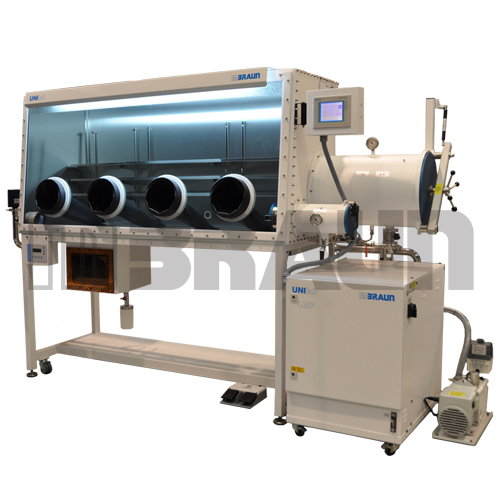
Dr. Likun Zhu is a Professor of Mechanical Engineering at Purdue University's School of Mechanical Engineering in Indianapolis. His research focuses on advanced battery technologies, including lithium-ion and solid-state batteries, with an emphasis on in situ and operando characterization, modeling, and micro/nano fabrication. Dr. Zhu's work addresses critical challenges in battery energy density, safety, and longevity through innovative materials and manufacturing processes. Education: Ph.D. Mechanical Engineering, University of Maryland (2006); M.S./B.S., Tsinghua University (2001/1998). His lab is affiliated with the Birck Nanotechnology Center and equipped with advanced facilities such as gloveboxes, electrochemical analyzers, and microscopy systems. Recent milestones include securing an NSF grant for solid-state battery research (2023) and advising over 30 graduate students. Research Interests: Solid-state batteries, micro/nano fabrication, operando characterization, and sustainable energy materials. His group develops novel electrode materials and designs for high-performance batteries, leveraging cutting-edge in situ techniques to study dynamic processes during cycling. Grants & Awards: NSF grant (2023) for solid-state battery research. Advising: Notable students include Hua Wang (Ph.D. 2024), Xintong Li, and Tianyi Li. Collaborations include work with Professors Hazim El-Mounayri and Andres Tovar on Bayesian optimization of battery materials. Labs & Facilities: The lab, located at ET 118, houses equipment like Arbin battery cyclers, FIB-SEM systems, and Comsol Multiphysics software. Dr. Zhu teaches courses including ME 330 (Dynamic Systems), ME 509 (Fluid Mechanics), and ME 597 (Renewable Energy).
Steven F. Son is the Alfred J. McAllister Professor of Mechanical Engineering at Purdue University, affiliated with the College of Engineering. He holds joint appointments in Aeronautics and Astronautics, Materials Engineering, and Mechanical Engineering. His research focuses on energetic materials, combustion science, and propulsion systems, with emphasis on detonation physics, additive manufacturing of explosives, and novel propellant designs. Key projects include developing throttleable solid propellants, studying material-filled void effects on detonation waves, and optimizing nanomaterials for enhanced reactivity. Dr. Son’s work integrates experimental and computational methods, such as laser absorption spectroscopy and machine learning, to advance understanding of high-energy materials. His contributions span from fundamental material characterization to applied systems like Martian perchlorate-based propellants. He leads research at the Maurice J. Zucrow Laboratories, Purdue’s premier facility for propulsion and energetic materials research. His recent studies explore flexoelectricity in fluoropolymer/aluminum composites, laser ignition systems for solid propellants, and thermal decomposition mechanisms of novel energetic formulations. While no awards are explicitly listed, his prolific publication record and interdisciplinary approach highlight his influence in the field.
Michael Como Tōshū Fukami is an Associate Professor of Shinto Studies at Columbia University's Department of East Asian Languages & Cultures. He holds a BA from Harvard University (1985) and a PhD from Stanford University (2000). His research focuses on the transmission of rituals, deities, and technologies to Japan, particularly during the Asuka to Heian periods. Current projects include a monograph on urbanization and materiality of religious performance in 8th–9th century Japan. His teaching includes courses such as the Colloquium on Major Texts in East Asia and Graduate Seminar in Japanese Religion. Research interests span cultural transmission, local religious traditions, and theological innovation tied to urbanization. Recent publications examine medieval Shintō, immigrant deities in ancient Japan, and the role of violence in Buddhist formation. He has held office at Columbia’s 307 80 Claremont and is listed among faculty in the department. No awards are explicitly mentioned in the provided text.
Melissa C. Smith is a Professor of Electrical and Computer Engineering and Associate Dean for Graduate Studies at Clemson University. She holds a Ph.D. from the University of Tennessee and degrees from Florida State University. Her research focuses on machine learning, reconfigurable computing, and high-performance systems, with applications in embedded systems and interdisciplinary scientific advancements. Before joining Clemson in 2006, she was a research associate at Oak Ridge National Laboratory (ORNL), contributing to projects like the Spallation Neutron Source and PHENIX experiments. Education: Ph.D., Electrical and Computer Engineering, University of Tennessee M.S., Electrical Engineering, Florida State University B.S., Electrical Engineering, Florida State University Research Interests: Machine Learning and AI High-Performance and Reconfigurable Computing System Performance Modeling Embedded Systems Articles Summary: Her recent work spans machine learning applications, GPU/FPGA architectures, speech enhancement, and medical systems. Key themes include optimizing heterogeneous computing for real-time and scientific workloads, and advancing interdisciplinary solutions through architecture-application co-design. Lab & Collaborations: Leads the Future Computing Technologies Lab and collaborates with ORNL and national labs on projects like GEMmaker and HPC-enabled medical systems.
Verónica Loureiro-Rodríguez is an Associate Professor in the Department of Linguistics at the University of Manitoba's Faculty of Arts. Her research focuses on sociolinguistics, language identity, and code-switching, with special attention to global hip hop and multilingual communities. She holds a PhD from the University of California, Davis, an MA from the University of Colorado at Boulder, and a BA from the Universidade de Santiago de Compostela. Dr. Loureiro-Rodríguez's work examines language attitudes across diverse contexts, including French-English dynamics in Manitoba, Spanish-Valencian bilingual processing, and code-switching in music. She has also explored language use in robotics and cultural hybridity among Puerto Rican and Mexican communities. Her teaching excellence was recognized with the 2021 Faculty of Arts Teaching Excellence Award. Education: PhD (UC Davis), MA (CU Boulder), BA (USC) Awards: 2021 Teaching Excellence Award (Established Faculty) Research Focus: Language policy, digital sociolinguistics, and cultural identity She currently supervises graduate students in Master's and PhD programs, focusing on sociolinguistic methodologies like the matched-guise technique. Her research often intersects with music studies, robotics, and diaspora linguistics.
Kuanshi Zhong is an Assistant Professor in the Department of Civil and Architectural Engineering and Construction Management at the University of Cincinnati. He holds a PhD from Stanford University (2021) in Civil and Environmental Engineering, with prior degrees from Stanford (Master, 2017) and Tongji University (Bachelor, 2015). His research focuses on earthquake engineering, structural resilience, and advanced computational methods for infrastructure safety. Key research interests include seismic design of tall buildings, probabilistic modeling of structural response (e.g., using Probabilistic Learning on Manifolds), and material failure mechanisms in reinforced concrete. He also explores multi-hazard resilience, regional risk assessment, and software tools for disaster simulation (e.g., R2DTool and EE-UQ). Dr. Zhong has secured grant funding as PI/Co-PI, including a National Science Foundation grant (2023-2026) for equitable building decarbonization strategies and a Concrete Reinforcing Steel Institute grant (2024-2025) for bar performance improvements. He teaches graduate/undergraduate courses on concrete design and structural mechanics. His work spans collaborations with institutions like Stanford University and the SimCenter, contributing to open-source tools for regional loss assessments and hurricane impact modeling. Current projects address cascading hazards, steel reinforcement durability, and high-resolution seismic risk evaluation.