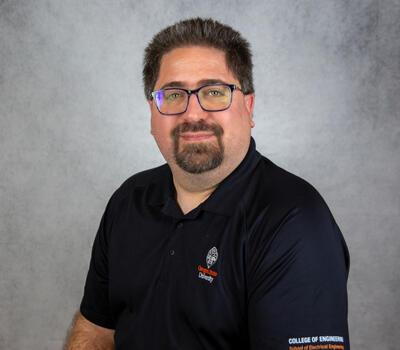
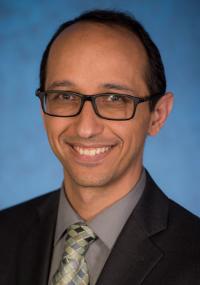
Kyle C. Hale is an Associate Professor at Oregon State University's School of Electrical Engineering and Computer Science (College of Engineering). He holds a Ph.D. and M.S. from Northwestern University (2016, 2013) and a B.S. in Computer Science from UT Austin (2010). Prior to joining Oregon State in 2024, he served as an Associate Professor at Illinois Tech in Chicago. His research spans operating systems, high-performance computing (HPC), virtualization, computer architecture, and system security. Current work focuses on specialized system software stacks for emerging computing paradigms like memory disaggregation and parallelism optimization. He leads the HExSA Lab and collaborates with the HiPCastor group. Scientific Awards: NSF CAREER Award (2023-2028) Illinois Tech College of Computing Excellence in Research (2023) Illinois Tech College of Computing Excellence in Teaching (2021) Illinois Tech Department of Computer Science Teacher of the Year (2020) EuroSys '22 Best Artifact Award Recent Research Trends: His publications emphasize compiler techniques for memory-disaggregated systems, optimizing parallel runtimes through hardware-software integration, virtualization at fine granularities, and accelerating machine learning workloads via system-level innovations. Keywords include HPC, virtualization, parallelism, and secure execution contexts. Teaching: Courses taught include Computer Architecture (CS/ECE 472), System Security (CSP 544), Operating Systems (CS 450), and advanced topics in serverless/edge computing. He actively recruits PhD students to the HExSA Lab.
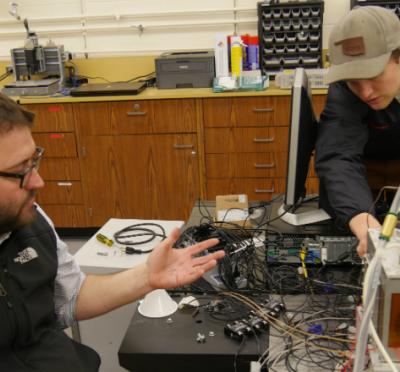
Scott Kerlin is a Senior Lecturer in the Department of Electrical Engineering and Computer Science at Oregon State University's College of Engineering. He holds an M.S. and B.S. in Computer Science from the University of North Dakota. Prior to academia, he worked at the Mayo Clinic on medical software systems and IBM as a build master for enterprise products. His career spans roles including network administrator, lab manager, and Undergraduate Director at UND. Dr. Kerlin's research focuses on bridging industry experience with academic curriculum, particularly in computer science education, project-based learning, and cybersecurity. He emphasizes practical applications of theoretical concepts, such as integrating 3D printing and scanning technologies with security systems for small satellites. His work also explores student efficacy in AI courses and scalable software project management methodologies. He has taught at multiple institutions, including the University of Minnesota and Augsburg University, and held roles at Michigan Tech as Senior Security Engineer. His 2024 Engineering+ Outstanding Teaching Award highlights his commitment to pedagogical innovation. Current projects include in-space 3D printing, solar energy systems, and cryptographic solutions for satellite communications. Key areas of contribution include: 3D printing/Scanning: Material characterization, key replication, and aerospace applications Cybersecurity: Intrusion detection, satellite communications security, and chaotic cryptosystems Educational Innovation: Active learning frameworks, PBL implementation, and student performance modeling His interdisciplinary approach connects computer science fundamentals with real-world engineering challenges, emphasizing sustainability and industry relevance in curricula.
Joshua Gess is an Associate Professor in the Mechanical, Industrial, and Manufacturing Engineering department at Oregon State University's College of Engineering. He joined Oregon State in 2015 and serves as a co-principal investigator at the Enhanced Heat Transfer Laboratory, where he leads research in thermal management solutions for high-performance microelectronics. His educational background includes: PhD, Mechanical Engineering, Auburn University, 2015 MS, Mechanical Engineering, Auburn University, 2012 B.E., Mechanical Engineering, Vanderbilt University, 2005 Before academia, he worked as a mechanical engineer at SSOE Group (including consulting for Johns Manville) and Northrop Grumman where he focused on military communication equipment. Professor Gess specializes in advancing thermal management solutions for high-performance microelectronic equipment. His research spans multiple scales, examining single and two-phase heat transfer on the macro-scale with passive and active liquid immersion techniques, as well as on the micro and nano scale for complex embedded thermal management solutions. He combines fundamental heat transfer knowledge with novel experimental methods such as two-phase PIV and high-speed image capture to develop reliable and energy-efficient cooling solutions for demanding electronics systems. His publication record demonstrates a clear trajectory toward increasingly sophisticated thermal management solutions, with recent work focusing on additive manufacturing applications for cooling systems, semiconductor thermal management, and nuclear reactor cooling systems. His research has significant implications for data center energy efficiency, where even small improvements in cooling efficiency could save enormous amounts of energy that could be returned to the grid. Gess is deeply committed to mentoring graduate students, emphasizing the practical applications of engineering principles. He attributes his interest in engineering to childhood influences like the movie RoboCop and the TV series MacGyver, and finds the reality of engineering work just as gratifying as he'd imagined. He particularly values the moments when his graduate students "get it" and watching them grow with each new accomplishment. As a person with a disability himself, Gess is passionate about establishing more robust support systems for people with disabilities at Oregon State. He is working with the School of Public Health to start an adaptive sports program, with the goal of building infrastructure that allows anyone to feel welcome and pursue advanced degrees at the university.
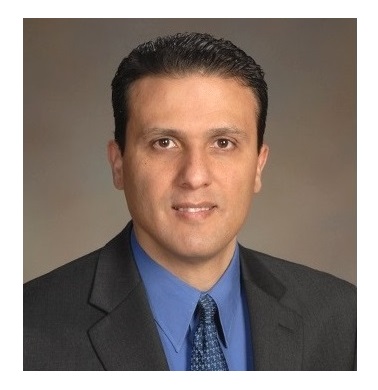
Dr. Wahab Hamou-Lhadj is a Professor and Chair at the Department of Electrical and Computer Engineering , Concordia University, and an Affiliate Researcher at NASA JPL, Caltech . He leads research in Artificial Intelligence for IT Operations (AIOps) , Software Observability , and Model-Driven Engineering , focusing on improving the reliability of digital systems in AI-driven environments.
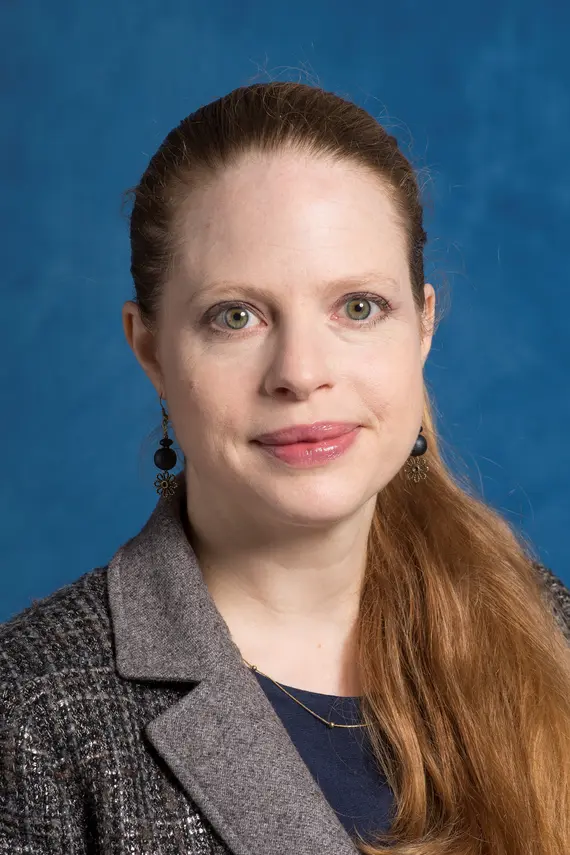
Prof. Dr. Mona Hess is a Full Professor and Chairholder of the Chair of Digital Heritage Technologies at Otto-Friedrich-Universität Bamberg , Germany. She directs the M.Sc. Digital Technologies in Heritage Conservation program and serves as Vice-Speaker at the Centre for Heritage Conservation Studies and Technologies (KDWT) . Her work bridges digital documentation, 3D imaging, and heritage conservation, with a focus on cultural landscapes, historic timber, and artifact preservation. Education : Dipl.-Ing. in Architecture (TUM), M.A. in Heritage Conservation (University of Bamberg), Ph.D. in 3D Imaging Metrology for Cultural Heritage (University College London, 2015) Her research spans 3D laser scanning, photogrammetry, SLAM-based recording , and digital twin environments , particularly for structural monitoring, museum artifacts, and historic gardens. She leads projects like VirScan3D (virtual laser scanner simulator) and 3DPetrie (UCL Petrie Museum 3D models) and collaborates on international initiatives such as the British Museum War Canoe digital repatriation. Recent publications emphasize automated defect analysis in timber, multi-modal imaging for ceiling art, and linked open data in heritage. She has contributed to CIPA ICOMOS as an expert member and will chair their Education and Dissemination Commission (2024). Scientific Awards : Fellow of the UK Higher Education Academy (2016), Associate Fellow of the Higher Education Academy (2014) She teaches courses in Digital Object Recording , 3D Spatial Data Modeling , and Science Communication , and organizes international summer schools on heritage monitoring. Her lab, the Chair of Digital Heritage Technologies , collaborates with institutions in Italy, Spain, and the UK, focusing on interdisciplinary innovation in heritage conservation.
Anastasia Ailamaki is a Professor at the Swiss Federal Institute of Technology in Lausanne (EPFL), renowned for her work in database systems and data management . Her research focuses on optimizing query processing for modern hardware, particularly GPUs and heterogeneous systems, and advancing cloud data analytics with serverless architectures like PixelDB . She has co-authored influential frameworks for adaptive query optimization , hardware-conscious database engines , and model-relational data management . Key research areas: GPU acceleration , HTAP , query approximation , spatial data processing , and cloud-native databases . Recent work emphasizes cross-task optimizations in distributed environments, efficient sampling , and context-aware joins integrating vector embeddings. In 2023, she contributed to adaptive recursive query optimization and speculative K-means clustering, while 2024 publications addressed proportional caching (HPCache) and model-relational systems . Her collaborations span institutions such as MIT, Microsoft, and ETH Zurich, with publications in top venues like SIGMOD , VLDB , and ICDE .
Dr. Godfred Afrifa is a Senior Lecturer in Accounting and Senior Tutor (Canterbury) at Kent Business School , University of Kent. He is also a Visiting Lecturer at IESEG School of Management (France) since 2014 and at ISCID-CO International Business School (France) since 2016. PhD in Finance and Risk (Bournemouth University, 2013) MSc in Finance (University of Leicester, 2008) BSc in Applied Accounting (Oxford Brookes University) HND in Accounting (Kumasi Polytechnic) Chartered Accountant and Certificate in Insurance (Chartered Insurance Institute) His research explores the intersection of corporate governance , working capital management , and microfinance institutions . He investigates how CSR governance affects business practices, the dynamics of trade credit in SMEs, and the role of regional development in service-sector performance. His recent work also covers linguistic influences on financial reporting and pedagogical innovations in accounting education. Dr. Afrifa's 15 most recent publications (2020–2025) span topics like CSR decoupling , firm identity changes , credit policies , and microfinance integrity , with methodologies including stochastic frontier analysis and cross-country comparisons . His work frequently addresses financial strategies in SMEs and sustainability in supply chains and development. Scientific Awards : Fellow of The Higher Education Academy (2015), Affiliate Member of ACCA (2004). Dr. Afrifa supervises Mohammad Abwen (PhD thesis: Credibility of CSR Disclosure ) and welcomes PhD candidates in SME management , working capital , and microfinance . His Visiting Lecturer roles at French institutions highlight international collaboration. The 2023 Evaluation Report on Re:Generation 2031 underscores his work in sustainable development beyond traditional finance.
Saumya Debray is a Professor at the Department of Computer Science , University of Arizona , with research interests in Compilers , Program Analysis and Optimization , and Programming Language Implementation . Their work bridges theoretical and applied computer science, focusing on security implications of program transformations and compiler-assisted system optimization. Education: Ph.D., The State University of New York at Stony Brook (1986). Contact: Office: GS 735 | Phone: 520-621-4527 | Email: debray@cs.arizona.edu. Research Themes: Debray’s research spans three decades, with core contributions in: JIT Compiler Analysis: Bug localization, dynamic code generation, and exploitation frameworks. Code Obfuscation & Stylometry: Evading detection through optimization-based obfuscation. Malware Analysis: Deobfuscation techniques, taint analysis, and dynamic defense modeling. Binary Rewriting: Energy optimization, code compaction, and kernel specialization. Their work intersects compiler design , cybersecurity , and system optimization , with applications in executable analysis , malware detection , and undergraduate CS education .
Maciej A Mazurowski is an Associate Professor at Duke University School of Medicine, with dual appointments in the Department of Biostatistics & Bioinformatics and Radiology. He is also affiliated with the Department of Electrical and Computer Engineering and is a member of the Duke Cancer Institute. His research focuses on applying machine learning to medical imaging for improved diagnosis and treatment. Ph.D. in Computer Science from the University of Louisville (2008) Dr. Mazurowski's research emphasizes medical imaging , machine learning , and computer vision applications in radiology. His work includes automated segmentation , domain adaptation , prognostic modeling , and foundation models for MRI/CT analysis. His recent publications highlight trends in universal segmentation models (SegmentAnyBone, SegmentAnyMuscle), foundation models for MRI (MRI-CORE), and AI-driven diagnostic tools for breast cancer, glioblastoma, and thyroid nodules. Key challenges addressed include domain generalization , image harmonization , and ethical considerations in clinical AI. Incubation Award for innovative research commercialization Dr. Mazurowski has secured significant research funding from agencies including the National Institutes of Health , National Institute of Biomedical Imaging and Bioengineering , and American Roentgen Ray Society . His work spans CT segmentation , MRI analysis , and AI-based quality assessment across multiple imaging modalities.
Callie Hao is an Assistant Professor in the Department of Electrical and Computer Engineering at the Georgia Institute of Technology since 2021, holding the ON Semiconductor Junior Professorship. Her research bridges hardware efficiency and algorithmic innovation with significant industry and federal recognition. Education: Ph.D. in Electrical Engineering, Waseda University (2017) M.S. and B.S. in Computer Science and Engineering, Shanghai Jiao Tong University Research Focus: Dr. Hao pioneers software/hardware co-design for edge AI, specializing in hardware-efficient machine learning algorithms, FPGA-based reconfigurable computing, graph neural networks, and electronic design automation (EDA). Her work emphasizes neural architecture search, high-level synthesis optimization, and memory-efficient systems for embedded and IoT applications, driven by the philosophy that "1 + 1 > 2" for transformative efficiency gains. Publication Impact: Her 15 most recent publications (2023-2026) reveal a strategic shift toward machine learning-driven EDA tools, with 60% focused on high-level synthesis frameworks and 40% on graph neural network acceleration. Key trends include simulation speed breakthroughs (LightningSim), automated accelerator generation (GNNBuilder), and cryptographic hardware innovations (Cryptonite), predominantly published in top-tier venues like MICRO, ICCAD, and DAC. Awards & Recognition: NSF CAREER Award (2024) and Intel Rising Star Faculty Award (2023) Best Paper Awards at MLCAD 2024 and GLSVLSI 2021 ON Semiconductor Junior Professorship (2025) and Sutterfield Family Early Career Professorship (2022) DAC-SDC competition championships (2018-2020) Mentorship & Funding: Dr. Hao advises 8+ Ph.D. students in the Sharc Lab, with Rishov Sarkar winning the Oscar P. Cleaver Award and Qualcomm Innovation Fellowship. Her research is funded by DARPA (2021) for ultra-light video intelligence systems and supported by industry awards from Amazon and Sony. She actively serves on program committees for DAC, ICCAD, and DATE conferences. Lab Leadership: As director of the Sharc Lab (Software/Hardware Co-design lab), she cultivates interdisciplinary research at the intersection of FPGA design, machine learning, and EDA, requiring expertise in Verilog/HLS, GNNs, and compiler technologies while maintaining strict focus on real-world hardware implementation.
Michael Riegler is a Researcher at the AI Department, Simula Research Laboratory , focusing on interdisciplinary applications of Artificial Intelligence in healthcare, sports analytics, and multimedia systems. His work bridges Machine Learning , AI Alignment , and Applied AI across clinical and real-world domains. Key Affiliations: Simula Research Laboratory (AI Department Head) Research Themes: Explainable AI in medicine, multimodal data analysis, and AI-driven health monitoring Research Interests include: Developing AI/ML algorithms for medical imaging (e.g., polyp detection, embryo analysis) Addressing missing data challenges in healthcare through novel imputation techniques Creating multimodal virtual avatars for investigative interview training Designing edge AI systems for sports analytics and sustainable fishing Recent Publications highlight collaborations with institutions in Norway and globally, with a focus on: Medical Applications: Polyp segmentation, ECG analysis, and explainable models for disease detection Sports Analytics: Athlete performance prediction and soccer video processing Data Infrastructure: Lifelogging datasets (ScopeSense), semantic representation frameworks Labs & Teams include leadership in Simula’s AI Department and participation in projects like Medico Multimedia Task , ImageCLEF , and MediaEval workshops. His work emphasizes responsible AI innovation in public sectors and privacy-preserving systems for edge environments.
Xiaoming Hu is a Professor at the Division of Numerical Analysis, Optimization and Systems Theory within the Department of Mathematics at KTH Royal Institute of Technology (Kungliga Tekniska Högskolan) in Stockholm, Sweden. Born in Chengdu, China, he received his B.S. degree from University of Science and Technology of China in 1983, followed by M.S. and Ph.D. degrees from Arizona State University in 1986 and 1989 respectively. After serving as a research assistant at the Institute of Automation, Chinese Academy of Sciences (1983-1984), he was a Gustafsson Postdoctoral Fellow at KTH (1989-1990) before becoming a faculty member. His educational background includes: B.S. in Engineering, University of Science and Technology of China, 1983 M.S. in Engineering, Arizona State University, 1986 Ph.D. in Engineering, Arizona State University, 1989 Xiaoming Hu's research primarily focuses on multi-agent systems, nonlinear feedback stabilization, nonlinear observer design, and sensing and active perception. His work bridges theoretical control theory with practical applications in robotics and autonomous systems. He has made significant contributions to geometric control theory, mathematical systems theory, and nonlinear systems analysis and control. His research often involves developing theoretical frameworks for distributed control, formation control, and cooperative behavior in multi-robot systems. Professor Hu's publication record shows a consistent research trajectory with numerous high-impact publications in top-tier journals like Automatica, IEEE Transactions on Automatic Control, and Systems & Control Letters. His research has evolved from fundamental control theory to more applied problems in robotics and multi-agent systems, while maintaining strong mathematical foundations. Recent work shows increasing focus on safety-critical control, inverse problems in estimation, and networked systems. His scientific contributions include: Development of theoretical frameworks for multi-agent coordination and formation control Advances in nonlinear observer design for robotic systems Contributions to geometric control theory and systems theory Research on distributed estimation and control algorithms Applications of control theory to robotics and autonomous systems Professor Hu teaches several advanced courses including Mathematical Systems Theory, Geometric Control Theory, and Nonlinear Systems: Analysis and Control. He has supervised numerous degree projects at both undergraduate and graduate levels in mathematics, optimization, systems theory, and scientific computing. His teaching reflects his research expertise, providing students with both theoretical foundations and practical applications of control theory.
Kambiz Ghazinour is a Professor and Chair of the Department of Cybersecurity at SUNY Canton, where he directs the Advanced Information Security and Privacy (AISP) Lab. He holds a PhD in Computer Science from the University of Calgary (2012) and a Postdoctoral Fellowship from the University of Ottawa and Children's Hospital of Eastern Ontario (2014). Previously, he served as an Assistant Professor at Kent State University (2015-2019) and earned a Master's in High Performance Scientific Computing from the University of New Brunswick (2007). Research Focus: Data Security and Privacy, Privacy Enhancing Technologies, Usable Security, Healthcare Systems, and Social Media. Key Projects: DigitalPASS—patented simulation-based privacy education tool for social media safety. His recent publications span Cybersecurity , Deep Learning , and Health Informatics , including works on cryptocurrency price prediction, Alzheimer's detection via eye tracking, and privacy-preserving surveillance. He has received multiple teaching awards such as the Best Teaching Award at the University of Calgary (2008). Faculty Recognition Award, Kent State University (2015, 2016) University Teaching Certificate (2009) Dr. Ghazinour's teaching portfolio includes graduate courses in Data Mining, Digital Forensics, Cryptography, and undergraduate instruction in cybersecurity fundamentals and programming.
Anna Grigolon is an Assistant Professor at the University of Twente , Netherlands, affiliated with the Transport Engineering and Management Research Group . Her research focuses on sustainable urban mobility , user-centric transport solutions , and travel behavior analysis using tools like discrete choice modeling , spatial analysis , and social psychology theories . Research Interests : Sustainable Urban Mobility Accessibility Modeling Travel Behavior Discrete Choice and Latent Class Modeling Spatial Analysis and GIS Shared Micromobility and Mobility Hubs Equity in Transport Planning Article Trends : Anna’s recent work (2025–2024) emphasizes mobility justice , 15-minute city transitions, and equity in transport access , particularly for marginalized communities like São Paulo favelas. She integrates digital tools (e.g., serious games, kiosks) and space-time metrics to evaluate mobility solutions. Projects : She currently leads the SmartHubs project and contributes to DREAMS and R-map , focusing on smart, equitable mobility systems in Europe and Saudi Arabia.
Golnoosh Farnadi is an Assistant Professor at McGill University's School of Computer Science and an Adjunct Professor at the University of Montréal. She serves as a Visiting Faculty Researcher at Google, a Core Academic Member at MILA (Quebec Institute for Learning Algorithms), and holds a prestigious Canada CIFAR AI Chair. Farnadi co-directs McGill's Collaborative for AI & Society (McCAIS) and founded the EQUAL Lab (EQuity & EQuality Using AI and Learning algorithms), which focuses on advancing algorithmic fairness and responsible AI. Her educational background includes a Ph.D. in Computer Science from KU Leuven and Ghent University (2017), with postdoctoral research at the University of Montreal/MILA (2018-2020) and the University of California, Santa Cruz (2017-2018). During her doctoral studies, she was a visiting scholar at UCLA, University of Washington, Tsinghua University, and Microsoft Research. Dr. Farnadi's research centers on developing mathematical tools and algorithms for fairness-aware machine learning systems. Her work addresses bias and discrimination in AI decision-making across critical domains including healthcare, criminal justice, financial services, and social media. She has pioneered approaches to ensure fairness in deep learning models, particularly in sequential decision-making under uncertainty. Her research bridges theoretical foundations with practical applications, examining how AI systems can be designed to promote equity while maintaining performance. Analysis of her recent publications reveals a strong focus on practical implementations of fairness mechanisms across diverse AI applications. Her work spans technical domains from generative models and large language models to recommender systems and healthcare optimization. A unifying theme is the development of mathematically rigorous frameworks that balance performance with fairness considerations, with increasing attention to cultural diversity in multilingual AI systems and privacy-preserving fairness approaches. Google Scholar Award (2021) Facebook Research Award (2021) Rising Stars in AI Ethics (2021) Google Award for Inclusion Research (2023) WAI Responsible AI Leader of the Year Finalist (2023) 100 Brilliant Women in AI Ethics (2023) Canada CIFAR AI Chair Dr. Farnadi advises numerous doctoral and master's students across McGill University, University of Montréal, and MILA, with research focusing on fairness, privacy, and responsible AI. Her EQUAL Lab brings together researchers from computer science, social sciences, and policy domains to address systemic challenges in AI ethics. She has secured significant research funding from Google and other major organizations to support her work on fairness-aware AI systems, with applications spanning healthcare, social media safety, and public policy. The EQUAL Lab serves as a hub for interdisciplinary research on algorithmic fairness, bringing together computer scientists, social scientists, and policy experts. The lab's work spans theoretical foundations of fairness metrics, practical implementations in real-world systems, and policy recommendations for responsible AI deployment. Current projects include developing frameworks for fair kidney exchange programs, mitigating cultural stereotypes in multilingual language models, and creating privacy-preserving approaches for detecting online harms while protecting user data.