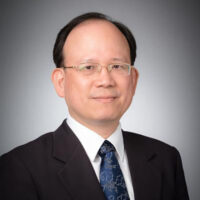
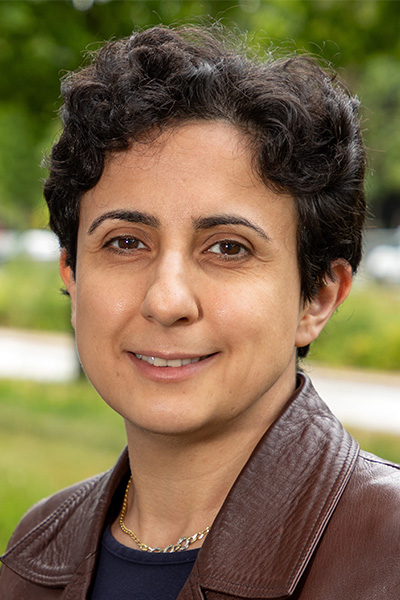
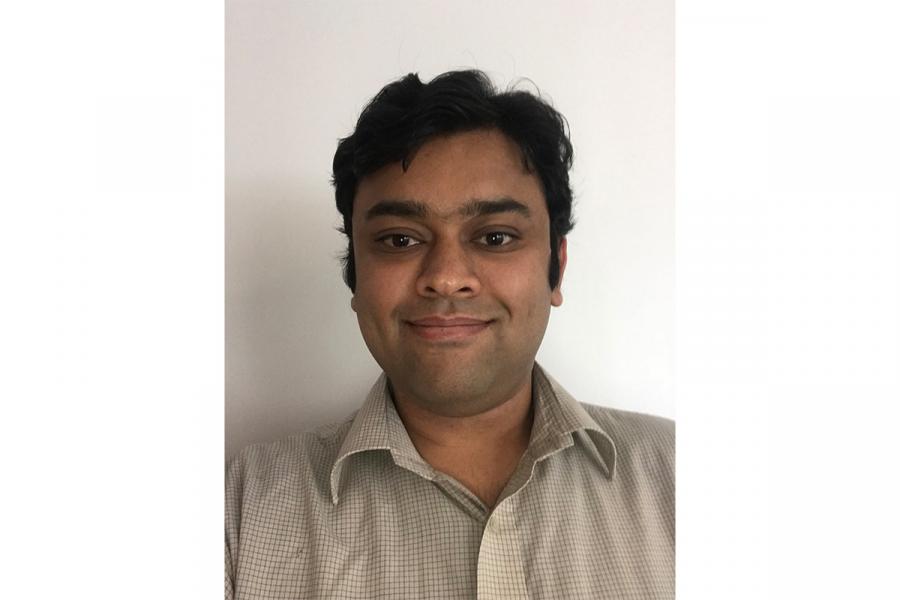
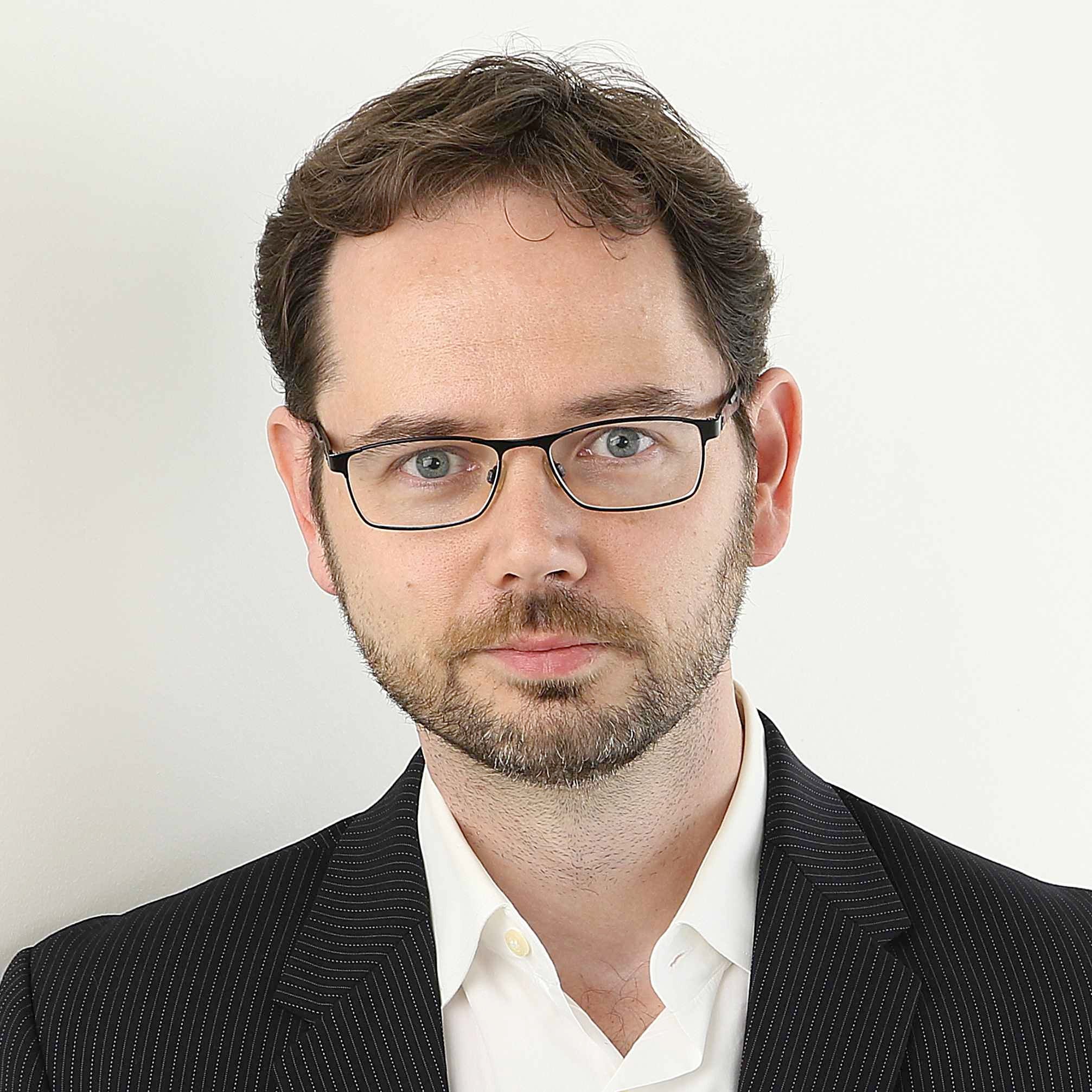
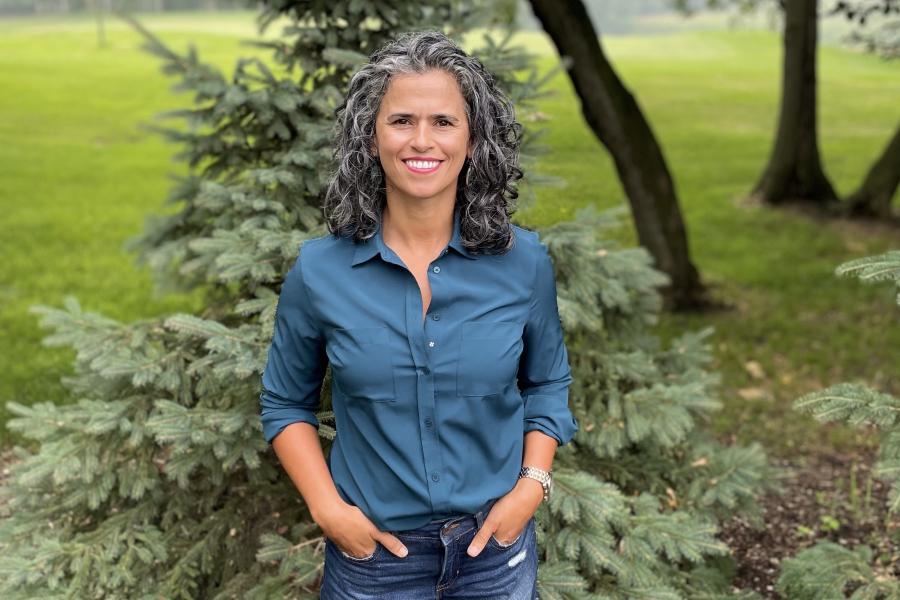
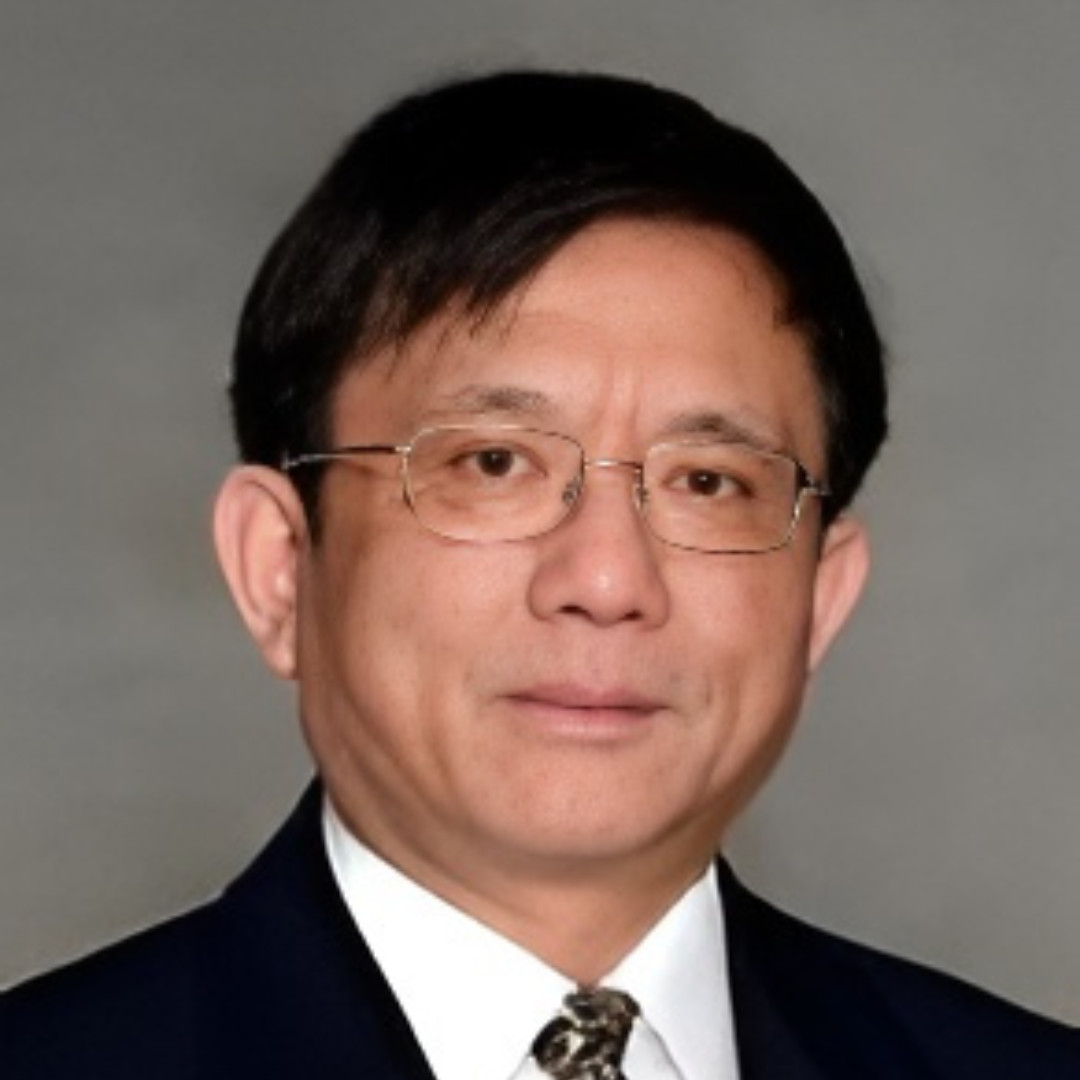
Dr. Chih-Hung (James) Chen is a Professor in the Department of Electrical & Computer Engineering at McMaster University. His research focuses on noise-related issues in semiconductor devices, low-noise circuit design for medical and communication applications, and thermal noise characterization in nano-scale transistors. He holds senior member status in IEEE and is a licensed Professional Engineer in Ontario. Education: Ph.D., McMaster University, 2002 M.A.Sc., Simon Fraser University, 1997 B.Sc., National Central University, Taiwan, 1991 Research interests include biomedical technologies, microelectronics & VLSI, and digital/smart systems. He has collaborated with companies like Sony Corporation, United Microelectronics Corporation, and Focus Microwaves. His work is supported by grants from the Canada Foundation for Innovation (CFI), NSERC, and the Ontario Innovation Trust (OIT). Notable achievements include serving on the International Advisory Committee of the International Conference on Noise and Fluctuations (2015) and as an editor for the Journal of Low Power Electronics and Applications since 2022. Teaching includes courses like Analysis and Design of RF ICs for Communications and Electronic Devices and Circuits 2. His research lab focuses on advancing noise measurement techniques and designing ultra-low-power analog circuits for emerging applications.
Gautam Kamath is an Assistant Professor at the University of Waterloo's Cheriton School of Computer Science, a Faculty Member at the Vector Institute, and a Canada CIFAR AI Chair. He leads The Salon, a research group focused on statistics, algorithms, machine learning, and optimization. His work bridges theoretical foundations with practical applications in data privacy and robustness, contributing to both academic research and real-world deployments that impact millions of users. Dr. Kamath earned his PhD and SM degrees in Electrical Engineering and Computer Science at MIT, where he was advised by Costis Daskalakis. Prior to MIT, he graduated from Cornell University in May 2012 with a degree in Computer Science and Electrical and Computer Engineering, where he worked with Bobby Kleinberg. His academic journey reflects a strong foundation in both theoretical computer science and practical applications. His research focuses on developing solutions for trustworthy and reliable machine learning and statistics, with particular emphasis on data privacy and robustness. He addresses fundamental problems in these areas, revitalizing statistical toolkits for the modern data era where privacy preservation is paramount. His work spans theoretical foundations of differential privacy to practical applications that have been deployed at scale, including contributions to systems that protect the sensitive information of hundreds of millions of individuals. Analysis of his recent publications reveals a strong trend toward addressing the interplay between privacy, robustness, and machine learning performance. His work increasingly examines practical deployment challenges while maintaining theoretical rigor, with growing emphasis on diffusion models, generative AI, and the legal implications of AI systems. There's a clear trajectory from foundational privacy theory toward addressing real-world implementation challenges across diverse application domains. Canada CIFAR AI Chair Ontario Early Researcher Award 2024 Caspar Bowden Award for Outstanding Research in Privacy Enhancing Technologies STOC Best Student Presentation Award ICML 2024 Best Paper Award Microsoft Research Fellow at the Simons Institute for the Theory of Computing Dr. Kamath actively mentors students, with notable successes including Valentio Iverson winning the Germain-Erdős Undergraduate Award and Chris Trevisan receiving the CRA Outstanding Undergraduate Researcher Award. His service to the research community is extensive, serving as Editor-in-Chief of TMLR, on the Executive Committee of the Learning Theory Alliance, and on steering committees for major conferences including ICML, COLT, and ALT. He has organized numerous workshops focused on privacy-preserving machine learning and differential privacy. Through The Salon research group, Dr. Kamath fosters a collaborative environment where postdoctoral fellows, graduate students, and undergraduates work together on cutting-edge problems at the intersection of statistics, algorithms, machine learning, and optimization. The group maintains strong connections with industry partners and participates in major research initiatives, including the Vector Institute's privacy and security research efforts. Looking forward, Dr. Kamath will be moving to the Computer Science department at NYU's Courant Institute of Mathematical Sciences in September 2026, where he plans to expand his research program.
Shiva Nejati is a Professor at the University of Ottawa 's School of Electrical Engineering and Computer Science . He holds a PhD in Computer Science from the University of Toronto and previously worked as a Senior Scientist (2012-2019) and Scientist (2009-2012) at the SnT Centre (University of Luxembourg) and Simula Research Laboratory. Research focus: Software engineering for cyber-physical systems (autonomous vehicles, IoT), blending formal verification, machine learning, and search-based testing Key tools developed: ARIsTEO, SOCRaTEs, SimCoTest, EPIcuRus Editorial roles: Associate Editor for EMSE Journal (2025–), ASE Journal (2025–), IEEE Transactions on Software Engineering (2020–2024) His work combines formal methods , empirical software engineering , and AI/ML to address verification challenges in complex systems, particularly through evolutionary algorithms and surrogate modeling . Notable collaborations include industry partners in telecommunications, automotive, and aerospace sectors. Recent publications emphasize large language models for requirements analysis, adversarial testing of vision systems, and multi-objective optimization for test generation. His Sedna Research Lab actively trains graduate students in these cutting-edge methodologies.
Juergen Dingel is a Professor in the School of Computing at Queen's University, Canada. He joined the faculty in 2000 and holds a PhD in Computer Science from Carnegie Mellon University (1999). His research focuses on software modeling, model-driven engineering, formal methods, and formal verification, with applications in real-time systems and embedded systems. He leads the Modeling and Analysis in Software Engineering (MASE) research group. Education: PhD in Computer Science, Carnegie Mellon University (1999) M.Sc. in Pure and Applied Logic, Berlin University of Technology (1994) M.Sc. in Computer Science, Berlin University of Technology (1992) Research Interests: Model-driven engineering and transformation Formal specification and verification Automated testing and debugging Real-time and embedded systems Service composition and distributed systems His work emphasizes practical tools like Papyrus-RT and MDebugger , integrating formal methods into software development. Grants & Collaborations: Funded by NSERC, OCE, and industry partners (IBM, GM, Ericsson) Focus on automotive systems, IoT, and safety-critical applications Service: Editorial board member for SoSyM , STTT , and JOT Former chair of the MODELS Steering Committee (2016–2018) PC co-chair for MODELS 2014 and FMOODS/FORTE 2011 Labs & Teams: Leads the MASE group, which develops open-source tools for model-driven engineering. Collaborates with industry on automotive and IoT projects.
Dr. Robert J. Teather is an Associate Professor and the Director of the School of Information Technology at Carleton University in Ottawa, Canada. He previously served as an interim Director of the School of Information Technology during the 2022-23 academic year. His academic journey includes a PhD in Computer Science from York University (2013) and a postdoctoral fellowship at McMaster University (2015). Dr. Teather's educational background includes: PhD in Computer Science from York University (2013) Master's Thesis: "Comparing 2D and 3D Direct Manipulation Interfaces" from York University (2008), which was awarded the Joseph Liu Thesis Award Dr. Teather's research broadly falls under the field of human-computer interaction, with specialization in 3D user interfaces, virtual reality, and user interfaces for computer games. His work establishes methods for direct comparison of 2D and 3D interfaces for conceptually equivalent tasks, such as selection and manipulation interfaces. He investigates factors influencing human performance in VR, including stereo 3D graphics, haptic feedback, and head-tracking. His research also evaluates novel user interfaces like tilt control or touchscreens, and examines human performance with game input devices in complex tasks involving navigation, selection, and manipulation of objects in game environments. His research has been published extensively in top venues including IEEE VR, ACM SUI, and Graphics Interface. Among his notable scientific achievements are: NSERC Postgraduate Scholarship during his PhD studies Ontario Graduate Scholarship during his PhD studies Best Paper Honourable Mention at the ACM Symposium on Applied Perception 2020 Best Demo Award for SUI 2017 Joseph Liu Thesis Award (2008) Dr. Teather actively supervises graduate students at Carleton University, currently overseeing multiple PhD and Master's students in the areas of human-computer interaction and interactive digital media. His research is supported by NSERC and the Canada Foundation for Innovation, providing funding for his students and laboratory equipment. His students have produced research spanning VR as a persuasive tool to improve vaccine confidence, selection performance using smartphones in VR, and text entry methods in virtual reality environments. Dr. Teather leads a well-equipped CFI-supported lab focused on virtual and augmented reality research. His team works collaboratively on projects related to interactive virtual reality systems, computer game user interfaces, and input devices for 3D interaction. The lab environment fosters interdisciplinary research with opportunities for students to work on cutting-edge VR/AR technologies and contribute to the growing field of spatial computing.
Shannon Johnson is an Associate Professor in the Department of Psychology and Neuroscience at Dalhousie University, concurrently affiliated with the Departments of Pediatrics and Psychiatry. She serves as Director of Clinical Training and Co-Director of the Dalhousie Centre for Psychological Health, which provides mental health services to underserved populations while training clinical psychology students. Dr. Johnson holds a BA from Kalamazoo College, MSc and PhD from the University of Victoria, and a Postdoctoral Fellowship from Indiana University. Her research focuses on enhancing well-being through nature connection interventions, understanding resilience mechanisms in pediatric populations, and improving diagnostic practices for neurodevelopmental disorders. She investigates the physical and cognitive benefits of nature exposure, barriers to nature connection, and behavioral change strategies. Her work bridges clinical and environmental psychology, with recent studies examining nature-based interventions for stress reduction, pain adaptation in youth with juvenile idiopathic arthritis, and moral foundations in autistic children. She has pioneered the concept of Indoor Nature Exposure (INE) as a health-promotion framework. Dr. Johnson’s lab collaborates with healthcare providers to develop scalable mental health interventions, particularly for underserved communities. Her training programs emphasize evidence-based practices and culturally responsive care. Key contributions include validating the role of nature in cognitive restoration and challenging clinical biases in autism assessment.
Yashar Ganjali is a Professor in the Department of Computer Science at the University of Toronto , leading the Systems and Networking Group . His research spans computer networks , with a focus on data center networking , software-defined networking (SDN) , and congestion control . Education : Not explicitly detailed, but inferred from academic rank as a Professor. His work on flow consolidation , load migration in SDN controllers , and machine learning for network management has been influential. Recent projects include FORESIGHT (2025) for ML-driven scheduling and Meta-Migration (2023) to reduce switch migration latency. Scientific Awards include the IFIP Networking 2025 Best Paper Award . Collaborations with institutions like Google (2024) and Facebook (2019) highlight his industry impact. Advisees include Sepehr Abbasi Zadeh (PhD, 2024). Current projects integrate optical packet switching and eBPF-based network augmentation , aiming to address scalability, micro-bursts, and resource allocation efficiency in cloud environments.
M. Tamer Özsu is a University Professor of Computer Science at the David R. Cheriton School of Computer Science, University of Waterloo, where he holds a Cheriton Faculty Fellowship. He also serves as a Distinguished Visiting Professor at Tsinghua University and is the Founding Director of Waterloo-Huawei Joint Innovation Laboratory since 2018. His extensive contributions to computing have earned him numerous prestigious awards including the 2024 ACM Presidential Award for long-standing and significant contributions to the computing field. Professor Özsu's research focuses on data engineering aspects of data science, particularly addressing data management issues with two main foci: management of non-traditional data and large-scale distributed data management. He is renowned for his seminal book "Principles of Distributed Database Systems" (co-authored with Patrick Valduriez), now in its fourth edition, and the "Encyclopedia of Database Systems" (co-edited with Ling Liu), in its second edition. His work bridges theoretical foundations with practical system implementations, targeting grand societal challenges through computational approaches. His recent publications reveal a strong trend toward graph analytics, streaming data processing, and the integration of large language models with vector data management. The research shows increasing focus on GPU-accelerated graph processing, RDF query optimization, and multimodal data analysis, reflecting the evolution of data management challenges in the era of big data and AI. His work continues to address fundamental challenges in distributed data systems while adapting to emerging technologies and application domains. Scientific Awards and Fellowships ACM Presidential Award (2024) IEEE TCDE Education Award (2024) IEEE Innovation in Societal Infrastructure Award (2022) CS Can | Info Can Lifetime Achievement Award (2018/2019) ACM SIGMOD Test-of-Time Award (2015) ACM SIGMOD Contributions Award (2006) The Ohio State University College of Engineering Distinguished Alumnus Award (2008) Fellow of the Royal Society of Canada Fellow of the American Association for the Advancement of Science (AAAS) Life Fellow of the Association for Computing Machinery (ACM) Life Fellow of the Institute of Electrical and Electronics Engineers (IEEE) Fellow of the Asia-Pacific Artificial Intelligence Association (AAIA) Elected member of the Science Academy, Türkiye Professor Özsu has been deeply involved in academic leadership and community building. As Founding Editor-in-Chief of ACM Books (2013-2019), he launched a series that by 2019 had published 28 major books with another 30 under contract. His service to ACM, particularly through SIGMOD, has been exemplary and widely recognized. He directs the Waterloo-Huawei Joint Innovation Laboratory, which focuses on cutting-edge research in data management and distributed systems, fostering strong industry-academia collaboration.
Raouf Boutaba is a Professor at the University of Waterloo , serving as Director of the David R. Cheriton School of Computer Science since July 2020. He holds prestigious fellowships including FRSC , FIEEE , FIEC , and FCAE . 2024: Inaugural Rogers Chair in Network Automation 2024: Ontario Research Fund–Research Excellence (ORF–RE) $2M grant for next-gen mobile networks 2021: University Professor title, University of Waterloo Research Interests span network automation, resource management in wired/wireless networks, network function virtualization (NFV), software-defined networking (SDN), cloud computing, blockchain, future Internet architecture, and cybersecurity. His work focuses on zero-touch networks, 5G/B5G slicing, and AI-driven orchestration. Scientific Contributions include 15+ recent publications on topics like reinforcement learning for RAN slicing, encrypted traffic classification, quantum network optimization, and self-driving infrastructure. His projects 5G LEAP and 5G ELITE explore network isolation and Open RAN principles. 2024: IFIP/IEEE CNOM Test of Time Paper Award 2024: Graduate Supervision Excellence Award 2021: Kenneth C. Sevcik Outstanding Student Paper Award (advisor) Teaching includes co-developing the NSERC CREATE Network Softwarization program, offering courses like Network Softwarization: Principles and Foundations (Winter 2024) and Technologies and Enablers since 2018. He emphasizes hands-on training in SDN, NFV, Open RAN, and 5G. Students and Collaborations : Supervised PhD students such as Shihabur R. Chowdhury (2021), Nashid Shahriar (2020), and undergrad Leni Aniva (2022 Gov. Gen. Silver Medal ). His team includes researchers working on 5G, blockchain, and AI-driven network management. Professional Leadership : Organized Rogers TEP Workshops (2024-2025), delivered keynotes at IEEE Globecom, ColCom, and BalkanCom, and served on expert panels for AI orchestration and 5G cybersecurity at major symposia.
Patrick Mitran is a full-time Professor at the University of Waterloo's Department of Electrical and Computer Engineering, within the Faculty of Engineering. His research focuses on advanced wireless communication systems, including 5G/6G technologies, millimeter-wave and sub-THz communication, digital predistortion techniques, MIMO systems, and beamforming architectures. He leads projects addressing challenges in transmitter linearization, network resource allocation, and hardware-efficient signal processing. Key research interests include optimizing frequency multiplier-based transmitters, mitigating inter-cell interference in massive MIMO networks, and developing algorithms for reconfigurable intelligent surfaces (RIS). His work often intersects hardware design, signal processing, and network optimization, with applications in next-generation wireless infrastructure. Recent publications highlight innovations in ultrawideband signal generation for 6G testing, practical RIS configurations, and FPGA-based real-time digital predistortion implementations. His contributions emphasize both theoretical advancements and practical system-level solutions. Dr. Mitran's research group collaborates on cutting-edge topics such as hybrid NOMA in multi-cell networks, adaptive coding modulation for Gaussian channels, and interference decoding strategies. His work has been published in top-tier journals and conferences, reflecting a sustained impact on modern wireless communication technologies.
Hamid Mansoor is an Assistant Professor in the Department of Computer Science at the University of Manitoba. He holds a PhD in Computer Science from Worcester Polytechnic Institute under Prof. Emmanuel Agu, and was part of the DARPA-funded WASH project. His research focuses on data visualization, digital health, and smartphone-based behavioral analysis. He previously served as a Postdoctoral Fellow at the VIXI Lab, University of Victoria, Canada, under Prof. Miguel Nacenta. Education: PhD in Computer Science, Worcester Polytechnic Institute Research Interests: Interactive data visualization frameworks for health monitoring Mobile and ubiquitous computing for behavioral analysis Smartphone-sensed human behavior and health informatics Visual representation of text-based and sensor data Publications highlight trends in visual analytics for healthcare, including tools like ARGUS and INPHOVIS for detecting bio-behavioral disruptions and smartphone-based phenotyping. His work integrates machine learning with visualization to address challenges in health data interpretation. Awards: Best short paper honorable mention (EuroVis 2020) His contributions span academic collaborations in health informatics and mobile computing, with a focus on bridging theory and practical applications in healthcare technology.
Samuel Jean Bassetto is an Associate Professor in the Department of Mathematics and Industrial Engineering at Polytechnique Montréal. He serves as Director of the Continuous Improvement Laboratory (LABAC) and holds membership in multiple prestigious research groups including the Research Group on Globalisation and Management of Technology (GMT), Poly-Industries 4.0 Laboratory, Interuniversity Research Centre on Enterprise Networks, Logistics and Transportation (CIRRELT), and Institute for Data Valorization (IVADO). Dr. Bassetto's research spans multiple disciplines, focusing on continuous improvement through the integration of engineering, artificial intelligence, cognitive science, psychology, and design. His primary sphere of excellence is in New Frontiers in Information and Communication Technologies, with secondary expertise in Modeling and Artificial Intelligence and Human Health. He develops tools that place humans at the center of technology to enhance organizational performance while respecting human rhythms and cognitive limitations. His recent publication portfolio reveals a strong interdisciplinary approach, with research bridging industrial engineering, cognitive neuroscience, and AI ethics. His work addresses practical challenges in lean manufacturing assessment, racial bias in medical AI systems, cognitive data collection in natural environments, and condition monitoring for industrial machinery. The research consistently demonstrates a commitment to developing practical solutions that integrate human factors with technological innovation. NSERC Synergy Prize for Innovation recipient Principal investigator on multiple research grants from NSERC, FRQ, and MITACS Collaborations with over a dozen institutions across multiple countries Supervision of over 150 highly qualified personnel throughout his career Dr. Bassetto teaches specialized courses including CAP7011 (Creativity in Research), IND8444 (Continuous Improvement), IND8203 (Industrial Launch), and previously taught IND8178 (Production). His teaching philosophy emphasizes practical application, with courses featuring hands-on exercises, real-world scenarios, and gamification techniques to enhance learning. His supervision portfolio includes numerous Ph.D. and Master's students working on topics ranging from human-technology collaboration to reinforcement learning for production management. Through LABAC, Dr. Bassetto leads research initiatives focused on developing human-centered tools for continuous improvement in organizational settings. The laboratory conducts projects related to industrial IoT applications, cognitive aspects of process improvement, and the development of practical frameworks for organizations to enhance performance while maintaining respect for human rhythms and cognitive capabilities.
Mark Crowley is an Associate Professor in the Department of Electrical and Computer Engineering at the University of Waterloo , with a cross-appointment in the Cheriton School of Computer Science . He is actively involved in the Waterloo Artificial Intelligence Institute (WAII) , the Waterloo Institute for Complexity and Innovation (WICI) , and serves as National Secretary for the Canadian Artificial Intelligence Association (CAIAC) , coordinating the Canadian Conference on AI . Research interests span the theoretical and applied aspects of Reinforcement Learning , Deep Learning , Manifold Learning , and Ensemble Methods . His work addresses challenges in domains with spatial dynamics, multi-agent systems, and uncertainty, particularly in Computational Sustainability (forest fire management, sustainable forestry), Autonomous Driving , Medical Imaging , and Material Design . Recent research focuses on integrating causal modeling with generative representation learning to improve out-of-distribution robustness in motion forecasting applications. Key publications include foundational work on ChemGymRL environments for safe chemical process reinforcement learning, Generative Causal Representation Learning for robust forecasting, and collaborative work on multi-advisor reinforcement learning in multi-agent settings. He co-authored a textbook Elements of Dimensionality Reduction and Manifold Learning (Springer, 2023) with Prof. Ali Ghodsi and Prof. Fakhri Karray. Teaching includes graduate and undergraduate courses in Algorithm Design , Computational Intelligence , Reinforcement Learning , and Data Modeling at the University of Waterloo since 2018. His research group has produced several notable graduates including Benyamin Ghojogh (2021), who continued as a postdoc until 2022.
Verónica Loureiro-Rodríguez is an Associate Professor in the Department of Linguistics at the University of Manitoba's Faculty of Arts. Her research focuses on sociolinguistics, language identity, and code-switching, with special attention to global hip hop and multilingual communities. She holds a PhD from the University of California, Davis, an MA from the University of Colorado at Boulder, and a BA from the Universidade de Santiago de Compostela. Dr. Loureiro-Rodríguez's work examines language attitudes across diverse contexts, including French-English dynamics in Manitoba, Spanish-Valencian bilingual processing, and code-switching in music. She has also explored language use in robotics and cultural hybridity among Puerto Rican and Mexican communities. Her teaching excellence was recognized with the 2021 Faculty of Arts Teaching Excellence Award. Education: PhD (UC Davis), MA (CU Boulder), BA (USC) Awards: 2021 Teaching Excellence Award (Established Faculty) Research Focus: Language policy, digital sociolinguistics, and cultural identity She currently supervises graduate students in Master's and PhD programs, focusing on sociolinguistic methodologies like the matched-guise technique. Her research often intersects with music studies, robotics, and diaspora linguistics.
Dr. Yuping He is a Professor in the Department of Automotive and Mechatronics Engineering at the University of Ontario Institute of Technology (UOIT). He holds a PhD in Mechanical Engineering from the University of Waterloo (2002) and has extensive academic and industry experience, including postdoctoral fellowships at the University of Windsor and University of Waterloo. His research focuses on autonomous driving, vehicle dynamics, chassis design, and active safety systems, with expertise in modeling and simulation techniques. Education: PhD (Mechanical Engineering), University of Waterloo, 2002 MASc (Automotive Engineering), Tsinghua University, China, 1991 BASc (Automotive Engineering), Hubei Automotive Industries Institute, China, 1985 Research interests include automated design synthesis, multidisciplinary optimization, and driver-hardware-in-the-loop simulations. He has contributed to advancements in heavy vehicle stability control, trailer steering systems, and energy-saving strategies for steer-by-wire vehicles. His work bridges mechanical systems, control engineering, and real-time simulation technologies. Awards include the 2010 Research Excellence Award from UOIT’s Faculty of Engineering and Applied Science, and a nomination for the Governor-General’s Gold Medal (2003). His publications span journals like Vehicle System Dynamics and ASME Journal of Computational and Nonlinear Dynamics , with a focus on improving vehicle safety and performance through advanced control strategies. Advising and Grants: Dr. He has advised student teams in capstone projects, including the 2010 FEAS Capstone Design Competition-winning team. His research integrates industrial collaboration, as seen in roles like Senior Product Engineer at American Axle & Manufacturing (2005). His work emphasizes practical applications in automotive and mechatronic systems.