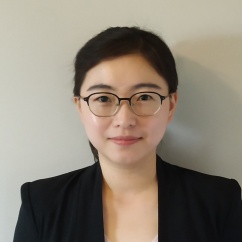
Dr Nga Wun (Doris) Li is a Senior Lecturer at the University of Technology Sydney (UTS) within the Faculty of Design, Architecture and Building, Department of Fashion and Textiles. She leads research in seamless knitting technology, smart textiles, and sustainable fashion innovation. PhD in Fashion & Textile Design (HK PolyU, 2021) BA (Hons) in Fashion & Textiles (HK PolyU, 2012) Certifications in Wholegarment Machine (Shima Seiki, Japan) and Higher Education Pedagogy (UTS) Her research focuses on functional garments, knitting technology, and bio-informed textile design. Key projects include smart socks for DVT prevention , one-size sports bras , and buoyant swimwear for children . She combines knitting with machine learning and 3D printing for material innovation. Recent publications highlight her work on compression textiles (2025), wearable glucose sensors (2025), and knitted metasurfaces for acoustic comfort (2024). She has secured AU$52,000+ in grants across 5 funded projects. Fashion Design Award (Jeanswest, China) Outstanding Presentation & Research Paper Awards (2024) Dr Li supervises PhD and MPhil students in smart textiles and sustainable design while coordinating machine knitting courses. She collaborates with AiDLab (Hong Kong) and Powerhouse Museum (Australia).
Dr. Yujie Tang is an Assistant Professor in the Faculty of Computer Science at Dalhousie University, Canada, where she has been serving since September 2022. Prior to this, she was an Assistant Professor at Algoma University (2019–2022) and a Post-Doctoral Fellow at the University of Waterloo (2017–2019). Her academic journey includes a PhD from the University of Waterloo and earlier degrees from Harbin Institute of Technology and Lanzhou Jiaotong University. PhD – University of Waterloo (2017) M.E. – Harbin Institute of Technology, Shenzhen, China B.E. – Lanzhou Jiaotong University, Lanzhou, China Her research focuses on intelligent networking and computing technologies for future IoT and 5G/6G systems. Key areas include Internet of Vehicles (IoV), AI-empowered edge computing, resource management in heterogeneous networks, software-defined networking, and UAV-assisted communications. She employs machine learning and optimization techniques to design energy-efficient and high-performance network protocols. The most recent publications reflect a strong trend in applying AI and machine learning to solve complex problems in vehicular networks, edge caching, and spectrum management. Her work spans top-tier IEEE journals such as IEEE Transactions on Vehicular Technology , IEEE Internet of Things Journal , and IEEE JSAC , with a clear emphasis on real-world deployable solutions for next-generation wireless systems. Faculty Research Startup Fund, Dalhousie University, 2022 NSERC Discovery Grant, 2021–2026 Algoma University Research Fund, 2021 Faculty Research Startup Fund, Algoma University, 2019 Best Speaker Award, University of Waterloo, 2017 Faculty of Engineering Award (4 times), University of Waterloo, 2013–2017 University of Waterloo Graduate Scholarship, 2013–2015 International Doctoral Student Award, 2012–2016 Graduate Research Studentship (twice), 2011–2012 Provost Doctoral Entrance Award for Women, 2011 Dr. Tang actively supervises graduate and undergraduate students and has secured competitive research grants, including the NSERC Discovery Grant. She serves on the technical program committees of major IEEE conferences such as INFOCOM, GLOBECOM, and ICC, and regularly reviews for top journals like IEEE JSAC , IEEE TWC , and IEEE TVT . She currently leads a research group focusing on B5G/6G networks, IoV, and edge computing, and she is actively recruiting new students and visiting scholars. Her research group operates within the Faculty of Computer Science at Dalhousie University, where she leads projects in intelligent resource management, AI-driven networking, and integration of space-air-ground networks. She is a member of IEEE, IEEE Communications Society, and IEEE Vehicular Technology Society.
Pedro Neves is a Full Professor in the Department of Management and Organizations at Nova School of Business and Economics (Nova SBE), Universidade Nova de Lisboa. His academic background includes a PhD in Industrial and Organizational Psychology/Organizational Behavior from ISCTE-IUL and post-doctoral research at the University of Delaware. He teaches courses in Organizational Behavior, Persuasion and Negotiation, and Entrepreneurship, and actively contributes to executive education programs. His research focuses on leadership processes , particularly the dark side of leadership , interpersonal relationships , organizational change management (especially resistance anticipation), occupational health (including stress perception), and entrepreneurial behavior . His work appears in leading journals such as the Journal of Applied Psychology , The Leadership Quarterly , and Human Resource Management . His recent publications show a consistent focus on leadership dynamics, organizational change, employee well-being, and ethical behavior, often using multi-level and cross-cultural frameworks. He has also edited key volumes such as the Handbook of Methods in Leadership Research and the Research Handbook on Destructive Leadership . He currently serves as Associate Editor of the Journal of Applied Behavioral Science and is on the Editorial Board of The Leadership Quarterly and other journals, reflecting his scholarly impact. Pedro Neves has collaborated with doctoral students and researchers globally and has contributed to both theoretical and applied aspects of organizational behavior. He has not received explicitly mentioned scientific awards in the text, but his editorial roles and publication record indicate significant recognition in the field. He is involved in the Leadership for Impact Knowledge Center and contributes to open and customized executive education programs at Nova SBE.
Dominique Foray is a Professor at Ecole Polytechnique Fédérale de Lausanne (EPFL) and holds the Chair of Economics and Management of Innovation (CEMI). He is a member of the Swiss Council for Science, chairman of the KOF Swiss Economic Research Institute's Advisory Board, and a foreign member of Columbia University's Center of Capitalism and Society. His career includes extensive advisory roles, such as with the European Commission's 'Knowledge for Growth' group and Germany's Expert Commission for Research and Innovation. Education: Ph.D. in Economics, University Lumière of Lyon (1984) Habilitation à diriger des recherches, University Lumière of Lyon (1992) Foray's research focuses on the economics of innovation, knowledge-based economy dynamics, technology policy, smart specialization strategies, and institutional frameworks for innovation. He has authored seminal works including The Economics of Knowledge (MIT Press, 2004) and Smart Specialisation (Routledge, 2015). His recent publications explore mission-oriented innovation policies, smart specialization in EU contexts, and knowledge diffusion mechanisms. Foray's work bridges academic theory with practical policy design, influencing regional and national innovation strategies globally. Advising: Past EPFL PhD students: Aouinait Camille Marguerite, Ayoubi Charles Chadi, Baruffaldi Stefano Horst, Bednyagin Denis, Bogers Marcellus, Coffano Monica, Conti Annamaria, Cristelli Gabriele, Gaulé Patrick, Hamdan Livramento Intan Maizurah, Marino Marianna, Muñoz Tellez de Kieffer Viviana Carolina, Pellegrin Claudia, Simeth Markus Foray's institutional roles include leadership in European policy initiatives and contributions to the World Bank's studies on innovation's role in economic growth. His interdisciplinary approach integrates economics, policy analysis, and technology management to address grand societal challenges through innovation.
Raquel Urtasun is a Full Professor in the Department of Computer Science at the University of Toronto and a co-founder of the Vector Institute for AI. She is also the Founder and CEO of Waabi, an autonomous vehicle company. Previously, she was Chief Scientist and Head of R&D at Uber ATG (2017–2021) and held faculty positions at the Toyota Technological Institute at Chicago (TTIC) and as a visiting professor at ETH Zurich. Her research spans machine learning, computer vision, robotics, and AI with a strong focus on autonomous driving and 3D perception. Education: Bachelor's degree, Universidad Pública de Navarra, 2000 Ph.D., Computer Science, École Polytechnique Fédérale de Lausanne (EPFL), 2006 Postdoctoral studies, MIT and UC Berkeley Raquel Urtasun's research focuses on developing AI systems for self-driving cars, emphasizing efficient perception using minimal sensors. Her work includes 3D scene understanding, stereo vision, optical flow, semantic segmentation, and object detection. She has developed the KITTI benchmark suite, widely used in autonomous driving research. Her lab is an NVIDIA NVAIL lab, reflecting its leadership in AI innovation. Her recent publications show a consistent trend in deep learning for visual perception, particularly in stereo matching, optical flow, 3D object detection, and semantic segmentation. These works integrate deep neural networks with structured models like CRFs and MRFs, pushing the boundaries of accuracy and efficiency in scene understanding for autonomous systems. Scientific Awards: NSERC E.W.R. Steacie Fellowship NVIDIA Pioneers of AI Award Google Faculty Research Awards (multiple) Amazon Faculty Research Award Connaught New Researcher Award Fallona Family Research Award Best Paper Runner Up at CVPR 2013 and 2017 UPNA Alumni Award Chatelaine 2018 Woman of the Year Adweek 2018 Toronto's Top Influencers Urtasun has advised numerous PhD and Master’s students, many of whom now hold faculty or research scientist positions at institutions like UIUC, NYU, UBC, MIT, and companies including Google, Amazon, NVIDIA, and Apple. She has secured significant research grants from NSERC, Google, Amazon, and NVIDIA. Her leadership extends to organizing workshops and serving as Area Chair and Program Chair at top conferences like CVPR, ICML, and NeurIPS. Labs and Teams: She leads a research group at the University of Toronto focused on AI for autonomous systems. Her team has been recognized as an NVIDIA NVAIL lab, and she continues to mentor students and postdocs working on cutting-edge problems in robotics and machine learning, both at UofT and through her company Waabi.
Dr. Bill Sheel is a Professor and Distinguished University Scholar at the School of Kinesiology, University of British Columbia. His research focuses on the integrative physiology of exercise, particularly respiratory and cardiovascular interactions. Email: bill.sheel@ubc.ca Office: Chan Gunn Pavilion, Room 221B, Vancouver, BC Lab: Health and Integrative Physiology Laboratory Research Interests: Dr. Sheel investigates respiratory physiology during exercise, cardiovascular modulation by breathing patterns, and human performance optimization. His work spans elite athletes, aging populations, and clinical applications. Publication Trends: Recent studies include pulmonary mechanics in exercise physiology, respiratory muscle training applications, and socio-cultural factors in sports science. Collaborative works address aging interventions and environmental influences on athletic performance. Scientific Recognition: Distinguished University Scholar, UBC Laboratory & Collaborations: Leads the Health and Integrative Physiology Laboratory at UBC, focusing on respiratory-cardiovascular integration and exercise tolerance mechanisms.
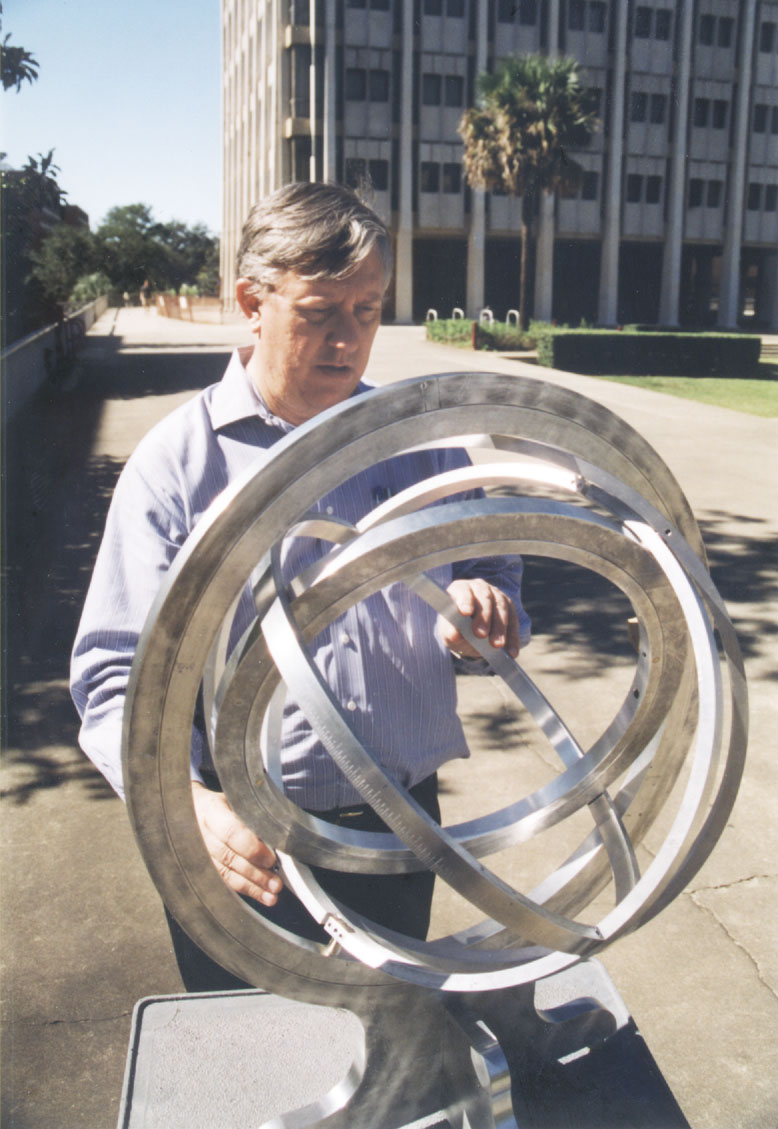
Dennis W. Duke is a Professor of Physics at Florida State University, with a joint appointment in the Department of Physics within the College of Arts and Sciences and the School of Computational Science. He has been a faculty member at FSU since 1979, progressing from Visiting Assistant Professor to his current position as full Professor since 1992. Duke has also held significant leadership roles including Director of the Supercomputer Computations Research Institute (1993-1998) and Director of the San Diego Supercomputer Center (1996-1997). Duke's research spans multiple disciplines with primary focuses on the history of ancient astronomy, computational physics, and high-performance computing. His work in ancient astronomy includes detailed studies of Greek, Babylonian, and Indian astronomical traditions, with particular emphasis on planetary models, trigonometry development, and historical measurement techniques. In computational science, he has made contributions to nonlinear dynamics, chaos theory, and statistical process control. Duke is particularly known for creating educational computer animations of ancient planetary models that have become valuable teaching tools. Analysis of Duke's 15 most recent publications reveals a consistent focus on historical astronomy, with approximately 75% of his work dedicated to analyzing ancient astronomical systems from Greek, Babylonian, and Indian traditions. The remaining publications address statistical methods and computational techniques. His historical research often combines mathematical analysis with historical scholarship to reconstruct and understand ancient astronomical practices. COFRS Award, The Florida State University (1985) COFRS Award, The Florida State University (1986) Developing Scholar Award, The Florida State University (1986) President's Continuing Education Award, The Florida State University (1992) Duke has been extensively involved in professional service, serving on numerous national committees related to supercomputing and organizing major conferences including multiple Supercomputing 'XY events from 1988 through 2006. His teaching extends beyond traditional academic boundaries through public outreach initiatives such as chairing the Board of Directors for Tallahassee Free-Net, Inc. and serving on the Leon County Schools Information Services Advisory Board. He has supervised numerous graduate students in computational physics and the history of science, though specific student names are not documented in the provided materials. Duke maintains an active research laboratory focused on computational ancient astronomy, where he develops mathematical models and computer animations to visualize historical astronomical concepts. His team has created an extensive collection of interactive animations demonstrating planetary models from Ptolemy through Copernicus, which are widely used in educational settings. Current projects include further analysis of ancient star catalogs and the development of more sophisticated visualization tools for historical astronomical concepts.
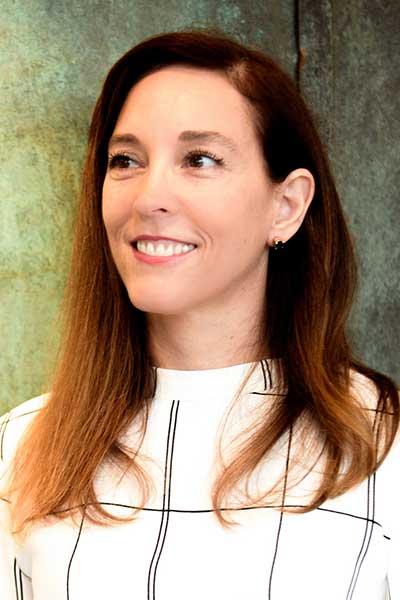
Stacey Jacobsen is an Associate Professor of Finance at the Cox School of Business, Southern Methodist University (SMU), and holds the Fabacher Endowed Professorship of Alternative Asset Management. She received her PhD in Finance from Indiana University in 2011 and an undergraduate degree from Texas Christian University. Prior to her academic career, she worked as an investment banking analyst and strategy associate. PhD, Finance, Indiana University Undergraduate, Texas Christian University Her research focuses on Empirical Corporate Finance and Market Microstructure , with a particular emphasis on liquidity analysis, corporate bond markets, and investor behavior. Her work combines empirical studies with quantitative finance methodologies to explore financial market dynamics, transaction cost analysis, and strategic corporate finance decisions. Stacey's publications in top-tier journals such as the Journal of Finance, Journal of Financial Economics, and Management Science reflect her expertise in liquidity measurement, market microstructure, and corporate finance. These works often bridge theoretical finance with real-world market outcomes, covering subfields like high-speed trading, market efficiency, and empirical analysis of financial strategies. She teaches FINA 6238 Financial Modeling , integrating her research insights into practical financial analysis tools.
Dr. Hongye Zhang serves as a Lecturer in Superconducting and Cryogenic Electric Machines at the School of Engineering, University of Edinburgh, while maintaining a Visiting Research Fellow position at the University of Manchester. He actively contributes to the European Society for Applied Superconductivity (ESAS) as a Board Member and chairs the international HTS 2026 workshop. His educational foundation includes: BSc and MSc in Electrical Engineering from Xi’an Jiaotong University (2015, 2018) Diplôme d’ingénieur (MEng) from École Centrale de Lyon (2018) PhD in Applied Superconductivity from the University of Edinburgh (2021) Dr. Zhang’s research centers on decarbonizing transport through superconducting/cryogenic electric machines for hydrogen-powered aircraft, integrating artificial intelligence with superconductor technology and cryogenic techniques. His work targets net zero emissions by developing high-power-density propulsion systems that leverage hydrogen energy and advanced numerical modeling of superconductors. Analysis of his 2022-2025 publications reveals dominant themes in superconducting machine design for wind energy and electric aviation, with significant contributions to loss mitigation, flux pump technology, and trapped field magnet applications. His research bridges fundamental superconductor characterization with practical system integration for renewable energy. Recognized with the 2021 IEEE Council on Superconductivity Graduate Study Fellowship, his professional engagements include: Early Career Editorial Board Member for Elsevier’s Superconductivity journal Technical Editor for IEEE Transactions on Applied Superconductivity Program Committee Member for SMT 2023 He leads critical research within the £54-million H2GEAR project developing hydrogen-electric aircraft propulsion, while teaching Power Engineering 2 and Electrical Machines courses. His advisory roles span doctoral supervision and industry collaboration through Energy Systems research institute. Based at the University of Edinburgh’s Faraday Building, Dr. Zhang directs a research group focused on hydrogen energy applications and superconducting machine testing, with strong ties to the H2GEAR consortium and ESAS working groups.
Tarik Abou-Chadi is a Professor in European Union and Comparative European Politics at the University of Oxford's Department of Politics and International Relations, and a Professorial Fellow at Nuffield College. He holds a PhD from Humboldt University Berlin (2015). His research focuses on elections, political parties, and the transformation of democratic representation in post-industrial societies. Key affiliations include the Government and Politics Network, Comparative Politics and Government, and leadership of the Swiss National Science Foundation-funded project on 'Social Status and the Transformation of Electoral Behavior in Western Europe'. He previously served as Assistant Professor at the University of Zurich before joining Oxford. His work appears in top journals like the American Political Science Review and World Politics. Awards include the Henrik Enderlein Prize (2022) and inclusion in Capital magazine's 'Top 40 under 40' (2022). He advises four doctoral students and actively contributes to media commentary on European political trends through outlets like The Economist. Research interests emphasize far-right dynamics, voter behavior, and party strategy in Western Europe. His recent analyses address gendered political preferences among youth, climate policy acceptance, and the electoral consequences of mainstream parties adopting radical-right policies.
Richard MA Tianbai is an Associate Professor at the School of Computing, National University of Singapore (NUS), and serves as IT Coordinator for Computing Facilities. He holds a B.Sc. (First-Class Honors) and M.Phil. from the Chinese University of Hong Kong, followed by an M.Sc. and Ph.D. from Columbia University, USA. His research focuses on systems & networking, distributed computing, and internet economics, with projects addressing cloud-based big data systems and internet peering agreements. Richard has received multiple awards, including the Best Paper Award Runners-up at ACM Mobihoc 2020 and the Teaching Excellence Award from NUS School of Computing in 2019. His work bridges theoretical models with practical applications in network economics and distributed systems. Education: B.Sc. (First-Class Honors), Computer Science & Engineering, Chinese University of Hong Kong (2002) M.Phil., Computer Science & Engineering, Chinese University of Hong Kong (2004) M.Sc., Columbia University (2008) Ph.D., Columbia University (2010) Research Interests: Cloud-Based Big Data Systems: Innovating serverless paradigms for real-time analytics (e.g., Stream as a Service). Internet Economics: Modeling peering agreements, premium peering dynamics, and regulatory alternatives to net neutrality. Distributed Computing: Auto-scaling frameworks (e.g., Elasticutor, DRS) for real-time stream processing. His research emphasizes performance guarantees and resource optimization in dynamic networked systems. Awards: Best Paper Award Runners-up (ACM Mobihoc 2020) Teaching Excellence Award (School of Computing 2019) Bell Labs Best Paper Award (IEEE SDP 2015) Best Paper Awards at ICNP 2014 and IC2E 2013 Grants & Advising: Recipient of research grants supporting projects like “Testbed for Innovative Inter-Networking Research.” Advises on doctoral projects related to stream processing and network economics. His work is funded by industry collaborations and institutional grants. Labs & Teams: Part of the Distributed Network Analysis (DNA) Research Group and Advanced Networking & Systems Research Group, fostering interdisciplinary collaborations in networking and distributed systems.
Dr. Rajkumar Buyya is a Redmond Barry Distinguished Professor at the University of Melbourne and Founder & CEO of Manjrasoft , a spin-off commercializing cloud innovations. He has held visiting roles at Imperial College London , University of Birmingham , and Tsinghua University . Research Interests : His work spans Cloud Computing , Edge Computing , Grid Systems , and Energy-Efficient Computing , focusing on utility-driven resource allocation, simulation tools, and scalable IoT application frameworks. He pioneered the CloudSim toolkit and Aneka Cloud technologies. Scientific Awards : IEEE Fellow (2015), Web of Science Highly Cited Researcher (2016-2021) Khwarizmi International Award (2020), Scopus Researcher of the Year (2017) Frost & Sullivan New Product Innovation Award (2010), IEEE TCSC Medal (2009) Impact : Authored over 850 publications, including the widely adopted textbook Mastering Cloud Computing . Graduated 54 PhD students now in leadership roles at institutions like Newcastle University and companies such as IBM , Google , and Amazon . His research has driven global adoption of cloud/edge technologies in 50+ countries.
Nancy Mock is an Associate Professor in the Department of Global Health Systems and Development at Tulane University's School of Public Health & Tropical Medicine. She holds affiliated faculty status at the Stone Center for Latin American Studies. Her academic journey includes a B.S. in Biology from Yale University (1976), an M.P.H. in International Health from Tulane (1979), and a Dr.P.H. in International Health from Tulane (1985). Dr. Mock's research focuses on global health systems, evaluation methodologies, complex emergencies, and health systems in Latin America and Africa. Notable areas include Haiti's public health challenges and Rwanda's educational health programs. She has directed key institutions like the Center for International Resource Development and contributed to the Famine Early Warning System (FEWS). Her work is supported by major grants, including the Robert Wood Johnson Foundation Grant (2007), USAID's Regional Public Health Leadership Initiative (2006-2007), and Rwanda-focused projects (2000-2004). She has consulted for organizations such as the World Food Program, UNICEF, and the Pan American Health Organization. Fluent in French and Spanish, her overseas experience spans Honduras and extensive fieldwork in Africa and Asia.
Timo Rintamäki is an Associate Professor at the Faculty of Management and Business , Tampere University . His research focuses on customer value creation, service ecosystems, and retail innovation, with particular expertise in co-creation, sharing economy platforms, and digital transformation. Research Themes : Customer Value Propositions, Service Ecosystems, E-Commerce, Co-Creation, Retail Experience Design Key Sectors : Retail, Healthcare, Social Media, Public Services Timo’s recent work explores sustainable value creation through collaborative platforms, analyzing customer behavior in online return processes, and optimizing value orchestration in multi-channel environments. His studies span both academic and practical perspectives, including policy implications in healthcare and innovation in consumer cooperatives. His scholarly contributions include frameworks for service experience management, insights into customer data utilization, and models for value co-creation across digital and physical touchpoints. While no specific scientific awards are listed, his interdisciplinary research bridges service science, marketing, and organizational behavior.
Golan Levin is Professor of Electronic Art at Carnegie Mellon University's School of Art, with courtesy appointments in the School of Design, School of Architecture, School of Computer Science, and Entertainment Technology Center. From 2009 to 2022, he served as Director and Co-Director of CMU's Frank-Ratchye STUDIO for Creative Inquiry, a laboratory dedicated to supporting atypical, anti-disciplinary research at the intersection of arts, science, technology, and culture. Levin's research spans interactive art, digital fabrication, information visualization, and generative design. He explores the critical potential of visualization, generative computation for expressive form, and how abstraction connects to realities beyond language. His practice engages interactive gestural robotics, nonverbal interaction aesthetics, and tactical applications of personal digital fabrication through responsive artifacts and media provocations that highlight human-machine relationships. His publications reveal consistent innovation in real-time audiovisual systems, interactive fabrication interfaces, and pedagogic tools for artists. Key trends include slit-scan video techniques, tangible augmented-reality performance, and noise-based visualizations, demonstrating his commitment to expanding human action vocabulary through digital media while bridging artistic expression with computational systems. Levin's work has received significant recognition: Permanent collection inclusion at Museum of Modern Art (MoMA) Whitney Biennial exhibition "50 Designers Shaping the Future" by Fast Company (2012) Competitive grants from National Endowment for the Arts, National Endowment for the Humanities, Creative Capital, and Rockefeller MAP Fund As an educator, Levin teaches "studio courses in computer science" on interactive art, experimental capture, and generative design, emphasizing computation as a medium for critical inquiry. His research funding from major cultural institutions supports interdisciplinary exploration at the arts-technology nexus. The Frank-Ratchye STUDIO for Creative Inquiry, which he directed for 13 years, remains a vital hub for anti-disciplinary collaboration, continuing his legacy of fostering creative agency through technology-infused artistic practice.