
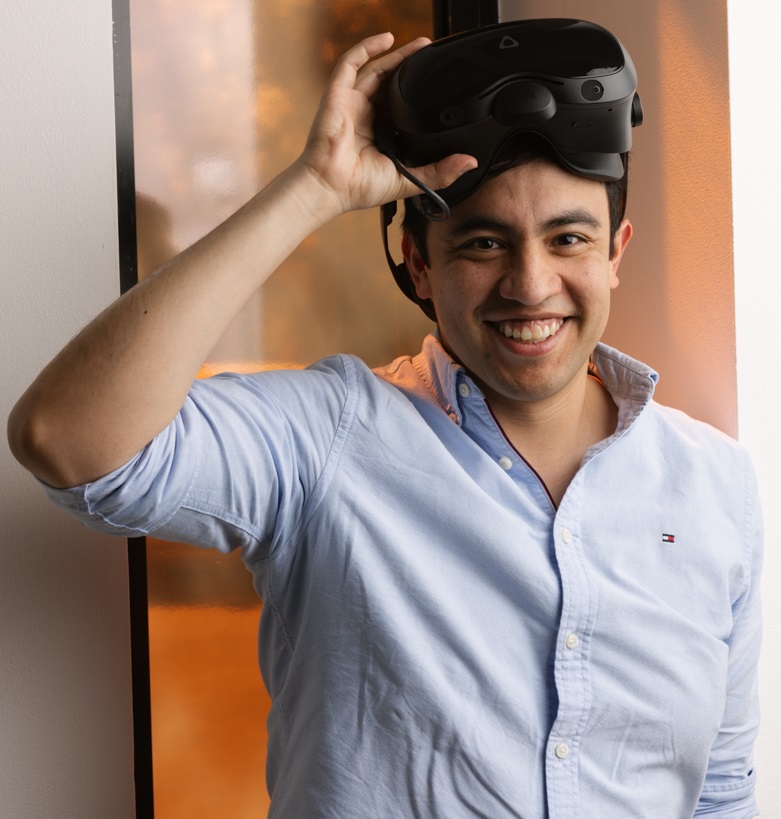
Carlos Tirado Cortes is a Lecturer in Interaction Design at the Discipline of Design Lab , Faculty of Architecture, Design and Planning, University of Sydney. As a virtual environments researcher, he focuses on Human-Computer Interaction and data visualization in immersive systems. Ph.D in Human-Computer Interaction (University of Technology Sydney, 2021) M.S. in Computer Game Engineering (Newcastle University, UK, 2015) B.S. in Engineering and Information Technology (Monterrey Institute of Technology, Mexico, 2012) His research explores immersive visualization for wildfire training (iFire project), VR sickness analysis, and brain-body dynamics during virtual navigation. Recent publications examine: AI-powered wildfire visualization systems Metaverse safety for children Postural instability in VR environments Fire-atmosphere interaction modeling Balance recovery techniques in immersive spaces
جستوجوی استاد و پژوهشگر
استاد راهنما، استاد دانشگاه یا پژوهشگر مناسب برای مسیر پژوهشیتان را پیدا کنید و با او ارتباط بگیرید.
نمایش ۷۳۶-۷۵۰ از ۴٬۳۰۰ استاد راهنما
اطلاعات این پروفایلها از صفحات عمومی دانشگاهها جمعآوری شده و ممکن است بهروز نباشد.

Dr. Josephine Vaughan is a Lecturer in Construction Management (Building) at the University of Newcastle's School of Architecture and Built Environment, part of the College of Engineering, Science and Environment. She holds a PhD in Architecture from the University of Newcastle, complemented by a Bachelor of Science (Architecture) from the University of Sydney and a Graduate Certificate in Ecologically Sustainable Development from TAFE NSW. Her research focuses on ecologically sustainable construction practices, particularly in building materials and embodied carbon reduction. Notable projects include developing removable brick mortar for reuse and researching hempcrete as a sustainable alternative. She collaborates with industry partners like Brickworks and RMIT, and actively engages with organizations such as MECLA and the MidCoast Council’s Sustainable Building Futures Partnership. Research interests span environmental sustainability, circular economy, and community-focused design. Over 50 publications and industry reports highlight her contributions, including award-winning work on thermal comfort in classrooms and embodied carbon analysis. Key grants include funding for circular economy mortar development and material management research. Education: PhD in Architecture, University of Newcastle Bachelor of Architecture, University of Newcastle Bachelor of Science (Architecture), University of Sydney Graduate Certificate in Ecologically Sustainable Development, TAFE NSW Her work aligns with UN Sustainable Development Goals (SDGs 3,7,11,12), emphasizing health, energy, sustainable cities, and responsible consumption. Awards include the 2024 MDPI Best Paper Award and 2023 Global Engagement Excellence Award. She also chairs the MECLA Construction Materials & Assemblies Working Group and coordinates student industry experiences. Recent articles explore thermal comfort, circular economy barriers, and traditional water knowledge applications. Grants total over $682,000, supporting projects like material inventories and mortar innovation. Collaborative international work includes teaching programs in India and Malaysia, reflecting her global impact in sustainable built environment practices.
Jamie MacKeeمشاهده پروفایل
دانشیار
- Architectural Conservation
- Climate Change Impacts on Cultural Built Heritage
- Environmental Management Systems
- +۴ مورد دیگر
Associate Professor Jamie MacKee is a prominent academic at the University of Newcastle, affiliated with the School of Architecture and Built Environment in the Department of Construction Management (Building). He holds an Associate Professor rank and has served in leadership roles such as Assistant Dean (International) and Head of Discipline for Construction Management. His career spans over 20 years in academia and professional education, with expertise in architectural conservation, disaster resilience, environmental management, and construction management education. Education: PhD, University of Newcastle Master of Science (Building), National University of Singapore Post Graduate Diploma in Arch Conserv of Mon&Sites, University of Moratuwa, Sri Lanka Bachelor of Design Studies, University of Queensland Bachelor of Architecture (Honours), University of Queensland Research Interests: Jamie’s work focuses on the intersection of cultural built heritage conservation, climate change impacts, and disaster resilience. He has pioneered frameworks for sustainable urban development in Asia and led projects like the Tsunami relief hospital in Sri Lanka. His research emphasizes systems theory, Buddhist philosophy, and resilience thinking to address challenges in heritage conservation and disaster management. Awards: 2016 Vice-Chancellor's Award for International Engagement 2010 Best Paper Award, Commonwealth Association of Surveying and Land Economy 2008 Excellent Building Postgraduate Award, Chartered Institute of Building Grants & Funding: Jamie has secured over $482,505 in grants, including projects on disaster resilience education in Latin America and Southeast Asia, and collaborations on cultural heritage conservation in Tuvalu. Notable grants include the Resilience Education Australia-China-Taipei (REACT) Network and Disaster Resilience Education Capacity Building initiatives. Teaching & Administration: As Course Coordinator and Head of Discipline, Jamie has led curricular reforms, developed online educational tools, and managed accreditation processes (e.g., RICS and AIBS). He has supervised over 45 Honours students and currently guides 12 PhD candidates. His administrative roles include Academic Conduct Officer and leadership in industry partnerships.
Majida Mehana is a Lecturer in the School of Education within the Faculty of Humanities, Arts, Social Sciences and Education at the University of New England, Australia. She brings extensive international experience, having taught and conducted research in Lebanon, Oman, Qatar, the United Arab Emirates, the United States, and Australia. Her educational background includes a Ph.D. in Curriculum & Instruction from The Pennsylvania State University, an M.A. in Educational Theory and Practice from The Ohio State University, and a B.A. in Human Development–Early Childhood Education from the Lebanese American University. She has focused her career on improving early childhood education systems globally. Dr. Mehana's research centers on early childhood education in multicultural contexts, teacher preparation programs, and comparative educational practices. Her work emphasizes inclusion, bilingual education, and the development of equitable learning environments. She investigates how curricula and policies can better support children from diverse cultural and linguistic backgrounds. Her publications and conference presentations reflect a strong commitment to inclusive and effective early childhood education. Themes across her work include teacher development, language acquisition, inclusion strategies, and educational reform in both Western and Middle Eastern contexts. She has contributed to international handbooks and peer-reviewed journals, highlighting cross-cultural challenges and innovations. Member, Australian Research Alliance for Children and Youth Member, Association of Graduates in Early Childhood Studies Dr. Mehana has supervised students and led research on early interventions, bilingual education, and inclusion. Though no specific grants are mentioned, her extensive publication and presentation record suggests active research engagement. She has contributed to national and international dialogues on early childhood policy and practice. She is involved in academic communities and has presented at major conferences including the Australian Sociological Association, Early Childhood Australia, and the World Federation of Associations for Teacher Education. Her work bridges policy, research, and classroom practice in early childhood education.
Zhuo Chenمشاهده پروفایل
عضو هیئت علمی
Zhuo Chen is an Adjunct Lecturer in the Department of Civil & Environmental Engineering at Monash University. His research focuses on sustainable urban planning, transportation engineering, and materials science, particularly in additive manufacturing and microstructural analysis. He has collaborated on projects addressing bike-friendly infrastructure, urban heat island effects, EV charging etiquette, and the development of advanced materials through novel processing techniques. Key research interests include integrating deep learning for urban infrastructure analysis, leveraging social media data for mobility studies, and optimizing additive manufacturing processes to enhance material properties. His work contributes to the UN Sustainable Development Goals, particularly in sustainable cities and communities (SDG 11) and climate action (SDG 13). Recent studies highlight trends in both transportation innovation (e.g., protected cycle lanes, EV infrastructure) and materials science (e.g., laser powder bed fusion, alloy development). His interdisciplinary approach bridges urban policy and advanced manufacturing, with applications in smart cities and nuclear materials. Zhuo Chen has been actively engaged with the Monash Suzhou Research Institute through patent collaborations, focusing on innovative manufacturing solutions. His work emphasizes empirical validation and data-driven methodologies to address real-world challenges in urban and materials engineering.
Bailey Sykesمشاهده پروفایل
پژوهشگر ارشد
Bailey Sykes is a Research Fellow at the School of Physics and Astronomy, Monash University. Their work focuses on advanced computational methods in astrophysics and general relativity. Institution: Monash University Academic Rank: Research Fellow Email: Bailey.Sykes@monash.edu Research Interests: Specializing in general relativity and astrophysics, Sykes develops numerical simulations for extreme cosmic events like core-collapse supernovae. Their 2023 publication in Physical Review D introduces a black-hole excision scheme for relativistic supernova modeling. Recent Publications: 1 article in 2023 related to numerical relativity and supernova simulations.
- Computer Vision
- Artificial Intelligence
- Robotics
- +۷ مورد دیگر
Christopher McCarthy is an Associate Professor in the Department of Computing Technologies within the School of Science, Computing and Emerging Technologies at Swinburne University of Technology. His research focuses on computer vision algorithms applied to robotics, intelligent transport systems, and assistive technologies, particularly for people with low vision. He serves as Stream Leader in Swinburne’s Innovative Planet Research Institute, leading the Intelligent Transport stream, and is a Chief Investigator in the Australian Cobotics Centre funded by the ARC. He has held research roles at CSIRO Data61, the Bionics Institute, and the University of Melbourne, contributing to bionic eye technology under the Bionic Vision Australia consortium. His research interests include: Computer Vision and AI for real-time systems Robot perception and navigation Assistive technologies for low-vision and blind users Intelligent transport systems and video analytics Human-machine interaction and cyber-human teams His recent publications reflect strong trends in deep learning, continual learning, and real-world deployment of vision systems in transport and healthcare. He has led numerous field trials and evaluations to assess system performance in real-world contexts. His work is highly interdisciplinary, combining computer science with engineering, medicine, and urban planning. Christopher McCarthy has received multiple awards, including: FSET Research Collaboration Award Excellence in Industry Engagement Special Commendation – VC Research Impact Finalist – National Disability Award in Technology Best Paper Award (IEEE) Excellence in Teaching (University of Melbourne) He has supervised over 20 HDR students in areas including robotics, AI, assistive tech, and transport analytics. He has led major research grants from ARC, Defence, SmartCrete CRC, iMOVE, and city councils. He also served as Academic Director for Work-Integrated Learning (2016–2023) and coordinated professional placements. His teaching includes core computer science units such as Computer Systems and Object-Oriented Programming. He maintains ongoing affiliations with: Bionics Institute (Honorary Member) Bionic Vision Australia (Affiliate) Data61 (Honorary Member) Royal Children's Hospital, Melbourne International Task Force for Vision Restoration Outcomes (Chair)
Shanti Krishnanمشاهده پروفایل
مدرس ارشد
Dr. Shanti Krishnan is a Senior Lecturer in the School of Engineering at Swinburne University of Technology, where she conducts interdisciplinary research at the intersection of physics, engineering, and cybersecurity. Her work spans fundamental physics experiments and practical industrial applications. Her research focuses on nuclear and plasma physics , particle physics , and astronomical sciences , with key contributions to muon tomography for monitoring mining infrastructure, dark matter detection via the SABRE South experiment at the Stawell Underground Physics Laboratory, and instrumentation development for the W. M. Keck Observatory. She also explores cybersecurity in Industry 4.0 , particularly through digital twin technologies and anomaly detection in cyber-physical systems. Her recent publications highlight advancements in muon-based navigation for space exploration, cosmic ray-based cybersecurity systems, and simulation of dark matter detectors. These works demonstrate a strong trend toward applying particle physics principles to real-world engineering and security challenges. Dr. Krishnan has received multiple grants, including external funding from HILT CRC Limited and internal grants from Swinburne University, supporting projects such as impact-driven learning materials for net zero in heavy industries and digital twin applications for blood product manufacturing. Development of Impact driven learning materials for net zero in heavy industries – HILT CRC Limited (2025) Rapid Scenario Testing using digital twin for sustainable and scalable manufacturing of blood products – Swinburne University (2024) A Dynamic In-bed Weight Monitoring System for Aged Care Facilities – Cloud Burst Software Pty Ltd (2023) She is actively supervising PhD students, including a project on using digital twins and machine learning to detect cyber-attacks in Industry 4.0 manufacturing systems. Her work is supported by collaborations with institutions such as Caltech, UC Observatories, ANU, and W. M. Keck Observatory, reflecting a strong international research network. Dr. Krishnan leads and contributes to multidisciplinary research teams focusing on detector development, secure industrial systems, and sustainable manufacturing. Her lab and project teams integrate physics, engineering, and data science to solve complex real-world problems.
Jamal Naserمشاهده پروفایل
مدرس ارشد
Jamal Naser is a Senior Lecturer in the School of Engineering at Swinburne University of Technology, where he actively contributes to research, teaching, and supervision. He holds the academic rank of Senior Lecturer and is involved in numerous research projects focusing on computational fluid dynamics (CFD), energy systems, and materials processing. Research Interests: His primary research areas include fluid mechanics, thermal engineering, chemical engineering, and extractive metallurgy. He specializes in CFD modeling applied to hydrogen use in steelmaking, wildland fire spread, composite manufacturing, and renewable energy systems such as wind turbines. His work bridges fundamental fluid dynamics with industrial applications in clean energy and sustainable manufacturing. The analysis of his recent publications reveals a strong trend in applying numerical modeling to environmental and industrial challenges—particularly decarbonization in steelmaking, fire safety in timber buildings, and bio-inspired wind turbine design. His research consistently employs advanced simulation tools like ANSYS Fluent and AVL FIRE, often incorporating user-defined subroutines for multiphase and reactive flows. Scientific Contributions: Lead and co-author of over 190 publications, with recent work appearing in high-impact journals such as Metallurgical and Materials Transactions B , Fire , and Energies . Active researcher in hydrogen-based steelmaking, fire dynamics, and composite preforming, contributing to sustainable development goals related to clean energy and climate action. Advising and Grants: Jamal Naser supervises multiple PhD and Master’s students and has secured several external research grants from organizations including CSIRO, Australian Mathematical Sciences Institute, and Lunar Resources. His grants support projects on hydrogen in steelmaking, lunar metal casting, and anaesthesia data analysis, demonstrating interdisciplinary collaboration and industry engagement. Labs and Teams: He collaborates with researchers in multiphase flow modeling, combustion, and materials engineering, often working with teams involving G. Brooks, W.D.S. Fernando, and S.M. Hayajneh. His work integrates experimental validation with computational modeling, ensuring robust and scalable solutions.
Sekhar Somenahalliمشاهده پروفایل
مدرس ارشد
Sekhar Somenahalli is a Senior Lecturer at University of South Australia 's UniSA STEM school, affiliated with the School of Natural and Built Environments . His work spans transport planning, urban analytics, and sustainable mobility systems, with a focus on walkability, traffic modeling, and public transport optimization. Research Themes : Walkability Assessment : Developed novel metrics for measuring land-use mix and pedestrian infrastructure quality Traffic Modeling : Pioneered multi-tier frameworks like the Tactical Adelaide Model Public Transport Innovation : Investigated bus-based transit corridors and interchange efficiency Shared Mobility : Identified regulatory and infrastructural barriers to sharing economy services His recent publications analyze census-based mobility prediction, spatiotemporal traffic patterns, and socio-demographic walkability variations. Despite extensive grant funding (e.g., CRC for Low Carbon Living), no specific awards are documented in the provided materials. He supervises research students and applies GIS extensively in urban infrastructure analysis.
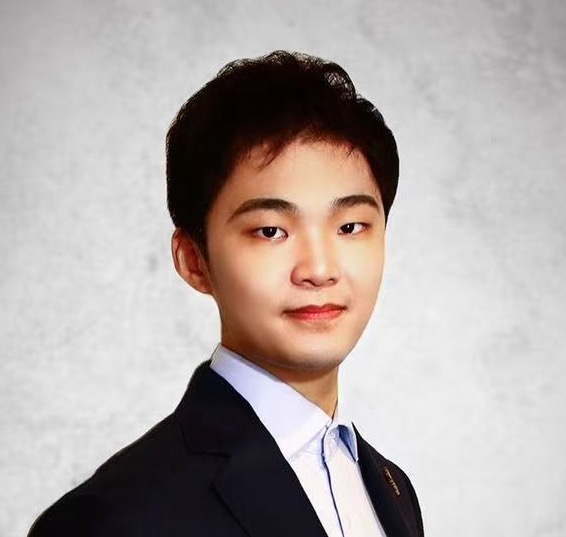
Dr. Yangyang Shu serves as an Associate Lecturer in the School of Systems and Computing at the University of New South Wales (UNSW) Canberra campus. Previously, he held a Research Fellow position at the Australian Institute for Machine Learning (AIML) at the University of Adelaide, where he contributed to the Centre for Augmented Reasoning (CAR) project. His academic foundation includes a Ph.D. in Computer Science from the University of Technology Sydney. His research spans cutting-edge areas in artificial intelligence, with core expertise in Machine Learning and Computer Vision . Key focus areas include: Low-supervised paradigms (Weakly/Semi-/Self-Supervised Learning) Rationale-Guided Machine Learning systems Generative AI applications Machine Learning in Music and affective computing Fine-grained visual recognition in data-scarce environments Dr. Shu's publication record demonstrates consistent contributions to top-tier venues including CVPR, ECCV, IEEE Transactions on Multimedia, and Pattern Recognition. His work bridges theoretical advances in learning with practical applications in photo aesthetic assessment, semantic segmentation, and emotion recognition, showing particular strength in developing methods for low-data regimes and leveraging privileged information. He maintains active research collaborations through the School of Systems and Computing at UNSW Canberra, building on prior affiliations with AIML and the Centre for Augmented Reasoning. His current teaching responsibilities include ZEIT 2103 (Data Structures and Representation) for Semester 1, 2025.

- Artificial Intelligence
- Machine Learning
- AI Ethics
- +۷ مورد دیگر
Dr. Conrad Sanderson is a Researcher and Team Leader at the Data61 division of CSIRO , focusing on artificial intelligence, machine learning, AI ethics, and high-performance numerical computing. He is also an Adjunct Professor at Griffith University . With over 150 publications and 11,000+ citations, he is renowned for developing influential open-source libraries like Armadillo and RcppArmadillo . Research Interests Artificial Intelligence & Deep Learning Responsible AI, Safe AI, and Ethical Trade-offs Numerical Linear Algebra and High-Performance Computing Recent Publications highlight advancements in: Dynamic graph anomaly detection via extreme value theory Fire propagation uncertainty estimation using neural emulators Resolving ethical tensions in AI implementation GPU-accelerated machine learning Scientific Awards Most cited paper award for thesis-based article Armadillo framework: 30+ million downloads Collaborations include researchers from Facebook, NASA, Boeing, and institutions like MIT and Stanford. His work bridges academia and industry through open-source contributions and interdisciplinary applications.
- Accounting
- Finance
- Corporate Governance
- +۴ مورد دیگر
Cameron Truong is a Professor in the Department of Accounting at Monash University , serving as Coordinator of interdisciplinary research. Previously affiliated with the University of Auckland and Citibank's Investment and Corporate Banking Division, his research spans empirical finance, corporate governance, sustainability reporting, and quantitative trading strategies. Key Research Areas : Corporate environmental performance, carbon risk pricing, capital structure dynamics, board governance, and work-from-home financial impacts Teaching : Advanced Quantitative Research Methods (PhD), Integrated Accounting (MPA), Risk Management, and Corporate Finance Consultancy : The Q Group and hedge funds on quantitative trading strategies Professional Memberships : American Finance Association, American Accounting Association, AFAANZ, SAS User Group His publications appear in Journal of Accounting Research , The Accounting Review , Journal of Financial Markets , and Journal of Environmental Economics and Management . Recent projects include AI-driven sustainability reporting standards and cost of capital models. Awards include multiple Best Paper Awards at international conferences (2010-2018) and competitive grants from AFAANZ and ACFS. Collaborations span interdisciplinary research with institutions globally.

Mary Jane Daltonمشاهده پروفایل
مدرس ارشد
Dr. Mary Jane Dalton serves as a Senior Lecturer at the School of Medicine and Public Health, University of Newcastle, Australia, where she has been instrumental in medical education since 2002. She played a primary role in developing Phase One of the MD program, focusing on integrating basic science, clinical medicine, and public health to cultivate compassionate medical professionals. Her institutional affiliation spans the College of Health, Medicine and Wellbeing, with direct responsibilities in curriculum design and Problem-Based Learning implementation. Her academic credentials include a Doctor of Medicine from Vanderbilt University and a Bachelor of Science in Genetics from the University of Georgia. This foundation in genetics and clinical medicine underpins her interdisciplinary approach to medical education. Doctor of Medicine, Vanderbilt University Bachelor of Science in Genetics, University of Georgia Dr. Dalton's research centers on medical education innovation, particularly Problem-Based Learning dynamics and curriculum integration. She investigates how to effectively merge basic sciences with clinical practice and public health principles to develop holistic medical training. Her work emphasizes creating environments that nurture both clinical competence and humanistic qualities in future physicians, with significant focus on preventive and primary health care frameworks as reflected in her Fields of Research codes (60% Preventive Health Care, 40% Primary Health Care). Analysis of her publication history reveals two distinct research phases: an early epidemiology period (1994-1996) focused on infectious disease outbreaks (cat-scratch disease, Rocky Mountain spotted fever, hantavirus), and her current medical education focus (2014-2024) examining assessment methods, Problem-Based Learning, and early-career researcher challenges. This evolution demonstrates her transition from clinical epidemiology to educational leadership while maintaining public health perspectives. Through her role in the MD program development, Dr. Dalton has shaped curriculum structures and teaching methodologies across multiple cohorts. Her contributions to Problem-Based Learning implementation and assessment design represent significant educational scholarship, though specific grant funding details are not documented in available sources. She maintains active engagement with medical student development through tutorial leadership and curriculum oversight.
Liem Viet Ngoمشاهده پروفایل
دانشیار
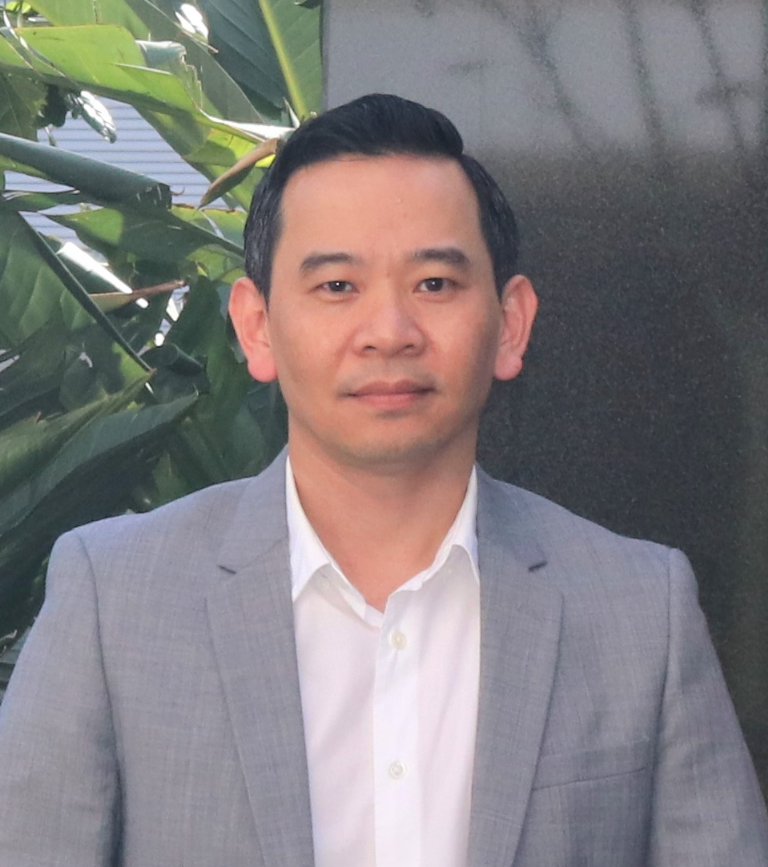
Associate Professor Liem Viet Ngo is a distinguished academic at UNSW Business School, University of New South Wales, Sydney, Australia. He serves as Editor-in-Chief of the Australasian Marketing Journal and has previously held significant administrative roles including Research Coordinator (2018-2019), Postgraduate Research Coordinator (2014-2017), and Postgraduate Coursework Coordinator (2010-2014). He is also a Member of the Advisory Board of Relationship Marketing for Impact at Griffith University. Dr. Ngo's educational background includes a PhD from the University of Newcastle, Australia, an MBA from the Asian Institute of Technology, Thailand, and a Bachelor of Engineering from HoChiMinh City University of Technology, Vietnam. His research focuses on human experience, theory of mind, attitude formation and change, persuasive communications, business ethics, value creation, and resources and capabilities management , applied to consumers, employees, managers, entrepreneurs, and organizations in marketing, branding, innovation, and entrepreneurship contexts. He employs survey research and experimentation methodologies in his work. The analysis of his recent publications (2022-2025) reveals a strong emphasis on contemporary marketing challenges including digital marketing ethics, AI applications in marketing, consumer well-being, sustainability in luxury markets, and cross-cultural consumer behavior. His work demonstrates a consistent integration of psychological principles with marketing theory, particularly in Asian contexts. Scientific Awards: Best Overall Conference Paper, ANZMAC 2019, Wellington, New Zealand Best Paper in Services Marketing Track, ANZMAC 2019, Wellington, New Zealand Honorary Doctor of Economics, University of Economics – HoChiMinh City, 2018 Best Paper in Services Marketing Track, ANZMAC 2015, Sydney Best Paper in Marketing Strategy Track, ANZMAC 2015, Sydney Outstanding Reviewer, Industrial Marketing Management Non-professorial Research Achievement Award, Australian School of Business Dr. Ngo has successfully supervised eight PhD students (five completed, one with revised thesis, two currently supervised), including Oanh Nguyen researching 'The Psychological Effects of Deprivation and Scarcity on Consumer Behaviors' and Widya Paramita studying 'The Ethical Chameleon: Exploring Frontline Employees' Problem-Solving Strategies Across Different Types of Ethical Issues.' His research has been supported by numerous grants from 2007-2020, including an ARC Discovery Grant. He is an active member of professional organizations including the American Marketing Association, Academy of Management, Australian Marketing Institute, ANZMAC, and ANZAM.
فقط ۷۵۰ نتیجه اول نمایش داده میشود. برای رسیدن به نتایج دقیقتر، جستوجو را با فیلترها محدودتر کنید.