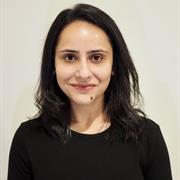
Dr. Bisma Manzoor is a Research Fellow (Postdoctoral) in the School of Engineering at RMIT University, specializing in wireless communication, satellite systems, and IoT technologies. She holds a PhD from RMIT (2021) and has dual experience in academia and industry, including a role as a Digital Signal Processing Engineer at Fleet Space Technologies. Her research focuses on enhancing IoT connectivity via satellite networks and machine learning applications in spectrum sensing. She has taught advanced engineering courses like Network Engineering and Research Methods, receiving awards for both teaching and research excellence. Research interests include satellite communication, signal processing, and energy-efficient IoT systems. She contributes to UN Sustainable Development Goals related to sustainable cities, industry innovation, and gender equality. Currently supervising projects on microwave vacuum electron devices, nanoscale electronics for satellites, and next-generation mega satellite networks.
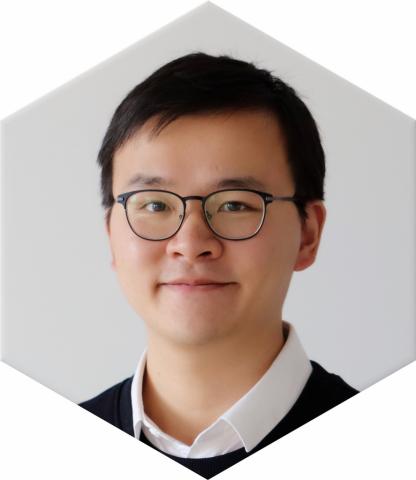
Dr. Erwin Fielt is a Senior Lecturer at the School of Information Systems within the Faculty of Science at Queensland University of Technology (QUT). He holds a PhD from Delft University of Technology and an MSc from the University of Twente, both in the Netherlands. His research focuses on the intersection of business strategy and information technology, emphasizing innovation, digital transformation, and data-driven business models. Current roles include Academic Lead Learning & Teaching in the School of Information Systems and Co-lead of the Algorithmic Enterprise theme at QUT's Centre for Future Enterprise, collaborating with the Technical University of Munich's KrcmarLab. Research Interests: Dr. Fielt's work explores digital business models, AI governance, platform ecosystems, and the strategic application of emerging technologies. His recent studies address topics such as metaverse entrepreneurship, value creation in digital platforms, and the governance challenges of data-driven enterprises. Awards: He has received the Best Paper Award at ICRIIS 2011 and the Best Poster Award at dg.o 2008. His teaching includes advanced units like IT Governance (IFN631) and the IT Capstone Project (IFB399), with a focus on preparing students for digital innovation challenges. Advising & Grants: Dr. Fielt has supervised doctoral and master's students on topics like shared services, software-as-a-service adoption, and enterprise architecture. His research collaborations span industry and academic institutions globally, addressing challenges in digital innovation, platform ecosystems, and public-sector AI applications. Labs/Teams: He contributes to QUT's Centre for Future Enterprise and Centre for Data Science, leading initiatives in algorithmic enterprise strategies and digital innovation frameworks.
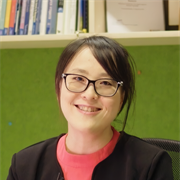
Dr. Sara Omrani is a Senior Lecturer in Virtual Design & Construction at the School of Architecture & Built Environment, Queensland University of Technology (QUT). She holds a PhD from QUT and specializes in energy efficiency, natural ventilation, building physics, BIM, thermal comfort, and passive design. Her research focuses on optimizing building design for sustainability, particularly in high-rise and residential structures, and integrates technologies like BIM and machine learning for improved construction practices. Dr. Omrani has contributed to numerous peer-reviewed publications and led projects addressing climate change impacts on buildings and sustainable construction decision-making. She actively supervises PhD students on topics ranging from BIM frameworks to apartment sustainability and solar energy potential. Her work bridges environmental science, engineering, and architectural design, promoting interdisciplinary solutions for resilient built environments. Education: PhD (Queensland University of Technology) Research Projects: Includes an Australian Competitive Grant-funded initiative on inter-generational living campuses and sustainability information provision for residential sectors. Research Interests: Thermal comfort, natural ventilation optimization, BIM integration, and sustainable construction materials. Recent work explores photovoltaic systems, precast concrete feasibility, and climate change adaptation in building design. Awards: Member of the ISO 41000 Sustainable Development Task Group (2020). Teaching: Courses include UXB100 Design Thinking for the Built Environment and DEH701 Research Methods.
Magda Nenycz-Thiel is a Professor and the Industry Growth Professor at the Ehrenberg-Bass Institute for Marketing Science, University of South Australia. She previously held the Mars Professor of Marketing position and led the Mars Marketing Lab from 2013 to 2016. Her work is centered on advancing evidence-based marketing through rigorous research and industry collaboration. Her core research interests include category and industry growth , e-commerce , and neuromarketing . She explores how brands grow, consumer behavior in retail environments, private label dynamics, and the effectiveness of advertising using biometric and behavioral data. Her interdisciplinary approach integrates marketing theory with empirical data analysis to derive actionable insights for industry stakeholders. The analysis of her recent publications reveals a consistent focus on understanding consumer purchasing patterns, brand performance, and market dynamics using large-scale datasets. Her work spans retail analytics , new product performance , advertising effectiveness , and private label branding , often leveraging scanner data, panel studies, and neuromarketing techniques. She frequently collaborates with leading scholars such as J. Romaniuk and J. Dawes, contributing to foundational knowledge in marketing science. Magda has made significant contributions through her publications in top-tier journals and book chapters in How Brands Grow: Part 2 . She regularly presents her findings to both academic and industry audiences globally, bridging the gap between research and practice. Her work with the Ehrenberg-Bass Institute includes producing influential reports for corporate sponsors on topics such as sustainable marketing, shopping behavior, and brand measurement. She is actively involved in leading the Industry Growth Initiative, which applies research discoveries to improve how organizations make growth investments. Her leadership in R&D initiatives funded by Mars Incorporated highlights her strong industry engagement. While no formal advising or grant details are listed, her role implies mentorship within the institute’s research team and involvement in major funded projects. Magda is affiliated with the Ehrenberg-Bass Institute for Marketing Science, a world-leading center for marketing research, operating under the UniSA Business School. The institute functions as a collaborative hub for marketing scientists, focusing on empirical research and industry application. Her work exemplifies the institute’s mission of promoting evidence-based marketing practices through scientific rigor and real-world relevance.
Professor Chong Meng Nan is a leading academic at Monash University Malaysia, serving as Director of the Centre for Net-Zero Technology. With over 18 years of experience in academia and research, he holds a Ph.D. from the University of Adelaide and has held roles at CSIRO. His research focuses on renewable energy, particularly solar fuels and photoelectrochemical systems, addressing technical challenges like low conversion efficiency and electrode stability. Chong has secured over RM 20 million in research funding and is recognized internationally, including the Royal Society Newton Fellowship and inclusion in Stanford's Top 2% Scientists list. He teaches courses in chemical engineering, including material balances, thermodynamics, and sustainable development. His work contributes to UN SDGs targeting clean energy and climate action. Key projects include green hydrogen production via photoelectrochemical water splitting and AI-driven microalgae CO2 fixation. Collaborations span Malaysia, Australia, and global institutions. Awards include the Green Talents Award and Top Research Scientist Malaysia. Chong actively advises on grants and mentors researchers, with a focus on advancing sustainable technologies. His lab explores nanostructured materials and advanced characterization using synchrotron facilities. Education: Ph.D. in Chemical Engineering (University of Adelaide), B.Eng. in Chemical Engineering Grants: Over RM 20M secured as PI/CI for projects on solar fuels, CO2 reduction, and urban water systems Labs/Teams: Leads the Centre for Net-Zero Technology and collaborates with industry partners like Microsoft
Dr. Thushari Atapattu is a Grant-Funded Researcher (A) and Post-doctoral Research Fellow in the School of Computer and Mathematical Sciences at the University of Adelaide . She leads the Learning Technology for Social Good (LT4SG) research group and contributes to the Computer Science Education Research Group . Her research focuses on text mining , natural language processing (NLP) , and discourse analysis , with applications in educational technology and social good initiatives. Her work addresses challenges such as combating cyberbullying via linguistic fingerprints, modeling mental health through social media data, and analyzing discourse patterns in Massive Open Online Courses (MOOCs). Key projects include: Developing computational models to improve communication processes in education and healthcare. Exploring teachers' academic discourse impact on MOOC video engagement. Creating emotion-annotated mental health corpora and frameworks for detecting learner confusion in online platforms. Dr. Atapattu is eligible to supervise Masters and PhD candidates, focusing on interdisciplinary topics at the intersection of NLP, education, and social impact. Her research group, LT4SG, emphasizes leveraging technology for community-driven solutions.
Dr. Tafsir Tafsirojjaman is a Senior Lecturer in Civil and Structural Engineering at the University of Adelaide's School of Architecture and Civil Engineering. His research focuses on sustainable construction materials, including FRP composites, concrete, and structural rehabilitation under dynamic loads. He has secured AU$1,207k in grants from ARC, government, and industry partners and supervises multiple PhD/Master’s students. Previously, he worked at the University of Southern Queensland and earned his PhD from Queensland University of Technology (QUT) and BSc from Chittagong University of Engineering & Technology (CUET). His awards include QUT's HDR High Achiever and Outstanding Publication Awards. Research Interests: Sustainable construction materials (FRP composites, concrete, metallic/plastic materials), structural rehabilitation under seismic/impact loads, lunar construction materials, and self-healing concrete technologies. Collaborations with industries and governments drive his work. Awards: QUT HDR High Achiever Award (202X), QUT Outstanding Publication Award (202X), University Merit Scholarship (202X), Engr. Khurshid Anwar Memorial Award (202X). Grants/Funding: AU$1.2 million from ARC, federal government, and industry. Active in supervising postgraduate students and promoting interdisciplinary collaborations. Labs/Teams: Leading research in composite materials and structural engineering at the University of Adelaide, affiliated with the School's advanced materials research group.
Dr. Anna Kalenkova is a Lecturer in the School of Computer and Mathematical Sciences at the University of Adelaide, part of the Faculty of Sciences, Engineering and Technology. She holds a position eligible to supervise Masters and PhD students. Her research focuses on process mining, event data analysis, visual analytics, and stochastic modeling, particularly in developing algorithms for process discovery and conformance checking. She actively contributes to the field through publications on topics such as semi-Markov models, entropy-based metrics, and agent systems mining. Her work integrates theoretical computer science with practical applications in process optimization and data-driven decision-making. Key areas of interest include: Process discovery and conformance checking Algorithm development for event log analysis Stochastic modeling in process mining Dr. Kalenkova’s research trends are evident from her recent publications, which emphasize entropy-based approaches, agent system mining, and automated process model repair. She has also engaged in conference activities, such as the ICPM 2021 Doctoral Consortium. She is affiliated with the School of Computer and Mathematical Sciences and maintains an office at Ingkarni Wardli Building, Room 5.38, North Terrace campus.
Associate Professor Zongyuan Ge is an interdisciplinary researcher in Medical Artificial Intelligence, Computer-aided Diagnosis, and Biomedical Engineering at Monash University, holding tenure in both the Faculty of IT and the Faculty of Engineering. He leads the Monash Medical AI group, supervising over 30+ PhD students and 5 Research Fellows. His research focuses on leveraging AI for medical imaging, genomics, and clinical decision-making, addressing diseases like diabetic retinopathy, cardiovascular conditions, and neurodegenerative disorders. Ge has attracted over $35M in funding from NHMRC, MRFF, and industry partners like NVIDIA and Airdoc, with a h-index of 40 and 10,000+ citations. Awards: Wu Wenjun Award (2019, 2022), NVIDIA AI Fellowship, APRS Early Career Award (2021) Entrepreneurship: Founded Eyetelligence (venture-backed $25M) and serves as Chief Scientist at Airdoc, whose products have served millions globally. Community Engagement: NVIDIA DLI instructor, program committee member for AAAI/IJCAI, and editorial roles in journals like IEEE Transactions on Medical Imaging. Ge’s work bridges academia and industry, contributing to AI-driven healthcare solutions such as eye disease screening systems and the HELIX healthcare data platform. His research emphasizes ethical AI frameworks and interdisciplinary collaboration.
Philip Whiting serves as Honorary Professor in Macquarie University's School of Engineering, affiliated with the Future Communications Research Centre. His research focuses on theoretical and practical aspects of wireless network design, optimization, and performance analysis across diverse communication environments. His expertise spans wireless communications, asymptotic analysis, millimeter wave systems, multiuser resource allocation, MIMO architectures, and quality-of-service optimization. Recent work demonstrates deep integration of mathematical modeling with real-world network challenges, particularly in dense heterogeneous networks and satellite-based infrastructures. Current publications reveal a strong emphasis on Low Earth Orbit satellite applications for IoT data harvesting, featuring innovative approaches to waveform design, terminal access protocols, and QoS feasibility in distributed systems. This work bridges theoretical information theory with practical implementation constraints in next-generation wireless ecosystems. Scientific Awards: StephenSLavenberg Award (2017) Professor Whiting leads significant grant-funded projects including 'What to do about WiFi Congestion?' (active 2015-present), 'Advanced Satellite Communications for High Rate Service Delivery' (2020), and 'Information-theoretic capacity of mm-wave communications' (2018-2020). His collaborative network spans Australian and international institutions with primary partners Stephen Hanly and Iain Collings. As a core member of the Future Communications Research Centre, he drives interdisciplinary work connecting information theory, network engineering, and satellite communications to solve emerging challenges in wireless infrastructure scalability and reliability.
Kylie Gilbey is a PartTime Lecturer at The University of Western Australia teaching MBA Managerial Finance (FINA5530) in 2023-2024. She holds a PhD examining Australian IPO performance and brings 30+ years of industry experience from banking, structured finance, and corporate advisory roles. Her educational qualifications include: MBA, The University of Western Australia (2014-2016) Bachelor of Economics, The University of Western Australia (1984-1987) Dr. Gilbey's research centers on ASX IPO dynamics , with specialized focus on first-day discounts , long-term return patterns , and financial risk tolerance segmentation . She investigates how Australia's hybrid venture capital/main board ecosystem compares with US models, particularly regarding early-stage funding structures and regulatory impacts on investor behavior. Her recent publications demonstrate consistent empirical analysis of IPO performance using time-series data, with growing emphasis on cross-national comparisons between Australian and US markets. Key trends include examining microcap listing outcomes and regulatory influences on risk perception. Scientific recognition includes: WA Government Scholarship for Emerging Female Leaders Fellow of FINSIA (SF.FINSIA) Her industry background informs practical teaching approaches, though no formal advising or grant activity is documented. Media engagement through 5 press contributions extends her research impact to public discourse on capital markets.
Dr. Say Yen Teoh is a Senior Lecturer in the Department of Accounting, Info Sys & Supply Chain at RMIT University. Her research focuses on digital sustainability, AI, blockchain, and health information systems, with a growing emphasis on ESG principles and AI integration. She holds a PhD from the National University of Singapore and has collaborated internationally across sectors like healthcare, manufacturing, and fashion. Her work emphasizes real-world impact, addressing challenges in supply chain traceability, preventive care systems, and SME digital transformation. Notable achievements include the AI-powered ESG artifact and contributions to eHealth systems in value-based healthcare. Dr. Teoh has supervised projects on sustainable AI for SMEs, blockchain in food supply chains, and public library data management. Her awards include the 2017 SAP Academic of the Year and NUS PhD Scholarship. Teaching interests span digital innovation, enterprise systems, and digital strategy. Education: PhD (National University of Singapore), Honours Degree (Monash University) Collaborations: Australia, China, Malaysia, Singapore, Thailand, USA Key Research Themes: Sustainable AI, Blockchain in Supply Chains, Health Informatics
Dr May Hu is an Associate Professor of Finance at RMIT University's School of Economics, Finance and Marketing. She holds a PhD in Finance from Monash University (2015). Her research focuses on banking and corporate finance, including banking competition, ownership structures, corporate cash holdings, stock market liquidity, and policy uncertainty. She has also contributed to studies on digital transformation, AI in mobility, and sustainability in information systems. Dr Hu's work bridges financial theory and practical challenges, with notable contributions to understanding financial inclusion through meta-analysis and exploring AI's role in urban mobility ecosystems. She has secured competitive grants and won best paper awards at international conferences. Her recent studies address space cybersecurity, fintech ecosystems in Africa, and MaaS adoption through behavioral and digital platform analyses. Education: PhD in Finance (Monash University, 2015) Research Themes: Banking Efficiency, Policy Uncertainty, Digital Skills Frameworks, AI in Transportation Awards: Best Paper Awards (various conferences), Academic/Industry Grants Her research emphasizes interdisciplinary approaches, combining finance, technology, and policy. Recent articles highlight innovation in mobility ecosystems, fintech evolution in Africa, and digital adaptability for small businesses.
Dwi Rahayu is a Lecturer in the Department of Human Centred Computing at Monash University. She is a Chief Investigator in the 2025 project 'Integrating Equity, Diversity, and Inclusion (EDI) into ICT Education: A GenAI-Powered Approach to Curriculum Development' funded by the Australian Council of Deans of Information and Communications Technology (ACDICT). Her research spans smart energy systems, wireless sensor networks, data science, and educational technology. Her expertise contributes to UN Sustainable Development Goals, particularly in advancing equitable and inclusive education through technology. Research collaborations include work on multimodal analytics for team teaching, sentiment analysis of e-commerce reviews, and material science innovations in metallurgy. Key research trends include optimizing data routing in sensor networks, developing context-aware energy solutions, and leveraging large language models for topic and sentiment analysis. She has advised multiple projects involving energy management, healthcare practices, and corporate financial analysis. No scientific awards are explicitly mentioned in the provided texts. Her work also involves community-focused initiatives, such as improving web programming skills through Laravel frameworks and enhancing logical thinking via game development in adolescents. Projects often emphasize practical applications of technology in public administration and healthcare contexts.
Tam Cai Lian is an Associate Professor at the Jeffrey Cheah School of Medicine and Health Sciences, Monash University Malaysia. She is a registered counselling psychologist and panel counsellor with the Board of Counsellors Malaysia. Dr. Tam serves as the coordinator for the Master of Professional Counselling (MoPC) program and is the unit coordinator for key courses including Children and Adolescents Counselling and Counselling Skills: Individuals and Couple. Her research focuses on adolescent mental health, drug abuse, counselling effectiveness, and socio-emotional development in Malaysia’s multi-ethnic context. She has led and contributed to numerous research projects, including international collaborations on youth depression, sleep, and anxiety, as well as localized studies on school uniforms and national identity. Her work aligns with UN Sustainable Development Goals related to mental health and well-being. Dr. Tam's recent publications (2019–2024) reflect a strong engagement with psychological distress in gaming and gambling populations, religiosity and marital satisfaction, classroom design and student engagement, and resilience among refugee children. Her research integrates psychological theory with real-world applications in education, public health, and community development. Scientific Awards: Monash-Sunway Decarbonization initiative: Microalgae farming and Native Tree Planting (23 Aug 2018, Other distinction) Dr. Tam has been actively involved in research grants and collaborative projects, including as Chief Investigator in multiple funded studies. She mentors students through the MoPC program and contributes to curriculum development and academic leadership. Her work bridges clinical psychology with public health and education, emphasizing culturally sensitive and evidence-based interventions. She is involved in research teams focusing on youth mental health across continents, neurological disease prediction using AI, and socio-emotional learning in marginalized communities. These collaborations highlight her interdisciplinary approach and commitment to impactful, translational research.