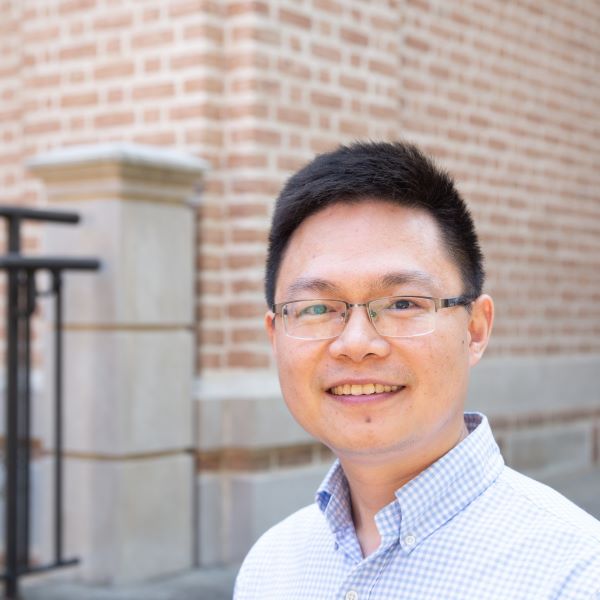
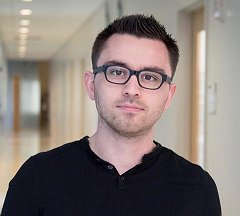
Dr. Kai Gong is an Assistant Professor of Civil and Environmental Engineering at Rice University, with affiliations at the Rice Advanced Materials Institute and Ken Kennedy Institute. His research focuses on sustainable infrastructure materials, environmental sustainability, and materials science. He holds a Ph.D. in Civil & Environmental Engineering and Materials Science from Princeton University, an MEngSci from Monash University (Australia), and dual B.S. degrees from Monash University and Central South University (China). Research Interests: Development of durable, sustainable infrastructure materials Waste encapsulation and conversion to value-added products Carbon mineralization and utilization Advanced characterization techniques (synchrotron/neutron scattering) Data-driven modeling and atomistic simulations Notable Awards: 2023 Le Chatelier Medal (Cement and Concrete Research) 2024 Giatec Award for Best Paper in Sustainability Walbridge Fund Graduate Award (2019) His work integrates computational methods (e.g., molecular dynamics) with experimental techniques to address decarbonization challenges in infrastructure. The Gong Research Group actively seeks motivated researchers for opportunities in sustainable materials innovation.
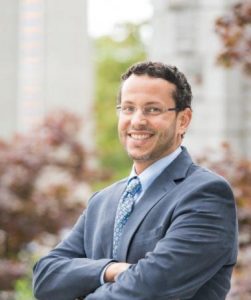
Dr. Muhammad Abdul-Mageed is an Associate Professor in the School of Information at The University of British Columbia, with joint appointments in Linguistics and an associate membership in Computer Science. He holds the Canada Research Chair in Natural Language Processing and Machine Learning. His research focuses on deep learning, socio-pragmatics, and speech/language technologies, particularly for Arabic and African languages. He leads the UBC Deep Learning & NLP Group and co-directs SSHRC-funded grants like I Trust AI and Ensuring Full Literacy. He is a founding member of the Center for Artificial Intelligence Decision making and Action and a member of the Institute for Computing, Information, and Cognitive Systems. His work spans automatic speech recognition, machine translation, computational socio-pragmatics, and low-resource language technologies. Notable projects include developing Arabic speech recognition systems, multidialectal Arabic benchmarks, and tools for African language processing. He has authored over 100 peer-reviewed papers and leads initiatives like the NADI Arabic Dialect Identification shared task and the NileChat project for culturally-aware LLMs. His research aims to create equitable, socially-aware AI systems for health, social media, and information management.
Jakob Schoeffer is a tenure-track Assistant Professor in the Artificial Intelligence department at the Bernoulli Institute for Mathematics, Computer Science and Artificial Intelligence, Faculty of Science and Engineering, University of Groningen (Netherlands). His work focuses on the intersection of human decision-making and artificial intelligence, particularly in high-stakes contexts where fairness, transparency, and appropriate human-AI collaboration are critical. Dr. Schoeffer's research interests center on responsible and explainable AI, with specific focus areas including: Human-AI collaboration dynamics in decision-making processes Fairness perceptions and interventions in AI systems Appropriate reliance on AI recommendations Explainable AI techniques for high-stakes domains Transparency mechanisms that improve human-AI team performance Label indeterminacy issues in medical AI applications His recent publications (2023-2025) reveal a strong trend toward applying AI research in critical domains like healthcare (particularly neurological recovery prediction), while maintaining a rigorous focus on the human aspects of AI deployment. His work spans both theoretical foundations of human-AI interaction and practical implementations, often employing mixed-methods approaches that combine technical AI development with behavioral studies. Dr. Schoeffer actively collaborates with researchers across institutions including the University of Texas at Austin and has made significant contributions to top conferences in AI ethics, fairness, and human-computer interaction. His research has been featured in multiple news outlets and policy discussions, indicating real-world impact of his work on responsible AI development. Prior to his current appointment, Dr. Schoeffer was a Postdoctoral Research Fellow at the University of Texas at Austin. He received his PhD from the Karlsruhe Institute of Technology (KIT) in Germany with a dissertation titled "On the Interplay of Transparency and Fairness in AI-Informed Decision-Making." He also holds a master's degree in Operations Research from Georgia Tech and industry experience as a Senior Data Scientist at IBM.
Thomas Hacker is a Professor in the Department of Computer and Information Technology at Purdue Polytechnic Institute, Purdue University. His research focuses on cloud computing, high-performance computing, operating systems, computer networking, and cyber infrastructure . He holds a Ph.D. and M.S. in Computer Science & Engineering from the University of Michigan, along with dual B.S. degrees in Computer Science and Physics from Oakland University. Education: PhD (Computer Science & Engineering), University of Michigan (2004) MS (Computer Science & Engineering), University of Michigan (1993) BS (Computer Science, Mathematics Minor), Oakland University (1989) BS (Physics), Oakland University (1989) Dr. Hacker's research spans cloud and grid computing, operating systems, and distributed systems , with applications in earthquake engineering data systems and AI-driven infrastructure analysis. His recent work explores extended layer 2 networking for bare-metal provisioning ( 2023 IEEE Cloud Summit ) and machine-supported bridge inspection using artificial intelligence ( Transportation Research Record, 2023 ). Notable scientific contributions include 15+ publications on topics like cyberinfrastructure for earthquake engineering, container-based virtualization, and data-intensive systems. His work has been recognized with awards such as the NSF CAREER Award (2010) and multiple Purdue Seed for Success Awards . Key Scientific Awards: NSF CAREER Award (2010) Purdue Seed for Success Awards (2008-2013) ASEE Information Systems Division Best Paper Award (2012) College of Technology Outstanding Faculty in Discovery Award (2010) He has held leadership roles at Purdue, including Department Head (2018-2021) and Interim Department Head (2011-2016) . His career spans academic positions at Indiana University, University of Michigan, and industry roles at Storage Technology Corporation.
John P. O'Doherty serves as the Fletcher Jones Professor of Decision Neuroscience within Caltech's Division of Humanities and Social Sciences, holding continuous faculty appointments since 2004 (Assistant Professor 2004-07, Associate Professor 2007-09, Professor 2009-present, Fletcher Jones Professor 2021-present). He previously directed the Caltech Brain Imaging Center (2013-17) and maintains affiliations with the T&C Chen Center for Social and Decision Neuroscience. His educational background includes a B.A. from University of Dublin, Trinity College (1996) and D.Phil. from University of Oxford (2000). His research focuses on computational and neural mechanisms of reward-based learning and decision-making , employing fMRI, intracranial recordings, and mathematical modeling to investigate how the brain solves complex decision problems through evolutionarily conserved algorithms. Key areas include Reinforcement learning systems (model-based/model-free arbitration) Observational and social learning mechanisms Neural representation of value, risk, and uncertainty Computational phenotyping of mental disorders Temporal dynamics of goal persistence Analysis of his 2023-2025 publications reveals dominant trends in computational psychiatry (problem gambling, autism traits), hierarchical decision-making, and neuroeconomic modeling of social behavior. His work consistently integrates cross-species computational frameworks with human neuroimaging to identify transdiagnostic mechanisms. While specific awards beyond his endowed professorship aren't detailed, his leadership as Brain Imaging Center Director and prolific high-impact publications demonstrate significant recognition. Current advising includes graduate researcher Sneha Aenugu on goal-persistence projects, with administrative support from Mary A. Martin (mmartin@caltech.edu). His active research program continues to pioneer computational approaches to understanding decision pathologies.
Arvind Narayanan is a Professor of Computer Science at Princeton University and Director of the Center for Information Technology Policy (CITP). His research focuses on the societal impact of digital technologies, particularly artificial intelligence, with emphasis on policy implications, fairness, and privacy. He leads interdisciplinary efforts connecting technical research with real-world policy challenges. Dr. Narayanan earned his Ph.D. from the University of Texas, Austin in 2009. His academic journey has established him as a leading voice in the critical examination of AI systems and their societal consequences. Narayanan's research spans multiple domains where technology intersects with society. His work on AI includes critical analysis of AI capabilities versus marketing claims (AI Snake Oil), fairness in machine learning systems, and the reproducibility crisis in ML-based science. In privacy research, he led the Princeton Web Transparency and Accountability Project which uncovered how companies track users online, developing the OpenWPM tool used in over 100 studies. His early work demonstrated fundamental limits of de-identification techniques and how machine learning reflects cultural stereotypes. His recent publications reveal a consistent focus on demystifying AI capabilities while identifying genuine opportunities and risks. Narayanan's work bridges technical computer science with policy relevance, emphasizing the importance of evidence-based approaches to AI governance. His research increasingly addresses the limitations of prediction systems, the challenges of evaluating AI systems, and the need for transparency in foundation models. Presidential Early Career Award for Scientists and Engineers (PECASE) Privacy Enhancing Technologies Award (twice recipient) Privacy Papers for Policy Makers Award (three-time recipient) TIME's inaugural list of 100 most influential people in AI 2025 Graduate Mentoring Award Narayanan is recognized as an exceptional mentor, receiving Princeton's Graduate Mentoring Award in 2025. His policy engagement extends to congressional testimony, advisory roles, and frequent media commentary. He has secured significant research funding supporting his work on web transparency, AI policy, and cryptocurrency analysis. His research group has produced influential tools like OpenWPM for web privacy studies and contributed to foundational textbooks on cryptocurrencies and fairness in machine learning. At Princeton, Narayanan leads the Web Transparency and Accountability Project, a major research initiative that has conducted large-scale measurements of online tracking across millions of websites. He also co-founded and directs the CITP's AI Policy Initiative, which brings together researchers from multiple disciplines to address pressing AI governance questions. His work frequently involves collaboration with social scientists, legal scholars, and policymakers to develop practical solutions to technology governance challenges.
Dr. Joey Paquet is a Tenured Associate Professor and Department Chair in the Department of Computer Science and Software Engineering at Concordia University in Montreal, Canada. He holds a PhD and specializes in research areas including Design and Implementation of Programming Languages, Context-Driven Computing, and Demand-Driven Computing. His work focuses on advancing programming paradigms and their applications in cybersecurity, distributed systems, and autonomic computing. Dr. Paquet is actively involved in thesis supervision across Computer Science and Software Engineering programs at both master's and doctoral levels. Research interests are centered around programming language design, particularly in demand-driven and context-aware systems. His contributions include frameworks like GIPSY and OpenISS, enabling scalable data processing and forensic computing. Recent work explores autonomic intent-driven networking, real-time gesture recognition, and IoT forensics. These efforts highlight his expertise in both theoretical constructs and practical implementations. His advising role supports students in MCompSc, MASc, and PhD programs. While specific grants are not detailed, his projects often involve interdisciplinary collaboration. Dr. Paquet is affiliated with platforms like LinkedIn and ResearchGate, reflecting an active academic presence. Key technical contributions include pioneering work on forensic computing backends, intent expression languages, and multimodal interaction systems. His research addresses challenges in cybersecurity, distributed systems, and service composition, with a focus on resilience and scalability.
Ali Vakilian is a Research Assistant Professor at the Toyota Technological Institute at Chicago (TTIC), with a strong academic background in theoretical computer science and algorithms. He will join the Department of Computer Science at Virginia Tech as an Assistant Professor in Fall 2025. His research bridges algorithmic theory and machine learning, focusing on scalable, fair, and efficient algorithms for massive data. Education: Ph.D. in EECS, Massachusetts Institute of Technology (MIT), advisors: Erik Demaine and Piotr Indyk M.S. in Computer Science, University of Illinois at Urbana-Champaign (UIUC), advisor: Chandra Chekuri B.S. in Computer Engineering, Sharif University of Technology Research Interests: Ali Vakilian's work centers on the algorithmic foundations of machine learning and data science. He develops streaming, sketching, and sublinear-time algorithms for massive datasets, and pioneers learning-augmented algorithms that use machine learning predictions to improve performance while maintaining worst-case guarantees. His research in trustworthy ML includes algorithmic fairness, fair clustering, and learning with strategic agents. He also contributes to combinatorial optimization and approximation algorithms for network design, set cover, and low-rank approximation. His recent publications (2023–2025) show a consistent focus on fair clustering (individual and group fairness), streaming graph algorithms , learning-augmented methods , and frequency estimation . These works appear in top venues such as NeurIPS, ICML, SODA, and ICALP, often with recognitions like oral or spotlight presentations. Scientific Awards: Outstanding Student Paper Highlight Award, AISTATS 2024 Notable-top-25% paper, ICLR 2023 Oral presentation, AISTATS 2024 Spotlight presentation, NeurIPS 2023 Advising and Grants: Ali Vakilian mentors several students and interns, including summer interns at TTIC and Fatima Fellows. His research is supported by the National Science Foundation (TRIPODS program), as noted in the press coverage of his work on LearnedSketch. He actively contributes to the academic community through advising, organizing workshops (e.g., Algorithms with Predictions, Learning-Augmented Algorithms), and serving on program committees (e.g., NeurIPS, ICML, AISTATS). Labs and Teams: He is affiliated with the theory and algorithms group at TTIC and collaborates with researchers at MIT, UIUC, and other institutions. His work on learning-augmented algorithms has led to influential workshops and collaborations with leading figures such as Piotr Indyk and Erik Demaine.
Hamed Zamani is an Associate Professor at the Manning College of Information and Computer Sciences (CICS) at the University of Massachusetts Amherst, where he also serves as Associate Director of the Center for Intelligent Information Retrieval (CIIR). He joined UMass Amherst in 2020 after working as a researcher at Microsoft. His research focuses on designing and evaluating statistical and machine learning models for information access systems, including search engines, recommender systems, and question answering. Education: PhD in Computer Science, University of Massachusetts Amherst MS in Computer Engineering, University of Tehran BS in Computer Engineering, University of Tehran Zamani's current research explores neural information retrieval, conversational search, and retrieval-enhanced machine learning. He develops efficient neural models for core IR tasks and emerging areas like conversational information seeking. His work bridges information retrieval with large language models to enhance capabilities in understanding complex queries and generating relevant responses. His recent publications demonstrate a strong focus on retrieval-augmented generation, personalized information access, and efficient neural ranking models. There's a clear trend toward integrating large language models with information retrieval systems, optimizing multi-agent frameworks, and developing evaluation metrics for generative AI applications in search contexts. Scientific Awards: NSF CAREER Award ACM SIGIR Early Career Excellence in Research & Community Engagement Awards (2023) UMass CICS Outstanding Dissertation Award Paper awards at SIGIR (2022, 2023, 2024), CIKM (2020), ICTIR (2019) Microsoft Research Award (AI and New Future of Work program) Amazon Research Award (Optimization of Retrieval-Enhanced ML Models) Zamani actively advises PhD students and postdoctoral researchers, with his students receiving prestigious awards including NSF Graduate Research Fellowships and SIGIR Best Paper awards. He leads the CIIR Talk Series, hosting IR researchers to share recent findings. His Alexa Prize TaskBot Challenge team was selected for two consecutive years, advancing task-oriented dialogue systems. He directs research at the Center for Intelligent Information Retrieval (CIIR), where he oversees projects in neural retrieval models, conversational AI, and retrieval-augmented generation. The center serves as a hub for developing next-generation information access systems with industry and academic collaborators.
Deian Stefan is an Associate Professor at the University of California San Diego (UCSD) in the Department of Computer Science and Engineering . His research spans security , programming languages , and systems , with a focus on building principled and practical secure systems. He has served as a co-founder and Chief Scientist at Intrinsic (acquired by VMWare) and contributed to standards bodies like the W3C WebAppSec and Node.js Security Working Groups . His research interests include: Secure Systems : Web frameworks, browser designs, sandboxing, runtime systems Language-Based Security : Constant-time programming, memory safety, information flow control Verification : Security verification, static/symbolic analysis tools WebAssembly and JavaScript JITs security Deian Stefan has received multiple scientific awards , including several Distinguished Paper Awards at venues like POPL, ICFP, and USENIX Security, as well as the IEEE Cybersecurity Award for Practice (2022) and CSAW 2020 First Place for Applied Research. He has taught courses on Computer Security (CSE 127, CSE 227) and advanced topics in Building Secure Systems (CSE 291) using Rust, WebAssembly, and blockchain security. His work has been supported by collaborations with industry and academia, including projects like RLBox and COWL .
Soroush Saghafian is an Associate Professor of Public Policy at Harvard Kennedy School, specializing in applying operations research and machine learning to address public health challenges. He leads the Public Impact Analytics Science Lab (PIAS-Lab), focusing on analytics-driven solutions for societal problems. His research spans healthcare delivery optimization, emergency department efficiency, and public health policy. Notable collaborations include Massachusetts General Hospital and Harvard's Center for Health Decision Science. Awards include the INFORMS MSOM Responsible Research Award and the Pierskalla Award for healthcare research. Recent work includes studies on hospital closures' impacts, predictive analytics for bipolar disorder using Fitbit data, and policy implications of race in disease risk models. He teaches courses on machine learning and big data for public impact.
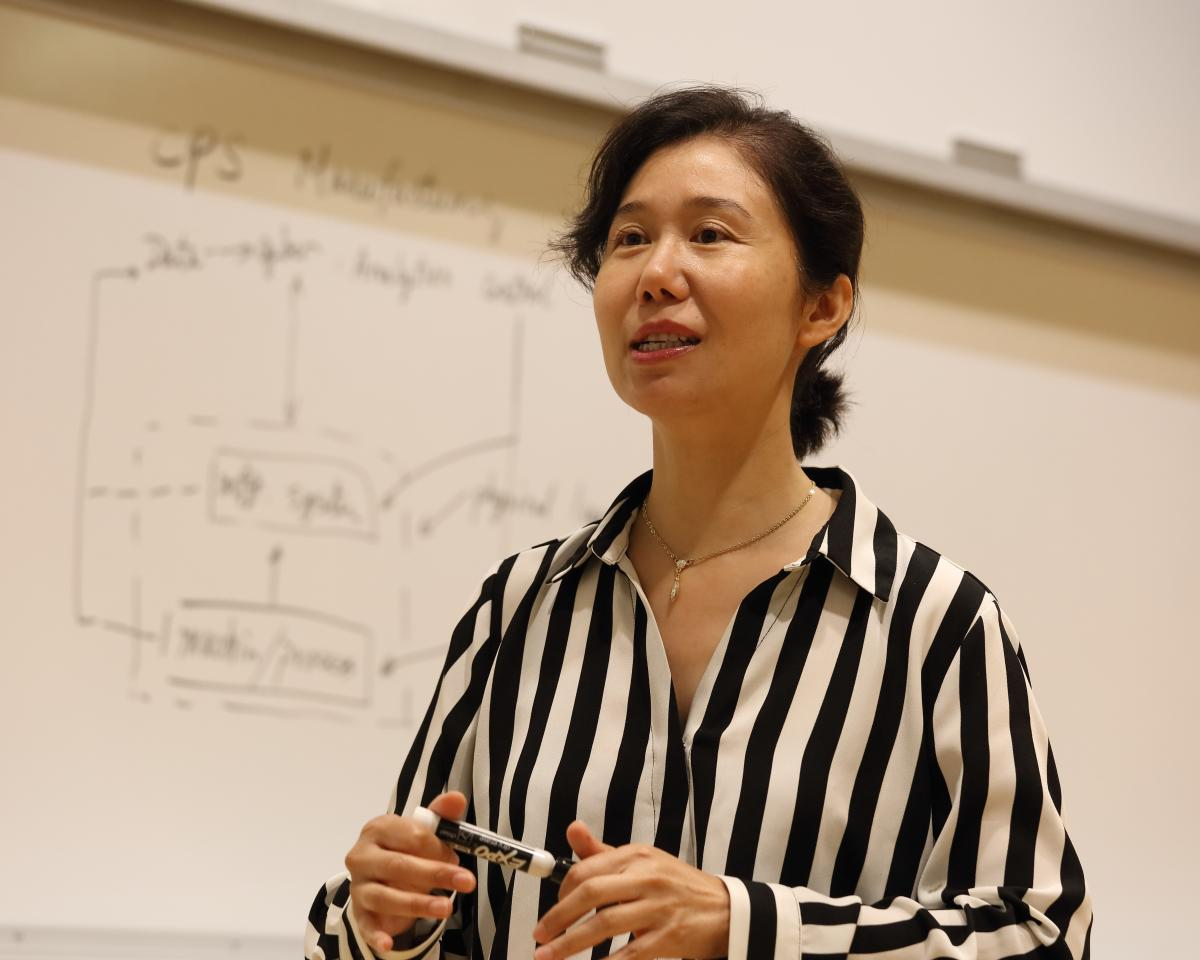
Qing (Cindy) Chang is a Professor in the Department of Mechanical and Aerospace Engineering at the University of Virginia, where she directs the Intelligent Systems Lab. She joined UVA in 2019 after serving as an associate professor at Stony Brook University. Prior to academia, she spent a decade at General Motors R&D, receiving their highest innovation awards. Education: M.S. from University of Wisconsin-Madison Ph.D. in Manufacturing from University of Michigan Research Focus: Chang's work integrates math-based modeling and data-driven methods to optimize manufacturing systems. Key areas include: Adaptive control and machine learning for production efficiency Human-robot collaboration frameworks Sustainable manufacturing through energy management Real-time control of cyber-physical production systems Reinforcement learning applications in industrial automation Research Trends: Her recent publications (2024-2025) demonstrate strong focus on AI-driven manufacturing optimization, with 80% leveraging reinforcement learning/LLMs for robotic control. Key themes include multi-agent coordination (67% of papers), energy efficiency (53%), and flexible production systems (47%). Awards & Recognition: Inducted as SME Scholar (2024) 20 Most Influential Professors in Smart Manufacturing - SME (2020) NSF CAREER Award (2014) Three-time GM Boss Kettering Award winner (2005,2006,2008) ASME and SME Fellow Leadership & Funding: Serves on NAMRI/SME Board of Directors with editorial roles across ASME/IEEE/SME journals. Research supported by NSF (including CAREER), Department of Energy, and multiple industry partners. Leads projects on human-robot collaboration and sustainable manufacturing. Lab & Collaboration: Directs the Intelligent Systems Lab at UVA, focusing on industrial AI applications. Collaborates with automotive and energy sectors to translate research into practical solutions for smart factories.
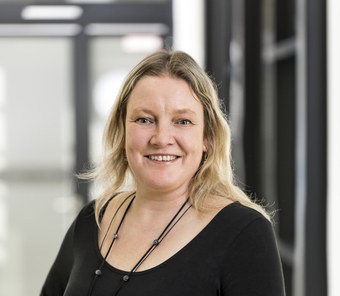
Susanne Weis is a Research Professor and Group Leader of the 'Variability of the Brain' group at the Department of Brain and Behavior (INM-7), part of the Institute of Neuroscience and Medicine (INM) at Research Center Jülich GmbH. Her work focuses on understanding brain variability through advanced neuroimaging techniques and machine learning, with particular emphasis on sex differences, hormonal influences, and clinical applications in mental health. Her research interests include neuroimaging methodologies, machine learning applications in cognitive neuroscience, and the structural-functional relationships underlying brain variability. She investigates how factors like sex hormones and naturalistic stimuli (e.g., movies) affect brain connectivity and cognitive performance, aiming to improve diagnostic and predictive tools for disorders such as schizophrenia and Alzheimer’s disease. Publications highlight her contributions to developing datasets (e.g., SpEx), analyzing confound leakage in ML models, and exploring meta-analytic networks during naturalistic viewing. Her work bridges basic science and clinical impact, addressing challenges in interpreting neuroimaging data and advancing personalized medicine approaches. In her role as a group leader, Weis oversees research projects and collaborates with interdisciplinary teams. She is affiliated with the Helmholtz Association and contributes to the broader scientific community through her research in neuroimaging and computational neuroscience.
Prof. Dr. Melanie Zeilinger is an Associate Professor at the Department of Mechanical and Process Engineering at ETH Zurich, leading the Intelligent Control Systems group at the Institute for Dynamic Systems and Control. She holds a diploma in Engineering Cybernetics from the University of Stuttgart (2006) and a Ph.D. in Electrical Engineering from ETH Zurich (2011). Her postdoctoral research included stints at EPFL (2011–2012), a Marie Curie fellowship at UC Berkeley and the Max Planck Institute (2012–2015), and a professorship at the University of Freiburg (2018–2019). Her research focuses on learning-based control, distributed control systems, and robotics , with applications to medical devices (e.g., hydrocephalus shunts) and human-in-the-loop systems. She organizes the Conference on Learning for Dynamics and Control (L4DC) and contributes to initiatives like the "Algorithm on My Team" project. Her awards include the ETH Medal for her PhD thesis, a Marie-Curie IO Fellowship , and an SNF Assistant Professorship grant . She serves as an Associate Editor for IEEE Control Systems Letters and actively reviews for top journals/conferences like IEEE TAC, Automatica, and NeurIPS. Key projects include: VIEshunt: A smart ventricular shunt for hydrocephalus treatment, combining control systems and medical engineering. Autonomous Racing: Contextual tuning and safety-certified learning-based MPC for real-time obstacle avoidance. Data-Driven Control: Integrating Gaussian processes and state-space models into MPC frameworks for uncertain systems. Her work bridges control theory, machine learning, and robotics, addressing societal challenges such as healthcare and energy efficiency.
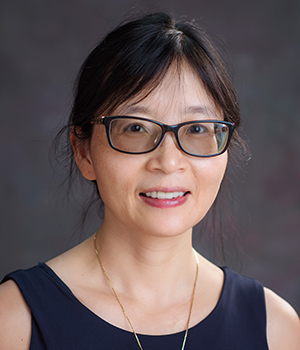
Tianxi Cai, ScD, holds the John Rock Professorship in Population and Translational Data Sciences at the Harvard T.H. Chan School of Public Health and is a Professor of Biomedical Informatics at Harvard Medical School. She directs the Translational Data Science Center for a Learning Health System (CELEHS). Her work bridges clinical and basic science data to advance personalized medicine and disease understanding. Institution: Harvard University Departments: Biostatistics (T.H. Chan School) and Biomedical Informatics (HMS) Key Roles: Faculty member since 2002, NIH-funded researcher, and leader in EHR data analytics Research focuses on biomarker evaluation, predictive modeling, high-dimensional data analysis, and survival analysis. Collaborates with the I2B2 Center to integrate clinical and genomic data. Active in developing semi-supervised learning methods for noisy EHR data and real-world evidence generation. Funding : Recent grants include NIH projects on rheumatoid arthritis treatment response (R01AR080193, R21AR078339) and semi-supervised EHR denoising (R01LM013614). Co-leads initiatives on chronic disease endpoints using multi-source data (U01FD007929). Labs/Teams : Directs CELEHS and leads the Cai Lab, focusing on translational data science and machine learning applications in healthcare.