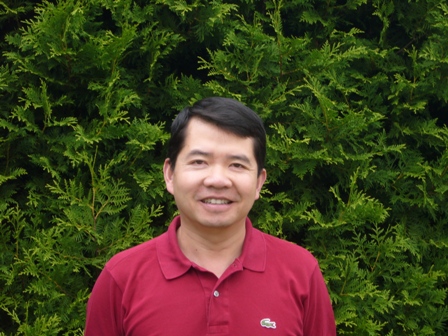
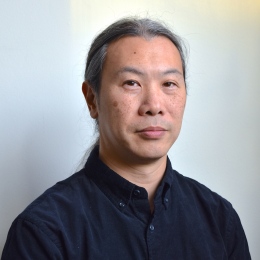
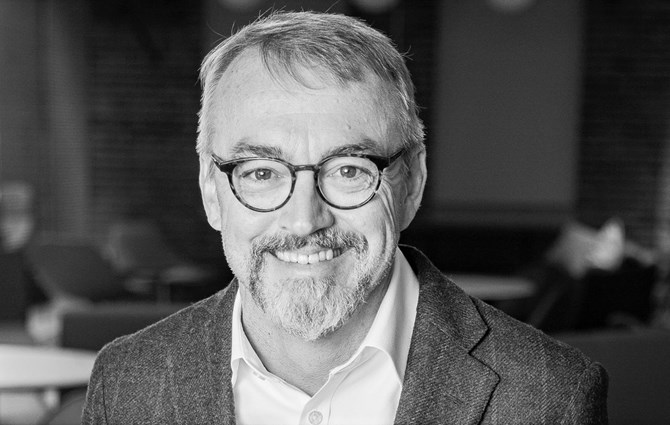
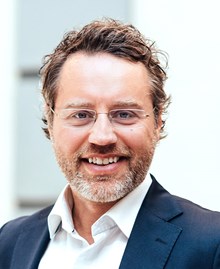
Henrik Boström is a Professor of Computer Science specializing in Data Science Systems at the Division of Software and Computer Systems, KTH Royal Institute of Technology. His research focuses on trustworthy machine learning , with emphasis on conformal prediction (for confidence-calibrated predictions) and explainable AI . He is the developer of Python packages crepes (conformal classifiers/regressors) and xrf (explainable random forests). His primary research domains include: Developing robust methods for uncertainty quantification in predictive models Creating interpretable machine learning frameworks Optimizing ensemble techniques for high-dimensional data Applying ML to healthcare informatics and industrial diagnostics Analysis of his recent publications reveals strong emphasis on: (1) advancing conformal prediction theory for trustworthy AI, (2) enhancing interpretability of complex models like random forests and GNNs, and (3) developing efficient algorithms for uncertainty-aware learning in domains including healthcare, graph data, and high-dimensional regression. He serves as examiner for multiple degree projects and teaches courses including Programming for Data Science (ID2214) and Research Methodology and Scientific Writing (II2202) . He leads development of open-source tools for conformal prediction and model interpretation.
Xiaoming Hu is a Professor at the Division of Numerical Analysis, Optimization and Systems Theory within the Department of Mathematics at KTH Royal Institute of Technology (Kungliga Tekniska Högskolan) in Stockholm, Sweden. Born in Chengdu, China, he received his B.S. degree from University of Science and Technology of China in 1983, followed by M.S. and Ph.D. degrees from Arizona State University in 1986 and 1989 respectively. After serving as a research assistant at the Institute of Automation, Chinese Academy of Sciences (1983-1984), he was a Gustafsson Postdoctoral Fellow at KTH (1989-1990) before becoming a faculty member. His educational background includes: B.S. in Engineering, University of Science and Technology of China, 1983 M.S. in Engineering, Arizona State University, 1986 Ph.D. in Engineering, Arizona State University, 1989 Xiaoming Hu's research primarily focuses on multi-agent systems, nonlinear feedback stabilization, nonlinear observer design, and sensing and active perception. His work bridges theoretical control theory with practical applications in robotics and autonomous systems. He has made significant contributions to geometric control theory, mathematical systems theory, and nonlinear systems analysis and control. His research often involves developing theoretical frameworks for distributed control, formation control, and cooperative behavior in multi-robot systems. Professor Hu's publication record shows a consistent research trajectory with numerous high-impact publications in top-tier journals like Automatica, IEEE Transactions on Automatic Control, and Systems & Control Letters. His research has evolved from fundamental control theory to more applied problems in robotics and multi-agent systems, while maintaining strong mathematical foundations. Recent work shows increasing focus on safety-critical control, inverse problems in estimation, and networked systems. His scientific contributions include: Development of theoretical frameworks for multi-agent coordination and formation control Advances in nonlinear observer design for robotic systems Contributions to geometric control theory and systems theory Research on distributed estimation and control algorithms Applications of control theory to robotics and autonomous systems Professor Hu teaches several advanced courses including Mathematical Systems Theory, Geometric Control Theory, and Nonlinear Systems: Analysis and Control. He has supervised numerous degree projects at both undergraduate and graduate levels in mathematics, optimization, systems theory, and scientific computing. His teaching reflects his research expertise, providing students with both theoretical foundations and practical applications of control theory.
Cheuk Wai Tai is a Senior Staff Researcher at Stockholm University's Department of Environmental and Materials Chemistry since 2009. He manages the transmission electron microscopes and sample preparation equipment at the Electron Microscopy Center and serves as Section Editor for the Journal of Electronic Materials. His work focuses on quantitative structure characterization in functional materials research, particularly within nanoscience and nanotechnology contexts. Education: Ph.D. in Applied Physics, The Hong Kong Polytechnic University, 2004 M.Phil. in Applied Physics, The Hong Kong Polytechnic University, 2001 M.Sc. in Physics, The Chinese University of Hong Kong, 1998 B.Sc. (Hons) in Engineering Physics, The Hong Kong Polytechnic University, 1997 Dip. in Mechanical Engineering (Computer Aided Engineering), Institute of Vocational Education (formerly Haking Wong Technical Institute), Hong Kong, 1992 His research centers on structure-property relationships in functional materials through advanced electron microscopy techniques. Current specializations include Pair Distribution Function (ePDF) & Diffuse Scattering, Energy Materials characterization, and EM sample preparation methodology development. The group maintains strong focus on translating structural data into functional performance metrics for nanomaterials. Recent publications (2013-2019) demonstrate consistent emphasis on electron microscopy applications for energy storage materials (batteries, photocatalysts) and functional ceramics. Key trends include structural disorder analysis in piezoelectrics, development of quantitative TEM methods like SUePDF, and nanoscale characterization of electrocatalyst surface phases. His work bridges materials chemistry with advanced imaging techniques. Scientific recognition includes: Fellow of The Royal Microscopical Society (U.K.) Senior Member of IEEE Marie Curie Fellowship (2007-2009) from European Commission Sir Edward Youde Memorial Fellowship (2003/2004) from Hong Kong S.A.R. Government He teaches Solid State Chemistry (KZ7003) and leads Introduction to Analytical Electron Microscopy (KZ8009), having previously taught Advanced Transmission Electron Microscopy (KZ8010) before 2011. Major grants supporting his work include: "Quantitative structural characterisation using 3D electron-based pair distribution function" (Swedish Research Council) "A Multidimensional Toolkit for Modern Electron Microscopy" (Swedish Foundation for Strategic Research) "Mitigating Ni-rich Li-ion cathode side-reactions" (Swedish Energy Agency, Co-applicant) He leads the Cheuk-Wai Tai group within Stockholm University's chemistry department and oversees operations at the Electron Microscopy Center, where his team develops and applies advanced characterization techniques for functional materials research.
Olof Bälter is a Professor in Computer Science at KTH Royal Institute of Technology, affiliated with the Division of Media Technology and Interaction Design within the School of Electrical Engineering and Computer Science. He is the founder of the Technology-Enhanced Learning research group and holds a focus on learning engineering and human-computer interaction. His research interests center on technology-enhanced learning , question-based learning , learning analytics , AI in education , and inclusive pedagogy . A consistent theme in his work is improving efficiency in education and daily life through digital tools. He developed the Pure Question-Based Learning (Pure QBL) methodology, a digital Socratic approach that enhances student engagement and learning outcomes. His work extends to wellness in education through initiatives like walking seminars, and he investigates digital interventions for mental health, such as online Cognitive Behavioral Therapy (CBT) courses. His recent publications highlight trends in AI-generated educational content , learning efficiency , digital pedagogy , and inclusive course design , with applications in computer science education, language instruction, and global development. His research often employs experimental and data-driven methods, including randomized controlled trials and learning analytics. Teacher of the Year at the Surveying program KTH's Pedagogical Prize Higher Education Hero STINT Excellence in Teaching Scholarship (2008 and 2013) Olof Bälter has supervised numerous courses in programming, computer science, media technology, and learning engineering. He has collaborated with institutions such as Stanford University, Williams College, Region Stockholm, Stockholm University, and organizations like Promobilia and Begripsam. His projects aim to scale effective learning methods globally and make education more accessible and efficient. He leads research on the effectiveness of Pure QBL for students with ADHD and is involved in developing digital tools for health literacy and professional development in Ethiopia and Rwanda. His work bridges theory and practice, aiming to transform educational delivery through innovation and evidence-based design.
Philipp Schlatter is a Professor in the Department of Mechanics at KTH Royal Institute of Technology. His research focuses on fluid mechanics, turbulence, and computational fluid dynamics (CFD), with expertise in high-performance computing and direct numerical simulations (DNS). He leads projects involving scalable CFD frameworks like Neko and Nek5000, and investigates turbulent boundary layers, flow control, and coherent flow structures. His work includes experimental and numerical studies of wing profiles, rotating systems, and transition dynamics. Schlatter teaches courses on computational fluid dynamics and turbulence, emphasizing both theoretical and practical aspects of fluid mechanics. Key research interests include developing numerical methods for high-fidelity simulations, understanding turbulence mechanisms, and optimizing flow control strategies. His contributions span aerodynamics, heat transfer, and the application of machine learning to fluid dynamics problems. Schlatter collaborates extensively on interdisciplinary projects, leveraging advanced computing resources to address complex fluid flow phenomena. Publications highlight advancements in DNS frameworks, Bayesian optimization for flow control, and analysis of turbulent structures in pipe and boundary layer flows. His research also addresses challenges in measurement techniques and uncertainty quantification in CFD simulations.
Marianna Ivashina is a Professor and Head of the Antenna Systems Research Group at Chalmers University of Technology's Department of Electrical Engineering . Her work focuses on array antennas , antenna integration with electronics , optimal beamforming , and over-the-air measurement methods . The group has achieved international recognition for innovations in ultra-wideband (UWB) feeds , Gap waveguide antennas , and Doherty-power-amplifier-integrated antennas for 5G/6G and radio telescope applications. Key projects include the SSF Sweden-Taiwan collaboration , EU Horizon 2020 MyWave , and VINNOVA ENERGETIC initiatives. Her recent publications emphasize millimeter-wave (mmWave) communication and reconfigurable intelligent surfaces (RIS) , with applications in 5G/6G networks , satellite communication (SatCom) , and advanced antenna testing chambers . She explores beamforming optimization , self-interference mitigation , and hybrid OTA environments to enhance wireless system performance. The group's work bridges theoretical advancements with practical implementations, including RFSoC testbeds and high-efficiency antenna arrays . Marianna leads major research programs funded by Ericsson , VINNOVA , and EUREKA EURIPIDES2 , addressing challenges in beamforming , antenna-IC integration , and automated design for 5G/6G . These projects highlight her role in advancing millimeter-wave communication and sensor integration technologies.
Joachim Oberhammer is a Professor in Microwave and THz Microsystems at KTH Royal Institute of Technology in Stockholm, Sweden. He leads research in radio-frequency/microwave/terahertz micro-electromechanical systems (MEMS) and has held academic roles since 2005. His work includes pioneering advancements in THz communication, sub-THz radar concepts, and MEMS-based components. Oberhammer has been awarded the 2023 Young Engineer Award by the European Microwave Association and holds multiple grants, including an ERC Consolidator Grant (2013) and SSF framework grants (2014–2025). He has authored over 200 peer-reviewed publications and holds four patents in MEMS and THz technology. Education: M.Sc. in Electrical Engineering (Graz University of Technology, 2000), Ph.D. in Microwave Engineering (KTH, 2004). Postdoctoral research at Nanyang Technological University (2004) and Kyoto University (2008). Guest professorships at Universidad Carlos III de Madrid (2019–2020) and NASA-JPL (2014). Research focuses on MEMS fabrication, THz systems integration, and radar technologies. Key projects include the EU-funded M3TERA and Car2TERA projects, and leadership in SSF framework grants for electronics research. He coordinates the EU RIA projects TeraMeasure and TESLA, advancing terahertz applications. Teaching responsibilities include MSc and PhD courses in MEMS engineering, radar systems, and integrated circuits. His lab develops high-performance THz components, including waveguide switches, antennas, and filters, with applications in communication, sensing, and aerospace.
Emma Tegling is a Senior Lecturer (Associate Professor) at the Department of Automatic Control, Faculty of Engineering (LTH), Lund University, Sweden. She joined the department in January 2021 and holds a prestigious WASP (Wallenberg AI, Autonomous Systems and Software Program) professorship. Her research focuses on the analysis and control of large-scale networked systems, with applications in distributed electric power networks and socio-epidemiological networks. She is actively involved in multiple research projects, supervises several PhD students, and contributes to major academic events in control theory. Education: Ph.D. in Electrical Engineering, KTH Royal Institute of Technology (2019) M.Sc. in Engineering Physics, KTH Royal Institute of Technology (2013) B.Sc. in Engineering Physics, KTH Royal Institute of Technology (2011) Emma Tegling's research centers on the fundamental limitations of distributed control, particularly in large-scale and non-normal network systems. Her work addresses critical challenges in vehicular formations, power grids, and social networks. She develops scalable control designs, consensus protocols, and optimal control strategies for complex networked environments. Her recent publications highlight breakthroughs in string stability, transient performance, and distributed optimization. The trend in her articles shows a strong focus on mathematical control theory, network dynamics, and real-world applications in socio-technical systems. Scientific Awards: WASP professorship (Wallenberg AI, Autonomous Systems and Software Program) Emma Tegling leads and co-leads several significant research grants, including WASP NEST: Learning in Networks and Dynamics of Complex Socio-Technological Network Systems. She actively supervises PhD students such as Jonas Hansson and David Ohlin, whose work has led to novel consensus protocols and optimal control formulations. Her academic leadership extends to organizing the European Control Conference and co-organizing interdisciplinary workshops on power and democracy in modern societies. She is also involved in public engagement and academic service through supervision and project coordination. Emma Tegling is a key member of the Department of Automatic Control at Lund University, contributing to research teams focused on networked systems, control theory, and AI integration. She collaborates extensively within ELLIIT (the Linköping-Lund initiative on IT and mobile communication) and participates in cross-disciplinary labs working on AI, digitalization, and natural/artificial cognition. Her work is aligned with UN Sustainable Development Goals related to sustainable energy and resilient infrastructure.
Claes Beckman is a part-time senior researcher in the Division of Communication Systems at KTH Royal Institute of Technology. He was appointed Professor in antenna systems at KTH in 2013 and previously served as Professor in microwave engineering at HIG in 2004. Beckman was the founding director of the research center Wireless@kth in 2001. His career spans over 40 years across academia, government, and industry, with significant contributions to wireless communications, antenna systems, and spectrum management. Beckman's research interests focus on wireless communications systems, particularly antenna design, MIMO technology, 5G networks, and mobile connectivity solutions for challenging environments including transportation systems and remote regions. His work bridges theoretical research with practical implementation, resulting in numerous patents, products, and industry standards. Recent research has examined satellite-cellular integration, high-reliability communication for transportation systems, and private 5G networks for industrial applications. Analysis of his recent publications reveals a strong focus on practical wireless communication challenges, with particular emphasis on real-world implementation issues in mobile and transportation environments. His work spans theoretical antenna design, field measurements, network performance analysis, and spectrum policy considerations, reflecting his unique position at the intersection of academic research, industry application, and regulatory frameworks. Beckman has advised close to 100 M.Sc. students, 7 licentiate, and 3 PhD theses throughout his career. He has secured over $30 million in research funding through multiple Vinnova, KK-foundation, and SSF projects, including serving as KTH's Principal Investigator for the EU FP7 METIS project on 5G. His industry experience includes roles as a microwave design engineer for Ericsson and research manager for Allgon Systems. Beckman serves as a technical expert for Icomera AB and technical consultant to Proan t AB. He has significant regulatory experience, having served on international standards committees (ETSI and 3GPP) and consulted for the Swedish National Regulator for Post- and Telecommunications (PTS), the Swedish Competition Authority, Swedavia, Teracom, and the Swedish Armed Forces.
Mikael Johansson is a Professor at Kungliga Tekniska Högskolan (KTH), specializing in Control Technology . He teaches and coordinates courses such as Distributed Optimization (FEL3311) and various advanced-level degree projects in computer science, electrical engineering, and systems engineering. His research spans Control Systems , Machine Learning , and Optimization , with a focus on asynchronous algorithms, federated learning, and applications in energy systems and construction. His work includes 15 recent publications on topics like neural networks, distributed optimization, and battery technology. Notable areas of contribution are in asynchronous learning, federated learning with privacy constraints, and quasi-Newton methods for optimization. His research bridges theoretical advancements with practical applications in urban design, healthcare, and autonomous systems.
Hanna Eklof is an Associate Professor at Umeå University's Department of Applied Educational Science within the Faculty of Social Sciences. Her research focuses on educational psychology and assessment, particularly examining test-taking motivation in international large-scale assessments. Her primary research interests include: Educational Psychology and Assessment Test-taking Motivation and Effort Mathematics Anxiety and Performance Working Memory and Cognitive Processes Large-scale Educational Studies (PISA, TIMSS) Psychometric Methods and Validation Dr. Eklof's recent publications demonstrate a consistent focus on understanding how student motivation affects performance in international assessments, particularly examining response processes, questionnaire-taking behavior, and the relationship between cognitive factors and academic achievement. Her work often employs sophisticated psychometric methods including Item Response Theory and process data analysis to investigate test-taking behavior. Her scientific contributions include numerous publications in high-impact journals examining test-taking motivation across different cultural contexts, the development of assessment tools like the Swedish MARS-E for measuring mathematics anxiety, and investigations into how cognitive factors like working memory mediate relationships between anxiety and performance.
David T. Robinson is the James and Gail Vander Weide Distinguished Professor at Duke University’s Fuqua School of Business, serving as Research Director of Duke's Innovation and Entrepreneurship Initiative. He holds an honorary doctorate from the Stockholm School of Economics and is a Research Associate at the National Bureau of Economic Research (NBER). His academic journey includes a PhD and MBA from the University of Chicago, an M.S. from the London School of Economics, and a B.A. from the University of North Carolina at Chapel Hill. His research focuses on private equity, venture capital, entrepreneurial finance, and the intersections of innovation, climate policy, and financial literacy. Key contributions include analyses of racial disparities in entrepreneurship financing, the environmental impacts of credit policies, and the governance of strategic alliances. Robinson has advised entities like the Swedish House of Finance and the Private Equity Research Council. Education: PhD & MBA, University of Chicago (2001) MSc, London School of Economics (1993) BA, University of North Carolina at Chapel Hill (1992) Honorary Doctorate, Stockholm School of Economics Professional Roles: Current: Core Faculty in Innovation & Entrepreneurship at Duke Past: Professor of Finance at Columbia University Visiting Professorships at SSE (Stockholm School of Economics) His recent publications explore topics such as minority entrepreneurship barriers, liquidity dynamics in private equity, and the environmental costs of easy credit. He has secured grants from institutions like the National Science Foundation and the Ewing Marion Kauffman Foundation.
Angela Sasic Kalagasidis is a Professor and Department Head at Chalmers University of Technology , leading the Building Physics research group. She serves as a board member of the Moisture Center at Lund University of Technology , contributing to interdisciplinary research in building science. Building Physics Heat and Mass Transfer Energy Efficiency Moisture Safety Indoor VOC Emissions Climate Change Adaptation Her recent publications focus on aerogel-based materials for insulation, urban heat island mitigation , and thermal energy storage systems . Key methodologies include CFD simulations , field testing , and life cycle assessment frameworks . Research trends show emphasis on: Advanced computational tools for hygrothermal analysis Integration of phase change materials in building systems Climate resilience in building envelopes Optimization of ventilation and moisture control
Ebru Turanoglu Bekar is a Senior Lecturer at the Department of Industrial and Materials Science, Chalmers University of Technology, specializing in Smart Maintenance and Production Systems. She contributes to the Production Service Systems & Maintenance research group. Research Interests: Total Productive Maintenance (TPM), Artificial Intelligence applications in manufacturing, Multi-Criteria Decision Making, Performance Measurement systems Recent Focus: Development of data-driven algorithms for predictive maintenance, integration of digital twins in industrial contexts Key Projects: Factory SensAI (2025–2028) - Data integration for AI in manufacturing Trustworthy Predictive Maintenance TPdM (2022–2025)
Martin Carlsson-Wall is a Full Professor at Stockholm School of Economics (SSE) in the Department of Accounting within the House of Governance and Public Policy. He serves as Center Director for both the Center for Municipality Governance and the Center for Security and Resilience. In 2024, he was named "The Linder Chair in Sports and Business," the first Chair at SSE on Sports and Business topics. Since 2017, he has been Program Director for the MSc in Accounting, Valuation and Financial Management, and in 2015, he founded the Center for Sports and Business, which now includes 40 faculty members and has strategic partnerships with major Swedish sports organizations across football, hockey, golf, and skiing. Martin Carlsson-Wall's research focuses on accounting in sports organizations and accounting in inter-organisational relationships across both private and public sectors. His work extensively examines management control systems , particularly in contexts of innovation , growth companies , and risk management . His research often takes a qualitative approach, investigating how accounting practices function in extreme situations (such as the Swedish migrant crisis), high-intensity organizations (like football clubs), and during organizational change processes. Analysis of Professor Carlsson-Wall's recent publications reveals a strong thematic focus on the intersection of accounting practices with sports management and public sector administration. His work demonstrates how management control systems adapt to different organizational contexts, from football clubs to technology firms and public administration during crises. A recurring theme is how accounting practices mediate tensions between different stakeholder interests and how they evolve in response to organizational challenges. His research methodology typically employs in-depth case studies that examine accounting as a social practice rather than merely a technical function. Professor Carlsson-Wall has received significant recognition through his appointment as "The Linder Chair in Sports and Business" in 2024, establishing the first dedicated research position at SSE focusing on the business aspects of sports. As an educator, Professor Carlsson-Wall serves as Program Director for the MSc in Accounting, Valuation and Financial Management and teaches several key courses including BE901 Hybrid Organizations: Value Creation and Strategy at the bachelor's level, and course 3313 Investments and Value Creation in Global Sports (which he directs) and course 3302 Management Control at the master's level. He also supervises master's theses in Accounting and Financial Management. In Executive Education, he teaches on management control, costing, performance management, transfer pricing, investment management, and financial analysis through both open programs and customized corporate offerings. Professor Carlsson-Wall founded and directs the Center for Sports and Business, which has grown to include 40 faculty members and established partnerships with major Swedish sports organizations. He also leads the Center for Municipality Governance and the Center for Security and Resilience, demonstrating his commitment to applying accounting and management control research to practical governance challenges in both public and private sectors.