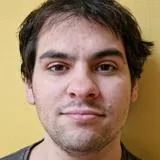
Philippe Ciblat is a Professor at TELECOM Paris Tech, affiliated with the Department of Signal Processing and Communications. His research spans signal processing, wireless communications, and machine learning applications in networking. He has collaborated extensively with institutions like the University of Paris-Saclay and international researchers in areas such as cooperative communication protocols, resource allocation, and coding theory. Research Interests: Machine learning for signal processing, wireless channel modeling (Rician fading), lattice decoding, caching strategies, and distributed optimization. Notable Work: Pioneered transformer-based packet scheduling, neural network approaches to lattice decoding, and effective capacity analysis in fading channels. His contributions include over 170 publications in top venues (IEEE Trans. Signal Process., IEEE Trans. Wireless Commun.) and collaborations with industry partners on practical implementations like cache-aided polar coding. He has advised multiple researchers in distributed systems and wireless resource management.
Yohan PETETIN is an Associate Professor at Telecom SudParis (Institut polytechnique de Paris) in the CITI Department. His research focuses on Bayesian filtering, Monte Carlo methods, hidden Markov models, and multi-object tracking. He has authored over 20 peer-reviewed articles since 2011, with notable contributions in IEEE Transactions on Signal Processing and other top venues. His work bridges statistical signal processing with machine learning applications. PhD: Algorithmes de restauration bayésienne mono- et multi-objets dans des modèles Markoviens (2013, Telecom SudParis) HDR: Generative models for time series data (2023, Institut polytechnique de Paris) Research interests emphasize sequential Monte Carlo algorithms, particle filtering optimizations, and deep learning integration for time-series analysis. Recent work explores expressivity comparisons between recurrent neural networks and hidden Markov models. Teaching includes courses on probabilistic graphical models, Bayesian filtering, and deep learning across undergraduate and graduate programs at Telecom SudParis and affiliated institutions.
Laura Toni is an Associate Professor in the Department of Electronic & Electrical Engineering at University College London (UCL). She serves as Director of the MSc in Telecommunications and Internet Engineering and the MRes in Telecommunications. Additionally, she is a Turing Fellow at the Alan Turing Institute and a member of ELLIS (European Lab for Learning and Intelligent Systems). Her research focuses on coding, streaming technologies, machine learning for immersive communications, decision-making under uncertainty, and large-scale signal processing. She leads the LASP (Learning And Signal Processing) group at UCL. Education: MSc (2005) and PhD (2009) from the University of Bologna, followed by postdoctoral research at UC San Diego and EPFL under Professors L. Milstein, P. Cosman, and P. Frossard. Key roles include Technical Program Chair at ACM MM 2022, Keynote Co-Chair at ACM MMSys 2022, and leadership in organizing workshops on graph-based machine learning and emerging technologies in performing arts. She is a Senior IEEE Member and holds editorial roles in IEEE Multimedia Magazine and EURASIP Journal on Signal Processing. Her work bridges communication systems and machine learning, with contributions to adaptive streaming, network optimization, and graph signal processing. She actively promotes diversity and inclusion in technical conferences, including roles as Diversity Chair at MMSys 2021 and PIMRC 2020.
Prof. Mohammed Khalid is a Professor in the Department of Electrical and Computer Engineering at the University of Windsor. He specializes in FPGA-based systems, network-on-chip architectures, and hardware acceleration for signal processing applications. His leadership roles include serving on the executive committee of IEEE Canada. His research focuses on optimizing cryptographic hardware, automotive embedded systems, and efficient algorithm implementations on FPGAs. Key contributions include advancements in PUF-based security mechanisms, high-speed elliptic curve processors, and FPGA-accelerated machine learning algorithms. He has led projects in automotive radar systems and AUTOSAR configuration tools. His work emphasizes practical applications of hardware-software co-design principles. Research Highlights : Development of novel FPGA architectures for real-time signal processing Innovative approaches to resource-efficient cryptographic hardware Pioneering work on hybrid NoC architectures for multi-FPGA systems Awards : IEEE Windsor Section Award (2019) for group leadership Best Student Paper Award (2024) for supervised research by Mohit Sharma Prof. Khalid's 150+ publications span FPGA design methodologies, adaptive signal processing, and embedded systems security. His research group collaborates with industry partners to advance automotive electronics and IoT applications.
Professor David Stone is a faculty member in the School of Electrical and Electronic Engineering at the University of Sheffield, where he holds the position of Professor in Electrical Engineering and serves as Theme Lead for Electrical Machines. He earned his BEng (Hons) in Electronic Engineering from the University of Sheffield (1982–1985) and a PhD in Automatic Weld Penetration Control from Liverpool University (1989). Since joining the University of Sheffield in 1989, he has been affiliated with the Electrical Machines and Drives (EMD) Group, advancing to full professorship in 2013. His research focuses on power electronics , energy storage systems , and their applications in electric vehicles (EVs) and renewable energy integration . Notable work includes leading the CREESA initiative, which operates the UK's largest grid-connected lithium titanate battery storage system. Current projects explore hybrid energy storage, EV battery second-life applications, and high-frequency resonant converters for industrial heating. Research interests span: Simulation of energy systems and hybrid storage technologies Electric vehicle energy consumption modeling using dashcam telemetry Smart battery management for EVs and grid support High-efficiency wireless EV charging systems Advanced control strategies for power converters His publications (2020–2025) reflect contributions to: Energy storage system design and control Electric machine fault detection and diagnostics Grid integration of renewable energy sources Piezoelectric transformer-based power supplies Microgrid optimization with hybrid energy storage He collaborates with industry through initiatives like the EPSRC Prosperity Partnership in Offshore Wind and the TransEnergy project linking road-rail energy exchange. His work addresses challenges in sustainable energy systems and smart grid technologies.
Rajeev Tyagi is a Professor of Marketing and holds the Walter B. Gerken Chair in Enterprise and Society at the Paul Merage School of Business, University of California, Irvine. He has been a faculty member since 1996, progressing from Assistant Professor to full Professor, and has held significant leadership roles including Interim Dean and Senior Associate Dean for Academic Affairs. PhD, MA, Marketing – The Wharton School, University of Pennsylvania (1996) MBA – Indian Institute of Management, Calcutta (1992) BE, Electronics Engineering – National Institute of Technology, Surat (1988) His research focuses on the economics of marketing strategy, particularly competitive marketing strategies, distribution channels, and new product introduction. He develops quantitative and game-theoretic models to analyze strategic interactions in markets. His work spans pricing, product positioning, channel design, and consumer welfare implications of technological change. His recent publications in Marketing Science , Management Science , and Journal of Marketing Research reflect a consistent focus on strategic decision-making in competitive environments. Key themes include bundling of time-sensitive events, channel decentralization benefits, pricing under uncertainty, and the impact of entry on market dynamics. His research often reveals counterintuitive outcomes, such as how technological advances can reduce consumer surplus or how entry can soften competition through strategic differentiation. Multiple school- and university-wide awards for excellence in teaching Rajeev Tyagi teaches courses at the PhD, MBA, and Master’s levels, including Marketing Analytics, Marketing Strategies in High-Tech Markets, New Product Development, Business Economics, and Multivariate Statistics. While specific advisees are not listed, his extensive publication record with co-authors suggests active mentorship and collaboration. His research has been supported by his academic appointments and institutional affiliations, with no external grants explicitly mentioned. He maintains an active research agenda, with publications as recent as 2022, indicating ongoing scholarly contributions. His work bridges theoretical rigor with practical implications for marketing and strategy.
Rainer Schulz is a Senior Lecturer at the Business School of the University of Aberdeen, where he conducts research and teaches in real estate economics, housing markets, and financial economics. He is actively accepting PhD students and supervises research in real estate. His affiliations include the Gillmore Centre for Financial Technology at Warwick Business School and the Berlin Center for AI Research in Economics and Management. Research Interests: Dr. Schulz's research focuses on urban real estate markets using econometric and machine learning methods. Key areas include automated valuation modelling (AVM), real estate investment vehicles, fund management, and location choice. He investigates the impact of teleworking on housing demand and the application of real options in real estate development. His work is interdisciplinary, combining urban economics, financial theory, and data science. Publication Trends: His recent publications (2022–2024) emphasize the effects of teleworking on housing markets, machine learning applications in real estate, and local housing market information systems. Earlier works focus on land value mapping, hurdle rates in investment, and the relationship between house prices and macroeconomic variables. His research consistently applies advanced quantitative techniques to real-world property market problems. Scientific Awards: Poster award for Semiparametric Estimation of Land Values, 2015 Aareal Award of Excellence in Real Estate Research, 2012 ARES Foundation Award, 2006 Deutsche Immobilien Akademie Research Prize for doctoral thesis, 2003 Advising and Grants: Dr. Schulz is currently accepting PhD students in Real Estate. He leads the compilation of the Aberdeen Housing Market Report, a knowledge exchange project with the Aberdeen Street Property Company (ASPC). While specific grants are not listed, his research is supported through institutional collaborations and publications in high-impact journals. Labs and Teams: He is affiliated with the Centre for Real Estate Research at the University of Aberdeen Business School. He collaborates with researchers at Humboldt University (Berlin) and participates in international research networks such as the Berlin Center for AI Research. His work involves interdisciplinary teams focusing on urban data, housing policy, and financial technology.
Eugene Chan is an Associate Professor in the Department of Marketing Management at the Ted Rogers School of Management, Toronto Metropolitan University. He holds a PhD in Marketing from the University of Toronto, a MA in Social Psychology from the University of Chicago, and an AB in Honors Psychology from the University of Michigan, along with an ARCT (Hons) in Piano Performance from the Royal Conservatory of Music, reflecting a multidisciplinary background. His research lies at the intersection of consumer psychology, political ideology, health communication, and sustainability. He employs experimental and survey methods grounded in social science theories to understand how individuals make judgments and decisions in marketplaces and society. Key themes include the influence of political ideology on consumer behavior, strategies for effective marketing and health communication, and promoting environmentally sustainable choices. His work often explores how emotional, moral, and cognitive factors shape consumer decisions. His recent publications span top journals such as Journal of Consumer Psychology , Global Environmental Change , Computers in Human Behavior , and Personality and Social Psychology Bulletin . These studies reveal consistent focus on behavioral interventions, ideological divides, health compliance, and environmental sustainability. Trends indicate a strong emphasis on moral psychology, emotional triggers, and real-world applications in public policy and marketing strategy. Scientific Awards: Emerging Researcher Award, Australian and New Zealand Marketing Academy (2018) Dean’s Award for Excellence in Research by an Early Career Researcher, Monash Business School (2018) He has secured research funding from diverse sources including the National Natural Science Foundation of China, ACR Transformative Consumer Research Grant, IHS Hayek Fund, and the Indiana Commission for Higher Education, supporting projects on fake news mitigation, brand revitalization, moral foundations, and pandemic behavior. He has taught at institutions worldwide, including the University of Toronto, Monash University, and Purdue University, demonstrating international academic engagement. Eugene Chan serves in editorial roles for several journals, including as Associate Editor for Australasian Marketing Journal and International Journal of Consumer Studies , and as Special Issue Editor for Frontiers in Psychology . He also co-authored the 2nd Asia-Pacific edition of the textbook Consumer Behavior , contributing to marketing education. He advises students in consumer behavior and marketing research, though specific advisees are not listed.
Qi Chen is a Professor in the Department of Geography at the University of Hawaii at Mānoa, specializing in remote sensing and geospatial technologies. His office is located in Saunders Hall, and he teaches undergraduate and graduate courses including GEO 370 (UAV and Aerial Photography), GEO 388 (Introduction to GIS), GEO 470 (Remote Sensing), GEO 489 (Applied GIS), and GEO 762 (Research Seminar: Remote Sensing. His research focuses on transforming earth observation data into actionable knowledge for environmental monitoring. Primary interests include: LiDAR applications for vegetation analysis and biomass estimation Climate change impacts on land cover and coastal systems Machine learning integration with geospatial data High-resolution mapping of agricultural and forest ecosystems Drone and satellite-based environmental assessment Chen's recent publications (2020-2025) demonstrate a strong focus on advancing remote sensing methodologies, particularly through: AI-driven approaches (GANs for vegetation indices, deep learning for marine debris) Multi-sensor fusion (LiDAR with camera systems, hyperspectral-multispectral integration) Novel applications in precision agriculture and infrastructure monitoring Hawaii-specific environmental studies incorporating indigenous knowledge systems He leads the Smart Remote Sensing Lab (smartremotesensing.org) where he mentors graduate students in developing cutting-edge geospatial solutions for ecological and societal challenges.
Taehyung Kim is an Associate Professor at the University of Michigan-Dearborn in the Department of Electrical and Computer Engineering , College of Engineering and Computer Science. His research focuses on power electronics , motor drives , and electric/hybrid power systems for vehicles and aircraft , with an emphasis on renewable energy integration and fault-tolerant control . Education Ph.D., Electrical & Computer Engineering, Texas A&M University M.S., Electrical Engineering, Korea University B.S., Electrical Engineering, Korea University His research interests include energy conversion systems, power electronics for electric vehicles, evaluation and diagnosis of AC motors, and position sensorless control of permanent magnet motors. He leads the KIM Laboratory , which explores unmanned aerial vehicles (UAVs) , battery systems , and powertrain reliability . The 15 most recent articles (2024-2021) highlight his work on hybrid UAVs , fault detection algorithms , cost-effective converters , and powertrain optimization . These publications span power electronics , renewable energy integration , and electric propulsion systems , with applications in transportation electrification and industrial power systems . Scientific Awards NSF Mid Career Advancement Award, 2023 IEEE-IAS Prize Paper Award (2nd Place), 2012 Best Paper Award, IEEE Transportation Electrification Conference, 2021 Listed in "World Top 2% Scientists" (Stanford University, 2020-2024) Listed in Marquis Who’s Who in America Technical Program Co-Chair, 2009 IEEE Vehicle Power and Propulsion Conference Prof. Kim has advised numerous PhD and Master’s students , including Feng Zhou , Sreekanthreddy Chalapala , and Sahithya Parvathareddy . He has secured significant grants from the NSF , Department of Energy , and industry partners like Ford, focusing on smart monitoring , fault identification , and energy management for electrified systems. His lab’s facilities include advanced power electronics labs and hybrid powertrain testing environments .
Jeremy P. Bos is an Assistant Professor in the Department of Electrical and Computer Engineering at Michigan Technological University. He serves as a Faculty Advisor for the Robotic Systems Enterprise and is affiliated with professional societies including SPIE (since 2011), OSA (since 2003), and IEEE. His work bridges engineering and optical sciences, with a focus on imaging through turbulent environments. PhD, Electrical Engineering (2012), Michigan Technological University MS, Electrical Engineering (2003), Villanova University BS, Electrical Engineering (2000), Michigan Technological University Dr. Bos’s research spans atmospheric optics , statistical optics , and quantum optics , with applications in image and signal processing , autonomous vehicles , and industrial automation . His work addresses challenges in imaging through atmospheric turbulence, including speckle noise mitigation, phase compensation, and adaptive optics. He also investigates machine intelligence for optimizing reconstruction algorithms. Recent publications highlight trends in non-Kolmogorov turbulence modeling , multiframe blind deconvolution (MFBD) , and hybrid adaptive optics systems . His studies focus on long horizontal-path imaging, anisoplanatic conditions, and performance metrics for turbulence correction. Scientific recognition includes: NRC Research Associateship Program Award CLEO 2012 Maiman Student Paper sEMI-Finalist Dr. Bos previously led the Paulding Lights Activity and contributed to SPIE student leadership committees. His expertise extends to electromagnetic compatibility (EMC) and RF system design , informed by industrial roles at General Motors, Johnson Controls, and Lockheed Martin.
Ellen Rathje is a Professor and Janet S. Cockrell Centennial Chair in Engineering at the University of Texas at Austin's Department of Civil, Architectural, and Environmental Engineering within the Cockrell School of Engineering. Her expertise spans geotechnical engineering with a focus on earthquake engineering, seismic response of earth structures, and liquefaction evaluation. She leads research initiatives such as DesignSafe cyberinfrastructure and TexNet Seismological Network, advancing geohazard risk assessment and computational modeling. Education: Ph.D. (1997), M.S. (1994), and B.S. (1993) in Civil Engineering from University of California, Berkeley and Cornell University. Research Interests: Dr. Rathje investigates earthquake-induced ground failures, including lateral spreading, liquefaction, and slope instabilities. Her work integrates machine learning, finite element analysis, and geospatial data to enhance predictive models for infrastructure resilience. Recent projects address induced seismicity in energy-producing regions, site amplification in Central and Eastern North America, and tailings dam failure mechanisms. Awards: Recipient of the 2022 Ralph B. Peck Award, 2018 William B. Joyner Lecture Award, and 2016 ASCE Fellow distinction. Her work has advanced open science through DesignSafe's cyberinfrastructure, supporting natural hazards research collaboration. Technical Contributions: Developed hybrid finite-element/material point methods for granular collapse modeling, probabilistic frameworks for regional landslide assessments, and neural network-based site amplification models. Active in post-earthquake reconnaissance through GEER (Geotechnical Extreme Events Reconnaissance) and TexNet operations.
Efi Psomopoulou is Lecturer in Data Science at the University of Bristol's School of Engineering Mathematics and Technology. Her research develops tactile sensing and control strategies for robotic manipulation, with applications in industrial robotics and minimally invasive surgery. Specializes in learning dexterous skills from demonstrations, underactuated hand design, and sim-to-real transfer for tactile robotics. Key innovations include the Tactile Softhand-A (3D-printed anthropomorphic hand with antagonistic tendons), BioTactIP optical tactile sensor for 3D force estimation, and Anyrotate system for gravity-invariant object rotation. Recent work advances efficient learning of fine manipulation skills from limited real-world data. Active in IEEE RAS Women in Engineering initiatives, promoting equity in robotics. Surgical robotics contributions include master controllers for da Vinci systems and palpation feedback evaluation. Publications demonstrate progression from surgical applications to fundamental dexterous manipulation research.
Tomasz Kozlowski is an Associate Professor and Associate Head for Undergraduate Programs at the University of Illinois at Urbana-Champaign's Grainger College of Engineering, Department of Nuclear, Plasma, and Radiological Engineering (NPRE). He holds additional positions as Associate Professor at Poland's National Centre for Nuclear Research (NCBJ) and Affiliated Professor in Computational Science and Engineering at UIUC. His research focuses on multi-physics modeling, reactor design/safety, computational methods, and thermal-hydraulics. He has taught courses like NPRE 200 (Mathematics), NPRE 455 (Neutron Transport), and advanced modeling topics. Education: B.S., M.S., and Ph.D. in Nuclear Engineering from Purdue University (2000–2005), followed by a Docent Habilitation in Nuclear Power Safety from the Royal Institute of Technology (KTH, 2011). He has collaborated on a $2M DOE grant for fuel storage solutions and contributed to UIUC's submission for a micro-reactor license application. His work includes advanced reactor design, uncertainty quantification, and computational tools like TRACE and MCNP-ORIGEN. Research emphasizes reactor analysis methods, numerical solver development, and inverse uncertainty quantification. Over 100 publications span topics like TRISO fuel performance, BWR instability, and hydrogen production integration with microreactors. He serves as Associate Editor for Nuclear Technology and actively engages in international benchmarks (e.g., BEAVRS, OECD/NEA).
Alexander Bastounis is a Lecturer in Applied Mathematics at King's College London, affiliated with the Department of Mathematics and the King’s Institute for Artificial Intelligence. His research focuses on computational mathematics, optimization, and the trustworthiness of AI systems. He holds a PhD from the University of Cambridge and has held academic roles at institutions including Leicester University, City University of Hong Kong, and TU Berlin. Education: PhD in Applied Mathematics from DAMTP, University of Cambridge (2018). Earlier academic qualifications not specified. Research interests include foundational aspects of computational mathematics, AI limits and robustness, adversarial attacks, and inverse problems. His work explores computational barriers in estimation and learning, with recent attention on stealth attacks in AI models and feature selection reliability. Received the Leslie Fox Prize (2019) for work on inverse problems Contributed to SIAM News articles on compressed sensing and AI challenges Advising and grants: Currently supervises the EPSRC-funded project '50:50 Haleon/EPSRC DLA Studentship' (2025–2029). No listed students. Labs/teams: Active in King’s Institute for Artificial Intelligence and collaborates on interdisciplinary projects across computational mathematics and AI security.