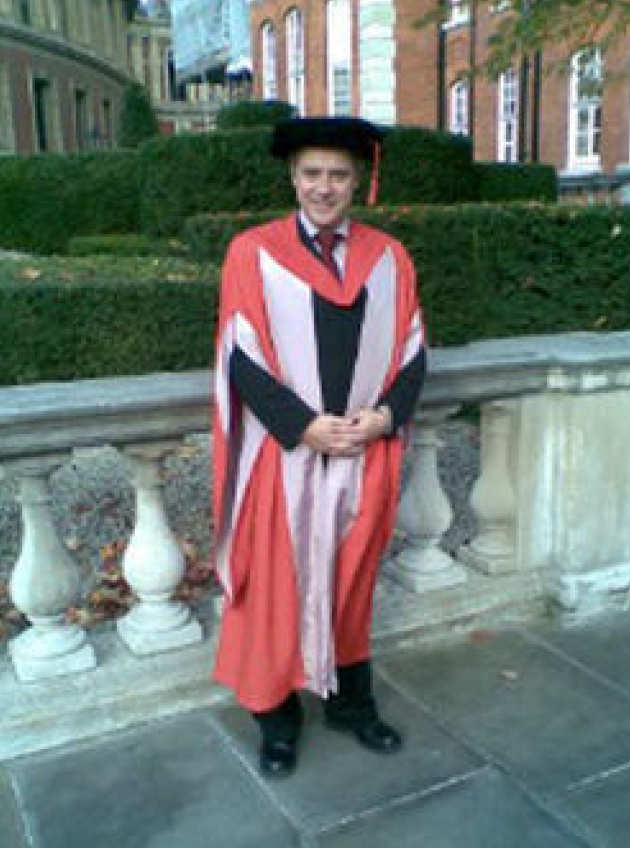
Professor George Britovsek (FRSC) is a leading figure in catalysis and sustainable carbon management at Imperial College London . As Director of the MRes in Catalysis & Engineering and Head of Teaching in Inorganic Chemistry, he bridges academic leadership with cutting-edge research. His work focuses on transition metal complexes for converting ethylene , alkanes , biomass , and CO₂ into valuable chemicals and fuels through industrial collaborations. Education : M.Sc. (Technical University of Aachen, 1990), Ph.D. (Aachen, 1993) under Prof. W. Keim Postdoctoral Training : University of Tasmania (1994-1996), Imperial College London (1996-2000) His research interests span: Selective oxidation of alkanes using bio-inspired iron complexes Alkene conversions to functional polymers via novel catalysts CO₂ valorization into polymers and cyclic carbonates Biomass-derived feedstocks for chemical synthesis Recent catalysis trends highlight his work on: Designing Fe-N/C catalysts for epoxidation Developing PN3P pincer ligands for H₂ activation Creating degradable polyethylene via iron-catalyzed chain growth Modeling alternating α-olefin distributions in chromium systems Awards : Fellow of the Royal Society of Chemistry (FRSC) Students & Collaborators actively engage in: Photocatalytic polymer degradation Electrocatalytic CO₂ conversion Functionalized polymeric materials 3D-printed catalytic scaffolds His Britovsek Research Group operates at the Molecular Sciences Research Hub, White City Campus, advancing both homogeneous and heterogeneous catalysis through experimental and computational approaches.
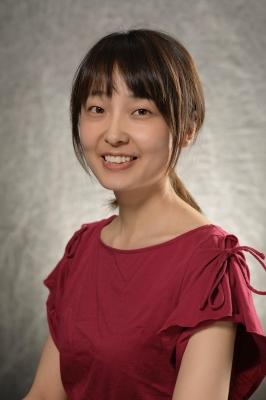
Callie Hao is an Assistant Professor in the Department of Electrical and Computer Engineering at the Georgia Institute of Technology since 2021, holding the ON Semiconductor Junior Professorship. Her research bridges hardware efficiency and algorithmic innovation with significant industry and federal recognition. Education: Ph.D. in Electrical Engineering, Waseda University (2017) M.S. and B.S. in Computer Science and Engineering, Shanghai Jiao Tong University Research Focus: Dr. Hao pioneers software/hardware co-design for edge AI, specializing in hardware-efficient machine learning algorithms, FPGA-based reconfigurable computing, graph neural networks, and electronic design automation (EDA). Her work emphasizes neural architecture search, high-level synthesis optimization, and memory-efficient systems for embedded and IoT applications, driven by the philosophy that "1 + 1 > 2" for transformative efficiency gains. Publication Impact: Her 15 most recent publications (2023-2026) reveal a strategic shift toward machine learning-driven EDA tools, with 60% focused on high-level synthesis frameworks and 40% on graph neural network acceleration. Key trends include simulation speed breakthroughs (LightningSim), automated accelerator generation (GNNBuilder), and cryptographic hardware innovations (Cryptonite), predominantly published in top-tier venues like MICRO, ICCAD, and DAC. Awards & Recognition: NSF CAREER Award (2024) and Intel Rising Star Faculty Award (2023) Best Paper Awards at MLCAD 2024 and GLSVLSI 2021 ON Semiconductor Junior Professorship (2025) and Sutterfield Family Early Career Professorship (2022) DAC-SDC competition championships (2018-2020) Mentorship & Funding: Dr. Hao advises 8+ Ph.D. students in the Sharc Lab, with Rishov Sarkar winning the Oscar P. Cleaver Award and Qualcomm Innovation Fellowship. Her research is funded by DARPA (2021) for ultra-light video intelligence systems and supported by industry awards from Amazon and Sony. She actively serves on program committees for DAC, ICCAD, and DATE conferences. Lab Leadership: As director of the Sharc Lab (Software/Hardware Co-design lab), she cultivates interdisciplinary research at the intersection of FPGA design, machine learning, and EDA, requiring expertise in Verilog/HLS, GNNs, and compiler technologies while maintaining strict focus on real-world hardware implementation.
Chris De Sa is an Associate Professor in the Department of Computer Science at Cornell University, affiliated with the Cornell Machine Learning Group and leading the Relax ML Lab. His research focuses on algorithmic, software, and hardware techniques for high-performance machine learning, particularly relaxed-consistency stochastic algorithms like asynchronous and low-precision stochastic gradient descent (SGD). He earned his Ph.D. from Stanford University under advisors Kunle Olukotun and Chris Ré. His work emphasizes constructing efficient, parallel, and distributed machine learning frameworks for deep learning and data analytics. Education: Ph.D. in Computer Science, Stanford University (2017) Research Interests: Algorithmic techniques for scalable ML, quantization, distributed optimization, hyperbolic geometry in ML, and reliable measurement of ML systems. His group develops frameworks for efficient inference/training and explores the intersection of ML with domains like agriculture and plant science through courses like PLSCI 7202. Recent Highlights: DARPA YFA Grant (2024), NSF CAREER Award, Google Research Scholar Award, and multiple best paper recognitions. Key contributions include QuIP quantization methods, Coneheads attention mechanisms, and theoretical advances in decentralized training. Awards: NSF CAREER Award DARPA YFA Grant (2024) Google Research Scholar Award Mr. & Mrs. Richard F. Tucker Teaching Award Grants & Advising: Advises 8 Ph.D. students (including Ruqi Zhang, Yucheng Lu, A. Feder Cooper) and holds leadership roles in MLSys conferences. Active in grant-funded research (e.g., NSF Robust Intelligence). Labs/Teams: Leads the Relax ML Lab and participates in Cornell’s Institute for Digital Agriculture (CIDA).
Dr. Stephanie Spahr is a Research Group Leader at the Leibniz Institute of Freshwater Ecology and Inland Fisheries (IGB) in Berlin, Germany, where she leads the Organic Contaminants research group within the Department of Ecohydrology and Biogeochemistry. Previously, she served as a Junior Research Group Leader at the University of Tübingen's Center for Applied Geoscience (2019-2021) and as a Postdoctoral Researcher at Stanford University's Department of Civil and Environmental Engineering (2016-2019). Dr. Spahr earned her PhD in Environmental Chemistry from the Swiss Federal Institute of Technology Lausanne (EPFL) and the Swiss Federal Institute of Aquatic Science and Technology (Eawag) in 2016. Her doctoral research focused on the formation of N-nitrosodimethylamine during water disinfection with chloramine. She completed her MSc in Geoecology at the University of Tübingen in 2012, with thesis work on carbon and nitrogen isotope analysis of benzotriazoles conducted at Eawag, and her BSc in Geoecology/Ecosystem Management at the same institution in 2010. Dr. Spahr's research focuses on trace organic contaminants in aquatic systems, with particular expertise in transformation processes of contaminants in natural and engineered systems, advanced oxidation processes for water treatment, urban blue-green infrastructure, and compound-specific isotope analysis. Her work bridges environmental chemistry, engineering, and ecology to address water quality challenges in urban and natural water systems. She employs advanced analytical techniques to track contaminant sources and transformation pathways, with a strong emphasis on practical applications for water treatment and environmental protection. Her recent publications demonstrate a strong focus on biochar-based water treatment technologies, particularly for stormwater management. She investigates how biochar amendments can remove trace organic contaminants from urban runoff, with recent work examining persulfate activation mechanisms, the role of chloride in reactive species formation, and the performance of engineered media filters under dynamic conditions. Her research also extends to understanding contaminant transport in rivers, the ecological impacts of pollutants, and developing analytical methods for environmental monitoring. The interdisciplinary nature of her work connects chemical processes with ecological outcomes. Outstanding Review Paper Award 2023 in Environmental Science: Water Research & Technology Selected for the Falling Walls Female Science Talents Intensive Track 2023 Selected mentee in the Leibniz Mentoring Programme 2022-2023 Best poster award (1st prize) at the Wasser 2022 of the Water Chemistry Society Selected fellow in the Postdoc Academy for Transformational Leadership 2020-2022 (Robert Bosch Stiftung) Selected fellow in the Athene Program for early female career researchers at the University of Tübingen, 2020-2021 As a Research Group Leader, Dr. Spahr supervises multiple research projects including 'POllution in UrbaN ponds, eco-evolutionary Dynamics, and Ecosystem Resilience (POUNDER)', 'Dynamic hyporheic zone', 'NYMPHE', and the 'Incident-related special investigation programme for the environmental disaster in the Oder River'. She serves on the Executive Board of the German Water Chemistry Society and heads its Expert Committee on 'Oxidative Processes'. Her collaborative work spans numerous institutions across Germany and internationally, addressing critical water quality challenges through interdisciplinary approaches. Dr. Spahr leads the Organic Contaminants research group at IGB Berlin, which focuses on understanding the fate and treatment of organic pollutants in water systems. Her team employs advanced analytical techniques including compound-specific isotope analysis to track contaminant sources and transformation pathways. The group collaborates extensively with other departments at IGB and with international partners on projects addressing urban water challenges and ecological impacts of pollution. Current research emphasizes innovative water treatment technologies, particularly biochar-based systems for stormwater management, and investigating the complex interactions between contaminants, aquatic ecosystems, and human activities.
Jason Cong is the Volgenau Chair for Engineering Excellence and Distinguished Chancellor's Professor in the Computer Science Department at UCLA's Samueli School of Engineering. He directs the Center for Domain-Specific Computing (CDSC) and the VLSI Architecture, Synthesis, and Technology (VAST) Laboratory, and serves as Associate Vice Provost for Internationalization and Co-Director of UCLA/PKU Student and Scholar Program. Dr. Cong's research spans electronic design automation, customizable computing for machine learning and big-data applications, quantum computing, and highly scalable algorithms. His work has produced over 500 publications with more than 41,000 citations and an H-index of 106. His recent work focuses on quantum computing compilation, domain-specific acceleration for AI workloads, and high-level synthesis optimization techniques that leverage machine learning. His publication trend shows a strong emphasis on quantum computing and machine learning acceleration in recent years, with numerous papers on quantum layout synthesis, LLM acceleration, and high-performance FPGA implementations. His team has developed frameworks like TAPA for task-parallel dataflow programming and RapidStream for automated parallel implementation of FPGA designs. Member of National Academy of Engineering (2017) IEEE Robert N. Noyce Medal recipient (2022) Phil Kaufman Award recipient (2024) ACM Chuck Thacker Breakthrough Award recipient (2024) 18 Best Paper Awards across major conferences Multiple 10-Year Retrospective Most Influential Paper Awards Dr. Cong has graduated 50 PhD students, many of whom are now faculty at major research universities or hold key positions at leading tech companies. He has led over 100 research projects funded by DARPA, NSF, SRC, and industry sponsors. His entrepreneurial activities include founding three successful companies (Aplus Design Technologies, AutoESL, and Falcon Computing Solutions), all acquired by major EDA players. His VAST Laboratory continues to push boundaries in domain-specific computing, with active research in quantum computing, AI acceleration, and high-performance FPGA implementations.
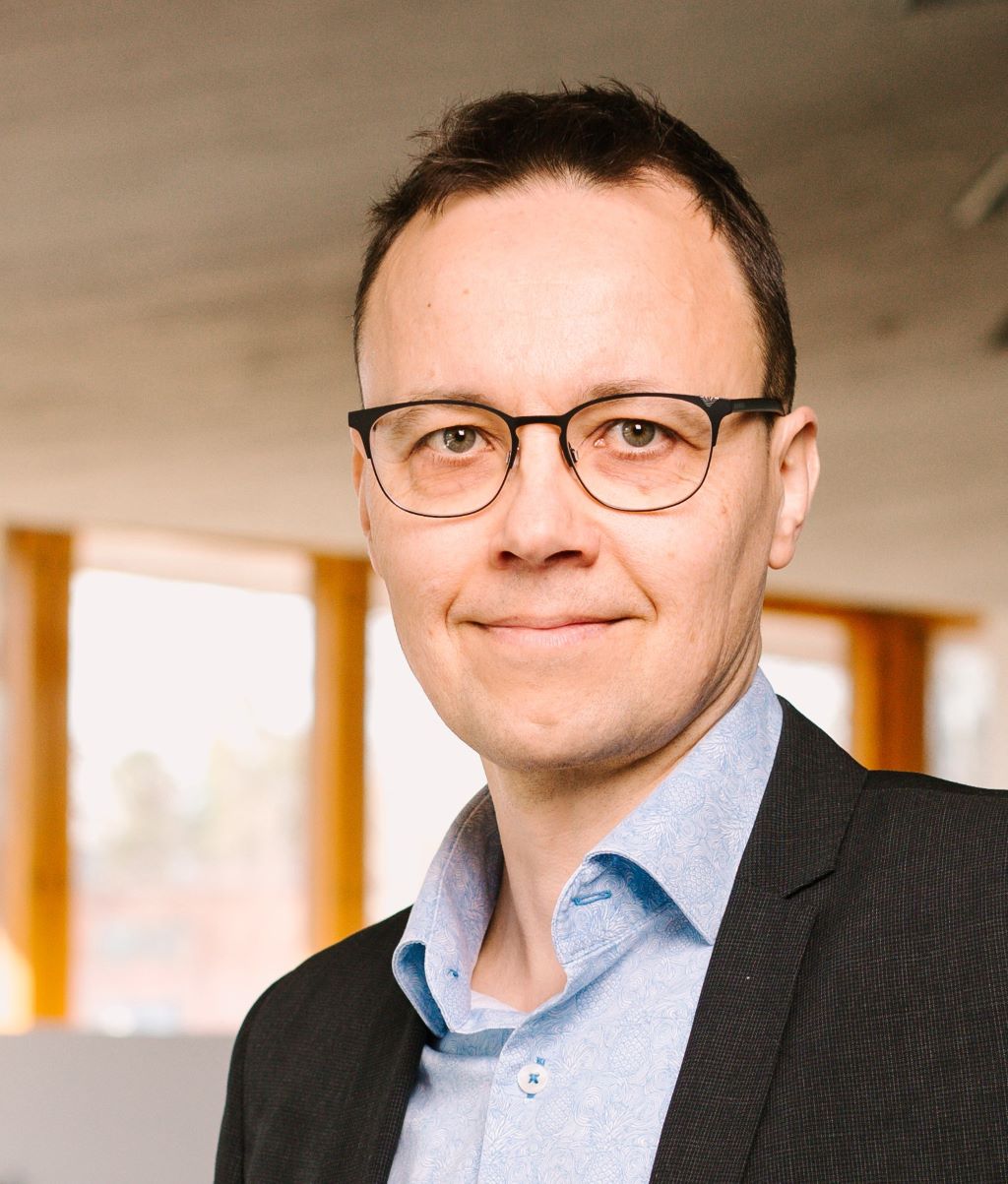
Simo Hostikka is a Professor in the Department of Civil Engineering at Aalto University's School of Engineering. His research focuses on fire safety engineering , utilizing numerical fire simulations to address critical challenges in building and infrastructure safety. Key Expertise: Fire Dynamics Simulator (FDS) development, thermal radiation heat transfer, pyrolysis modeling, fire toxicity calculations, and probabilistic risk analysis. Leadership: Supervises advanced fire safety research and contributes to international fire safety standards. Research Trends: Recent publications emphasize fire toxicity modeling , hydrogen fire safety , radiation heat transfer , and fire retardancy of polymeric materials . His work bridges computational methods with real-world fire safety applications. Scientific Awards: Philip Thomas Medal of Excellence (2008, 2005) Sjölin Award (2012) Interflam Trophy (2007) Harmathy Award (2020, 2019) Dean’s Award for Best MSc Thesis (2020) Best Paper in Rakenteiden Mekaniikka (2009) Advising: Supervised Topi Sikanen, who received the Young Talent Award from the International Water Mist Association.
Dr. Zheng Yuan is an Associate Professor (Senior Lecturer) in the School of Computer Science at the University of Sheffield. Previously, they held roles as an Assistant Professor at King's College London and a Research Associate at the University of Cambridge's Department of Computer Science and Technology. Their primary research focuses on machine learning and deep learning applications in natural language processing (NLP), particularly in educational technology, healthcare, creativity, and multilingual contexts. Key projects include computer-assisted language learning (CALL), human-centered NLP in education, computational code-switching, and creative AI. Education includes a PhD and MPhil in Natural Language Processing from the University of Cambridge, and a BSc(Eng) from Queen Mary University of London. They hold affiliated positions at the University of Cambridge, King's College London, and are a Fellow of Trinity College, Cambridge. They contribute to The Alan Turing Institute's Data-Centric Engineering Programme and hold FHEA status (2024-). Research interests span educational NLP, multilingual systems, transfer learning, and explainable AI. They actively organize workshops and serve on editorial boards (e.g., PeerJ Computer Science) and conference committees (ACL/EMNLP). Recent activities include co-organizing NLP workshops at ACL 2025 and NAACL 2024, alongside roles in professional societies like the ACL Professional Conduct Committee. Awards include Fellowship of the Higher Education Academy (2024-) and ASEFClassNet18 Faculty Collaboration (2025-). They welcome PhD applications in NLP and machine learning, emphasizing interdisciplinary applications.
Yiguang Ju is the Robert Porter Patterson Professor of Mechanical and Aerospace Engineering at Princeton University, affiliated with the HMEI Grand Challenges Program. His research focuses on plasma-assisted combustion, alternative fuels, and nano-material synthesis via flame processes. He investigates energy-efficient systems for microscale energy conversion, catalytic reactions, and low-temperature plasma chemistry. Research interests include non-equilibrium plasma dynamics, ammonia synthesis, and high-pressure oxidation kinetics. He develops advanced diagnostics like hybrid laser spectroscopy and machine learning models to study reaction mechanisms. Recent work explores plasma-enhanced combustion for hydrogen and alternative fuels, with applications in energy storage and emission reduction. His studies address challenges in plasma-chemistry interactions, material synthesis, and high-pressure combustion systems. His articles highlight innovations in plasma catalysis, combustion kinetics, and atmospheric chemistry. Collaborative projects include plasma-based material recycling and supercritical-pressure reactor analysis. He leads initiatives in clean energy technologies and sustainable chemical processes.
Jiro Katto is a Professor at Waseda University's School of Fundamental Science and Engineering, where he has been conducting research and teaching since 1999. He received his Ph.D. from the University of Tokyo and has established himself as a leading researcher in multimedia signal processing and computer networks. His academic journey includes positions as Associate Professor (1999-2004), Professor (2004-present), and Director at NEDO (2004-2008), along with research experience at NEC C&C Laboratories (1992-1999) and a Visiting Scholar position at Princeton University (1996-1997). Professor Katto's research interests focus on Multimedia Signal Processing and Computer Networks, with particular expertise in video compression, 5G network performance, and learned image compression techniques. His work bridges theoretical advancements with practical implementations, as evidenced by his extensive publications in top-tier conferences and journals. His research group has made significant contributions to point cloud compression, latency compensation in remote systems, and hardware-accelerated video encoding for UHD streaming. His publication record is impressive, with 276 papers cited 3,323 times in Scopus and 6,169 times in Google Scholar, reflecting his substantial impact in the field. His recent work shows a strong trend toward applying deep learning techniques to traditional signal processing problems, particularly in the areas of image and video compression, where his team has developed novel approaches to improve compression efficiency while reducing computational complexity. Electric Telecommunications Promotion Foundation Telecommunications System Technology Award (2023) Takayanagi Kenjiro Foundation Takayanagi Kenjiro Achievement Award (2020) Institute of Image Information and Television Engineers Fellow (2020) Institute of Electronics, Information and Communication Engineers Fellow (2015) IEICE Communications Society Activity Contribution Award (2006) IEICE Academic Encouragement Award (1995) SPIE VCIP 1991, Best Student Paper Award (1991) Professor Katto has served on numerous prestigious committees including IEEE ComSoC Tech News Editorial Board, IEEE Technical Program Committees for major conferences (Globecom, ICC, ICIP), and editorial boards for several academic journals. His leadership in the academic community extends to chairing conferences like IWAIT 2011 and serving as Editor-in-Chief for journals in his field. His research has practical applications in commercial 5G networks, video streaming services, and remote monitoring systems, demonstrating the real-world impact of his work.
Yang You is a Presidential Young Professor at the National University of Singapore (NUS), affiliated with the Department of Computer Science under NUS Computing. He holds a PhD in Computer Science from UC Berkeley, advised by Prof. James Demmel. His research focuses on parallel/distributed algorithms, high-performance computing, and machine learning, particularly in scaling deep neural networks on distributed systems and supercomputers. Notably, his team achieved world records in ImageNet and BERT training speeds, with techniques adopted by tech giants like Google and NVIDIA. His optimizers (LARS/LAMB) are included in MLPerf benchmarks. Education - PhD in Computer Science, UC Berkeley - Outstanding Graduate of Tsinghua University (1st rank). Research Interests Yang You’s work spans machine learning system optimization, parallel computing, and distributed training infrastructure. He explores efficient algorithms for large-scale models, including techniques for reducing training time and improving scalability. His contributions emphasize practical implementations that bridge theory and industry applications, such as accelerating diffusion models and optimizing LLM inference. Awards & Honors Lotfi A. Zadeh Prize (2020) IPDPS 2015 Best Paper Award (0.8% acceptance) ICPP 2018 Best Paper Award (0.3% acceptance) ACM/IEEE George Michael HPC Fellowship Siebel Scholar (2020) Forbes 30 Under 30 Asia (2021) Advising & Labs He advises PhD students in cutting-edge research and leads the NUS AI Lab , focusing on advancing AI systems and high-performance computing. His lab collaborates with industry partners to deploy scalable machine learning solutions.
Brian S Woodard serves as a Teaching Associate in the Department of Aerospace Engineering at the University of Illinois Urbana-Champaign, teaching undergraduate courses including AE 100 (Intro to Aerospace Engineering), AE 140 (CAD), and ENG 100/101 (Engineering Orientation). Education Doctor of Philosophy, Aerospace Engineering, University of Illinois Urbana-Champaign, 2012 Master of Science, Aerospace Engineering, University of Illinois Urbana-Champaign, 2004 Bachelor of Science, Aerospace Engineering, University of Illinois Urbana-Champaign, 2001 Research Interests His research focuses on High-Energy Lasers , Aerodynamics , and Aircraft Icing , with specialized work in electric discharge-pumped atomic iodine and oxygen-iodine laser systems. He investigates plasma discharge geometries for oxygen singlet delta production and their application in high-power laser development, while also studying aerodynamic effects of aircraft icing for flight safety. Publication Trends Publications from 2008-2011 reveal concentrated expertise in laser physics and plasma engineering, particularly in electric discharge pumping mechanisms for iodine-based laser systems. His work demonstrates consistent innovation in resonator design and discharge configuration to enhance laser efficiency, bridging aerospace engineering principles with advanced optical technologies for potential defense and propulsion applications. Scientific Awards No scientific awards were mentioned in the provided text. Advising and Grants Dr. Woodard mentors students through AE 298 RES (Research Seminar Mentoring and Introduction to Research courses), guiding undergraduate research projects. He has instructed over 20 distinct undergraduate courses spanning aerospace fundamentals, computational design, global engineering experiences, and leadership training, though no research grants are documented in the source material. Labs and Teams His research is conducted within Talbot Laboratory (Room 319K) at the University of Illinois, collaborating with prominent researchers including J.W. Zimmerman, G.F. Benavides, and W.C. Solomon on electric oxygen-iodine laser projects.
Prof. Paul V. Braun is the Grainger Distinguished Chair in Engineering and Professor of Materials Science and Engineering, Chemistry, Mechanical Sciences and Engineering, Chemical and Biomolecular Engineering at the University of Illinois Urbana-Champaign. He is also a part-time faculty member at the Beckman Institute. His research focuses on synthesizing materials with unique optical, electrochemical, thermal, and mechanical properties through nano/mesoscale architectures. Education: B.S. (Cornell University), Ph.D. (Materials Science and Engineering, University of Illinois). Postdoctoral work at Bell Labs (1999–present at UIUC). Research Interests : Electrochemical energy storage (batteries) Polymers and self-assembly Photonics and advanced optics Self-healing materials Control of heat and matter transport Recent articles explore battery recycling, hydrogel thermal conductivity, additive manufacturing for heat transfer, and silicon anode analysis. His work spans materials synthesis, characterization, and applications in energy and photonics. Awards : AAAS Fellow (2020) NAI Fellow (2022) Grainger Award for Translational Research (2023-24) MRS Fellow (2018) Advising & Grants : Braun has co-authored ~350 publications, holds multiple patents, and co-founded four companies. His labs include the Materials Research Laboratory and Beckman Institute.
Professor Vishnu Pareek is the John Curtin Distinguished Professor at Curtin University, leading the Western Australian School of Mines (WASM) within the Faculty of Science and Engineering. He has held academic roles including Dean of Engineering, Head of School, and various professorships since 2002. His research focuses on multiphase flow modeling, computational fluid dynamics, and reactor engineering, with applications in energy and chemical processes. He holds a BE (Hons) from MNIT, MTech from IIT Delhi, and a PhD from UNSW. Key research interests include LNG process modeling, erosion modeling, and granular flow dynamics. He has authored over 200 peer-reviewed publications, with recent work emphasizing structured packing design, biomass gasification, and additive manufacturing for process intensification. Notable projects include CFD-ANN hybrid models for fluidized beds and experimental studies on 3D-printed structured packings. His expertise spans industrial collaborations in LNG safety, fluid catalytic cracking, and biofuel production. Teaching areas include chemical engineering fundamentals and process systems engineering. He advises on energy policy and leads research teams in multiphase flow and reactor design.
Imad L. Al-Qadi is the Grainger Distinguished Chair in Engineering and Director of the Illinois Center for Transportation (ICT) at the University of Illinois at Urbana-Champaign (UIUC). He holds a Ph.D. in Civil Engineering from Penn State and has held faculty positions at Virginia Tech and Penn State. His research focuses on sustainable transportation infrastructure, pavement mechanics, and advanced materials. Al-Qadi leads initiatives like the Illinois Autonomous and Connected Track (I-ACT), a high-speed test facility for autonomous vehicles and energy harvesting systems. Key roles include: Director of ICT, advancing multimodal transportation infrastructure Pioneer of the Smart Road and full-scale pavement testing Founder of the Academy of Pavement Science and Engineering Research interests span: Highway/airfield sustainability Tire-pavement interaction Energy harvesting Electric vehicles' infrastructure impact Leadership roles include past presidency of ASCE's Transportation and Development Institute and editorship of the International Journal of Pavement Engineering. He has authored over 1,000 publications, including 390 refereed papers, and secured over 180 research grants from federal agencies and industry. Awards include NSF Young Investigator Award (1994), TRB Crum Award (2023), and 2024 Executive Leadership Fellow. His work is internationally recognized, with honorary professorships at institutions in China, Sweden, and the UK.
Samuel W.K. Wong is an Associate Professor in the Department of Statistics and Actuarial Science at the University of Waterloo. He holds a Ph.D. in Statistics from Harvard University (2013) under Prof. Samuel Kou. His research focuses on statistical methodology for complex data science challenges in protein structure modeling, dynamic systems inference, and reliability engineering of wood-based products. He has held academic positions at the University of Florida (2013–2018) and has been at Waterloo since 2018. His research interests include Bayesian computation, statistical inference for dynamic systems, and spatial-temporal data analysis. Notable contributions include the development of manifold-constrained Gaussian processes (MAGI package) and sequential Monte Carlo methods for protein folding studies. He has advised over 15 graduate students and researchers, many of whom are now in academic or industry roles worldwide. Wong has received teaching distinctions at Harvard and holds awards including the Nash Medal (2008) for academic excellence. His work bridges computational statistics with applications in bioinformatics, structural engineering, and environmental science. He has published extensively in top-tier journals like Journal of Computational and Graphical Statistics and Biometrics , and collaborates with wood scientists to improve real-time lumber quality assessment using laser imaging data. His teaching portfolio includes courses on probability theory, statistical inference, and spatial data analysis at both undergraduate and graduate levels. Beyond academia, he maintains an active passion for classical piano performance, having performed recitals combining music with his statistical research interests.