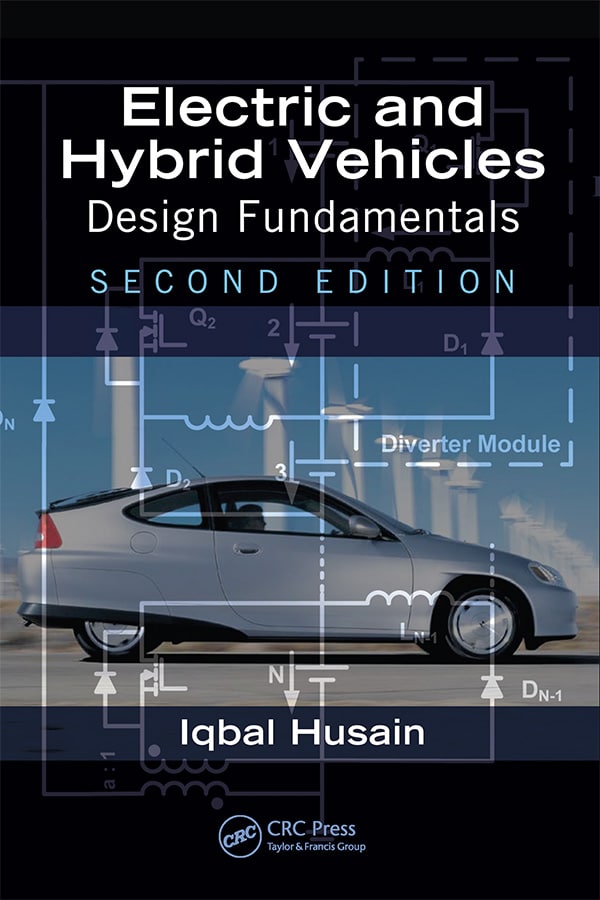
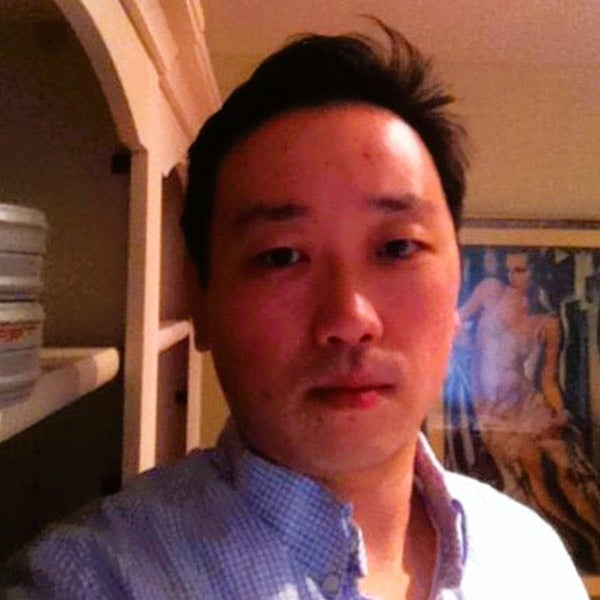
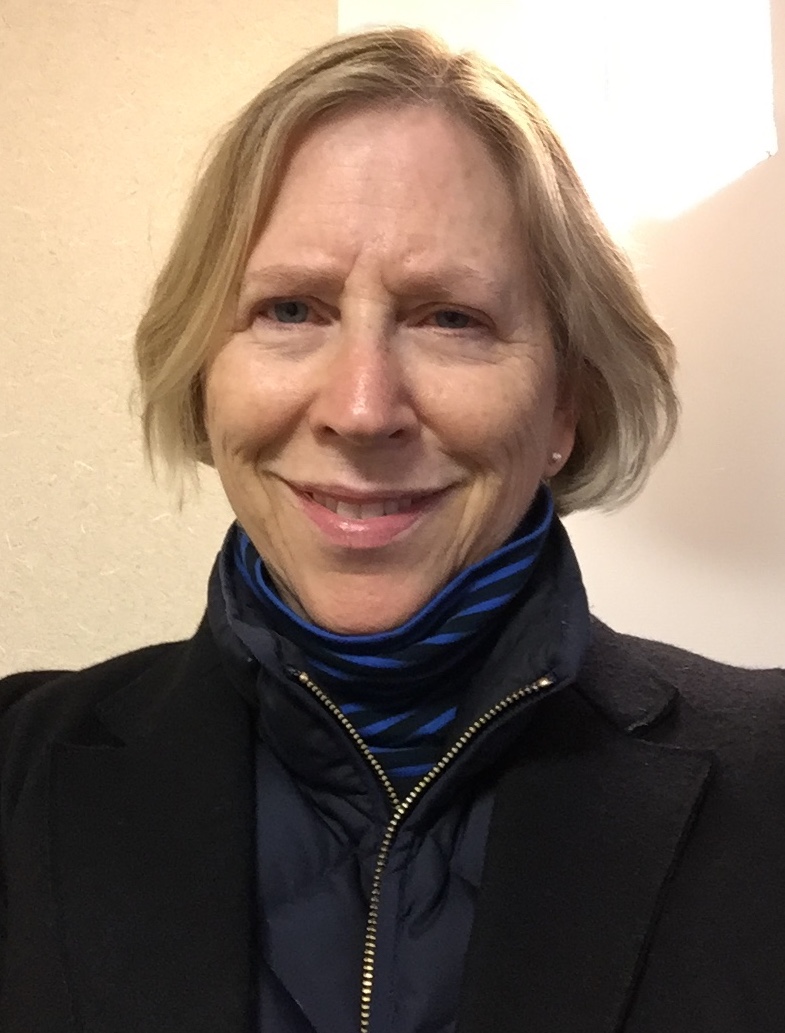
Dr. Iqbal Husain is the Director of the FREEDM Center and an ABB Distinguished Professor in the Department of Electrical and Computer Engineering at North Carolina State University. Previously, he served at the University of Akron for 17 years before joining NC State. He holds a Ph.D. (1993), M.S. (1989), and B.S. (1987) in Electrical Engineering from Texas A&M University and Bangladesh University of Engineering and Technology, respectively. His research focuses on power electronics, electric drives, and renewable energy systems, with applications in transportation, automotive, and aerospace. Notable contributions include advancements in electric machine design, inverter controls, and grid synchronization. He authored the textbook *Electric and Hybrid Vehicles: Design Fundamentals*, now in its third edition. Dr. Husain’s awards include the NSF CAREER Award (1997), SAE Vincent Bendix Award (2006), and IEEE Fellow (2009). His recent work includes developing AI-enabled tools for power grid cybersecurity and medium-voltage solid-state transformers for EV fast charging. He leads interdisciplinary projects at the FREEDM Systems Center, addressing challenges in clean energy and smart grid technologies.
Hélène Charlery is a Lecturer in Anglophone Studies at the Université Toulouse - Jean Jaurès, affiliated with the Center for Anglophone Studies (CAS). She has held this academic position since 2008 and is actively engaged in research and scholarly activities. Her primary research interests center on intersectionality in American cinema and series , with a specific focus on Black American female directors and the representation of African American women in film and media. Her work critically examines the intersections of race, gender, and sexuality in visual narratives. Her recent publications, including the 2024 journal issue Mainstreaming Intersectionality in Contemporary Cinema and Television which she co-edited, and articles on films by Dee Rees, Ava DuVernay, and Jordan Peele, demonstrate a consistent and evolving scholarly trajectory. Her research analyzes how contemporary films and television series negotiate complex social identities and political themes, particularly through the lens of Black feminism. Scientific Responsibilities Co-Secretary of the Society for the History of Women in the Americas (SHAW) Thesis Supervision Co-supervised the doctoral thesis of Mikael Toulza on Voodoo in North American audiovisual fiction. She has presented her research at numerous international conferences, contributing to academic discourse on gender, race, and representation in the English-speaking world.
Prof. Dr. Ute Fendler holds the Chair of Romance Literature and Comparative Studies with Special Emphasis on Africa at the University of Bayreuth. Her academic journey includes a 2006 Habilitation and 1992 PhD from Saarland University, with research spanning Francophone African literatures , intermedial phenomena , and postcolonial cinematic analysis . She coordinates the Bayreuth Academy of Advanced African Studies as Vice-Director and serves on multiple editorial boards. 2006-Present: Professor at University of Bayreuth 2011-2015: Director of Institute for African Studies 2015-Present: Vice-Director of Bayreuth Academy of Advanced African Studies Her research interrogates urban ecotonal spaces through African music videos, transnational cinematic flows in African and Afro-Asian contexts, and mediated memory practices . Recent publications explore post-apocalyptic storytelling and decolonial aesthetics in music videos and films. Scientific contributions include: 2025: Staging Atmosphere: Urban Ecotonal Spaces in African Music Videos (Brill) 2024: Co-edited Asia-Africa: Multifaceted Engagement (Palgrave Macmillan) 2022: Animating the Future: Superheroes in Africa (Brill) 2020: Ghosts as Mediators: Memory and Hauntology (iwalewabooks) 2019: K-Pop Fandom in Germany (Korea University Press) She received the Faculty Enrichment Award from the Canadian Embassy in 2005 and serves on multiple academic committees including the University Library Commission (2007-2016).
Daniele Ielmini is a Professor at the Department of Electronics, Information and Bioengineering at Politecnico di Milano, Italy, where he leads research in non-volatile memory technologies and neuromorphic computing. He received his Laurea (with merit) and Ph.D. in Nuclear Engineering from Politecnico di Milano in 1995 and 2000, respectively, and has held visiting positions at Intel Corporation (2006), Stanford University (2006), and the University of Illinois at Urbana-Champaign (2010). His research focuses on the modeling and characterization of non-volatile memories, including nanocrystal memory, charge trap memory, phase change memory (PCM), resistive switching memory (RRAM), and spin-transfer torque magnetic memory (STT-MRAM). He has co-edited the book 'Resistive switching – from fundamental redox-processes to device applications' and published over 300 papers with more than 10,000 citations and an H-index of 69 (Scopus, September 2023). Prof. Ielmini's recent publications demonstrate a strong trend toward in-memory computing and neuromorphic applications, with particular emphasis on closed-loop analog computing architectures, reservoir computing with 2D materials, and hardware security implementations using emerging memory technologies. His work bridges fundamental device physics with practical computing applications, especially for energy-efficient AI acceleration. Intel Outstanding Researcher Award (2013) ERC Consolidator Grant (2014) IEEE-EDS Paul Rappaport Award (2015) Fellow of the IEEE Prof. Ielmini leads multiple ERC-funded projects including SHANNON (Secure Hardware with Advanced Nonvolatile memories), NEURO2D (neuromorphic systems based on reservoir computing in MoS2), and ANIMATE (closed-loop in-memory computing). His research group includes post-doctoral researchers, PhD students, and M.Sc. students working on various aspects of emerging memory technologies and their applications. He serves as Associate Editor for IEEE Trans. Nanotechnology and Semiconductor Science and Technology (IOP), and has served in several Technical Subcommittees of international conferences including IEEE-IEDM, IEEE-IRPS, and IEEE-ISCAS. His laboratory at Politecnico di Milano is equipped with advanced semiconductor device testing equipment including probe-stations, semiconductor parameter analyzers, high-speed waveform generators, and other specialized instruments for nano-electronic research. The lab collaborates with major semiconductor companies including Micron Technology Inc. and STMicroelectronics, as well as participating in national and international research projects.
William Anderson is a Professor in the School of Aeronautics and Astronautics at Purdue University since 2001. He holds a Ph.D. in Mechanical Engineering (Pennsylvania State University, 1996), M.S. in Chemical Engineering (University of Arizona, 1984), and B.S. in Chemistry (Arizona State University, 1979). His research focuses on chemical propulsion systems, combustion dynamics, and rocket engine design methodologies. Key research areas include measurement and modeling of combustion instabilities, rocket combustor stability, and liquid propulsion systems. His work spans experimental and computational studies of thermoacoustic behavior, injector design, and hypergolic reaction mechanisms. He has led projects on resonance igniters, hydrogen peroxide/kerosene combustors, and multi-fidelity modeling frameworks. Anderson has been recognized with the C.T. Sun Research Award (2005) and multiple Best Paper Awards from AIAA conferences. He served as Global Engineering Program Director (2011–2014) and is an Associate Fellow of AIAA. His expertise is showcased in invited lectures at institutions worldwide, including Technical University of Munich and Harbin Institute of Technology. He has authored/co-authored books on rocket propulsion and combustion instability, including Rocket Propulsion (Cambridge University Press, 2018) and edited volumes such as Liquid Rocket Engine Combustion Instability (AIAA, 1995). His lab collaborates internationally on advanced propulsion technologies, emphasizing design, build, and test methodologies.
Jeffrey Ruoff is an Associate Professor of Film and Media Studies at Dartmouth College. His research focuses on documentary filmmaking, film festivals, and North African cinema. He authored Telluride in the Film Festival Galaxy (2016) and edited works on film programming and travel cinema. Ruoff teaches documentary production, video mashups, and courses on New Waves in Film. His films, including the 2012 documentary Still Moving: Pilobolus at Forty , explore dance and cultural history. He holds a B.A. from Cornell University, an M.F.A. from Temple University, and a Ph.D. from the University of Iowa. In 2015-16, he participated in the OpEd Public Voices Fellowship. Ruoff’s writing appears in academic journals and popular outlets like The Huffington Post and Fortune .
Harald Zapf is a Senior Lecturer in the Department of English and American Studies at Friedrich-Alexander University Erlangen-Nürnberg (FAU), specializing in American literature and cultural studies. Affiliated with the Faculty of Philosophy and Theology, he focuses on postcolonial theory, hybridity, and multiculturalism in the Americas. 2002 Lilli Bechmann Rahn Doctoral Prize 2001 Bavarian American Academy Dissertation Prize His research explores intersections of ethnicity, language, and performance in contemporary American poetry, particularly in multilingual and transnational contexts. He has collaborated extensively with Wolfgang Binder and Klaus Lösch on publications examining cultural encounters and hybrid identities. Zapf’s publications span monographs, edited volumes, and critical articles, with a strong emphasis on authors like Ishmael Reed and theoretical frameworks such as rooted cosmopolitanism and deconstruction. His work bridges literary analysis with sociocultural and philosophical discourses.
David Burn is a Professor and Program Director of the POC Archeologie, Kunstwetenschappen en Musicologie (AKM) at the Faculty of Arts, KU Leuven. His research focuses on Heinrich Isaac and Renaissance musicology, with specializations in polyphony, liturgical chant, and source-critical studies. He leads multiple projects on medieval and Renaissance courtly song, Jesuit musical heritage, and multilingualism in early song. Burn supervises doctoral research and teaches courses on music history, analysis, and digital musicology. His editorial work includes co-editing the Journal of the Alamire Foundation . Research Interests: Polyphony, liturgical music, 15th–16th century Imperial lands, source studies, early music analysis. Teaching: Courses include 'Analysis in Context: Music to 1750', 'Music of the Middle Ages and Renaissance', and 'Research Colloquia in Musicology'. Projects: Promoting studies on Trouvère music, Jesuit musical inheritance, and Scottish polyphony. He actively contributes to academic conferences and publishes on topics like Czech National Library manuscripts and Low Countries musical traditions.
Henry F. (Hank) Korth is a Professor of Computer Science and Engineering at Lehigh University, with a courtesy appointment in the Department of Decision and Technology Analytics in the College of Business. He serves as Director of the Blockchain Lab in the Center for Financial Services and Co-Director of the Computer Science and Business Program. Korth is a Fellow of the ACM and IEEE, and a recipient of the VLDB 10-Year Award and Bell Labs President's Silver Award for contributions to database technologies. PhD in Computer Science from Princeton University MA, MSE in Computer Science from Princeton University BA in Mathematics from Williams College Korth's research spans database systems, blockchain systems, distributed systems, and real-time systems. He has pioneered transaction management in parallel and distributed systems, query processing, and the impact of modern computing architectures on database performance. His recent work focuses on blockchain applications in enterprise databases, including acceleration of zero-knowledge proofs, benchmarking frameworks, central-bank digital currencies, and private-yet-provable accounting systems. His contributions are rooted in both theoretical advancements and practical implementations, such as the QTM™ aggregation engine and the DataBlitz™ main-memory storage manager. Scientific awards include: ACM Fellow IEEE Fellow 10-Year Award at the VLDB Conference Bell Labs President's Silver Award Korth actively supervises research within the Blockchain Lab and is affiliated with the Scalable Software Systems Research Group at Lehigh. His scholarly output reflects a deep engagement with blockchain benchmarking, concurrency control, verifiable databases, and the evolution of database systems in response to technological shifts.
Dong Hoon Kim is an Associate Professor in the Cinema Studies department at the University of Oregon's College of Arts and Sciences . His work bridges media history and cultural studies, focusing on the ideological and visual frameworks of cinema in East Asia and beyond. Research Interests: His scholarship critically examines colonial cinema , socialist cinema , transnational media flows , and the intersection of media spectatorship with national identity. His studies span East Asian film, media, and popular culture, emphasizing historical and discursive formations. University of Oregon | Cinema Studies Email: donghoon@uoregon.edu Office Hours: Mondays 12-1:30p.m., Winter 25 Key Publications: Kim authored Eclipsed Cinema: The Film Culture of Colonial Korea (2017) and co-edited The Bloomsbury Handbook of North Korean Cinema (2025). His articles explore topics like socialist star-making in North Korea, transcolonial benshi practices, and the global impact of South Korea's Parasite . Teaching: Courses include Introduction to Korean Cinema , Studio Ghibli Animation , and seminars on Japanese New Wave cinema, transnational film genres, and violence in Korean cinema. He emphasizes interdisciplinary approaches to East Asian cultures.
Greg W. Marshall serves as the Charles Harwood Professor of Marketing and Strategy at Rollins College, with an extensive publication record cited over 11,600 times. His academic career spans more than two decades with continued scholarly output through 2020. Dr. Marshall's research focuses primarily on sales force management, workplace isolation among field sales professionals, and the impact of technological advancements on selling environments. His work examines critical issues such as sales strategy development, organizational commitment among salespeople, and the evolution of traditional sales methodologies in digital contexts. He has made significant contributions to understanding how virtual work arrangements affect sales performance and employee engagement. His publication trends reveal a consistent focus on sales management with increasing attention to technology's role in selling processes. Early work examined foundational sales concepts like the seven steps of selling, while more recent research investigates social media's impact on sales environments and the psychological effects of workplace isolation in virtual sales teams. Co-author of the 13th edition of Sales Force Management (2020), considered a contemporary classic in the field Extensive research on workplace isolation and its effects on sales performance Pioneering work on technology adoption in sales force environments Marshall has collaborated extensively with leading scholars in sales research including Mark Johnston, William Moncrief, and Juan Pablo Mulki. His research has practical implications for sales organizations navigating digital transformation and virtual work arrangements, with applications across multiple industries that rely on field sales forces.
Katherine Saltzman-Li is an Associate Professor at the University of California, Santa Barbara (UCSB), affiliated with the Department of East Asian Languages & Cultural Studies, the Program in Comparative Literature, and the Department of Theater and Dance. Her research focuses on Japanese performing arts, particularly Kabuki theater, Japanese literature, and folklore. She holds a Ph.D. from Stanford University. Her work examines Edo-period Kabuki playwriting through studies of rare treatises like Kezairoku , interactions among Edo artists, and adaptations of puppet theater into Kabuki. She co-edited Cultural Imprints: War and Memory in the Samurai Age (2022) and Realisms in East Asian Performance (2023), challenging Eurocentric theatrical realism frameworks. She co-curated exhibitions on Japanese theater prints at the Santa Barbara Museum of Art and directs the Japanese Performing Arts Research Consortium (JPARC). Her teaching spans Japanese literature, folklore, and performance studies, including courses on traditional theater, comparative drama, and digital humanities applications in theater research.
Michael Felsberg is a Professor and Head of Division at the Department of Electrical Engineering (ISY) at Linköping University, leading the Computer Vision Laboratory (CVL). His research focuses on artificial visual systems (AVS), including 3D computer vision, computational imaging, object tracking, and autonomous systems. He emphasizes HVS-inspired approaches to bridge the gap between human and machine vision capabilities. Notable achievements include over 20,000 citations (h-index 47), leadership roles in the Wallenberg AI, Autonomous Systems and Software Program (WASP), and recognition as Sweden’s top AI researcher by Vinnova. His work spans academic contributions, industry collaborations, and interdisciplinary projects like climate science applications of machine learning. Positions : WASP Executive Committee Member, WASP Area Cluster Leader for Machine Learning, and Vice-Head of Department (Electrical Engineering). Education : Extensive academic background in electrical engineering and computer vision (details not explicitly stated). Research trends in his articles reflect advancements in autonomous systems, multimodal AI, and robust vision models. His teams address challenges like object tracking, generative models for 3D simulation, and culturally diverse AI systems. Awards : Tracking Challenge Winner (OpenCV, 2015) Best Paper Awards (ICPR 2016, VISAPP 2021) Vinnova’s Highest-Ranked Swedish AI Researcher (2018) He advises numerous PhD students and oversees grants in WASP-funded initiatives. CVL collaborates on projects like disaster-response robotics and Berzelius supercomputer utilization for AI.
Patrick Finglass is the Henry Overton Wills Professor of Greek at the University of Bristol, leading the Department of Classics & Ancient History. He holds academic memberships in the Academia Europaea and Niedersächsische Akademie der Wissenschaften zu Göttingen. His research focuses on ancient Greek literature, particularly lyric poetry and tragedy, with notable expertise in Sophocles, Euripides, Pindar, Sappho, and Alcaeus. Education: MA, DPhil (Oxford). Prior roles include Professor of Greek and Head of Department at the University of Nottingham, and Director of the AHRC South West and Wales Doctoral Training Partnership. He served as a Leverhulme Major Research Fellow (2020–2023) and was a visiting scholar at the Institute for Advanced Study, Princeton. Research highlights include a 2024 monograph on Euripides’ lost plays and ongoing critical editions of Sappho and Alcaeus. He has published over 170 works, including editions of Sophocles’ plays and co-edited volumes on Sappho and Stesichorus. Awards include the Philip Leverhulme Prize (2012) and Rudolf Meimberg Preis (2019). Teaching and supervision: Advised 8 PhD students as principal supervisor. Taught courses on Archaic Greece, Sappho’s poetry, and Greek tragedy. Editorial roles include editorship of Classical Quarterly and advisory boards for major classical publications.
Terence Lee Robinson is a Professor at Cornell AgriTech , affiliated with the School of Integrative Plant Science and Horticulture Section . His work focuses on applied fruit crop physiology to enhance global fruit production. Education : PhD in Horticulture (1984) and MS in Horticulture (1982) from Washington State University; BS in Plant Science (1978) from Brigham Young University. Research Interests center on solving practical fruit production challenges through orchard systems analysis , rootstock evaluation , and crop load management . His field-oriented studies integrate biological and economic assessments of orchard performance. Recent Publications highlight his expertise in apple rootstock testing , chemical thinning , and nutrient management , with global implications for improving fruit quality and orchard productivity under diverse conditions. Scientific Honors : Elected Fellow, American Society for Horticultural Science (2021) Wilder Medal, American Pomological Society (2021) International Fruit Tree Association Hall of Fame (2015) Extension Leadership includes fostering collaborations between Cornell, Michigan State University, and Ontario Canada extension teams, while editing the NY Fruit Quarterly to disseminate research findings.