Mohammad Sadoghi is a Professor in the Department of Computer Science at University of California, Davis, where he leads the Exploratory Systems Lab. His research spans database systems, distributed computing, and blockchain technologies with over 54 publications from 2007-2025 and more than 900 citations. His primary research domains include: Distributed database transactions Byzantine fault tolerance Consensus protocols Event processing systems Blockchain applications Database indexing techniques Prof. Sadoghi's publication trajectory shows evolution from foundational work on boolean expression indexing and event processing to cutting-edge research on blockchain consensus mechanisms. His recent work (2023-2025) demonstrates significant contributions to understanding BFT protocols, with publications in top venues like VLDB, EuroSys, and IEEE TKDE. His research bridges theoretical analysis with practical implementations, particularly focusing on performance optimization and security in distributed environments. His notable recognition includes: ACM Senior Member (2020) Prof. Sadoghi has advised multiple doctoral students who have become active researchers in distributed systems, including Suyash Gupta and Thamir M. Qadah. His lab has secured research funding for projects spanning database engines, consensus protocols, and blockchain infrastructure. The Exploratory Systems Lab maintains strong industry and academic collaborations worldwide, with recent work focusing on edge-cloud consensus applications and high-performance data management systems.
Hans-Arno Jacobsen is a Professor at the Faculty of Computer Science (Technische Universität München, TU Munich) and affiliated with the Department of Electrical and Computer Engineering at the University of Toronto. His work spans Computer Science , Distributed Systems , and Artificial Intelligence . Research interests include Blockchain Technology , Consensus Algorithms , Graph Neural Networks , and Quantum Computing . Recent projects focus on decentralized consensus , energy-efficient databases , and federated learning in edge environments. His 15 most recent articles (2024–2025) explore topics such as dynamic resource orchestration , CRDT-based blockchains , and multimodal depression recognition . Collaborates with researchers like Ruben Mayer , Gengrui Zhang , and Shiqiang Wang on systems for federated computing , blockchain benchmarking , and distributed GNN training .
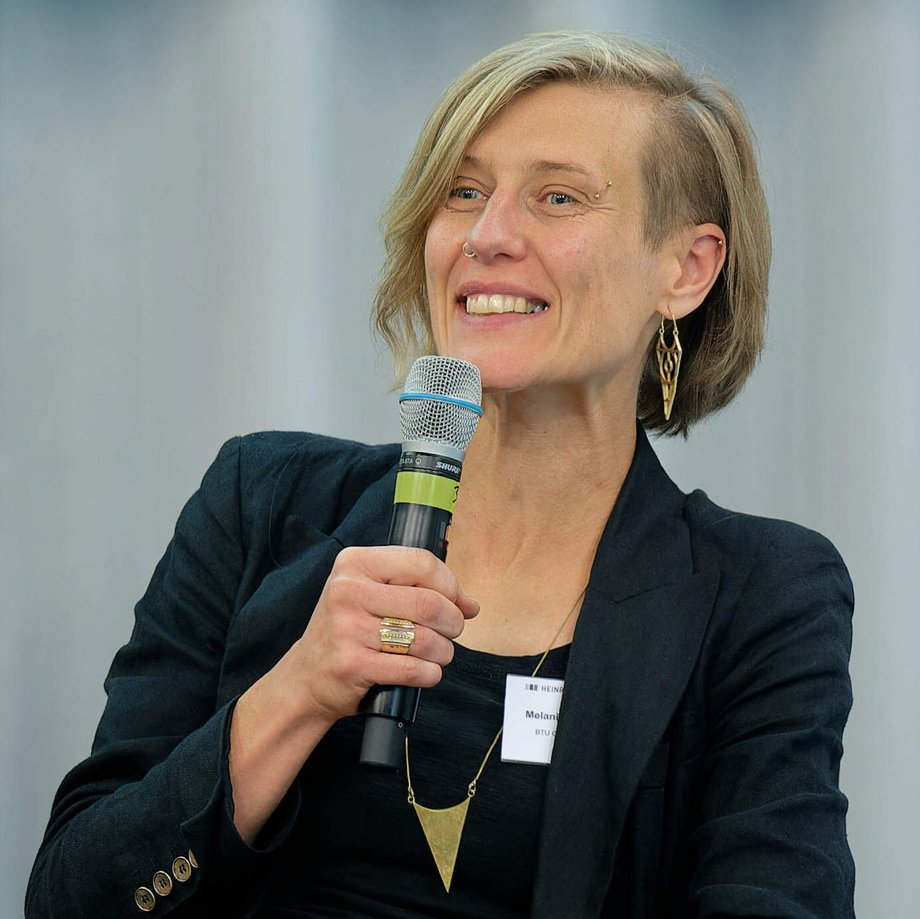
Prof. Dr. Melanie Jaeger-Erben is a Professor of Sociology of Technology and Environmental Engineering at BTU Cottbus-Senftenberg since 2021. Previously, she led the Transdisciplinary Sustainability Research in Electronics group at TU Berlin. Her work focuses on socio-ecological transformations, circular economy, and sustainable consumption practices. She holds affiliations with institutions such as the German Advisory Council on Global Change (WBGU) and the German Federal Environment Agency's Resources Commission. Education: Bachelor/Master in Psychology and Sociology (Universities of Göttingen and Uppsala) Postgraduate in Qualitative Social and Educational Research (Magdeburg, 2009) Doctorate in Sociology (TU Berlin, 2010) Research Interests: Her research explores how societal practices and technological systems can support sustainability transitions. Key areas include circular economy implementation, consumer behavior influencing product longevity, and transdisciplinary methodologies to address socio-ecological challenges. She emphasizes the interplay between material flows, cultural norms, and policy frameworks. Key Roles: Member of the Expert Commission for Germany's Fourth Gender Equality Report Co-leader of the ESYS working group on Energy Transition in Built Environments Board Member at the Institute for Social Innovation (ISInova) Associate Editor of Sociology and Sustainability and GAIA Grants & Labs: Engaged in projects like the Bauwelt 4 Future initiative promoting participatory climate action. Active in citizen science projects analyzing emissions and repair practices. Collaborates with the Circular Economy Initiative Germany (CEID) on business model innovations. Labs/Teams: Leads research groups in transdisciplinary sustainability at BTU and co-designs circular society frameworks through multi-stakeholder collaborations.
Witold Andrzejewski is an active researcher in computer science, focusing on data deduplication pipelines, co-location pattern mining, and GPU-accelerated algorithms. His work bridges academia and industry, with publications analyzing customer record deduplication in the financial sector, performance optimization of spatial data processing, and comparative studies of statistical modeling versus machine learning approaches. 2025: Co-location pattern mining with Euclidean metrics 2024: Customer data deduplication parameter tuning 2023: Text similarity measures in financial applications
Muntadher Fadhil Sallal is a researcher affiliated with the University of Portsmouth, Department of Computing and Informatics, United Kingdom. His academic work focuses on blockchain technology, Bitcoin network security, and performance optimization, with additional research interests in e-voting systems utilizing distributed ledger technology. Education: PhD in Computer Science, University of Portsmouth, UK (2018) Research Interests: Dr. Sallal's research primarily investigates the intersection of blockchain technology and network security, with a specific focus on Bitcoin network architecture and performance metrics. He explores methods to enhance propagation delay through clustering strategies and node protocol analysis. Additionally, his work extends to implementing blockchain-based solutions for secure e-voting systems with verifiability features, as well as innovative applications in 6G network spectrum management and industrial autonomous robot security. Publication Trends: His publications demonstrate expertise in blockchain performance analysis, with 15 recent works examining network optimization, security frameworks for decentralized systems, and verifiable voting mechanisms. Key research areas include cryptocurrency network topology, latency reduction in peer-to-peer systems, and blockchain-based infrastructure for secure digital processes.
Aad P. A. van Moorsel is a faculty member at the School of Computing Science, University of Newcastle , with a focus on blockchain technology, cybersecurity, and privacy-preserving machine learning systems. His work bridges theoretical analysis with practical implementations in decentralized systems and financial technologies. Research Interests : Blockchain systems, smart contract security, federated learning, verifiable fairness in AI, and privacy-preserving technologies. Key Contributions : Development of the BlockSim simulation framework for blockchain, quantitative analysis of Ethereum's verifier dilemma, and frameworks for fairness-as-a-service in machine learning. Collaborations : Regularly works with researchers in cybersecurity (e.g., Mhairi Aitken, Ehsan Toreini), financial technology (e.g., Karen Elliott, Kovila Coopamootoo), and distributed systems (e.g., Han Wu, Lydia Chen). Publications : Over 170 works since 1992, with recent emphasis on blockchain scalability, AI ethics, and secure financial services. Tools : Co-designed OpBench for Ethereum opcode benchmarking and ADaCS for analyzing data collection strategies in security contexts.
Carlo Curino is a researcher at Microsoft Research , focusing on database systems, cloud computing, and machine learning integration. He has collaborated extensively with institutions including MIT, Microsoft, and the University of Wisconsin-Madison. His research spans Geo-distributed data analytics Automated configuration tuning Tensor-based database systems Data lake optimization Spark performance engineering Recent publications highlight his work on AI-driven systems like MotherNet and Rockhopper , alongside contributions to query processing over compressed data and log-structured tables. Collaborators include prominent figures such as Raghu Ramakrishnan and Jesús Camacho-Rodríguez . Key projects involve LST-Bench (cloud storage benchmarking), AutoComp (data compaction), and PyFroid (commodity workstation analytics). His work bridges database optimization with modern machine learning demands in enterprise environments.
Floriano Scioscia is a researcher at the Polytechnic University of Bari, Department of Electrical Engineering and Information Technology, with extensive contributions to the Semantic Web, Internet of Things, and knowledge-based systems. His work focuses on developing frameworks for semantic reasoning, resource discovery, and intelligent systems in ubiquitous computing environments. His research interests span multiple domains within computer science: Semantic Web technologies and ontology reasoning Internet of Things and Cyber-Physical Systems Cloud-Edge computing architectures Knowledge representation and semantic matchmaker systems Mobile and ubiquitous computing applications Analysis of his recent publications (2023-2025) reveals a strong focus on edge-based semantic reasoning, with significant work on the Tiny-ME and Cowl frameworks for lightweight OWL reasoning on resource-constrained devices. His research has increasingly incorporated blockchain technologies into IoT systems and explored the concept of "Internet of Conscious Things" with social capabilities for smart objects. The interdisciplinary nature of his work bridges computer science with healthcare applications, particularly in clinical decision support systems. Dr. Scioscia has collaborated extensively with researchers including Michele Ruta, Eugenio Di Sciascio, Giuseppe Loseto, and Filippo Gramegna across numerous projects spanning more than 15 years of research output.
Dr. Charlotte Debus serves as a junior research group leader at the Scientific Computing Center (SCC) of Karlsruhe Institute of Technology (KIT), directing her independently funded research group since 2022. Her work pioneers sustainable artificial intelligence through robustness optimization, energy efficiency improvements, and carbon footprint reduction in large-scale AI systems. Her academic foundation includes a physics degree and doctoral research focused on AI methods for medical imaging. Prior to leading her KIT group, she contributed to the Helmholtz AI program as an AI consultant, advising researchers across the Helmholtz Association on AI implementation strategies. Dr. Debus's research integrates high-performance computing (HPC) principles into AI training workflows to eliminate computational bottlenecks. She demonstrates how synchronizing data loading, forward/backward computation, and network communication across CPU/GPU architectures minimizes idle time and energy waste. Her meteorology case study proves 2D AI architectures achieve weather forecasting accuracy comparable to 3D models while drastically reducing training time and resource consumption—revealing data processing speed and volume as critical efficiency factors beyond dimensional structure. Funded by the German Federal Ministry of Education and Research, her group develops transparent benchmarking frameworks for AI energy consumption metrics. She actively advocates for industry-wide adoption of these standards to convert computational energy use into tangible CO2 emissions data, driving environmentally responsible AI development practices across research and industry sectors.
Prof. Dr.-Ing. Ulrich Rückert is a Professor at the Faculty of Engineering of the University of Bielefeld , where he leads the Cognitronics & Sensor Technology Group and participates in CITEC (Center for Cognitive Interaction Technology). He serves as Vice Rector for Digitalization and Data Infrastructure , driving university-level digital transformation initiatives. Research Focus : Neuromorphic computing, spiking neural networks (SNNs), embedded systems, robotics, UWB localization, and reconfigurable hardware. Projects : Leading federal and EU-funded initiatives like eProcessor (RISC-V multi-core systems), VEDLIoT (efficient deep learning in IoT), and Al4DG (AI in distribution grid control). Teaching & Leadership : Academic advisor for the Master in Biomechatronics , chairs examination boards, and leads the Library Commission . His work integrates neuromorphic hardware with edge computing and real-time systems , supported by grants from the European Union and German Federal Government . Recent publications analyze FPGA-based SNNs , UWB localization , and resource-efficient embedded architectures . Scientific Contributions : Over 200 publications in robotics, neural networks, and hardware-software co-design. Notable collaborations with institutions in Germany, Switzerland, and Italy.
Prof. Dr. Matthias Tichy is a Full Professor and head of the Institute of Software Engineering and Programming Languages at Ulm University, Germany, since 2015. His research focuses on domain-specific languages (DSLs), model-driven engineering (MDE), self-adaptive software , and cyber-physical systems , with an emphasis on safety-critical applications and graph transformation formalisms. He employs empirical research methods to evaluate technical contributions and human factors in software engineering. University: Ulm University Role: Professor & Institute Head Research Interests span domain-specific languages for mechatronic systems, collaborative modeling , performance prediction in model transformations, and software evolution in industrial contexts. His work often bridges graph transformations and safety assurance for self-adaptive systems. Recent Publications highlight trends in model versioning (e.g., operation-based caching), DSL design (e.g., flowR for R code analysis), and automotive software testing (e.g., clustering test case specifications). He frequently collaborates with international institutions on topics like cyber-physical systems and IoT resilience . Key Collaborations include projects with Chalmers University, University of Gothenburg, and industrial partners like dSPACE GmbH. His grants and industry partnerships focus on automotive software , robotics , and self-healing systems .
PD Dr. Florian Frank is Privatdozent (senior lecturer with full teaching licence) for Applied Mathematics at Friedrich-Alexander-Universität Erlangen-Nürnberg (FAU) and heads the Bavarian research project „Parallel mesh loading and partitioning for large-scale simulation“ . His expertise spans high-performance computing, phase-field and discontinuous Galerkin methods, digital-rock physics, and reactive transport in porous media. Education & career 2022 – Venia legendi (private lecturer), Mathematics, FAU 2019 – Dr. habil., Mathematics, FAU 2013 – Dr. rer. nat., Applied Mathematics, FAU 2008 – Graduate Mathematician, University of Frankfurt 2021-2022 (acting) W2 Professor Scientific Computing, FAU 2018-2021 (acting) W2 Professor Mathematical Modelling, FAU 2017-2018 Senior Postdoc, CAAM, Rice University, USA 2014-2017 Postdoc, CAAM, Rice University, USA Research interests Frank focuses on the development and analysis of numerical schemes for partial differential equations that govern multiphase, multicomponent and reactive processes in porous or biological media. Key themes include discontinuous Galerkin and finite-volume methods , physics-preserving discretizations , high-performance computing , and digital-rock-based pore-scale simulations . He couples phase-field approaches with (Navier–)Stokes, Cahn–Hilliard, Nernst–Planck and density-gradient equations to quantify flow, transport, colloid dynamics and interfacial phenomena. Recent publications reveal a clear trend toward data-driven modelling : convolutional neural networks are trained with direct numerical simulation data to predict permeability and diffusion coefficients from 3-D micro-CT images, while advanced preconditioners and regularization techniques accelerate multiphase thermodynamic computations. Awards & recognition 2020 – Emmy-Noether-Prize der Naturwissenschaftlichen Fakultät, FAU 2017 – Promotion to Senior Postdoctoral Research Associate , George R. Brown School of Engineering, Rice University Projects, tools & supervision Frank currently leads a Bavarian state-funded project on parallel mesh handling for large-scale simulations. Together with collaborators he maintains the open-source MATLAB/GNU Octave toolbox FESTUNG for discontinuous Galerkin methods. Since 2018 he has (co-)supervised ten BSc and MSc theses on topics ranging from Stokes preconditioning to enriched Galerkin shallow-water solvers, regularly serves as reviewer for more than a dozen international journals, and is guest editor of special issues in Computational Geosciences and Oil & Gas Science and Technology .
Professor Matthias Braun is a distinguished academic in the field of physical geography, specializing in remote sensing and GIS applications for glaciology and polar research. He holds a professorship at the Institute of Geography at Friedrich-Alexander University Erlangen-Nuremberg (FAU), where he leads the Chair of Geography (Remote Sensing and GIS) and serves as Chairman of the Examination Board for B.Sc./M.Sc. Physical Geography and BA/MA Cultural Geography since 2022. His research focuses on monitoring glacier dynamics, ice sheet changes, and climate impacts in polar and mountainous regions using advanced remote sensing techniques. Professor Braun has held several significant leadership positions including Chairman of the International Doctoral Program 'Measuring and Modelling Mountain Glaciers in a Changing Climate' in the Bavarian Elite Network funded by the Bavarian Ministry of Science & Art since 2022, and Coordinator of the DFG SPP Antarctic Research since 2017. His academic journey includes an Associate Professor position at the University of Alaska Fairbanks (2010-2011) and extensive field experience leading multiple Arctic and Antarctic expeditions since 1994/95, with research stays in Alaska, South America, West & East Africa, Himalaya & Karakorum. His research interests span glaciology, remote sensing, geographic information systems, climate change impacts, land use change, polar regions, and high mountain environments. Professor Braun's work integrates microwave and optical remote sensing data from satellite and airborne platforms to derive geobiophysical parameters and their spatiotemporal variations. He employs advanced digital image processing, pattern recognition, SAR interferometry, and polarimetry techniques in his research. His laboratory maintains active participation in major research initiatives including the TanDEM-X and TanDEM-L Science Teams since 2010. Professor Braun's extensive publication record demonstrates a clear progression from foundational work on glacier monitoring to sophisticated applications of machine learning and deep learning for glacier feature extraction. His recent work focuses on calving front detection using SAR imagery, glacier velocity mapping, and integration of multi-sensor data for comprehensive glaciological analysis. Key research themes include glacier mass balance, ice sheet dynamics, supraglacial hydrology, and climate change impacts on cryospheric systems across diverse regions including Antarctica, Patagonia, the Himalayas, and the European Alps. Among his notable recognitions is the 2009 Science Award for Physical Geography from the Prof. Dr. Frithjof Voss Foundation for Geography and his Habilitation at the Mathematical-Natural Science Faculty of the University of Bonn in 2009. He serves as an Associate Editor for Frontiers in Earth Sciences – Cryospheric Sciences and reviews for numerous peer-reviewed journals. Professor Braun has mentored numerous doctoral students to completion, with recent graduates including Dr. Christian Sommer (2022), Dr. David Farias Barahona (2021), Dr. Stefan Lippl-Seifert (2020), and Dr. Peter Friedl (2019). Several students are currently completing their dissertations under his supervision. His research is supported by various funding mechanisms including the Bavarian Elite Network, DFG research programs, and international collaborations. He maintains strong connections with national and international research institutions including membership in the International Glaciological Society (IGS), German Society for Photogrammetry, Remote Sensing and Geoinformation (DGPF), German Society for Polar Research (DGP), and German Society for Geography (DGfG).
Prof. Dr. Dr. Ann-Kristin Achleitner holds the Chair of Entrepreneurial Finance at the Technical University of Munich's Department of Economics. Her research focuses on entrepreneurial finance, venture capital, private equity, corporate restructuring, and international accounting standards. She has authored over 15 books including Handbook of Investment Banking and Venture Valuation , and edited specialized volumes like the Yearbook Entrepreneurship series. Her research explores capital market communication, start-up valuation methodologies, private equity dynamics in family businesses, and corporate restructuring strategies. She maintains strong industry connections through case studies on venture financing and regularly contributes to policy discussions on SME financing through publications in academic and business media. She directs the Center for Entrepreneurial and Financial Studies (CEFS), producing working papers on venture capital risk management and entrepreneurial finance. Her work bridges academic research and practical applications in corporate finance.
Jörg Freiling is a Professor at the University of Bremen, affiliated with the Faculty of Economics and the SCOUT Institute for Strategic Competence Management. His research focuses on strategic competence management, entrepreneurship theory, SME management, business start-ups, strategic management, and service management. He leads the LEMEX Chair for Small Business, Entrepreneurship, and Start-up Management. His research explores theoretical and practical aspects of competence-based strategies in dynamic business environments. Key themes include resource orchestration, internationalization processes, service innovation, and entrepreneurial marketing. His work integrates evolutionary economics, systems dynamics, and network theory to analyze competitive advantage. Freiling's publications (2002-2006) predominantly address competence-based management frameworks, international business strategies, and service innovation. Recent articles emphasize empirical validation of theoretical models, cross-border expansion challenges, and dynamic capabilities in SMEs. He directs the LEMEX research group, focusing on entrepreneurial processes and SME competitiveness. No awards or grants are documented in this text.