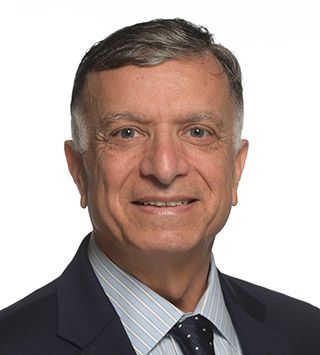
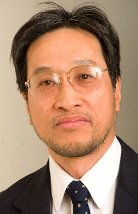
Prof. Muhittin Eren Uçkan is a Professor in the Department of Civil Engineering at Rafet Kayış Faculty of Engineering. His work focuses on earthquake engineering, structural dynamics, and seismic performance of infrastructure systems. Education: MS in Civil Engineering (1987) from Middle East Technical University, PhD in Earthquake Engineering (1994) from Boğaziçi University Key Research Areas: Seismic response of pipelines, soil-structure interaction, base isolation systems, and infrastructure resilience His recent publications analyze post-earthquake performance of transmission pipelines (2024 Kahramanmaras), liquid storage tanks (2023), and buried steel pipes (2016–2019). Studies emphasize fault crossing effects , sloshing damping , and seismic risk frameworks . Administrative roles include Vice Dean at Gebze Institute of High Technology (1998), Head of Department (1995–1998), and Commission Presidency at Alanya Aladdin Keykubat University (2020).
Dr. Marina Bock is a Chartered Civil Engineer and Lecturer in Civil Engineering at Aston University's College of Engineering and Physical Sciences. She specializes in structural engineering with expertise in metallic structures, additive manufacturing, and numerical modeling. Currently accepting PhD students, her work bridges academic research and industry applications in sustainable construction. Her educational background includes: PG Cert in Building and Design and Construction Technology, University of Wolverhampton (2017-2018) PhD in Local Buckling and Web Crippling Response of Stainless Steels, Universitat Politècnica de Catalunya (2010-2015) MSc in Patch Loading of Hybrid Plate Girders, Universitat Politècnica de Catalunya (2004-2010) Dr. Bock's research integrates laboratory experiments and numerical modeling to advance metallic structural systems, with pioneering work in additive manufacturing for construction. Her investigations span stainless steel design code development, corrosion prevention in reinforced concrete using hydrogels, and cold-formed steel behavior. Recent projects focus on sustainable infrastructure solutions through novel composite materials. Analysis of her 2022-2025 publications reveals dominant themes in additive manufactured aluminum structures, cold-formed steel design methodologies, and sustainable paving materials for urban heat island mitigation. Her work consistently addresses practical engineering challenges through experimental validation and code-compliant design solutions. Scientific recognition includes: IStructE Academic Research Award Commendation (2021) for research on aluminum SHS/RHS under biaxial bending Dr. Bock has secured significant research funding including a Royal Society Research Grant (£20k, 2023) for additive manufactured Al7075 aluminum and Innovate UK funding (£437k) for UV-reflective resin-based paving. Previous internal projects (£20k) focused on structural aluminum applications. She supervises PhD research in additive manufacturing and corrosion prevention while maintaining industry collaborations. Her experimental work utilizes advanced university laboratories for structural testing, with collaborations spanning European research consortia and industrial partners. Current projects involve multi-institutional teams developing reusable structural systems and solar-energy-harvesting building envelopes.
Shideh Dashti is a Professor and Associate Chair for Administration in Geotechnical Engineering & Geomechanics at the University of Colorado Boulder's Department of Civil, Environmental, and Architectural Engineering within the College of Engineering and Applied Sciences. She holds a PhD (2009) and MS (2005) from UC Berkeley and a BS (2004) from Cornell University where she graduated Magna cum Laude. Dr. Dashti's research focuses on the intersection of geotechnical engineering, infrastructure resilience, and environmental sustainability. Her work spans physical modeling (particularly centrifuge testing), seismic soil-structure interaction, liquefaction mechanisms in urban environments, and the impact of compound hydrologic-seismic hazards on infrastructure. She has pioneered research on the seismic response of underground structures in dense urban settings and performance-based design of liquefaction remediation techniques. Analysis of her recent publications (2021-2025) reveals a strong emphasis on liquefaction mitigation techniques, particularly using dense granular columns and ground densification. Her work increasingly incorporates machine learning approaches and examines the intersection of infrastructure resilience with social equity, as evidenced by her research on environmental vulnerability in incarceration facilities. Her publications predominantly appear in top-tier journals like the ASCE Journal of Geotechnical and GeoEnvironmental Engineering. 2025 Earthquake Engineering Research Institute (EERI) Distinguished Lecture Award 2024 Campus Sustainability Award, CU Boulder 2021 Walter L. Huber Civil Engineering Research Price, ASCE 2015 National Science Foundation Early CAREER Award 2018 Arthur Casagrande Professional Development Award, ASCE Dr. Dashti has received significant research funding including the prestigious NSF CAREER award. She serves as Co-leader and Steering Committee member of GeoEngineering Extreme Event Reconnaissance (GEER), having participated in 8 reconnaissance efforts since 2011 (leading 3). She is also an ISSMGE TC104 committee member and one of two U.S. representatives. Her professional service includes editorial roles, notably as Associate Editor of the Year for the ASCE Journal of Geotechnical Engineering and Geomechanics (2020). As a leader in the field, Dr. Dashti directs research focused on resilient infrastructure with sustainability and equity. She leads the GAANN fellowships in Integrative Reengineering of Infrastructure and is affiliated with the Center for Infrastructure, Energy, and Space Testing. Her work bridges traditional geotechnical engineering with contemporary concerns about social justice and environmental sustainability in infrastructure systems.
Farzin Zareian is a Professor in Civil and Environmental Engineering at the Samueli School of Engineering, University of California, Irvine. His research focuses on performance-based earthquake engineering, collapse analysis, structural reliability, and structural control. Ph.D. in Structural Engineering, Stanford University (2006) M.S. and B.S. in Civil/Earthquake Engineering, Sharif University of Technology (1997, 1995) Zareian's research integrates analytical and experimental approaches to advance earthquake resilience in structural systems. Key areas include base plate connections, seismic response of asymmetric structures, and validation of simulated ground motions. His work with the Performance Based Earthquake Engineering Laboratory emphasizes practical applications in structural safety. Recent publications highlight innovations in column base modeling, seismic demand prediction, and infrastructure recovery frameworks. Notable trends in his 2021–2025 articles include machine learning for ground motion prediction, resettable structural systems, and probabilistic drift profile analysis for multistory buildings.
Jack Baker is the William Alden Campbell and Martha Campbell Professor of Engineering and Associate Dean for Faculty Affairs in the Stanford Doerr School of Sustainability at Stanford University. He is a Professor of Civil & Environmental Engineering with expertise in probabilistic and statistical tools for quantifying and managing disaster risk and resilience. His work has significantly influenced building codes, performance-based engineering guidelines, and catastrophe risk models. Dr. Baker's educational background includes: Ph.D. in Civil & Environmental Engineering from Stanford University (2005) M.A. in Statistics from Stanford University (2004) M.S. in Civil & Environmental Engineering from Stanford University (2002) B.A. in Mathematics/Physics from Whitman College (2000) His research focuses on disaster risk and resilience, particularly in earthquake engineering and seismic hazard analysis. Baker uses probabilistic and statistical approaches to analyze risk in spatially distributed systems, characterize earthquake ground motions, and simulate post-disaster recovery processes. His work bridges theoretical frameworks with practical applications in building codes and risk management strategies. He has made significant contributions to understanding the relationship between ground motion characteristics and structural response, while also expanding into climate-related hazards like atmospheric rivers and their compound effects. His recent publications demonstrate a growing focus on interdisciplinary research that connects engineering with socioeconomic factors in disaster contexts. There's a clear trend toward integrating machine learning techniques with traditional engineering approaches, particularly in modeling household displacement, economic recovery, and flood damage prediction. His work increasingly addresses the human dimension of disasters, examining how physical damage translates to social impacts and recovery timelines. Dr. Baker has received numerous prestigious awards recognizing his contributions to the field: William B. Joyner Lecture Award from the Seismological Society of America and Earthquake Engineering Research Institute (2023) PROSE Awards finalist for Seismic Hazard and Risk Analysis textbook (2022) Thorpe Medal from the European Council on Computing in Construction (2022) Walter L. Huber Civil Engineering Research Prize from the American Society of Civil Engineers (2018) CAREER Award from the National Science Foundation (2010) As an educator and mentor, Baker advises numerous doctoral and master's students while serving as Associate Dean for Faculty Affairs. His research group has secured significant funding for projects related to seismic risk, disaster recovery modeling, and infrastructure resilience. He has directed major initiatives like the Stanford Urban Resilience Initiative and co-founded the Haselton Baker Risk Group, demonstrating strong leadership in translating research into practical applications. Dr. Baker leads the Baker Research Group, which focuses on probabilistic approaches to disaster risk assessment and management. The group maintains active collaborations with government agencies, industry partners, and international research institutions to advance the state of knowledge in earthquake engineering and broader disaster resilience fields. Their work often involves developing innovative computational tools and frameworks that are made publicly available through GitHub repositories.
Yue Li is the Leonard Case Jr. Professor in the Department of Civil and Environmental Engineering at Case Western Reserve University. He specializes in resilient and sustainable infrastructure systems, focusing on structural reliability, probabilistic design, and climate change adaptation. His research addresses risk assessment for infrastructure under extreme events, including earthquakes, hurricanes, and climate impacts. Education: PhD in Civil Engineering, Georgia Institute of Technology, 2005 Research Interests: Dr. Li’s work integrates advanced statistical methods and data-driven approaches to enhance infrastructure resilience. Key areas include: Probabilistic modeling of structural systems Risk-informed decision-making for multi-hazard mitigation Climate change impacts on material durability and performance Asset management and lifecycle cost analysis Notable Contributions: His recent publications emphasize data-driven resilience metrics for water systems and seismic risk assessment for bridges. He has pioneered frameworks for evaluating infrastructure vulnerability under climate change, including corrosion effects and extreme weather adaptation. Awards: ABSE Outstanding Paper Award (2023) Case School of Engineering Teaching Award (2020) Nomination for John S. Diekhoff Award (2019) Leadership Roles: Dr. Li serves as Section Editor for the ASCE Journal of Structural Engineering and chairs multiple technical committees on safety and reliability. He leads initiatives to standardize multi-hazard design practices and resilience evaluation methodologies.
Dr. James F. O'Brien is a Professor of Computer Science at the University of California, Berkeley, affiliated with research centers including the Berkeley Artificial Intelligence Research Lab (BAIR) and the Visual Computing Lab (VCL). His research focuses on computer graphics, animation, physical simulation, and image forensics, with applications in film, gaming, and virtual reality. O'Brien pioneered destruction modeling techniques used in over 200 films and games, earning an Academy Award in 2015. He holds leadership roles in tech companies like Juice Labs and Get Klothed, and has advised on patent litigation cases. Education: PhD in Computer Science (Georgia Tech, 2000), MS (Georgia Tech, 1997), BS (Florida International University, 1992). Research Interests: Computer Animation & Simulation Image/Video Forensics Human Perception of Motion VR/AR Privacy & Motion Data Machine Learning Applications Awards: Recipient of the 2015 Academy Award for Technical Achievement, ACM Distinguished Scientist (2009), and MIT TR-35 Innovator (2004). His work spans over 50,000+ VR user studies and groundbreaking contributions to cloth simulation and destruction modeling. Current Projects: Exploring ethical implications of extended reality (XR) motion data, developing privacy-preserving VR systems, and advancing AI-driven animation techniques.
Dr. Andy Nguyen is a Senior Lecturer in Structural Engineering at the University of Southern Queensland, within the School of Engineering. He is an active researcher and educator, specializing in the Structural Health Monitoring (SHM) of critical civil infrastructure such as bridges, buildings, and transport tunnels. Bachelor of Engineering (BEng), NUCE, 1999 Master of Engineering (MEng), NUCE, 2003 Doctor of Philosophy (PhD), Queensland University of Technology (QUT), 2014 Dr. Nguyen's research is at the forefront of integrating advanced technologies into civil engineering. His primary focus is on developing and deploying sophisticated SHM systems that utilize sensors, data analytics, and machine learning to provide real-time insights into the structural integrity of ageing infrastructure. His work aims to enable proactive maintenance, extend the lifespan of structures, and enhance public safety. He has successfully implemented monitoring systems on major bridges and high-rise buildings in Queensland and New South Wales, with systems capable of even detecting distant earthquake events. His research interests span Structural Health Monitoring, Machine Learning for Engineering, Damage Detection, Finite Element Model Updating, Sustainable Building Materials like bamboo, and the application of AI for automated condition assessment of transport infrastructure. The analysis of his recent publications reveals a strong and consistent research trajectory centered on the application of data-driven and AI methods to solve practical problems in civil infrastructure. His work frequently combines signal processing techniques (like Stockwell Transform) with deep learning models for tasks such as crack detection in concrete and pavement. He also conducts significant research on model updating for complex structures like cable-stayed and arch bridges, using vibration data and optimization algorithms. The integration of machine learning for overload classification and the development of cost-effective, automated monitoring systems are key trends in his recent output. Advanced Queensland Fellow (2024-2027) Dr. Nguyen is actively involved in research supervision and collaboration. He is currently supervising several postgraduate students on projects related to AI-powered condition assessment, bamboo as a sustainable building material, and railway track design. He receives research funding from the Queensland Government through his Advanced Queensland Fellowship. His research has direct practical applications, as evidenced by his public engagement, such as writing for The Conversation on safeguarding ageing bridges, and his work with the Australian Network of Structural Health Monitoring. Dr. Nguyen's work embodies the development of a next-generation 'Living' Laboratory for engineering education, where research, teaching, and real-world infrastructure monitoring are integrated. His current projects involve creating smart, automated fault detection systems and advancing 'digital twin'-based monitoring platforms for infrastructure.
Tracy Becker is an Adjunct Assistant Professor in the Department of Civil Engineering at McMaster University, where she has been since 2014. Her expertise lies in the design, modeling, and experimental testing of high-performance structural systems with a focus on seismic isolation. Education: BS in Structural Engineering, University of California, San Diego MS and PhD in Structural Engineering, Mechanics and Materials, University of California, Berkeley Post-doctoral research at Kyoto University's Disaster Prevention Research Institute Research Interests: Becker specializes in seismic isolation systems, hybrid simulation methods, and structural performance under extreme events. Her work spans bridge engineering, nuclear infrastructure protection, and innovative materials for earthquake resilience. She integrates computational modeling with experimental validation to address challenges in: Nonlinear system behavior in isolated structures Multi-hazard optimization for seismic and wind loads Bridge management using data-driven and fuzzy logic frameworks Advanced gusset plate design for seismic retrofit Adaptive isolation systems for nuclear facilities Probabilistic lifetime demand predictions for infrastructure Teaching: She has instructed courses in Seismic Design (CIVENG 4ED4), Structural Mechanics (CIVENG 2C04), and Earthquake Engineering (CIVENG 730) at McMaster University.
Mohamed Ezzeldin is an Associate Professor in the Department of Civil Engineering at McMaster University. His work integrates structural engineering, seismic resilience, and machine learning for infrastructure risk management. Research Interests: Seismic behavior of reinforced concrete and masonry structures, blast mitigation systems, urban resilience modeling, and AI applications in construction risk prediction. Teaching: Instructor for courses including Structural Mechanics (CIVENG 2C04), Modern Methods of Structural Analysis (CIVENG 4K04), and Seismic Behavior and Design of Reinforced Concrete Systems (CIVENG 716). His publications focus on hybrid simulation testing, data-driven risk assessment, and bio-inspired structural designs. Recent work (2025) includes advancements in seismic analysis of nuclear facilities and urban resilience frameworks.
Kostas Kalfas is an Assistant Professor in the Department of Civil Engineering at the University of Texas at Tyler. He holds a PhD from Southern Methodist University (2023), an M.Sc. from the University of Surrey (2015), and a 5-year Diploma from the National Technical University of Athens (2012). His professional certifications include Engineer in Training (Texas), Chartered Engineer (Institution of Civil Engineers, UK), and Chartered Engineer (Technical Chamber of Greece). His teaching focuses on courses such as CENG 3306 – Mechanics of Materials , CENG 3434: Civil Engineering Materials, Codes and Specifications , and CENG 3325: Structural Analysis . Dr. Kalfas’s research interests center on structural dynamics, seismic isolation systems, and sustainable materials. He investigates topics like pressurized sand dampers, elastomeric bearing performance under combined loading, and the mechanical behavior of civil engineering materials. His work emphasizes practical applications in earthquake engineering and infrastructure resilience. His recent conference contributions include awards for studies on pressurized sand dampers and elastomeric bearings. He has presented at leading events such as the Engineering Mechanics Institute Conference (EMI 2023), the International Conference on Natural Hazards & Infrastructure (ICONHIC2022), and the IABSE Symposium (2018). Notable awards include the 1st Prize in the Dynamics Student Paper Competition (EMI 2022) and recognition for innovative humanitarian engineering projects in Uganda and sustainable material solutions.
Alexander Rodríguez is an Assistant Professor in the Department of Computer Science and Engineering at the University of Michigan. His research focuses on advancing AI methods for modeling complex spatiotemporal dynamics, particularly in applications related to population health and community resilience. He specializes in machine learning, time series analysis, uncertainty quantification, and multi-agent systems, with an emphasis on scientific modeling and data-driven decision-making. Recent contributions include keynote talks at AAMAS 2025 (Autonomous Agents for Social Good workshop), presentations at the US National Academies Symposium, and invited talks at AAAI 2025 on topics like knowledge-guided machine learning and public health prediction. He co-organizes AAMAS 2025 as sponsorship co-chair and leads initiatives in AI for science and epidemic forecasting. His publications emphasize neural networks for time series forecasting, biomedical foundation models, and epidemic surveillance systems. Notable work includes 'Neural Conformal Control for Time Series Forecasting' (AAAI 2025) and 'Deepcovid: An operational deep learning-driven framework for explainable real-time forecasting' (2021). No scientific awards explicitly listed in available texts. His research group actively collaborates on grants related to AI applications in public health and infrastructure resilience, with a focus on data-centric methodologies and multi-agent systems.
Jamshid Mohammadi is the Interim Provost and Professor of Civil and Architectural Engineering at Illinois Institute of Technology (IIT), within the Armour College of Engineering. He holds a Ph.D. in Civil Engineering (Structural Engineering) from the University of Illinois at Urbana-Champaign. His research focuses on structural integrity, seismic damage analysis, bridge performance, and risk assessment in transportation systems. Research Projects: He leads studies on bridge fatigue, seismic vulnerability, structural health monitoring, and disaster resilience. Notable projects include investigating horizontally curved bridges, seismic damage to skewed bridges, and probabilistic models for fatigue failure in metals. His work often involves collaborations with institutions like NASA and the Illinois Department of Transportation. Publications & Books: Mohammadi has authored over 150 peer-reviewed articles and two influential books: Systems Engineering, with Economics, Probability and Statistics and NDT Methods Applied to Fatigue Reliability Assessment of Structures . His work bridges theoretical models with practical engineering solutions. Expertise: His expertise spans system reliability, highway bridge analysis, and probabilistic methodologies for infrastructure assessment. He advises on temporary structure design, post-disaster risk mitigation, and lifecycle cost optimization. Grants & Recognition: His projects are funded by federal and state agencies. While no specific awards are listed, his extensive publications and leadership roles highlight his impact in civil engineering education and practice.
Thuy T. Le is a Professor of Electrical Engineering at San Jose State University's College of Engineering. With a distinguished career spanning several decades, he teaches graduate and undergraduate courses in digital system design, computer architecture, microprocessor systems, and related fields. His academic journey began with earning B.S., M.S., and Ph.D. degrees from the University of California, Berkeley. Professor Le's research interests encompass a broad spectrum of cutting-edge technological domains. His primary focus areas include System-on-Chip (SoC) and Embedded System Design, Hardware Accelerators for complex algorithms, Quantum Computing, implementation of Probability theory and Monte Carlo simulation, and radiation effects on electronic devices and systems. His work bridges traditional electrical engineering with emerging computational paradigms, demonstrating a consistent ability to adapt to evolving technological landscapes while maintaining strong foundations in core engineering principles. Analysis of Professor Le's publication record reveals a consistent trajectory from nuclear reactor physics and computational methods toward modern hardware acceleration and quantum computing. His early work focused on nuclear reactor simulation and radiation shielding, then evolved to parallel computing and distributed systems, and has recently centered on hardware acceleration for complex algorithms, quantum computing applications, and AI hardware. This progression demonstrates his ability to transition between major technological paradigms while maintaining expertise in computational methods and hardware implementation. Professor Le has demonstrated significant leadership in professional service, having served as keynote speaker, general chair, technical program chair, session chair, reviewer, and committee member for numerous international conferences. His service extends beyond academia through his role as Co-Founder and Advisor of the Vietnamese Strategic Ventures Network and Chairman of the Board of the United States–Vietnam Foundation. In his educational role, Professor Le has made substantial contributions to engineering curriculum development and assessment. He has taught a wide range of courses including EE271 (Advanced Digital System Design), EE210, EE250, and various project/thesis courses. His research advising spans digital system design, ASIC, SOC, and hardware accelerators. He has also collaborated with local companies on projects related to high-performance system architectures, parallel algorithms, digital arithmetic, and System-on-Chip verification.
Dr. Xinqun Zhu is an Associate Professor at the University of Technology Sydney (UTS) in the School of Civil and Environmental Engineering . He has held academic positions at Western Sydney University (2016-2017), University of Western Australia (2005-2009), and University of Manchester (2001-2005). His research spans structural health monitoring, steel-concrete composite structures, physics-informed machine learning, and advanced sensor systems.