Prof. Anna Janosz is a distinguished academic at the Stanisław Moniuszko Academy of Music in Gdańsk, specializing in rhythmics and music education. She holds a PhD (1998) and postdoctoral degrees (2003, 2013), and was appointed Professor in 2011. Her roles include teaching Promotion of Cultural Goods, Event Organization, and Pedagogy, while leading the Department of Rhythmics & Piano Improvisation since 2020. She is internationally recognized for her research in movement interpretations of 20th/21st century music, publishing a monograph Sound in Movement Interpretations... (2012) and over a dozen academic articles. Her work bridges music, movement, and education through the Dalcroze method, with engagements in Austria, Spain, China, and Serbia. Awards include the Rector’s Award and Poland’s 'Meritorious for Polish Culture' honor badge. Research focuses on rhythmic expression, sonorist timbres, and music’s impact on movement. She leads workshops globally and organizes community music initiatives. Professional activities span university teaching, international conferences, and cultural management projects under Erasmus programs.
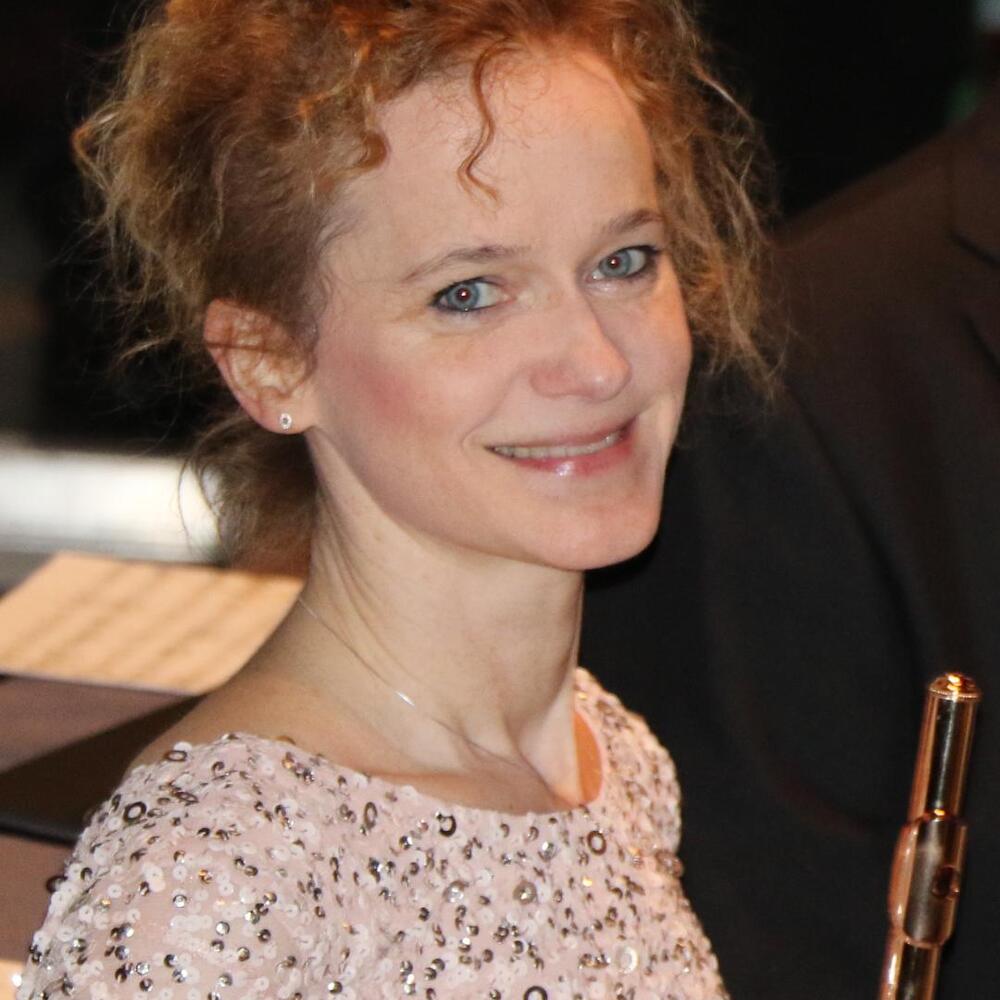
Roles & Affiliations: Britta Bauer is an Adjunct Professor of Flute at Mozarteum University, serving as Head of the Pre-College and Chair of the Curriculum Committee (Performance). She holds leadership roles in academic governance, including Deputy Department Head for Wind/Brass/Percussion and Senate Representative. Her international teaching spans institutions like the Hochschule für Musik und Tanz Köln and Redlands University, California. Education: She completed studies in flute performance, music pedagogy, and medicine across Bonn, Köln, Berlin, Paris, and Salzburg, earning top honors in all university degrees. Key mentors include Marianne Geise, James Galway, and Pierre Yves Artaud. Research & Pedagogy: Specializes in flute didactics and body-instrument physiology, developing concepts like 'The Body Sounds' for physical awareness in playing. Active in interdisciplinary performances blending music with dance, poetry, and light installations through her SIRIUS-Trio ensemble. Professional Contributions: Founded the International Flute Competition for Youth (2018), serves on national and international juries (Jugend Musiziert, EMCY), and publishes in journals such as Üben und Musizieren and Flöte aktuell . Her 2017 SCHOTT edition of Kolbris remains a pedagogical reference. Administration: Served as Deputy Department Head (2017–2022), Senate Vice-Chair (2018–2019), and initiated the annual 'Fachdidaktik Flöte' workshop at Mozarteum. Current roles include leadership in the German Flute Society (DGfF) and the International Flute Council (IFC).
Vovka Ashkenazy is a distinguished classical pianist and lecturer, currently teaching at Kalaidos Musikhochschule (Zurich), the Conservatory of Italian Switzerland (CSI) in Lugano, the Accademia di Imola Foundation, and the Tiziano Rossetti Academy. He holds a Master of Arts from Belford University and advanced pedagogical certification from France. His academic roles are centered on classical piano performance and interpretation. Education: Master of Arts, Summa Cum Laude, Belford University (2008) Certificat d'Aptitude - Professor d'Enseignement Artistique, France (2002) GRNCM Upper Division, Royal Northern College of Music (BA, 1983) Vovka Ashkenazy's research and artistic interests focus on classical and romantic piano repertoire, with a special emphasis on Russian music, two-piano performance, and chamber music. His pedagogical philosophy emphasizes musical understanding before technical execution, advocating for clarity of sound and emotional expression. He has made significant contributions through performances and arrangements of works by Rachmaninoff, Borodin, Mussorgsky, and Scriabin. His recent artistic output, spanning from 2009 to 2014, reveals a strong focus on collaborative piano performance, particularly in two-piano and piano-and-winds genres. He frequently performs with his father, Vladimir Ashkenazy, and his brother, Dimitri Ashkenazy, exploring Russian romanticism, orchestral transcriptions, and chamber repertoire. His work bridges performance and education, with recordings on DECCA, Chandos, and Cryston labels reflecting both technical mastery and interpretive depth. Scientific and Artistic Awards: Honorary Artistic Adviser, Guangzhou Opera House (2010) Artistic Director, Rina Sala Gallo International Piano Competition, Monza, Italy (2014) Vovka Ashkenazy is actively engaged in mentoring through masterclasses across Asia, Europe, and the Americas. While no formal grant information is available, his leadership roles in international competitions and recordings indicate sustained artistic funding and institutional support. He has contributed to charitable causes such as Action for Children, Cystic Fibrosis Trust, and the Bridges Peace Foundation. He runs a private teaching studio in Pura, Switzerland, offering structured and intensive piano study programs. Laboratories and Performance Ensembles: Private Piano Studio at Casa Camelia, Pura, Switzerland Collaborative Duo with Vladimir Ashkenazy (father) Chamber Ensemble with Dimitri Ashkenazy (brother) Reykjavík Wind Quintet (long-term collaborator) Regular performer at international festivals (Marlboro, Edinburgh, Spoleto)
Samuel Zyman is Professor of Music Theory and Analysis at the Blair School of Music, Vanderbilt University. A prominent Mexican composer and former long-time faculty member at The Juilliard School, Zyman is internationally recognized for his contributions to contemporary classical music across orchestral, chamber, vocal, and film genres. Education: M.Mus. in Composition, The Juilliard School D.M.A. in Composition, The Juilliard School His research and creative work centers on music composition, theory, and analysis, with deep engagement in Mexican cultural identity and Sephardic musical traditions. His compositions often bridge artistic expression with social themes, such as peace and youth empowerment, as seen in works like An Ode to Music and Sacrifixio . Zyman's recent works (2016–2018) reflect a continued focus on large-scale compositions involving orchestra, chorus, and soloists, often inspired by cultural narratives and performed internationally. His music integrates traditional forms with modern compositional techniques, placing him at the forefront of Latin American contemporary music. Scientific Awards: Meet-the-Composer grants (U.S.) Most Outstanding Composer of the Year (1992) – Mexican Society of Theater and Music Critics Mozart Medal (1998) – Austrian Embassy in Mexico Medal of Merit in the Arts (2014) – Mexico City Legislative Assembly Zyman has received numerous commissions and has served as a judge for composition competitions in the U.S. and Mexico. His works are widely performed and recorded by major orchestras and ensembles globally, though no formal advising or lab affiliations are mentioned in the text.
Matt Wright is a Lecturer at Stanford University's Center for Computer Research in Music and Acoustics (CCRMA), specializing in media systems design and computer music research. He previously served as Musical Systems Designer at UC Berkeley's CNMAT (1993-2008) and Research Director at UCSB's CREATE center for eight years. His work focuses on real-time music synthesis, sound standards (SDIF/OSC), and computational ethnomusicology. He holds a PhD from Stanford CCRMA on musical rhythm perception, and contributed to the AlloSphere immersive audiovisual instrument. Education: PhD in Computer-Based Music Theory from Stanford University (completed at CCRMA). Earlier studies include training in traditional lutes and Afro-Brazilian percussion. Research interests bridge technology and music: developing tools for musical gesture analysis, sound synthesis, and cross-cultural music analysis. His recent work also involves genomic data platforms (ClinGen) for clinical variant curation, reflecting a dual focus on computational music and bioinformatics. Publications emphasize both music technology (e.g., EEG studies of piano duets) and genomics (e.g., ClinGen variant curation tools). He has advised students in electronic arts and contributed to genetic disease research through collaborative frameworks like ClinVar. Labs/Teams: Lead the CREATE Ensemble (technology-driven live performance) and contributed to the AlloSphere research instrument at UCSB's CREATE center.
Richard Savery is an Honorary Research Fellow at Macquarie University's Faculty of Arts, affiliated with the Performance and Expertise Research Centre and the Centre for Applied Artificial Intelligence. His work bridges artificial intelligence, robotics, and music, focusing on creative interactions and trust-building through robotic musicianship. He holds a PhD in Music Technology from Georgia Institute of Technology (2021) and a Master's from UC Irvine. Key roles include developing the NSF-funded Keirzo rapping/drumming robot and publishing the edited book Sound and Robotics (2023). Research interests include emotional musical prosody, human-robot collaboration, and robotic performance. Notable projects include Shimon the singing robot and IVF sonification. Awards include a GANG Award (2015) for game audio. Active in interdisciplinary collaborations, he has composed music for films, ads, and video games, including Gunman Taco Truck and Gathering Sky . His work spans academic grants ($800k NSF-NRI grant), industry partnerships, and public installations like the Un[contained] Arts Festival's beehive exhibit. Over 50 publications highlight his contributions to robotics, music tech, and AI ethics.
Chris Sollars is an Associate Professor in the Department of Studio Art at Dartmouth College, specializing in multidisciplinary art and music that critiques societal issues through absurd public interventions. His work combines sculpture, video, installation, and performance, often repurposing urban detritus to create thought-provoking commentary. Sollars holds a BFA from Rhode Island School of Design and an MFA from Bard College's Milton Avery Graduate School. His research focuses on transforming discarded materials into installations that challenge perceptions of waste, environment, and human interaction. Notable techniques include site-specific performances documented through multimedia formats, and instrument construction addressing ecological anxieties through sound. Recent projects include the Wyoming Wind series (2022), which explores landscape acoustics through amplified natural phenomena, and Ice House: For Cooler Futures (2022), a climate-focused installation using frozen artifacts. He has received prestigious awards including the 2013 Guggenheim Fellowship and multiple residency grants. Sollars teaches courses like On Earth: Art The Anthropocene and AV Installation Art , emphasizing interdisciplinary approaches to contemporary art practice. His studio at 667 Shotwell St serves as a creative hub for experimental art production.
Dr. Aaron Einbond is an academic and composer affiliated with City St George's, University of London, where he teaches. He holds a Ph.D. from UC Berkeley and has held positions at Columbia University, Harvard University, and the University of Huddersfield. His research explores intersections between instrumental music, field recording, sound installation, and interactive technology, focusing on spatial sound, timbre, and AI applications in music. Education: Ph.D., University of California, Berkeley (2002-2009) M.Phil., University of Cambridge (2000-2001) A.B., Harvard University (1996-2000) His work emphasizes collaborations with ensembles like Yarn/Wire and Dal Niente, and he has received prestigious awards such as the Guggenheim Fellowship and Giga-Hertz Förderpreis. As Co-Artistic Director of Qubit New Music, he leads interdisciplinary projects in New York. His publications and compositions span academic journals and artistic works, with a focus on AI-driven spatial sound synthesis and music technology.
Carlos Guedes is Associate Professor of Music at New York University Abu Dhabi (NYUAD) , affiliated with the Arts and Humanities division and the Music department. He also holds affiliated positions as Associate Professor in Computer Engineering at NYUAD and in Music Technology at NYU Steinhardt, reflecting his interdisciplinary profile. University: New York University Abu Dhabi School: Arts and Humanities Department: Music Rank: Associate Professor Emails: cag204@nyu.edu, menosmuitomais@gmail.com He holds a BM from the Polytechnic of Porto, School of Music and Performing Arts, and an MA and PhD from New York University. His research and artistic work span music composition, sound design, computational music, and cultural preservation, with a focus on the Gulf, East Africa, and South India. His primary research interests include: Analysis and preservation of music Automatic music generation Interactive music systems Generative computational technologies Audiovisual ethnography Immersive experiences and VR in music He is a founding member of the Music and Sound Cultures (MaSC) research group at NYUAD, which develops hybrid computational-humanistic methodologies and tools such as VR environments and games for cultural enculturation. His recent projects include a faculty research grant from the Sheikh Saud bin Saqr Al Qasimi Foundation to document the musical traditions of the Shihuh tribe in Ras Al Khaimah. As a composer, Guedes has over 80 international premieres, with work presented at major venues and festivals including Expo ’98, Expo 2020, Ars Electronica, ICMC, SIGGRAPH, and the Beijing Modern Music Festival. His compositions often blend industrial, carnatic, and Western erudite traditions with computational technologies. Notable recent works include the Time Poetries cycle for percussion and electronics, composed during his 2021–2022 residency with Drumming GP . His recent artistic output shows a strong trend toward electronic and computational music, with themes exploring space, time, cultural identity, and human-machine interaction. Albums such as Shadows & Reflections (2021) and Becoming Space (2021) reflect collaborative, improvisatory, and ambient tendencies, while pieces like Phobia robotica (2020) and Far Out (ISS Edition) (2024) explore robotic and cosmic themes. He has been actively involved in teaching a wide range of courses across disciplines, including: Music: Music Theory, Individual Instruction, Capstone Seminars, Computational Approaches to Music Computer Science: Capstone Project in CS Interdisciplinary: Immersive Experiences, Multidisciplinary Artistic Collaborations, Audiovisual Ethnography He mentors students in music capstone projects and computational media, and co-advises research in hybrid artistic-technical domains. He leads and participates in research labs and teams such as: Music and Sound Cultures (MaSC) Research Group – focused on computational ethnomusicology and cultural preservation Immersive Experiences Lab – exploring VR, AR, and sensory technologies in artistic contexts Interactive Media and Sound Computing – developing new instruments and performance systems
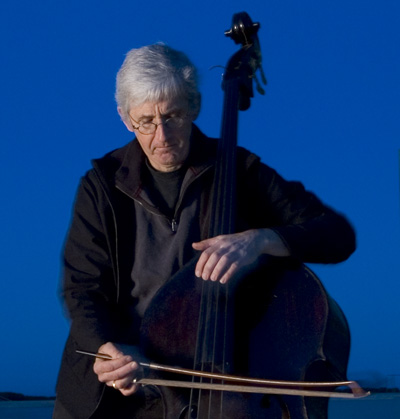
Mark Dresser is Professor of Music at the University of California, San Diego (UCSD), where he has been a faculty member since 2004. He earned both his B.A. and M.A. from UCSD, studying under Professor Bertram Turetzky. He has also taught at Princeton University, the New School University, and Hampshire College. Education: B.A., University of California, San Diego M.A., University of California, San Diego Fulbright Fellow, Italy (1983), studying with Maestro Franco Petracchi Mark Dresser is a Grammy-nominated bassist, composer, and innovator in contemporary music. His research focuses on expanding the sonic possibilities of the double bass through extended techniques, unconventional amplification, and interdisciplinary collaboration. He has authored a chapter in ARCANA and articles in The Strad on multiphonics and harmonics. His artistic work spans solo performance, ensemble leadership (e.g., Trio M, Arcado String Trio), and telematic music projects like Deep Tones for Peace . He is deeply engaged in improvisation, silent film scoring, and collaborative composition across media. His recent articles and recordings reflect a sustained exploration in avant-garde jazz, experimental composition, and telematic performance. Themes include extended instrumental techniques, interdisciplinary art, and innovative ensemble dynamics. His works blend jazz, classical, and free improvisation traditions into a unique sonic language. Scientific and Artistic Awards: Doris Duke Impact Award (2015) Shifting Foundation Award (2015) Fulbright Fellowship (1983) Two New York Foundation for the Arts Grants Meet the Composer Commissions Fellowships: MacDowell Colony, Civitella Ranieri, Bellagio, Akrai Mark Dresser has advised numerous emerging musicians and has been involved in significant research grants supporting telematic performance and interdisciplinary projects. He curates performance series and educational initiatives, including the Virtual Tour: A Reduced-Carbon Footprint Concert Series. He serves on the boards of the International Society of Bassists, the International Society of Improvised Music, and the Deep Listening Institute, contributing to the advancement of experimental music and improvisational practices. He leads and collaborates with several ensembles, including Trio M (with Myra Melford and Matt Wilson), Mauger (with Rudresh Mahanthappa and Gerry Hemingway), and a septet performing his original compositions. His UCSD-based research lab and performance groups focus on telematic music, real-time networked performance, and sonic experimentation with the double bass.
I Nyoman Wenten serves as Adjunct Associate Professor of Ethnomusicology at the University of California, Los Angeles (UCLA), where he directs the Music of Bali Ensemble. He simultaneously holds the position of Chair of Balinese and Javanese Music and Dance at the California Institute of the Arts (CalArts), maintaining dual institutional affiliations focused on Southeast Asian performing arts preservation and pedagogy. His academic credentials include a Ph.D. in Ethnomusicology from UCLA, an advanced degree from the National Academy of Dance in Yogyakarta, Java, and foundational training at the Music and Dance Conservatory in Bali. Wenten specializes in Balinese and Javanese traditional music and dance with particular emphasis on Gamelan orchestration. His four-decade career bridges performance, cultural diplomacy, and cross-disciplinary collaboration, exemplified by his work on the 2018 documentary BALI: BEATS OF PARADISE where he fused traditional Gamelan with contemporary pop elements alongside Grammy-winning artist Judith Hill. His research actively combats the diminishing practice of sacred Balinese musical traditions through innovative pedagogical approaches. As director of UCLA's Music of Bali Ensemble, Wenten mentors undergraduate students across diverse academic disciplines in the complex techniques of Balinese gamelan—metal percussion orchestras that narrate Hindu epics like the Mahabharata and Ramayana. His ensemble serves as both cultural sanctuary for Southeast Asian diaspora students and musical expansion for Western-trained musicians, preparing performers for international stages beyond campus boundaries. Wenten's professional impact extends through diplomatic channels where he previously directed music, dance, and language programs for the Indonesian Cultural Center under the Consulate General of the Republic of Indonesia, while maintaining extensive performance history across five continents including collaborations with institutions throughout the United States, China, Japan, and Europe.
Dr. Eric Skytterholm Egan serves as Associate Professor of Composition in Durham University's Department of Music and holds an Associate Fellowship at the Institute of Advanced Study. An Irish-Norwegian composer based in northern England, Egan's creative practice centers on formal clarity through the synthesis of historical musical elements and innovative instrumental techniques, resulting in expansive textural palettes across diverse ensembles. Egan completed his PhD in Composition in May 2010 under Richard Rijnvos at Durham University. His scholarly trajectory demonstrates deep integration of academic research with practical composition, evidenced by extensive collaborations with leading international ensembles and performances at major venues including Konzerthaus Wien and Southbank Centre. Egan's research explores contemporary composition through dual lenses of historical synthesis and technical innovation. His work systematically investigates textural complexity, extended instrumental techniques, and formal architecture across solo, chamber, and orchestral contexts. Key thematic strands include political narratives (e.g., North Korea conflict studies), literary engagement (James Joyce), and environmental soundscapes (Arctic fieldwork), often manifested through experimental notation and spatialized performance practices. Recent publications reveal intensified focus on geopolitical themes and interdisciplinary collaboration. The 2025 Geohumanities journal article on Arctic soundscapes exemplifies his expansion into environmental fieldwork, while compositions like 'Conflict as Artefact' demonstrate sustained political engagement. His output increasingly integrates technology with acoustic performance, particularly through ensemble residencies exploring real-time sound processing and spatial audio techniques. Egan actively cultivates next-generation musicians through hands-on leadership of Durham's performance ecosystems. As producer of Ensemble 7Bridges and E7B SoundLab, director of student ensemble NAME, and curator of the annual KLANG festival, he creates vital platforms for emerging composers. These initiatives facilitate direct mentorship with professional ensembles like Arditti Quartet while connecting academic research with public performance at venues including Sage Gateshead and National Concert Hall Dublin. Through Ensemble 7Bridges' residency program and E7B SoundLab's experimental studio, Egan has established Durham as a hub for contemporary music innovation. These platforms enable collaborative development of new works with ensembles including Roentgen Connection and Cikada, while KLANG festival serves as the department's flagship public engagement vehicle, featuring premieres from international composers and student works alike. His leadership fosters a distinctive creative ecosystem bridging academic research, professional performance, and community outreach.
Associate Professor Daniel Herscovitch is a renowned pianist and academic at the Sydney Conservatorium of Music, University of Sydney. He holds an Associate Professorship in Piano and has lectured on chamber music and piano pedagogy. His career spans extensive performances across Europe, Asia, and Australia, including collaborations with leading ensembles like the Australia Ensemble and Sydney Spring Festival of New Music. Education: Bachelor of Music (DSCM, Honours) Künstlerische Reifeprüfung (Munich) Meisterklassendiplom (Munich) Research Interests: Specializes in Baroque and Classical performance interpretation, particularly Bach’s Art of Fugue and Beethoven ornamentation. Active in commissioning contemporary works by Australian and international composers. His recordings span 17th to 21st century repertoire, with notable releases on Toccata Classics and ABC Classics. Performance Highlights: Includes tours in the USA, Indonesia, and Europe, with residencies at institutions like the Royal Northern College of Music. Notable performances include Hindemith’s Ludus Tonalis and Bartók’s Two-Piano Concerto. Awards: 2019 Gramophone Editor’s Choice for the Roger Smalley CD. Internationally acclaimed releases include works by Don Banks and Peter Dart. Grants & Collaborations: Supported by DAAD scholarships and has led projects with Musica Viva, the Seymour Group, and Sydney Southeast Asia Centre. His research bridges historical performance practices with contemporary composition. Labs/Teams: Involved in the Sydney Conservatorium’s chamber music programs and pedagogical initiatives. Regularly presents at conferences on topics like Bach interpretation and 20th-century piano techniques.
Tiago de Oliveira Pinto is a Brazilian academic and UNESCO expert in Intangible Cultural Heritage, currently serving as Professor and Chair of Transcultural Music Studies at Hochschule für Musik Franz Liszt Weimar and Friedrich-Schiller-Universität Jena since 2009. His career spans institutions across Brazil, Germany, and the USA, including full professorships in Anthropology at Universidade de São Paulo (1989-2006) and visiting scholar positions at Harvard University (2013-2014). Key affiliations: German UNESCO Commission (2013-present), Bibliothek Brasiliana Mindlin (since 2008) Former roles: Director of Brazilian Cultural Institute in Germany (1996-2002), President of Brazilian Ethnomusicological Association (2004-2007) His research focuses on transcultural music phenomena, Afro-Brazilian musical traditions, and the intersection of music with globalization and religious practices. He has pioneered fieldwork in Brazil's Recôncavo region and Central Asia, contributing to debates on heritage preservation. Scientific contributions include co-developing global music databases and curating ethnographic collections. His recent publications analyze samba's heritage status, transcultural music pedagogy, and African-Brazilian musical affinities. Notable awards: Visiting Scholar at Harvard University, leadership roles in international ethnomusicology associations
Daniel Albert is an Assistant Professor of Music Education at the University of Massachusetts Amherst, where he is also affiliated with the Department of Music and Dance. He holds a Bachelor of Music (summa cum laude) from the University of Massachusetts Amherst, a Master of Music in Music Education from the University of Michigan, and a Ph.D. in Music Education from Michigan State University. Before joining UMass Amherst, Albert served as an Assistant Professor of Music, Human Development, and Learning at Augsburg University in Minneapolis. His career began with 11 years of teaching general music and instrumental music at Glenbrook and Williams Middle Schools in Longmeadow, Massachusetts. He has held leadership roles in the Massachusetts Music Educators Association (MMEA) and the Massachusetts Department of Elementary and Secondary Education’s Arts Education Advisory Council. Albert’s research focuses on pre-service and in-service music teacher identity, music education curricula, mentoring practices, and the role of culture and community in music education. He emphasizes partnerships with K-12 educators and arts organizations, such as the Community Music School of Springfield, to develop programs that enhance student learning through artist-in-residence initiatives and commissioning projects. He has presented at conferences like the National Association for Music Education (NAfME) and the International Society for Music Education (ISME), and his work has been featured in journals including the Journal of Research in Music Education and Music Education Research . Albert received the MMEA’s Lowell Mason Award for outstanding leadership in music education. His professional activities include conducting regional honors ensembles, participating in conducting symposia, and freelancing as a percussionist. He studied percussion with renowned instructors such as Eduardo Leandro and has collaborated with composers to innovate music education practices.