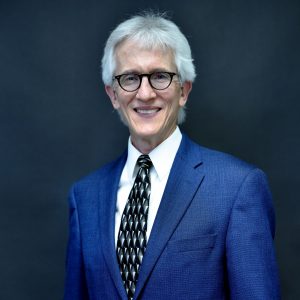
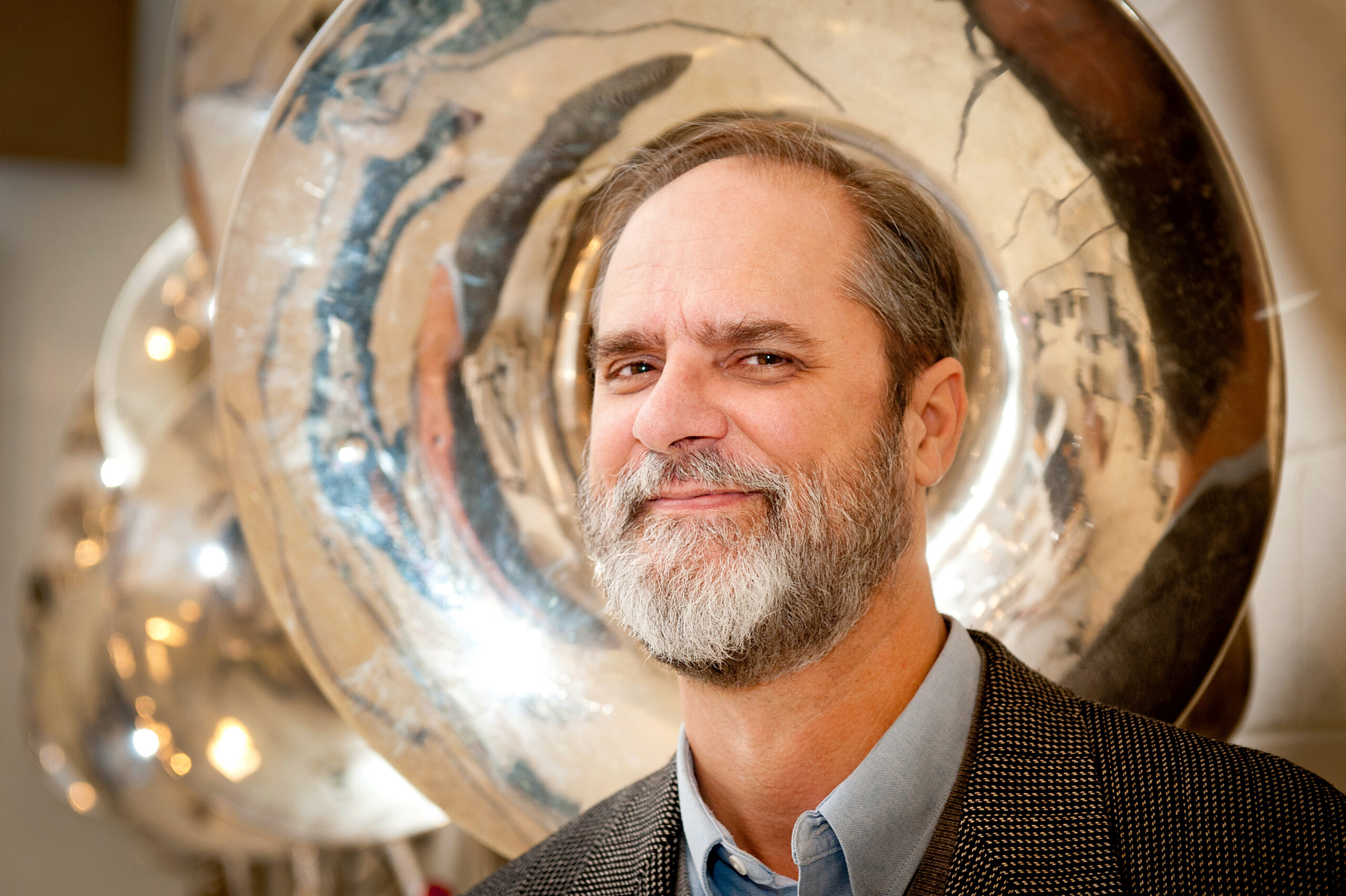
Christopher D. Azzara is the Eisenhart Professor of Music Teaching & Learning at the Eastman School of Music, University of Rochester. He holds affiliate roles in Jazz Studies & Contemporary Media and Woodwinds, Brass & Percussion. His research focuses on creativity, improvisation, and music pedagogy. Azzara earned a B.M. from George Mason University (1981), M.M. (1988), and Ph.D. (1992) from Eastman. Previously, he taught at The Hartt School (1991–2002) before joining Eastman's faculty in 2002, later serving as Chair of Music Teaching & Learning (2010–2018). He has received prestigious awards, including the Edward Peck Curtis Award (2022) and the Eisenhart Professorship (2023). His academic work emphasizes the integration of listening, creating, improvising, and composing in music education. Key publications include Developing Musicianship through Improvisation and Jump Right In: The Instrumental Series . Azzara’s arrangements are published by GIA and Oxford University Press. He performs with the Chris Azzara Trio and collaborates with Eastman faculty and the Rochester Philharmonic Orchestra. Internationally recognized, Azzara has conducted workshops in over 20 countries, including TEDxRochester and Carnegie Hall. His engagements in 2024–2026 include teaching clinics in Germany, the U.S., and Australia, emphasizing creativity-driven music education. His research appears in journals such as the Journal of Research in Music Education and Oxford Handbooks Online . Azzara advocates for innovative teaching methods, blending academic rigor with practical performance experiences.
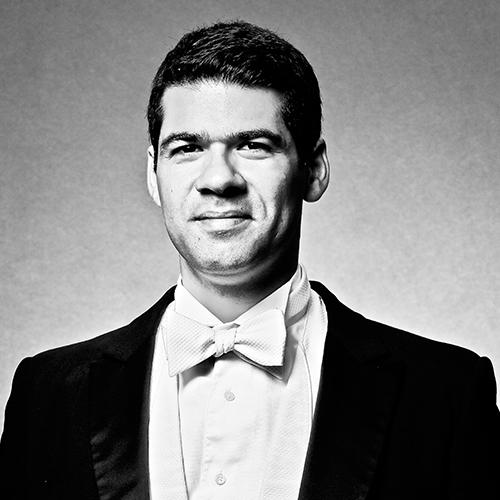
Dr. Paul Bhasin is the Donna and Marvin Schwartz Professor of Practice in Music and Director of Undergraduate Research at Emory University. He leads the Emory University Symphony Orchestra and Emory Youth Symphony Orchestra, directs the Atlanta Chamber Music Festival, and oversees Emory’s Music in Italy program. His roles include conducting, teaching, and curriculum development in orchestral studies and chamber music. Education: Doctor of Musical Arts (DMA) from University of Wisconsin-Madison (2010), Master of Music (MM) from Northwestern University, and Bachelor of Music (BM) from University of Michigan. Research interests span orchestral conducting, chamber music advocacy, music education, and composition. He has collaborated with ensembles worldwide and composed film scores for projects like Hogtown , recognized at multiple international film festivals. Recent projects include conducting recordings with the EUSO (Centaur Label) and brass/organ chamber works (ACA Digital). He composed the score for the film SISTER CARRIE , part of Emory’s “Arts and Social Justice” initiative. Award-winning educator, his trumpet students have excelled at top conservatories and competitions. He founded the Emory Percussion Symposium and expanded chamber music programs at Emory.
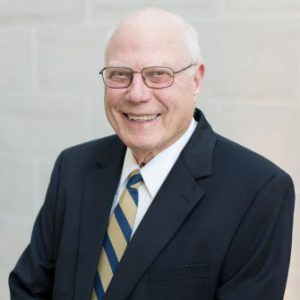
Richard Killmer is a Professor of Oboe and Wegman Family Professor of Oboe at the Eastman School of Music, University of Rochester. He has held principal oboe positions with the St. Paul Chamber Orchestra, Oklahoma City Symphony, Aspen Festival Orchestra, and Lake Placid Sinfonietta. His military service included roles with the NORAD Band and Commander’s Dance Band. Educated at University of Northern Colorado (B.A. 1960) and Yale School of Music (M.M., M.M.A., D.M.A.), he also taught at Yale as Visiting Professor of Oboe. Teaching accolades include Eastman’s Eisenhart Award (1984-85) and Yale’s Gustave Stoeckel Award (2006). His career spans orchestral performance, pedagogy, and competition adjudication including CIBC, Geneva, and Prague Spring Competitions. Specializes in classical oboe performance and wind ensemble training with expertise in baroque and contemporary repertoire. Performance history includes summer festivals at Mainly Mozart, Banff Centre, and Sarasota. Maintains active involvement in instrumental education through Eastman’s faculty roles since 1982.
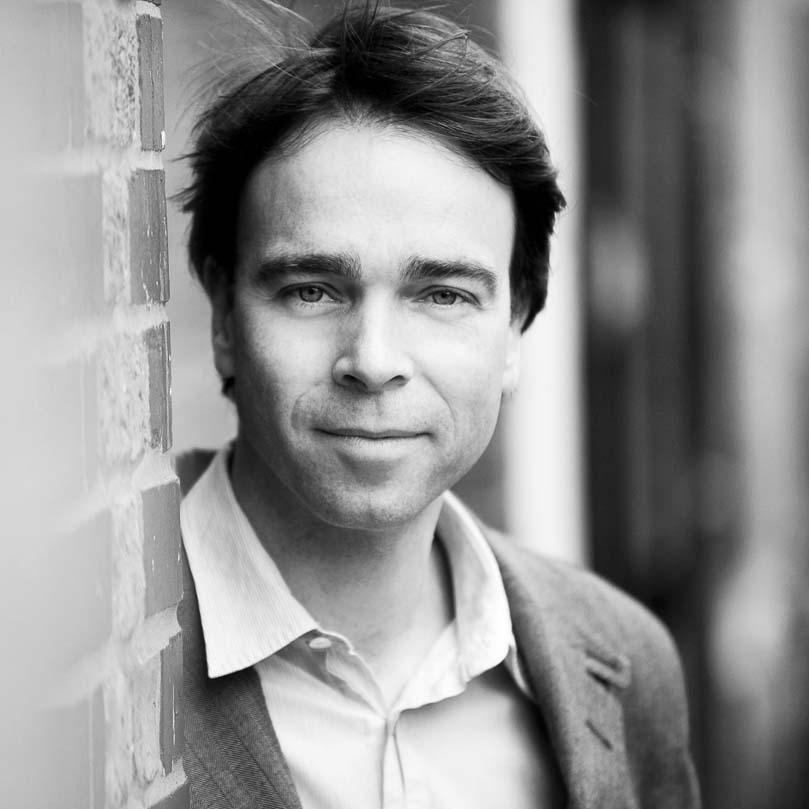
Fabrice Fitch is a Senior Research Fellow at the Royal Conservatoire of Scotland, where he focuses on artistic research, early music, and musicology. He holds dual nationality (France/Canada), having been raised in Toronto and Bordeaux, and has lived in the United Kingdom since 1991. His academic journey includes studies at the Conservatoire National de Région de Bordeaux, McGill University, and private mentorship from Brian Ferneyhough, supported by Canada Council for the Arts grants. Research Interests: Fitch’s career spans both composition and musicology. His compositions explore the acoustic properties of instruments and prioritize audience communication, often written for soloists, duos, or small ensembles. Since 1986-7, collaborations with performers have been central to his work, leading to two ongoing cycles: Per Serafino Calbarsi (inspired by François Rabelais) and agricologies (blending Alexander Agricola’s Renaissance music with modern artists like Cornelia Parker). His musicology focuses on early Renaissance composers (Ockeghem, Obrecht, Agricola) and their relevance to contemporary practice. Publications & Collaborations: Recent work includes the 2024 scholarly edition of Jacob Obrecht’s Missa Scaramella and a 2020 Cambridge University Press book on Renaissance polyphony. He has contributed to journals like the Journal of the Alamire Foundation , analyzing modular composition in Motetti Missales and recovering anonymous works. His research bridges historical analysis with practical performance, emphasizing manuscript studies and interdisciplinary approaches. Awards & Recognition: Supported by Canada Council for the Arts grants during his studies, Fitch’s editorial work (e.g., Loyset Compère’s motets) and performances with ensembles like Exaudi and Fretwork highlight his scholarly and artistic impact.
Gerd Grupe serves as Professor of Ethnomusicology and Vice Rector for Research at the University of Music and Performing Arts Graz (KUG), where he has held his faculty position since 2002. His academic career spans multiple institutions including Free University Berlin, Frankfurt am Main, Hildesheim, Bayreuth, and Krems. His educational background includes doctorate in Comparative Musicology (1990, FU Berlin) with dissertation on Afro-Jamaican Kumina music, and habilitation (1996) on Shona music published as The Art of Mbira Playing (2004). His research spans sub-Saharan African music , African-American traditions , Central Javanese gamelan , and cross-cultural comparative studies , with fieldwork in Jamaica, Zimbabwe, and India. His scholarly output reveals consistent focus on traditional African musical systems (particularly Shona mbira and Jamaican Kumina), notation challenges in oral traditions , and pedagogical approaches to non-Western music . The article corpus demonstrates progression from specific case studies (Kumina, 1990s) toward broader theoretical frameworks (2000s) examining cognitive dimensions, performance practices, and cross-cultural learning methodologies. As academic leadership, he established KUG's Central Javanese Gamelan ensemble (2004) for research and teaching, and co-edits the Translingual Discourse in Ethnomusicology journal while editing Grazer Beiträge zur Ethnomusicologie . His work bridges performance practice, cognitive analysis, and cultural context with emphasis on learning through performance methodology.
Simon Mills is Professor of Ethnomusicology in Durham University's Department of Music, specializing in Korean shaman music and ritual performance traditions. His research combines ethnographic fieldwork with musical analysis of Korean ritual practices. Key research domains: Korean shaman ritual music Instrumental performance traditions Music's role in healing practices Musical transcription methodologies Publications extensively document Korean musical heritage, including studies of Buddhist temple chanting, shamanic artistry, and folk traditions. Recent work focuses on performance style transmission and cultural preservation. Supervises five doctoral students researching Asian music traditions. Maintains active performance practice on Korean percussion instruments including changgo drum and tanso flute.
Professor Barley Norton is a distinguished ethnomusicologist and filmmaker at Goldsmiths, University of London, where he serves as Director of the Asian Music Unit (AsMU), convenor of the MA in Music (Ethnomusicology), and leader of the Goldsmiths Gamelan Group. His academic career focuses on the music and culture of Southeast Asia, particularly Vietnam, where he has conducted extensive field research. His research interests span ethnomusicological filmmaking and theory, the cultural politics of musical practice, discourse on cultural heritage and music revival, music and religious experience, music and emotion, music and gender theory, music censorship, improvisation, and performance and modal theory. Norton's academic work is deeply informed by his practical musical engagement; during his field research in Vietnam, he learned to play the dan day and dan nguyet lutes, and he also performs Sundanese music from Indonesia on the kacapi zither and in the gamelan degung orchestra. Norton's scholarly output reveals significant trends in Southeast Asian music studies, particularly focusing on the intersection of traditional musical practices with contemporary political and social contexts. His work consistently examines how musical traditions navigate processes of canonization, heritage safeguarding, and creative innovation within rapidly changing cultural landscapes. A notable thread throughout his research is the relationship between music, ritual, and identity in Vietnamese cultural contexts, with increasing attention to environmental concerns and climate change impacts on musical heritage in his most recent work. American Musicology Society's 2014 Ruth A. Solie Award for 'Music and Protest in 1968' Commendation - Intangible Culture Film Prize at the Royal Anthropological Institute's 12th International Festival of Ethnographic Film for 'Hanoi Eclipse: The Music of Dai Lam Linh' Professor Norton has supervised numerous doctoral students including Christopher Hanby (Applied Ethnomusicology and Jèrriais language revitalization), Lin Lin (Creative Realization in the Compositional Process), Clare Salaman (Reimagining the trumpet marine), and Jasmine Hornabrook (Transnational networks in London's Tamil diaspora). His research has been generously funded by the Getty Foundation, Arts and Humanities Research Council, British Academy, and ASEASUK, supporting projects on Vietnamese music revival and audiovisual archiving. He has also undertaken consultancy work with UNESCO, the British Council, and Vietnamese cultural institutions on music heritage projects. As a key figure in the field, Norton directs Goldsmiths' Asian Music Unit, which serves as a hub for research, performance, and teaching focused on Asian musical traditions. The unit facilitates cross-cultural musical dialogue and supports field research in Asia, while the Goldsmiths Gamelan Group provides hands-on experience with Indonesian musical traditions. His leadership extends to international scholarly organizations, having served as Chair of the British Forum for Ethnomusicology (2015-2018) and as a member of the Society for Ethnomusicology Council (2017-2020).
Rodney Waschka II is a Professor and Director of Arts Studies at North Carolina State University's College of Humanities and Social Sciences. He also directs the Arts NOW Series, presenting contemporary arts events. His expertise spans music composition, algorithmic processes, and electronic music. Waschka's works are globally recognized, with recordings across international labels. His operas like Saint Ambrose and Sappho's Breath showcase interdisciplinary collaboration. Recent works include A Note for Joe Alexander (2024) and In Memoria di Linda Garzoli Cardosi (premiering 2025). His research explores genetic algorithms in music composition and dynamical systems as compositional tools. Education: Doctor of Musical Arts in Computer Music/Media from the University of North Texas. Awards and recognitions include features in Computer Music Journal , Musical Opinion , and international festivals. He actively commissions new works and has performed across Europe, North America, and Australia. The Arts NOW Series, under his leadership, connects contemporary art forms with academic disciplines like mathematics, politics, and climate science. Notable collaborations include the Aizuri Quartet and filmmaker projects like Boris Karloff: The Man Behind the Monster (2022).
Matthias Bertsch is a faculty member with expertise spanning musical acoustics, medical acoustics, and ethnomusicology. His work bridges musicology, biomedical engineering, and clinical applications. Academic leadership in structured doctoral programs Research on brass instrument mechanics and NICU sound environments Interdisciplinary focus on music-physiology and psychoacoustics Research Interests: Specializing in the acoustic properties of musical instruments, therapeutic sound applications for premature infants, and physiological analysis of brass players. His work combines empirical measurement with clinical and cultural implications. Article Trends: Publications emphasize brass instrument biomechanics , incubator sound optimization , and music's physiological effects , with recurring themes in virtual acoustics and interdisciplinary methodologies.
Paul Théberge is a Professor at Carleton University, cross-appointed to the Institute for Comparative Studies in Literature, Art and Culture and the School for Studies in Art and Culture (Music). He teaches graduate courses in Cultural Mediations (technologies of culture), Film Studies (sound in visual media), and Music (sound studies), reflecting his interdisciplinary academic home within Ottawa's major research institution. His research interrogates the material and cultural dimensions of sound technologies, with core expertise in music-technology-culture intersections, internet-mediated musical practices, and sonic applications in film/television. Théberge's scholarship bridges musicology, media studies, and science and technology studies, examining how recording technologies reshape creative practice and auditory experience across historical periods from analog tape to digital streaming platforms. Analysis of his 15 most recent publications reveals persistent engagement with sound's materiality—from multichannel audio histories to the embodied nature of listening—and consistent exploration of technological transitions, particularly the internet's disruption of traditional music production/distribution models. His work demonstrates deep methodological versatility spanning archival research, ethnographic observation, and creative composition. Scientific recognition includes: International Association for the Study of Popular Music (US branch, 1998) Society for Ethnomusicology (2000) While the source text doesn't specify current advising activities, his extensive editorial work (e.g., co-editing Living Stereo ) and composition output suggest significant mentorship through collaborative projects. His research has been supported through Canada Research Chair funding and industry partnerships like Sony Classical International.
Erik Santos is an Associate Professor and Chair of Composition within the University of Michigan's School of Music, Theatre & Dance. He holds DMA and MM degrees in Composition from the University of Michigan and a BM in Voice from Indiana University of Pennsylvania. His research spans acoustic/electronic music, dance-theater production, and interdisciplinary collaborations. Notable projects include scores for the Japanese butoh company Dairakudakan and the October Babies band's multicultural music. He co-created the Fukushima-inspired documentary series (e.g., Threshold: Whispers of Fukushima) and films exploring post-disaster cultural resilience. Recipient of the 2020 Sousa-ABA-Ostwald Prize Charles Ives Fellowship (American Academy of Arts and Letters) Organized the Fukushima Tribute Concert featuring Yamakiya Taiko ensemble His work emphasizes non-traditional performance spaces (dance clubs, museums, digital platforms) and integrates spontaneous sensory experiences with music. Santos actively collaborates with international artists and organizations, including the Center for Japanese Studies and Willis Sound label.
Laurie San Martin is a Professor of Music at the University of California, Davis, serving as department chair and undergraduate advisor for music majors with last names N-Z. She holds a PhD in Theory and Composition from Brandeis University and a B.A. in Music from UC Davis (1991). Her primary roles include teaching composition, music theory, and recital preparation, while maintaining active involvement in compositional research and performance activities. Research & Creative Work: San Martin specializes in contemporary concert music for chamber ensembles, orchestra, and chorus. Her compositions explore intersections of texture and line, often incorporating experimental techniques and cross-cultural influences. Notable works include Witches (2018), a chamber-choral piece with lyrics by Lucy Corin; Night Owls (2024), a Barlow Endowment-commissioned work for Ensemble Ari; and Elective Affinities (2013), blending Korean gayageum with string quartet. She frequently collaborates with ensembles like Earplay, Left Coast Chamber Ensemble, and Volti. Performed internationally in Europe, South America, and Asia Recipient of prestigious awards including the Guggenheim Fellowship (2016), Andrew Imbrie Award (2018), and Barlow Endowment commissions Teaching & Mentorship: As an advisor, she supports music majors while mentoring emerging composers through programs like the Pacific Chamber Orchestra's Dream American workshop. Her pedagogical focus includes fostering creativity and technical mastery in composition students. Recent Activities: In 2023, she served as guest faculty at the Cortona Sessions in Italy, where her works Octurnal , Miniatures , and Conveyer Belt Dreaming were performed. Ongoing projects include a 2025 residency at the São Paulo Contemporary Composers Festival and a new work for the Empyrean Ensemble. Awards & Recognition: Her accolades reflect her impact on contemporary music, including the League of Composers-ISCM Fellowship and ASCAP Morton Gould Young Composer Awards. She has held residencies at prestigious institutions like the MacDowell Colony and Yaddo.
Marco Uvietta is an Associate Professor of Musicology and History of Music at the Department of Literature and Philosophy, University of Trento. He holds a Laurea in Music Disciplines from the DAMS of Bologna (1991) and a PhD in History and Analysis of Musical Cultures from Sapienza University of Rome (1999). His academic career includes roles as a Researcher (2005–2016) and Associate Professor (2016–present) at the University of Trento. He teaches courses on Music History and Ethnomusicology and contributes to the PhD program in European Cultures. His research focuses on two main areas: 1) Musical Philology, particularly in 19th-century Italian opera (e.g., critical editions of Verdi’s Requiem and Bellini’s La straniera), and 2) Analysis of 20th-century musical language, with significant contributions on Luciano Berio’s style and compositional processes. He has authored numerous scholarly works, including books and articles on composers like Berio, Debussy, Stravinsky, and Martucci. Uvietta is actively involved in editorial projects, such as directing critical editions for Ricordi and contributing to the Rossini Critical Edition. He holds leadership roles in academic committees, including the editorial board of Il Saggiatore Musicale . His compositional works, influenced by his analytical research, have been performed by prestigious ensembles worldwide, including the Arditti Quartet and Monteverdi Cello Octet. Notable awards include recognition in composition competitions (e.g., Guido d’Arezzo International Competition), and his works span orchestral, choral, and chamber music. Uvietta’s interdisciplinary approach bridges historical musicology with contemporary compositional practice, reflecting his dual expertise as a scholar and composer.
Youngmoo Kim is Professor of Electrical and Computer Engineering at Drexel University, where he directs the Expressive and Creative Interactive Technologies (ExCITe) Center. His leadership extends to the Music & Entertainment Technology Laboratory (MET-lab), focusing on machine listening, robotics for expressive interaction, and STEM education through music technology. Education: PhD, Media Arts & Sciences, MIT (2003) MS, Electrical Engineering, Stanford University MA, Music, Stanford University BS, Engineering, Swarthmore College BA, Music, Swarthmore College Research Focus: Kim's interdisciplinary work bridges audio signal processing, machine learning for music information retrieval, human-robot interaction, and acoustic synthesis. His lab develops novel interfaces including brain-controlled robotics, augmented instruments, and AI-driven music systems, while championing K-12 STEAM education through technological innovation. Publication Trends: Recent articles demonstrate strong convergence of deep learning with music technology, particularly in neural audio synthesis, instrument recognition, and robotic control systems. Emerging themes include differentiable physical modeling of instruments, neuroadaptive interfaces using fNIRS/tDCS, and computational approaches to creative collaboration. Awards & Honors: 2021 College of Engineering Inclusive Excellence Award 2013 Apple Distinguished Educator 2012 Lindback Foundation Distinguished Teaching Award 2012 Philadelphia Geek Awards Scientist of the Year 2007 NSF CAREER Award Leadership & Funding: Kim has secured research support from the National Science Foundation and Knight Foundation. His ExCITe Center serves as an interdisciplinary hub for creative technology development, while MET-lab advances audio-machine intelligence through collaborations across engineering, computer science, and performing arts.
Magdalena Fuentes is an Assistant Professor of Music Technology and Integrated Design & Media at New York University (NYU), affiliated with the Music and Audio Research Lab (MARL) and the Integrated Design & Media (IDM) programs. She holds a Ph.D. from Université Paris Saclay (France) and a B.Eng. in Electrical Engineering from Universidad de la República (Uruguay). Her research focuses on Machine Listening, Human-Centered Machine Learning, and Multimodal Representation Learning, with applications to Music Information Retrieval and Environmental Sound Analysis. Previously, she served as a Postdoctoral Faculty Fellow at NYU’s MARL and Center for Urban Science and Progress (CUSP). Her work bridges technical innovation with cultural and societal contexts, particularly in underrepresented music traditions like Brazilian percussion and Candomblé rituals. She has developed open-source tools such as Soundata to ensure reproducible audio dataset usage. Her research outputs span audio-visual synchronization (e.g., SONIQUE), environmental sound monitoring (e.g., SONYC projects), and rhythm analysis frameworks (e.g., Carat toolbox). These contributions highlight her dual focus on advancing machine learning techniques while maintaining human-centric and culturally sensitive applications.