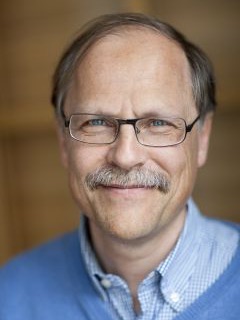
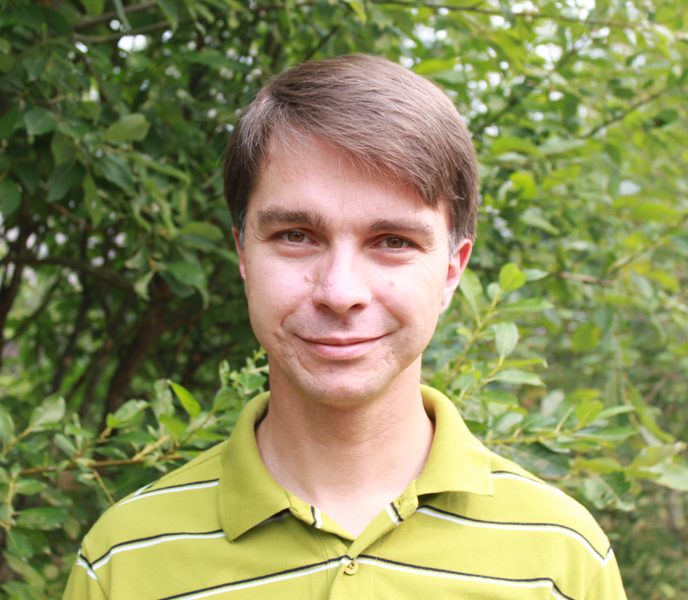
Kurt Johansson is a Full Professor of Mathematics at KTH Royal Institute of Technology, Sweden. His academic journey includes roles as Associate Professor at KTH (1993-2001) and Uppsala University (1988-1993), alongside research funded by the Swedish Natural Science Research Council (1998-2003). His primary affiliations are within the Department of Probability, Mathematical Physics & Statistics at KTH, where he also coordinates courses on Differential Equations and Fourier Analysis. Education: BSc in Physics (1982) and PhD in Mathematics (1988), both from Uppsala University. Research interests focus on Probability Theory , Mathematical Physics , and Random Matrix Theory , with contributions to stochastic models, determinantal processes, and universality in statistical mechanics. Key Awards: Wallenberg Prize (1995), Rollo Davidson Prize (2000), Göran Gustafsson Prize (2002), Fellow of the American Mathematical Society (2012), and multiple Wallenberg Scholar grants (2011-2023). Grants: Major funding from the Swedish Research Council (VR), K&A Wallenberg Foundation, and others. His research group explores Random Matrices, Stochastic Models, and Analysis , with notable work on the Arctic Circle Theorem and KPZ universality class. Recent publications analyze Brownian directed percolation and domino tilings of the Aztec diamond, reflecting his focus on interdisciplinary applications of probability and mathematical physics.
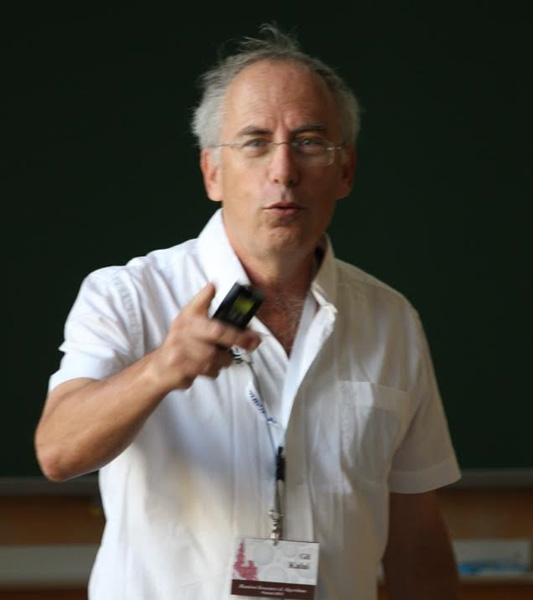
Gil Kalai is a Professor of Mathematics at the Hebrew University of Jerusalem since 1992, where he holds the Henry and Manya Noskwith Chair. He also serves as an Adjunct Professor of Mathematics and Computer Science at Yale University since 2004 in a long-term part-time visiting position. His academic career includes visiting positions at prestigious institutions including MIT, Cornell, IAS Princeton, Berkeley, Bell-labs, IBM, and Microsoft. Professor Kalai's research spans multiple areas within mathematics and theoretical computer science. His work in combinatorics encompasses geometric, probabilistic, and topological approaches. He has made significant contributions to the study of convex sets and polytopes, linear programming, and theoretical computer science. His influential 1988 paper with Kahn and Linial on Boolean functions pioneered applications of Fourier analysis in theoretical computer science. Kalai's research has evolved to include the application of Fourier analysis to thresholds, influences, symmetries, noise, percolation, and social choice. He has developed theories in algebraic shifting and studied face-numbers and other combinatorial invariants of polytopes. His work on the diameter of polytopes and randomized simplex algorithms has been influential in optimization theory. In 1993, his collaboration with Kahn produced a groundbreaking counterexample to Borsuk's Conjecture in 1325 dimensions. Professor Kalai's publications reveal a consistent focus on the intersection of combinatorics, geometry, and theoretical computer science. His work shows a progression from foundational combinatorial geometry to increasingly sophisticated applications of harmonic analysis in discrete mathematics. The recurring themes across his 30+ year career include Boolean functions, polytope theory, and probabilistic methods in combinatorics, demonstrating remarkable coherence in his research trajectory. 2016 European congress of Mathematics, plenary speaker 2013 ERC advanced grant 2012 Rothschild Prize 1994 International Congress of Mathematicians invited section talk, Zurich 1994 Fulkerson Prize 1993 Erdos Prize 1992 Polya Prize Though specific details of his advising are not provided in the source material, Kalai has written over 70 scientific papers and maintains an active research blog entitled "Combinatorics and More." His 2013 ERC advanced grant indicates significant research funding for his work. His extensive collaborations with researchers across multiple institutions suggest a robust research program with numerous PhD students and postdoctoral researchers, though specific names are not mentioned in the provided texts. Professor Kalai maintains active research connections across multiple institutions including Hebrew University, Yale, and various research centers worldwide. His work bridges pure mathematics and theoretical computer science, creating a unique interdisciplinary research environment that influences both fields.
Dr. Julia W.P. Hsu is a Professor and Texas Instruments Distinguished Chair in Nanoelectronics at the University of Texas at Dallas (UT Dallas), affiliated with the Erik Jonsson School of Engineering and Computer Science. She holds leadership roles, including Director of the MaSTeR facility and former Associate Head of the Materials Science and Engineering Department. Previously, she served at Sandia National Laboratories (2003–2010), Bell Laboratories (1999–2003), and the University of Virginia (1993–2001). Education: PhD in Physics (Stanford, 1991), MS in Physics (Stanford, 1987), BSE in Chemical Engineering (Princeton, 1985). Research: Focuses on nanomaterials, photovoltaics, interfacial phenomena, and semiconductor nanostructures. Key areas include solution-synthesized materials, low-temperature processing, and device physics. Her work bridges experimental techniques like scanning probe microscopy and industry-relevant applications in energy materials. Notable achievements include pioneering studies on organic-inorganic hybrid systems and contributions to nanofabrication. Awards and Honors: MRS Fellow (2011) APS Fellow (2001) AAAS Fellow (2007) Simons Foundation Pivot Fellow (2023) Advising and Leadership: Supervised over 15 PhD and MS students. Directed the Light Institute of Texas and UT Dallas’ MaSTeR facility, emphasizing interdisciplinary research and industry collaboration. Labs/Teams: Leads the MaSTeR facility for material characterization and collaborates with the Light Institute for optoelectronics research.
David Croydon is an Associate Professor at the Research Institute for Mathematical Sciences (RIMS), Kyoto University. His research focuses on probability theory, particularly diffusions on random fractals and scaling limits of random walks on random graphs. He also investigates discrete integrable systems with random initial conditions. Dr. Croydon's primary research interests span several areas of probability theory and mathematical physics. His work centers on diffusions on random fractals and how these processes can be constructed as scaling limits of related random walks on random graphs. He has made significant contributions to understanding random walks on critical structures including Galton-Watson trees, uniform spanning trees, and percolation clusters. More recently, he has developed a growing interest in the behavior of discrete integrable systems such as the box-ball system, particularly when started from random initial conditions. His research often bridges theoretical probability with applications in statistical physics and mathematical physics. Dr. Croydon's recent publications demonstrate a dual focus on theoretical probability and mathematical physics. His work on random walks spans various structures including binary trees, critical percolation clusters, and uniform spanning trees. He has made significant contributions to understanding aging phenomena, heat kernel fluctuations, and scaling limits in random media. Simultaneously, his research on discrete integrable systems explores the connections between probability theory and soliton theory, particularly through the lens of the box-ball system and related models. These two research strands converge in his investigations of scaling limits and invariant measures for complex stochastic systems. Dr. Croydon's scientific contributions have been recognized through publications in top-tier journals across probability theory and mathematical physics, though specific awards are not mentioned in the available information. Dr. Croydon has supervised several doctoral students to completion, including Adam Bowditch (2017), George Andriopoulos (2019), Eleanor Archer (2020), and Takumu Ooi (2024). He has also served in advisory roles for other students including John Sylvester (2017). His collaborative research spans multiple international institutions, suggesting involvement in various research grants supporting his work in probability theory and mathematical physics. While specific lab names aren't mentioned, Dr. Croydon is part of the vibrant probability theory research group at the Research Institute for Mathematical Sciences (RIMS) at Kyoto University. His extensive collaborations with researchers worldwide, particularly in the UK, France, and Japan, indicate active participation in international research networks focused on stochastic processes, random media, and discrete integrable systems.
Anna Levina is an Assistant Professor for Computational Neuroscience at the University of Tübingen , affiliated with the Department of Computer Science under the Faculty of Science. Her research focuses on the self-organization of neuronal activity, critical dynamics in neural networks, and the excitation/inhibition balance in cortical circuits. Current positions: Assistant Professor (since 2018), Group Leader (2017-2018), Equality Officer (Computer Science) Previous roles: IST Fellow (2015-2017), Associated Researcher (2011-2015), Postdoc/PI (2011-2015), Postdoc (2008-2011) Her research integrates mathematical modeling , statistical physics , and computational neuroscience to study criticality phenomena, neural avalanches, and adaptive network dynamics. Key interests include: Self-organized criticality in neural systems Excitation/Inhibition balance mechanisms Network topology and dynamics Timescale analysis in neural processing Stochastic modeling of neural activity Recent publications reveal trends in understanding critical dynamics across biological and artificial networks, with applications to memory systems, sensorimotor integration, and disease modeling. She has received recognition as an IST Fellow .
Béla Bollobás is a renowned mathematician affiliated with the University of Memphis as the Jabie Hardin Chair of Excellence in Combinatorics and the University of Cambridge as a Fellow of Trinity College and Honorary Professor at the Centre for Mathematical Sciences. His work spans combinatorics, probability theory, and graph theory, with significant contributions to percolation and random graphs. Dr. Rer. Nat. (Budapest, 1967) Ph.D. (Cambridge, 1972) Sc.D. (Cambridge, 1984) Bollobás pioneered extremal graph theory, random graphs, and probabilistic combinatorics. He introduced novel graph polynomials and advanced bootstrap percolation models, impacting both theoretical mathematics and statistical physics. His research includes inhomogeneous random graphs and cellular automata in random environments. His selected publications reveal a focus on percolation thresholds, graph invariants, and stochastic processes. Notably, he derived sharp thresholds for bootstrap percolation and defined critical probabilities for Voronoi percolation. Senior Whitehead Prize (2007) Fellow of the Royal Society (2011) Foreign Member, Hungarian Academy of Sciences (1990) Foreign Member, Polish Academy of Sciences (2013) Honorary Doctorate, Adam Mickiewicz University (2013) Szechenyi Prize (2017) Bollobás has supervised over 50 Ph.D. students and authored over 450 publications, including 10 books. He co-founded the journal Combinatorics, Probability and Computing and served on eight editorial boards. He organized numerous conferences, including Bill Tutte and Paul Erdős events.
Jan de Gier is a Professor at the School of Mathematics and Statistics, The University of Melbourne . He is also the Founding Director of MATRIX , Australia’s residential research institute in the mathematical sciences, and a former Deputy Director and Chief Investigator in the Australian Research Council Centre of Excellence for Mathematical and Statistical Frontiers (ACEMS) . Additionally, he co-founded the Australian and New Zealand Association for Mathematical Physics (ANZAMP) in 2011 and served as its inaugural Chair. His research focuses on solvable lattice models at the intersection of mathematical physics and statistical mechanics . Key areas include the application of quantum integrability , algebraic structures like the Yang-Baxter equation, Hecke algebras, and quantum groups, as well as analytical methods such as complex analysis and elliptic curves. His work bridges pure and applied mathematics through connections between enumerative combinatorics , representation theory , and real-world phenomena like traffic flow modeling via exclusion processes . The 15 most recent articles reflect his expertise in integrable systems , non-equilibrium statistical mechanics , and algebraic combinatorics . Topics span Macdonald polynomials , stochastic duality , quantum spin chains , and traffic modeling , with methodologies involving matrix product forms , exact solutions , and critical phenomena analysis. He has contributed to editorial efforts through the AustMS Gazette and MATRIX Annals, and has been involved in public science communication via opinion pieces on mathematics funding and applications. His work emphasizes the importance of fundamental research in driving technological innovation, as highlighted in media articles discussing pi calculation , zero-knowledge proofs , and mathematics education .
Alan Hammond is a Professor in the Department of Statistics at the University of California, Berkeley. His research focuses on rigorous mathematical probability techniques applied to problems in statistical mechanics, including percolation theory, polymer models, and random growth processes. He has contributed to understanding critical phenomena, phase transitions, and universality classes in stochastic systems. Hammond's work spans topics such as KPZ universality, Brownian motion, and the geometry of random media. He has investigated models like last passage percolation, self-avoiding walks, and tug-of-war games, often uncovering deep connections between stochastic processes and nonlinear PDEs. His teaching includes courses on stochastic processes and statistical theory at both graduate and undergraduate levels. Notable research highlights include studies on fractal properties of Airy processes, stability in dynamical last passage percolation, and the behavior of geodesics in random environments. His contributions bridge probability theory with applications in physics and combinatorics.
Simon Dobson is a Professor of Computer Science and Deputy Head of the School of Computer Science at the University of St Andrews. His research focuses on complex systems, sensor analytics, computational tools for simulation, and data analytics. He leads grants exceeding EUR30M, including a £5M EPSRC-funded programme in Sensor Systems Software. He is a Fellow of the Royal Society of Edinburgh (2020) and advises the Scottish government. Education: BSc (University of Newcastle), DPhil (University of York), both in Computer Science. Professional: Chartered Engineer, Fellow of the British Computer Society. Research Interests: Complex systems, network science, higher-order networks, epidemiological modeling, and sensor data integration. Teaching: CS4203 (Computer Security), CS5728 (Complex Systems Modelling). Supervises PhD/MSc projects. Awards: Includes RSE Fellowship, BCS Fellowship, and multiple leadership roles in conferences and committees.
Svitlana Mayboroda is a Professor of Mathematics at ETH Zurich and the McKnight Presidential Professor at the University of Minnesota. Her research focuses on partial differential equations, harmonic analysis, and wave localization phenomena. University of Minnesota: School of Mathematics, 127 Vincent Hall, Minneapolis, MN ETH Zurich: Department of Mathematics, Ramistrasse 101, Zurich Research Interests: Analysis and partial differential equations Wave localization and Anderson localization Elliptic theory on non-smooth and lower-dimensional domains Harmonic measure and geometric measure theory Applications to quantum mechanics and semiconductor physics Recent Publications: Her 2023-2022 works investigate Anderson mobility edges, landscape functions in spectral theory, regularity problems for elliptic operators, and Green function estimates. Key themes include localization landscape theory, uniformly rectifiable domains, and spectral analysis of disordered systems. Grants & Collaborations: Simons Collaboration on Localization of Waves (Director, 2018–2025, $14M) NSF RAISE–TAQS grant ($1M) Academic Leadership: She has organized numerous conferences and workshops, including annual meetings of the Simons Collaboration on Wave Localization (2020–2024) and programs at MSRI and PCMI. Her mentorship includes postdocs and PhD students working on elliptic theory, spectral problems, and applied mathematical physics.
Dr. Yanqing Hu is an Associate Professor at the Department of Statistics and Data Science, School of Science, Southern University of Science and Technology (SUSTech). With a Ph.D. in Systems Theory from Beijing Normal University (2011) and postdoctoral experience at the Levich Institute, City University of New York (2011-2013), his work focuses on big data analysis of complex systems, particularly in social media dynamics, network resilience, and graph neural network applications. Ph.D.: Beijing Normal University (Systems Theory, 2011) Postdoctoral: Levich Institute, CUNY (2011-2013) Research spans complex network analysis, information spreading mechanisms, and predictability of network structures. His work combines theoretical frameworks with real-world applications in social networks, infrastructure systems, and brain connectivity. Recent publications explore information percolation in social media, resilience quantification in interdependent networks, and intrinsic structure predictability. These studies appear in high-impact journals like Nature Human Behaviour (IF: 24.3), Nature Communications (IF: 17.7), and PNAS (IF: 10). World AI Conference Youth Outstanding Paper Nomination Beijing Outstanding Doctoral Dissertation Award Guangdong Special Support for Young Talents Guangdong Outstanding Youth Fund Collaborations include leading researchers from Boston University, King's College London, and Shenzhen-Hong Kong Institute of Microelectronics. His work informs network defense strategies and efficient navigation mechanisms in complex systems.
Jeffrey Guasto , Associate Professor at Tufts University, holds joint appointments in the School of Engineering (Mechanical Engineering) and School of Arts and Sciences (Physics & Astronomy). His work bridges engineering, physics, and biology to study transport properties in complex systems. Ph.D., Engineering (2009), Brown University Sc.M., Engineering (2004), Brown University Dual B.S. in Physics and Mechanical Engineering (2003), Lehigh University Research Interests focus on: Biophysics : Flagellar mechanics, chemotaxis, cell-fluid interactions Soft Matter : Active suspensions, colloids, viscoelastic materials Microfluidics : Device design for cell motility studies and gradient generation Environmental Transport : Microbial ecology in porous systems Scientific Trends from his 77+ publications show emphasis on microscale fluid dynamics, bacterial transport mechanisms, and viscoelastic flow instabilities. His 2024 Nature Microbiology work reveals phage-infected bacteria driving marine chemotaxis, while 2023 PNAS research explores stress topology in viscoelastic flows. Scientific Awards : NSF CAREER Award (2016) for cell dispersal mechanisms Collaborative NSF grants (2015-2023) Advising includes mentoring 15+ students and postdocs. His grants portfolio features 9+ awards, notably NSF grants for viral-microbe interactions (2018) and flagellar mechanics (2020). Labs & Teams : Leads the Guasto Laboratory at Tufts, integrating microfluidics and high-speed imaging for studying microbial transport, while collaborating with MIT, Harvard, and international institutions.
Dr. George Cantwell is an Assistant Professor in the Department of Engineering at the University of Cambridge, affiliated with Cambridge Infectious Diseases. He specializes in computational methods for inference problems, particularly in disease spreading across networks. Education: PhD in Physics from the University of Michigan; postdoctoral fellowship at the Santa Fe Institute His research focuses on network science , complex systems , and statistical inference , with an emphasis on computational approaches. His work spans theoretical and applied domains, including: Message passing algorithms for heterogeneous networks Bias correction in social network analysis (friendship paradox) Statistical inference of network structure from noisy data Modeling judicial voting behavior through network interactions Computational cognitive neuroscience of category learning Recent publications highlight interdisciplinary applications in epidemiology, physics, and cognitive science. He actively mentors students in networks, complex systems, and statistical inference.
Arnab Sen is an Associate Professor at the School of Mathematics, University of Minnesota. His research focuses on probability theory and discrete harmonic analysis, with emphasis on models from statistical physics such as spin glasses, random graphs, random matrices, and random polynomials. PhD in Statistics, UC Berkeley (2010), advised by Steven N. Evans and Elchanan Mossel Postdoctoral Fellow, Statistical Laboratory, University of Cambridge His research spans discrete probability , statistical physics , and random matrix theory , addressing topics like disorder chaos in spin glasses, eigenvalue distributions, and quantum percolation. He has taught graduate and undergraduate courses including Random Matrix Theory , Introduction to Stochastic Processes , and Multivariable Calculus . His recent publications analyze spin glass models, random matrices, and combinatorial systems.
Stanislav Smirnov is a Professor at the University of Geneva and holds a part-time position at the Chebyshev Laboratory of St. Petersburg State University. A leading figure in mathematical physics, he works on probability, complex analysis, and dynamical systems, with significant contributions to conformal invariance in statistical mechanics models.