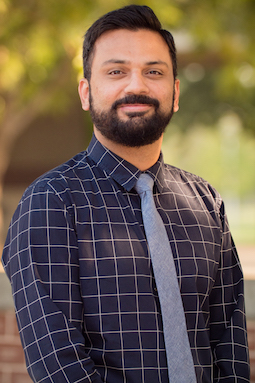
Sonia Betti is an Assistant Professor at the University of Padova. Her research focuses on motor control systems, neurophysiological mechanisms, and the interplay between social context and motor responses. She investigates topics such as corticospinal excitability, motor inhibition under threat, facial expression dynamics, and the neural basis of action observation. Key areas include the role of cerebellar development in motor disorders, temporal processing in neurostimulation, and the effects of fear conditioning on motor planning. Her work integrates neuroimaging, electrophysiological techniques, and behavioral studies to explore how contextual cues influence motor execution and perception. Notable themes span from embodied cognition in grasp movements to lateralized facial expressions' neural correlates. While no specific awards or grants are listed, her contributions emphasize translational applications of motor system research.
Marco Dadda is an Associate Professor at the Department of General Psychology, University of Padova. His research focuses on the evolution of behavioral asymmetries and lateralized brain functions in vertebrates, alongside studies on animal cognition. He investigates mechanisms underlying perception, learning, and decision-making in species like zebrafish, guppies, and plants. Key interests include lateralization costs/benefits, numerical cognition in fish, and environmental enrichment effects. Research highlights include groundbreaking work on plant communication via volatile compounds and perceptual completion in pea plants. His studies on zebrafish explore early learning, anxiety modulation through environmental factors, and operant conditioning methodologies. He also examines laterality's role in spatial navigation and simultaneous task performance across species. Publications consistently bridge behavioral biology with neuroethology, emphasizing cross-species comparisons (e.g., plant-fish cognition parallels). Ongoing work investigates how developmental experiences (light exposure, predation cues) shape lateralization patterns and cognitive capabilities. His lab employs innovative tools like automated behavioral tracking systems and minimally invasive testing protocols for neonatal fish.
Andrea Facoetti is an Associate Professor at the Department of General Psychology, University of Padua. His research focuses on developmental neuropsychology, particularly investigating visual and auditory perceptual mechanisms in neurodevelopmental disorders such as dyslexia, autism spectrum disorder, and dyscalculia. He explores early neurocognitive predictors and develops innovative rehabilitation programs, notably through action video game interventions and neuromodulation techniques like transcranial stimulation. His work emphasizes attentional control, multisensory processing, and neuroplasticity. Key contributions include demonstrating how action video games enhance reading abilities and attention in children and adults with dyslexia, and identifying visual and auditory temporal processing deficits linked to developmental disorders. He also studies parental autistic traits' influence on infant socio-communicative development. Recent articles highlight trends in neuromodulation (e.g., tRNS, tDCS), video game-based interventions, and the role of sensory integration in developmental outcomes. Facoetti collaborates on interdisciplinary projects, including oncological radiotherapy studies and educational tool development (e.g., reading assessment web applications). His research bridges basic neuroscience and clinical applications, aiming to translate findings into practical tools for early diagnosis and intervention. He actively publishes in high-impact journals and contributes to international conferences, advancing understanding of neurodevelopmental disorders' underlying mechanisms.
Shakoor Pooseh is a Postdoctoral Research Fellow at the Freiburg Center for Data Analysis and Modeling (FDM) , affiliated with the Institute of Physics at the University of Freiburg. His research focuses on computational approaches to decision-making, resilience dynamics, and neuropsychopharmacology. He leads the Value-Based Decision-Making Battery project, a Bayesian adaptive assessment tool for impulsive and risky behavior, and contributes to the EU Horizon 2020 DynaMORE initiative modeling psychological resilience. Education: Completed a PhD in Computational Methods in the Fractional Calculus of Variations at the University of Aveiro, Portugal (2013), with prior work in fractional optimal control problems. His interdisciplinary background bridges mathematics, neuroscience, and clinical psychology. Research Interests: Explores mathematical psychology, computational neuroscience, and statistical modeling of decision processes. Key topics include serotonin/dopamine modulation of impulsivity, resilience dynamics under stress, and translational research in addictive disorders. He develops software tools for behavioral experiments and machine learning models. Grants/Projects: Principal investigator for the DynaM-OBS longitudinal study on resilience, and collaborates on interventions like DynaM-INT . His work integrates clinical data with computational models to understand mental health outcomes. Labs/Teams: Active in the FDM interdisciplinary group and the Institute of Physics’ neuroscience unit. Collaborates with psychiatric research teams at the University Medical Center Freiburg.
Ganesh Krishnasamy is a Lecturer at the School of Information Technology, Monash University Malaysia. He holds a PhD in Electrical Engineering from the University of Malaya, with earlier degrees from Universiti Kebangsaan Malaysia (B.Eng and M.Eng in Electrical and Electronic Engineering). His research focuses on computer vision, pattern recognition, manifold learning, and semi-supervised learning, with applications in multimedia processing and understanding. He has led three research projects including 'AEinstein: Adversarial AI amongst Materials Discovery Domains' and pioneered semi-supervised action recognition in videos. His work aligns with UN Sustainable Development Goals related to innovation and infrastructure. Research Interests: Computer Vision Pattern Recognition Manifold Learning Semi-Supervised Learning Optimization Algorithms HDR Image Reconstruction Recent Projects: AEinstein Project (2024-2026): Focuses on adversarial AI in materials discovery. Research Management System (2023-2024): Aims to optimize research workflows. Semi-Supervised Image-to-Video Adaptation (2020-2023): Developed ActNetFormer and other hybrid models. Publications: Over 16 outputs since 2014, with recent emphasis on HDR imaging, sports video analysis (badminton rally detection), and optimization techniques. His work bridges theoretical machine learning with commercial applications.
Professor Jacquelyn Cranney is a faculty member at the University of New South Wales (UNSW), Sydney, where she holds a Professorial position in the Department of Psychology, Faculty of Science. Her research focuses on undergraduate psychology education, psychological literacy, and student wellbeing. She has held academic appointments at institutions including Dartmouth College (USA) and the University of Queensland (Australia) before joining UNSW. She earned her BA (Hons) and MA from the University of Queensland, followed by a PhD from Bryn Mawr College (USA). Education: BA (Hons), University of Queensland MA, University of Queensland PhD, Bryn Mawr College, USA Research Interests: Cranney’s work bridges cognitive neuroscience and educational psychology. Early research explored neural bases of motivation and learning. Current research emphasizes psychological literacy, student self-management, and wellbeing. Key areas include: Educational strategies for academic success Global standards in psychology education Curriculum design for wellbeing and resilience Awards: Fellow, International Federation of National Teaching Fellows (2020–) UK Advance HE Senior Fellowship (2018–) APS Society for Teaching of Psychology Presidential Citation (2018) UNSW Scientia Education Academy Fellowship (2017–2021) Advising & Grants: Cranney has advised numerous projects on educational innovation and student success. Her grants include work on Indigenous psychology education and curriculum renewal. She collaborates internationally on initiatives like the International Competences for Undergraduate Psychology (ICUP) model. Labs & Teams: Active in initiatives like the Healthy Universities project and the UNSW Scientia Education Academy. Her work is supported by platforms such as Academic Resources and Psychological Literacy Hub .
Nori Jacoby is an Assistant Professor in the Department of Psychology at Cornell University and a Research Group Leader at the Max Planck Institute for Empirical Aesthetics in Frankfurt. His research examines how internal representations shape sensory and cognitive abilities through computational approaches, cross-cultural studies, and large-scale behavioral experiments. Ph.D. from Hebrew University of Jerusalem (Edmond and Lily Safra Center for Brain Sciences) Postdoctoral training at MIT, UC Berkeley, and Columbia University Research areas include: Computational modeling of human perception Cross-cultural analysis of musical cognition Collective behavior in social networks Recent publications focus on: Global rhythm perception patterns Machine learning alignment with human cognition Oral transmission mechanisms in music evolution Scientific awards: NSF grant for collaborative creativity research Presidential Scholar in Society and Neuroscience Lab: Cornell Computational Cognition (CoCoCo) Lab
Dr. Fleur Bouwer is an Assistant Professor at the Cognitive Psychology Unit of Leiden University, affiliated with the Music Cognition Group and Amsterdam Music Lab. Her research focuses on rhythm perception and its neural mechanisms, combining cognitive neuroscience approaches with behavioral studies. She holds an NWO Veni Grant for investigating temporal expectations in rhythm and has received awards such as the Distinguished Women Scientists Fund and ABC Talent Grant for postdoctoral work. Her work spans cross-species comparisons (e.g., rhesus monkeys) and developmental studies (e.g., newborns). She collaborates widely, including with Prof. Henkjan Honing and Dr. Heleen Slagter, and actively engages in public science communication through lectures and media appearances. Key Roles: Assistant Professor (Leiden University), Postdoctoral Researcher (University of Amsterdam), Affiliate Researcher (Music Cognition Group) Education: PhD in Cognitive Neuroscience (likely from University of Amsterdam, based on collaborations) Grants: NWO Veni (2020), Distinguished Women Scientists Fund (2017), ABC Talent Grant (2016) Public Engagement: NEMO lectures, Atlas TV features, Volkskrant articles, and science communication projects like Toontjehoger Her research explores beat perception, rhythmic entrainment, and the interplay between attention and memory-based expectations. She uses EEG, ERP, and behavioral paradigms to study how rhythmic patterns are processed in the brain, with implications for music therapy and clinical applications (e.g., Parkinson’s disease). Her publications emphasize methodological rigor in cross-species research and highlight differences between beat-based and pattern-based temporal expectations. Recent work includes updated reviews on ERP methods for studying rhythm perception across species and collaborations on rhythmic complexity influenced by musical training. Awards: NWO Veni Grant, Distinguished Women Scientists Fund, ABC Talent Grant Labs/Teams: Cognitive Psychology Unit (Leiden), Cognition & Plasticity Lab (UvA), Music Cognition Group
Amanda McKerracher is a Clinical Professor in the School Psychology program at the University of California, Berkeley's School of Education. She holds dual licensure as a Licensed Educational Psychologist (#6772) and Licensed Psychologist (PSY33155) in California, and is additionally licensed in Ontario and British Columbia, Canada. Her roles include clinical supervision of doctoral trainees, teaching coursework in mental health assessment, ethical decision-making, and consultation skills. PhD in School Psychology, UC Berkeley MA in Child Study and Education, University of Toronto (OISE) BS in Psychology, University of Toronto Her research focuses on children with exceptional needs, particularly youth with visual impairments. Key areas include psychoeducational assessment adaptations, tactile learning strategies, and accessibility in education. Her work emphasizes improving assessment validity for visually impaired populations through innovative methodologies. Publications consistently explore sensory learning modalities, testing accommodations for disabled students, and the intersection of tactile perception with academic performance. Recent work highlights disparities in standardized testing for visually impaired students and proposes tactile-based interventions. No scientific awards were explicitly mentioned in the provided information. Dr. McKerracher's clinical practice and teaching involve close collaboration with schools and educational institutions to implement evidence-based practices.
Elyse S. Sussman is a Professor at Albert Einstein College of Medicine, holding dual appointments in the Dominick P. Purpura Department of Neuroscience and the Department of Otorhinolaryngology - Head & Neck Surgery . Her research focuses on the neurobiology of auditory perception, attention, and memory, employing human electrophysiology to study neural adaptation, multisensory interactions, and changes in auditory cognition across the lifespan. She investigates neural development in both typical and atypical conditions, including neurodevelopmental disorders and the effects of childhood leukemia treatments. Her laboratory combines non-invasive brain recordings with behavioral metrics to map auditory information processing. Notable areas include auditory scene analysis, predictive coding mechanisms, and the impact of attention on perception. Recent work spans topics like spatial hearing, sensory prediction errors, and bilingual language disorders in children. Research Highlights: Neuroplasticity in auditory processing Chemotherapy-induced sensory deficits Cross-modal sensory integration No scientific awards are explicitly listed. Her lab is based at the Rose F. Kennedy Center in Bronx, NY.
Goffredina Spano is a Lecturer in Psychology at Kingston University London's Faculty of Business and Social Sciences. A developmental cognitive neuropsychologist, her research explores the interplay between learning, memory, and sleep variability across the lifespan, with a focus on neurodevelopmental and memory disorders. Ph.D. in Psychology (2016) - University of Arizona Postdoctoral Research Associate (2016-2022) - UCL Queen Square Institute of Neurology Lecturer (2022-present) - Kingston University London Her work bridges foundational research on hippocampal function with applied treatment contexts, particularly for Down syndrome populations. Key areas include: Memory consolidation during sleep Neurodevelopmental disorder assessment tools Circadian rhythm development in children ERP-based memory measurement Language development and sleep efficiency Spano's publications (2009-2020) reveal consistent focus on sleep's role in neurodevelopmental disorders, with recent work (2020) extending into circadian rhythm interventions and hippocampal damage studies. Her methodology combines clinical trials, neuropsychological assessment, and neurophysiological measurements. Current research aims to enhance cognitive/educational outcomes and promote mental health through sleep-related interventions.
Michael Schober is a Professor of Psychology at The New School and Senior Vice Provost for Faculty Affairs. He holds a PhD from Stanford University (1990) and a Sc.B. from Brown University (1986). His research bridges psychology, linguistics, human-computer interaction, music, and design, focusing on coordinated action, cognitive processes, and technology-mediated collaboration. He previously served as Dean of the New School for Social Research (2006–2013) and as editor of Discourse Processes (2005–2015). Major research themes include survey methodology innovations, jazz improvisation coordination, virtual collaboration interfaces, and audience-performer dynamics. He co-developed influential frameworks for analyzing conceptual misalignment in survey interactions and received the 2013 Warren J. Mitofsky Innovators Award for advancing survey research methods. His work often involves interdisciplinary collaborations, such as with Frederick G. Conrad at the University of Michigan. Teaching spans graduate/undergraduate courses in psycholinguistics, research methods, and psychology of music. Current roles include overseeing faculty affairs and guiding institutional academic strategy. His portfolio http://www.mfschober.net showcases ongoing projects in music cognition and technology-enhanced communication.
Adam Hill is an Associate Professor of Electroacoustics at the University of Derby, co-leading the Electro-Acoustics Research Lab (EARLab) and leading the MSc Audio Engineering program. He holds a Ph.D. from the University of Essex, an M.Sc. in Acoustics and Music Technology from the University of Edinburgh, and a B.S.E. in Electrical Engineering from Miami University. His research focuses on low-frequency sound reproduction, live sound reinforcement, and noise pollution. He is a Chartered Engineer and a member of the AES, IOA, IEEE, and IET. Professional roles include Chair of the AES Technical Committee on Acoustics and Sound Reinforcement, and WHO technical working group member for Safe Listening Venues. Recent awards include the Tyndall Medal (2024) and the IoA Young Persons’ Award (2019). He teaches modules such as Audio Electronics and Live Sound System Design, and serves as a seasonal live sound engineer for Gand Concert Sound. His work spans academic publications, conference presentations (e.g., 2024 International Conference on Acoustics and Sound Reinforcement), and industry collaborations. Key research themes include sound exposure management, psychoacoustic correction, and innovative sound system design.
Rohit Mehta is an Associate Professor of Secondary Curriculum with Instructional Technology in the Department of Curriculum & Instruction at California State University, Fresno. He teaches courses on adolescent learning, educational research methods, cross-cultural theory, and academic writing across teacher credential, MA in Teaching, and Ed.D programs. His research focuses on pedagogy, creativity, technology, and coloniality, advocating for liberatory practices that challenge Eurocentric epistemologies. Dr. Mehta holds a Ph.D. in Educational Psychology and Educational Technology from Michigan State University (2017), an M.S. in Electrical and Computer Engineering from the University of Florida (2010), and a B.E. in Electronics and Communication Engineering from the University of Technology of Madhya Pradesh (2008). His transdisciplinary background includes work in electronics engineering and film editing. His research interests emphasize decolonial praxis, anti-colonial theory, and humanizing pedagogies. Key areas include critical literacies, neoliberalism in education, and qualitative mixed-methods research. He has co-led special issues in the Italian Journal of Educational Technology and Journal of Creative Behavior. Recent publications explore mindfulness in creativity, posthumanist approaches to education, and decolonizing creativity frameworks. His work appears in journals like Review of Research in Education, TechTrends, and Educational Technology Research and Development. Dr. Mehta has received fellowships including the Enhancement of Global Understanding (Netherlands, 2016) and Inside Teaching fellowships. He leads a transmedia art project using art-based methodologies for decolonial expression.
Mary Stevens is a Research Fellow at the Institute of Phonetics and Speech Processing (IPS) at Ludwig Maximilian University of Munich. Her work focuses on sound change, the phonetics-phonology interface, and experimental phonetics. She holds a PhD from the University of Melbourne (2007), following degrees from the Australian National University (B.A., 2000) and the University of Melbourne (B.A. (Hons), 2001). Stevens has been affiliated with the IPS since 2010, initially as a Humboldt Foundation-funded postdoctoral researcher and later as a full research fellow. Her research investigates how phonetic variation leads to permanent sound changes, particularly focusing on /s/-to-/sh/ retraction in languages like English and Italian. Current projects include a DFG-funded study (2018–2025) modeling the actuation of sound change through agent-based simulations. Key interests include computational modeling, sociophonetics, and linguistic typology. Publications span experimental phonetics, sound change dynamics, and computational linguistics. She collaborates internationally, notably with John Harrington and Frank Kleber, on projects exploring agent-based modeling and phonetic variation. Stevens also engages in interdisciplinary work, such as applying phonetic analysis to clinical communication training in medicine. Grants and Funding: DFG project (2018–2025) on modeling sound change actuation. Labs/Teams: Active member of the IPS research group, contributing to the Bavarian Archive for Speech Signals (BAS) and the MAMPF database for speech processing.





.jpg)