Oliver Brock is a Professor at the Technische Universität Berlin (TU Berlin) , holding the Alexander von Humboldt Professorship since 2009. His research focuses on algorithmic foundations for robotic agents to perform complex tasks in dynamic and unstructured environments , with cross-disciplinary applications in molecular structural biology (e.g., protein folding, docking). Education: Ph.D. in Computer Science, Stanford University (2000) M.S. in Computer Science, Stanford University (1994) Diploma in Computer Science, TU Berlin (1993) Research Trends: His work spans robotics , motion planning , soft robotics , and machine learning , with recent emphasis on acoustic sensing , adaptive behavior representation , and separating learning from modeling in manipulation tasks. Publications highlight probabilistic methods , human-robot interaction , and biomimetic systems . Scientific Awards: Notable recognitions include the 2016 RSS Best Systems Paper Award , 2015 Amazon Picking Challenge First Place , and the 2006 NSF CAREER Award . Advising & Grants: As a Humboldt Professor, he has led programs like the Science of Intelligence and Cognitive Systems tracks at TU Berlin. Professional service includes editorial roles in Autonomous Robots and International Journal of Robotics and Research . Labs & Teams: He leads the Robotics and Biology Laboratory (RBO) at TU Berlin, focusing on robotic manipulation , sensor design , and biological data integration .
Irfan Essa is a Professor at the School of Interactive Computing , Georgia Institute of Technology, and serves as Senior Associate Dean in the College of Computing. He leads the Interdisciplinary Research Center for Machine Learning at Georgia Tech (ML@GT) and holds a Senior Staff Research Scientist position at Google Inc. His academic journey includes a Ph.D. from MIT (1994) and prior research faculty roles at MIT Media Lab (1988-1996). Research Focus : Computer Vision, Machine Learning, Robotics, Computational Journalism, and Human-Computer Interaction. Leadership : Co-founded ML@GT, Adjunct Faculty at Carnegie Mellon's Robotics Institute. Essa’s research explores Generative AI , Computational Video , Wearable Computing , and Vision-Language Models . His work impacts areas like Autonomous Systems , Video Analysis , and Social Computing . Recent projects include end-to-end trainable frameworks for Image Retargeting (HALO) and Video Generation (VideoPoet), emphasizing content-structure preservation and zero-shot capabilities. His 15 most recent publications (2023-2025) span CVPR , NeurIPS , ICML , and ECCV , focusing on Generative Media , Diffusion Models , and Human Activity Recognition . Notable contributions include Text-Free Diffusion , Wearable-Based Activity Recognition , and Layered Transformation Architectures . Awards : NSF CAREER, IEEE Fellow, Best Paper Awards at ICML 2024 and ICLR 2023. Students : Advisees include Varun Agrawal, Aneeq Zia, Unaiza Ahsan, and Daniel Castro Chin. Labs/Teams : Affiliated with ML@GT, Georgia Tech's Center for Experimental Research in Computer Systems (CERCS), and Google Research.
Pascal Gaillard is an Associate Professor at the University of Toulouse - Jean Jaurès, where he conducts research at the CLLE Lab (Cognition, Languages, Language, Ergonomics, UMR5263) in the "Language and Cognitive Processes" Team, while teaching in the Music Department at the National Higher Institute for Teaching and Education in Toulouse - Midi-Pyrénées (INSPE). His academic career spans over two decades, beginning as an Assistant Professor in Musicology at Université de Toulouse - Le Mirail from 1998 to 2000, before becoming an Associate Professor at the University of Toulouse since 2002. His educational background includes: PhD in Musicology and Auditory Perception (1996-2000) from Université de Toulouse - Le Mirail / Université de Paris - Jussieu Master (DEA) in Musicology - Ethnomusicology (1993-1994) from Université de Toulouse - Le Mirail Maîtrise in Musicology - Ethnomusicology (1989-1990) from Université de Toulouse - Le Mirail Licence in Musicology (1985-1989) from Université de Toulouse - Le Mirail Dr. Gaillard's research focuses on auditory perception and cognitive processes, particularly the categorization of sounds. His work spans multiple domains including musical timbre perception, speech perception in individuals with age-related hearing loss, environmental sound recognition, and auditory processing in deaf individuals with cochlear implants. He has pioneered studies on how humans organize their sound world through categorization, drawing on prototypical categorization theory developed by Rosch (1976). A key insight from his research is that auditory categorization is dynamic rather than fixed, varying according to listener needs, tasks, and action goals. His recent publications demonstrate a strong interdisciplinary approach, bridging music cognition, clinical audiology, and cognitive neuroscience. There's a clear trend toward applied research with clinical implications, particularly for deaf children with cochlear implants, as evidenced by multiple studies on humanoid robots for speech-language training. His work also shows increasing integration of computational approaches, including transfer learning for music preference prediction and ontology-based data management. Dr. Gaillard has secured numerous research grants from prestigious funding bodies including the French National Research Agency (ANR), Occitanie Regional Council, and ANSES. Current projects include "The hospital and its 'Beeps': evaluation of the hearing health of caregivers" (2025-2028), "SILENCE - Comparative acoustics: earth, planets and extreme environments" (2024-2026), and "Rehabilitation of age-related hearing loss: evolution of cognitive load in a 3D virtual environment - AgeHear" (2020-2024). He directs the "Cognition, Behavior and Use" facilities (CCU) which include specialized auditory booths for research. Since 2003, he has developed TCL-LabX, experimental software for conducting categorization studies. His research collaborations span international boundaries, working with labs in France, Canada, and the Netherlands, as well as industry partners in aeronautics and healthcare sectors.
Loïc Caroux is an Associate Professor of Cognitive Psychology and Ergonomics at Université Toulouse Jean Jaurès, France, where he is affiliated with the CLLE laboratory (a joint lab between CNRS and University of Toulouse Jean Jaurès). He serves as Co-director of the Master's Degree in Cognitive Ergonomics, Technological Innovation and Human Factors and is a full member of the French National Council of Universities (CNU), section 16 (psychology and ergonomics). His educational background includes: Habilitation to Supervise Research ("HDR"), University of Toulouse, France, 2025 Ph.D. in Cognitive Ergonomics, University of Poitiers, France, 2012 Master's Degree in Cognitive Psychology, University of Poitiers, France, 2008 Master's Degree in Games and Interactive Media (major in Ergonomics), University of Poitiers, France, 2007 Bachelor's Degree in Cognitive Science, University of Lille, France, 2004 Dr. Caroux's research focuses on Human Factors/Ergonomics in everyday computing systems, with particular emphasis on video games, assistive computing technologies, and robotic and autonomous systems. His work investigates how design choices impact user experience, performance, and cognitive processes such as perception, attention, and memory. He frequently collaborates with partners from computer science, robotics, and health science disciplines to conduct interdisciplinary research that bridges theoretical understanding with practical applications in human-computer interaction. His recent publications (2022-2025) demonstrate a strong focus on video game ergonomics, gamification in transportation, assistive technologies for deaf children with cochlear implants, and user engagement with digital interfaces. These works span multiple disciplines including human-computer interaction, cognitive psychology, accessibility studies, and transportation behavior, reflecting his interdisciplinary approach to understanding human-system interactions across diverse contexts. Dr. Caroux has supervised numerous graduate students and postdoctoral researchers, including: Valentin Strahm (2023-2026), co-supervised with C. Lemercier Morgane Pujol (2022-2026), co-supervised with C. Lemercier Emilie Ferries (2022-2026), co-supervised with C. Lemercier Sabrina Stiti (2021-2025), co-supervised with O. Deguine Kristell Aguilar Alarcon (2018-2024), co-supervised with M.-P. Gleizes Noé Monsaingeon (2019-2022), co-supervised with C. Lemercier He has secured funding from various sources including the French Government (PIA4 program), Toulouse Métropole, Occitanie Region, and CNRS for projects such as VILAGIL, IMMUNE, C2C, and MAN3. Dr. Caroux is actively involved in research management as co-manager of the thematic axis "Cognition in Interaction with Innovative Technologies" of the CLLE Lab and manager of the technical platform ROB (platform for studies on human-robot interaction). He also serves as a reviewer for numerous prestigious journals including Applied Ergonomics, Ergonomics, and Computers in Human Behavior, as well as conferences like ACM CHI and HFES.
He Kong is an Associate Professor at Southern University of Science and Technology (SUSTech), affiliated with the School of Automation and Intelligent Manufacturing, where he also serves as Deputy Director of the SUSTech Institute of Robotics. Previously, he was an Assistant Professor in the Department of Mechanical and Energy Engineering at SUSTech from January to May 2022. Prior to joining SUSTech, he was a Research Fellow at the Australian Centre for Field Robotics, University of Sydney (2016-2021), and at Cranfield University's Advanced Vehicle Engineering Centre (2015-2016). He received his Ph.D. in Electrical Engineering from the University of Newcastle, Australia (2014), M.E. in Control Science and Engineering from Harbin Institute of Technology (2010), and B.E. in Electrical Engineering and Automation from China University of Mining and Technology (2004). His research focuses on robotic intelligent perception and decision making, robot audition, optimal filtering and estimation, and advanced control methods. Specifically, he works on active multi-mode perception, parameter calibration of robot audition systems, optimal filtering under unknown inputs, and fully actuated system approaches. His work has significant applications in precision agriculture, environmental monitoring, and robotic inspection of hazardous industries such as chemical and mining operations. His recent publications reveal a strong emphasis on multi-modal perception systems, particularly combining visual and auditory sensing for robotic applications. His research shows a progression from theoretical control methods toward practical implementations in field robotics, with increasing focus on real-world applications in agriculture and hazardous environments. Finalist for Youth Author Prize, IFAC Workshop on Robot Control (2019) Fifth China Robotics Academic Annual Conference Best Poster Award (2024) 14th International Conference on Indoor Positioning and Indoor Navigation Best Paper Award (2024) The Equity Scholarship, Council of International Students Australia (2011) Outstanding Postgraduate Students Award, Harbin Institute of Technology (2010) Professor Kong actively supervises numerous PhD and Master's students and has established a productive research group focused on active intelligent systems. His laboratory is equipped with advanced facilities including over 30 motion capture systems, Unitree humanoid robots, robot dogs, wheeled mobile robots, and custom-developed platforms like Cubli and acoustic perception systems. He serves on editorial boards for several prestigious journals including IEEE Robotics and Automation Letters and IEEE Sensors Letters, and has been an Associate Editor for major robotics conferences such as IEEE ICRA and IEEE/RSJ IROS.
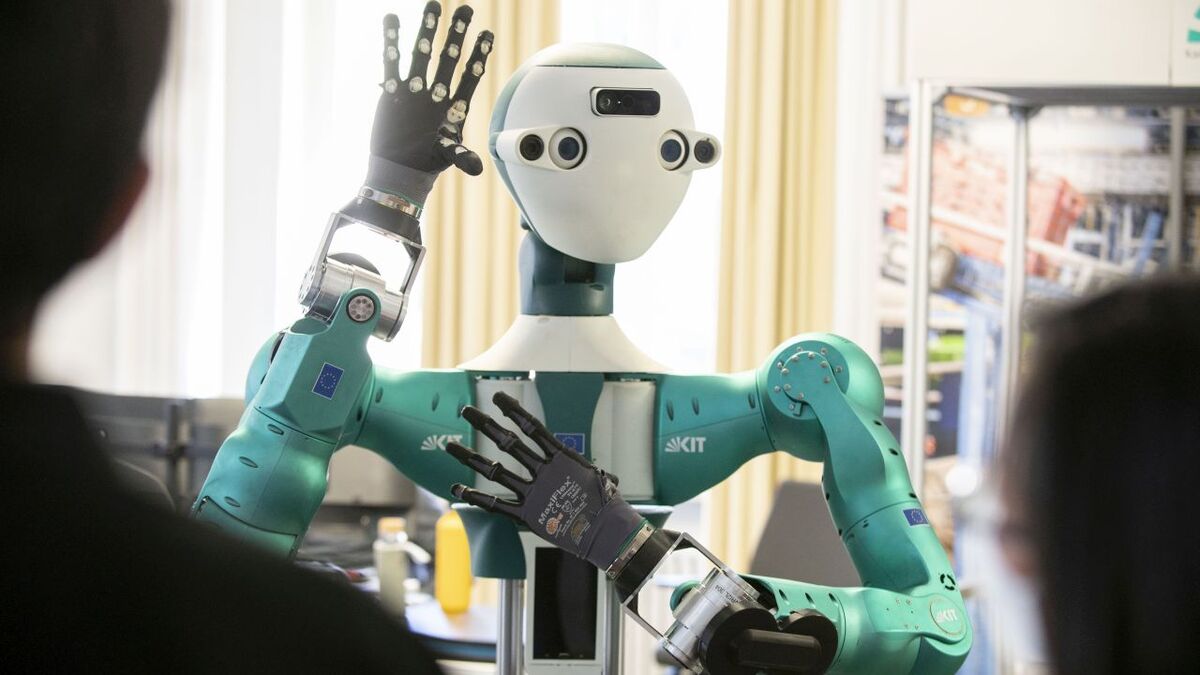
Prof. Tamim Asfour is a full-time Professor at the Karlsruhe Institute of Technology (KIT), affiliated with the Institute of Anthropomatics and Robotics. His research focuses on humanoid robotics and artificial intelligence (AI), aiming to understand natural intelligence and develop assistive technologies that enhance human quality of life. Develops the ARMAR robot series for versatile tasks in domestic and industrial settings Focuses on mechano-informatics (mechatronics, computer science, AI) and anthropomatics (human-machine symbiosis) Specializes in visual/haptic perception, object manipulation, and human-robot interaction Creates wearable assistive technologies like exoskeletons and hand prostheses His work emphasizes intuitive programming through demonstration, where robots learn via observation, imitation, and self-experience. Asfour envisions a "movement alphabet" for robot programming, enabling complex action combinations. He positions robotic AI as a transformative force for future applications in work, healthcare, and education.
Zerrin Yumak is an Assistant Professor at the Department of Information and Computing Sciences, Faculty of Science, Utrecht University, specializing in virtual humans and social robotics. She leads Task 3.2: Embodiment and Physical Interaction in the RAGE project. Her research focuses on Social and emotional behavior analysis for virtual characters Machine learning applications in motion capture data Constrained motion graph search algorithms Lip-sync and gesture animation generation Real-time multimodal interaction systems Notable projects include the Virtual Human Controller asset for Unity 3D, integrated with BiP Media and Randstad applications. Recent work spans 2025: SemGes for semantics-aware gesture generation 2024: ProbTalk3D emotion-controllable facial animation 2023: Diffusion model-based facial animation (Facediffuser) 2020: Music-driven expressive gesture generation She contributes to workshops like GENEA (2021-2022) and MASSXR (2025), advancing non-verbal behavior modeling for embodied agents.
Dennis Krupke is a Researcher at the Department of Informatics, University of Hamburg, affiliated with the Human-Computer Interaction (HCI) group and the Technical Aspects of Multimodal Systems (TAMS). His work bridges robotics, virtual reality, and human-computer interaction, focusing on natural interfaces for human-robot cooperation. Education: Diploma in Informatics (2014), University of Hamburg Research Interests: Human-Robot Interaction (HRI) Bio-inspired Robotics and Sensor Systems Modular Robotics and Low-cost Prototyping Mixed Reality for Immersive Scenarios Scientific Awards: Finalist, IROS KROS Best Paper Award on Cognitive Robotics (2018) Highly Commended Paper, Industrial Robot Innovation Award (2017) CLAWAR Association Best Technical Paper Award (2015) Best Innovative Robot Award, CLAWAR (2014) Publications & Projects: Co-developed a printable modular robot with Florens Wasserfall Contributed to ROS-Unity integration for VR-based robotics Explored locomotion techniques for modular robots using reinforcement learning
Luis Arturo Cavazos Quero is an Assistant Professor in the Department of Computer Science and Engineering at Sejong University , South Korea. His research agenda centers on Human–Computer Interaction , accessibility for visually impaired users , and multimodal interaction technologies . Education: Ph.D. in Computer Science, Sungkyunkwan University (2022) M.S. in Computer Science, Sungkyunkwan University (2015) B.S. in Computer Science, Tecnológico de Monterrey (ITESM) (2010) Research Focus: Dr. Cavazos Quero designs and evaluates interactive systems that enable people with visual impairments to access art, education, and mobility. His projects include multimodal interfaces for artwork exploration, voice-based navigation aids, tactile map applications, and Braille text-entry tools for mobile devices. Recent Publications Trend: Since 2021 his output has concentrated on two parallel tracks: (1) assistive technologies that merge tactile, auditory, and olfactory feedback for non-visual art appreciation, and (2) robotics and data security —including quadruped robot control and reversible data-hiding algorithms—showing a broad yet accessibility-driven research portfolio. Scientific Awards: No specific awards are listed in the provided materials. Advising & Grants: Current information on funded projects or doctoral students is not available in the supplied text. Labs & Teams: He completed a postdoctoral fellowship at the Human–Computer Interaction Laboratory, Ewha Womans University (2022–2023) and now leads research activities within his department at Sejong University.
Dr. Jean-Luc Zarader is a Professor at Sorbonne University's Faculty of Engineering , serving as Deputy Director of the UFR of Engineering. Based at ISIR (Institute of Intelligent Systems and Robotics) in Paris, his research focuses on speech processing , neural networks , and binaural sound localization with applications in humanoid robotics and aircraft diagnostics. Key research areas: Speech coding, Nonlinear signal processing, Humanoid auditory systems, Fault diagnosis Active collaborations with teams: ACIDE, MLIA, IRIS Research Trends (2017-1996): 2017-2012: Whale bioacoustics, Aircraft diagnostics, Binaural localization 2007-2000: Speaker verification, Predictive coding, Neural network applications 1999-1996: Doppler lidar analysis, Speech compression His scientific contributions span multiple disciplines, including: Neural network optimization for signal processing Acoustic feature extraction Humanoid robot perception systems Aerospace fault detection Bioacoustic pattern recognition
Mohsen Kaboli is an Assistant Professor (Part-time) at Eindhoven University of Technology (TU/e) in the Netherlands, affiliated with the Department of Electrical Engineering and the Electronic Systems group. Since 2018, he has served as head of the AI, Robotics & Cognitive Vehicle research lab at BMW Group’s Center of Invention in Munich, Germany. Previously, he held positions at Radboud University’s Institute for Brain and Cognition (2019-2022) and Technical University of Munich (TUM) as a postdoctoral research fellow. His research focuses on Embodied Robotics, Visuo-Tactile Interactive Perception, and Machine Learning, with applications in Robotic Grasping, Human-Robot Collaboration, and Neuromorphic Computing. He leads European-funded projects like PHASTRAC (Oscillatory Neural Networks for AI Edge Computing) and INTUITIVE (Tactile User Interfaces). Keywords: Tactile Intelligence, AI, Robotics Application Domains: Mobile Robotics, Medical Instrumentation, Neuroprosthetics His recent publications (e.g., ViTract, Shared Visuo-Tactile Perception) emphasize robust object pose estimation and shape reconstruction using Bayesian filtering and Graph Neural Networks. He has authored ~40 academic works and contributed to 20 patents. Scientific Awards : IEEE Senior Member (2018) Georges Giralt Ph.D. Award (Finalist) IEEE ICRA Outstanding Paper Award (Finalist, 2023) IEEE FLEPS Outstanding Student Award (Winner, 2022) IEEE ROSE Outstanding Paper Award (Winner, 2024) Mohsen Kaboli serves as Editor/Associate Editor for IEEE ICRA, IROS, R-AL, T-RO, and IJRR. His work bridges tactile perception, AI, and robotics, with impacts in wearables, medical devices, and autonomous systems.
Prof. Dr. Kristian Hildebrand is a Professor of Computer Graphics and Interactive Systems at Berlin University of Applied Sciences and Technology since 2015, leading the Intelligent Interactive Systems research group. His work bridges computer graphics, VR/AR, computer vision, and machine learning. PhD in Computer Graphics (Technical University of Berlin, 2013) Diploma in Computer Science and Media (Bauhaus University Weimar) Academic experience: University of British Columbia, Max Planck Institute Saarbrücken Industry experience: ART+COM Studios Berlin, Disney Research Zurich, co-founder of kunstmatrix Research Interests span computer graphics , AR/VR systems , computer vision , and digital fabrication , with applications in: Medical therapy (AnorexiaVR, PAN-Assistant, VITALAB.mobile) Human-robot interaction (Digit gestures, Non-verbal communication) Machine learning (Domain adaptation, GAN-based medical image synthesis) Digital fabrication (Optimized 3D printing, crdbrd fabrication) Publications show trends in: Medical VR applications for mental health and geriatrics GAN-based medical image generation and segmentation Redirected walking and spatial navigation techniques Domain adaptation for industrial object classification Scientific Contributions : Principal investigator in multiple DFG-funded projects (tele.interaction, Manipulation of virtual self-perception) Recipient of Best Student Paper Award (ECML-PKDD 2023) Key role in BMBF projects: Vitalab.mobile, BewARe, SynthNet Academic Leadership includes: Supervision of PhD students (Christopher Kümmel, Tabea Kossen) Teaching: Computer Vision, Game Programming, Scientific Computing Founding director of Human.VR.Lab (interdisciplinary computer science/life science collaboration)
Hiroyasu Iwata is Professor at Waseda University's Faculty of Science and Engineering, School of Creative Science and Engineering. He serves as Director of the Frontier Mechanical Engineering Research Institute and Director of Global Robot Academia Institute. Holding a Dr. Engineering degree from Waseda University, his research spans intelligent machines, medical robotics, and rehabilitation engineering, with over 256 publications and an h-index of 22. His research focuses on human-robot symbiosis with emphasis on humanoid robotics, tactile perception, and medical applications. Iwata develops systems for rehabilitation, tele-operated medical procedures, and human-coordinated machine systems that enhance human capabilities. His recent work explores VR applications for cognitive rehabilitation, particularly for stroke patients with spatial neglect, and human augmentation through supernumerary robotic limbs. Iwata's publications reveal strong interdisciplinary trends across medical robotics, virtual reality applications, and human augmentation technologies. His research bridges engineering and medical fields with particular focus on stroke rehabilitation, echocardiography robotics, and VR training systems for cognitive and physical rehabilitation. Best Paper Award, Robotics Society of Japan (2018) Multiple Outstanding Presentation Awards from Society of Instrument and Control Engineers (2017) Grand Prize, System Control Fair 2017 Executive Committee (2017) The Young Scientists' Prize from Minister of Education, Culture, Sports, Science and Technology (2009) Distinguished Achievement Award from Waseda University (2007) Iwata actively collaborates with medical institutions including Nippon Medical School through joint symposia on medical-science-engineering collaboration. His laboratory conducts research on robotic echocardiography, VR rehabilitation systems, and supernumerary robotic limbs, securing funding for projects that translate engineering innovations into medical applications. He directs the Frontier Mechanical Engineering Research Institute and Global Robot Academia Institute at Waseda University, fostering interdisciplinary collaboration between engineering and medical fields. Through the Nippon Medical School and Waseda University Joint Symposium series, his work promotes the integration of robotics, medicine, and engineering for clinical applications.
Prof. Dr. Sarah Degallier Rochat serves as Head of Humane Digital Transformation at Bern University of Applied Sciences (BFH), where she is a Professor in the Department of Technology and Computer Science. She is affiliated with the Institute for Human Centered Engineering (HuCE) and specifically works within the Laboratory for Computer Perception and Virtual Reality. Her research spans multiple institutional collaborations including the Institute for Data Applications and Security (IDAS) at BFH and partnerships with the University of Fribourg on experimental studies. Professor Degallier Rochat's research focuses on human-robot interaction , collaborative robotics , and humane digital transformation . She challenges the notion of complete human replacement by technology, advocating instead for human augmentation where technology empowers rather than mechanizes workers. Her work examines how humans and robots can work together effectively in industrial settings, with particular emphasis on developing intuitive interfaces for robot programming that promote digital skills acquisition among workers through experiential learning rather than symbolic cognition. Her research has evolved from foundational work in motor primitives for humanoid robots to current applications in industrial settings. She investigates the human factors involved in digital transformation, with special attention to workers with intermediate and lower levels of education who are often overlooked in digital skills training. Her approach emphasizes embodied cognition and work experience as foundations for developing effective human-machine interfaces that leverage existing worker knowledge. Human augmentation through collaborative robotics Intuitive robot programming interfaces (visual programming) Digital skills development for industrial workers Human-centered approaches to digital transformation Ethical considerations in human-robot collaboration Workplace adaptation to new technologies Professor Degallier Rochat has secured funding from diverse sources including Innosuisse, the Gerbert Rüf Foundation, and SNF. With support from the Gerbert Rüf Foundation's First Venture program, she co-founded a spin-off company aimed at making automation profitable for SMEs through employee training. Her research demonstrates significant practical impact, with interface designs tested across 116 participants showing positive effects on programming anxiety and usability. Her laboratory develops practical solutions for human-robot collaboration in manufacturing environments, creating interfaces that workers can use without extensive technical training. Through numerous publications, conference presentations, and media engagements, she actively contributes to the discourse on ethical and human-centered technological development in industry.
Mikko Peltola is an Associate Professor (tenure track) in Welfare Sciences at Tampere University's Faculty of Social Sciences. He also serves as a University Lecturer in Welfare Sciences and has been the Psychology Degree Programme Manager since 2023. Dr. Peltola earned his PsM from the University of Tampere in 2006 and his PsT (equivalent to PhD) in 2011. His academic journey includes postdoctoral research at Leiden University (2012-2013) and the University of Tampere (2014-2017), followed by prestigious positions as Academy Research Fellow at the University of Tampere (2017-2022) and University Research Fellow at the Tampere Institute for Advanced Study (2021-2023). Dr. Peltola's research centers on developmental psychology with emphasis on social information perception, emotional development, and childhood empathy. His work investigates how infants and children perceive emotional cues, examining the biological and social factors influencing empathy development. He employs psychophysiological methods to explore the neural mechanisms underlying social cognition in development, with recent projects focusing on infant attachment, parental sensitivity, and the development of emotional recognition skills. Analysis of Dr. Peltola's publication record reveals a strong trajectory in developmental research with increasing international collaboration. His work spans from foundational studies on infant cognition to large-scale cross-cultural projects like the Global Temperament Project involving 59 nations. A distinctive trend in his recent work is the innovative integration of robotics into developmental research, using humanoid robots to investigate social attention and emotion perception in infants and children. Dr. Peltola actively contributes to academic service as an editorial board member of Developmental Psychology (2022-2024) and previously chaired the Psychology Doctoral Education Network Dopsy (2019-2022). His supervisory activities include mentoring master's students and serving as pre-examiner for doctoral dissertations, reflecting his commitment to developing the next generation of psychological scientists. Dr. Peltola leads the TransParent research project and conducts his research within the Human Information Processing laboratory at Tampere University. His team also investigates the relationship between sleep patterns and developmental outcomes through the Child sleep and health study (CHILD-SLEEP), demonstrating the breadth of his research interests in child development and welfare.