Michael Everett is an Assistant Professor at Northeastern University with a joint appointment in the Department of Electrical & Computer Engineering and the Khoury College of Computer Sciences. He directs the Autonomy & Intelligence Laboratory, focusing on certifiable learning machines at the intersection of robotics, deep learning, and control theory. His research emphasizes safety, reliability, and efficiency in robotics applications like off-road navigation and social environments. Education: PhD in Mechanical Engineering, Massachusetts Institute of Technology (2020) SM in Mechanical Engineering, MIT (2017) SB in Mechanical Engineering, MIT (2015) Research Interests: Robotics and motion planning Control theory and neural network verification Reinforcement learning applications Certifiable safety guarantees for autonomous systems Navigation in dynamic/human environments Awards: Runner-Up: Best Paper Award (ICML 2022) Winner: Best Student Paper (IROS 2017/2023) Editors’ Top 5 Published Articles (IEEE Access 2021) Lab & Contributions: The Autonomy & Intelligence Lab develops algorithms for high-speed off-road autonomy, socially aware navigation, and neural feedback verification. His work includes the RAMP planning pipeline and Evora traversability learning framework. He collaborates with Google’s PAIR team on trustworthy AI.
Vanessa Bowden is a Senior Lecturer in the School of Psychological Science at The University of Western Australia. She serves as Graduate Research Coordinator for the School, Deputy Director of the Master of Industrial and Organisational Psychology program, and Co-Director of the Human Factors and Applied Cognition Laboratory. Her academic credentials include a PhD from The University of Western Australia and a Graduate Diploma in Human Factors and Safety Management Systems from the University of South Australia. Dr. Bowden's research expertise spans multiple domains within human factors and cognitive psychology. Her primary research interests include: Human interaction with technological systems Automation design and human-automation interaction Driver distraction and transportation safety Cognitive processes in complex work settings Situation awareness and workload management Prospective memory in applied contexts Her recent research has focused on understanding how humans interact with automated systems across various domains, from driving to air traffic control. Dr. Bowden has developed computational models of human decision-making with automated advice and has investigated the impact of automation transparency on operator performance. Her work has important implications for designing safer technological systems that optimize human performance. Dr. Bowden has received significant research funding, including an Australian Research Council Discovery grant (2024) for $924,198 for "A Unified Computational Model of How Humans Use Automated Advice" and multiple Department of Defence grants. Her research has been published extensively in top-tier journals in human factors and cognitive psychology. She has supervised numerous research students and currently accepts PhD and other Higher Degree by Research students. Dr. Bowden teaches several courses including Psychology of Training (PSYC5573), Industrial and Organisational Psychology (PSYC3309), and Perception and Sensory Neuropsychology (PSYC3318).
Dr. Mark Williams is a Professor and Chair of the Department of Health, Kinesiology, and Recreation at the University of Utah. He holds dual expertise in kinesiology and neuroscience, with a focus on perceptual-cognitive mechanisms in skill acquisition. Previously, he served in senior roles at Brunel University London and the University of Sydney. His research spans 180+ peer-reviewed articles across neuroscience, psychology, and sports science, supported by $6M+ in external funding from agencies like the Australian Research Council and UK-based councils. Education: B.Sc. (Hons) in Sports Science from Manchester Metropolitan University; Ph.D. in Movement Science/Experimental Psychology from the University of Liverpool. Research Interests: Neural underpinnings of perceptual-motor skills, decision-making in dynamic environments, expertise development, and the impact of anxiety on motor performance. His work integrates neuroimaging (fMRI, EEG) with behavioral experiments to explore cognitive-motor interactions. Awards: Distinguished Scholar Awards from International Society of Sport Psychology and North American Society for Psychology of Sport and Physical Activity. Served as Visiting Professor at 9+ institutions including Florida State University and University of British Columbia. Advising & Grants: Supervised ~50 doctoral students and mentored 9 postdocs. Editorial roles include Editor-in-Chief of Journal of Sports Science and Executive Editor for Human Movement Science. His grants address topics like skill development pathways in youth athletes and cognitive performance under environmental stressors. Labs & Teams: Active in interdisciplinary collaborations exploring motor learning, sport cognition, and neuroplasticity. Co-developed virtual reality tools for mobility anxiety research and fall prevention strategies.
Dr. Maria Witek is an Associate Professor at the Department of Music, University of Birmingham. Her research focuses on the psychology, cognitive neuroscience, and philosophy of musical experience, particularly rhythm, timing, emotion, and body-movement. She leads the Witek Lab, investigating how dance music experiences emerge from interactions between neural, social, and embodied processes. Notable projects include studying rhythmic skill in DJs (funded by AHRC) and ensemble synchronization in the ARME project (EPSRC-funded). She holds a DPhil from Oxford and previously worked at Aarhus University. Her methods span experimental psychology, neuroimaging, and participatory action research. Education: BA Musicology (Oslo, 2006), MA Music Psychology (Sheffield, 2008), DPhil Music (Oxford, 2013) Research interests include groove theory, disabled DJs' embodied timing, and the social dynamics of music-making. She collaborates with artists and tech companies like Drake Music and Native Instruments to develop inclusive musical tools. Articles focus on rhythmic entrainment, neurodiverse musical practices, and the neural basis of musical pleasure. Current grants include work on disability-inclusive DJ practices and virtual ensemble training systems.
Patrick Bruning is Professor of Business Administration in the Faculty of Management at the University of New Brunswick. He teaches organizational behavior, leadership, and motivation courses. Dr. Bruning holds a PhD from Purdue University and researches work behavior dynamics with focus on job crafting and organizational sponsorship relationships. Research focuses on: Job crafting competencies and outcomes Leadership development strategies Organizational sponsorship effectiveness Social influence in networked environments His publications appear in premier outlets including Academy of Management Journal and Organizational Behavior and Human Decision Processes. Awards include SSHRC Grants, Harrison McCain Young Scholar's Award, UNB Merit Award, and multiple research excellence recognitions. He serves on editorial boards for Human Relations, Journal of Management, and Journal of Vocational Behavior.
Erik Prytz is a Senior Associate Professor in Cognitive Science at the Department of Computer and Information Science (IDA) at Linköping University. His research focuses on applying human factors principles to improve safety-critical systems, particularly in emergency response domains such as first aid, disaster medicine, and prehospital care. He holds a PhD in Human Factors Psychology and has served in roles including Director of the Forum Securitatis graduate school and Program Chair for the Cognitive Science BSc program. Education: PhD in Human Factors Psychology (Old Dominion University, 2014), MSc in Cognitive Science (LiU, 2010). Research Interests: Simulation-based training, stress and mental workload, emergency responder teamwork, and human-system interaction in crisis scenarios. His work emphasizes interdisciplinary collaboration, combining cognitive science, computer science, and medicine to enhance emergency response systems. Recent projects explore driver behavior toward emergency vehicles, ad-hoc responder group dynamics, and optimal placement of bleeding control kits in public spaces. He contributes to initiatives like the Center for Advanced Research in Emergency Response (CARER) and the Forum Securitatis graduate school. Erik’s teaching includes courses on human factors, distributed cognition, and emergency response systems. He actively participates in curriculum development and quality assurance committees within the Faculty of Arts and Sciences.
Rynson W.H. Lau is a Professor of Computer Science at City University of Hong Kong (CityU), leading research in Computer Graphics, Computer Vision, and Deep Learning. He holds an Honorary Professorship at Swansea University. Previously, he served on faculties at Durham University and The Hong Kong Polytechnic University. His work focuses on advancing graphics and vision techniques, including deep learning applications for graphics/vision problems, with publications in top venues like SIGGRAPH, CVPR, and NeurIPS. He has received the Adobe Research Gift (2023) and the Springer Nature Editorial Contribution Award (2025) for his editorial contributions to the International Journal of Computer Vision . Education: B.Sc. (First-class Honors) in Computer Systems Engineering from University of Kent Ph.D. in Computer Science from University of Cambridge Research Interests: Computer Graphics: Focused on 3D reconstruction, rendering, and real-time performance capture. Computer Vision: Specializing in saliency detection, object recognition, and low-light scene enhancement. Deep Learning: Developing generative models and diffusion-based frameworks for graphics and vision tasks. Editorial Roles: Editorial Board Member, International Journal of Computer Vision and IET Computer Vision . Guest Editor for special issues in journals like ACM Transactions on Internet Technology and IEEE Transactions on Multimedia. Teaching: 2024/25 Academic Year: CS4185: Multimedia Technologies and Applications CS4188/CS5188: Virtual Reality Technologies and Applications Research Team: Advises over 20+ students and collaborates internationally. Recent projects include AI-driven VR systems for healthcare and advanced 3D content generation using diffusion models.
Aneeqa Suhail is an Assistant Professor in the Department of Human Resource Studies at Tilburg University, Netherlands, affiliated with the Tilburg School of Social and Behavioral Sciences. She holds a Ph.D. in Social Sciences from KU Leuven, Belgium. Her research focuses on strategic HRM, employee outcomes, leadership, and public sector HR reforms, with a regional emphasis on Pakistan and South Asia. Her work explores topics such as HRM autonomy in public hospitals, ethical challenges in disaster management, and the role of Sufi shrines in governance. She has published in journals like Journal of Organizational Effectiveness and contributed to edited volumes on public sector reforms. Her research bridges organizational theory and practical policy implementation, particularly in healthcare and public institutions. Key themes in her publications include the interplay between HR practices and leadership, multi-level employee dynamics, and institutional logics influencing HR adoption in public organizations. She has conducted case studies on work-life balance for public sector employees and analyzed decentralization reforms in Pakistan's health sector.
Dr. Michael Otto is affiliated with the University of Ulm, Department of Computer Science, within the Faculty of Engineering. His research focuses on virtual technologies for production planning, immersive virtual assembly assessments, and markerless motion capture systems. He has contributed to projects like ARVIDA (Cost-efficient motion capture systems) and INTERACT (Human-centered workplaces). His work bridges computer science, manufacturing systems, and human factors. Key contributions include developing frameworks for motion capture, virtual reality benchmarking, and augmented reality applications in industrial contexts. Notable achievements include receiving the Best Industrial Paper award (2015) for his work on ubiquitous tracking using depth cameras. His research addresses challenges in assembly planning, ergonomic assessments, and spatial interaction in manufacturing environments. Education/Background: Former External PhD Candidate at University of Ulm. Research Interests: Dr. Otto’s work emphasizes practical applications of virtual and augmented reality in manufacturing. He explores how technologies like markerless motion capture and immersive environments can optimize assembly processes, enhance worker ergonomics, and improve production verification workflows. His projects often involve interdisciplinary collaboration with industry partners. Articles Overview: His publications (2014–2025) span topics such as augmented reality visualization, motion tracking algorithms, and VR-based simulation tools. These contributions highlight advancements in scalable systems, sensor fusion, and human-motion analysis within industrial contexts.
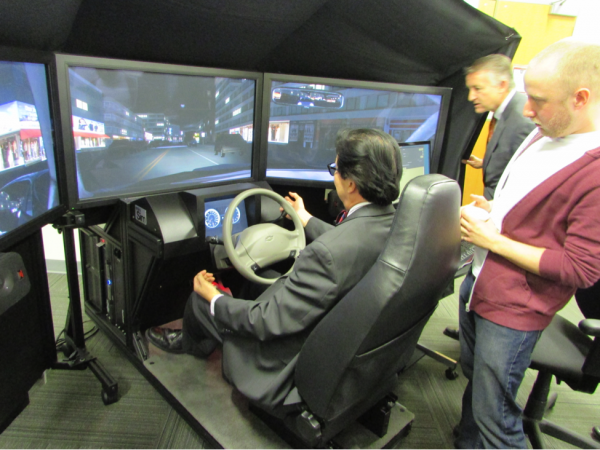
Professor Chris Lee is a faculty member in the Department of Transportation Science and Engineering at the University of Windsor's Faculty of Engineering. His research focuses on advancing transportation safety through the analysis of driver behavior, traffic flow dynamics, and the integration of emerging technologies like autonomous vehicles and machine learning. Key areas include collision risk prediction, driver vigilance assessment, and the development of advanced car-following models. He has contributed to initiatives such as the Transportation Science and Engineering scholarship program, supporting student research in innovative technologies like driving simulators for lane change behavior studies. His work bridges engineering and human factors, addressing challenges such as driver response to autonomous systems, heavy vehicle traffic management, and cross-cultural automotive design. Lee's interdisciplinary approach leverages data analytics, physiological signals, and machine learning to solve real-world transportation problems. His research has implications for policy-making, infrastructure design, and vehicle safety standards. Lee has collaborated extensively on projects analyzing crash precursors, variable speed limits, and the impact of ITS (Intelligent Transportation Systems) on safety. His publications span over two decades, demonstrating a commitment to both academic rigor and practical applications in transportation engineering. Notable contributions include refining car-following models, studying driver aggression, and evaluating the effectiveness of traffic management strategies.
John Reganold is a Regents Professor of Soil Science and Agroecology at Washington State University (WSU), affiliated with the Department of Crop and Soil Sciences within the College of Agricultural, Human, and Natural Resource Sciences (CAHNRS). He specializes in sustainable agriculture, soil health, and organic farming systems. Reganold holds a B.A. in German (1971), M.S. in Soil Science (1974), and Ph.D. in Soil Science (1980) from the University of California at Berkeley and Davis. He teaches courses including Organic Gardening/Farming, Advanced Soil Analysis, and oversees the 30-acre Eggert Family Organic Farm research initiative. His research focuses on measuring the sustainability of organic vs. conventional farming systems, with a focus on soil health, crop yields, environmental quality, and economic performance. Notable studies include the long-term impacts of farming systems on soil organic matter and the financial competitiveness of organic agriculture. Reganold has authored influential papers in Nature , PNAS , and Scientific American , emphasizing agroecology and perennial grain development. Reganold directs the Organic and Sustainable Agriculture undergraduate program (~25 students) and the Online Certificate in Organic Agriculture. His work integrates ecological principles with practical farming practices, advocating for policies that support sustainable agricultural transitions. Current projects explore climate change impacts on soil health and the role of perennial grains in future food systems. His teaching and research laboratories emphasize participatory learning and field-based experimentation. Recent collaborations include studies on biodegradable plastics in agriculture and the role of dung beetles in disrupting pest vectors. Reganold’s work bridges academia and practice, aiming to advance global food security while preserving environmental integrity.
Prof. Kremena Bachmann is a Professor at the ZHAW School of Management and Law, specializing in Behavioral Finance, Household Finance, and Retirement Decision Making. She holds a PhD from the Swiss Finance Institute, University of Zurich, and has extensive postdoctoral research experience at the University of Zurich's Institute of Banking and Finance. She leads the 'Certificate Program for Advanced Studies in Behavioral Finance' and serves as Head of Research and Development at Moor & Bachmann AG. Her research focuses on investor behavior, financial decision-making biases, and retirement planning strategies. She has published widely in top journals like Journal of Economic Psychology and Financial Services Review , and received the 2007 Best Paper Award from the Swiss Society for Financial Market Research. She actively engages in media commentary, discussing topics like retirement asset allocation and minimizing savings gaps in Neue Zürcher Zeitung and Cash . Education: PhD in Finance, Swiss Finance Institute, University of Zurich (2002–2007) lic.oec.HSG in Finance and Economics, University of St. Gallen (2003–2004) Bachelor's in Economics, Study Center Gerzensee (1995–2002) CAS in Higher School Didactic, Pedagogical School Zurich (2021) Research Interests: Combines experimental methods with behavioral finance to study how cognitive biases affect investment decisions, particularly in retirement contexts. Recent work examines impact investor motivations and advisor influence on belief updating. She leads projects like 'Incentives and Retirement Savings in Switzerland'. Grants & Projects: Swiss National Science Foundation (Project 'Behavioral Finance for Retail Banking') Leadership of the 'Certificate Program for Advanced Studies in Behavioral Finance' (University of Zurich, 2006–2007) Labs/Teams: Coordinates interdisciplinary research teams at ZHAW and collaborates with private sector firms like Moor & Bachmann AG to bridge academic insights with practical financial advisory practices.
Dr. James F. O'Brien is a Professor of Computer Science at the University of California, Berkeley, affiliated with research centers including the Berkeley Artificial Intelligence Research Lab (BAIR) and the Visual Computing Lab (VCL). His research focuses on computer graphics, animation, physical simulation, and image forensics, with applications in film, gaming, and virtual reality. O'Brien pioneered destruction modeling techniques used in over 200 films and games, earning an Academy Award in 2015. He holds leadership roles in tech companies like Juice Labs and Get Klothed, and has advised on patent litigation cases. Education: PhD in Computer Science (Georgia Tech, 2000), MS (Georgia Tech, 1997), BS (Florida International University, 1992). Research Interests: Computer Animation & Simulation Image/Video Forensics Human Perception of Motion VR/AR Privacy & Motion Data Machine Learning Applications Awards: Recipient of the 2015 Academy Award for Technical Achievement, ACM Distinguished Scientist (2009), and MIT TR-35 Innovator (2004). His work spans over 50,000+ VR user studies and groundbreaking contributions to cloth simulation and destruction modeling. Current Projects: Exploring ethical implications of extended reality (XR) motion data, developing privacy-preserving VR systems, and advancing AI-driven animation techniques.
Huda Khan is a Senior Lecturer in Marketing at the Business School of the University of Aberdeen, where she also serves as Director of the MSc Marketing Management Program and Associate Director of the Africa-Asia Centre for Sustainability Research. She holds a PhD in Marketing from the University of South Australia and has previously worked as a marketing academic there, engaging in high-value research projects with global brands through the Ehrenberg-Bass Institute. University: University of Aberdeen School: Business School Academic Rank: Senior Lecturer Email: huda.khan@abdn.ac.uk Office: 719, MacRobert Building, UK Education: PhD in Marketing, University of South Australia, 2016 Graduate Certificate in Digital Learning, University of South Australia, 2020 Huda Khan’s research centers on international marketing, sustainability, digital transformation, and SME internationalization. Her work explores strategic agility, responsible innovation, and the impact of digitalization on business models and consumer behavior. She is particularly interested in emerging markets and the challenges faced by firms in volatile environments. Her recent publications (2023–2025) span top journals such as Journal of Business Research , Industrial Marketing Management , International Business Review , and European Journal of Marketing . The articles reflect a strong interdisciplinary focus on sustainability, digitalization, and international business, with recurring themes of strategic agility, value co-creation, and responsible innovation. She has also contributed to book chapters and edited special issues on sustainability and marketing disruption. Scientific Awards and Recognitions: Fellow of the Royal Society of Arts Endorser of Responsible Research in Business & Management (RRBM) Certified Practising Marketer (CPM), Australian Marketing Institute Affiliate Professional, Chartered Institute of Marketing (CIM) Member, BAM Peer Review College (2023–2026) Huda Khan has secured research funding from the Society for Advancement of Management Studies and the Royal Society of Edinburgh for projects on supply-chain resilience and women-led startups in Pakistan. She is actively supervising PhD students in Business Management, with a focus on international marketing, digital marketing, and sustainability. She serves on the editorial boards of several journals, including Industrial Marketing Management and Journal of Business Research , and is an Associate Editor for Rutgers Business Review . She is also an External Examiner at the University of Sussex and the University of Kent. Huda is actively involved in research centers and networks, particularly the Africa-Asia Centre for Sustainability Research, where she contributes to cross-regional sustainability initiatives. She has also led special issues on climate change, de-globalization, and sustainable partnerships, reflecting her leadership in shaping scholarly discourse on global business challenges.
Maurizio Ramanzin is a Full Professor at the University of Padova , affiliated with the School of Animal Science and Department of Agronomy, Animals, Food and Natural Resources (DAFNAE) . His research focuses on Agricultural Sustainability , Environmental Impact Assessment , and Precision Livestock Farming . Academic Field : AGR/19 Email : maurizio.ramanzin@unipd.it Address : Agripolis - Viale dell'università, 16 - Legnaro (Padova) – ITALY His work explores the interactions between livestock systems and ecosystem services in mountainous regions, with emphasis on: Grazing Management and biodiversity conservation Life Cycle Assessment (LCA) of dairy and beef systems Climate Change Adaptation in Alpine ungulates Animal Welfare in small-scale farms Technological Tools (GPS, NIRS) for monitoring grazing behavior Key trends in his recent publications include: Quantifying environmental drivers of wolf predation on livestock Developing low-cost biologging systems for dairy cows Analyzing social-ecological trade-offs in mountain agriculture Assessing microbial dynamics in alpine soils