Valerie B. Duffy is a Professor and Graduate Program Director at the University of Connecticut's Department of Allied Health Sciences. Her research focuses on chemosensory variation in humans and its impact on food perception and intake, alongside community-based interventions to improve children's nutrition and physical activity, particularly for economically disadvantaged populations. Education: Human Nutrition (BS) from Cornell University, Nutrition Science (MS) and Registered Dietitian credential from Rush University, Psychophysics of Taste from University of Connecticut, and postdoctoral training at Yale University School of Medicine. Her work spans sensory science, public health nutrition, and digital health interventions. Key areas include taste/smell disorders, food environment mapping, and technology-enabled nutrition education. Recent research emphasizes food swamps, GIS-based resource mapping, and digital food literacy tools. She mentors undergraduate and graduate students in community nutrition projects and has received institutional recognition for excellence in teaching, research, and service.
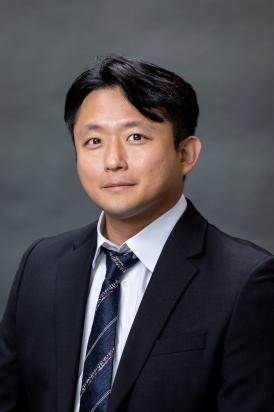
Hyeonchang Gim is an Assistant Professor in the Department of Communication at the University of North Dakota within the College of Arts and Sciences. His research focuses on intergroup communication, exploring how mediated and interpersonal interactions influence social attitudes and relationships. Education: Ph.D. in Communication (University of Arizona, 2024) Graduate Certificates: Natural Language Processing (2024), College Teaching (2023), Computational Social Science (2022) His work examines communication technologies and cultural messages, particularly analyzing music's role in cross-group understanding. Recent studies investigate: Mediated contact mechanisms through music and language learning Cultural adaptation challenges during study abroad experiences Music's dual role in both facilitating and hindering intergroup communication Language accommodation in film translation Social media discourse around public health crises Research spans communication theory, applied psychology, and cultural studies, with publications in Communication Monographs , Media Psychology , and related journals.
Arne Ziegler is a full Professor at the Institute of German Studies within the Faculty of Humanities at the University of Graz, Austria. His academic career spans over two decades, with current leadership of the Austrian Science Fund (FWF)-supported Special Research Programme 'German in Austria' (DiÖ), running from 2016 to 2026. He maintains active roles in international academic governance and editorial boards. Professor Ziegler's research centers on grammatical variation in Standard German , with particular emphasis on Austrian German dialects, urban sociolinguistics, and youth language phenomena. His work bridges theoretical linguistics and practical applications, examining how regional, social, and historical factors shape language structures. Key contributions include the development of the 'Variant Grammar of Standard German' – a comprehensive digital reference work documenting areal grammatical differences across German-speaking regions. Analysis of his recent publications reveals consistent focus on urban language dynamics, grammatical variation patterns, and reference grammar development. His work demonstrates methodological innovation through quantitative analysis of spoken interaction, spatial distribution mapping of linguistic features, and interdisciplinary approaches combining sociolinguistics with historical text analysis. The 'German in Austria' project represents the cornerstone of his current research, investigating language variation, contact phenomena, and speaker perception across Austria. Professor Ziegler has secured significant competitive funding including three major FWF projects: 'German in Austria' (2016-2026), 'Youth language(s) in Austria' (2013-2016), and 'Variant Grammar of Standard German' (2015-2018). These initiatives involve extensive collaboration with researchers across German-speaking countries and support large-scale empirical investigations into contemporary language use. He holds prominent leadership positions including Chair of the International Association for German Studies (IVG) since 2000, Chair of the Society for German Language History since 2008, and editorial roles for 'Technical language' (International Advisory Board) and 'Contingentia' (Editorial Board). His academic service extends to co-editing six major book series including 'Writings on the German Language in Austria' (Peter Lang) and 'Lingua Historica Germanica' (de Gruyter), significantly shaping publication venues for German linguistic research.
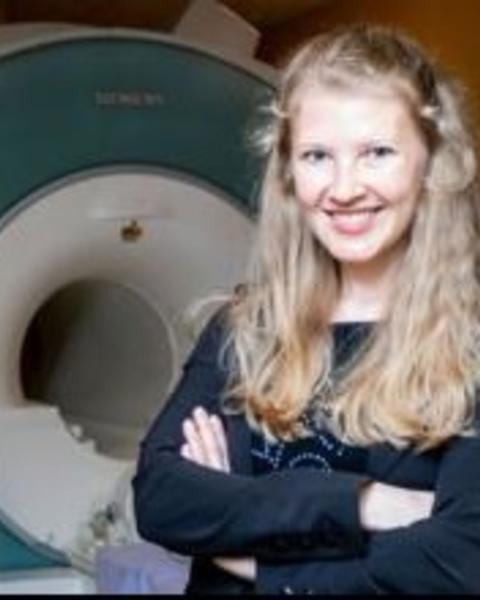
Evelina Fedorenko is an Associate Professor in the Department of Brain and Cognitive Sciences at the Massachusetts Institute of Technology (MIT) , with affiliations at Massachusetts General Hospital (MGH), Boston Campus . Her research focuses on the cognitive and neural mechanisms underlying language processing, including interactions with artificial systems like language models. Lab: Language Lab at MIT , exploring minds and brains creating language Key Research Areas: Cognitive Neuroscience of Language and Music, Neural Representations, Computational Models Her recent work examines how artificial language models map to human brain regions , investigates the universality of language networks across languages and individuals, and explores non-classical aspects like cerebellar involvement. She develops advanced methodologies for neuroimaging, including individualized brain mapping and standardized stimuli creation. Scientific contributions include debates on language localization, studies of language evolution, and frameworks for semantic analysis. Her team employs fMRI , MEG , and precision imaging to dissect the language-selective network and its interactions with other cognitive systems.
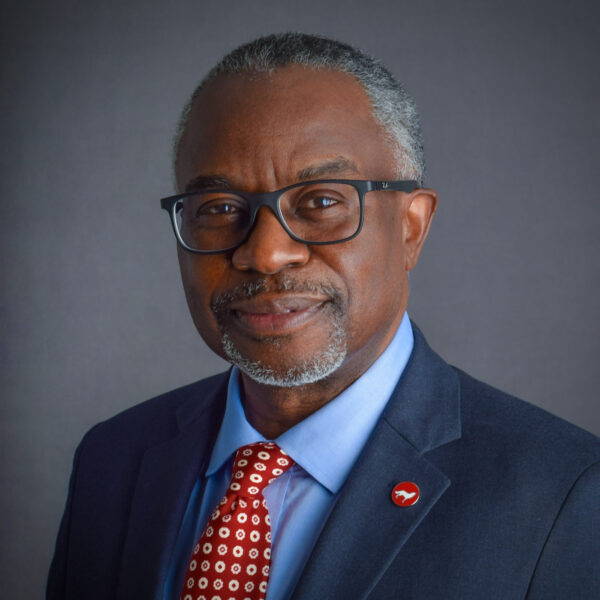
Dr. Myron F. Floyd is Dean of the College of Natural Resources at NC State University. With over 35 years of academic experience, he has held faculty roles at Clemson University, Texas A&M University, and the University of Florida before joining NC State in 2005 as a Professor in the Department of Parks, Recreation and Tourism Management. PhD in Recreation and Resources Development, Texas A&M University MS in Parks, Recreation and Tourism Management, Clemson University MS in Recreation and Park Administration, Clemson University BS in Recreation and Park Administration, Clemson University His research focuses on the intersection of race/ethnicity with leisure behavior, examining how urban green spaces can mitigate health disparities and promote physical activity in marginalized communities. He has pioneered studies on environmental justice, conservation behavior, and crowdsourcing data for health research. Key grants include $1.5M from DHHS for obesity prevention in NC counties, $435K from Robert Wood Johnson Foundation for park-based physical activity studies, and multiple USDA Forest Service/NPS-funded projects. He co-authored the seminal book Race, Ethnicity, and Leisure and has produced 95+ peer-reviewed articles. Elected Fellow: Academy of Leisure Sciences (2005), American Academy for Park and Recreation Administration (2019) Theodore and Franklin Roosevelt Award (2008) Leadership for a Diverse Campus Workshop Series (2014) Dr. Floyd has served on national advisory councils including USDA's Forestry Research Advisory Council (2014-2017) and NC Institute of Medicine's Healthy NC 2030 Taskforce. His work bridges public health, natural resource management, and social equity through interdisciplinary research.
Jørgen Ellegaard Andersen is a Professor and Center Director at the Department of Mathematics and Computer Science, University of Southern Denmark (SDU), and holds the D-IAS Chair at the Danish Institute for Advanced Study (DIAS). He is also a Distinguished Visiting Professor at the California Institute of Technology since 2013, reflecting his international stature in mathematical sciences. University: University of Southern Denmark School: Faculty of Science Department: Department of Mathematics and Computer Science Position: Professor, Center Director, D-IAS Chair Andersen earned his DPhil in Mathematics from the University of Oxford in 1992, with a thesis on Jones-Witten theory and the Thurston Compactification of Teichmüller space. His research lies at the intersection of quantum theory and geometry, focusing on quantum topology, geometric quantization of moduli spaces, topological quantum field theory, low-dimensional geometry, and applications to RNA and protein folding. His work combines deep mathematical rigor with potential applications in quantum computing and biophysics. The trends in his recent publications show a consistent focus on quantization of moduli spaces, topological recursion, mapping class group representations, and quantum Chern-Simons theory. His work often bridges pure mathematics and theoretical physics, with increasing attention to computational and applied aspects in quantum technologies. ERC Synergy Grant ReNewQuantum (EUR 10m, Principal Investigator) Distinguished Visiting Professor, Caltech Andersen leads major research projects such as ReNewQuantum and TopQC2X, securing significant funding from the EU and Danish agencies. He actively supervises PhD students and collaborates with leading mathematicians worldwide, including Maxim Kontsevich and Bertrand Eynard. His work is frequently highlighted in the media for its potential impact on quantum computing and Danish industry. He is a central figure in the Quantum Mathematics center at SDU and collaborates with institutions like MSRI and the University of Hamburg. His research group is part of international networks focused on geometric and topological methods in quantum theory.
Assoc. Prof. Dr. Umut Asan is an active faculty member in the Department of Industrial Engineering at Istanbul Technical University (ITU), Faculty of Management. He holds the academic rank of Associate Professor and has been affiliated with ITU since 1999, progressing from Research Assistant to his current role. He earned his PhD from Technische Universität Berlin and holds a Master’s and Bachelor’s from ITU in Engineering Management and Industrial Engineering, respectively. PhD: Technische Universität Berlin (2003–2009) MSc: Istanbul Technical University, Engineering Management (1999–2001) BSc: Istanbul Technical University, Industrial Engineering (1995–1999) Dr. Asan's research lies at the intersection of decision science and industrial systems, with a strong emphasis on Multi-Criteria Decision Making (MCDM) , Fuzzy Cognitive Mapping , Scenario Planning , and Digital Twins . His work applies advanced modeling techniques such as Bayesian networks and fuzzy logic to solve complex problems in supply chain resilience, urban mobility, technology adoption, and organizational behavior. His recent publications (2023–2025) reveal a consistent trend toward integrating artificial intelligence and data-driven methods into decision support systems. Topics include electric vehicle adoption in urban logistics, digital twin frameworks for manufacturing, risk analysis in forestry and rail systems, and consumer behavior in digital platforms. These works demonstrate interdisciplinary applications across engineering, business, and social sciences, often using fuzzy and probabilistic models to handle uncertainty. Dr. Asan is actively involved in research leadership, having served as Vice Dean (2018–2023) and currently supervising numerous graduate theses. He is the principal investigator of funded projects, including BAP grants on qualitative cross-impact analysis and consumer cognitive models. Principal Investigator, "A New Approach to Qualitative Cross-Impact Analysis" (BAP Project, 2016–2020) Principal Investigator, "A New Approach to Consumer Causal Chain Models" (BAP Project, 2022–2024) He is a member of several international academic societies, including the International Society on MCDM, ENBIS, and EURO, reflecting his active engagement in the global operations research community. His research has been published in journals such as IEEE Access, European Journal of Forest Engineering, and Decision Science Letters, with a growing citation impact (Scopus h-index: 13). Dr. Asan advises a large cohort of graduate students, both at the Master’s and PhD levels, in areas ranging from risk modeling to digital transformation. His lab or research group focuses on decision support systems and cognitive modeling, supervising theses on FMEA, Bayesian networks, and digital twins. Future work appears to be directed toward enhancing predictive capabilities in industrial and societal systems through hybrid AI models.
Lisa Birke is an interdisciplinary artist and faculty member at the University of Saskatchewan’s College of Arts and Science , where she founded the Digital and Integrated Practice (DIP) area in the Department of Art & Art History in 2019. Her work intersects performance, video art, augmented reality, and installation to critique cultural norms and explore subjective realities through Canadian landscape narratives. Education: BFA (1999) in Visual Art (Painting) from Emily Carr Institute of Art and Design MFA (2013) in Fine Arts (Studio Art) with distinction from the University of Waterloo Birke’s research investigates the collision of art history, pop culture, and everyday life in multi-channel digital works. She blurs the line between theatrics and documentation, focusing on themes like postfeminist critique, relational aesthetics, and technological mediation. Recent projects include TrippingTime (2024) and Natures of Reality (2021), both utilizing augmented reality for public engagement. Key scientific trends: Immerse audiences in layered realities, challenge normative representations, and employ collaborative digital tools (360 video, AR) to address themes of community, tolerance, and the deconstruction of perfection. Scientific awards: Provost’s New Teacher Award (2022) USSU Teaching Excellence Award (2022) Canada Council for the Arts Grow Grant (2023-2024) Arizona International Film Festival Jury Award (2024) Teaching & advising: Birke advocates for competence, autonomy, and relatedness in pedagogy, emphasizing foundational skills alongside experimental risk-taking. She served as graduate chair (2019-2022) and mentors students in digital media, installation, and performance art. Labs & teams: Principal Investigator for the Shared Spaces augmented reality outreach project (University of Saskatchewan), collaborating with international institutions and grade 8 students in Germany.
Professor Helen Woolley is Head of the School of Architecture and Landscape at the University of Sheffield, where she is a leading academic in children's outdoor environments and landscape architecture. Her research spans inclusive play spaces, post-disaster landscapes, urban green space equity, and children's spatial agency. Research Interests: Her work focuses on the relationship between people and green spaces, especially children's access to and use of outdoor environments. She investigates policy, design, and societal influences on play, with a strong emphasis on inclusion, disaster recovery, and urban planning. Her research has been funded by ESRC, AHRC, JRF, JSPS, and the Big Lottery. Recent Publications Trends: Her recent articles (2020–2025) show a global reach, with studies in China, Brazil, and Jordan, using advanced spatial analysis (SOPARC, KDE), co-design methods, and comparative disaster research. Themes include water play, mobility safety, generational change in play, and multifunctional urban green spaces. Scientific Awards: Japanese Society for the Promotion of Science (JSPS) Visiting Fellowship (2014) Invited to Queen’s Garden Party at Buckingham Palace (2003) Landscape Institute Research Award (1997) Winner, Sunday Telegraph Town Garden Design Competition (1982) Advising and Grants: She actively supervises PhD students such as Melih Bozhurt, Junfang Xie, and Maryam Mani. Her grant portfolio includes major projects like Living with Nature (Big Lottery funded), Children’s Lost Landscapes in post-disaster Japan (Daiwa Foundation), and Knowledge Transfer Partnerships with Timberplay and Fairplay. She has led research for CABE Space, Natural England, and the National Audit Office. Labs and Teams: She is a member of the Centre for the Study of Childhood and Youth and the Sheffield Urban Institute. She co-led the Living with Nature partnership with Sheffield City Council and Wildlife Trusts, and contributed to interdisciplinary initiatives like the Green Space Forum and Sheffield Botanical Gardens regeneration.
Dr. Simon Kelly is an Associate Professor in the UCD School of Electrical & Electronic Engineering, part of the UCD College of Engineering and Architecture. With a background in Electrical and Electronic Engineering (B.E. and Ph.D. from UCD), he has established himself as a leading researcher at the intersection of engineering and cognitive neuroscience, focusing on how the brain makes perceptual decisions. Dr. Kelly's research program centers on understanding the neural mechanisms underlying perceptual decision making. Using human electroencephalography (EEG), he investigates how the brain accumulates sensory evidence to reach decisions about what we see, hear, and experience. His pioneering work around 2012 identified the Central Parietal Positivity (CPP) signal that reflects the accumulation of evidence during decision processes, building to a threshold before decisions are executed. This discovery has fundamentally advanced our understanding of how the brain transforms sensory input into decisions. His recent publications reveal continued innovation in understanding the dynamics of evidence accumulation, the neural representation of confidence in decisions, and how prior knowledge shapes perceptual processing. His work spans theoretical advances in decision mechanisms and practical applications for diagnosing and treating cognitive impairments associated with neurological disorders like Parkinson's disease. Wellcome Trust Investigator Award in Science (2020) for 'What dictates the extent of evidence accumulation in human decision making?' SFI US-Ireland Research Partnership Programme award (2020) for 'Uncovering the neural architecture underlying decisions abstracted from movements' As an interdisciplinary researcher, Dr. Kelly bridges engineering, neuroscience, and psychology through his leadership of the UCD Cognitive Neural Systems Lab. His work has significant implications for both fundamental cognitive science and potential clinical applications, reflecting his commitment to basic research as a foundation for future practical advances.
Daniel Majchrowicz is an Associate Professor of South Asian Literature and Culture at Northwestern University's Department of Asian Languages and Cultures. He holds a Ph.D. from Harvard University (2015) and specializes in travel writing, global history, and South Asian Muslim identity through Urdu and Hindi literature. Co-Director, South Asia Research Forum Co-Director, Kaplan-funded "Language of Islam" workshop Vice-President, American Institute of Pakistan Studies Board Member, Modern Endangered Archives Program His research explores South Asian Muslims' global imagination through travel narratives, including his monograph The World in Words (Cambridge, 2023) and co-edited Three Centuries of Travel Writing by Muslim Women (Indiana, 2022). His upcoming book Hindi: A Global History examines Hindi's transregional trajectory. Recent publications include translations of Urdu supernatural stories ( The Ajeeb Society , 2026) and analyses of Partition-era border travel. His work bridges literary studies, postcolonial theory, and archival recovery. Current projects involve Urdu script education ( Zer o Zabar , 2023) and literary preservation through the Modern Endangered Archives Program.
Jennifer R Mc Conville is a researcher at Chalmers University of Technology's Department of Urban Design and Planning. Her work focuses on sustainable sanitation systems, particularly in developing countries, with extensive research on wastewater management, community-based approaches, and resource recovery. Key affiliations: Formas-funded projects (2012–2020) Geographic focus: Bolivia, West Africa, Sweden Methodologies: Gamification, participatory planning, regime analysis Research interests include: Sanitation planning frameworks Decentralized wastewater systems Equity in urban-rural transitions Policy implementation barriers Recent publications analyze: Circular economy in sanitation Decision-support tools Community-managed infrastructure Role-playing in engineering education
Steven J. Dundas is Associate Professor at Oregon State University in the Department of Applied Economics and Coastal Oregon Marine Experiment Station . He serves on the Science Panel for the Puget Sound Partnership and as Associate Editor for Marine Resource Economics . Key research areas include Environmental Economics , Natural Resource Economics , Non-Market Valuation , and Coastal Ecosystem Services . Education : Ph.D. in Economics from North Carolina State University (2015), M.S. in Agricultural & Resource Economics from University of Delaware (2011), B.S. in Natural Resource Management from University of Delaware (2003) His research focuses on climate change adaptation, coastal hazard mitigation, and environmental policy evaluation. Recent work explores social media impacts on public land visitation, economic modeling of coastal armoring, and non-market valuation of natural infrastructure. He has contributed to Land Economics and Marine Resource Economics , with media coverage in Jefferson Public Radio and American Shoreline Podcast . Scientific Awards include the Outstanding Article Award . Current projects funded by a $500,000 federal grant to assess Oregon dune resilience against sea level rise. He teaches courses like Environmental Economics and Climate Change Economics , with a professional focus on integrating empirical methods and policy usefulness in climate research.
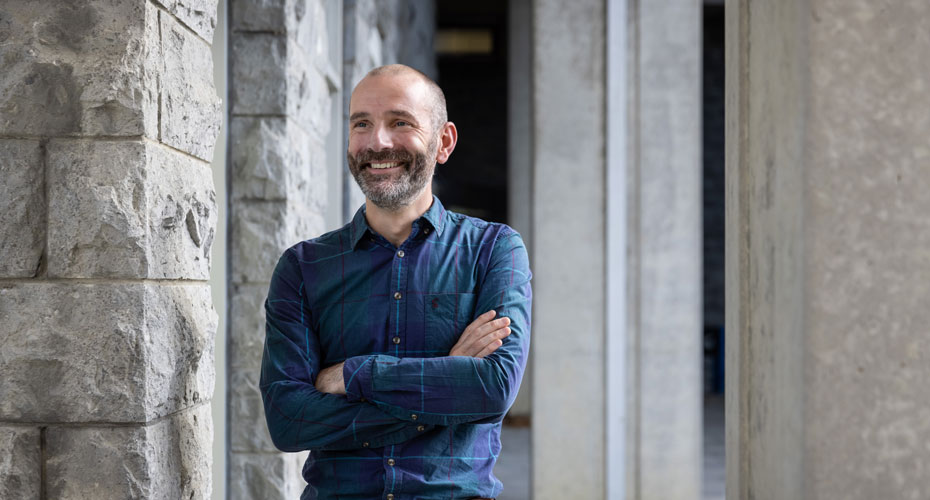
Tom DE LEYN is a Tenure Track Assistant Professor at Hasselt University's School of Social Sciences, where he contributes to the Capacity group Social Sciences and the Research group Research for Digitalisation, Diversity and Democracy. His work bridges media studies, sociology, and digital anthropology with a focus on youth experiences in technology-mediated environments. Based at Campus Hasselt in the Faculty of Law building, he actively engages in interdisciplinary research examining the societal implications of digital transformation. His research centers on Digital Media, Media and Communication, and the Sociology of Youth, with particular emphasis on Privacy and Surveillance dynamics across diverse cultural contexts. He investigates how children, adolescents, and ethno-religious minorities navigate digital spaces, parental mediation, and mobile technologies through qualitative and ethnographic approaches. Key themes include digital disconnection practices, intimate surveillance, and the socio-cultural construction of technology use, often comparing Global North and South contexts like Belgium and Liberia. Recent publications (2024-2025) reveal a cohesive trajectory examining digital harms assessment scales, children's perspectives on surveillance, and the paradoxes of digital disconnection policies. His work consistently employs innovative methodologies like the 360° interview technique while addressing critical gaps in understanding racial, gendered, and age-based digital inequalities. This scholarship demonstrates strong thematic continuity across media sociology, youth studies, and critical technology assessment. No scientific awards were mentioned in available sources. Tom DE LEYN actively contributes to academic training as a coordinating lecturer for courses including Media and Communication Studies I, Digital Media and Civil Society, and Qualitative Research Methods. He currently leads the 'Environmental analysis digital skills' research project (2025) focused on community service learning contexts, demonstrating practical engagement with digital inclusion initiatives. Within Hasselt University's research ecosystem, he operates through the Research group Research for Digitalisation, Diversity and Democracy, which examines technology's societal impacts through lenses of diversity, democratic processes, and digital transformation. This affiliation positions his work at the intersection of theoretical innovation and real-world policy relevance, particularly regarding youth digital rights and inclusive technology design.
Roberto Calandra is a Full (W3) Professor at Technische Universität Dresden, where he leads the Learning, Adaptive Systems and Robotics (LASR) Lab. Previously, he served as a Research Scientist at Meta AI (formerly Facebook AI Research) and a Postdoctoral Scholar at UC Berkeley’s BAIR Lab under Sergey Levine. His academic journey includes a PhD in Robotics from TU Darmstadt, an M.Sc. in Machine Learning from Aalto University, and a B.Sc. in Computer Science from Università di Palermo. His research bridges Robotics and Machine Learning, focusing on tactile sensing, Bayesian Optimization, and model-based reinforcement learning. He pioneered the DIGIT tactile sensor , now the most widely used tactile sensor in robotics, and advocates for a computational field of Touch Processing to advance haptic understanding. His work emphasizes data-efficient learning, real-world dexterous manipulation, and multimodal perception. Recent publications highlight breakthroughs in tactile sensor design, in-hand object manipulation, and multimodal integration. He organizes workshops on robotics and machine learning (e.g., at NeurIPS, ICRA) and promotes open-source tools like PyTouch and TACTO .