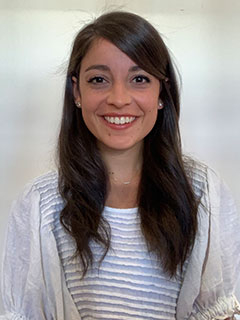
Dr. Melanie Franklin is a pediatric psychologist at Children's Hospital of Philadelphia with expertise in sleep disorders, treatment adherence, and pediatric psychology. She operates within the Department of Child and Adolescent Psychiatry and Behavioral Sciences and collaborates across multiple teams. BA in Psychology – Muhlenberg College PhD in School Psychology – Lehigh University Residency and Fellowship in Pediatric Psychology – Nemours/A.I. DuPont Children’s Hospital Her research focuses on: Sleep behavior in chronic illness populations Mental health communication barriers ADHD functional outcomes Treatment adherence strategies Recent publications demonstrate expertise in ADHD comorbidities , Cystic Fibrosis sleep interventions , and academic functioning analysis . Key collaborations include: Psychiatry and Behavioral Sciences Sleep Center Pulmonary and Sleep Medicine Division
Claudia Passos Ferreira is an Assistant Professor of Bioethics at the Center for Bioethics, New York University (NYU), where she bridges philosophy, psychology, and neuroethics to address ethical questions in consciousness studies and emerging technologies. Education: MA and Ph.D. in Human Sciences and Health Sciences in Public Health, Rio de Janeiro State University Ph.D. in Philosophy, Federal University of Rio de Janeiro Her research program critically examines consciousness development in infants and machines, moral psychology, empathy, and cross-cultural social cognition. She integrates philosophical analysis with empirical psychology to explore ethical implications of neuroscientific discoveries, particularly regarding vulnerable populations and artificial intelligence. Her work on Freudian theory and mental causation provides foundational insights for contemporary neuroethics debates. Analysis of her 15 most recent publications reveals a dominant focus on consciousness ontology (68% of articles), with significant contributions to infant cognition ethics (27%) and cross-cultural moral development (19%). Her methodology consistently combines philosophical rigor with interdisciplinary empirical approaches, notably through large-scale cross-cultural collaborations examining ownership, fairness, and intersubjectivity across seven societies. Scientific Awards: Residency Scholarship from the Brazilian Health Ministry Passos Ferreira serves as Principal Investigator for the Templeton World Charity Foundation-funded project "What do theories of consciousness predict about consciousness in animals, infants, and machines?". Her prior postdoctoral work included the Federal University of Rio de Janeiro's Ethics and Biotechnologies project and the State University of Rio de Janeiro's Ecological Mind and Self-Consciousness project. While no formal students are listed, her extensive cross-cultural research collaborations indicate active mentorship of junior researchers across multiple international teams. Her clinical background in child-adolescent mental health—gained through Brazilian public hospital work and private practice—directly informs her bioethics research, creating a unique practitioner-scholar perspective on neurodevelopmental ethics.
Owen R. White is a Professor in the Department of Epidemiology & Public Health at the University of Maryland School of Medicine, serving as Associate Director of the Institute for Genome Sciences and Associate Director of Research Collaboration & Development. He leads a team of 25 scientists and engineers developing genomic annotation pipelines and data analysis tools for state-of-the-art research in microbiome and multi-omic studies. His academic background includes: BS in Biotechnology from the University of Massachusetts (1985) PhD in Molecular Biology from New Mexico State University (1992) Postdoctoral Fellowship in Genome Informatics at the Institute for Genomic Research (TIGR) (1994) Dr. White's research spans bioinformatics, genomics, transcriptomics, and metagenomics with emphasis on data management, metadata standards, ontologies, and cloud systems. His work has been foundational for large-scale initiatives like the Human Microbiome Project (HMP) and Integrative Human Microbiome Project (iHMP), generating over 50,000 datasets totaling 10 terabytes of multi-omic data. Analysis of his recent publications reveals a strong trend toward neuroscience multi-omics (BRAIN Initiative), cloud-based data infrastructure, and ethical data sharing frameworks. His work consistently bridges microbiome research with emerging fields like single-cell analysis and Alzheimer's disease biomarker discovery through integrated data platforms. Notable awards include: Benjamin Franklin Award for Open Access in the Life Sciences (2015) Kumho Science International Award in Plant Molecular Biology and Biotechnology (2001) As Principal Investigator for major NIH-funded centers, he has secured sustained support for the HMP Data Analysis and Coordination Center and iHMP Data Coordination Center. His team's work combines fee-for-service models with collaborative research funding to maintain cutting-edge genomic analysis capabilities. The Institute for Genome Sciences houses his computational team responsible for developing production annotation pipelines, database systems, and visualization tools that serve researchers across the University of Maryland School of Medicine and national consortia.
Ashli Owen-Smith is a behavioral scientist affiliated with the School of Public Health at Georgia State University , where her research focuses on mental health disparities, suicide prevention, and integrative/complementary approaches for complex mental-physical health conditions. She works with underserved populations including refugees/immigrants, incarcerated individuals, and LGBTQ+ communities through community-based participatory research and mixed-methods frameworks. Her current projects are funded by CDC , DBHDD , and DPH . Education: Ph.D. in Behavioral Sciences (Emory, 2009), S.M. in Public Health (Harvard, 2005), B.A. in Psychology (Smith College, 2001) Her research spans mental health , trauma , suicide prevention , and mindfulness-based interventions . Recent work examines telehealth adaptations for chronic pain and mental health, vaccine hesitancy in refugee communities, and social determinants of suicide . She leads studies on gender-affirming care and health disparities in LGBTQ+ populations. Key article trends include epidemiological analysis of suicide risk factors, COVID-19 impacts on mental health, ICD-10 coding for autism, and complementary medicine in trauma recovery. Subfields span telehealth , health equity , mental-physical comorbidity , and community engagement . Students she has mentored include C.A. Scarlett , T. Griner , and M.M. Sesay . Her work integrates public health policy , clinical research , and health systems analysis .
Michael James Herdman is an Honorary Visiting Associate Professor at the National University of Singapore’s Saw Swee Hock School of Public Health. He serves as Head of Health Outcomes Research at the Office of Health Economics in London and Director of Insight Consulting & Research in Barcelona. His work focuses on patient-reported outcome (PRO) measures, including their development, validation, and application in healthcare evaluation. He has been a key member of the EuroQol Group for 25 years, contributing to initiatives like the EQ-5D-5L tool and pediatric health measurement standards. Education: MSc in Bioethics and Law from the University of Barcelona (1996–1998) and BSc Philosophy (Honors) from the University of Hull (1981–1985). Research Interests: Central to Herdman’s work are PRO measures, health technology assessment, and outcomes research, particularly in younger populations and pediatric health. He has authored over 150 peer-reviewed articles and book chapters, with notable contributions to cross-cultural adaptation of health instruments and systematic reviews on pediatric vaccines. Professional Activities: Provides consulting services to pharmaceutical companies and public health organizations. His work bridges academic research and practical applications in health economics and policy. Labs/Teams: Active in the EuroQol Group’s Executive Committee and Younger Populations Working Group, and leads Insight Consulting & Research.
Professor Dan Goodley is a leading academic in Critical Disability Studies at the University of Sheffield , affiliated with the School of Education and co-director of the iHuman research center. His work bridges critical psychology , medical sociology , and posthuman theory to challenge ableist norms in education, healthcare, and society. He has secured major grants, including a £2.9m Wellcome Trust Discretionary Award and multiple ESRC-funded projects, focusing on themes like disablism , social justice , and inclusive research methodologies . Research Themes : Critical Disability Theory, Posthumanism, Dis/ability and Technology, Decolonizing Disability, Austerity and Dis/ability, Co-Production with Marginalized Communities. Grants : Wellcome Trust, ESRC, EPSRC, Research England, European Social Fund. Professional Roles : Visiting Professor at University of Ghent, Editorial Board Member for multiple journals, ESRC Peer Review College. His recent publications interrogate the intersections of disability , pandemic ethics , and autonomous technologies , often employing co-produced and participatory frameworks. He advocates for disabled voices in research and policy, emphasizing resilience and decolonizing praxis in global contexts.
Dr. Ronald P. Strauss serves as the Adams Distinguished Professor at the University of North Carolina at Chapel Hill in the Adams School of Dentistry, with additional appointments as Professor of Social Medicine in the School of Medicine and Clinical Professor of Epidemiology in the Gillings School of Global Public Health. He concurrently holds the position of Chief Global Officer for the Adams School of Dentistry and is an active member of the UNC Craniofacial Center Team. His academic credentials include: BA in Biology from Queens College New York DMD from the University of Pennsylvania PhD in Sociology from the University of Pennsylvania Dr. Strauss's research examines the social dimensions of chronic health conditions, with specialized focus on craniofacial differences and HIV/AIDS. His interdisciplinary approach integrates clinical practice, sociological theory, ethical frameworks, and health policy analysis to address stigma, healthcare access barriers, prenatal diagnosis implications, and community engagement strategies. Methodologically, he employs qualitative ethnography and survey research to investigate psychosocial impacts. His scholarly output demonstrates consistent thematic focus across decades, with recent publications revealing intensified examination of structural determinants of health, intersectional disparities in craniofacial care, and innovative community-based HIV/AIDS interventions. Key patterns include transdisciplinary collaboration, emphasis on patient-centered outcomes, and critical analysis of systemic inequities in healthcare delivery. Dr. Strauss directs the campus-wide HIV/AIDS Course annually since 1987 and teaches Social and Health Systems to medical students. As Faculty Director of the CFAR Office of Community Engagement and lead of the Thorp Faculty Engaged Scholars Program, he mentors faculty in community-engaged scholarship while maintaining active clinical and research supervision. He maintains leadership within the UNC Craniofacial Center Team and has conducted international fieldwork across five countries, reflecting his commitment to global health equity through partnerships in Brazil, Israel, Thailand, Moldova, and China.
Gert Helgesson is a Professor of Medical Ethics at the Department of Learning, Informatics, Management and Ethics (LIME), Karolinska Institutet, since 2015. He previously held an associate professorship (docent) at KI from 2008. His academic background includes a PhD in ethics from Uppsala University (2002), focusing on value assumptions in microeconomics. His research spans clinical and research ethics, emphasizing interdisciplinary collaboration. Key interests include authorship issues, patient-centered care, ethical dilemmas in psychiatry, and the ethics of compulsory care for patients with borderline personality disorder. He leads the Medical Ethics group at the Stockholm Centre for Healthcare Ethics (CHE), addressing topics like healthcare prioritization, patient rights, and research integrity. Education: PhD in Practical Philosophy (Ethics), Uppsala University (2002); Docent in Medical Ethics, Karolinska Institutet (2008). Research Interests: Medical ethics (clinical and research), authorship ethics, palliative care ethics, compulsory treatment ethics, and interdisciplinary ethics. Current projects include studying the 'best interest of the child' in social care decisions and analyzing non-standard plagiarism cases. Teaching: Research ethics for master’s and doctoral students, physician training in clinical ethics, and ethics for doctoral supervisors. Grants: Includes a Swedish Research Council grant (2024–2026) on child welfare decisions and a VINNOVA grant (2014–2018) on person-centered care in psychiatry and pediatrics. Labs/Teams: Co-founder of the Stockholm Centre for Healthcare Ethics (CHE), collaborating with KTH and Stockholm University. His group includes researchers like Niklas Juth, Manne Sjöstrand, and Antoinette Lundahl.
Irina A. Anselm, MD is Assistant Professor of Neurology at Harvard Medical School and Director of the Mitochondrial Program at Boston Children's Hospital. She co-directs the Neurometabolic Program and serves as clinical expert for the hospital's Precision Medicine Service. Her work spans pediatric neurology , neurogenetics , and mitochondrial medicine . Medical School: St. Petersburg Pediatric Medical Academy (1984) Residency: University of Massachusetts Medical Center (1995) Fellowship: New England Medical Center (1998) Dr. Anselm specializes in mitochondrial disorders and neurometabolic syndromes affecting children. Her research focuses on genetic diagnosis , experimental therapies , and clinical management of these complex conditions. She leads clinical trials evaluating novel treatments like dichloroacetate (DCA) for lactic acidemia and collaborates with biotech companies on gene therapy approaches. Key publication areas include mitochondrial disease pathophysiology , neurodevelopmental genetic mutations , and experimental treatment outcomes . She has authored consensus guidelines for mitochondrial disease management and serves as reviewer for multiple journals including Journal of Pediatric Neurology and Current Pediatric Reviews .
Alex V. Levin, M.D., M.H.Sc., serves as Professor in the Department of Ophthalmology at the University of Rochester School of Medicine and Dentistry, holding the Adeline Lutz - Steven S.T. Ching, M.D. Distinguished Professorship. He concurrently holds joint appointments in the Center for Visual Science and the Department of Pediatrics, Genetics. As Chief of the Flaum Eye Institute's Pediatric Ophthalmology and Ocular Genetics team and Chief of Clinical Genetics at URMC, he leads cross-functional teams comprising ophthalmologists, optometrists, pediatric specialists, geneticists, nurses, and genetic counselors. Medical Degree: Jefferson Medical College Residency: Pediatrics at Children's Hospital of Philadelphia Residency: Ophthalmology at Wills Eye Hospital Fellowship: Pediatric Ophthalmology and Strabismus at Toronto's Hospital for Sick Children Masters of Health Science in Bioethics: University of Toronto (2001) Dr. Levin's research spans ocular genetics and gene therapy, children's vision screening, pediatric glaucoma/cataract/uveitis, ocular manifestations of child abuse, and bioethics. His work integrates clinical expertise in pediatric anterior segment eye conditions with scientific investigation into genetic eye diseases. He maintains the only simultaneous US Board Certifications in pediatrics, ophthalmology, and child abuse pediatrics worldwide. Analysis of his 15 most recent publications reveals predominant focus on genetic eye disorders (73%), with significant emphasis on retinal hemorrhage patterns in trauma (13%) and pediatric glaucoma (7%). His research demonstrates consistent translational application from basic science to clinical practice, particularly in ocular genetics and abusive head trauma diagnostics. Resident Guardian Award (2022) Edward A. Jaeger and John B. Jeffers Citizenship Award (2020) Albert Marquis Lifetime Achievement Award (2018) Al Biglan Medal in Pediatric Ophthalmology (2014) Ray E. Helfer Society Award for Child Abuse Research (2011) With over 35 years of experience and hundreds of peer-reviewed publications, Dr. Levin has secured funding from the National Institutes of Health, Canadian Institute of Health, and private foundations. His research portfolio demonstrates exceptional continuity in pediatric ophthalmology and ocular genetics, with recent emphasis on deep learning applications for retinal hemorrhage analysis and international registry development for childhood glaucoma. He has established comprehensive vision screening programs for underserved urban populations and pioneered ethical frameworks for genetic testing in pediatric ophthalmology. Dr. Levin directs the Ocular Genetics Program at URMC, which provides multidisciplinary care through the Pediatric Ophthalmology and Ocular Genetics team. His laboratory investigations focus on nascent chromatin structure in fibrosis and protein modeling for inherited retinal diseases, with active collaborations across the Montalcino Aortic Consortium and Sturge-Weber Foundation research networks.
Nicola Hawley is an Associate Professor of Epidemiology (Chronic Disease) at the Yale School of Public Health with a secondary appointment in the Department of Anthropology at Yale University. She serves as Associate Director for Dissemination and Implementation Science at the Yale Center for Clinical Investigation and is affiliated with the Yale Institute for Global Health and Yale Network for Global Non-Communicable Diseases. Dr. Hawley is an internationally recognized expert in maternal and child health, with particular expertise in the developmental origins of obesity and related chronic diseases. Her interdisciplinary research bridges epidemiology, anthropology, and global health to examine how early life exposures during pregnancy, infancy, and childhood shape long-term health. She employs a life-course perspective and mixed-methods approaches across cross-sectional, cohort, and randomized controlled trial designs to identify critical windows for intervention. A hallmark of her work is the integration of community-engaged and culturally responsive strategies to address maternal and child health disparities in under-resourced and Indigenous settings. Her research primarily focuses on Pacific Islander communities in Samoa, American Samoa, and the US, with additional collaborations in South Africa, Uganda, New Zealand, and the United States. Dr. Hawley's current research portfolio includes NIH- and PCORI-funded studies addressing gestational and Type 2 diabetes, prevention of excess gestational weight gain, childhood obesity, and cardiometabolic risk across generations. Her recent publications demonstrate strong emphasis on Samoan health issues, including studies on genetic adaptations, sleep patterns, mental health, and food security, with a consistent focus on culturally appropriate interventions and community engagement. Yale School of Public Health Teacher of the Year (2016) As a mentor, Dr. Hawley plays a central role in training the next generation of US and global health scientists, serving as primary mentor on multiple NIH career development awards (K01, K99, F30, F31) focused on Pacific Islander health. She leads the Obesity, Lifestyle and Genetic Adaptations (OLaGA) Study Group, which uses a life course approach to understand the origins of obesity and related cardiometabolic diseases among Samoans and other Pacific Islanders. Her laboratory work emphasizes community partnerships and capacity building, with core values centered on equity, community engagement, interdisciplinary collaboration, and mentorship. The OLaGA Study Group is driven by the belief that innovative research should not only advance scientific understanding but lead to tangible improvement in health outcomes for all, particularly for populations often neglected in public health and genetic research.
Rafael Wainer is a Continuing Sessional Lecturer in the Department of Anthropology at the University of British Columbia (UBC), affiliated with the Faculty of Arts. His academic background includes a PhD in Medical Anthropology (UBC, 2017), an M.A. from UBC (2008), and a Licenciado from the Universidad de Buenos Aires (2003). His research focuses on medical anthropology, socio-cultural anthropology, and health-related issues in Latin America, particularly Argentina. Education: Ph.D., Medical Anthropology, University of British Columbia, 2017 M.A., University of British Columbia, 2008 Licenciado, Universidad de Buenos Aires, 2003 Research Interests: Children’s cancer experience and biomedicine Palliative care and end-of-life practices Humor in clinical settings Death, dying, and grief in schools Healthcare policy and pandemic responses Ethnographic methods in medical institutions Teaching: Rafael teaches courses on Medical Anthropology, Socio-Cultural Anthropology, and Applied Anthropology, emphasizing critical perspectives on health, biomedicine, and cultural practices. Publications: His work explores themes like permeable bodies in pediatric oncology, grief in educational settings, and the role of humor in palliative care. Recent contributions include analyses of Argentina’s Hospice movement and critiques of pandemic-era health technologies. Recognition: He has received awards including the Sessional Lecturer Teaching Award (2022) and multiple research grants supporting fieldwork in Argentina and Canada. Advisory Role: Co-director of Darío-Iván Radosta’s PhD thesis on Argentina’s Hospice movement (2020–present). Outreach: Engages in public projects like “Duelo en Escuelas” , addressing grief in educational contexts, and critiques of health policies (e.g., Canada’s pandemic app).
Sarah C. Hull, MD, MBE is an Associate Professor of Medicine (Cardiology) at Yale School of Medicine, where she serves as Associate Director of the Program for Biomedical Ethics and Cardiology Course Director. She is affiliated with the Department of Internal Medicine, Cardio-Oncology Program, Cardiovascular Imaging Program, and Yale Cancer Center. Education: AB, Biochemical Sciences, Harvard University (2003) MD, University of Pennsylvania School of Medicine (2008) MBE, University of Pennsylvania School of Medicine (2008) Residency, Hospital of the University of Pennsylvania (2011) Fellowship, Yale University School of Medicine (2014) Her research and scholarly work focus on bioethics in cardiology and public health, with key interests in end-of-life care, LVAD deactivation, shared decision-making in cardio-oncology, nutrition ethics, vaccine ethics, and reproductive health ethics. She advocates for integrating ethical frameworks into clinical cardiology practice and medical education. Her work often addresses moral uncertainty, physician-patient communication, and systemic inequities in healthcare access. Recent publications highlight trends in cardioethics , exploring AI's role in moral agency, ethical boundaries in medicine, and curriculum development for ethics training in cardiology. She also contributes to cardio-oncology research, particularly in predicting cardiovascular outcomes in cancer survivors using advanced imaging. Scientific Awards: Bohmfalk Prize for Teaching in Basic Sciences (2021) Sarah C. Hull is actively involved in medical education and ethics leadership. She advises on clinical ethics policy and collaborates with interdisciplinary teams across Yale. She has no listed advisees or grants in the provided text, but her role as Associate Director suggests mentorship and program leadership. She is part of research teams in cardio-oncology and ethics, contributing to collaborative publications. Labs and Teams: She collaborates with researchers in the Cardio-Oncology Program and the Program for Biomedical Ethics, and is a frequent co-author with experts in cardiology, neurology, and oncology at Yale.
Professor Jonathan Herring serves at the Faculty of Law, University of Oxford with a focus on Medical Law and Ethics, Family Law, Criminal Law, and Vulnerability Theory . His work bridges feminist ethics of care with legal frameworks, challenging traditional individualistic approaches. DM Wolfe-Clarendon Fellow, Exeter College Editorial Board: Child and Family Law Quarterly Research Interests He investigates law's interaction with human relationships , emphasizing areas like domestic abuse as human rights violation , pregnancy regulation , mental capacity ethics , and dementia-related legal reforms . His Law Through the Life Course (2021) examines age-based legal assumptions. Publication Trends Recent works focus on obstetric violence (with Pickles), fragile X syndrome ethics (with Johnson), and revising sexual offense consent models . Articles span 2017-2025 , showing sustained engagement with vulnerability theory and relational legal philosophy . Teaching Contributions He instructs Criminal Law , Family Law , and Medical Law and Ethics for Oxford's BA Jurisprudence, plus Medical and Family Law BCL courses. Supervises DPhil topics across domestic abuse , obstetric violence , and trans parenthood .
Mario A. Svirsky is the Noel L. Cohen Professor of Hearing Science and Professor of Neuroscience at NYU Grossman School of Medicine. He leads the Laboratory for Translational Auditory Research, focusing on auditory neural prostheses like cochlear implants and their impact on speech perception and neuroplasticity. His work bridges clinical care and scientific discovery, addressing how the brain adapts to sensory deprivation and degraded auditory input. Education: PhD in Biomedical Engineering from Tulane University (1988). Postdoctoral training at MIT and prior academic appointments at Indiana University and Purdue University before joining NYU in 2005. Research: Explores cochlear implant performance optimization, speech perception in hearing-impaired individuals, and neuroplasticity mechanisms. Collaborates with the Froemke Lab on animal models of cochlear implantation. Active in developing computational models and signal processing techniques to improve implant efficacy. Funding: Principal investigator on multiple NIH grants (e.g., R01 DC016839, R01 DC016834) and industry partnerships. His lab’s work has advanced clinical management strategies for cochlear implant users, including those with contralateral hearing aids. Labs/Teams: Directs the Laboratory for Translational Auditory Research, collaborating with multidisciplinary teams including engineers, neuroscientists, and clinical audiologists. Mentors postdocs, audiologists, and medical students in auditory research.