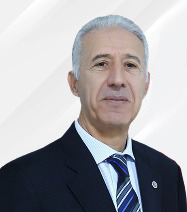
Regina Kratzer is an Associate Professor at the Graz University of Technology , affiliated with the Institute of Biotechnology and Bioprocess Engineering . Her academic work focuses on advancing CO₂-based biotechnology, enzyme engineering, and sustainable bioprocessing techniques. Her research emphasizes: Bioprocess optimization for Cupriavidus necator cultivation CO₂ utilization in microbial systems Enzyme engineering for industrial applications Integration of reaction engineering with protein design Development of sustainable chemical production systems Analysis of microbial growth dynamics and substrate interactions Recent publications highlight trends in microbial CO₂ fixation, bioplastic production, and enzymatic reduction mechanisms. She maintains a focus on practical implementation of green biotechnology solutions. Contact: regina.kratzer@tugraz.at Location: Room BC01124, 8010 Graz, Petersgasse 10-12/I
Hatice Neval Özbek is a Research Assistant at the Department of Food Engineering, Gaziantep University Institute of Science and Technology , with a focus on food chemistry and waste valorization. She holds a Doctorate (2015–2020) and Master’s degree (2012–2014) in Food Engineering from Gaziantep University, and a Bachelor’s degree in Food Engineering from Uludağ University (2008–2012). Her research emphasizes microwave-assisted extraction , biodegradable film production , and food waste recovery , particularly from pistachio shells , grapefruit peels , and olive pomace . Recent publications demonstrate expertise in xylose/xylitol production , pectin extraction , and drying kinetics for fruit and vegetable powders. She has supervised theses on snack bar formulation and grapefruit pectin extraction, and participated in 33 international conferences. Her work includes TUBITAK-funded projects on solar-assisted drying systems and microwave pretreatments for lignocellulosic fractionation.
Prof. Dr. Nurcan KOCA at Ege University's Faculty of Engineering leads research in Food Engineering, specializing in Milk and Dairy Products Technology, Food Technology, and sustainable development. Her work bridges engineering principles with dairy science, focusing on product innovation, processing optimization, and quality assessment. Research Focus: Dairy product formulation (e.g., reduced-fat cheeses, kefir, kashar cheese) Advanced processing techniques (spray drying, explosion puffing, UV light treatment) Lifecycle sustainability of dairy products Rheological and microstructural analysis Functional ingredient applications (whey protein, maltodextrin, pectin) Scientific Trends: Recent publications emphasize drying kinetics, fat reduction strategies, UV preservation methods, and lifecycle analysis. Her work often combines engineering metrics (exergy, energy efficiency) with sensory and biochemical evaluations. Academic Metrics: High H-index (16 Scopus, 14 WoS) Significant citations (34.2 Scopus average) Q1-Q2 journal publications (19 WoS Q1)
Fahrettin Göğüş is a Professor at Gaziantep University's Department of Food Engineering, Faculty of Engineering. With a doctorate from the University of Leeds (1995) and a master's from Middle East Technical University (1989), his career spans 30+ years in food chemistry, oil technology, and sustainable food processing. He has led numerous national and international projects, including TÜBİTAK-funded initiatives on microwave-assisted extraction and EU collaborations on food waste valorization. Education: University of Leeds (PhD, Food Sciences), Middle East Technical University (MSc, Food Engineering), Middle East Technical University (BSc, Food Engineering) His research focuses on microwave-assisted extraction , food waste valorization , biodegradable films , and innovative drying techniques . Key projects include enzymatic oil modification, cocoa butter alternatives, and bioactive compound recovery from agricultural byproducts. Over 105 publications highlight his expertise in Food Science , Food Chemistry , and Sustainable Technologies . Recent articles (2023-2024) emphasize microwave-assisted extraction of xylose from pistachio shells, radio frequency drying of fruits/vegetables, and biorefinery applications for olive pomace. His work bridges food waste valorization , green chemistry , and emulsion technology . Scientific Award: 2017 YABİTED Poster Second Prize Administrative roles: Former Rector Assistant (2008-2016), Erasmus Coordinator (2010-2016), Department Chair (2012-2016). He has supervised 15+ theses, including PhDs on cocoa butter alternatives and flaxseed oil encapsulation .
Masahiko Matsukata is a Professor at the School of Advanced Science and Engineering of Waseda University, with a focus on Applied Chemistry . His academic credentials include a Doctor of Engineering from Waseda University. Education: Ph.D. in Applied Chemistry, Waseda University (1989) B.Eng. in Applied Chemistry, Waseda University (1984) Research Interests span multiple cutting-edge domains: Zeolite and metal-organic framework (MOF) membrane synthesis Catalytic processes for hydrocarbon conversion Energy-efficient separation technologies Hydrogen production and carbon dioxide utilization Plastic chemical recycling methods Advanced adsorption and diffusion mechanisms Article Trends reveal extensive work on zeolite membrane development for forward osmosis, isomer separation, and catalytic membrane reactors. His recent studies emphasize defect healing techniques, hierarchical pore architectures, and hybrid systems for energy-saving separations. Scientific Awards include: The Japan Petroleum Institute Award (2025) nano tech Prize (Green Nanotechnology Category, 2014) Japan Energy Society Progress Award (2001) Catalysis Society of Japan Award (1999) His work has been pivotal in advancing microporous membrane technology for industrial applications, as highlighted by his leadership in multiple research projects and contributions to chemical engineering journals.
Dr. Reelika Rätsep is a Senior Lecturer in Plant-Based Food Technology at the Estonian University of Life Sciences, holding positions in both the Institute of Veterinary Medicine and Animal Sciences (Chair of Food Science and Food Technology) and the Institute of Agricultural and Environmental Sciences (Polli Horticultural Research Centre). With a PhD in Agriculture earned in 2016, she has established herself as a researcher bridging horticulture and food science, with particular expertise in valorizing agricultural by-products and developing sustainable food production systems. Dr. Rätsep's educational background includes a Doctor of Philosophy in Agriculture (2016), Master of Sciences in Horticulture (2011), and Bachelor degree in Horticulture (2009), all from the Estonian University of Life Sciences. Her doctoral research focused on the effect of cultivation techniques on grapevine and strawberry fruit quality, establishing her early interest in horticultural production systems. Her research spans multiple interconnected domains with particular focus on: Valorization of food industry wastes and by-products Extraction and application of bioactive compounds from plant materials Sustainable food production technologies Polyphenol analysis and functionality Viticulture and fruit production in northern climates Food safety using natural compounds Dr. Rätsep's publication record demonstrates a strong trajectory toward transforming agricultural by-products into valuable food ingredients. Her recent work examines fruit and berry pomaces (particularly from rowanberry, sea buckthorn, black currant, and hybrid grapes) for their compositional properties, bioactive compounds, and potential applications in food products. She has made significant contributions to understanding how these by-products can enhance food quality, safety, and nutritional value while supporting circular economy principles in food systems. Among her notable recognitions are: 2019 Organic Scholarship for best popular scientific publication in Estonian 2018 Erasmus+ scholarship for staff mobility 2017 Dora Pluss scholarship for short-term study 2014 Erasmus Mundus Infinity scholarship 2010 'Deed of the Year' for participation in international Flowerfestival Dr. Rätsep is actively involved in research funding and collaboration, having participated in projects like CIRCLE (2021-2024) focused on circular bioeconomy and the RESTA14 TAIMLOOMTOIT project on adding value to meat and fish products using horticultural by-products. She has organized multiple international workshops and summer schools on food by-product valorization, demonstrating her commitment to knowledge transfer in this field. She leads research activities at the Polli Horticultural Research Centre, which serves as a hub for horticultural research in Estonia. Her work connects field production with food processing, creating a comprehensive research pipeline from plant cultivation to value-added food products. Through her involvement with the ERA Chair for Food (By)Products Valorisation Technologies, she has access to advanced processing technologies for developing innovative food ingredients from agricultural by-products.
Dr. Beszédes Sándor is an Associate Professor at the University of Szeged Faculty of Engineering, where he has been working since 2015. Previously, he served as an assistant lecturer (2008-2015) and technical assistant (2002-2008) at the same institution. He earned his PhD in Environmental Sciences from the University of Szeged (2014) and completed his habilitation in Environmental Sciences in 2024. His academic journey includes degrees in Food Engineering (BSc, 2002), Teacher of Engineering (BSc, 2004), and Agricultural Environmental Management Engineering (MSc, 2006). Dr. Beszédes has held several administrative positions at the Faculty of Engineering, including Deputy Dean for External and Internal Relations (2024-), Deputy Dean for Scientific Affairs (2020-2021), and Dean's Commissioner responsible for scientific affairs (2018-2020). He serves as Editor-in-Chief of Analecta Technica Szegedinensia (2018-2022) and as Regional Associate Editor for several engineering journals. His research focuses on microwave-enhanced sludge conditioning, the relationship between dielectric properties and biodegradability, microwave-assisted extraction of bioactive components from food industry by-products, and analysis of biomass pre-treatments for biofuel production. His work bridges environmental engineering, food technology, and renewable energy, with particular emphasis on waste-to-resource conversion technologies. Dr. Beszédes has secured multiple research grants as principal investigator and co-investigator, including the current NKFIH/OTKA FK146344 project on monitoring wastewater treatment efficiency based on dielectric behavior (2024-2027). His research demonstrates consistent focus on applying dielectric measurement techniques to optimize wastewater treatment processes and food industry by-product valorization. Among his notable scientific awards are: MTA Bolyai János Research Scholarship (2021-2024, 2015-2018) Young Teacher of the Year Award in Natural Sciences and Mathematics (2019) Outstanding Talent Mentor Award (2018) New National Excellence Program Scholarship (2018) National Excellence Award, Doctoral Candidate Category (2015) Dr. Beszédes actively supervises student research, with current thesis topics focusing on microwave sludge conditioning efficiency analysis, moisture removal from biological materials, energy utilization possibilities of plant-based biomass, and efficiency analysis of thermal treatments for food industry wastewater sludge. He has also conducted research abroad, including at the University of Oulu (2009/2010) through a CIMO Scholarship.
Victor de Souza serves as a Research Fellow at the International Iberian Nanotechnology Laboratory (INL) within the Food Processing Group (Pastrana Research Group) since 2021. His work focuses on developing sustainable food packaging solutions through advanced material science. His academic credentials include: Diploma in Food Engineering (2008), Federal University of Viçosa, Brazil Master's in Food Science and Technology (2014), Federal University of Viçosa, Brazil PhD in Food Quality (2018), NOVA University of Lisbon, Portugal Dr. de Souza specializes in bio-based film development using renewable biopolymers and nanotechnology to enhance food preservation. His research integrates materials engineering with food science to create edible coatings and active packaging systems that significantly extend shelf life while reducing environmental impact. Key innovations involve nanocellulose reinforcement, natural antioxidant incorporation, and smart sensor integration for real-time quality monitoring. Analysis of his publication record reveals a strong interdisciplinary focus spanning food science, polymer chemistry, and nanotechnology. His work consistently addresses sustainability challenges through biodegradable material design, with recurring themes in natural extract utilization, biodegradability assessment methodologies, and functional packaging applications across food, biomedical, and pharmaceutical sectors. His scientific recognition includes: Stanford University World's Top 2% Scientists List (2023) While the provided text doesn't specify current advisees, Dr. de Souza previously contributed to the ERANETMED project developing byproduct applications for Opuntia spp. His research has generated over 30 SCI-indexed publications and 8 book chapters, achieving a Scopus h-index of 21. As a core member of INL's Food Processing Group, he advances nanotechnology applications in food systems through collaborative research on bio-based materials, with ongoing work focused on improving mechanical properties and functional performance of sustainable packaging solutions.
Prof. Dr. Fethiye Aylin Sungur is an Associate Professor at Istanbul Technical University, where she serves as the Deputy Director of the Institute of Informatics. She is affiliated with the Computational Science and Engineering Division within the Institute of Informatics, contributing significantly to interdisciplinary research that bridges computational methods with pharmaceutical and biochemical applications. Current Position: Associate Professor & Deputy Director of Institute of Informatics Institution: Istanbul Technical University Department: Computational Science and Engineering Research Focus: Computational Chemistry & Drug Design Dr. Sungur earned her PhD in Chemistry from Boğaziçi University in 1997, following a Master's degree with thesis (1995) and undergraduate studies (1989-1995) in the same department. Her academic journey includes positions as Research Assistant at Boğaziçi University (1995-2004), Assistant Professor at Istanbul Technical University (2004-2012), and promotion to Associate Professor in 2012. Her research spans Pharmaceutical Chemistry , Physical Chemistry , and Theoretical Chemistry , with a strong emphasis on computational approaches. Dr. Sungur specializes in molecular modeling, enzyme mechanism studies, and computational drug design. Her work frequently applies quantum mechanical and molecular dynamics simulations to understand complex biochemical processes and develop novel therapeutic approaches. She has made significant contributions to understanding enzyme reaction mechanisms, particularly for targets relevant to disease treatment. Analysis of her recent publications reveals a consistent focus on applying computational chemistry to drug discovery and delivery challenges. Her work demonstrates expertise in molecular docking, virtual screening, and simulation techniques applied to ribosome targeting, enzyme inhibition, and controlled drug release systems. A notable trend is her increasing work on metal-organic frameworks for drug delivery applications, particularly for anti-inflammatory steroids and wound healing applications. Dr. Sungur has secured substantial research funding through multiple TÜBİTAK (Turkish Scientific and Technological Research Council) projects, including "Multiscale Mechanistic Study for Protein Arginine Deiminase 2: An Attractive Target for Breast Cancer Therapy" and "Elucidation of the Deacetylation Reaction Mechanism of O-Acetylpeptidoglucan Esterase (Ape1) Enzyme by In Silico Methods and Inhibitor Design." She has also participated in international collaborations such as "Partnership for Advanced Computing in Europe Sixth Implementation Phase (PRACE 6IP)." Multiscale Mechanistic Study for Protein Arginine Deiminase 2 Deacetylation Reaction Mechanism of O-Acetylpeptidoglucan Esterase Partnership for Advanced Computing in Europe As an advisor, Dr. Sungur has mentored numerous graduate students, supervising over 13 Master's theses and one Doctoral dissertation. Her students have pursued research in computational chemistry, molecular modeling, and drug design, reflecting her expertise and research focus. Her laboratory utilizes advanced computational resources for molecular dynamics simulations, quantum mechanical calculations, and virtual screening approaches.
Leila Lo Leggio is a Professor in the Department of Chemistry at the University of Copenhagen, Faculty of Science. She has been a professor since March 2018, previously serving as an Associate Professor from August 2003 to February 2018. She leads research in structural biology and enzymology, with a focus on carbohydrate-active enzymes and protein structure-function relationships. She is a member of the ISBUC Structural Biology and Medicinal Chemistry clusters at the University of Copenhagen and has authored 186 PDB entries. Her educational background includes: First class Honours Degree from the University of Bath, UK (1993), with professional placements at Babraham Institute, Cambridge, UK and Max-Planck Institute, Martinsried, München, Germany PhD obtained at Institute of Food Research, Reading, UK/Birkbeck College, London (1997) Professor Lo Leggio's research focuses on the structure-function relationship in proteins, with recent emphasis on carbohydrate-active proteins, DNA-binding transcription factors, and protein engineering/design. Her work primarily employs X-ray crystallography and small angle scattering techniques to investigate enzyme mechanisms, particularly lytic polysaccharide monooxygenases (LPMOs) and other biomass-degrading enzymes. Her research has significant implications for biomass conversion, sustainable chemistry, and industrial biotechnology applications. Her recent publications demonstrate a strong focus on understanding the molecular mechanisms of carbohydrate-active enzymes, particularly lytic polysaccharide monooxygenases and glucuronoyl esterases. Her work spans structural characterization, enzyme engineering, and applications in biomass conversion and sustainable technologies. A notable trend is the increasing interdisciplinary nature of her research, combining structural biology with quantum chemistry calculations and practical biotechnology applications, particularly in sustainable textile dyeing and biomass utilization. Professor Lo Leggio has secured significant research funding, including multiple grants from the Danish Independent Research Fund and Novo Nordisk Foundation. Her current projects include: DFF FTP grant 'HIPPO' (2025-2030, 6.2 million DKK) DFF FTP grant 'Prodrug production through enzymatic glycosylation' (2025-2029, 3.2 million DKK) Novo Nordisk Foundation project grant on time-resolved LPMO studies (2025-2027, 3 million DKK) HALRIC pilot project on time-resolved LPMO studies (2024, ~150K DKK) Radical Innovation Sprint project 'FRESHEN' (2024, ~300K DKK) She currently supervises 1 Postdoc, 1 PhD student, 1 guest PhD student, 1 Research assistant, 3 MSc students, and 2 BSc students. Previously, she has supervised 9 Postdocs, 10 PhD students, 28 M.Sc. students, 14 B.Sc. students, and numerous other research students and assistants. Professor Lo Leggio leads research within the ISBUC Structural Biology cluster and the Medicinal Chemistry cluster at the University of Copenhagen. Her laboratory combines structural biology techniques with biochemical and biophysical approaches to investigate enzyme mechanisms. Her team collaborates internationally on projects related to biomass conversion, enzyme engineering, and sustainable biotechnology applications.