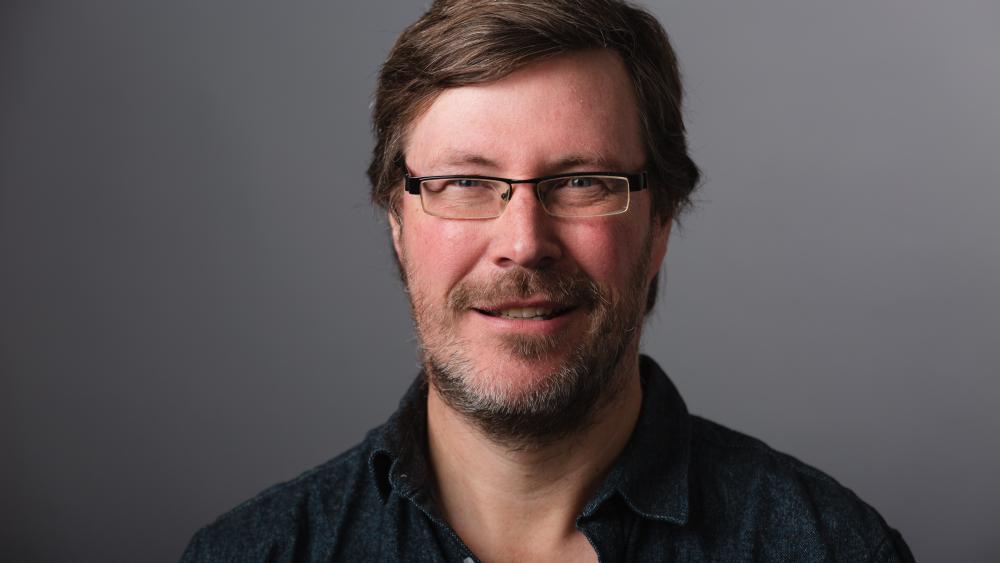
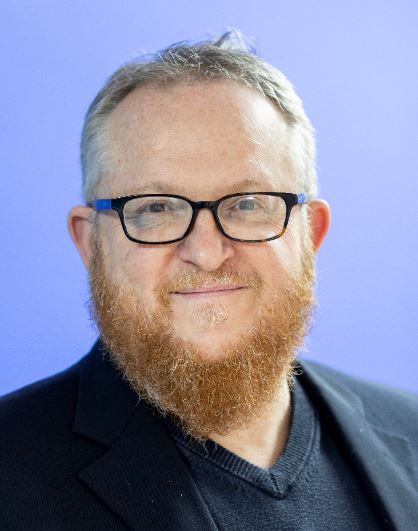
Professor Gabrielle Lynch is a leading scholar in Comparative Politics and African Studies at the University of Warwick. She holds the academic rank of Professor and serves as PAIS Impact Director, Comparative Politics cluster lead, and Warwick UCU Equalities Officer. Her research focuses on ethnic identities, elections, transitional justice, and social media's role in African politics. Lynch earned her BA, MPhil, and DPhil from the University of Oxford. She has conducted extensive fieldwork in Kenya, Ghana, and Uganda, supported by grants from the ESRC, Warwick Policy Support Fund, and others. Her awards include the ESRC Award for Outstanding International Impact (2019) and the Market Research Society’s President’s Medal. Lynch is editor of African Affairs and a member of the African Studies Association of the UK and British Institute in Eastern Africa. Lynch’s work bridges academia and public engagement, including columns in The Saturday Nation and The East African . She founded the African Judiciaries Research Network and co-authored influential books like Performances of Injustices and The Moral Economy of Elections in Africa . Her research emphasizes democratization challenges, electoral integrity, and the intersection of technology and politics in Africa.
Ayesha Jalal is a distinguished Professor of History at Tufts University's School of Arts and Sciences and holds a joint appointment at The Fletcher School of Law and Diplomacy. She currently serves as the Mary Richardson Professor and directs the Center for South Asian and Indian Ocean Studies. With a career spanning over three decades, Professor Jalal has established herself as a leading scholar in South Asian history, particularly focusing on Pakistan studies, the partition of India, and Muslim political thought in the region. Professor Jalal's academic journey began with a double major in History and Political Science from Wellesley College in 1978. She then pursued doctoral studies at the University of Cambridge, earning her PhD in History in 1983. Her early career included prestigious fellowships at Trinity College, Cambridge (1980-84), the Centre of South Asian Studies (1984-87), the Woodrow Wilson Center for International Scholars (1985-86), and the Harvard Academy for International and Area Studies (1988-90). Professor Jalal's research primarily centers on South Asian history with special emphasis on Pakistan, the partition of India, and Muslim political thought. Her work explores the complex interplay between religious identity, nationalism, and state formation in the region. She has made significant contributions to understanding democratic development in Pakistan, sectarian dynamics in South Asia, and the historical connections between the Indian subcontinent and the wider Indian Ocean world. Her recent scholarship has focused on 'Oceanic Islam,' examining transregional Muslim networks and universalist aspirations that transcended colonial boundaries. Professor Jalal's extensive publication record demonstrates a consistent focus on South Asian political history, with particular attention to Pakistan's formation and development. Her recent works show a progression from studies of partition and state formation toward broader examinations of Muslim intellectual history and transregional connections. The 2020-2024 publications reveal a sophisticated engagement with themes of democratic erosion, sectarianism, and the historical roots of contemporary political challenges in South Asia, while also exploring more cultural and religious dimensions through works on Muslim enlightened thought and oceanic connections. Patrus Bukhari Award for the best English language book, The Pity of Partition , Academy of Letters, Government of Pakistan (2015) Britannica Book of the Year recognition (2015) MacArthur Fellowship (1998-2003) As an educator, Professor Jalal has mentored numerous graduate students through thesis supervision and directed research projects. Her teaching portfolio includes courses on Modern South Asia, Contemporary South Asia, Islam and the West, and specialized seminars on South Asian history. She has taught at several prestigious institutions including the University of Wisconsin-Madison, Columbia University, and Harvard University before joining Tufts in 1999. In her role as Director of the Center for South Asian and Indian Ocean Studies, she has fostered interdisciplinary research and provided guidance to emerging scholars in the field. Professor Jalal directs the Center for South Asian and Indian Ocean Studies at Tufts University, which serves as a hub for interdisciplinary research on South Asia and its connections to the wider Indian Ocean world. The center facilitates collaborative projects, hosts visiting scholars, and organizes events that bridge historical, political, and cultural perspectives on the region. Under her leadership, the center has become a prominent institution for South Asian studies, promoting dialogue between academic research and contemporary policy issues.
Dr Juliet Bennett is a Research Fellow at the Sydney Centre for Healthy Societies (SCHS) and Charles Perkins Centre, University of Sydney. Her work bridges process philosophy with systemic interventions for social and ecological wellbeing. She holds a PhD in Peace and Conflict Studies, focusing on paradigm shifts from static to process thinking. Previously, she managed collaborative research at Sydney Policy Lab and directed the Sydney Peace Foundation. Education: PhD (Peace and Conflict Studies), MPhil/MA (Peace and Conflict Studies). Teaching includes units on peace studies, narratology, and structural violence at the University of Sydney and Lenoir Rhyne University. Research interests center on mitigating social/ecological injustice, structural violence, and climate change through critical sociology, contextual economics, and participatory methods. Current projects examine food systems and ultra-processed foods via critical social theory. Awards: 2020 Excellence in Teaching for 'Key Issues in Peace and Conflict Studies'. Memberships include Sydney Policy Lab, New Economic Networks Australia, and the International Peace Research Association. Publications span process philosophy applications, climate policy, and participatory research methods. Her work advocates for systemic transformations toward ecological civilization through interdisciplinary collaboration.
Richard Caplan is Professor of International Relations at the Department of Politics and International Relations (DPIR), University of Oxford, and an Official Fellow of Linacre College. His academic career spans several decades with significant contributions to the field of international relations, particularly in the areas of international organizations, conflict management, and peacebuilding. Professor Caplan holds an MA and PhD from the University of London. His academic journey has included visiting positions at prestigious institutions including the European University Institute (EUI), University of Konstanz, University of Pavia, Princeton University, and Sciences Po (Paris). Professor Caplan's principal research interests focus on international organizations and conflict management, with particular emphasis on peacekeeping and post-conflict peace- and state-building. His work explores critical questions about how international institutions manage conflicts, the effectiveness of peacekeeping operations, and the complex processes of rebuilding societies after conflict. His research has significantly contributed to understanding the challenges of measuring peace, the dynamics of international administration in war-torn territories, and the recognition of new states in contested contexts. Professor Caplan has received considerable recognition for his scholarly contributions through fellowships and grants from leading organizations including the British Academy, the British Council, the Carnegie Corporation of New York, the Economic and Social Research Council (ESRC), the Folke Bernadotte Academy, the John Fell OUP Research Fund, the Leverhulme Trust, the MacArthur Foundation, the Oxford Martin School, and the US Institute of Peace. As a dedicated educator and mentor, Professor Caplan has supervised numerous graduate students including Ishrat Hossain, Ebenezer Azamati, Michaela Coplen, Lucy Maycox, John Helferich, Gwendolyn Whidden, Alejandro Posada Téllez, Colm Trant, Salma Daoudi, Nadila Ali, and Katharina Engel. His current research focuses on the aftermath of UN peacekeeping operations through the ESRC-funded "After Exit" project, which investigates conditions in countries following the withdrawal of large-scale UN peacekeeping missions. Professor Caplan leads the "After Exit" research team, which includes collaborators from Oxford, Cornell University, and the University of North Carolina at Wilmington. Previously, he contributed to the Oxford Martin Programme on Transboundary Resource Management, which explored cross-border cooperation on natural resource management in the eastern Nile River Basin and the Jordan River Basin.
London School of Economics and Political Science (LSE)United Kingdom
Austin Zeiderman is an Associate Professor in the Department of Geography and Environment at the London School of Economics (LSE), with interdisciplinary expertise in urbanization, environmental governance, and political dynamics in Latin America and the Caribbean. His research integrates anthropology, geography, sociology, and history, focusing on Colombia, particularly the Magdalena River and Bogotá’s urban periphery. Zeiderman holds a PhD in Anthropology from Stanford University, an MA in Environmental Science from Yale, and a BA in Economics from Colgate University. He has led projects like LSE’s Urban Uncertainty initiative and remains a Research Associate at LSE Cities. His work explores how security, risk, and environmental challenges shape marginalized communities, with notable monographs including *Endangered City* (2016) and *Artery* (2025). Research interests include racial ecologies, colonial capitalism, urban futures, and the interplay of race, environment, and security. He has been recognized with fellowships from the Fulbright Program, Wenner-Gren Foundation, and others. His recent scholarship critiques infrastructure projects like Colombia’s Magdalena River logistics corridor, linking environmental crises to systemic racial inequalities. Publications span journals like *Antipode* and *Public Culture*, and he engages public discourse through media like the Guardian and podcasts. His work bridges academic rigor with societal impact, addressing urgent global issues such as climate adaptation and post-conflict urban resilience.
Professor Phil Clark is a Professor of International Politics at SOAS University of London, specializing in conflict and post-conflict issues with a focus on transitional justice, peacebuilding, and reconciliation after mass atrocity in Rwanda, Uganda, the Democratic Republic of Congo, and Burundi. He holds a DPhil in Politics from the University of Oxford, where he studied as a Rhodes Scholar, and a Bachelor of International Studies from Flinders University. His research focuses on international, national, and community-based responses to mass violence in Central Africa, particularly examining the gacaca community courts in post-genocide Rwanda and the International Criminal Court (ICC). Professor Clark has advised multiple governments (Danish, Sudanese, Swedish, Ugandan, and UK), international organizations (ICC, International Criminal Tribunal for Rwanda), and NGOs (Human Rights Watch, Crisis Group) on conflict issues in Africa. Professor Clark's work spans several key areas including the History, Politics and Law of the African Great Lakes; Transitional Justice Theory and Practice; the Politics of Violence; Community-Based and Customary Law; Conflict Resolution and Reconciliation; the Politics of International Criminal Justice; Peacebuilding, Security and Post-Conflict Reconstruction; and Moral and Political Philosophy. His approach often combines theoretical analysis with practical fieldwork in post-conflict societies. His publications reveal a consistent focus on the tension between international legal frameworks and local justice mechanisms, particularly examining how post-genocide societies navigate complex reconciliation processes. Over time, his work has evolved from documenting specific cases (like the gacaca courts) to analyzing broader patterns of transitional justice and international criminal law across the African continent. Shortlisted for the Raphael Lemkin Award for best book on genocide and mass violence (for "Distant Justice: The Impact of the International Criminal Court on African Politics") Regular contributor to major media outlets including The New York Times, Foreign Affairs, Washington Post, The Guardian, and BBC Frequent media commentator on international news networks including BBC, France 24, Al Jazeera, CNN, and Deutsche Welle Professor Clark has supervised multiple PhD students working on topics related to conflict analysis, women's access to transitional justice, China-Africa relations, and conflict transformation. His current research includes "Intergenerational Justice in Eastern Africa" and "Reframing Justice after Atrocity," which examines justice interactions beyond the linear international-to-national transmission of norms and practices. He has led significant research projects, including serving as technical advisor and co-author of a 2007 UN Office of the High Commissioner for Human Rights project surveying popular perceptions of transitional justice and peacebuilding in northern Uganda. His ongoing work continues to shape academic and policy discussions about justice mechanisms in post-conflict societies.
Don John Omale serves as a Senior Lecturer in Criminology within the College of Business, Law and Social Sciences, focusing on critical issues in Nigerian and African criminal justice systems. His work bridges theoretical frameworks with practical field applications across diverse security and justice contexts. Dr. Omale's research centers on restorative justice mechanisms, police ethics, and conflict resolution in Africa. He extensively examines traditional African dispute resolution models alongside modern criminal justice challenges, with particular emphasis on Nigeria. His studies address farmer-herder conflicts, prison conditions, terrorism countermeasures, and domestic violence in semi-urban settings, consistently advocating for culturally grounded solutions that enhance community trust and institutional accountability. Analysis of his 15 most recent publications (2010-2025) reveals a dominant focus on restorative justice implementation and police accountability in Nigeria. His work demonstrates a methodological shift from theoretical discourse (2005-2011) toward empirical field studies examining practitioner perspectives and community-level impacts, particularly in conflict-affected regions like the Niger Delta and North Central Nigeria. The research consistently connects indigenous African conflict resolution traditions with contemporary security challenges. No scientific awards were documented in available sources Professional activities show no recorded student advising or grant funding in the provided materials, though his extensive publication record suggests active research supervision. His work frequently engages criminal justice professionals and community stakeholders, indicating collaborative field-based approaches to justice reform.
Dr. Bahar Baser is a Professor in Politics and International Relations at Durham University's School of Government and International Affairs, where she joined in 2021. She is also a member of the Institute for Middle Eastern and Islamic Studies. Previously, she served as Associate Professor at Coventry University's Centre for Trust, Peace and Social Relations, leading the "Peacebuilding and Conflict Transformation Research Group," and was a postdoctoral research fellow at the University of Warwick. Dr. Baser completed her PhD in Social and Political Sciences at the European University Institute in Florence, Italy. During her doctoral studies, she was a Visiting Research Fellow at multiple institutions including Humboldt University in Berlin, REMESO in Sweden, and the Instituto de Ciencias Sociais in Lisbon. Dr. Baser is an expert in diaspora studies, peacebuilding, and conflict transformation with a regional focus on the Middle East. Her research examines diaspora engagement in peace processes, post-conflict reconstruction, and state-building in the Global South. She has extensively studied stateless diaspora activism in Europe, particularly regarding host states' counterterrorism policies, radicalization of diaspora members, and transnationalization of homeland conflicts. Her recent publications demonstrate a strong focus on Kurdish diaspora studies, diaspora governance by authoritarian states, intergenerational trauma in diaspora communities, and peacebuilding processes. Her work spans multiple disciplines including political science, international relations, migration studies, and Middle Eastern studies, with particular attention to how diasporas interact with homeland conflicts and host state policies. Dr. Baser serves as editor of the Kurdish Studies Series published by Lexington Books and co-editor of the Diasporas and Transnationalism Series published by Edinburgh University Press. She is also a senior associate research fellow at the Security Institute for Governance and Leadership in Africa (SIGLA), Stellenbosch University, South Africa, and a visiting professor at Tampere Peace Research Institute, Tampere University, Finland. Dr. Baser has supervised multiple doctoral students including Abdullah Al-Khonaini, Mengqi Sun, Nannan Li, and Shorooq Al Zaabi. She has secured numerous research grants including projects funded by the British Academy, Academy of Finland, Allan and Nesta Ferguson Trust, and Horizon 2020 Marie Curie Fellowship. Her research projects span topics such as diaspora engagement in peace processes, youth violence and conflict transformation, and diasporic identity formation. Dr. Baser is actively involved with the Institute for Middle Eastern and Islamic Studies at Durham University, contributing to research initiatives focused on the Middle East and Islamic studies. Her multilingual capabilities (Turkish, English, Italian, Spanish, French, Portuguese, Azerbaijani) support her extensive fieldwork and collaborative research across multiple countries.
Professor Jonathan Goodhand is a distinguished academic in the Department of Development Studies at SOAS University of London, where he has established himself as a leading expert on conflict, peacebuilding, and political economy in fragile and post-conflict states. His work focuses on the complex interplay between illicit economies, borderland dynamics, and political settlements in South and Central Asia, with particular expertise in Nepal, Sri Lanka, and Afghanistan. As a prolific researcher and supervisor, he has shaped the field through both theoretical contributions and empirical studies grounded in extensive fieldwork. Professor Goodhand's research interests span several interconnected domains: Conflict and peacebuilding dynamics in post-war contexts Political settlements and statebuilding processes Borderland and frontier studies, particularly the role of brokers Illicit economies, especially drug economies and their relationship to conflict The intersection of development and security in fragile states Humanitarian action and its political implications in conflict zones His recent publications reveal a sophisticated analytical framework that connects spatial dimensions of conflict with political economy approaches. Goodhand has pioneered research on "frontier brokers" who operate in the margins between state and non-state authority, examining how these figures shape post-war transitions. His work on the "drugs-development-peacebuilding trilemma" has gained significant traction in policy circles, challenging conventional approaches to drug policy in conflict-affected regions. The Drugs & (dis)order research project, which he leads, represents a major contribution to understanding how illicit economies can be transformed into peace economies. Professor Goodhand has supervised numerous doctoral students whose work extends his research agenda into new contexts including Afghanistan, Colombia, South Sudan, and Myanmar. His influence extends beyond academia through policy engagement with international organizations working on conflict resolution and development.
Serra Hakyemez is Assistant Professor of Anthropology and Global Studies at the University of Minnesota, currently on leave until January 2023. Her research examines the intersection of counterinsurgency warfare and judicial violence in Turkey's Kurdish regions, focusing on prison solidarity networks and decolonial resistance. She employs interdisciplinary methods combining political anthropology, legal studies, and ethnography to analyze state violence and resistance movements. Education includes: Ph.D. in Cultural Anthropology, Johns Hopkins University, 2016 M.A. in Sociology and Anthropology, Central European University, 2008 M.Sc. in Social Policy, London School of Economics, 2006 B.A. in Political Science & Business Administration, Bogazici University, 2005 Her research investigates the juridical and visual economies of counterinsurgent violence, with ongoing work on prison-based solidarity and insurgent justice frameworks in Kurdistan. Publications explore themes including feminist resistance in conflict zones, archival politics of state violence, and the anthropology of dissent. Awards include: ACLS Fellowship Wenner-Gren-Hunt Fellowship
University of California , Santa Barbara (UCSB)United States
Jaime Alves is an Assistant Professor in the Department of Black Studies at the University of California, Santa Barbara. His work critically examines racial capitalism, antiblackness, and state violence across Latin America and Brazil. Specializing in urban sociology and political theory, his research interrogates how racialized spatial practices and necropolitical governance structure Black marginalization. Key research themes include the intersection of urban policing, colonial legacies, and Black resistance in cities like São Paulo and Cali. He analyzes how racialized temporal frameworks (e.g., "chronos") and spatial discourses (e.g., "necropolis") perpetuate systemic inequities. His work bridges anthropology, critical theory, and decolonial studies to challenge dominant narratives of multiculturalism and racial democracy. Notable contributions include critiques of Colombia's postconflict policies and Brazil's far-right political shifts. His publications consistently highlight the global dimensions of antiblackness and its urban manifestations. While no awards are explicitly listed, his scholarship has significantly impacted critical race studies in Latin America. Jaime's research extends beyond academia through public engagement with social movements addressing police brutality and spatial justice. Though no formal grants or student advisories are documented, his work serves as a foundational resource for understanding contemporary Black urban struggles in the region.
Dr Vera Axyonova is an Assistant Professor at the University of Birmingham's Department of Political Science and International Studies within the School of Government. Holding a PhD from the University of Bremen and Jacobs University Bremen, she has held prestigious positions including Marie Skłodowska-Curie REWIRE Fellow at the University of Vienna and Hurford Next Generation Fellow at the Carnegie Endowment. PhD: University of Bremen & Jacobs University Bremen (2013) MA: Fulda University of Applied Sciences (2008) Diploma: East Kazakhstan State University (2006) Her research focuses on international crisis management, cross-border norm transfer, and knowledge production in conflict environments. Recent projects examine European normative engagements in Eastern Europe and academic freedom challenges during forced migration. Her publications appear in top-tier journals like Peacebuilding and European Security . Notable awards include the Marie Skłodowska-Curie REWIRE Fellowship and Carnegie Endowment's Hurford Next Generation Fellowship. She co-chairs the ECPR Research Network on Statehood and Sovereignty and has held visiting positions at European University Institute, Freie Universität Berlin, and George Washington University.
Kristine Andra Avram is a Visiting Researcher at the Center for Conflict Research (ZfK) at Philipps University of Marburg, serving as a Post-doctoral fellow in the BMBF project 'Transformations of Political Violence' (2024-2025). Her work bridges peace and conflict studies, narratology, and social sciences with a focus on meaning-making in contexts of political violence and state repression. Her educational background includes a PhD in Political Science (summa cum laude, 2022) from Philipps University of Marburg, an MA in Peace and Conflict Studies (2010-2013) with study abroad at the University of Haifa, and a BA in Communication Science and Romance Studies (2007-2010) from the University of Erfurt, including Erasmus at Complutense University of Madrid. Avram's research examines how narratives shape interpretations of violence, influence reckoning with traumatic pasts, and inform transitional justice efforts. Using interdisciplinary narrative and (auto)ethnographic methods, she reveals storytelling as a site of agency and resistance—both for processing historical violence and envisioning just futures. Her work centers on concepts like responsibility, truth, and hope within post-communist contexts, particularly Romania. Her recent publications (2023-2025) demonstrate methodological innovation in narrative analysis applied to political violence, with increasing attention to researcher positionality and reparative methodologies. Articles span qualitative frameworks, courtroom narratives, postcolonial critiques of peacebuilding, and ethical dimensions of studying violence. Key scientific awards include: Dissertation Award from Südost-europagesellschaft (2023) Honorable Mention from Gert-Sommer-Award for Peace Psychology (2023) Mobility Grant from EISA (2023) Scholarships from MARA, Friedrich Ebert Foundation, and University of Haifa She has secured significant research funding including a Fritz Thyssen Foundation grant (2017-2022) as co-applicant and has taught courses on narrative reconstructions of the past at Philipps University Marburg and Goethe University Frankfurt. Her advisory work includes designing memory projects and conflict resolution initiatives with pax christi Rhein-Main. Avram actively collaborates within the Center for Conflict Research's interdisciplinary teams, focusing on political violence, transitional justice, and narrative methodologies in post-communist contexts through projects like 'Ascribing Individual Criminal Responsibility' and 'Transformations of Political Violence'.
Professor Richard Thomas is Head of the School of Culture and Communication at Swansea University and holds a Professorship in Media within the department of Media, Communications, Journalism and Public Relations. He is a globally recognized academic in political communication and media research, co-authoring Reporting Elections: Rethinking the Logic of Campaign Coverage , and leading research on alternative media’s role in democracy. His work has been funded by the Economic and Social Research Council (£517,000 project on online political media), influencing 21st-century journalism practices. Research interests span political communication, media methods, and the treatment of elections in alternative media. He employs content analysis and critical discourse analysis to study media framing of economics, politics, and conflict. Recent work explores right-wing media perspectives and UK election coverage. Grants & Impact : Co-led a £517k ESRC project (2019–2022) analyzing alternative political news online. His research informs media regulators and has been published in top journals like International Communication Gazette and Journalism . He is a Fellow of the Higher Education Academy and advises global journalism programs through his role as Global Chair of the Erasmus Mundus Joint Degrees Advisory Board. Teaching & Leadership : Teaches modules on media analysis and 21st-century journalism. Serves on Swansea University Senate and Faculty Leadership. Supervises PhDs on topics like Nigerian activism, gender in sports journalism, and Saudi Arabia media narratives. Publications : Over 30 peer-reviewed articles and books, including works on Brexit media coverage, BuzzFeed’s election reporting, and cricket’s cultural history. Recent focus areas include media literacy via YouTube essays and the BBC’s election role.
Tatiana Sánchez Parra is an Assistant Professor of Cultural Anthropology at the University of Tennessee. Her research focuses on reproductive violence and justice in contexts of war and transitional justice, particularly in Colombia and Latin America. She employs feminist peacebuilding, social reproduction frameworks, and creative/arts-based methodologies in her work. Previously, she held a Marie Skłodowska-Curie Actions Fellowship at the University of Edinburgh and remains a visiting researcher there. Education: Ph.D. in Sociology, University of Essex (2018) M.A. in Theory and Practice of Human Rights, University of Essex (2013) M.A. and B.A. in Social Anthropology, Universidad de los Andes, Colombia (2007/2006) Key research interests include: Gendered victimhood in transitional justice Reproductive autonomy and social reproduction in militarized contexts Creative methods for knowledge production Environmental devastation and conflict legacies Her book ‘Born of War in Colombia’ (2024) examines how children born of conflict-related sexual violence remain marginalized in Colombia’s transitional justice systems. Recent publications analyze Colombia’s Truth Commission, feminist methodologies, and reparations frameworks. Awards include the prestigious Marie Skłodowska-Curie Actions Fellowship (2018-2020). She co-edits special journal issues on gender-based violence in Latin America and Colombia’s peacebuilding processes. Teaching includes courses on anthropology of human rights and reproduction/sexuality studies. She collaborates with Afro-Colombian communities and transitional justice actors to advance transformative justice measures for conflict-affected populations.