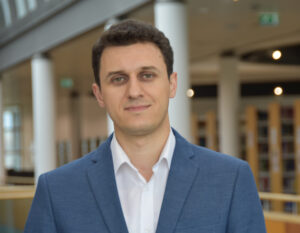
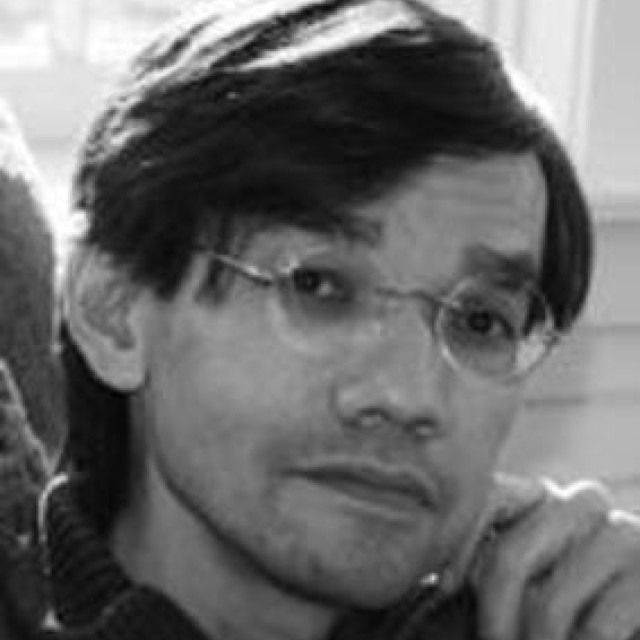
Paul Kennedy is the J. Richardson Dilworth Professor of History at Yale University, Director of International Security Studies, and Distinguished Fellow of the Brady-Johnson Program in Grand Strategy. His research focuses on great power relations, military history, British foreign policy, and global security. Born in 1945 in England, he holds a BA from Newcastle University and a DPhil from the University of Oxford. He is a Fellow of the Royal Historical Society and numerous other academic societies, and was honored as Commander of the British Empire (C.B.E.) in 2000. His influential works include The Rise and Fall of the Great Powers (1987) and Engineers of Victory (2013). Kennedy’s monthly column on global issues is syndicated worldwide, and he has authored nineteen books. His academic leadership includes directing ISS programs funded by the Smith Richardson Foundation and contributing to UN policy reports. Awards highlight his contributions to historical scholarship, including election to the British Academy. Current projects involve seapower’s role in World War II transformations. Kennedy’s work bridges historical analysis with contemporary strategic challenges, emphasizing problem-solving approaches in global conflict and cooperation.
Antonios Tzanakopoulos is the Professor of Public International Law at the University of Oxford and a Fellow at St Anne’s College . He has held visiting positions at the Universities of Paris II, Paris X, Angers, King’s College London, National and Kapodistrian University of Athens, Bern, Hebrew University of Jerusalem, IDC Herzliya, and China University of Political Science and Law. He previously taught at University College London and the University of Glasgow. DPhil (Oxford), LLM (NYU), LLM/LLB (Athens) Researcher for the Hellenic Ministry of Foreign Affairs and United Nations Graduate Teaching Assistant at Oxford’s Faculty of Law His research interests span public international law, state responsibility, treaty law, international human rights, law of the sea, and international investment law. He has served as counsel in cases before the International Court of Justice , EU courts, and ICSID tribunals, including Cyprus v Russia and Ukraine v Russia. His recent ICJ involvement includes Malaysia’s advisory opinions on the Occupied Palestinian Territory. His scholarly output is evident in 15 recent articles addressing treaty-custom interaction, maritime jurisdiction, self-defence doctrine, sanctions accountability, ICJ provisional measures, and state reactions to international coercion. He co-edits major handbooks on treaty law and domestic judicial engagement with international law. Secretary-General of the International Law Association Joint Secretary of the ILA’s British Branch Editorial Board of Oxford Reports on International Law
Dr. Paul McGarr is a Lecturer in Intelligence Studies at King’s College London (since 2023), part of the Department of War Studies within the Faculty of Social Science & Public Policy. He holds an MA in International History from Royal Holloway, University of London, and a PhD from Royal Holloway (2008). Prior to joining King’s, he served as Lecturer and Associate Professor in US Foreign Policy at the University of Nottingham (2011–2023), where he also held an AHRC Postdoctoral Fellowship (2009–2011). He is a Fellow of the Royal Historical Society and Royal Asiatic Society. His research focuses on security and intelligence outside the Anglosphere, clandestine diplomacy, and covert propaganda. Notable projects include a British Academy-funded study (2017–2019) analyzing emotions in British-India security relations and research fellowships at institutions like the Library of Congress and British Library. Dr. McGarr teaches modules on intelligence in war studies, diplomacy, and peace/war contexts. He supervises PhDs in intelligence agencies outside the Anglosphere, covert action, and disinformation. His authored/co-authored books include Spies in South Asia (2024), The Cold War in South Asia (2013), and India at 70 (2019). Recent articles explore topics like Soviet disinformation in India and the Sino-Indian War’s colonial cartographic roots. He contributes to the King’s Centre for the Study of Intelligence, a hub for interdisciplinary intelligence research.
Dr Gëzim Visoka serves as Associate Professor of Peace and Conflict Studies at Dublin City University (DCU), where he also completed his PhD in Politics and International Relations. A prolific scholar, he has authored or co-edited 10 books, published 25 journal articles, and contributed 20 book chapters, establishing himself as a leading voice in critical peace studies and state recognition theory. Education: PhD in Politics and International Relations, Dublin City University Visoka's research interrogates the intersections of peacebuilding, state formation, and global governance, with particular emphasis on diplomatic recognition practices, the foreign policy of small states, and Kosovo's contested statehood. His critical approach challenges liberal peacebuilding paradigms while exploring emancipatory alternatives through concepts like 'normal peace' and 'peace multitudes,' grounded in extensive fieldwork across the Western Balkans. Analysis of his recent publications reveals three dominant trajectories: 1) Theoretical innovations in state recognition/derecognition dynamics, 2) Critical examinations of 'counter-peace' as systemic obstruction to conflict resolution, and 3) Investigations into micro-level normalization practices in post-conflict settings. His work consistently bridges high theory with empirical studies of Kosovo, demonstrating how everyday state-making practices intersect with international governance structures. Dr Visoka holds influential editorial positions including Associate Editor of Peacebuilding journal, editor of Routledge Studies in Statehood book series, co-editor of Rethinking Peace and Conflict Studies , and editor-in-chief of the Palgrave Encyclopaedia of Peace and Conflict Studies . Complementing his academic work, he maintains 15+ years of practical engagement with civil society organizations and policy institutions in post-conflict environments, providing critical insights into transitional justice implementation and peacebuilding effectiveness.
Jaremey McMullin is a Senior Lecturer in the School of International Relations at the University of St Andrews, where he conducts research on post-conflict reintegration, youth peacebuilding, and veterans' politics. His work spans academic research, policy advising, and documentary filmmaking, with a focus on Liberia and the United States. Education: PhD in International Relations, University of Oxford (2006) Master of Studies in Forced Migration, University of Oxford (2001) MA in Comparative Ethnic Conflict, Queen's University Belfast (2000) BA in Government (International Relations) and Italian, Georgetown University (1999) His research centers on disarmament, demobilization, and reintegration (DDR), particularly how ex-combatant youth reintegrate through livelihoods like motorcycling in Liberia. He investigates veterans’ return, stigma, and peer support, employing qualitative and ethnographic methods. His 2013 monograph Ex-Combatants and the Post-Conflict State is a key contribution to the field. His recent work explores gendered dynamics in peace processes and youth-led peacebuilding narratives. McMullin’s publications span top journals such as Review of International Studies , Peacebuilding , and Conflict, Security & Development . His recent articles examine masculinities in peace processes, community dialogues in the Mano River Basin, and the role of documentary filmmaking in peace research. He integrates visual media into scholarship, producing acclaimed films like Silkies and Liberia: Legacies of Peace . Scientific Awards and Recognition: Award of Recognition, Close:Up Edinburgh Docufest (2020) Official Selection, Ethnografilm, Paris (2022) Official Selection, Film for Peace, Toronto (2020, 2021) Official Selection, MHSA Film Festival, Colorado (2021) He advises the United Nations on DDR programming, serving on the Research Working Group of the Integrated DDR Training Group. He has led multiple funded projects, including those supported by the Scottish Funding Council. He regularly delivers invited talks and participates in international policy workshops. He supervises graduate research and contributes to public discourse through media engagement and peer review. McMullin is actively involved in research networks and has contributed to public policy impacts, particularly in shaping UN approaches to ex-combatant reintegration. His work supports UN Sustainable Development Goals related to peace, justice, and strong institutions.
Noelle Higgins is an Associate Professor in Law at Maynooth University. She previously held academic roles at the Irish Centre for Human Rights (NUI Galway), the School of Law and Government (DCU), and served as Teaching and Learning Innovation Lead at ATU. Her academic qualifications include Master's degrees in Irish and Law, a Higher Diploma in Education, and a PhD from NUI Galway on 'Wars of National Liberation and Self-Determination.' Her research focuses on international human rights law, international humanitarian law, and international criminal law, with a current emphasis on cultural rights and cultural cleansing. She co-leads WG3 of the COST Action K-Peritia (cultural expertise in law) and is part of the Horizon2020 'ReCreating Europe' project on digital copyright law. She previously led an IRCHSS-funded project on international peace mediation. Her recent publications explore cultural heritage protection, indigenous rights, and the intersection of law and climate change. She has contributed extensively to legal education research, advocating for experiential learning tools like moot courts and field trips. Education: PhD (NUI Galway), LLM (International Human Rights Law), MA (Irish), Higher Diploma in Education Awards: None explicitly listed, but recognized for contributions to legal education and international law research Grants: Horizon2020 (2020), IRCHSS (2010) Labs/Teams: Member of the COST Action K-Peritia and ReCreating Europe Consortium.
Dr Silvia Borelli is a Visiting Lecturer at King's College London's Dickson Poon School of Law and an Adjunct Professor at Pepperdine University's Caruso School of Law. Her expertise spans international law, with a focus on human rights, refugee law, and humanitarian law. She holds a PhD from the University of Milan and has held roles at institutions like the University of Bedfordshire and UCL. Dr Borelli is a Senior Fellow of the Higher Education Academy and has advised organizations such as the British Red Cross and REDRESS Trust. Her research examines the intersection of human rights and international humanitarian law, particularly in counter-terrorism and migration contexts. She has explored issues like extraterritorial military operations, refugee family reunification, and legal aid access for asylum seekers. Dr Borelli’s work bridges academic scholarship with practical advocacy, addressing contemporary challenges in global governance and human rights protection. Teaching includes modules on Public International Law and Transnational Human Rights Litigation. Her funded research projects include studies on UK legal aid reforms affecting refugees and refugee family reunification mechanisms. Professional collaborations include roles with the Alliance for Lawyers at Risk and Peace Brigades International UK.
Dr. Alan James is Reader in International History at King's College London's Department of War Studies, specializing in early modern naval warfare and state formation. His research examines the changing strategic contexts of 16th-18th century Europe with focus on French naval development and imperial expansion. Research interests include: Evolution of Western naval power ideologies (1500-1815) Relationship between military innovation and state formation French absolutism and maritime policy Confessional conflicts and imperial expansion His publications demonstrate consistent focus on French naval history, particularly under Louis XIV and Colbert, with recent works exploring ideological foundations of Western sea power. James serves as trustee of the British Commission for Maritime History and convener of the King's Maritime History Seminar. Honors include a 2022-23 fellowship at the Institute of Advanced Study in Paris.
Felix Herbert is a Research Fellow at the Max Planck Institute for Comparative Public Law and International Law (MPIL) in Heidelberg, Germany, where he has been working since January 2021. He also serves as a Lecturer at the University of Heidelberg's Faculty of Law since 2024 and as Associate Editor for the Max Planck Encyclopedia of Public International Law since 2025. In April 2025, he began a legal clerkship (Rechtsreferendariat) at the Heidelberg Regional Court as part of his German legal education path. Herbert's research focuses primarily on the prohibition of the use of force under international law and peremptory norms (ius cogens), with significant scholarly contributions analyzing these principles in the context of Russia's war against Ukraine. His dissertation project examines The Prohibition of the Use of Force as a Peremptory Norm of General International Law (ius cogens) . His work demonstrates how fundamental principles of international law apply to contemporary conflicts and challenges in global security. Herbert's publications reveal a strong emphasis on the practical application of international legal principles to current geopolitical conflicts, particularly examining the Russia-Ukraine war through the lens of ius cogens. His scholarship bridges theoretical international law with pressing real-world security challenges, contributing significantly to ongoing debates about the enforcement of fundamental legal norms during armed conflicts. Otto Schmidt Prize for the Promotion of the Europeanization and Internationalization of Law (2nd Prize, December 2024) for his contribution on ius cogens and Russia's war against Ukraine As an educator, Herbert has taught Working Groups on International Law at the University of Heidelberg since the Winter Semester 2021/22 and has served as a coach for the Heidelberg Jessup Moot Court teams. He has also been a judge for the Philip C. Jessup International Law Moot Court Competition since 2022. Additionally, he serves as the Environmental Officer for the MPIL, focusing on sustainability initiatives within the institute's operations.
Mauricio Tenorio Trillo serves as the Gustavus F. and Ann M. Swift Distinguished Service Professor of History at the University of Chicago and the College, while maintaining an affiliation as Profesor afiliado at Centro de Investigación y Docencia Económicas (CIDE) in Mexico City. With over two decades of scholarly work including thirteen years at Chicago, he remains actively engaged in research as evidenced by his upcoming research leave for Autumn 2025 and Winter 2026. Tenorio earned his PhD from Stanford University in 1992, establishing a foundation for his interdisciplinary approach that bridges historical methodology with linguistic analysis and urban studies. His academic trajectory demonstrates consistent engagement with Mexican and Latin American historical narratives across institutional contexts. Professor Tenorio's research explores the intricate relationships between language and historical understanding, urban development and national identity formation, and the conceptual frameworks that shape regional perceptions. His work critically examines how historical narratives are constructed, with particular focus on Mexico City's evolution and the conceptual construction of Latin America as a region. Recent scholarship increasingly addresses historical memory, monument culture, and the politics of historical representation, reflecting his evolving intellectual trajectory while maintaining core methodological commitments. Analyzing his publication trends reveals Tenorio's sustained commitment to conceptual history and the deconstruction of regional identities. His scholarship consistently demonstrates how historical narratives shape contemporary understandings of place and culture, with language serving as both medium and subject of historical inquiry. The interdisciplinary nature of his work bridges history with linguistics, urban anthropology, and cultural studies, creating a distinctive methodological approach that has influenced multiple fields. Professor Tenorio's scholarly contributions have been recognized through several prestigious awards: Honorary Mention for The Bolton-Johnson Prize from the American Historical Association (2013) Spiro Kostof Book Award from the Society of Architectural Historians (2015) Gordon J. Laing Prize from The University of Chicago Press (2015) Quantrell Award for Excellence in Undergraduate Teaching (2019) While specific details about current advising relationships aren't prominently featured, Tenorio's collaborative work such as 'El Porfiriato: Una propuesta y un balance' with Aurora Gómez demonstrates scholarly partnership. His extensive publication record and teaching recognition suggest significant student mentorship, with his work appearing in numerous academic journals and receiving translations that extend his scholarly impact beyond English-language academia. Professor Tenorio operates within a robust transnational scholarly network connecting the University of Chicago with Mexican academic institutions, particularly CIDE. This binational academic presence enables him to bridge North American and Latin American intellectual traditions, creating a distinctive conceptual space that informs his research on historical narratives and regional identity formation. His work exemplifies how transnational scholarly engagement can produce innovative historical methodologies and conceptual frameworks.
Professor Ashley Jackson is a leading scholar in Imperial and Military History at King’s College London and a Visiting Fellow at Kellogg College, Oxford. His career spans academic roles including Director of Research, Vice Dean (Research), and external examiner for multiple universities. Jackson holds fellowships from the Royal Historical Society and Higher Education Academy. He specializes in British imperial history with a focus on wartime contexts, particularly in Africa, the Indian Ocean, and the Middle East. His research emphasizes colonial contributions to global conflicts and their underappreciated roles in World Wars. Educated at New College, Oxford, Jackson has authored over 15 books including The British Empire and the Second World War and Ceylon at War, 1939–1945 . Current projects explore the war’s impact on the British Empire and comparative global wartime experiences. He teaches at the Joint Services Command and Staff College and has lectured widely at military institutions and international forums like the Chalke Valley History Festival. Administratively, Jackson has led research strategy groups, managed doctoral fellowships, and served on peer review panels. His editorial roles include the Journal of African Military History and the Helion book series on South Asian military culture. He co-founded the British Empire at War Research Group and contributes to institutions like the Bodleian Library and the Soldiers of Oxfordshire Museum. His awards include British Academy grants and AHRC funding for collaborative projects. Jackson’s work bridges academia and practice, addressing contemporary security issues in post-conflict regions like Afghanistan and the Sahel. He regularly engages with policymakers on counterinsurgency, humanitarian engagement with armed groups, and climate adaptation in conflict zones.
Dr. Natasha Kuhrt is a Senior Lecturer in International Peace and Security at King's College London's Department of War Studies, housed within the School of Security Studies. Her academic affiliations include membership in BISA, Chatham House, ISA, ASEN, and BASEES. She holds a PhD from UCL and has taught extensively on international law, intervention, and security studies. Her research focuses on Russian foreign policy in Asia, regionalism in Eurasia/Asia-Pacific, nationalism, and the Responsibility to Protect (R2P). Education: BA (Hons) in Russian & German from School of Slavonic and East European Studies (UoL), MA in Soviet Studies (SoSlavonic), PhD (UCL) on Russian policy toward China/Japan. Research interests span Russian security policy, international law applications in conflict zones, and the nexus between memory discourse and foreign policy. She co-leads the BISA Working Group on Russian & Eurasian Security and collaborates on ESRC UK-Japan projects on populism. Current book projects include co-authored volumes on Russian foreign policy and Russia-China relations. Her work appears in outlets like Journal of Global Faultlines , Asian Survey , and Australian Journal of Defence and Strategic Studies . She advises multiple PhD students and engages in public commentary via BBC, Al Jazeera, and academic conferences on Ukraine-Russia dynamics, China-Russia relations, and UN peacekeeping. Labs/Teams: Co-director of War Crimes Research Group and Centre for Grand Strategy, focusing on historical conflict analysis and strategic diplomacy.
Dapo Akande is the Chichele Professor of Public International Law at the University of Oxford’s Faculty of Law and a Fellow of All Souls College. He is Co-Director of the Oxford Institute for Ethics, Law and Armed Conflict (ELAC) at the Blavatnik School of Government and has held visiting positions at Yale, Melbourne, and other institutions. Since January 2023, he has served as a Member of the United Nations International Law Commission. His academic background and research span public international law, with a focus on the law of armed conflict, international criminal law, human rights, law of international organizations, and cyber operations. He is a generalist with deep expertise in the regulation of armed conflict, humanitarian access, and accountability mechanisms. His recent scholarship addresses critical issues such as the crime of aggression, immunity of state officials, targeted killings by drones, and humanitarian relief in conflict zones. His work on the Oxford Guidance on the Law Relating to Humanitarian Relief Operations , commissioned by UN OCHA, has shaped policy and legal understanding globally. He co-authored the authoritative Oppenheim’s International Law: The United Nations , which won the 2019 ASIL Certificate of Merit. The trends in his publications reveal a sustained engagement with the evolving legal frameworks governing war, accountability, and state responsibility. His work bridges doctrinal analysis with practical policy impact, particularly in the areas of drone warfare, ICC jurisdiction, and humanitarian law compliance. Scientific awards and recognition include: Certificate of Merit, American Society of International Law (2019) Akande has served as legal adviser to the UK Parliament’s All Party Parliamentary Group on Drones and to multiple international bodies, including the UN Security Council, Human Rights Council, and ICRC. He has advised national courts (including the UK Supreme Court) and acted in cases before the ICJ, ICC, and ECtHR. He is founding editor of EJIL:Talk! and has held editorial roles in leading journals such as the American Journal of International Law and European Journal of International Law . He leads several research initiatives, including the Oxford Process on International Law Protections in Cyberspace, and previously co-directed the Oxford Martin Programme on Human Rights for Future Generations and the ERC-funded project on the Individualisation of War. He is actively involved in global policy through advisory roles with the US State Department, UK Ministry of Defence AI Ethics Panel, and the Ukrainian Government Working Group on war damage compensation.
Belinda Davis is a Professor of History at Rutgers University's School of Arts and Sciences, where she has been teaching since 1992. She serves as Director of the Rutgers Center for European Studies (2018-2021; 2024-2025) and is Co-Representative for the Jean Monnet ValEUs International European Studies Award (2024-2026). Her academic home is within the Department of History, where she teaches courses on modern European history, German history, gender studies, and social movements. Davis earned her Ph.D. from the University of Michigan and her B.A. from Wesleyan University. Her educational background has shaped her interdisciplinary approach to historical research, bridging political, social, and cultural history with gender studies and environmental history. Professor Davis's research focuses on Modern Germany and Europe , with particular expertise in popular politics and social movements , environmental history , women and gender studies , and the history of everyday life . Her work explores how ordinary people engage with political systems, how conceptions of democracy evolve through grassroots activism, and how environmental concerns have shaped political movements. She employs innovative methodologies including oral history , memory studies , and emotional history to understand the personal dimensions of political change. Her research spans from World War I Berlin to contemporary European environmental politics, with special attention to the transformative period of the 1960s-1980s in West Germany. Davis's extensive publication record reveals a consistent focus on how social movements transform both political structures and personal identities. Her work demonstrates how grassroots activism in West Germany from the 1960s-1980s created new forms of political engagement that operated outside traditional parliamentary channels. Recent publications increasingly address environmental history and the intersection of gender with political movements, reflecting evolving scholarly interests while maintaining her core focus on everyday political experiences. Her scholarly contributions have been recognized with prestigious awards including: Fernand Braudel Senior Fellowship, European University Institute (Florence), Spring 2015 German Studies Association Best History Book Prize (2020, 2024) Barclay Book Prize (2023) Residential Fellowship, Zentrum für Zeithistorische Forschung (Potsdam), Summer 2006 Research Fellowship, Volkswagen-Stiftung, Academic Year 2005-6 Research Fellowship, Shelby Cullom Davis Center, Princeton University, 2003-2004 Professor Davis has mentored numerous graduate students who have completed dissertations on diverse topics including Turkish "guestworkers" in West Germany, German-Polish and German-Czech borderlands identities, sexualities in twentieth-century Germany and Hungary, Holocaust survivors' memory, and "lived ideologies" in postwar Germanies. Her current research projects include co-editing "Voices of the Organized Poor" and writing an environmental history of Europe from 1500 to the present for Cambridge University Press. She has secured significant research funding through fellowships from institutions including the European University Institute, Zentrum für Zeithistorische Forschung, Volkswagen-Stiftung, and Princeton University's Shelby Cullom Davis Center. As Director of the Rutgers Center for European Studies and Chair of the Academic Advisory Board of the Rutgers Oral History Archive, Davis leads important institutional initiatives that support European studies and historical documentation. She is actively involved in public scholarship, having appeared on CNN, C-SPAN, France Télévision 3, and other media outlets to discuss historical perspectives on contemporary political issues. Her work with the EDGES (Engaged Digital German Environmental Studies) Consortium demonstrates her commitment to interdisciplinary collaboration on environmental issues.
Chiara Ruffa is a University Professor at the Centre for International Studies (CERI) , Sciences Po, Paris. Previously, she served as a Senior Lecturer at the Swedish Defence University and an Academy Fellow at Uppsala University's Department of Peace and Conflict Research. Her research focuses on multilateralism, peacekeeping operations, military cultures, and civil-military relations, with a micro-level analysis of field dynamics in conflict zones like Lebanon, Mali, and Afghanistan. Current affiliation: CERI, Sciences Po Prior roles: Swedish Defence University, Uppsala University Research themes: Peacekeeping, Multilateralism, Social Science Methodologies Her methodological expertise spans comparative qualitative methods, ethnography, and reflexivity in fieldwork. She has published extensively in journals such as European Journal of International Relations , Security Studies , and International Peacekeeping , co-authoring a critically acclaimed book shortlisted for the Conflict Research Society Best Book Award (2020). Scientific Awards & Grants: Fulbright Commission funding European Commission grants Swedish Research Council support Royal Swedish Academy funding 3rd ERGOMAS Prize (2018) Chiara Ruffa's work bridges empirical field studies with theoretical analyses of international security norms and their implementation in multilateral contexts.