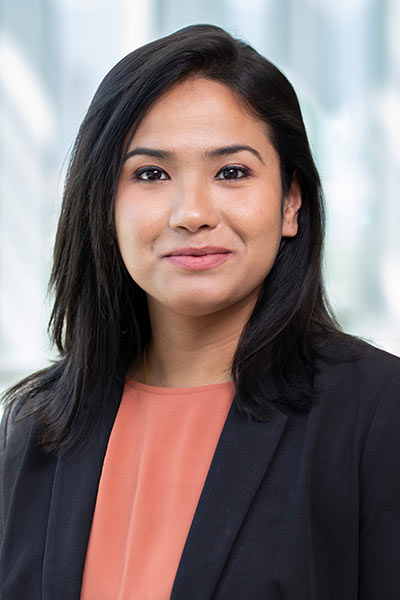
Kenan Hazirbaba is a Teaching Professor in the Department of Civil Engineering at the University of Texas at Tyler. With extensive teaching experience, he specializes in geotechnical engineering and offers courses in statics, mechanics of materials, soil mechanics, foundation design, and seismic site response. Ph.D. in Civil, Architectural, and Environmental Engineering from The University of Texas at Austin (2005) M.S. in Civil Engineering from Bogazici University (1999) B.S. in Civil Engineering (with distinction) from Istanbul Technical University (1996) Hazirbaba's research focuses on applied and experimental geotechnical engineering, particularly the behavior of saturated soils under cyclic loading and non-traditional soil stabilization techniques. His work addresses critical challenges in cold regions, including freeze-thaw effects on soil mechanics and seismic response in permafrost areas. His publications highlight expertise in geofiber-reinforced sands, synthetic fluid stabilization, and seismic design of earth-retaining structures. Research has secured over $2 million in funding from state and non-governmental agencies, emphasizing practical solutions for civil engineers. Hazirbaba is a Registered Professional Engineer in Alaska and promotes undergraduate research engagement. His certifications and applied research bridge academic theory with real-world engineering applications.
Dr. XiaoYue Cathy Liu is an Associate Professor in the Department of Civil & Environmental Engineering at the University of Utah. She holds a PhD in Transportation Engineering from the University of Washington and advanced degrees in Transportation Planning and Electronics Engineering. Her research focuses on sustainable transportation systems, shared mobility, public transit optimization, managed lanes, and intelligent transportation systems. She actively serves on committees including the Transportation Research Board's Highway Capacity Quality of Service (HCQS) Committee and chairs its Technology Transfer Subcommittee. She also advises the Utah Model Advisory Committee and previously served on Salt Lake City’s Transportation Advisory Board. Dr. Liu is a licensed professional engineer in Utah. Education: PhD, Transportation Engineering, University of Washington (2013) MA, Transportation Planning & Management, Texas Southern University BS, Electronics & Electrical Engineering, Beijing Jiaotong University Graduate Certificate, Global Trade & Logistics, University of Washington (2011) Research Interests: Electric vehicle infrastructure and charging networks Smart transportation systems and agent-based modeling GIS-based asset management for transportation infrastructure Snowplowing operations optimization and winter maintenance Managed lanes and high-occupancy toll (HOT) lane analysis Public transit equity and accessibility Her recent publications emphasize data-driven approaches to transportation challenges, including EV demand forecasting, drone delivery networks, and resilience in interdependent transit systems. She collaborates on projects addressing Utah’s unique transportation needs, such as optimizing snowplow routes and integrating renewable energy into public transport systems. Professional Contributions: Board member, Utah Model Advisory Committee Former Chair, Salt Lake City Transportation Advisory Board (2013-2016) TRB Managed Lane Committee member TRB Transit Capacity & Quality of Service (TCQS) Committee member (2016-2019) Dr. Liu’s work bridges transportation engineering with computational methods, focusing on equity, sustainability, and operational efficiency. She leads research initiatives involving large-scale modeling, geospatial analytics, and interdisciplinary solutions for modern mobility challenges.
Kunhee (KC) Choi is a Professor in the Department of Construction Science at Texas A&M University, holding the History Maker Homes Endowed Professorship and serving as a Chancellor EDGES Fellow. His research focuses on enhancing transportation systems through cyber-enabled solutions, including digital twinning, artificial intelligence, and data-driven modeling. B.E. in Architectural Engineering, Korea University (1999) M.S. in Construction Science, Texas A&M University (2002) Ph.D. in Civil and Environmental Engineering, University of California, Berkeley (2008) Dr. Choi’s work addresses four key areas: (1) AI-powered mobility and safety solutions for highway projects, (2) cost-time-risk tradeoff analyses under alternative contracting methods, (3) infrastructure sustainability through life-cycle assessment, and (4) stochastic modeling for civil planning and management. His research has been funded by NSF, USDOT, NCHRP, and TxDOT. Recent publications highlight his emphasis on predictive analytics, flood resilience, pavement engineering, and AI-driven disaster recovery frameworks. The i²dEAS Lab, which he directs, has produced 130+ peer-reviewed publications and secured $500k+ in annual research funding. Chancellor EDGES Fellow (2022) NSF Grant Recipient for Road Safety Research Texas Sea Grant Program Award (NOAA Funding) for AI-based evacuation route modeling Dr. Choi’s teaching philosophy emphasizes integrative learning and interdisciplinary critical thinking in construction management. His lab collaborates with academia, government, and industry to optimize transportation infrastructure performance through safer, more efficient management strategies.
Elie Hajj is a Professor in the Department of Civil & Environmental Engineering at the University of Nevada, Reno (UNR), serving as Associate Director of the Western Regional Superpave Center. His research focuses on asphalt pavement engineering, sustainable materials, and infrastructure resilience. He specializes in pavement rehabilitation, numerical modeling of dynamic load impacts, and economic analysis of pavement preservation strategies. Dr. Hajj has received recognition for his 2016 ASTM award for outstanding work on pavement rehabilitation economics. He actively engages in professional service, including TRB webinars and academic seminars on topics like pavement damage assessment and vehicle operating costs. His teaching spans graduate and undergraduate courses in pavement design, materials engineering, and advanced pavement analysis. His research integrates experimental and computational methods to address challenges in pavement performance under superheavy loads, recycled material utilization, and energy-efficient construction practices. Collaborations with industry and government agencies enhance the practical applicability of his findings.
Professor Inge Hoff is affiliated with the Norwegian University of Science and Technology (NTNU) in the Department of Civil and Environmental Engineering, where he has served since 2009. Prior to this, he held roles as senior researcher and research leader at SINTEF. Research Interests : Materials for road construction, frost protection, laboratory testing, pavement dimensioning, road rehabilitation, state development modeling, ground-penetrating radar surveys, and concrete/natural stone coverings. Students : Mentors active PhD fellows Lisa Hannasvik, Arman Hamidi, Clara Weber, and Shoiab Ahmad. Teaching : Coordinates courses like TBA4204/BYGT1102 Transport Infrastructure , BYGT2204 Road and Railway Construction , and BA8600 Pavement Structure Dimensioning . Recent publications highlight his expertise in granular material behavior, asphalt durability under climate stressors, and advanced structural assessment techniques. Collaborations with international researchers and presentations at major conferences (TRB, International Conference on Bituminous Mixtures) demonstrate his ongoing contributions to road engineering.
Jason Weiss is a Professor and the Miles Lowell and Margaret Watt Edwards Distinguished Chair in Engineering at Oregon State University’s College of Engineering, where he is affiliated with the School of Civil and Construction Engineering. He previously served as Head of the School from 2015 to 2020 and was a long-time faculty member at Purdue University, holding the Jack and Kay Hockema Professorship and directing the Pankow Materials Laboratory. His educational background includes a B.A.E. from Pennsylvania State University, and M.S. and Ph.D. from Northwestern University in 1997 and 1999, respectively. Dr. Weiss’s research centers on the behavior of cement and concrete, with a strong emphasis on early-age shrinkage, cracking, durability, transport properties, internal curing, and performance prediction of concrete structures. He is widely recognized for developing and advancing test methods such as the ring test, dual ring test, and electrical resistivity measurements for assessing cracking potential and durability. His work has significantly influenced specifications for concrete pavements through the FHWA’s Performance Engineered Mixtures program. He has authored over 425 publications, including more than 225 peer-reviewed journal articles, and his editorial leadership includes serving as Editor-in-Chief of the American Concrete Institute’s Journal of Materials, Associate Editor of the Transportation Research Record, and former Editor-in-Chief of both the ASTM journal Advances in Civil Engineering Materials and the RILEM journal Materials and Structures. NSF Career Award RILEM L'Hermite Medal ACI W. P. Moore, Young Member, Philleo, Wason, and Arthur Anderson Awards ASCE Huber Award ESCSI Erskine Award ACPA Knutson Award Multiple teaching awards including the University Murphy Award and induction into the Purdue Teaching Academy Dr. Weiss has been deeply involved in mentoring and advising, recognized through multiple teaching and advising awards. He has led large research teams and secured significant funding for infrastructure materials research. His work is supported by federal agencies and industry partners, particularly in advancing performance-based specifications for durable and sustainable concrete. He leads research within the Infrastructure Materials Laboratories at Oregon State, including the Concrete Performance Lab and Kiewit Building Materials Lab, focusing on innovative mixture designs, durability testing, and field implementation.
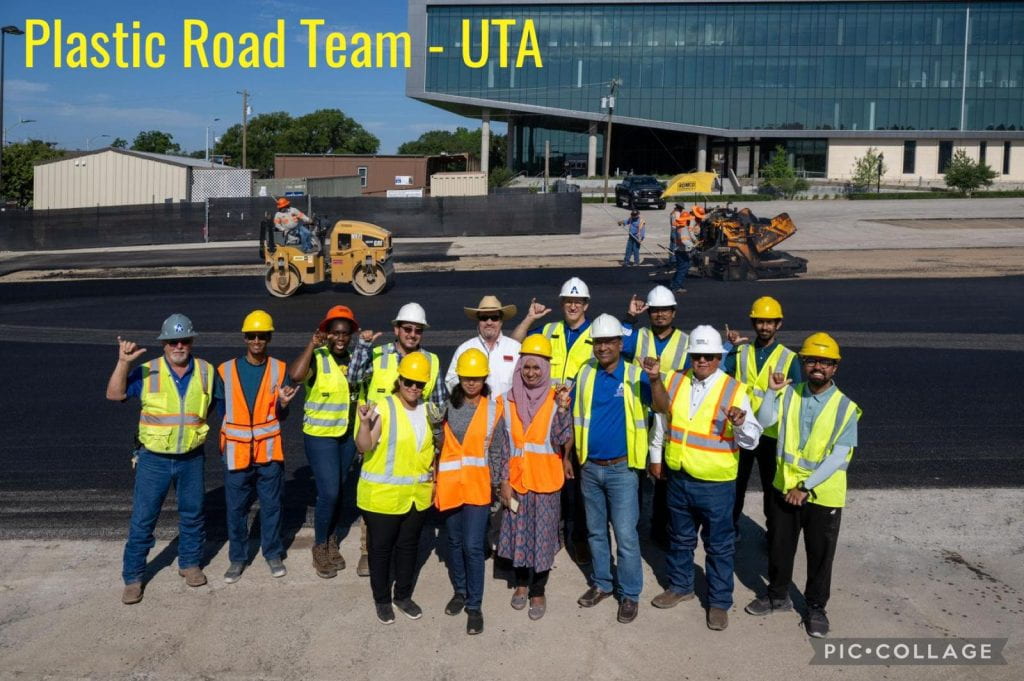
Dr. Md S Hossain is a Professor of Civil Engineering at The University of Texas at Arlington, directing the Solid Waste Institute for Sustainability (SWIS). He holds a B.S. from IIT Bombay, an M.E. from AIT Bangkok, and a Ph.D. from North Carolina State University. His research focuses on sustainable waste management, bioreactor landfills, geotechnical engineering, and slope stabilization, with notable contributions to landfill gas-to-energy and recycled materials utilization. He has over 6 years of professional experience in geotechnical and geoenvironmental projects globally. Research Interests: Sustainable waste management, landfill engineering, slope stabilization, recycled materials, geotechnical site investigations. Key Roles: Director of SWIS, Principal Investigator on numerous grants, and advisor to over 50 graduate students. Dr. Hossain has secured millions in grants from agencies like NSF, EPA, and TxDOT, focusing on waste-to-energy, landfill mining, and slope stabilization using recycled plastics. His awards include the ISWA Leadership Award and Distinguished AIT Alumni recognition. He actively collaborates with international organizations like CCAC and ISWA, advocating for sustainable waste solutions in developing countries. His work spans 50+ projects in Bangladesh, Singapore, Hong Kong, and the U.S., emphasizing practical applications like recycled plastic pins for slope stabilization and ET cover systems for landfills. SWIS, under his leadership, promotes global sustainable waste management through education, research, and policy advocacy.
Yuxia Hu is a Professor at the University of Western Australia, affiliated with the School of Engineering (Civil, Environmental and Mining Engineering) and the School of Social Sciences, Planning and Transport Research Centre. Her research focuses on geotechnical engineering, particularly in large deformation FE analysis, offshore foundation systems, and soil-structure interaction. She has contributed to advancements in suction caissons, plate anchors, and computational mechanics, with applications in offshore wind energy and infrastructure stability. Research Interests: Large deformation FE analysis of soils, soil-structure interaction, offshore foundation systems, soil mechanics, and pavement engineering. Awards: Telford Premium, British Geotechnical Association Prize, and Significant Junior/Senior Paper Award. Grants: Leads projects on offshore anchors, carbon capture in pavements, and road maintenance optimization. Her work addresses challenges in geotechnical design and sustainable infrastructure, with a focus on numerical modeling and experimental validation. Collaborations span academia and industry, emphasizing practical solutions for complex soil-structure systems.
Patrick Singleton is an Associate Professor in the Department of Civil and Environmental Engineering at Utah State University, specializing in transportation research. His work bridges travel behavior, safety analysis, and health impacts of transportation systems, with a focus on active transportation and data science applications. Academic Background: PhD in Civil and Environmental Engineering (Portland State University, 2017) Research Areas: Travel behavior, transportation-electrification, pedestrian safety, health-wellbeing in transport Recent research trends emphasize data-driven approaches to pedestrian and bicycle safety, transportation electrification, and the impact of environmental factors like air quality on travel patterns. His lab develops tools for pedestrian data analysis and systemic safety improvements. Scientific recognition includes multiple UDOT awards and a 2017 Best Paper award. He mentors graduate students in transportation modeling and safety analysis.
Ebenezer Fanijo is an Assistant Professor at the School of Building Construction, part of the College of Design at Georgia Institute of Technology. He joined in Spring 2023 and specializes in sustainable and smart-resilient infrastructure, focusing on low-carbon construction materials and alternative energy sources. His work addresses carbon emissions in building materials and processes through advanced research on cementitious composites, recycled materials, and green technologies. Dr. Fanijo holds a B.S. in Building Construction (Obafemi Awolowo University, Nigeria), M.S. in Civil Engineering (University of Idaho, 2019), and a Ph.D. in Civil Engineering with a concurrent MEng in Materials Science and Engineering from Virginia Tech (2022). He is also a Professional Engineer (P.E.) and LEED Green Associate with over five years of construction sector experience. Education: B.S. Building Construction, Obafemi Awolowo University, Nigeria (First Class Honours) M.S. Civil Engineering, University of Idaho (2019) Ph.D. Civil Engineering & MEng Materials Science, Virginia Tech (2022) Research Interests: His research spans sustainable construction materials, concrete durability, green technologies using recycled/by-product materials, 3D-printed cementitious materials, and advanced sensing for structural monitoring. He emphasizes decarbonizing infrastructure and developing innovative composites to reduce lifecycle emissions. Awards: NSBE Golden Torch Award (2022) – Recognized as Graduate Student of the Year National/international awards for research excellence Teaching & Advising: Dr. Fanijo teaches courses on construction materials, green technologies, and sustainable practices. He developed core curricula such as Construction Materials and Methods and Green Construction Technology . His advising focuses on student mastery of material properties and their integration into environmental performance frameworks. Professional Contributions: He has led funded research projects, published widely in peer-reviewed journals, and pioneered work on alkali-silica reactivity mitigation, asphalt mix design optimization, and corrosion monitoring. His lab integrates AI and nanoscale techniques for material analysis.
Dr. Andy Nguyen is a Senior Lecturer in Structural Engineering at the University of Southern Queensland, within the School of Engineering. He is an active researcher and educator, specializing in the Structural Health Monitoring (SHM) of critical civil infrastructure such as bridges, buildings, and transport tunnels. Bachelor of Engineering (BEng), NUCE, 1999 Master of Engineering (MEng), NUCE, 2003 Doctor of Philosophy (PhD), Queensland University of Technology (QUT), 2014 Dr. Nguyen's research is at the forefront of integrating advanced technologies into civil engineering. His primary focus is on developing and deploying sophisticated SHM systems that utilize sensors, data analytics, and machine learning to provide real-time insights into the structural integrity of ageing infrastructure. His work aims to enable proactive maintenance, extend the lifespan of structures, and enhance public safety. He has successfully implemented monitoring systems on major bridges and high-rise buildings in Queensland and New South Wales, with systems capable of even detecting distant earthquake events. His research interests span Structural Health Monitoring, Machine Learning for Engineering, Damage Detection, Finite Element Model Updating, Sustainable Building Materials like bamboo, and the application of AI for automated condition assessment of transport infrastructure. The analysis of his recent publications reveals a strong and consistent research trajectory centered on the application of data-driven and AI methods to solve practical problems in civil infrastructure. His work frequently combines signal processing techniques (like Stockwell Transform) with deep learning models for tasks such as crack detection in concrete and pavement. He also conducts significant research on model updating for complex structures like cable-stayed and arch bridges, using vibration data and optimization algorithms. The integration of machine learning for overload classification and the development of cost-effective, automated monitoring systems are key trends in his recent output. Advanced Queensland Fellow (2024-2027) Dr. Nguyen is actively involved in research supervision and collaboration. He is currently supervising several postgraduate students on projects related to AI-powered condition assessment, bamboo as a sustainable building material, and railway track design. He receives research funding from the Queensland Government through his Advanced Queensland Fellowship. His research has direct practical applications, as evidenced by his public engagement, such as writing for The Conversation on safeguarding ageing bridges, and his work with the Australian Network of Structural Health Monitoring. Dr. Nguyen's work embodies the development of a next-generation 'Living' Laboratory for engineering education, where research, teaching, and real-world infrastructure monitoring are integrated. His current projects involve creating smart, automated fault detection systems and advancing 'digital twin'-based monitoring platforms for infrastructure.
Dr Md Habibullah Bhuyan is an Adjunct Lecturer at the School of Civil Engineering, The University of Queensland, Australia. His research focuses on geotechnical engineering with an emphasis on soil mechanics, electromagnetic measurement methods, and pavement material characterization. He can be contacted at h.bhuyan@uq.edu.au . PhD, Geotechnical Engineering, The University of Queensland (2018) Masters, Geotechnical Engineering, Saitama University (2013) Bachelor, Civil Engineering, BUET (2006) His expertise includes non-destructive testing of unbound granular materials, geo-hydraulic characterization of soft soils in saline environments, and electromagnetic monitoring of soil moisture, density, and deformation. He investigates drained/undrained shear strength, unsaturated soil mechanics, and phase transitions in granular media such as erosion and liquefaction. Recent publications highlight railway ballast deformation (2025), tailings consolidation (2023), TDR sensor challenges (2022), and applications of electromagnetic methods in pavement and coastal engineering. Key themes span unsaturated soil behavior, erosion processes, and advanced geotechnical instrumentation. His teaching spans 12 years across Australia, Japan, and Bangladesh, covering Soil Mechanics , Geotechnical Engineering , Advanced Soil Mechanics , and Transportation Engineering .
Tae J. Kwon is an Associate Professor in the Department of Civil and Environmental Engineering at the University of Alberta . His research spans Winter Transportation Engineering , Intelligent Transportation Systems (ITS) , Traffic Optimization , and Geospatial Information Science . Developed LoRWIS , a web-based decision support system for road weather sensor optimization Recipient of multiple awards including ITS Canada Excellence in Research and Development Award (2024) , KOFST Scientist of the Year (2024) , and Early Career Research Award (University of Alberta, 3 times) Active in professional committees like the TRB Surface Transportation Weather Research Group (2016–present) Research Highlights : Winter Road Maintenance : Advanced geostatistical and deep learning techniques for road condition monitoring Location Optimization : Pioneered models for RWIS sensor placement using hybrid geostatistical methods Intelligent Transportation Systems : Focused on big data applications for traffic safety and connected vehicles Climate Resilience : Integrated ecological vulnerability into fire hazard modeling Scientific Awards : ITS Canada Excellence in Research (2024) KOFST Scientist of the Year (2024) Donald Stanley Best Paper Award (2023) AKCSE Early Achievement Award (2021) University of Alberta Early Career Research Award (2020) Great Supervisor Award (2019) Teaching & Leadership : Teaches courses like CIV E 419 (Transportation Engineering: Highway Planning and Design) and CIV E 612 (Transportation Planning: Methodology and Techniques) Leads the Geospatial Transportation System & Sensing Solutions Lab (GeoTrans) , mentoring PhD students Juan Cuellar and Jiehao Bi Collaborates with agencies including Alberta Transportation , NSERC , and Iowa DOT
Michael Pawlovich is Assistant Professor of Civil and Environmental Engineering at South Dakota State University's Jerome J. Lohr College of Engineering. His research focuses on traffic safety analytics, statistical modeling of crash data, and transportation infrastructure evaluation. Research expertise includes: Statistical methods for safety evaluation (Empirical Bayes, Bayesian modeling) Geometric design safety impacts Rural intersection safety Infrastructure treatment effectiveness Honors include multiple National Roadway Safety Awards and AASHTO recognitions. Publications demonstrate consistent application of advanced statistics to traffic safety challenges.
Dr. Srishti Banerji is an Assistant Professor in the Department of Civil and Environmental Engineering at Utah State University and Director of the Systems, Materials, and Structural Health (SMASH) Lab. She leads research on advanced construction materials, structural resilience under extreme loads (particularly fire), sustainable infrastructure, and structural health monitoring. Her group focuses on experimental testing, numerical simulations, and developing design solutions for civil infrastructure. Education: PhD in Civil (Structural) Engineering, Michigan State University (2021) MS in Civil (Structural) Engineering, Concordia University (2016) BS in Civil Engineering, National Institute of Technology Silchar (2013) Research Focus: Her work spans: 1) Characterization of high-performance/sustainable materials (e.g., UHPC, recycled glass pozzolan), 2) Structural behavior under fire exposure, 3) Integration of electric charging systems in concrete pavements, 4) Non-destructive testing and structural health monitoring, and 5) Retrofitting techniques for infrastructure strengthening. She employs machine learning, thermo-mechanical modeling, and full-scale experimentation. Publication Trends: Her 13+ journal articles primarily analyze fire resistance of concrete/timber structures, UHPC material properties at high temperatures, sensor-based infrastructure monitoring, and sustainable material development. Recent works increasingly incorporate machine learning and electrification concepts. Awards & Honors: Teacher of the Year (USU, 2025) ASCE ExCEEd Faculty Teaching Fellowship (2023) Top Cited Article Award, Fire and Materials Journal (2023) SHMII-11 Early Career Grant (2022) NSERC Scholarship (2015) Best Conference Paper (SEC 2016) Current Projects & Teams: She leads 5+ funded projects including fire performance of polymer concrete, self-healing concrete for bridges, and Utah-sourced UHPC development. Mentees include 3 PhD students (Abdullah Al Sarfin, Mehrnoosh Nazari, Mahmoud Ali) and alumni working on sustainable materials and additive manufacturing.