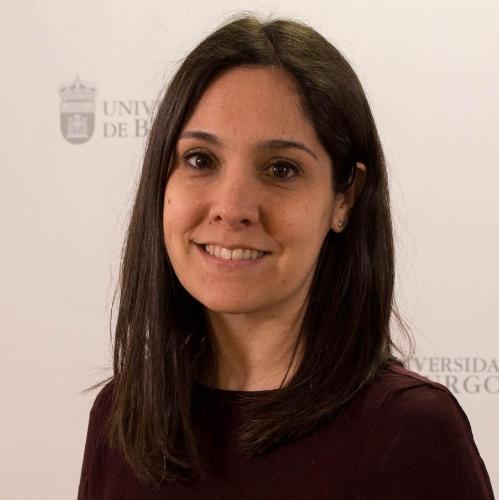
Dr. Alaitz Linares Unamunzaga is a permanent faculty member at the Department of Civil Engineering within the College of Engineering at the University of Burgos. She holds a PhD in Industrial, Computer, and Civil Engineering and Technology (UBU) and specializes in Transport Engineering and Infrastructure. Education: PhD from University of Burgos (2015) with thesis on semirigid pavement soil-cement characterization Research: Affiliated with the LogIT research group focusing on transport engineering Contact: alinares@ubu.es
Neil Debbage, Ph.D., serves as Associate Professor in the Department of Political Science and Geography at the University of Texas at San Antonio (UTSA) within the College of Liberal and Fine Arts. His research integrates urban climatology, natural hazards, and sustainability through advanced GIS and modeling techniques to enhance urban resilience against heat and flood threats, with publications in high-impact journals including Water Resources Research and International Journal of Climatology. Education: Ph.D. in Geography, University of Georgia M.S. in Geography, University of Georgia B.A. in Geography, University of Georgia Dr. Debbage's research program centers on urban climate challenges, employing spatial analysis and numerical weather modeling to investigate the urban heat island effect, flood vulnerability, and sustainability interventions. His work examines physical and social determinants of urban environmental risk, with recent projects evaluating cool pavement efficacy and urban climate action plans. This interdisciplinary research bridges geography, environmental science, and public policy to develop practical solutions for climate-resilient cities. Analysis of his publication record reveals consistent focus on urban heat mitigation strategies, environmental justice in flood risk assessment, and climate policy evaluation across megaregions. His work demonstrates evolving methodological sophistication from foundational hydrological studies to current policy-oriented climate action research, emphasizing spatial equity and practical urban adaptation measures. Scientific Awards: University of Texas San Antonio College of Liberal and Fine Arts Stumberg Assistant Professor Researcher of the Year (2022) Dr. Debbage actively secures competitive research funding including NASA grants for air quality monitoring and urban hydrometeorological analysis, totaling over $2.3 million in collaborative projects. He serves as faculty advisor for UTSA's Gamma Theta Upsilon geographical honor society and teaches core courses in GIS, spatial analysis, and climate science. His grant portfolio demonstrates strong institutional partnerships with NASA and local sustainability offices focused on translating research into actionable urban resilience strategies. While specific laboratory facilities aren't detailed in available materials, his research involves collaborative teams analyzing urban climate data through GIS and modeling frameworks. Current projects emphasize real-world applications including San Antonio's cool pavement implementation and Texas Triangle cooling center accessibility, indicating active engagement with municipal planning agencies to operationalize climate adaptation measures.
Claudia Zapata is an Associate Professor at Arizona State University's School of Sustainable Engineering and the Built Environment. She serves as the Associate Director of the National Center for Infrastructure Transformation (NCIT) under the U.S. Department of Transportation and as Deputy Director of the Engineering Research Center for Bio-Mediated and Bio-Inspired Geotechnics funded by the National Science Foundation. Her educational background includes a Ph.D. in Geo-Environmental Engineering from Arizona State University (1999), an M.S.E. in Geotechnical Engineering from Arizona State University (1996), and a B.S. in Civil Engineering from Universidad Nacional-Manizales-Colombia (1988). Dr. Zapata specializes in unsaturated soil mechanics with particular focus on temperature effects on moisture movement, matric suction effects on soil resilience under dynamic loading, and incorporating environmental effects into pavement design methodologies. Her research has significantly advanced mechanistic pavement design practices, including introducing models that account for real-time environmental effects in pavement performance. She has authored over 90 technical publications on unsaturated soils behavior, expansive soils characterization, thermo-hydro-mechanical soil behavior, and soil improvement techniques. Her recent publications demonstrate a strong trend toward bio-mediated geotechnics, climate-responsive pavement design, and advanced modeling of soil-water interactions. The research spans fundamental unsaturated soil mechanics to practical applications in transportation infrastructure, with increasing emphasis on sustainability and climate adaptation. Carl Monismith Award 2025 from ASCE for outstanding contributions to Pavement Engineering Victoria Foundation Award 2021 for increasing participation of underrepresented populations in engineering Community Service Award 2011 for advancing pavement programs in Arizona Recognition in Top 5% of Superior Teaching by Ira A. Fulton Schools of Engineering (2019) Dr. Zapata has been instrumental in developing the Mechanistic-Empirical Pavement Design Guide in the United States, creating a database of over 35,000 unsaturated soils properties across the U.S., and leading NSF-funded research through the Engineering Research Center for Bio-Mediated and Bio-Inspired Geotechnics. Her current research activities include moisture measurement for pavement foundations, implementation of environmental effects into ERDC pavement design programs, and enhancements to Pavement ME Design considering shrink/swell soils and frost heave. She actively leads research teams focused on bio-mediated and bio-inspired geotechnics, with recent work examining microbial-induced desaturation, fungal mycelium effects on soil cracking, and enzyme-based soil stabilization techniques. Her lab work integrates experimental testing with advanced modeling to address infrastructure challenges related to problematic soils and climate effects.
Jose Roberto Medina Campillo is an Associate Professor at Arizona State University's School of Sustainable Engineering and the Built Environment. His academic journey began and ended at ASU, where he earned his B.S., M.S., and Ph.D. in Civil, Environmental, and Sustainable Engineering. Education Ph.D. - Civil, Environmental and Sustainable Engineering, Arizona State University, 2018 M.S. - Civil, Environmental and Sustainable Engineering, Arizona State University, 2014 B.S.E. - Civil Engineering, Arizona State University, 2012 Dr. Medina's research focuses on pavement materials characterization, performance modeling, advanced laboratory testing of construction materials, sustainable pavement strategies, and pavement management systems. His work bridges materials science with civil infrastructure, emphasizing durability and environmental impact reduction. Teaching CEE 483: Highway Materials, Construction, Quality (2025 Fall) CEE 583: Fieldwork (2025 Fall) CEE 512: Pavement Performance and Management (2025 Fall) CEE 513: Pavement EMR (2024 Fall) CEE 353: Civil Engineering Materials (2021 Summer) CNE 353: Civil Engineering Materials (2021 Summer)
Hudson Jackson is a Professor at the Department of Civil and Environmental Engineering, United States Coast Guard Academy. He holds a PhD in Geotechnical Engineering from Rutgers University (2003), an Mpl in Geotechnical Engineering from Rutgers (2000), and a Dipl-Ing in Geotechnical Engineering/Structural Design from TU Darmstadt (1994). With over 35 years of experience, he is a Licensed Professional Engineer in Pennsylvania and Sierra Leone, and his career spans geotechnical engineering, structural design, pavement engineering, construction management, and ethics education across Africa, Europe, and North America. Research Interests: Dr. Jackson's work focuses on non-destructive pavement testing , coastal resiliency , civil engineering education , and ethical leadership . His pedagogical research explores curriculum innovation, technical writing integration, and critical thinking development, while his technical work addresses infrastructure assessment and environmental mitigation. Notable Publications: His research trends include pedagogical strategies for engineering education, coastal resilience in infrastructure, and ethical frameworks for professional practice. Notably, he coauthored a compendium on civil engineering education strategies and pioneered models for critical thinking assessment and leadership development in undergraduate programs. Scientific Awards: USCGA Provost Outstanding Service Award (2024) Excellence in Scholarship Award (2020) Dean of Engineering Educator Award (2018) BEYA Emerald Honoree (2013) Chi Epsilon Honor Society membership Professional Leadership: Dr. Jackson has served as past president of the Connecticut Society of Civil Engineers and is active in ASCE, ASEE, and Deep Foundation Institute. He has coauthored 2+ books and delivered 80+ conference papers, with a focus on curriculum innovation and coastal infrastructure.
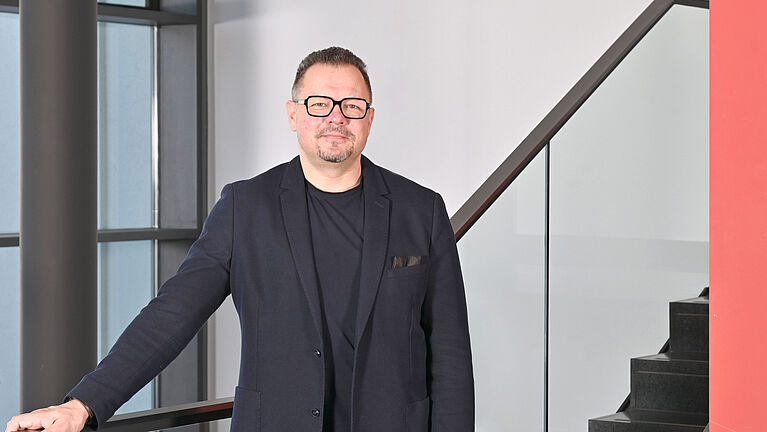
Michael Kaliske is a full-time Professor at Technische Universität Wien , specializing in computational mechanics and material modeling. His research focuses on advanced numerical methods like phase-field modeling, material point method (MPM), and digital twin frameworks for civil, mechanical, and materials engineering applications. Research Interests: Phase-field approaches for fracture and fatigue analysis Micromechanical homogenization techniques Multiphysics modeling of concrete and geopolymer materials Digital twin systems for infrastructure and tire technology Recent Article Trends: His 2025 publications emphasize phase-field modeling of multi-material interactions (wood, concrete, tempered glass), AI integration for pavement diagnostics, and multiscale approaches for high-strain-rate concrete analysis. The 2024 works focus on snow mechanics, viscoelastic modeling, and numerical stabilization methods in MPM.
David Stapleton, Ph.D. , is a Professor in the Department of Mathematics & Statistics at the University of Central Oklahoma. His research spans aerospace studies, flight dynamics, and mathematical modeling, with collaborations involving the USAF, FAA, and ICAO. He has over 28 years of experience teaching courses such as Mathematical Modeling, Advanced Calculus, and Numerical Analysis. Ph.D. in Applied Mathematics from the University of Arizona (1990) Stapleton's work focuses on GPS/WAAS navigation systems, aircraft terminal procedures, missile risk analysis, and spaceplane trajectory simulations. He employs MATLAB and C++ for 3D modeling, algorithm optimization, and real-time flight safety calculations. Recent publications highlight his expertise in numerical linear algebra, mathematical modeling, and aviation safety standards. Stapleton has contributed to ICAO's Extended Pinsker height loss model and FAA studies on runway pavement repair protocols.
Steffen Riedl is a Professor of Road Construction at the University of Applied Sciences Erfurt , specializing in civil engineering and transport infrastructure. He serves as Vice-President for Academic Affairs and a member of FH Erfurt's Senate. Research focuses on asphalt maintenance, cold recycling, and pavement diagnostics Teaches bachelor’s courses on road engineering fundamentals Active in standardization committees including FGSV Education: Diplom degree in Civil Engineering (2000, TU Darmstadt) Doctorate in Engineering (Dr.-Ing., 2006) His work emphasizes load-bearing capacity analysis using Falling Weight Deflectometer (FWD) technology and thin-layer asphalt construction for sustainable infrastructure. Recent publications examine cold recycling techniques and pavement preservation. Professional Affiliations: Chair of Gütegemeinschaft AKB (Cold-Mix Asphalt Quality Association) Member of Forschungsgesellschaft für Straßen- und Verkehrswesen (FGSV) Active in Thuringian and Hessian road engineering associations As a certified expert for asphalt construction methods, he contributes to technical standards and has led multiple research projects on pavement longevity and maintenance technologies.
Jafar P Mohsen serves as Professor and Associate Dean of Administration and Faculty Affairs at the JB Speed School of Engineering, University of Louisville, having previously chaired the Civil and Environmental Engineering Department. His academic credentials include: B.S. in Civil Engineering, University of Louisville (1978) ME in Civil Engineering, University of Louisville (1980) ME in Engineering Management, University of Louisville (1992) Ph.D. in Civil Engineering, University of Cincinnati (1992) Dr. Mohsen's research centers on practical applications of civil engineering principles to transportation infrastructure, with particular expertise in concrete pavement construction methodologies. His work demonstrates how the maturity method can optimize quality control processes and traffic reopening schedules for state DOTs, bridging theoretical engineering with real-world construction challenges. This research trajectory reflects his dual focus on materials science and engineering management within civil infrastructure projects. His scholarly contributions, exemplified by his work on concrete maturity techniques, show consistent application of engineering principles to solve pressing transportation infrastructure challenges faced by state departments of transportation across the United States. Professional leadership represents another significant dimension of Dr. Mohsen's career, though specific awards aren't detailed in the available materials. As Associate Dean, he oversees critical faculty administration functions while maintaining his scholarly profile. His service as President of the American Society for Engineering Education (2009-10) and regional Board of Direction member for the American Society of Civil Engineers representing Kentucky (2009-12) demonstrates substantial professional engagement beyond campus boundaries.
Zhihui Sun is a Professor in the Department of Civil and Environmental Engineering at the University of Louisville, where she conducts cutting-edge research in concrete technology and sustainable infrastructure. Her work bridges fundamental materials science with practical engineering applications to address critical infrastructure challenges. Her educational credentials include: B.S. in Civil Engineering, Tongji University (1995) M.E. in Civil Engineering, National University of Singapore (2001) Ph.D. in Civil Engineering, Northwestern University (2005) Dr. Sun's research spans Concrete Technology , Nanomaterials in Construction , and Sustainable Infrastructure , with emphasis on non-destructive testing and geothermal applications. Her innovative work integrates cellulose nanocrystals for concrete enhancement, explores geothermal solutions for bridge resilience, and develops smart pavement systems. She employs advanced characterization techniques like Raman spectroscopy to study cement hydration at microstructural levels, while addressing practical challenges like chloride erosion and alkali-silica reaction. Analysis of her recent publications reveals three dominant research thrusts: 1) Nanocellulose modification of cementitious systems for improved durability, 2) Geothermal energy integration for climate-resilient infrastructure, and 3) Sustainable material solutions using biomass waste and recycled components. Her work consistently bridges laboratory innovation with field-scale validation, particularly in transportation infrastructure applications. Dr. Sun has secured significant research funding from the National Science Foundation, Department of Transportation, Federal Highway Administration, and Portland Cement Association. Her educational initiatives include undergraduate research programs focused on sustainable waste management. While specific advising details aren't provided, her committee memberships and educational projects indicate active mentorship in civil engineering education.
Pramod Bhusal is a researcher at Helsinki University of Technology, specializing in sustainable lighting solutions, geographic information systems, and energy efficiency. His work aligns with UN Sustainable Development Goals, particularly in education and renewable energy. He has led multiple international projects, including MELINA, SLSIM, and DESL. Research Focus: Bhusal's research spans urban lighting design, smart lighting education, and technical modeling for tunnel safety. He emphasizes public participation in lighting systems and sustainable practices in developing countries. Projects: Recent projects include MELINA (2025–2027) on lighting simulations and PROPEL (2022–2024) for renewable energy education. He has also worked on heritage site lighting in Nepal and tunnel luminance models. Collaborations: Bhusal collaborates with institutions like National University of Lesotho, Tribhuvan University, and Hellenic Open University. His activities include guest lectures and workshops across Bhutan, Vietnam, and Lesotho.
Ryun Jung Lee serves as an Assistant Professor in the Department of Urban and Regional Planning within the Margie and Bill Klesse College of Engineering and Integrated Design at the University of Texas at San Antonio (UTSA). His research integrates geospatial methodologies with urban planning to address sustainability and resilience challenges in community development, with particular emphasis on socially vulnerable populations. His academic credentials include: Ph.D. in Urban and Regional Sciences, Texas A&M University (2018) M.S. in Urban Planning and Engineering (Urban design track), Yonsei University, Seoul, South Korea (2009) B.S. in Urban Planning and Engineering, Yonsei University, Seoul, South Korea (2007) Lee's research program centers on four interconnected domains: Built Environment (examining urban form, vacancies, and walkability), Green Infrastructure (analyzing tree canopy, green spaces, and low-impact development through environmental justice lenses), Climate Adaptation (studying extreme weather events and disaster mitigation strategies), and Community Resilience (developing tools for neighborhood-scale risk reduction). His work employs advanced GIS and spatial modeling techniques to translate geographic patterns into actionable policy recommendations. Analysis of his recent publications reveals a strong thematic focus on the socioeconomic dimensions of environmental interventions, particularly how green infrastructure investments impact property values, health outcomes, and community vulnerability. His methodological approach consistently combines quantitative spatial analysis with environmental justice frameworks, often using Texas communities as living laboratories for urban resilience research. Lee directs the GeoDesign + Planning Lab at UTSA, which maintains an active partnership with the UTSA Westside Community Partnership to implement community-engaged research projects. The lab develops practical tools like Python scripts for vacant land duration measurement while producing policy-relevant studies on topics ranging from flood buyout impacts to campus environment-health linkages.
Dr. Yuekai Xie is a Research Associate in the School of Engineering and Technology at the University of New South Wales (UNSW) Canberra campus. With a PhD in civil (geotechnical) engineering from UNSW completed in 2022 and a BSc from Monash University (2017), Dr. Xie has established himself as a researcher specializing in geoenvironmental engineering and sustainable materials. Dr. Xie's educational background includes: PhD in Civil (Geotechnical) Engineering, University of New South Wales, 2022 BSc, Monash University, 2017 Dr. Xie's primary research interests focus on the geoenvironmental behaviour of municipal solid wastes , sustainable cement materials , and the geoenvironmental impacts of microplastic contamination on natural soils . His work bridges the gap between waste management and civil engineering, developing innovative solutions for recycling waste materials in construction applications while addressing environmental concerns. He has made significant contributions to understanding how microplastics affect soil properties and how waste materials can be repurposed in sustainable construction. Analysis of Dr. Xie's recent publications (2023-2025) reveals a strong focus on sustainable geopolymer composites, microplastic impacts on soil behavior, and waste material recycling in construction. His research demonstrates a clear trajectory toward developing environmentally friendly construction materials while addressing waste management challenges. The interdisciplinary nature of his work connects geotechnical engineering, environmental science, and materials engineering, with particular emphasis on practical applications for sustainable infrastructure development. Dr. Xie has published extensively in high-impact journals including Waste Management, Construction and Building Materials, and Science of the Total Environment, with numerous publications appearing in 2024-2025. His research demonstrates consistent productivity and growing influence in the fields of geoenvironmental engineering and sustainable construction materials.
Lin Wan-Wendner is an Assistant Professor at the Department of Civil Engineering, KU Leuven, with a focus on materials and structures for sustainable construction. They are affiliated with the Faculty of Engineering Technology and lead research on hybrid structures combining concrete, timber, steel, and novel materials, as well as multiscale-multiphysics modeling of structural behavior and 3D concrete printing. Research Highlights : Sustainable structural design, hybrid material systems, computational modeling, and additive manufacturing in construction. Current Projects : Promotor for initiatives like HYBRE (demountable hybrid structures), 3D4WALL (3D-printed wall elements), and climate-resistant composite materials. Engagement : Committee member for steel-timber composites, editorial board member of Low-carbon Materials and Green Construction , and reviewer for journals including Engineering Structures and Structural Concrete . Recent publications emphasize chloride binding in geopolymers, recycled aggregate modeling, and machine learning applications for concrete durability. Their work bridges theoretical and applied research in structural engineering.
Dr. Chandra Balijepalli is an Associate Professor in Transport Studies at the Institute for Transport Studies , part of the Faculty of Environment at the University of Leeds. With over 30 years of experience across India, Indonesia, and the UK, his research focuses on transport modelling, network resilience, and sustainable mobility solutions for the Global South. Education: PhD in Transport Modelling (2006), University of Leeds MSc in Transport Planning & Engineering (2000), University of Leeds MSc in Transportation Engineering (1989), National Institute of Technology, Warangal BSc in Civil Engineering (1987), Nagarjuna University His research spans strategic transport modelling, day-to-day traffic dynamics, and resilient network design. Current projects include the U-PASS initiative on urban mobility innovation and post-disaster transport recovery in Indonesia. He developed the MARS model for Jakarta's infrastructure planning and contributed to evacuation strategies for Mount Merapi. Recent publications focus on seaport recovery algorithms, electric motorcycle adoption in Bandung, and pavement maintenance optimisation. These works highlight his expertise in disaster resilience, network interdependencies, and sustainable urban transport policy. Scientific recognitions include: Fellow of the Higher Education Academy Fellow of the Chartered Institution of Highways & Transportation Editorial Board Member, Transportation Research Record He supervises 11 PhD students (5 completed, 6 ongoing) and teaches modules on transport engineering, traffic network modelling, and pavement maintenance. As Director of International Activities (2021–present), he leads global collaborations with institutions in Indonesia, including Bandung Institute of Technology and University of Gadjah Mada.