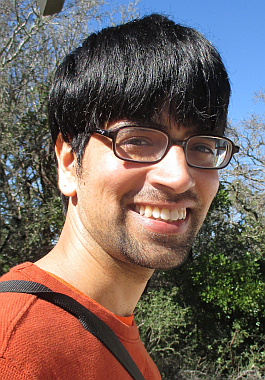
Levi J Hargrove is an Associate Professor at Northwestern University, holding dual appointments in the Department of Physical Medicine and Rehabilitation at the Feinberg School of Medicine and the Department of Biomedical Engineering at the McCormick School of Engineering. He is also a Research Scientist at the Center for Bionic Medicine at Shirley Ryan AbilityLab. His work focuses on developing neural control systems for prosthetic limbs, particularly in myoelectric control and pattern recognition, aiming to create clinically viable solutions for amputees. Education: BScE in Electrical Engineering, University of New Brunswick, 2003 MScE in Electrical Engineering, University of New Brunswick, 2005 PhD in Electrical Engineering, University of New Brunswick, 2008 Research Interests: Signal processing, pattern recognition, myoelectric control of powered prostheses, and neural interfaces for bionic limbs. His lab translates research into clinical applications, such as the first thought-controlled bionic leg and Coapt LLC's pattern recognition systems for upper-limb prosthetics. Awards: 2017 American Academy of Orthotists and Prosthetists Research Award 2014 Department of Defense Outstanding Research Team Award 2015 Collaboration Award from Chicago Innovation Grants: Manages a $25 million portfolio from federal, military, and philanthropic sources. Key projects include NSF-funded research on human-robot interaction and DoD grants for prosthetic innovation. Labs: Leads the Regenstein Foundation Center for Bionic Medicine and collaborates with the Neurorehabilitation and Neural Engineering Lab. His work emphasizes translational research, bridging engineering and clinical practice.
David Green is a Professor at the Vancouver School of Economics , University of British Columbia, and an International Fellow at the Institute for Fiscal Studies in London. He holds a Ph.D. from Stanford University and has served as Chair of the BC Basic Income Panel . Research Focus : Labour economics, income inequality, wage distribution, and public policy. His work bridges macro-level employment trends with micro-level identification of causal effects. Key Contributions : Analysis of minimum wage impacts on job stability, immigrant economic integration, resource boom spillovers, and basic income policy evaluation. Article Trends include: Welfare reform and health outcomes (2022) Covid-19 occupational risks (2022) Resource boom wage spillovers (2019) Post-2000 skill demand reversal (2016) Minimum wage and job tenure dynamics (2013) Scientific Recognition : Harry Johnson Prize (2000, 1995) for best articles in the Canadian Journal of Economics. International Fellow, Institute for Fiscal Studies (London). Policy Engagement : Directed the 2017-2019 BC Basic Income Panel , producing evidence-based reports on poverty reduction and workforce participation. His empirical work frequently informs national policy debates on taxation, immigration, and social assistance.
Dr. Debraj Roy is a Visiting Professor at the University of Amsterdam (UvA), affiliated with the Faculty of Science, Mathematics and Computer Science and the Informatics Institute. His research focuses on agent-based modeling, socio-economic dynamics, environmental resilience, and blockchain technology. He investigates complex systems such as urban slums, disaster recovery, and climate adaptation using computational methods like remote sensing and machine learning. His work bridges theory and practice, offering insights into policy design for sustainable development and social equity. Key research interests include slum dynamics, poverty traps, and the application of blockchain oracles for decentralized systems. He employs advanced techniques such as global sensitivity analysis and manifold learning to explore multi-scale socio-environmental challenges. His recent articles highlight trends in carbon pricing, flood risk valuation, and multi-agent systems. Earlier work concentrated on urban inequality in cities like Bangalore and Mexico City, leveraging geospatial and statistical tools. No scientific awards or grants are explicitly listed. His advising and team collaborations are unspecified in the provided text.
Associate Professor Sonny Pham leads research in artificial intelligence at Curtin University's School of EECMS. His work balances theoretical foundations with practical applications in computer vision, data mining, and deep learning. As head of the IAMAI research group, he collaborates with industry partners on security systems, healthcare AI, and sustainable technologies. His research explores: Computationally efficient deep learning architectures Compressed sensing for high-dimensional data Robust statistical methods for real-world problems Applications in computer vision and industrial automation Recent publications demonstrate a focus on medical imaging interpretation and efficient neural networks, with applications spanning radiology report generation, semantic segmentation for autonomous systems, and cybersecurity. His team's work consistently bridges theoretical AI advancements with industrial applications. Honors include: Multiple WANMA Awards (2021-2024) for industry-impactful research INCITE Award for social impact technology (2024) IEEE Young Author Best Paper Award (2010) Over $5M in competitive research funding including MRFF and DFAT grants He leads the IAMAI research group with 12+ graduate students and coordinates Curtin's Master of Artificial Intelligence program. Industry collaborations include Alcoa Australia, iCetana, and HyprFire.
Dr. Victoria C. P. Chen is a Professor in the Industrial, Manufacturing, and Systems Engineering (IMSE) department at The University of Texas at Arlington (UTA), where she has served since 2002. She previously held positions at the Georgia Institute of Technology from 1993-2001. Dr. Chen has held several leadership roles at UTA, including Interim Department Chair (2012-2014), Director of the Center on Stochastic Modeling, Optimization, & Statistics (COSMOS) (2008-2012, and again from 2017-present), and Director of Doctoral Studies (2019-present). She was also the George & Elizabeth Pickett Professor from 2015-2017 and was inducted into the UT Arlington Academy of Distinguished Teachers in 2019. Dr. Chen is actively involved with INFORMS (Institute for Operations Research and the Management Science), where she currently serves as Secretary on the Executive Board. Dr. Chen earned her B.S. in Mathematical Sciences from The Johns Hopkins University, and her M.S. and Ph.D. in Operations Research and Industrial Engineering from Cornell University. Her academic journey includes visiting professorships at the University of Genoa, Italy, and Iowa State University. Dr. Chen's research utilizes statistical perspectives to create new methodologies for operations research problems appearing in engineering and science. Her expertise includes the design of experiments, statistical modeling, and data mining, particularly for computer experiments and stochastic optimization. Through her statistics-based approach, she has developed computationally-tractable decision-making methods for many high-dimensional complex systems. Her work spans multiple domains including sustainability, energy, water management, healthcare, and law enforcement. Specific application areas include inventory forecasting, airline optimization, water reservoir networks, wastewater treatment, air quality monitoring, green building design, nurse assignment systems, and pain management programs. Her recent publications demonstrate continued innovation in mixed integer programming for electric vehicle charging stations, vacuum ultraviolet spectroscopy prediction, and sustainable building education. Senior Member, Institute for Operations Research and the Management Sciences (INFORMS) (2024) Data Mining Prize (Lifetime Achievement Award), INFORMS Society on Data Mining (2023) College of Engineering Teaching Award, UT Arlington (2021) Third Place Award, C3.ai COVID-19 Grand Challenge (2020) Academy of Distinguished Teachers, University of Texas at Arlington (2019) George & Elizabeth Pickett Professorship (2015-2017) As an educator and mentor, Dr. Chen has advised over 25 doctoral students across diverse research topics in operations research and systems engineering. She has secured substantial research funding from multiple sources including the National Science Foundation (over $1.5 million in active projects), Environmental Protection Agency, National Institute of Justice, and industry partners like Luminant and Dallas-Fort Worth International Airport. Her current research projects focus on decision analytics for sustainable urban environments, optimization for Texas water management, and statistical methods for pain management programs. She has served as Principal Investigator or Co-PI on more than 20 externally funded research projects totaling over $3 million in funding. Dr. Chen co-founded the Center on Stochastic Modeling, Optimization, & Statistics (COSMOS) at UTA with Dr. H. W. Corley. This research center brings together faculty and students from multiple disciplines to address complex problems through advanced statistical and optimization methods. She also leads interdisciplinary research teams working on projects related to sustainable infrastructure, energy systems, and healthcare optimization, frequently collaborating with researchers from civil engineering, environmental science, and medical fields.
Yolanda Vidal Segui is an Associate Professor in the Department of Mathematics at the Universitat Politècnica de Catalunya (UPC), affiliated with the Escola d'Enginyeria de Barcelona Est (EEBE). Her research focuses on wind energy systems, predictive maintenance, and structural health monitoring of wind turbines. She leads projects in the CoDAlab and WinTurCoM research groups, specializing in data-driven models, condition monitoring, and failure prognosis. Her work integrates machine learning, mathematical modeling, and sensor technology to enhance turbine reliability and energy efficiency. Dr. Vidal holds a PhD in Applied Mathematics and has authored over 350 publications. Her contributions include advancements in SCADA data analysis, vibration-based diagnostics, and AI-driven condition monitoring systems. She has received several accolades, including the WindEurope Technology Workshop recognition and the IFIT Distinction in Mechanism and Machine Science. Her research bridges academia and industry, addressing challenges in offshore wind turbine integrity and maintenance strategies. Active in professional service, she serves on conference committees and editorial boards (e.g., Mechanical Systems and Signal Processing, Wind Energy). Her work emphasizes sustainable energy solutions and has been applied in real-world scenarios like the Alpha Ventus wind farm. She also contributes to educational initiatives, developing innovative teaching materials for engineering students.
Vassilios Tzerpos is an Associate Professor at the Lassonde School of Engineering, York University, where he has been since 2001. He holds a Ph.D. in Computer Science from the University of Toronto (2001). His research focuses on audio processing for musical applications, deep learning, digital signal processing, machine listening, and software engineering education. He directs the APTLY lab exploring music-technology intersections and leads the LaSSoftE lab developing socially-oriented software solutions. Education: Ph.D. in Computer Science, University of Toronto, 2001 Research Highlights: Dr. Tzerpos' work spans music information retrieval (e.g., automatic music classification), synthetic speech detection using neural networks, and software engineering pedagogy. His recent projects include Music-STAR for audio re-instrumentation and OER-based learning path creation systems. He has pioneered methods in design pattern detection and software clustering evaluation. Grants & Labs: Leads two research groups: APTLY (music-tech) and LaSSoftE (social impact software). Active in developing adaptive cybersecurity solutions against DoS attacks and refining software architecture recovery techniques. Key Themes in Publications: Recent work emphasizes machine learning applications in music technology and cybersecurity, with foundational contributions to software clustering methodologies and design pattern detection algorithms. His work bridges theoretical computer science with practical applications in education and creative industries.
Dr. Julie Markant is an Associate Professor in the Department of Psychology at Tulane University and a Faculty Associate in the Tulane Brain Institute. Her research focuses on the interplay between selective attention and learning in infants and young children, emphasizing developmental and neurobehavioral perspectives. She uses behavioral, eye-tracking, genetic, MRI, and fNIRS methods to explore how attention control influences learning efficacy and vice versa. Education: Ph.D., 2010, University of Minnesota Her research interests include developmental attention mechanisms, perceptual learning, and how biological and contextual factors shape cognitive outcomes. Key themes involve understanding how infants and children selectively attend to information and how this attention drives learning processes. Recent work explores caregiver influence on attention, prenatal factors affecting infant attention, and the role of competing information in school-aged learning. Dr. Markant leads the Learning and Brain Development Lab , which investigates cognitive and neural mechanisms underlying attention and learning. She is actively recruiting graduate students from Tulane’s Psychology and Neuroscience Ph.D. programs. Her publications reflect a focus on attention biases, developmental learning dynamics, and methodological innovations like remote infant studies. Awards and honors are not explicitly listed in the provided text.
Professor Hugh N Kennedy is a distinguished academic at SOAS University of London, holding dual affiliations with the School of History, Religions and Philosophies and the School of Languages, Cultures and Linguistics. As a Professor of Arabic, he specializes in Early Islamic History (600-1100 CE), with particular focus on Arabic historiography, Islamic archaeology, and the historical geography of the Middle East. His research also examines castle building in the region and the history of al-Andalus. He holds a PhD (Cantab) and has supervised doctoral candidates including Ummugulsum Kurukol and Zhicheng Ye. His publications span authored books, edited volumes, and numerous articles exploring topics like the Abbasid Caliphate, Islamic economic systems, and comparative political histories. He is based at the Russell Square campus and can be contacted via hk1@soas.ac.uk. Research Interests: Kennedy’s work bridges textual analysis and material culture, investigating how political structures, military campaigns, and cultural exchanges shaped the early Islamic world. He examines themes such as the evolution of governance systems, the role of pilgrimage economies, and the interaction between religious and temporal authority. His scholarship frequently engages with primary sources like al-Baladhuri’s Futuh al-Buldan and Ibn Wāḍiḥ al-Yaʿqūbī’s writings, contextualizing them within broader historical narratives. Key Publications: Includes seminal works on the Abbasid Caliphate, the conquests of the Arab armies, and comparative analyses between Islamic and Byzantine governance. Teaching: Contributes to SOAS’s MA History program, focusing on the Global South through decolonial and interdisciplinary approaches. Professional Affiliations: Active in academic networks promoting the study of pre-modern Middle Eastern history and cultural heritage.
Matthew Holden is an Associate Professor in the School of Computer Science at Carleton University. He holds a PhD (2018) and MSc (2014) from Queen's University and a BScH (2012) from Western University. His research focuses on Surgical Data Science, applying machine learning to surgical time-series data from operating rooms and simulations to improve patient outcomes and surgical training. Key areas include real-time decision support, performance assessment, and surgical efficiency through domain-knowledge integration. Research interests emphasize machine learning for surgical workflows, skill assessment via sensor data (e.g., motion tracking, EEG), and computer-assisted interventions. Notable work includes automated proficiency evaluation in cataract surgery, ultrasound-guided procedures, and neurosurgical training. His contributions span medical robotics, surgical education, and clinical decision support systems. Publications highlight advancements in surgical workflow anticipation, tool detection, and skill metrics across domains like ophthalmology, emergency medicine, and neurology. Holden advocates for interdisciplinary approaches combining computational methods with clinical expertise to enhance healthcare delivery.
Prof. Hatice Gunes is a Full Professor of Affective Intelligence and Robotics at the University of Cambridge's Department of Computer Science and Technology, leading the Affective Intelligence and Robotics Lab (AFAR Lab). She holds an EPSRC Fellowship and is an EPSRC Fellow. Her research focuses on multimodal affective and social intelligence for AI systems, particularly embodied agents and robots, integrating Machine Learning, Affective Computing, and Human Nonverbal Behaviour Understanding. Key projects include the CHANSE initiative (2025–2028) for child mental health assessment via social robotics, the EPSRC Fellowship on robotic EQ for wellbeing (2019–2025), and the EU Horizon 2020 WorkingAge project. Prof. Gunes has pioneered systems like the EU SEMAINE project's SAL system, recognized with Best Demo and Paper Awards, and co-founded SensingFeeling, a spin-out company from the Innovate UK Sensing Feeling project. Her work emphasizes ethical AI and fairness, earning awards like the Best Paper Award in Responsible Affective Computing (IEEE ACII'23). She has delivered keynote talks at IEEE FG’19 and ICPR’22 and collaborates with the Department of Psychiatry and wellbeing professionals. Education: PhD in Computer Science from University of Technology Sydney (UTS) under Australian Government IPRS Scholarship Postdoctoral Research at Imperial College London (SEMAINe project) Research Interests: Multimodal affective computing, social robotics for mental wellbeing, fairness in AI systems, human-robot interaction (HRI), and ethical deployment of AI technologies. Her lab develops robots for workplace wellbeing coaching and child mental health assessment, with over 700 media coverages and partnerships with industry and healthcare sectors. Notable Achievements: Runner-up Collaboration Award (2023 VC Research Impact) Better Future Award (2023 Hall of Fame) Finalist RSJ/KROS Interdisciplinary Research Award (2021) Shortlisted Sony Women in Technology Award 2025 Labs & Teams: AFAR Lab drives interdisciplinary research in Cambridge, focusing on socially intelligent robots and AI systems that address critical societal challenges in wellbeing and mental health.
Jianjun (Jan) Shi is the Carolyn J. Stewart Chair and Professor at the H. Milton Stewart School of Industrial and Systems Engineering (ISyE) and holds a joint appointment with the George W. Woodruff School of Mechanical Engineering at Georgia Institute of Technology. He previously served as the G. Lawton and Louise G. Johnson Chair Professor of Engineering at the University of Michigan. His research focuses on system informatics and control for manufacturing and service systems, with notable contributions to quality improvement, cyber-physical systems, and data-driven methodologies. B.S. & M.S. in Electrical Engineering, Beijing Institute of Technology (1984–1987) Ph.D. in Mechanical Engineering, University of Michigan (1992) Dr. Shi’s research interests include process modeling, control systems, and quality engineering. He pioneered methodologies for in-process quality improvement and developed advanced frameworks for high-dimensional data analysis in manufacturing. His work integrates statistical methods, machine learning, and system informatics to enhance operational efficiency and product quality. He has published over 150 peer-reviewed papers and secured $19 million+ in research grants from NSF, DOE, and industry partners. His lab, the System Informatics and Control Group, collaborates with automotive, aerospace, and pharmaceutical sectors. Shi leads initiatives such as the Quality Science Center at the Chinese Academy of Sciences and serves on editorial boards of journals like IIE Transactions and ASME Transactions . Recipient of the IIE Albert G. Holzman Distinguished Educator Award (2011) Fellow of INFORMS, ASME, and IIE Academician of the International Academy for Quality Shi advises 26 Ph.D. graduates, many of whom hold faculty positions or leadership roles in industry. His research group’s innovations have been implemented in global manufacturing systems, yielding significant economic impacts. Current work includes 4D printing, cyber-physical system resilience, and federated learning for industrial data.
Jay Pujara is a Research Associate Professor in the Department of Computer Science at the University of Southern California (USC), affiliated with the Viterbi School of Engineering and the Information Sciences Institute (ISI). He directs the Center on Knowledge Graphs and leads research in artificial intelligence, specializing in knowledge graph construction, scalable machine learning, and probabilistic models. Education : PhD in Computer Science (University of Maryland, 2016), MS and BS in Computer Science from Carnegie Mellon University (2005 and 2004), with minors in Robotics, Mathematical Sciences, and Logic & Computation. Research Interests : His work focuses on probabilistic models for dynamic data, knowledge graph construction, entity resolution, and applications in NLP and social network analysis. He emphasizes scalable algorithms and real-world impact in domains like finance, climate science, and healthcare. Awards : Includes the SWSA Ten-Year Award (2023), Best Paper Awards at IUI 2019 and ISWC 2013, and grants totaling over $9M from DARPA, NSF, and industry partners. Grants & Mentorship : Principal Investigator on projects like "Artificial Domain-Understanding and Collaborative Agency" (DARPA) and "Explainable and Robust AI Agents" (NSF). Mentored over 50 students in PhD, MS, and undergraduate programs, focusing on knowledge graphs, NLP, and machine learning. Labs & Teams : Leads ISI’s Knowledge Graph and Neurosymbolic AI teams, coordinating the Open Knowledge Network (OKN) and tools like KGTK. Active in academic service, including roles on PhD admissions committees and ISI’s Space Management Committee.
Qiongxiu Li is a Tenure-Track Assistant Professor in the Cyber Security group at Aalborg University's Copenhagen campus, part of the Technical Faculty of IT and Design. Her research focuses on cybersecurity, distributed optimization, privacy/security, and federated learning. She has authored/co-authored 38 papers in top-tier venues including IEEE Transactions on Information Forensics and Security, ICLR, and EUSIPCO. Education: PhD in Privacy and Security from Aalborg University (2018-2021). Notable achievements include winning the EUSIPCO 2020 3MT Contest and co-delivering a tutorial on privacy-preserving distributed optimization at EUSIPCO 2024. She actively reviews for conferences like NeurIPS, ICLR, and journals such as TPAMI and TIFS. Research Themes: Privacy-preserving distributed algorithms, federated learning security, differential privacy, and adversarial machine learning. Recent Trends: Focus on securing AI systems (e.g., LLM vulnerabilities, federated clustering privacy), quantization for privacy, and theoretical bounds in decentralized learning. Awards: 2020 EUSIPCO 3MT Winner (outstanding finalist in EURASIP's annual doctoral research competition). Grants/Projects: Co-PI of the AI:SECURITY project (2025-2029) addressing AI security threats like phishing and malicious actors. Labs/Teams: Leads the Cyber Security group at Aalborg's Copenhagen campus, focusing on theoretical and applied research in secure distributed systems.
Dr. Ava Green is a Lecturer in Forensic Psychology at City, University of London, within the School of Health and Psychological Sciences, Department of Psychology. She completed her PhD in Forensic Psychology at Edinburgh Napier University in 2020 and has held academic positions at Queen Margaret University and Edinburgh Napier University. She is a Chartered Psychologist and a Fellow of the Higher Education Academy. Her educational background includes: PhD in Forensic Psychology, Edinburgh Napier University (2017–2020) MSc in Applied Criminology and Forensic Psychology, Edinburgh Napier University (2015–2016) BSc (Hons) in Psychology, Edinburgh Napier University (2011–2015) Dr. Green’s research focuses on gender differences in personality disorders, particularly narcissism in women, its aetiology, diagnostic assessment, and links to intimate partner violence. She explores how narcissism manifests differently across genders and challenges diagnostic biases in clinical settings. Her work also extends to criminal false confessions and the behavioural manifestations of narcissism in forensic contexts. Her recent publications reveal a consistent focus on narcissism through both empirical research and public engagement. Articles span clinical studies using ICD-11 frameworks, gendered analysis of personality disorders, and accessible commentary in outlets like The Conversation. Her work integrates clinical, forensic, and social psychological perspectives, emphasizing the importance of accurate diagnosis and gender-informed assessment. Her scientific recognition includes: Fellow of the Higher Education Academy Chartered Psychologist, The British Psychological Society Dr. Green is actively involved in teaching and academic leadership, serving as Programme Lead for the BSc Psychology with Criminology and Module Leader for Forensic Psychology. She supervises PhD students and welcomes research collaborations. Her professional experience includes grant acquisition and interdisciplinary research, often in collaboration with international scholars in psychology and psychiatry. She is affiliated with research teams focusing on personality disorders and contributes to academic discourse through book chapters and peer-reviewed journal articles. Her work is supported by a strong foundation in both clinical theory and empirical methodology.