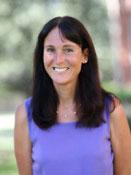
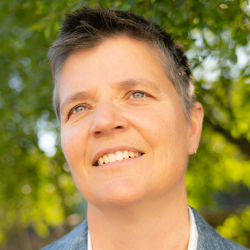
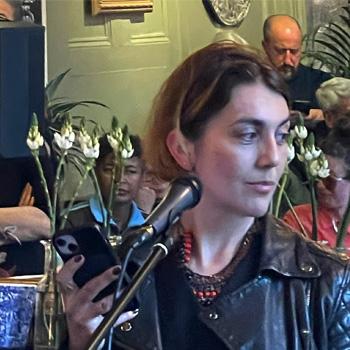
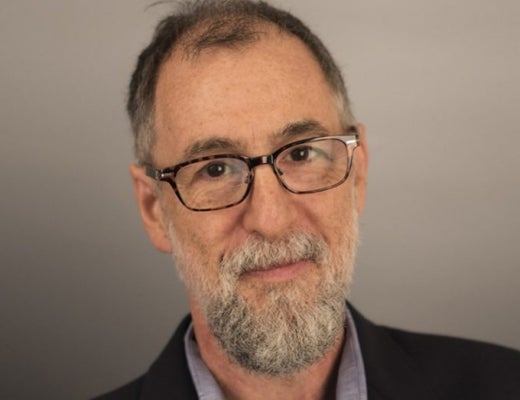
Sidney R. Nagel is the Stein-Freiler Distinguished Service Professor at the University of Chicago, affiliated with the Department of Physics, James Franck Institute, and Enrico Fermi Institute. His research investigates complex phenomena in non-equilibrium systems, including granular flows, droplet dynamics, and jamming transitions. His group explores singularities in fluid coalescence, splashing mechanisms, Leidenfrost effects, and pattern formation in disordered materials. The Nagel group's work connects microscopic interactions to macroscopic behaviors in systems ranging from colloidal glasses to impacting droplets. Major contributions include establishing universal features near jamming transitions, revealing air-dependent splashing mechanisms, and developing scaling theories for viscous-inertial crossovers in fluid dynamics. Recent work examines memory formation in driven disordered systems and pattern selection in fluid instabilities. Honors include the APS Medal for Exceptional Achievement, Buckley Prize, and memberships in the National Academy of Sciences and American Academy of Arts and Sciences.
Thomas Lemieux is a Professor at the Vancouver School of Economics within the Faculty of Arts at the University of British Columbia , where he has been affiliated since 1999. Previously, he taught at MIT and the Université de Montréal. Born in Quebec City, he earned his Ph.D. from Princeton University. Research Interests: His work focuses on labor economics and econometric methods , particularly analyzing earnings inequality , unionization effects , regression discontinuity designs , and educational returns . He employs advanced decomposition techniques to study wage dynamics across gender, immigration status, and sectoral divides. Scientific Awards: Fellow, Royal Society of Canada Fellow, Society of Labor Economists Research Fellow, Institute for the Study of Labor (IZA) Research Associate, National Bureau of Economic Research (NBER) Publications: He has published extensively in top journals like the Quarterly Journal of Economics , Econometrica , and Journal of Labor Economics , with recent work examining: Union wage premiums using matched employer-employee data Spillover effects of minimum wage policies Changes in task prices and occupational wages Top income dynamics in Canada Immigrant wage gaps across education sources Regression discontinuity identification challenges Canadian labor market responses to the Great Recession
David Eltis serves as an Adjunct Professor in the Department of History at Emory University, where he focuses on the early modern Atlantic World, particularly slavery and migration patterns. His distinguished career spans several decades with significant contributions to understanding the transatlantic slave trade through quantitative and historical analysis. Dr. Eltis earned his BA from Durham University (1962), BEd from Dalhousie University (1965), MA from the University of Alberta (1969), and PhD from the University of Rochester (1979). His educational background provided the foundation for his specialized research in economic history and the Atlantic slave trade. His research primarily centers on the early modern Atlantic World, with particular emphasis on slavery systems, the transatlantic slave trade, and migration patterns (both coerced and free). Eltis has pioneered quantitative approaches to studying the slave trade, developing extensive databases that have transformed scholarly understanding of the scale, structure, and economic dimensions of this historical phenomenon. His work examines the demographic impact of slavery, the economic forces driving the trade, and the experiences of enslaved Africans. Eltis's publications demonstrate a consistent focus on quantitative analysis of the transatlantic slave trade, with increasing emphasis on digital humanities approaches in his later work. His research has evolved from broader economic analyses of slavery's role in Atlantic development to more specific studies of individual regions, trade routes, and the experiences of liberated Africans. The integration of database methodologies with traditional historical analysis represents a significant contribution to the field. British Trevor Reese Memorial Prize (for Economic Growth and The Ending of the Transatlantic Slave Trade ) Frederick Douglass Prize John Ben Snow Prize Wesley-Logan Prize (for The Rise of African Slavery in the Americas ) John T. Hubbell Prize for best article in Civil War History (2008) W.E.B. Dubois Medal from Harvard (2025) Dr. Eltis has received significant research funding, including a two-year NEH grant for his collaborative project on the origins of Africans in the transatlantic slave trade. This project analyzes records of 67,000 Africans liberated from slave vessels in the 19th century. He serves as co-editor of the influential Transatlantic Slave Trade database at www.slavevoyages.org, which represents one of the most comprehensive digital resources on this historical phenomenon. While specific student mentorship isn't detailed in the available information, his extensive publication record suggests he has likely advised numerous graduate students throughout his career. As principal investigator of the NEH-funded project analyzing liberated African records and co-editor of the Transatlantic Slave Trade database, Eltis leads significant collaborative research efforts. These projects involve international teams of scholars working with historical records from multiple archives to reconstruct the experiences and origins of enslaved Africans. His work bridges traditional historical research with digital humanities methodologies, creating resources that benefit scholars across multiple disciplines.
Dr Jonathan Tenney is a University Lecturer in Assyriology at the University of Cambridge and a Fellow at Jesus College. He serves as Curator of Works of Art and Director of Studies in Archaeology at Jesus College. His research focuses on Mesopotamian archaeology, cuneiform studies, and socio-political institutions of ancient Babylonian and Kassite periods. BA, Edinboro University of Pennsylvania PhD, University of Chicago Tenney employs philology and social science methodologies to analyze cuneiform tablets and archaeological evidence from Mesopotamia (modern Iraq, Iran, and Syria). His academic interests include: Cuneiform (Akkadian and Sumerian languages) Historical demography of Mesopotamia Settlement patterns and environmental interactions Comparative slavery systems Religious and political ideologies His publication record (2022–2009) spans topics like: Kassite administrative systems Babylonian population dynamics Cuneiform documentation of servile labor Urban development in Mesopotamian cities Socio-economic structures in ancient Near East Religious-political integration in Babylonia Key research themes include materiality of bureaucratic records and epistemological methodologies in Assyriology. Outstanding Dissertation Prize by The American Academic Research Institute in Iraq (2009) Tenney is currently on sabbatical (2025/26) but remains available for consultancy. His work intersects with the Department of Archaeology’s research themes on Environment, Landscapes and Settlement, Material Culture, and Rethinking Complexity. He contributes to teaching in Assyriology, Mesopotamian Languages, and socio-political archaeology.
Tal Cohen is an Associate Professor in the Department of Civil and Environmental Engineering at the Massachusetts Institute of Technology (MIT), School of Engineering. He joined MIT as an assistant professor in November 2016 after working at Harvard's School of Engineering and Applied Sciences, and was granted tenure in May 2023. He leads the Cohen's Mechanics Group, which focuses on understanding material behavior under extreme conditions including large deformations, dynamic loading, and growth. His educational background includes a Ph.D. (2014), M.Sc. (2011), and B.Sc. (2007) from the Faculty of Aerospace Engineering at the Technion, Israel. Professor Cohen's research centers on nonlinear solid mechanics, material growth, and material instabilities. His work combines theoretical modeling with experimental approaches to explore how materials behave at their extremes. Key research areas include understanding material instabilities (what triggers them, how they can be harnessed or avoided), extreme dynamic loading (shock wave propagation, energy dissipation), and material growth with chemical coupling (how growth leads to residual stresses and morphological changes). His research has significant implications for protective structures, understanding planetary impacts, and biological systems. Analysis of his recent publications (2015-2025) reveals a consistent focus on nonlinear mechanics of soft materials, with increasing emphasis on biological applications in recent years. His work spans theoretical frameworks for material growth, experimental characterization of soft material properties, and computational modeling of complex material behaviors. Key themes include cavitation phenomena, fracture mechanics in soft materials, and the mechanics of biological growth processes. MIT Arthur C. Smith Award, 2024 Eshelby Mechanics Award for Young Faculty, 2023 NSF CAREER Award, 2020 ONR Young Investigator Award, 2020 ARO Young Investigator Award, 2019 MIT-Technion Post-Doctoral Fellowship, 2013-2014 Zonta International Amelia Earhart Fellowship, 2011-2012 Professor Cohen has advised numerous students through their PhD, Master's, and undergraduate research projects. His group includes current PhD candidates working on topics related to material growth, biological mechanics, and extreme loading conditions. He has successfully placed former postdocs in faculty positions at institutions including Harvard, UNH, and Central South University in China. His research has been supported by significant grants including the NSF CAREER Award and Young Investigator Awards from ONR and ARO. The Cohen Mechanics Group maintains an active research program with connections to multiple disciplines including civil engineering, mechanical engineering, materials science, and biomechanics.
Wei Li is a Professor at Arizona State University's School of Geographical Sciences and Urban Planning. She also holds affiliations with the School of Social Transformation, SPARC (Spatial Analysis Research Center), Global Futures Scientists and Scholars, Center for Asian Research, and the U.S. Census Bureau's advisory committees on Asian populations. Her research focuses on urban ethnicity, transnational migration, and minority community development, particularly among Chinese and Asian groups in the Pacific Rim. She pioneered the concept of 'ethnoburb' to describe suburban Asian settlements and has conducted extensive studies in Los Angeles, Toronto, and Metropolitan Phoenix. Li's education includes a Ph.D. in Geography from the University of Southern California (1997), an M.S. from Peking University (1985), and a B.S. from Beijing Normal College (1982). She has been funded by prestigious institutions like the National Science Foundation, Fulbright Foundation, and the Rockefeller Foundation. Her work explores intersections of migration, race, and economics, with notable projects on Hurricane Katrina's impact on minority communities and the role of ethnic financial sectors in community development. Her research interests are structured around migration analytics, ethnic geographies, and globalization's socio-spatial effects. Key focuses include skilled migration pathways, returnee dynamics, and the co-movement of people and capital. Li emphasizes transnationalism and how diaspora communities reshape urban landscapes and economies. Li’s articles collectively analyze migration trends, community resilience, and policy implications, reflecting her expertise in migration studies, urban sociology, and cultural geography. She has been recognized with major awards like the AAG’s Ronald F. Abler Distinguished Service Honors and the Distinguished Ethnic Geography Career Award. In advising, Li has no listed advisees but has mentored through institutional roles and grants. Her grants include studies on Asian American communities, diaspora banking, and post-disaster migration. Li’s contributions extend to policy commentary on attracting skilled migrants to China and comparative analyses of India and Chinese diasporas. She leads SPARC’s spatial analysis initiatives and chairs the International Metropolis Project’s steering committee. Her work bridges academia and public service, including roles in the Woodrow Wilson Center and National Bureau of Asian Research.
Dr. Julia Dyson Hejduk, Reverend Jacob Beverly Stiteler Professor of Classics at Baylor University , specializes in Latin poetry, intertextuality, Roman religion in literature, women in antiquity, and acrostic analysis. She joined Baylor in 2003 after a decade at the University of Texas at Arlington, drawn by the university's classical strength and its Christian research vision. Education : Ph.D. and M.A. in Classical Philology (Harvard), B.A. in Classics summa cum laude (Princeton) Dr. Hejduk's research bridges classical literature with Catholic theological reflection, examining how Roman poetry illuminates biblical context and sacramental theology. Her work explores: Irony and moral complexity in Virgil’s Aeneid Acrostic patterns as theological commentary Eros and divinization in Roman erotic poetry Marian readings of classical texts Poetic structures as models for Christian ethics Recent publications include analyses of Virgil’s biblical echoes, Propertius’s temporal paradoxes, and Horace’s ethical satire. Scientific honors include Choice Outstanding Academic Title recognition and a National Translation Award longlisting. Contact : Julia_Hejduk@baylor.edu | (254) 710-7763 | Morrison Hall 314
Laura (Kai) Burrus is a Professor in the Department of Biology within the College of Science and Engineering at San Francisco State University, where she has been a faculty member since 1997. Her research has evolved from studying Wnt signaling in developmental biology to addressing climate change resilience through microbial ecology. Education: BS in Chemistry - College of William and Mary (1986) PhD in Biochemistry - University of Wisconsin-Madison (1991) Post-doc in Developmental Biology - Harvard University (1996) Dr. Burrus' research has historically focused on the biochemical and cellular mechanisms underlying Wnt gradient formation in chick embryos, with relevance to birth defects and cancer. Her work has been funded by NIH, NSF, CSUPERB, and MDA over the last 20 years. She is currently transitioning her research to analyze the role of microbes in climate change resilience, motivated by her recognition that 'climate change is inherently racist.' She is actively involved with Lifting Black Voices in STEM and is leading an effort to launch an interdisciplinary Certificate in Climate Change Causes, Impacts, and Solutions. As one of five LGBTQIA biology faculty at SFSU, she brings unique perspectives to her work on inclusive classroom practices. Her publication record spans from 1994 to 2021, with recent work focusing on Wnt signaling mechanisms, educational approaches in STEM, and the transition to climate change research. Her research shows a clear evolution from fundamental developmental biology to applied environmental science, while maintaining a strong foundation in molecular and cellular mechanisms. Scientific Contributions: Pioneering work on Wnt protein trafficking and modification Research connecting Wnt signaling to cancer biology Leadership in developing inclusive STEM education practices Transition to climate change resilience research with focus on microbial ecology Dr. Burrus has mentored numerous undergraduate and graduate students throughout her career, with many alumni going on to pursue advanced degrees and careers in science. She has been actively involved in pedagogical innovation and is pioneering new approaches to effectively communicate research to both scientific and lay communities. Her lab has received funding from multiple sources including NIH, NSF, CSUPERB, and MDA. She is currently involved in oyster reef restoration research in the San Francisco Bay, investigating microbial communities as indicators of climate resilience. This work represents an aspirational shift from her previous focus, leveraging molecular expertise to address pressing climate challenges while mentoring students from diverse backgrounds.
Univ.-Prof. Robert Rollinger is a full professor at the University of Innsbruck’s Department of Ancient History and Oriental Studies. He holds academic degrees from the Leopold-Franzens-Universität Innsbruck, including a M.A. (1989), PhD (1993), and Habilitation (1999). His research focuses on the interconnections between the Aegean and Ancient Near East, Achaemenid history, and global historiography. Rollinger has held prestigious positions such as editor of journals like Nikephoros and Ancient History Bulletin , and is a member of institutions including the Academia Europaea and the Austrian Academy of Sciences. Research Interests Contacts between Aegean and Near Eastern worlds Ancient Near Eastern historiography Empire studies (especially Achaemenid Persia) Global and entangled history approaches Awards Dr. Seibert-Preis (1995) Preis des Fürstentums Liechtenstein (1998) Wissenschaftspreis des Österreichischen Olympischen Comités (1999) Ausonius-Preis (2023) He leads major projects like the NAWA Chair on Achaemenid-Roman empire comparisons and chairs the Austrian Academy’s “Transformation Processes and Empire” commission. His work emphasizes cross-cultural connections and imperial legacies in antiquity.
Manca Bajec is a Programme Leader for the BA Fine Art and History of Art at Goldsmiths, University of London within the Department of Visual Cultures. Her interdisciplinary work examines socio-political issues through art, focusing on memorialization in post-conflict regions, migration, and cultural diplomacy. She holds a PhD in Sculpture (Royal College of Art, 2019), MA in Sculpture (Ljubljana, 2016), MA in Curating (Chelsea College of Art and Design, 2011), and a dual BA in Visual Arts and Performance (Academy of Fine Art, Venice, 2007). Her research explores how monuments and artworks construct national histories and identities, particularly in unresolved conflict zones like the former Yugoslavia. She investigates the Non-Aligned Movement’s legacy, migration patterns, and the role of art in challenging state narratives. Recent projects include collaborations with Igor Rogelja on Infrastructure Soundscapes (2024) and a public artwork Peripheral Visions (2024–2025) in Gorizia, Italy/Slovenia. Grants & Awards: European Commission Grant (2022) British Academy Special Research Grants (2020) British Council Artist Residency (2019) Andrew W. Mellon Travel Grant (2019) Manca has delivered guest lectures on memory and memorialization in the Western Balkans at institutions such as the University of the Arts and UCL’s European Language, Culture, and Society department. She also organized the Visual Writing Workshop (2024) with Igor Rogelja and Yoav Galai, aimed at interdisciplinary research methods.
Kristen L. Corbosiero is a Professor in the Department of Atmospheric & Environmental Sciences at the University at Albany, State University of New York. Her primary research focuses on understanding the structure, intensity changes, and environmental interactions of tropical cyclones, including processes like secondary eyewall formation and rapid intensification. She utilizes both observational data and numerical models to explore topics such as cloud microphysics, vertical wind shear effects, and the role of lightning in storm dynamics. Education: PhD, Atmospheric Science, University at Albany, SUNY, 2005 MS, Atmospheric Science, University at Albany, SUNY, 2000 BS with Distinction, Atmospheric Science, Cornell University, 1997 Research Interests: Dr. Corbosiero investigates tropical cyclone behavior, including the formation of hurricane rainbands and secondary eyewalls, the impact of environmental conditions on storm evolution, and the influence of cloud microphysical parameterizations. Her work also addresses the predictability of heavy rainfall events linked to tropical systems, such as atmospheric rivers and remnant cyclones. Articles & Research Trends: Her recent publications emphasize ventilation processes in tropical cyclones, diurnal pulsations in hurricane structure, and the climatological significance of downshear reformation. She collaborates on projects funded by NASA, NOAA, and UCAR, advancing the understanding of cyclone dynamics and forecast improvement. Advising & Students: Dr. Corbosiero has mentored numerous graduate and undergraduate students, many of whom have contributed to studies on tropical cyclone evolution, precipitation patterns, and mesoscale meteorology. Notable advisees include Nicholas Johnson (ventilation in sheared storms) and Alex Mitchell (eastern Pacific cyclone variability). Labs & Teams: Her research group actively explores topics like tropical cyclone predictability, lightning activity in storms, and the North American Monsoon System’s interaction with eastern Pacific systems. Current projects involve ensemble-based sensitivity analysis and high-resolution numerical simulations.
Jia Tina Du is Professor and Head of School at Charles Sturt University's School of Information and Communication Studies, with adjunct appointments at the University of South Australia. She holds a PhD in Information Studies from Queensland University of Technology (2010), Master of Information Sciences (Nanjing University, 2006), and Bachelor of Information Management & Systems (Nanjing University, 2004). Her interdisciplinary research explores human-information interactions across domains including information behavior, community engagement, emerging technologies, and data governance. Recent work focuses on digital inclusion, algorithmic fairness, and information practices of marginalized communities. Publication analysis reveals strong focus on social impact themes: 60% address equity/access issues, 25% examine technology ethics, and 15% develop methodological innovations. Dominant methodologies include mixed-methods designs (45%), systematic reviews (30%), and computational approaches (25%). Australian Research Council DECRA Fellowship ASIS&T Distinguished Member (2023) National Field Leader in Library & Information Science (2020) 6 Best Paper Awards Winnovation Award Leads the Information and Innovation Lab supervising 22 PhD completions and 8 current candidates. Research has attracted AUD$1.9M+ in competitive funding. Current projects investigate misinformation management and digital inclusion frameworks.
Roman Samulyak is a Professor in the Department of Applied Mathematics and Statistics at Stony Brook University. He holds a Ph.D. from NJIT in Applied and Computational Mathematics with specializations in Hydro- and Electrodynamics. His research develops advanced numerical algorithms for modeling complex physical systems in high-energy physics and fusion energy. Research spans computational methods for magnetohydrodynamics, plasma physics, nuclear fusion/fission systems, and particle accelerator design. Current applications include disruption mitigation in tokamaks and laser-driven particle acceleration. Recent publications demonstrate strong focus on plasma-based accelerators and fusion reactor modeling, particularly pellet ablation dynamics, laser wakefield acceleration, and MHD simulations of tokamak plasmas. Research utilizes high-performance computing resources for large-scale simulations. Office location is Math Tower 1-108 at Stony Brook University.
Dr. En Cheng is an Associate Professor in the Department of Computer Science at The University of Akron, affiliated with the College of Engineering and Polymer Science. She joined the university in 2012 and specializes in research areas such as Data Integration, Big Data Management, Database Systems, Mobile Applications, Business Intelligence, and Bioinformatics. Her work bridges theoretical computer science with practical applications, including educational mobile games and business productivity tools. Dr. Cheng’s education includes a Ph.D. from Case Western Reserve University and advanced degrees from Huazhong University of Science and Technology, China. Her research emphasizes innovative solutions in database systems and interdisciplinary applications like bioinformatics. Notable publications include studies on mobile game integration, web content extraction libraries, and business intelligence optimization. Her recent work explores supramolecular assembly, material science, and nanostructure engineering, reflecting a shift toward interdisciplinary collaboration. Over 30 publications since 2014 highlight her contributions to both computer science and materials research. Dr. Cheng teaches courses such as Data Integration, Database Management, and NoSQL systems. She maintains an active research lab and collaborates on projects funded by institutional grants. Her office is located in CAS 229, and she can be reached via echeng@uakron.edu or her website.
Paul Cohen is a Professor of Computer Science at the University of Pittsburgh's School of Computing and Information (SCI), where he also directs the Modeling and Managing Complicated Systems Institute (MOMACS). Previously, he served as the founding Dean of SCI from 2017 to 2020. Before joining Pitt, he was a Program Manager at DARPA (2013–2017), leading initiatives like Big Mechanism and Communicating with Computers. Earlier roles include founding director of the University of Arizona’s School of Information: Science, Technology and Arts (SISTA), and professor at the University of Southern California’s Information Sciences Institute and the University of Massachusetts. Education: PhD in Computer Science and Psychology (Stanford University), MS in Psychology (UCLA), BS in Psychology (UC San Diego). Research Interests: Focuses on artificial intelligence, machine learning, natural language processing, and modeling complex systems like cell signaling pathways and socio-environmental interactions. His work emphasizes explainable AI, human-computer communication, and interdisciplinary problem-solving. Key Contributions: Authored Empirical Methods for Artificial Intelligence and over 200 peer-reviewed articles. His research spans robotics, education technology (e.g., the AnimalWatch tutoring system), and collaborative analysis tools like COLAB. He has won a Telly Award for his video on systemic challenges and a Best Paper award for spatial language learning frameworks. Awards & Recognition: Elected Fellow of the AAAI, recipient of the Telly Award, and winner of the Best Paper Award at the IEEE Conference on Development and Learning. Leadership & Outreach: Advocates for polymathy in education to address global challenges. His work includes developing curricula for complex systems thinking and promoting diversity in STEM through initiatives like AnimalWatch.