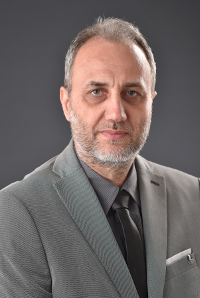
Dalibor Radovanović is a researcher at Singidunum University , affiliated with the Faculty of Business Informatics . His work spans cybersecurity, blockchain technologies, and their applications in business and IoT systems. Education: Doctoral Dissertation (2016, Singidunum University) Master's & Basic Studies (Faculty of Business Informatics) Secondary Education: ETŠ Nikola Tesla Research Interests include: Security frameworks for IoT and blockchain integration Smart card and wireless network vulnerabilities E-governance and corporate IT audit methodologies Machine learning applications in cybersecurity Environmental performance optimization in agribusiness Publication Trends reveal a focus on blockchain (2022), cybersecurity (2009-2022), and IT governance (2010-2017). His work bridges theoretical analysis with practical implementations in Serbia's digital economy. Collaborations with scholars like Marko Šarac and Saša Adamović highlight interdisciplinary approaches to securing financial systems, educational institutions, and industrial IoT applications.
Goran Avlijaš is a researcher affiliated with Singidunum University in Belgrade, specializing in project management, operations research, and retail logistics. He holds a Doctorate in Engineering Management (2011–2016) from Singidunum University, a Master’s in Project Management (2008–2009) from the Faculty of Organizational Sciences, and a Bachelor’s in Management (2003–2007) from the same institution. His research focuses on optimizing project schedules through methods like Earned Value Management and Monte Carlo Simulation, analyzing supply chain efficiency, and exploring gig economy impacts on well-being in Balkan countries. Key research areas include: Project Management Innovation: Developing risk analysis tools (e.g., Event Chain Methodology) and applying earned value metrics to construction projects. Retail Operations: Investigating automated replenishment systems and inventory management challenges in retail environments. Social-Economic Dynamics: Studying gig economy effects on workforce well-being and regulatory impacts on entrepreneurship. His work spans 30+ peer-reviewed articles and conference papers, including contributions to Management , Sustainability , and Frontiers in Psychology . He co-authored textbooks like Project Management and Entrepreneurship for Singidunum University’s curriculum. Active in academic events such as Sinteza and FINIZ conferences, he bridges theoretical research with practical industry applications.
Miloš Racković serves as a full Professor in the Department of Mathematics and Informatics at the University of Novi Sad, Serbia. He maintains active academic engagement through the Laboratory for the development of information systems, with his office located in the Information technologies and systems office (DMI&DF) on the second floor, room 49. Contact is available via telephone (485)-2868 or email rackovic@dmi.uns.ac.rs, and his personal website (http://www.is.pmf.uns.ac.rs/rackovicm/) provides additional resources. His research spans foundational and applied computer science, with seminal contributions in fuzzy database systems including PFSQL query language development and prioritized fuzzy logic for relational databases and XML. He has pioneered deep learning methodologies through innovative classification techniques using negative and missing features in convolutional neural networks. Additional expertise includes high-performance computing implementations of Lattice Boltzmann methods using OpenCL, robotics (symbolic modeling and trajectory planning), and blockchain applications for Industry 4.0 production processes. His sports analytics work applies neural networks to basketball player and referee movement analysis. Analysis of his 2012-2025 publications reveals a strategic evolution toward interdisciplinary applications, particularly in industrial transformation (blockchain-enabled traceability) and sports analytics. His work consistently bridges theoretical computer science with practical implementations, demonstrating increasing focus on real-world problem solving while maintaining strong foundations in database theory and computational methods. Professor Racković leads the Laboratory for the development of information systems, which focuses on advancing information system methodologies through formal modeling extensions (including Petri net innovations) and practical implementations for uncertainty management. The laboratory's work spans from foundational research in fuzzy logic systems to applied projects in high-performance computing and blockchain integration, fostering innovation in information technology development.
Jelena Dj. Trifkovic serves as Full Professor in the Department of Analytical Chemistry at the Faculty of Chemistry, University of Belgrade, where she was promoted from Assistant Trainee (2003) through Associate Professor (2019) to her current position (2024). She concurrently holds leadership roles as Vice-Dean for Teaching and Secretary of the Serbian Chemical Society since 2020. Her academic foundation includes undergraduate (1995-2001), Master's (2003-2006), and Doctoral studies (2011-2013) in Chemical Sciences, all completed at the University of Belgrade's Faculty of Chemistry. Trifkovic's research centers on chromatographic separation techniques and chemometrics for food authenticity verification, particularly focusing on bee products like honey and propolis. Her methodology integrates advanced analytical instrumentation with multivariate data analysis to establish quality control protocols and detect adulteration, significantly contributing to food safety standards in the Balkan region. Analysis of her publication record reveals consistent innovation in HPTLC image analysis and multi-technique approaches (GC, LC, electrochemical methods) for natural product authentication. Her work demonstrates increasing international collaboration, with recent publications emphasizing standardized protocols for regulatory compliance and health benefit validation of food components. She actively secures competitive research funding, including Horizon Europe's PFAStwin project (2022-2025) and UNDP-funded valorization initiatives (2023-2024), alongside leadership in bilateral projects on bee product authentication with Croatian and Slovenian institutions. Trifkovic maintains strong laboratory networks through her affiliation with Slovenia's National Chemical Institute Food Chemistry Laboratory and coordinates multiple university committees focused on curriculum development and quality assurance in chemical education.
Marko Djordjevic is an Associate Professor at the Faculty of Biology, University of Belgrade. His research spans computational biology of infectious diseases, bacterial immune systems (CRISPR/Cas and restriction-modification systems), and quantitative understanding of infection progression with applications to SARS-CoV-2 and computational physics of quark-gluon plasma. Diploma in Physics, Faculty of Physics, University of Belgrade, Serbia. PhD in Biophysics and Bioinformatics, Department of Physics, Columbia University, USA. Postdoctoral training at the Mathematical Biosciences Institute, Ohio State University, USA. Djordjevic's research focuses on nonlinear regulatory dynamics of bacterial immune systems, their role in horizontal gene transfer, and modeling infection progression under social mitigation measures. His secondary interest in computational physics examines quark-gluon plasma dynamics via high-p⊥ observables and tomography. His recent publications address CRISPR/Cas regulation, restriction-modification systems, and SARS-CoV-2 transmissibility drivers. Grants from the Serbian Ministry of Science, Science Fund of Serbia, EU Marie Curie IRG, and Swiss National Science Foundation support his work.
Marija Maruna is a Full Professor at the University of Belgrade - Faculty of Architecture , leading the Department of Urban Planning and heading the Doctoral Study Program . She specializes in urban development management , integrated planning , and planning theory . Graduated (1995), Master's (2003) and PhD (2009) from University of Belgrade - Faculty of Architecture Founder and former Head of Integral Urbanism master's program Current head of Doctoral Study Program in Architecture and Urbanism Her research focuses on urban planning , strategic urban design , and public policies in post-socialist transition countries . She has contributed to international publications with Elsevier , Springer , and MDPI . Notable awards include: First prize from Society of Architects of Novi Sad (graduation thesis) First prize from Belgrade Chamber of Commerce (doctoral dissertation) Special recognition at XXIV Salon of Urbanism First prize at VII Salon of Landscape Architecture She mentors students in master's and doctoral theses , coordinates international teaching at ETH Zurich , TU Berlin , and Politecnica Barcelona , and directs the Lab for Planning Culture and Spatial Policy Design .
Dejan Sredojević is a Full Professor in Serbian language and linguistics at the Faculty of Philosophy, University of Novi Sad. He holds a doctorate in Philological Sciences and has been actively involved in both teaching and research. Education: Diploma in Acting from Academy of Arts, Novi Sad (2003) Master's degree in Philological Sciences from Faculty of Philosophy, Novi Sad (2007) Doctorate in Philological Sciences from Faculty of Philosophy, Novi Sad (2011) Research Interests: His research focuses on phonetics and phonology of the standard Serbian language, with particular emphasis on experimental-phonetic studies of accent and intonation, normative accentology, and diction. He explores prosodic features, accent systems, and the acoustic characteristics of speech elements. Scientific Achievements: His work includes studies on the intonation of interrogative statements, prosodic characteristics of contrastive focus, and spectral analysis of stressed vowels in Serbian. He has contributed significantly to understanding accent realization and value judgments in different speech contexts. Awards and Recognition: 2003 Predrag Peđa Tomanović Award for best graduate student in Acting 2019 Sterija Award for Stage Speech 2022 Sterija Award for Stage Speech 2023 Special Recognition at International Golden Fairy Theater Festival 2024 Milorad Telebak Award at Petar Kočić Theater Fest
Miloš Stojmenović is a faculty member at Singidunum University in Belgrade, Serbia, where he serves as a Professor in the Faculty of Informatics and Computing within the Department of Computer Science. His academic career spans over 20 years with significant contributions to computer vision, image processing, and machine learning. Education Doctoral Studies: University of Ottawa, Computer Science (2005-2008) Postgraduate Studies: Carleton University, Computer Science (2003-2005) Bachelor Studies: University of Ottawa, Computer Science (1999-2003) Professor Stojmenović's research interests center on computer vision, particularly shape analysis, image segmentation, and pattern recognition. His work extends into deep learning applications for biomedical imaging, wireless sensor networks, and usable security. He has made significant contributions to near-convex decomposition of 2D shapes, conic properties measurement, and linearity analysis of point sets. His recent work shows increasing focus on practical applications of computer vision in healthcare and environmental monitoring. Analysis of his 15 most recent publications reveals a strong trend toward interdisciplinary research, particularly in biomedical applications of computer vision. Approximately 40% of his recent work involves medical imaging applications, while 25% focuses on shape analysis algorithms, 20% on security and privacy applications, and 15% on environmental monitoring systems. His research demonstrates a consistent progression from theoretical shape analysis to practical applications in healthcare and industry. Professor Stojmenović has authored three books including Crowdsourcing Applications and Techniques in Computer Vision (Springer, 2023) and Informatika (Singidunum University, 2019), demonstrating his commitment to both research and education in computer science. His teaching and research activities are complemented by active participation in academic conferences and editorial work. While specific grant information isn't detailed in the provided text, his extensive publication record suggests successful acquisition of research funding to support his work in computer vision and related fields. Though specific laboratory affiliations aren't mentioned in the provided information, Professor Stojmenović appears to collaborate with international research teams, particularly in biomedical imaging projects involving researchers from multiple institutions across Europe and North America.
Miloš Dobrojević serves as a Professor at Singidunum University's Faculty of Informatics and Computing in Belgrade, Serbia. His academic foundation includes doctoral, postgraduate, and bachelor studies at the University of Belgrade's Faculty of Mechanical Engineering. His research spans Artificial Intelligence , Internet of Things , and Computer Vision with emphasis on practical applications. Key focus areas include metaheuristic optimization of neural networks for tasks like crop yield prediction, medical diagnostics, and cybersecurity. Recent work demonstrates strong industry relevance in precision agriculture, drone detection systems, and sustainable homestead automation. Analysis of his 15 most recent publications reveals a consistent pattern of applying modified metaheuristics to enhance deep learning models across diverse domains. His work bridges theoretical AI advancements with real-world implementations in agriculture, healthcare, and energy systems. Scientific Contributions: Author of 3 textbooks including 'Veb informacioni sistemi' (2024) and 'Veb programiranje' (2021) Published 40+ journal/conference papers between 2003-2025 Active contributor to Springer book chapters on AI applications Dobrojević's work demonstrates strong practical orientation with projects in Serbian renewable energy transition, flood prevention systems, and municipal e-government solutions. His recent collaborations with researchers like N. Bacanin and M. Zivkovic show consistent output in high-impact journals. Current projects focus on generative AI for medical data and computer vision for agricultural optimization. His laboratory work centers on IoT-based monitoring systems for environmental applications, particularly water management in mountainous regions. Ongoing research explores drone detection networks and waste classification systems using advanced computer vision techniques.
Tamara Papić is an Assistant Professor at Singidunum University in Belgrade, specializing in Innovation Management and Entrepreneurship. She holds a Ph.D. in Sensor Technologies from Jožef Stefan International Postgraduate School (Slovenia) and a Master's in Quality Management from Fakultet organizacionih nauka. Her research focuses on sensor technologies, dyslexia detection through eye-tracking, and the application of AI in education and marketing. Key academic contributions include developing sensor-based systems for analyzing reading patterns in children with dyslexia, leveraging machine learning models like VGG16 and autoencoders. She co-founded BabyFM, a startup creating smart thermoregulation devices for infants using sensors and mobile apps. Her work has been supported by grants from Innovation Forum Cambridge, Star Tech, and Serbia’s Innovation Fund. Professionally, she produced RTV Serbia’s entrepreneurial series 'My Hero' and 'Golden Idea,' and organized national startup competitions. She chairs strategic conferences like Smart City SEE and Belgrade Strategic Dialogue, promoting innovation ecosystems. Her cross-disciplinary projects bridge engineering, education, and business strategy.
Dubravka J. Relić is an Associate Professor at the University of Belgrade's Faculty of Chemistry , Department of Applied Chemistry. She specializes in environmental chemistry with a focus on pollution assessment in sediments, soils, water, and air. Her work addresses contamination from industrial, agricultural, and urban sources, emphasizing heavy metal speciation and environmental risk evaluation. Education: BSc Chemistry (1998), University of Belgrade Faculty of Chemistry MSc Chemistry (2006), University of Belgrade Faculty of Chemistry PhD Chemistry (2012), University of Belgrade Faculty of Chemistry Research Interests: Her studies examine contamination pathways in aquatic and terrestrial environments, including heavy metal mobility, pollution indices, and bioavailability in agricultural systems. She applies advanced analytical techniques like microwave digestion and sequential extraction to evaluate element fractionation. Current projects include EU-funded initiatives on PFAS contamination and cross-border pollution analysis. Research Projects: EU Horizon 2022-2025: Addressing PFAS challenges in Serbia (Principal Investigator) Bilateral 2021-2022: Organophosphate flame retardants exposure assessment (PI) International 2019: Soil and food sample pollution in Serbia/Slovakia Professional Activities: Member of Faculty Promotion Committee (2019-2021) and Exams Recognition Committee (2018-2021). Teaches courses like Environmental Chemistry and Chemodynamics of Pollutants . Active in international collaborations through Erasmus+ programs. Lab Affiliation: Conducts research in Department of Applied Chemistry laboratories, focusing on sediment/water analysis and environmental sampling techniques.
Marija Blagojević is a Full Professor at the Department of Information Technologies within the Faculty of Technical Sciences in Čačak, University of Kragujevac, Serbia. With over fifteen years of experience in teaching and research, she has established herself as a leading academic in Information Technologies and Systems. Her work spans multiple domains including artificial intelligence, machine learning, and educational technologies, contributing significantly to both theoretical advancements and practical applications in these fields. Dr. Blagojević began her academic career at the Technical Faculty in Čačak in October 2007, initially conducting exercises for courses in Informatics Methodology and IT Applications-Practicum. She was appointed as an Assistant in June 2008 and has since advanced to her current position as Full Professor. Throughout her career, she has continuously expanded her expertise through various specialized courses including Oracle Academy courses in database design and programming, machine learning from Stanford University, and certifications in Huawei AI technologies. Her research interests primarily focus on the application of artificial intelligence techniques to solve complex problems across diverse domains. She has made significant contributions to neural network applications, developing models for predicting apricot yields, air pollution levels, and student success in programming courses. Her work in e-learning technologies demonstrates innovative approaches for adaptive course delivery using data mining techniques. She has also pioneered research at the intersection of AI and psychology, exploring concepts like 'Artificial Psychology' and 'PsAIchology'. Analysis of Dr. Blagojević's recent publications reveals a clear trajectory toward interdisciplinary applications of artificial intelligence. Her work increasingly bridges computer science with psychology, healthcare, and environmental science. A notable trend is her focus on explainable AI, ensuring complex machine learning models remain interpretable for end-users. Her research also demonstrates strong commitment to applying technology for social good, particularly in education and rural development contexts, as evidenced by projects like WINnovators Space. Scientific Awards and Recognitions Award from 'dr Milivoje Urošević' foundation for best graduating student in 2006/2007 Four awards from Technical Faculty for excellent academic results each school year Scholarship from Fund for Young Talents Scholarship from University of Kragujevac (as one of 11 best students) Scholarship from Čačak municipality Scholarship from 'Denise Hale' Foundation Award for the best second-place innovative idea from the Union of Engineers and Technicians of Serbia (February 2020) Recognition for the best female scientist with most research results at University of Kragujevac (February 2022) Dr. Blagojević has been actively involved in research supervision and grant-funded projects throughout her career. She has served as a reviewer for three scientific journals and participated in significant research initiatives including 'Development of new information and communication technologies using advanced mathematical methods' (Project III 44006) and 'Application of biomedical engineering in preclinical and clinical practice' (Project 41007). Her international collaboration includes participation in TEMPUS project 544482-TEMPUS-1-2013-1-IT-TEMPUS-JPHES and Erasmus mobility at Alexandru Ioan Cuza University of Iaşi. As a member of the Computer Science Laboratory at the Faculty of Technical Sciences, Dr. Blagojević contributes to a collaborative research environment focused on advancing information technologies. Her interdisciplinary approach connects computer science with psychology, healthcare, and environmental science, demonstrating how technology can address complex real-world challenges while enhancing educational outcomes and community development.
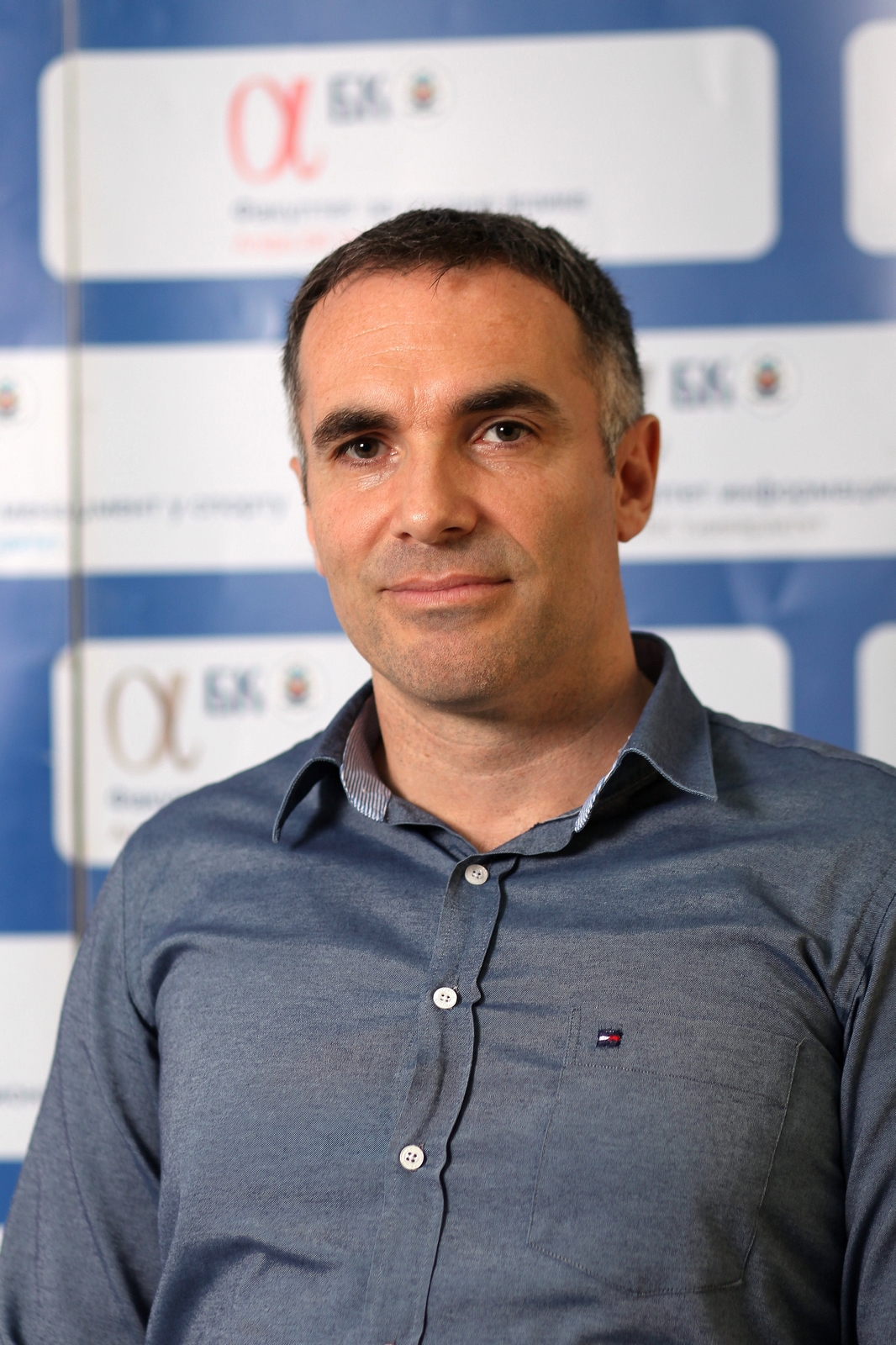
Lazar Kopanja serves as Associate Professor and Acting Dean of the Faculty of Information Technologies at Alfa BK University in Belgrade, Serbia, a position he has held since 2017. His interdisciplinary work bridges computer science and materials engineering with significant contributions to nanomaterials characterization. His educational foundation includes: Bachelor's degree in Computer Science from the Faculty of Science and Mathematics, University of Novi Sad Master's degree in Mathematics Teaching Methodology from the same institution Doctorate in Magnetic Properties of Nanoparticles from the University of Belgrade's Faculty of Technology and Metallurgy Dr. Kopanja's research centers on computational shape analysis and image processing , developing algorithms for quantifying nanoparticle morphology in TEM and confocal microscopy. His work has pioneered novel circularity and ellipticity measures for complex nanostructures, with applications spanning magnetic materials, biomedical imaging, and nanomedicine. The integration of computer geometry with materials science represents his signature interdisciplinary approach. Analysis of his 13 SCI-indexed publications reveals a consistent trajectory from foundational shape orientation algorithms (2005-2006) toward applied nanomaterials characterization (2016-2018), increasingly incorporating biological systems. His recent work demonstrates sophisticated fusion of image processing with magnetic property analysis in hematite and iron oxide nanostructures. As project manager for bilateral Serbia-Slovakia and Serbia-Belarus research initiatives, he has secured international funding for collaborative work in nanoparticle synthesis and characterization. His technical leadership extends to mentoring high school students for programming competitions and developing web applications through industry partnerships.
Suzana Petrović Savić is an Associate Professor at the Department of Production Engineering, Faculty of Engineering, University of Kragujevac, Serbia. Her work integrates advanced manufacturing processes, materials science, and biomedical engineering with computational techniques like neural networks and machine learning. Her research focuses on optimizing machining processes, tribological behavior analysis, and biomechanical applications such as gait analysis and prosthetic design. Notable areas include abrasive waterjet machining, temperature prediction in milling, and AI-driven diagnostics for respiratory and musculoskeletal disorders. She also contributes to the development of smart healthcare technologies and IoT-enabled quality management systems. Recent studies emphasize interdisciplinary approaches, combining experimental mechanics with data-driven modeling. Her work spans from material characterization (e.g., dental ceramics, polymers) to clinical applications in orthopedics and neonatal care. Despite no awards listed, her publications reflect sustained contributions to production engineering and biomedical innovation. No formal advisee list or grant details are provided, but her involvement in laboratory activities related to the Faculty’s research centers is implied through her departmental affiliation.
Tamara Stojmenović is affiliated with Singidunum University's Faculty of Physical Education and Sports Management as a researcher. Born May 1, 1981 in Tuzla, Bosnia and Herzegovina, she holds a Doctorate in Experimental and Applied Physiology with Sports Medicine from the University of Kragujevac Medical Faculty (2011-2019), a Specialist in Sports Medicine from Belgrade University Medical Faculty (2014-2017), and a Medical Degree from Belgrade University Medical Faculty (2003-2010). She also completed a Higher School diploma in Basketball Coaching (2011-2019). Her research focuses on sports medicine, cardiac health in athletes, post-pandemic physiological recovery, and nutritional strategies for performance optimization. Notable recent work includes studies on atrial fibrillation in endurance athletes, post-COVID-19 cardiorespiratory impairments in elite athletes, and the effects of SARS-CoV-2 strains on aerobic capacity. She has co-authored books on corrective gymnastics in sports and sports medicine questionnaires. Her 15 most recent articles (2021-2024) span topics like myocarditis post-COVID-19 infections, alcohol's impact on sports performance, and positional differences in aerobic capacity among basketball players. While no formal awards are listed, her extensive publication record indicates recognition in sports physiology circles. Her research integrates clinical cardiology with sports science, addressing both elite athlete performance optimization and public health applications such as schizophrenia symptom management through prescribed physical activity.