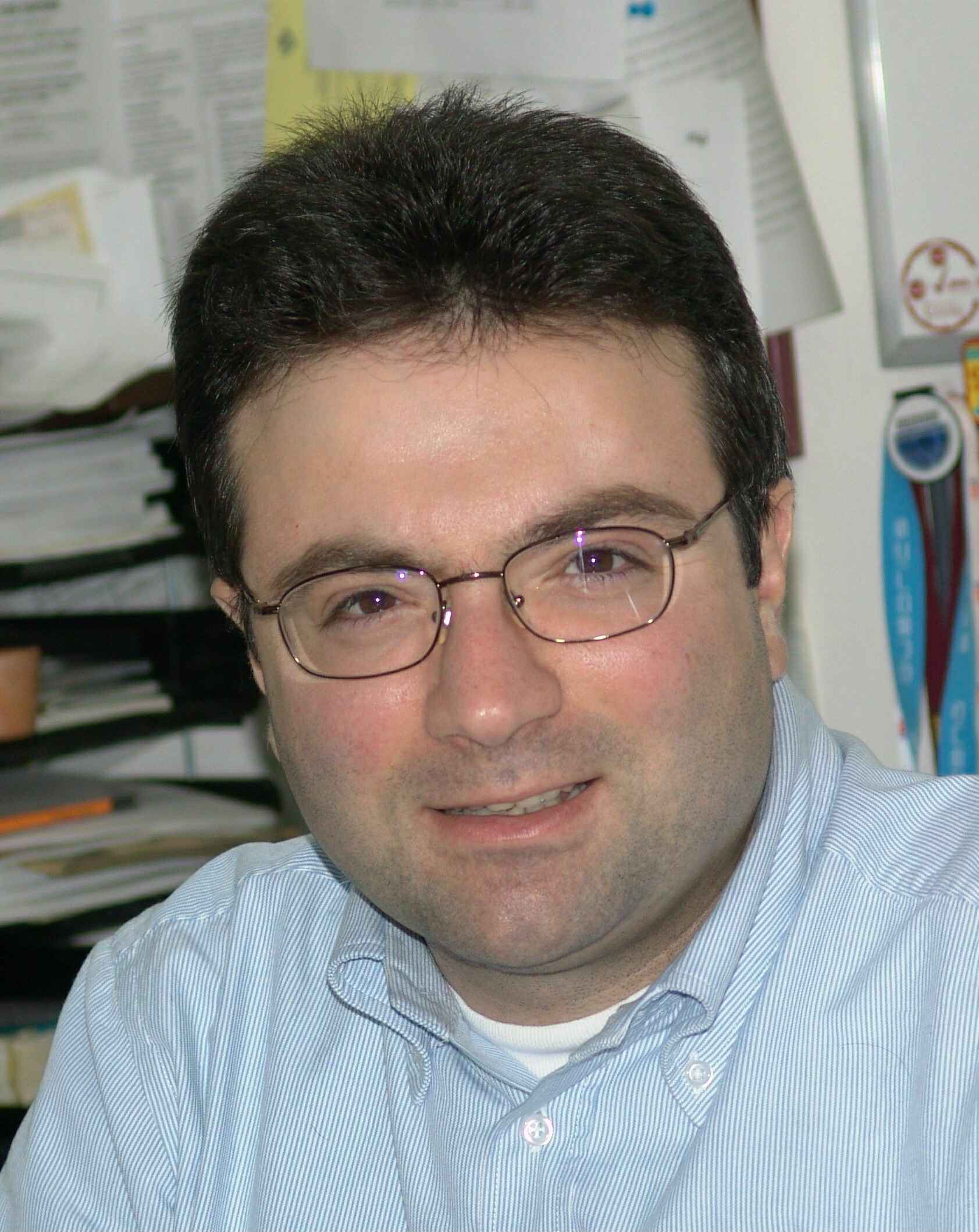
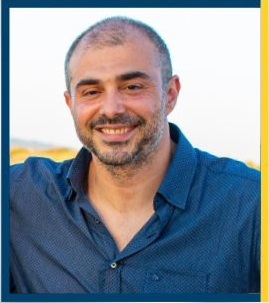
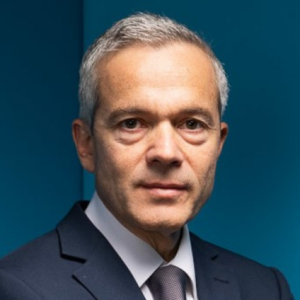
Nectarios Koziris is a Professor at the Department of Computer Science , National Technical University of Athens (NTUA) , and former Dean of the School of Electrical and Computer Engineering . His research focuses on Parallel and Distributed Systems , Computer Architecture , and Cloud Computing . Key Research Themes: Compiler-OS-Architecture Interaction, Datacenter Hyperconvergence, Sparse Matrix Optimization, Quantum Computing, FPGA Virtualization Leadership: Founder of ~okeanos (Europe's largest public Cloud IaaS), Co-founder of GFOSS , Member of IEEE Computer Society Greece, Advisor to Arrikto Inc. His work has led to over 180 publications with 5800+ citations (h-index 33) , including two Best Paper Awards (IPDPS 2001, CCGRID 2013) and Intel Recognition (2015). He has supervised 12 PhD students and participated in 15+ EU projects as coordinator or consortium partner. Scientific Leadership: Program Co-Chair for Europar 2012 , Organizer for IPDPS , ICPP , SC conferences, and active member in Cloud Computing Expert Groups for the European Commission.
National and Kapodistrian University of AthensGreece
Dimitris Maroulis is a Professor at the Department of Informatics and Telecommunications, University of Athens, leading the Real-Time Systems and Image Analysis Lab (RTS-image). With over 20 years of experience in data acquisition and real-time systems, and 15 years in image/signal analysis, he collaborates extensively with Greek and European hospitals in biomedical informatics. He has led 5 R&D projects and authored 150+ papers with 1400+ citations. University of Athens: Professor (2000–present) Meudon Observatory: Research Fellow (3 years) & Long-term Collaborator (10+ years) Research Interests focus on real-time systems , image/signal processing , and biomedical applications . Key areas include automated segmentation of proteomic images, noise removal methods, and stereo image coding. His 15 most recent publications (2003–2012) span 3D imaging , medical image analysis , and biomedical informatics , with sub-fields like autostereoscopic displays, wavelet-based coding, and computer-aided diagnosis. Awards : Best Paper Award (2012: Integral Image Analysis) Projects include European and national R&D initiatives in image analysis and real-time systems. Labs : RTS-image Lab develops methodologies for biomedical and proteomic applications.
Nikos Giatrakos is an Assistant Professor at the School of Electronic & Computer Engineering, Technical University of Crete, and a core member of the Software Technology and Network Applications Lab (SoftNet) . His work bridges Big Data systems, IoT, and advanced analytics, with a focus on real-time processing and scalable architectures. Previously, he served as a postdoctoral researcher at the same laboratory. Education PhD in Computer Science, University of Piraeus (2012) Postgraduate Diploma in Information Systems, Athens University of Economics and Business (2008) BSc in Computer Science, University of Piraeus (2006) Research Focus : Nikos specializes in software architectures for Big Data streaming, including Distributed Big Data Processing , Federated Machine Learning , Cloud-to-Edge Data Management , and Approximate Query Processing . His work has also advanced Complex Event Processing and Outlier Detection in decentralized environments. Scientific Contributions : His research has led to the DAG* workflow optimizer for IoT, the SuBiTO framework for real-time neural learning, and the INFORE approach for cross-platform analytics. He received the Best System Demonstration Award at ACM CIKM 2020 for INforE. Academic Leadership : Nikos teaches Object-Oriented Programming, Data Science, and Distributed Systems. He has supervised numerous European and national grants as Principal Investigator and served on program committees for top-tier conferences like SIGMOD, VLDB, and DEBS.
Periklis Andritsos is an Associate Professor at the University of West Attica's Department of Informatics and Computer Engineering. Previously, he served as an Assistant Professor at the University of Toronto's Faculty of Information (iSchool). He holds a PhD in Computer Science from the University of Toronto (2004), with postdoctoral research under Professors Renée J. Miller and Kenneth C. Sevcik. His research focuses on data clustering, process mining, customer journey analytics, and database design. He co-founded Thoora Inc. (winner of TechCrunch 50 2009) and Odaia.ai, applying his work to real-world applications in banking and urban transport systems. Education: PhD in Computer Science, University of Toronto (2004); MEng from National Technical University of Athens (Diploma in Electrical & Computer Engineering). Awards: Multiple Best Paper Awards (ICPM 2021, ADBIS 2019), TechCrunch 50 Award, and recognition in industry collaborations with institutions like the National Bank of Denmark and Lausanne Municipality. Research Interests: Process mining for customer journey mapping, categorical data clustering (notably the LIMBO algorithm), and applications in sales process optimization, data warehousing, and entity lifecycle management. Service: Program committee roles at EDBT, SIGMOD, KDD, and other conferences; editorial contributions to journals and special issues. His work on LIMBO remains a benchmark in categorical clustering, while recent efforts in process mining have pioneered customer journey analytics. He actively engages with industry, notably through Odaia.ai's application of his research in customer journey mapping tools.
Vassilis P. Plagianakos is an Associate Professor at the Department of Computer Science and Biomedical Informatics, University of Thessaly, Greece. He has held visiting academic roles at the University of the Aegean, University of Patras, and University of Central Greece. He currently serves as the Department Head and Director of the postgraduate program Informatics and Computational Biomedicine in the School of Sciences. His research focuses on machine learning, neural networks, bioinformatics, and parallel computing with applications in healthcare and education. Education : Bachelor’s in Mathematics (1996), University of Patras Ph.D. in Mathematics (2003), University of Patras Research Interests : Plagianakos explores neural networks, evolutionary algorithms, and machine learning applications in bioinformatics, medical diagnosis, and educational technology. His work bridges computational methods with real-world challenges in healthcare (e.g., precision medicine) and STEM education (e.g., flipped classrooms, AI integration). Recent Trends in Publications : Recent work emphasizes predictive precision medicine using big data, blockchain scalability solutions, and AI ethics in automated content detection. He has pioneered methods like the HCER hierarchical clustering-ensemble regressor and developed tools for analyzing single-cell RNA sequencing data. Professional Activities : Member of IEEE Neural Networks Society, IEEE BBTC, and former Board Member of the Hellenic AI Society. Active in collaborative projects like CrowdHEALTH for policy-driven health data analytics.
Georgios Bardis is a permanent Assistant Professor at the Department of Informatics and Computer Engineering , School of Engineering , University of West Attica . He holds a PhD in Informatics from University of Limoges (2006), an MSc in Software Systems from University of California, Santa Barbara (1994), and a Diploma in Computer Engineering & Informatics from University of Patras (1992). His career spans multiple academic roles, including Lecturer at University of West Attica (2018-2021) and Professor of Applications at TEI of Athens (2010-2018). Research Interests : Focus on Intelligent Computer Graphics , Declarative Modeling , and Multicriteria Decision Analysis . His work integrates AI into 3D scene synthesis, urban planning, and semantic decision systems. Awards : Master Microsoft Office Specialist (MOS), 2003 NAT Scholarships for Academic Excellence (1989-1992) 1984 Monetary Prize from Hellenic Mathematical Society Leadership : Member of AKIIS Research Lab (University of West Attica), Editorial Board of International Journal of Systems Biology and Biomedical Technologies , and Reviewer for International Journal of Digital Earth . Publications : 5 peer-reviewed journals, 2 books, 8 book chapters, and 22 conference papers. Key areas include WebGL avatars, urban data analysis, and 3D modeling with AI.
Dimitris Karlis is a Professor in the Department of Statistics at the Athens University of Economics and Business (AUEB), within the School of Information Sciences and Technology. He has been a key academic figure since earning his BSc and PhD in Statistics from AUEB in 1992 and 1999, respectively, and was promoted to Associate Professor in 2012 before advancing to full Professor. Education: BSc in Statistics, AUEB (1992) PhD in Applied Statistics, AUEB (1999) His research spans computational statistics, mixture models, EM algorithms, copulas, multivariate discrete data, and applications in sports, insurance, and seismicity. He has published extensively in top-tier statistical journals such as the Journal of the Royal Statistical Society and Statistics in Medicine . The 15 most recent publications reveal a strong focus on multivariate count data, integer-valued time series, model-based clustering using copulas, and applications in actuarial science and health. His work frequently involves mixture models, Bayesian inference, and innovative extensions of Poisson-based frameworks. Scientific Service and Recognition: Associate Editor: Metron, Communications in Statistics, IMA Journal of Management Mathematics, Stochastic Environmental Research and Risk Assessment Editor: Biometrics Bulletin of IBS Member: American Statistical Society, International Statistical Institute, International Association of Statistical Computing, Hellenic Statistical Institute Publicity Officer: Eastern Mediterranean Region, International Biometric Society Advising and Grants: He has supervised 4 completed PhDs and 18 Master’s theses, with several more in progress. He has led and participated in research projects funded by the European Union and EUROSTAT, particularly in official statistics. His advising spans methodological and applied topics in statistics. Labs and Teams: While no formal lab is named, he collaborates extensively with researchers in actuarial science, transportation, biostatistics, and environmental risk, often through joint projects and publications.
Dimitrios Bosnakis is a Professor of Classical Archaeology at the Department of History and Archaeology, School of Philosophy, University of Crete, where he has been active since 2013. Currently on educational leave for spring 2024-25, he also serves as a visiting professor at the University of Basilicata and coordinates ERASMUS programs with European universities including Padova, Torino, and Napoli. Education: Department of Archaeology, University of Ioannina (1980-1984) Postgraduate studies, University of Basel (1985-1988) as Swiss federal scholarship holder Doctoral thesis on 'Thessalian Tomb Reliefs of the 5th and 4th centuries BC' (University of Ioannina, 1990) Research Focus: His work centers on the Archaeology of Death, examining sculpture, iconography, inscriptions, and funerary customs in ancient Greece. He investigates non-normative burial practices, social hierarchies in death rituals, and the ideological dimensions of funerary monuments, with particular emphasis on Thessaly and the Dodecanese islands (Kos, Kalymnos). Publication Trends: Recent works (2020-2023) reveal intensified exploration of non-normative burial rites and the archaeology of shame, exemplified by his 2023 book 'Κατηφείη και Όνειδος'. His epigraphic research remains prolific through the Inscriptiones Graecae program, while excavations at Krannona and Metapontium drive new analyses of settlement patterns and cult practices. Scientific Recognition: Corresponding member of the German Archaeological Institute of Athens Editorial board member for journals: Thiasos, Loggeion, Ariadne, Tekmyria Reviewer for multiple international archaeological publications Academic Leadership: He co-supervises theses at Crete and Athens universities, secured €150,000 from the Thessaly Region for Krannona excavations (2025), and co-directs Metapontium excavations in Italy with Prof. Maria Chiara Monaco. His ERASMUS coordination facilitates significant European academic exchange. Fieldwork Direction: Since 2018, he leads systematic excavations at ancient Krannona (Thessaly), and since 2023 co-directs Metapontium residential zone excavations. His earlier career (1989-2009) involved extensive rescue excavations across the Dodecanese and monument restoration projects including Kos' Roman Odeon.
Costas Smaragdakis is an Assistant Professor in Numerical Analysis and Scientific Computing at the Department of Statistics and Actuarial - Financial Mathematics, University of the Aegean. He is also a Member of the Institute of Applied and Computational Mathematics (IACM) at FORTH. His work bridges numerical methods, machine learning, and applied mathematics, with a focus on solving complex problems in finance and oceanography. Research Interests : Numerical Analysis Scientific Computing Mathematical Modelling Deep Learning Machine Learning Applications to PDEs/PIDEs Recent Research Trends : His articles highlight a strong focus on integrating deep learning with traditional numerical methods for functional minimization, PDE/PIDE solutions, and financial applications. Earlier work emphasizes acoustic signal processing, inverse problems in oceanography, and wavelet-based analysis. Events : Organized a mini-symposium on Machine Learning Methods in Finance (ICCF24, Amsterdam) and attended international workshops in Canada and Greece. Contact : kesmarag@aegean.gr , kesmarag@iacm.forth.gr , Office A5, Vourlioti Building, Karlovassi, Samos, Greece.
Foundation for research and technology-hellasGreece
Dr. Vivi Tornari is a Research Fellow and head of the Holography laboratory at IESL/FORTH, specializing in optical metrology and cultural heritage preservation. She has held this position since 1996 and has coordinated major EU projects such as E-RIHS and CHARISMA . Her work focuses on developing holographic interferometry techniques for structural diagnosis of artworks, fraud detection, and environmental impact assessment. She holds a PhD in Applied Science from the University of Sunderland and has authored over 70 scientific publications. Education: Postdoctoral Fellow in Optical Holography, Royal College of Art (RCA), London (1990) PhD in Applied Science, University of Sunderland, UK (2009) MSc in Chemical Engineering/Material Science, National Technical University of Athens (1996) Research interests include laser-based structural analysis, speckle interferometry, and the integration of optical methods for heritage preservation. She has pioneered non-invasive diagnostic tools such as the Applied Holography Metrology Laboratory and has advised on EC projects as an evaluator. Funding highlights include: Leadership in EU projects totaling over €20M Coordinator of SYDDARTA (FP7) and CLIMATE FOR CULTURE (FP7) PI for HOLOAUTHENTIC (FP5) and LASERACT (FP6) Her publications emphasize interdisciplinary collaboration, combining optical engineering with conservation science. Key innovations include: Development of DHSPI (Digital Holographic Speckle Pattern Interferometry) Integration of thermography with interferometry for defect analysis Laser ablation studies on polymer substrates Labs/Teams: Lead the Holography Lab at IESL, collaborating with international institutions like the V&A Museum and Imperial College London. Current projects focus on European research infrastructures (E-RIHS) and climate change impacts on heritage materials.
John Paparrizos is an Assistant Professor of Computer Science and Engineering at The Ohio State University's College of Engineering, where he directs The DATUM Lab (Data Analytics, Understanding, Mining, and Management Lab). He maintains an adjunct affiliation with the School of Informatics at Aristotle University of Thessaloniki. His research spans databases, data science, machine learning, and artificial intelligence , with focus areas including: Time-series analysis (clustering, anomaly detection) Scalable data mining for structured/unstructured data Adaptive algorithms for resource-constrained environments Foundational technologies for data-intensive applications His work addresses real-world challenges across relational, time-series, multimedia, text, graph, web, and IoT data domains. Notable recognition includes: 2025 ACM SIGMOD Test-of-Time Award for k-Shape time-series clustering 2023 IEEE TCDE Rising Star Award ACM SIGMOD Research Highlight Award NetApp Faculty Award His research has been featured in New York Times (front page), Washington Post , Forbes , and adopted by Fortune 500 companies (Exelon, Nokia) and the European Space Agency. He actively serves on program committees for premier conferences including ACM SIGMOD, VLDB, IEEE ICDE, ACM SIGKDD, and NeurIPS. His open-source tools have exceeded 100,000 downloads and are integrated into academic curricula at Brown, Columbia, Purdue, and University of Chicago.
Ioannis Andreadis is a Professor in the Department of Electrical and Computer Engineering at the School of Engineering, Democritus University of Thrace. He has been a faculty member since 1993, following his appointment as a Visiting Professor at the School of Technological Applications of TEI Kavala (1991-1992). His academic journey began with a Diploma in Electrical Engineering from Democritus University of Thrace (1983), followed by an M.Sc. in Electrical Engineering & Electronics (1985) and a Ph.D. in Instrumentation & Analytical Science (1989), both from the University of Manchester. Professor Andreadis's research spans the Design and Implementation of Electronic Systems with particular emphasis on Intelligent Systems and Machine Vision . His work has resulted in over 230 publications in international journals, book chapters, and conference proceedings. He has made significant contributions to image processing, particularly in mathematical morphology, color image processing, and real-time implementation of image processing algorithms. His research has practical applications in seismic signal processing, crowd management systems, and 3D reconstruction technologies. The analysis of his recent publications reveals a strong focus on advanced image processing techniques, with increasing integration of deep learning approaches. His work spans both theoretical foundations (such as entropy estimation and moment calculations) and practical applications (including image stabilization, multi-focus image fusion, and crowd management systems). The interdisciplinary nature of his research connects electrical engineering, computer vision, and signal processing with applications in safety engineering, structural analysis, and robotics. Among his notable achievements are the IET Image Processing Premium Award (2009) , Best Paper Award at PSVIT 2007 , and Best Paper Award at EUREKA 2009 . He was elected Fellow of the Institute of Engineering & Technology (IET) in 2006 and Fellow of the Institute of Measurement & Control (InstMC) in 2021. He has also served as Subject Editor of the IET Electronics Letters and as Guest Editor for special issues of Pattern Recognition journal. Professor Andreadis has supervised 14 PhD theses , 21 Master's theses , and 88 Diploma works , demonstrating his commitment to academic mentoring. His research has been supported by significant grants including the EDUnet project (€280,000), wireless network implementation (€37,000), laboratory infrastructure development (€120,000), school information systems support (€478,000), the RESCUER project (€350,000 as Deputy P.I.), and the EDUSAFE project (Marie Curie Actions). He leads the Electronics Laboratory at Democritus University of Thrace, which has undergone significant infrastructure development through multiple funding sources. His work on the RESCUER project demonstrates collaboration with European partners on emergency risk management systems, while his EDUSAFE involvement shows commitment to advanced AR/VR safety systems development. His research group applies computational intelligence techniques to diverse challenges from seismic analysis to pedestrian evacuation modeling.
Professor Diomidis Spinellis is a renowned academic in Software Technology at Athens University of Economics and Business (AUEB). He specializes in software engineering practices, code quality, AI ethics, and system architecture. His work bridges theoretical advancements with practical applications in industry, emphasizing reproducibility and empirical methods. Recipient of the IEEE Computer Society's prestigious 'Distinguished Contributor Recognition,' Spinellis is the sole Greek scientist to achieve this honor. His research spans software evolution, security, and open-source ecosystems, with a focus on methodologies like refactoring, static analysis, and debugging strategies. Key research interests include AI-generated content detection, modular data analytics, and incident management systems. His studies often leverage large-scale datasets (e.g., Unix evolution, Linux supercomputing analysis) to uncover patterns in software behavior and development practices. Publications frequently address emerging technologies' societal impacts, such as energy-efficient computing and ethical AI deployment. He advocates for reproducible research through tools like the Alexandria3k framework and contributes to open-source initiatives.
Minos Garofalakis is a Professor at the School of Electronic & Computer Engineering at the Technical University of Crete, specializing in data stream management, complex event processing, and privacy-preserving analytics. His work bridges theoretical and applied computer science, with a focus on scalable algorithms for high-velocity data. Best Paper Award at VLDB 2024 for 'OmniSketch' Leader in sketch-based and distributed stream processing Pioneer in differential privacy for relational data Research interests span stream analytics , probabilistic databases , and interactive query systems . Recent work includes oblivious parallel joins (2025), relational data synthesis under privacy constraints (2024), and cross-platform analytics frameworks (2020). His publications demonstrate a consistent focus on error-controlled approximations and real-time distributed processing. Scientific contributions have been recognized at premier conferences like VLDB, with awards highlighting innovations in multi-dimensional stream analysis and privacy-preserving operations . Collaborations span academia and industry, particularly in bioinformatics and distributed systems.
Professor Garyfalia Economou holds a prominent position at the Agricultural University of Athens (AUA) as Director of the Institute for the Research and Marketing of Medicinal Aromatic Plants and a member of the Faculty of Crop Science. Her research focuses on crop resilience to abiotic stress, sustainable agriculture, and integrated weed management. She has led 45 funded projects, including 24 as principal investigator, and published extensively across journals and conferences. Her scientific contributions include landmark studies on drought tolerance in cereals, phytoremediation, and archaeological site vegetation management. Awards include the Academy of Athens Award (2008), Excellence in Higher Education (2010), and recognition for mentoring innovative agricultural projects like bio-friendly beer production and herbal tea development. She collaborates internationally with institutions in Croatia, USA, Czech Republic, Turkey, and Israel. Professor Economou has advised 8 PhD and 60 MSc students, contributing to over 70 more as a committee member. Her work spans 77 peer-reviewed articles, 5 monographs, and numerous conference papers. She actively participates in global initiatives like the European Weed Research Society (EWRS), leading its Weed Mapping Working Group.