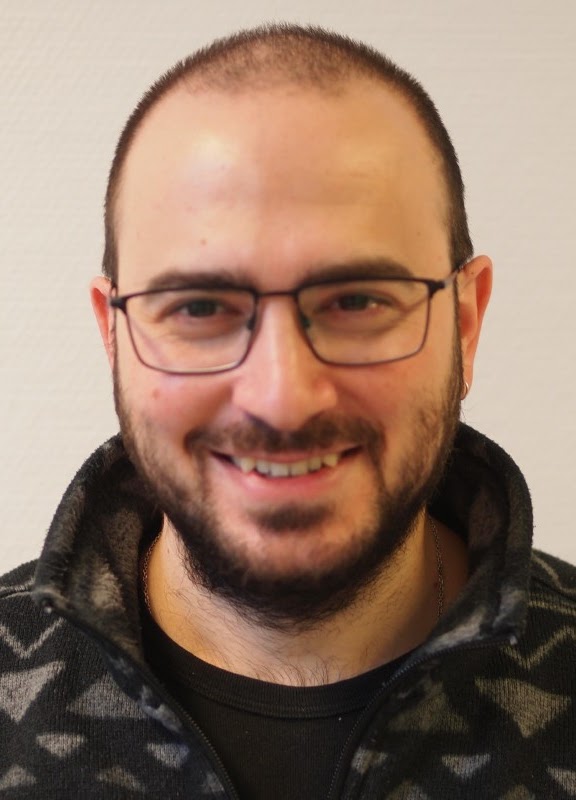
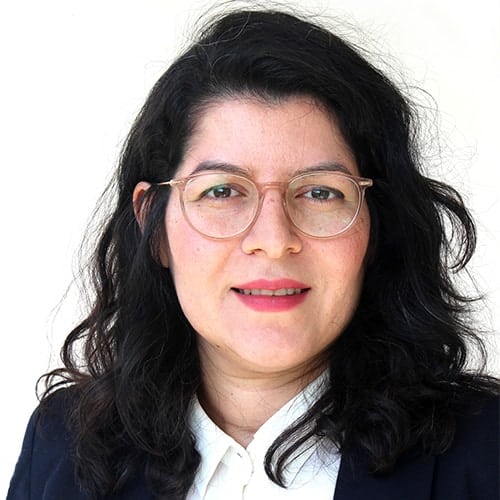
Luis Emilio Bruni is an Associate Professor at Aalborg University’s Department of Architecture, Design and Media Technology, within The Technical Faculty of IT and Design. He leads the Media Cognition and Interactive Systems (MeCIS) research group and coordinates the Master of Science in Medialogy. Bruni is also the founder and director of the Augmented Cognition Lab, focusing on perception, cognition, and immersive technologies. His academic roles include PI on multiple interdisciplinary projects and board memberships in international associations like the Nordic Association for Semiotic Studies (2011–2017) and the International Society for Biosemiotic Studies (founding member, 2005). Academically, Bruni holds a Ph.D. in Molecular Biology and Theory of Science (University of Copenhagen), M.Sc. in International and Global Relations (Universidad Central de Venezuela), and B.Sc. in Environmental Engineering (Pennsylvania State University). His research spans narrative cognition, extended reality, biosemiotics, and the interplay between technology, cognition, and culture. He has conducted projects on neurocinematic analysis, interactive storytelling, and the psychological impact of digital media. Key research contributions include studies on EEG responses to branded advertising, functional connectivity in psychiatric disorders, and the role of narrative in immersive technologies. Bruni’s work bridges cognitive science, computer science, and semiotics, with applications in healthcare (e.g., pediatric counseling tools) and cultural engagement (e.g., citizen curation systems). Over 80+ publications and active participation in conferences and media discussions highlight his interdisciplinary impact.
Filippo Menczer is a Professor of Informatics and Computer Science and Director of the Center for Complex Networks and Systems Research at Indiana University School of Informatics and Computing. He maintains courtesy appointments in Cognitive Science and Physics, and is affiliated with the Center for Data and Search Informatics and the Biocomplexity Institute. Additionally, he holds a Fellowship at the ISI Foundation in Torino, Italy. His research spans computational analysis of digital ecosystems with emphasis on: Web Science: structural and behavioral analysis of internet-scale systems Social Media Dynamics: information diffusion, meme competition, and attention economy modeling Complex Networks: traffic pattern analysis, popularity dynamics, and social link prediction Publications from 2009-2012 reveal consistent focus on social network analytics and information diffusion mechanisms. Key trends include modeling attention-limited meme competition, bursty popularity patterns in social media, and social link prediction through metadata analysis. His work integrates network science, computational social science, and data mining to decode online behavior. His scientific recognition includes: Fellow of ISI Foundation (2013) He leads the NaN research group within the Center for Complex Networks and Systems Research, focusing on interdisciplinary approaches to complex information networks and social media analytics.
Morten Nielsen is a Professor at the Department of Health Technology, Technical University of Denmark, specializing in Bioinformatics with a focus on Immunoinformatics and Machine Learning . His research develops pattern recognition algorithms for immune system characterization and protein structure analysis, contributing to vaccine design against infectious diseases like HIV and tuberculosis. Professor since 2008 Director of Algorithm in Bioinformatics course (27623) Active in 8 current and 27 completed research projects Research spans epitope prediction , T-cell receptor modeling , and genomic variation analysis of pathogens. Recent work (2024) includes cancer neo-epitope immunogenicity studies, B-cell epitope prediction tools (DiscoTope-3.0), and TCR specificity modeling using machine learning. Current projects involve deep immune receptor modeling , personalized neoantigen screening , and autoimmunity pattern identification , with students including L. Machado, B. Scapolo, S. N. Deleuran, G. Nos, and A. B. Saksager.
Georgios Arvanitidis is an Associate Professor at the Technical University of Denmark (DTU) in the Department of Applied Mathematics and Computer Science, specifically within the Section for Cognitive Systems (CogSys). He has established himself as a leading researcher in geometric machine learning, focusing on the application of differential geometry principles to enhance machine learning models. His work bridges theoretical mathematics with practical applications in artificial intelligence, with particular emphasis on understanding the geometric structure of data manifolds and latent spaces. Dr. Arvanitidis completed his educational journey with a Bachelor's degree from the Department of Informatics at the Aristotle University of Thessaloniki, followed by a Master's degree in Computer Science from Saarland University supported by the Max Planck Institute for Informatics. He earned his PhD at DTU's Cognitive Systems section under the supervision of Søren Hauberg, with additional research experience at Philipp Hennig's Probabilistic Numerics group. Prior to his current position as associate professor, he was a PostDoc at the Max Planck Institute for Intelligent Systems working with Bernhard Schölkopf. Dr. Arvanitidis's research primarily focuses on differential geometry in machine learning , where he explores how geometric structures can enhance representation learning and statistical modeling. His work in generative models investigates how learning the geometry of data manifolds can improve deep learning architectures. In the domain of deep learning theory , he examines why deep learning models generalize effectively on unseen data, with particular attention to the curvature properties of loss landscapes. His research in approximate Bayesian inference applies geometric principles to improve uncertainty quantification in neural networks. Through his innovative approaches, Dr. Arvanitidis has established himself as a leading researcher in geometric machine learning, contributing to both theoretical foundations and practical applications across various domains including robotics and life sciences. The publication trends of Dr. Arvanitidis reveal a consistent and evolving focus on geometric approaches to machine learning problems. His recent work (2023-2025) demonstrates increasing sophistication in applying Riemannian geometry to deep learning architectures, with particular emphasis on latent space geometry, optimization on manifolds, and geometric interpretations of neural network behavior. A notable pattern is the progression from foundational work on geometric representations to more applied research in areas like robotics and causal inference. His publications span top-tier conferences including NeurIPS, ICML, ICLR, and AISTATS, reflecting the high impact of his research. The interdisciplinary nature of his work is evident in collaborations across mathematics, computer science, and robotics domains, with recent papers addressing challenges in multimodal sampling, safety guarantees for dynamical systems, and counterfactual explanations. Dr. Arvanitidis has received several notable scientific awards and recognitions: Sapere Aude starting grant from the Independent Research Fund Denmark (DFF) GADL funding i-Rase, Pathfinder, and EIC (European Innovation Council) funding Best reviewer award for NeurIPS 2019 Best reviewer award for NeurIPS 2018 Best student paper award at Robotics: Science and Systems (R:SS) 2021 Dr. Arvanitidis actively mentors PhD students and researchers, currently supervising Alejandro Valverde, Johanna Gegenfurtner, and Albert Kjøller Jacobsen. He has previously co-supervised Alison Pouplin's PhD and worked with research assistant Georgios Pantis. His group receives substantial funding through multiple prestigious grants including the Sapere Aude starting grant from the Independent Research Fund Denmark, as well as European Innovation Council funding. He has been instrumental in creating opportunities for students interested in geometric machine learning, offering BSc and MSc thesis projects focused on generative models, deep learning theory, and optimization techniques. Dr. Arvanitidis also contributes significantly to the academic community as a reviewer for top conferences including ICLR and TMLR, and as an area chair for NeurIPS, ICML, AISTATS, and UAI. He co-organized the Machine Learning Summer School 2020 in Tübingen, further demonstrating his commitment to education and community building. Dr. Arvanitidis leads a vibrant research group focused on geometric machine learning within the Cognitive Systems section at DTU. His team includes multiple PhD students working on cutting-edge research at the intersection of differential geometry and artificial intelligence. The group has developed notable software tools, including the "geometric_ml" GitHub repository with over 70 stars, which contains implementations for applying Riemannian geometry in machine learning. His research has practical applications in robotics, where geometric approaches enable more robust motion planning, as evidenced by his work on "Reactive Motion Generation on Learned Riemannian Manifolds" which received a best student paper award. Additionally, his methodologies have found applications in life sciences, as mentioned in his 2022 AISTATS paper. The collaborative nature of his work is evident through extensive partnerships with researchers at institutions including the Max Planck Institute for Intelligent Systems, University of Cambridge, and various European universities. His recent news items indicate active engagement with the academic community through talks, conference presentations, and ongoing supervision of new PhD students joining his group.
Fariba Karimi is a Professor of Social Data Science at Graz University of Technology and leads the Algorithmic Fairness research group at the Complexity Science Hub (CSH) in Vienna. Her work sits at the intersection of computational social science, network science, and AI ethics, with a strong focus on fairness, inequality, and bias in algorithmic systems. She holds a PhD in Physics and Computational Science from Umeå University, Sweden (2015), and was a Postdoctoral Researcher at GESIS – Leibniz Institute for Social Sciences, Germany. Her research combines large-scale data analysis, agent-based modeling, and network science to study how social structures and algorithms interact to shape disparities, particularly for underrepresented groups. Computational Social Science Algorithmic Fairness and Bias Network Science and Homophily Digital Humanism Urban Inequality and Implicit Bias Gender and Age Equity in Academia Her recent publications reveal a consistent focus on understanding and mitigating algorithmic and structural inequities. Themes include the visibility of minorities in networks, the impact of segregation on health and cognition, gender citation gaps in physics, and the development of fair ranking and recommendation systems. She employs interdisciplinary methods to analyze both digital and real-world social systems. Fariba Karimi has received several prestigious recognitions, including: Young Scientist Award from the German Physical Society (2023) ERC Starting Grant (2024) Nomination for the Hedy Lamarr Award (2021) She leads the 'Humanized Algorithms' project at CSH, funded by the ERC, and co-leads an EU Horizon project (MAMMOth) on multi-criteria fairness in AI. She advises PhD researchers such as Lisette Espín-Noboa and collaborates with institutions like the University of Mannheim and the Centre for Social Sciences. Her work contributes to both academic knowledge and practical solutions for fairer AI systems and more equitable societies.
Tuukka Ruotsalo serves as Associate Professor in the Machine Learning Section at the Department of Computer Science, University of Copenhagen. His research bridges human cognition with computational systems through brain-computer interfaces and physiological computing. As Academy Research Fellow at University of Helsinki (2019-2024), he maintained dual institutional affiliations while leading cutting-edge work in neuro-linguistic modeling and affective relevance. His research focuses on brain-computer interfaces for information retrieval , where he pioneers methods to decode cognitive states from neural signals to improve search systems. Key areas include affective relevance modeling that integrates emotional states into search algorithms, and neuro-linguistic reconstruction that translates brain activity into language. His work on fairness-relevance tradeoffs in recommender systems established Pareto frontier evaluation frameworks now widely adopted in ethical AI research. Recent publications demonstrate how physiological signals like EEG and galvanic skin response can create more adaptive human-information interaction systems. Ruotsalo's scientific recognition includes the prestigious Academy Research Fellow position. His publications in IEEE Transactions on Human-Machine Systems , Journal of the Association for Information Science and Technology , and Communications Biology reveal growing interdisciplinary impact. His advising spans cognitive neuroscience and machine learning students, with notable collaborations across the SCIENCE AI Centre. Current projects include the TreeSense initiative for remote sensing of global tree resources and development of quantum-inspired neural architectures. His lab leverages the department's powerful compute cluster for large-scale physiological data analysis.
Per Lynggaard is a Professor of Electronics at the Technical University of Denmark (DTU) , leading the B.Eng. program in Electronics. Previously, he held an Associate Professor role at Aalborg University, combining academic excellence with a robust industrial career in technical-scientific research and development. Education: M.Sc. in Electrical Engineering and Information Technology (EE and IT) Ph.D. in Electronics from Aalborg University Research Interests: Focus on Integrated Circuit Design, Wireless Sensor Networks (WSN), Machine Learning, IoT, and Smart City Technologies . His work emphasizes energy-efficient systems, cybersecurity in IoT, AI-driven interference mitigation, and sustainable energy harvesting solutions. He has contributed to UN Sustainable Development Goals through projects addressing smart infrastructure and environmental monitoring. Projects & Collaborations: Leads and participates in EU-funded initiatives such as InnoTech (2023–2025) for green transition solutions and TransportTech (2023–2026) for Industry 4.0 logistics. Active in cybersecurity research via projects like Jamming Against Critical Wireless Communication , aiming to protect critical infrastructure. Awards: Recognized with multiple honors and rewards during his industrial career, though specific names are not listed. His work has been cited widely, with notable impact in IoT security and energy-efficient systems. Advising & Grants: Supervises Turnip T.N. in a PhD project on 6G security protocols. Engaged in securing funding for projects like F2D2: The Community for Dynamic Data (2021–2030), focusing on dynamic data systems and cybersecurity. Labs & Teams: Collaborates in interdisciplinary teams such as the InnoTech TaskForce and F2D2 Community , advancing IoT and AI integration. His research bridges academia and industry, with outputs spanning smart cities, healthcare IoT, and sustainable energy systems.
Mikkel Lønborg Friis is a Clinical Associate Professor at Aalborg University, affiliated with the Department of Clinical Medicine under The Faculty of Medicine. He also serves as a senior consultant ( Ledende overlæge ) at Aalborg University Hospital, where he leads simulation-based training initiatives at NordSim – Centre for Skills Training and Simulation. His dual academic and clinical roles position him at the intersection of advanced surgical practice and innovative medical education. Clinical Associate Professor, Aalborg University Ledende overlæge (Chief Physician), Aalborg University Hospital Member, NordSim – Centre for Skills Training and Simulation His research interests focus on enhancing surgical and diagnostic competencies through technology-driven education. Key areas include simulation-based training, artificial intelligence in fetal and surgical ultrasound, robotic surgery assessment using deep learning, and curriculum development for cross-specialty ultrasound education. He actively contributes to improving clinical outcomes in pilonidal sinus disease and advancing AI integration in medical imaging. The recent publications highlight a strong trend toward interdisciplinary innovation, particularly in blending AI, simulation, and medical education. His work spans clinical surgery, educational methodology, and computational analysis of surgical performance. A significant portion of his research involves designing and evaluating training protocols, developing datasets for skill assessment, and exploring ethical and practical implications of AI in clinical settings. Mikkel Friis has not been publicly recognized with scientific awards in the provided text, but his leadership in simulation and curriculum design suggests significant institutional impact. He is involved in mentoring and advising through collaborative research projects, particularly in simulation and ultrasound education. While formal students are not listed, his role in study protocols and dataset creation implies supervision of junior researchers and medical trainees. He participates in funded or institutionally supported research activities related to medical education innovation and surgical technology. His involvement in press and media coverage further underscores his role as a thought leader in clinical simulation careers. Friis is deeply embedded in NordSim – Centre for Skills Training and Simulation, where he contributes to developing and implementing simulation-based assessment tools, particularly for abdominal ultrasound and surgical skills. His team collaborates across departments and institutions, focusing on creating standardized, scalable training models that integrate emerging technologies like AI and virtual reality.
Tijs Slaats is an Associate Professor in the Software, Data, People & Society section at the Department of Computer Science, University of Copenhagen. His research focuses on Business Process Management with particular emphasis on declarative and hybrid process notations to provide flexible workflow support for knowledge workers, funded by the Danish Council for Independent Research. His educational background includes: M.Sc. in Information Technology from IT University of Copenhagen Ph.D. in Computer Science from IT University of Copenhagen (supervised by Thomas Hildebrandt) Dr. Slaats specializes in declarative process modeling, particularly Dynamic Condition Response (DCR) graphs which enable flexible workflow systems. His work bridges theoretical foundations with practical applications in cross-organizational settings. Recent research extends into blockchain technologies, smart contracts, and applications in sensitive domains like asylum processing and refugee law. He combines formal methods with empirical evaluation to ensure both correctness and usability of workflow systems. His publication pattern shows increasing application of process mining techniques to blockchain technologies and socially impactful domains, while maintaining core research in Business Process Management. Notable trends include integration of DCR graphs with smart contracts, privacy-preserving techniques for asylum data, and object-centric approaches to process discovery. Research funding includes: Hybrid Business Process Management Technologies project (Danish Council for Independent Research) Technologies for Flexible Cross-organizational Case Management Systems (FLExCMS) industrial Ph.D. project Alongside his academic work, Dr. Slaats maintains strong industry connections through Exformatics A/S where he developed the DCR Graphs workflow solution (www.dcrgraphs.net), and previously worked as a software engineer in the Dutch e-commerce sector. His dual expertise in academia and industry ensures his research addresses real-world workflow challenges while maintaining theoretical rigor.
Yvonne Dittrich is a Professor at the IT University of Copenhagen (ITU), affiliated with the Software Development Group. She holds an adjunct professorship at IIT Mandi, India, and has held roles at institutions in Sweden, Canada, and the U.S. Her research focuses on cooperative and human aspects of software engineering, including Continuous Software Engineering (CSE), use-oriented design, and end-user development (EUD). She has led projects like SAIA-Farm (sustainable irrigation via satellite analytics) and contributed to frameworks like 'Cooperative Method Development.' **Education**: PhD in Computer Science (Hamburg University, 1997), M.Sc. from TU Darmstadt. **Research Interests**: She pioneers methods bridging software engineering with human-centric practices, emphasizing sustainability and participatory design. Her work addresses challenges in global software development, agile methodologies, and software ecosystems. **Awards**: TAT-Förderpreis (1989), Best Paper Award (2018), Distinguished Reviewer recognition (2018). **Grants & Leadership**: Led projects funded by the Danish Innovation Fund, EU, and others. Served on editorial boards for IEEE Transactions on Software Engineering and Journal of Systems and Software. **Labs/Teams**: Collaborates with labs in Denmark, India, and Canada on interdisciplinary projects, including smart irrigation systems and fintech ESG data commons.
Teresa Anna Steiner serves as an Assistant Professor in the Department of Mathematics and Computer Science at the University of Southern Denmark, specializing in algorithmic research with emphasis on privacy-preserving computational methods and theoretical computer science. Her research centers on differential privacy mechanisms, where she investigates trade-offs between data utility and privacy guarantees through rigorous analysis of noise injection techniques like Laplace and Gaussian distributions. She extends this work to dynamic graph databases requiring real-time privacy protections and develops novel text indexing approaches for regular expression pattern matching, contributing to foundational advancements in algorithm design for sensitive data environments. Recent 2025 publications reveal a cohesive research trajectory focused on practical implementations of differential privacy across diverse data structures, with particular attention to variance optimization in noise mechanisms, edge-level privacy in evolving graphs, and efficient indexing for textual pattern recognition. These works collectively address critical challenges in balancing computational efficiency with robust privacy guarantees in modern data systems. No scientific awards were documented in the available information. Details regarding student advising or research grant funding were not specified in the provided materials.
Giovanni Colavizza holds a dual academic appointment as Professor in the Department of Communication at the University of Copenhagen and Associate Professor at the University of Bologna (since November 2023). His research bridges information science, digital humanities, and open science practices. His primary research areas include: Quantitative analysis of open research practices (data/code/preprint sharing) and citation impact Wikipedia's role in scientific knowledge dissemination and news source reliability assessment Digital tools for humanities including knowledge graphs and NLP applications for historical archives Recent publications (2024-2025) reveal strong interdisciplinary trends, combining scientometrics with natural language processing to analyze scientific communication patterns and colonial archival materials. His work appears in leading venues including PLoS ONE, Scientometrics, and IEEE Journal of Biomedical and Health Informatics, demonstrating methodological innovation across information science and humanities domains.
Matthias Oliver Wilhelm is an Associate Professor in the Department of Mathematics and Computer Science at the University of Southern Denmark, affiliated with the Quantum Mathematics research group. His work focuses on advanced theoretical physics topics including scattering amplitudes in gauge/gravity theories, Feynman integrals, special functions, and applications of machine learning in physics. He has contributed to groundbreaking research at the intersection of quantum field theory and mathematical physics, particularly in understanding gravitational wave phenomena and high-energy particle interactions. Research Interests: His research combines quantum field theory with algebraic geometry and computational methods, exploring topics like elliptic Feynman integrals, post-Minkowskian expansions, and machine learning-driven amplitude calculations. Recent work includes leveraging Calabi-Yau manifolds for gravity-related Feynman integrals and developing transformer-based algorithms for scattering amplitude computations. Awards: He received the Velux Grant - Villum Young Investigator in 2018, recognizing his innovative contributions to theoretical physics. Projects: Leveraging Algebraic Geometry for High-Precision Fundamental Physics (2024-2028, DFF-funded) Thermodynamics of strongly coupled Quantum Field Theory (2019-2027, private foundation-funded) Key Themes in Recent Work: His articles emphasize novel computational techniques (e.g., machine learning for integration-by-parts reduction), formal developments in scattering amplitude theory, and geometric approaches to quantum gravity problems. Notable contributions include classifying Feynman integral geometries for black-hole scattering and advancing elliptic function methodologies in perturbative QFT.
Chenjuan Guo is an Associate Professor at the Department of Computer Science, Aalborg University, within The Technical Faculty of IT and Design. She is affiliated with the Data Engineering, Science and Systems group and the AI for the People initiative, and is part of the Daisy - Center for Data-intensive Systems. Her research focuses on machine learning, data engineering, spatio-temporal data analysis, and time series forecasting. Key projects include the Villum Foundation-funded 'Explainable AI for Complex Microbial Community Interactions and Predictions' (2021-2024) and the Astra project on time series analytics in spatial networks (2018-2021). Her research interests span representation learning, autoencoders, path representation, outlier detection, trajectory data analysis, and time series modeling. She has supervised 3 PhD students and contributed to over 60 publications, with a recent emphasis on transformer-based forecasting, neural architecture search, and continuous learning frameworks for spatio-temporal data. Her work bridges theoretical advancements with practical applications in environmental science, cloud computing, and urban mobility systems. Key achievements include developing frameworks like AutoCTS++ for automated time series forecasting and LightGTS for lightweight models. She actively collaborates internationally, contributing to conferences like ECML PKDD and CVPR. Her research is supported by grants from the Villum Foundation and other institutions.
Per Bækgaard is an Associate Professor at the Department of Applied Mathematics and Computer Science, Technical University of Denmark (DTU), specializing in Cognitive Systems. He serves as Head of Study for Human-Centered Artificial Intelligence, leading research in human-computer interaction, user experience, eye tracking, and cognitive neuroscience. His work bridges AI and human cognition to create systems that enhance daily life and support meaningful tasks. PhD, MSc EE, Technical University of Denmark His research interests center on Human-Computer Interaction (HCI) , User Experience , and Human-Centered Artificial Intelligence , with strong emphasis on Eye Tracking , Cognitive Neuroscience , and Digital Media . He explores how digital systems can adapt to users’ cognitive states using physiological signals like pupil dilation and gaze patterns, aiming to improve learning, health, and decision-making. His work aligns with UN Sustainable Development Goals in health and education. The recent publications reflect a strong trend in integrating eye tracking and pupillometry with AI-driven adaptive systems , particularly in education and healthcare. Themes include generative AI in learning , trustworthy AI in supply chains , and digital micro-interventions for mental health . The interdisciplinary nature spans computer science, psychology, and biomedical engineering, showcasing a cohesive focus on human-centered technology evaluation. Scientific Awards: Best Paper Award, 26 Jun 2020 – for contributions to gaze interaction research Per Bækgaard actively supervises PhD students and leads multiple research projects, including those involving generative AI in education , digital phenotyping , and AI in nursing and mental health . He is the main supervisor for several PhD projects and a co-supervisor or examiner in others, demonstrating a strong commitment to academic mentoring. His grant involvement includes projects funded by DTU and collaborative research initiatives in digital health and AI. He is part of the Cognitive Systems group at DTU, contributing to interdisciplinary research in AI, neuroscience, and human factors. His team collaborates on projects involving real-time physiological monitoring, adaptive interfaces, and AI-mediated learning systems, positioning him at the forefront of human-centered AI research in Scandinavia.