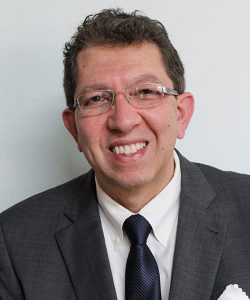
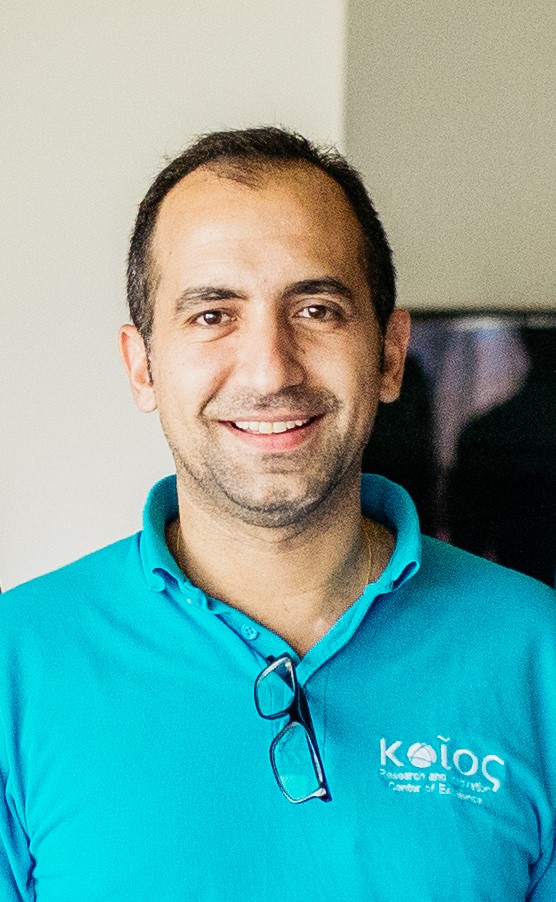
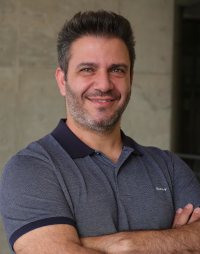
Marios Polycarpou is a Professor of Electrical and Computer Engineering and Director of the KIOS Research and Innovation Center of Excellence at the University of Cyprus. He holds honorary positions at Imperial College London and is a member of Academia Europaea. His expertise spans intelligent systems, adaptive control, machine learning, and critical infrastructure. Education: B.A. Computer Science (Rice University, 1987) B.Sc. Electrical Engineering (Rice University, 1987) M.S. Electrical Engineering (University of Southern California, 1989) Ph.D. Electrical Engineering (University of Southern California, 1992) Research Focus: Polycarpou’s work emphasizes fault diagnosis in cyber-physical systems, water distribution networks, and adaptive control. He pioneers digital twin technologies for infrastructure resilience and develops algorithms for real-time anomaly detection and system optimization. Article Trends: His recent publications address adaptive control strategies, cybersecurity in networked systems, and AI-driven solutions for water management. Key themes include distributed control, event-triggered mechanisms, and transformer-based anomaly localization. Awards: 2023 IEEE Frank Rosenblatt Technical Field Award 2016 IEEE Neural Networks Pioneer Award Fellow of IEEE and IFAC Grants & Leadership: He secured prestigious grants including ERC Advanced and Synergy Grants. He led KIOS CoE’s Horizon 2020 projects and served as IEEE Computational Intelligence Society President (2012–2013). Labs & Teams: Directs the KIOS CoE, a hub for AI in critical infrastructure. Collaborates on projects like ERC Water-Futures, focusing on long-term water system transitions and contamination mitigation.
Panayiotis Kolios is an Assistant Professor at the Department of Computer Science, University of Cyprus (UCY). Previously, he served as a Research Assistant Professor at the KIOS Research and Innovation Centre of Excellence (2013–2024) and a Visiting Lecturer at UCY. He holds a BEng and PhD in Telecommunications Engineering from King’s College London (2008 and 2012, respectively). His research focuses on networked intelligent systems, emergency management using AI and UAV technologies, and cyber-physical systems. Education: BEng in Telecommunications Engineering, King’s College London, 2008 PhD in Telecommunications Engineering, King’s College London, 2012 Research Interests: His work centers on autonomous systems, intelligent transportation, and emergency management. Key areas include AI-driven disaster response, UAV-based surveillance, and algorithmic optimization for critical infrastructure. He develops solutions for real-time situational awareness and decision-support in emergencies. Recent work trends show a focus on multi-UAV coordination, disaster management platforms (like AIDERS), and AI applications in emergency response. His team’s 2023 win in the Cooperative Aerial Robots Inspection Challenge highlights advancements in UAV inspection algorithms. Scientific Awards: First Prize in Cooperative Aerial Robots Inspection Challenge (CDC 2023) Grants and Advising: He has secured over €40 million in EU and industrial grants, leading projects like PREDICATE, SWIFTERS, and AIDERS. His team advises on emergency response strategies and has trained first responders through EU-funded programs such as the Exchange of Experts training. Labs and Teams: He leads the Security and Emergency Response Group at KIOS CoE and established the Cyprus Civil Defence Aerial Observation Unit. His team collaborates with institutions like the Cyprus Police and Fire Service to operationalize UAV technologies in disaster scenarios.
Professor Mohammed Salamah is a distinguished faculty member in the Computer Engineering Department at Eastern Mediterranean University's Faculty of Engineering. He maintains an office in room 114 and can be contacted at +90 392 630 1149/1334 or via email at muhammed.salamah@emu.edu.tr. His academic website provides additional resources for students and colleagues. Dr. Salamah earned his BS, MS, and PhD degrees in Electrical and Electronics Engineering from Middle East Technical University in 1988, 1990, and 1996 respectively, establishing a strong foundation for his career in network communications and wireless systems. His research interests span multiple critical areas in modern networking, with particular expertise in Wireless Sensor Networks, Internet of Things (IoT) security, Mobile Communications, and Energy Efficiency in network protocols. Professor Salamah has made significant contributions to the understanding of network security mechanisms, trust management systems, and optimization of wireless communication protocols. An analysis of his recent scholarly output reveals a strong focus on security challenges in IoT communication systems, controller placement optimization in software-defined wireless sensor networks, and trust-based malicious node detection schemes. His work demonstrates consistent attention to practical network performance issues while addressing emerging challenges in next-generation communication technologies. Throughout his academic career, Professor Salamah has demonstrated exceptional commitment to student mentorship, supervising numerous graduate students through their research journey. His administrative contributions include service as an associate editor, reviewer, and session chair for academic conferences. His laboratory work focuses on practical implementations of wireless communication protocols, with emphasis on energy efficiency, security mechanisms, and performance optimization for various network architectures including cellular networks, cognitive radio systems, and wireless sensor networks.
Assoc. Prof. Dr. Yıltan Bitirim is a faculty member at the Computer Engineering Department of Eastern Mediterranean University in North Cyprus. With over two decades of academic experience, he has served in various roles including Vice Chair (2014-2022), Academic Affairs Coordinator (2025-), and committee member for ABET assessment, curriculum development, and faculty recruitment. Current academic rank: Associate Professor Active administrative roles: Senate Member (2023-), Information Technology Commission Member (2023-) Professional memberships: ACM, IEEE Senior Member, Cyprus Turkish Chamber of Computer Engineers Research Interests focus on four primary areas: Information Retrieval Systems – evaluating search engine effectiveness and reverse image search performance Machine Learning – applied to emotion classification, gender recognition, and medical diagnosis Data Mining – used in Turkish word-stemming analysis and user behavior studies Biometrics – specializing in hand/wrist/palm vein recognition systems and voice-based identification Publications demonstrate consistent contributions across disciplines, with recent works (2023-2025) emphasizing: Deep learning applications in biometric authentication Advanced emotion recognition systems Medical AI for diabetes management and retinopathy diagnosis Biometric spoof detection mechanisms Turkish language processing challenges Recommendation system innovations Awards & Recognition : Research Incentive Awards (2020, 2021) Best Paper Award at ICIW 2007 IEEE Senior Member status As an educator, he has supervised numerous thesis committees and taught foundational courses in computer engineering, including CMPE 112 and CMPE 342. His certifications (MCTS, MCITP) reflect technical expertise in Microsoft technologies.
Christodoulou Chris is a Professor at the Department of Computer Science, University of Cyprus. He joined in 2005 and holds a Visiting Research Fellowship at Birkbeck College, University of London. His educational background includes a BEng in Electronic Engineering from Queen Mary and Westfield College (1991), a PhD in Neural Networks from King's College London (1997), and a BA in German from Birkbeck College (2008). His research focuses on Computational Neuroscience, Neural Networks, and Machine Learning, with specific interests in neural coding, self-control modeling, computational neuronal modeling, multi-agent reinforcement learning, and practical machine learning applications. Recent publications (2013-2025) demonstrate interdisciplinary approaches combining neuroscience, computer science, and optimization techniques, with emerging emphasis on protein structure prediction and biomedical applications. Scientific awards include: Best Paper Award, ICSR 2015 Best Paper Award, MODELS 2008 Doctoral Symposium He leads the Computational Intelligence and Neuroscience (CIN) research group and has secured funding from European projects (SocioCoast, CYberSafety, TAMIT). He mentors students through Google Summer of Code and collaborates internationally.
Assoc. Prof. Dr. Wayne FULLER is a faculty member at Near East University's Faculty of Veterinary Medicine, Department of Genetics. He earned his BSc in Zoology from the University of Oxford before pursuing doctoral research at Exeter Universities' Centre for Ecology and Conservation in North Cyprus. Specializing in Mediterranean marine turtle conservation and ecology, his work spans climate change impacts, plastic pollution, and stable isotope applications. Education: BSc in Zoology, PhD in Marine Ecology Current Roles: Head of Department of Genetics, Near East University Key Projects: IUCN Marine Turtle Specialist Group (2017-present), EU Nature 2000 implementation in Cyprus (2008) His recent research explores phenological shifts in sea turtle offspring under climate change, macroplastic ingestion patterns, and avian conservation in Mediterranean forests. Publications emphasize ecological monitoring, habitat connectivity, and conservation technology applications like GPS and stable isotopes. Scientific recognition includes: Member of IUCN Marine Turtle Specialist Group
Assoc. Prof. Dr. Adnan Acan is a faculty member in the Department of Computer Engineering at Eastern Mediterranean University (EMU). He holds a PhD from Middle East Technical University, specializing in Electrical Engineering. His academic roles include teaching and supervising numerous graduate students in areas such as optimization algorithms, computer vision, and biomedical signal processing. Education: PhD, Electrical Engineering, Middle East Technical University (1992) MS, Electrical Engineering, Middle East Technical University (1985) BS, Electrical Engineering, Middle East Technical University (1983) Research Interests: His research focuses on optimization algorithms, machine learning, pattern recognition, and biomedical applications. Notable areas include metaheuristic algorithms (e.g., particle filters, great deluge), multi-agent systems, and ECG/heartbeat classification. He has contributed to advancements in computational intelligence, evolutionary algorithms, and medical diagnostics. Advising & Students: He has supervised over 30 graduate students, including PhDs such as JAMSHID TAMOUK (2021) and ZAHRA GOLRIZ KHATAMI (2019), and master’s students like MILAD ROSTAMPOUR (2023). His work spans applications in robotics, face recognition, and numerical optimization. Labs & Collaboration: His teaching and research involve courses in artificial intelligence, algorithms, and computer engineering. He actively contributes to academic service, including roles as a session chair and reviewer in conferences. His lab focuses on developing innovative solutions to complex computational and biomedical challenges.
Mian Pan is an Associate Professor at Hangzhou Dianzi University. He holds a B.S. in Electronic Engineering (2007) and a Ph.D. in Signal Processing (2013) from Xi'dian University, Xi’an, China. His research focuses on machine learning, radar signal processing, pattern recognition, and audio/video/image processing algorithms. Education: Ph.D. in Engineering Sciences, 2013, Xi'dian University B.S. in Electronic Engineering, 2007, Xidian University Research Interests: Mian Pan explores advanced machine learning techniques for radar signal analysis, develops algorithms for pattern recognition in complex systems, and investigates efficient processing methods for audio, video, and image data. His work bridges theoretical foundations with practical applications in signal processing domains. Publications & Awards: No specific articles, grants, or awards are listed in the provided information. Advising & Labs: No student advisees, lab affiliations, or grant details are mentioned.
Panos K. Chrysanthis is a Professor of Computer Science at the University of Pittsburgh and an adjunct Professor at Carnegie-Mellon University and the University of Cyprus. He holds a BS in Physics with a Computer Science concentration from the University of Athens, Greece, and MS and PhD degrees in Computer and Information Sciences from the University of Massachusetts Amherst. He has been affiliated with the University of Pittsburgh since 1991, serving as Director of the Advanced Data Management Technologies (ADMT) Lab. His research focuses on database systems, mobile and pervasive data management, distributed computing, and real-time systems, with recent emphasis on data streams and energy-efficient data management for IoT and sensor networks. Chrysanthis has authored over 100 peer-reviewed publications, including a book on transaction processing and consistency in distributed databases. He has received the NSF CAREER Award (1995) and the University of Pittsburgh's Provost Award for Excellence in Mentoring (2015). He has held editorial roles at the VLDB Journal, IEEE TKDE, and DAPD, and has organized major conferences like ICDE and MDM. His work bridges theoretical database research with practical applications in urban informatics, healthcare, and sustainability. Chrysanthis has advised numerous students, contributed to grants focused on big data and healthcare analytics, and co-developed tools like the ADMT Lab's experimental platforms for urban mobility and congestion. He is a Senior Member of IEEE and an ACM Distinguished Scientist.
Dr. Joyce De-Graft Acquah serves as a Research Fellow in the Department of Peace Studies at the School for Development Studies, University of Cape Coast, Ghana, where she teaches graduate courses in Peace, Security, and Development Studies. She concurrently holds a prominent position on Ghana's Central Regional Peace Council. Her academic foundation includes: Bachelor of Arts in Social Work and Sociology (University of Ghana) Master of Arts in Development Studies (University of Ghana) Master of Philosophy in Peace and Conflict Transformation (University of Tromsø, Norway) Ph.D. in International Conflict Management (Kennesaw State University, USA) Dr. Acquah's research critically examines conflict dynamics through multiple lenses including gender-responsive peacebuilding, refugee integration, and post-conflict livelihood reconstruction. Her current work investigates urban gang violence in Ghana using innovative methodological approaches to analyze socioeconomic, cultural, and political drivers within stable democratic contexts. She bridges theoretical frameworks with practical community engagement across Africa, Europe, and North America. Her recent publication on Ghanaian gang violence reveals complex interactions between urban development patterns and conflict emergence, employing specialized sampling techniques for high-risk environments. This work contributes significantly to criminology and peace studies through its focus on 'hot spots' within otherwise stable nations. Key recognitions include: Norwegian Government Quota Scholarship PEO International Peace Scholarship British Council Pan-African Leadership selection (2004) Nordic Africa Institute Research Fellowship (2023) Golden Key and Alpha Beta Kappa Honor Society memberships Dr. Acquah has secured substantial research funding from Norway's Centre for Environment and Development and Canada's Bureau for International Education. Her professional practice combines academic rigor with field application through USAID community development projects, Georgia Office of Dispute Resolution certification, and leadership in the Ghana Association of Social Workers. She maintains active roles in the South South Migration Network, Gender Violence Survival Support Network, and African Migration Mobility Initiative. Through the Central Regional Peace Council and multiple transnational networks, she implements community-based conflict resolution frameworks while advancing policy development on migration, gender-based violence, and urban security challenges across West Africa.
Prof. Hakan Altınçay is a Full Professor in the Department of Computer Engineering at Eastern Mediterranean University (EMU). He holds a PhD from Middle East Technical University (METU), Turkey (2000), and has been at EMU since 2000, progressing from Assistant Professor (2000–2005) to Full Professor (2012–present). His research focuses on machine learning, including imbalance learning, feature selection, ensemble methods, and biomedical data analysis. He has supervised 10+ PhD and Master’s theses and authored over 50 journal and conference papers. Education: BEng in Electrical and Electronics Engineering (METU, 1993), MSc and PhD in Electrical Engineering (METU, 2000). Awards include the IEEE Third Best Paper Award (2003) and TÜBİTAK PhD Scholarship. He serves on editorial boards (e.g., Applied Intelligence Journal) and chairs academic committees at EMU. Key contributions include algorithms for imbalanced data classification (MaMiPot), feature selection techniques, and biomedical applications like diabetes prediction. His work addresses challenges in text categorization, speaker verification, and ensemble classifier design.
Aristidou Andreas is an Associate Professor at the Department of Informatics, University of Cyprus. His academic journey includes a BSc from National and Kapodistrian University of Athens (2005), MSc from King's College London (2006), and a PhD from the University of Cambridge (2011). He has held postdoctoral positions at multiple institutions and served as a visiting professor at the University of Nicosia. His research focuses on human motion analysis, computer graphics, cultural heritage digitization, and geometric algebra applications. He is a senior member of IEEE, ACM, and Eurographics, and serves on editorial boards for journals like The Visual Computer. Research highlights include the FABRIK algorithm (widely used in game engines) and motion capture innovations for cultural heritage preservation. Awards include the DIDAKTOR scholarship, Erasmus Mundus Grant, and NVIDIA GPU grant. He leads projects funded by EU initiatives (e.g., ITN-DCH, SCHEDAR) and collaborates internationally on digital twins, virtual museums, and AI-driven motion synthesis. Key contributions span 3D motion analysis, motion reconstruction from sparse data, and emotion recognition in theater performances. His work bridges computational methods with cultural preservation, biomedical applications, and interactive VR systems.
Antonis Savva serves as a Researcher at the KIOS Research and Innovation Center of Excellence, University of Cyprus, a role he has held since March 2020 focusing on computer vision applications for drone systems. His academic background includes: MEng in Electronics and Systems from the School of Electrical and Computer Engineering, National Technical University of Athens (2014) MSc in Management of Organizations and Entrepreneurship from the same institution (2018) PhD in medical data analysis from the School of Electrical and Computer Engineering, National Technical University of Athens (2019) Dr. Savva specializes in signal processing and computer vision with dual applications in medical imaging and autonomous systems. His doctoral work pioneered algorithms for aligning pre/post-operative CT scans in bone augmentation procedures, reconstructing panoramic jaw views, and quantifying dynamic brain region associations via fMRI analysis in both healthy and pathological states. Current research extends these methodologies to drone technology, emphasizing real-time visual data processing and pattern recognition for aerial applications. He operates within the KIOS Research and Innovation Center of Excellence, a specialized hub for intelligent systems and networks at the University of Cyprus driving cross-disciplinary innovation in computational methodologies.
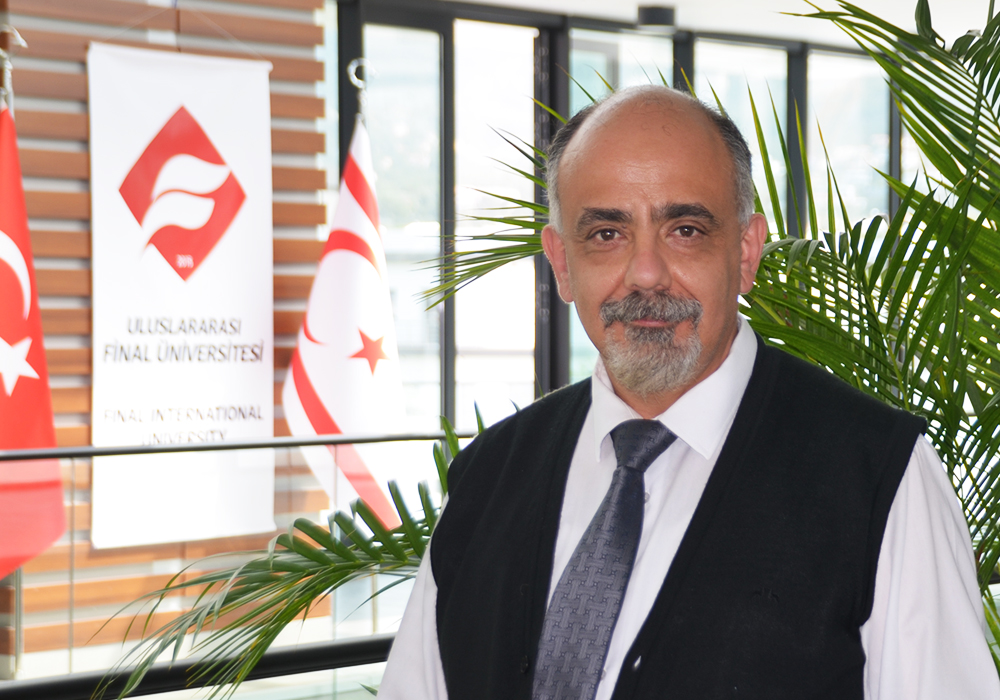
Prof. Cem Birol serves as a Professor in the Department of Educational Sciences within the Faculty of Educational Sciences at Final University in the Turkish Republic of Northern Cyprus (TRNC). His academic career spans over two decades with consistent scholarly contributions focused on communication dynamics, organizational behavior, and measurement methodologies in educational contexts. His educational qualifications include: Doctoral Degree in Educational Sciences from Ankara University (2002) Master's Degree in Curriculum and Instruction from Ankara University (1996) Bachelor's Degree in Curriculum and Instruction from Ankara University (1994) Birol's research centers on communication effectiveness in educational settings, organizational culture in schools, and service quality assessment in higher education. He has developed specialized measurement scales for friendship communication among science students and parent protection frameworks. His methodological approach emphasizes comparative analysis across cultural and institutional contexts, particularly within TRNC's unique educational landscape. Key investigations include the impact of assertiveness on academic achievement, emotional intelligence among educators, and non-academic service quality dimensions. Analysis of his publication record (2000-2018) reveals a cohesive research trajectory examining teacher-student interactions, administrative behaviors, and cross-cultural educational comparisons. His work consistently bridges theoretical frameworks with practical measurement tools, demonstrating particular expertise in scale development and institutional case studies. The interdisciplinary nature of his scholarship integrates educational psychology, organizational theory, and communication studies to address systemic challenges in educational administration. While no specific scientific awards are documented in the source materials, his contributions include serving as conference organizer, journal reviewer, and proceedings editor for international educational technology conferences. His administrative roles within the university context appear focused on educational leadership and quality assurance initiatives.
Athanasios Metaxas is an Assistant Professor in the Department of Life Sciences at the School of Sciences, European University Cyprus. He holds a Ph.D. in Biosciences and Medicine (University of Surrey, U.K.), an M.Sc. in Biosciences and Medicine (University of Surrey, U.K.), and a B.Sc. in Pharmacy (Aristotle University of Thessaloniki, Greece). His research focuses on neuroinflammation, synaptic pathology, and molecular mechanisms underlying Alzheimer’s disease, particularly using transgenic mouse models and advanced imaging techniques like PET. Metaxas has received travel awards from the Lundbeck Foundation and the University of Southern Denmark, and his work emphasizes serotonin signaling, tau protein alterations, and the development of diagnostic tools for neurodegenerative conditions. Educations: Ph.D., Biosciences and Medicine, University of Surrey, U.K. (2010) M.Sc., Biosciences and Medicine, University of Surrey, U.K. (2005) B.Sc., Pharmacy, Aristotle University of Thessaloniki, Greece (2004) Research Interests: His studies investigate the interplay between neuroinflammation and synaptic dysfunction in Alzheimer’s disease. Metaxas employs transgenic mouse models to study amyloidosis, tau pathologies, and the role of serotonin transporters (SERT) in disease progression. He is also dedicated to developing PET imaging ligands targeting NMDA receptors and exploring antioxidant therapies that modulate the NRF2 pathway. Recent work highlights the protective roles of cytokines like TNF in cognitive processes under physiological conditions, while his studies on 5-HT2B receptors in microglia cells reveal behavioral impacts of conditional receptor inactivation. Metaxas’ research bridges molecular proteomics with translational neuroscience, aiming to identify novel therapeutic targets and biomarkers. Publications Trends: His articles emphasize Alzheimer’s disease pathogenesis, focusing on synaptic plasticity, neuroinflammation, and age-related biomarkers. He frequently publishes in journals like Cells , Scientific Reports , and Alzheimer’s Research & Therapy , with contributions to both basic science and clinical neuroimaging. Recent work extends to canine models of early Alzheimer’s, suggesting cross-species relevance of microglial activation patterns and perivascular macrophage infiltration. Awards & Recognition: 2018: IMM Travel Award (University of Southern Denmark) 2017: Lundbeckfonden Travel Award (Lundbeck Foundation) 2016: IMM Travel Award (University of Southern Denmark) 2006-2010: Ph.D. Studentship (European Commission) Advising & Grants: Metaxas has served as Principal Investigator for projects on neurofibrillary tangles (2016), SSRIs and amyloid pathology (2015), and Co-Investigator in studies on serotonergic signaling in microglia (2018-2020). He collaborated on LeARN (2010-2014) for Alzheimer’s diagnosis tools and CoPING AD (2015-2018) exploring neuron-glia interactions. As a supervisor, he guided undergraduate and postgraduate theses in multiple institutions (SDU, VUmc, University of Surrey). His leadership roles include Erasmus+ Coordinator at SDU (2016-2017) and Professional Training Year Coordinator at VUmc (2012-2013), emphasizing international collaboration and training program development. Labs & Teams: While specific lab names are not provided, his research is embedded within collaborative projects such as LeARN (Center for Translational Molecular Medicine) and CoPING AD (University of Southern Denmark). These projects involve multidisciplinary teams focusing on neuropharmacology, imaging, and molecular biology, with contributions to preclinical drug evaluation and diagnostic tool development.