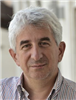
Antonio Torralba is a Professor of Electrical Engineering and Computer Science at the Massachusetts Institute of Technology (MIT), affiliated with the College of Engineering. He received his telecommunications engineering degree from Telecom BCN, Spain, in 1994, and his Ph.D. in signal, image, and speech processing from the Institut National Polytechnique de Grenoble, France, in 2000. His research interests span Deep Learning , Machine Learning and Pattern Recognition , Computational Intelligence , and Ambient Assisted Living , focusing on advancing computer vision and artificial intelligence systems. Prof. Torralba has received prestigious honors, including the 2008 NSF Career award, a best student paper award at CVPR 2009, and the 2010 J. K. Aggarwal Prize from the International Association for Pattern Recognition. He has held leadership roles such as Program Chair for CVPR 2015 and Associate Editor of the International Journal in Computer Vision. 2008 National Science Foundation (NSF) Career award Best student paper award at CVPR, 2009 2010 J. K. Aggarwal Prize from IAPR
Professor Josef Kittler is a distinguished academic at the University of Surrey, where he serves as Professor and heads the Department of Electronics within the Faculty of Engineering and Physical Sciences. He founded the Centre for Vision, Speech and Signal Processing (CVSSP), which has grown into a major research hub with over 100 researchers. Kittler joined the university in 1986 after five years at EPSRC Rutherford Appleton Laboratory and prior research fellowships at Cambridge, Oxford, Southampton, and ENST Paris. His research spans Pattern Recognition, Machine Learning, Biometrics, Signal Processing, and Cognitive Vision, with significant contributions to Deep Learning and Ambient Assisted Living. His prolific output includes over 700 scientific publications and the seminal textbook Pattern Recognition: A Statistical Approach (Prentice Hall). As Series Editor of Springer Lecture Notes in Computer Science, he shapes discourse across computer vision and signal processing disciplines. Professor Kittler's exceptional contributions are recognized through: KS Fu Prize (2006) for outstanding pattern recognition research Honorary Doctorates from University of Lappeenranta (1999) and Czech Technical University (2007) IET Faraday Medal (2008) EURASIP Fellow designation (2009) His leadership extends to serving as President of the International Association for Pattern Recognition (1994-1996) and co-founding OmniPerception Ltd., demonstrating sustained impact across academia and industry through the CVSSP research ecosystem.
Tim Finin is a Professor in the Computer Science and Electrical Engineering Department at the University of Maryland Baltimore County (UMBC). He has over 30 years of experience applying AI to information systems and intelligent interfaces. Education: Massachusetts Institute of Technology (MIT), University of Illinois Finin's research focuses on Artificial Intelligence , Intelligent Agents , Social Media , and the Semantic Web , with applications in Deep Learning , Machine Learning , and Pervasive Computing . He has authored over 270 refereed publications and served as Editor-in-Chief of the Journal of Web Semantics. Finin has held positions at Unisys, the University of Pennsylvania, and the MIT AI Laboratory. He played a key role in developing the KQML agent communication language and contributed to the OWL language for the Semantic Web. He has organized major conferences and held leadership roles at UMBC and within academic organizations like AAAI and the Computing Research Association.
Bram van Ginneken serves as Professor of Medical Image Analysis at Radboud University, where he has co-chaired the Diagnostic Image Analysis Group since 2010. He maintains dual affiliations with Fraunhofer MEVIS in Bremen, Germany, and founded Thirona—a company specializing in medical image analysis software and services. His academic foundation includes: Physics studies at Eindhoven University of Technology and Utrecht University Ph.D. from the Image Sciences Institute (2001) on Computer-Aided Diagnosis in Chest Radiography Van Ginneken's research pioneers medical image analysis through computational intelligence frameworks, with emphasis on deep learning applications for diagnostic imaging. His work bridges clinical practice and artificial intelligence, notably advancing challenge-based benchmarking methodologies that standardize algorithm validation across the field. Core contributions span chest radiography analysis, ambient assisted living systems, and pattern recognition techniques for medical diagnostics. Key research domains: Medical Image Analysis Computer-Aided Diagnosis systems Deep Learning in healthcare Machine Learning for radiology Clinical pattern recognition Computational diagnostic modeling As Associate Editor of IEEE Transactions on Medical Imaging and Editorial Board member for Medical Image Analysis, he shapes scholarly discourse while leading the Diagnostic Image Analysis Group—focusing on algorithm development, clinical validation, and translational implementation of imaging technologies.
Nicu Sebe is a Professor at the University of Trento, Italy, leading research in multimedia information retrieval and human-computer interaction for computer vision applications. He holds a PhD from Leiden University, The Netherlands, with prior affiliations at the University of Amsterdam and the University of Illinois at Urbana-Champaign. His research expertise encompasses Multimedia Information Retrieval, Human-Computer Interaction, Computer Vision, Pattern Recognition, Machine Learning, Deep Learning, Computational Intelligence, and Ambient Assisted Living, focusing on intelligent systems that bridge human-centered multimedia analysis with advanced visual computing. His professional recognitions include: Fellow of the International Association for Pattern Recognition (IAPR) Senior Member of the Association for Computing Machinery (ACM) Senior Member of the Institute of Electrical and Electronics Engineers (IEEE) Sebe has held pivotal leadership roles in major conferences: General Co-Chair: IEEE FG 2008, ACM ICMR 2017, ACM Multimedia 2013 Program Chair: ACM Multimedia 2007/2011, ECCV 2016, ICCV 2017, ICPR 2020 General Chair: ACM Multimedia 2022 Program Chair: ECCV 2024 He currently serves as Vice Chair of ACM SIGMM (Special Interest Group on Multimedia), driving innovation in multimedia systems and applications.
Michal Irani is a Professor at the Weizmann Institute of Science in Israel, affiliated with the Department of Computer Science and Applied Mathematics. She earned her B.Sc., M.Sc., and Ph.D. in Mathematics and Computer Science from the Hebrew University of Jerusalem. Her research spans Computer Vision , Image Processing , and Artificial Intelligence , with a focus on video analysis, machine learning, and pattern recognition. She has contributed to fields like ambient assisted living and computational intelligence. David Sarnoff Research Center Technical Achievement Award (1994) Yigal Alon Fellowship (1998) Morris L. Levinson Prize in Mathematics (2003) Maria Petrou Prize (2016) Landau Prize in AI (2019) Rothschild Prize (2020) ECCV Best Paper Awards (2000, 2002) Marr Prize Honorable Mentions (2001, 2005) Helmholtz Prize – Test of Time Award (2017)
Donato Cascio is an Associate Professor in the Department of Physics and Chemistry - Emilio Segrè at the University of Palermo. His research focuses on biomedical engineering, machine learning applications in healthcare, and medical imaging analysis. He teaches physics to students in Dentistry, Veterinary Medicine, and Medicine, with office hours available via Teams. Current position: Associate Professor at University of Palermo (PHYS-06/A) Teaching: Physics for Dentistry, Veterinary Medicine, and Medicine students Research: Machine learning in diagnostics, medical imaging, AI-driven healthcare solutions Dr. Cascio's work spans biomedical applications of artificial intelligence, including AI-assisted cancer diagnosis, neonatal health prediction models, and automated immunofluorescence image analysis. His recent publications demonstrate a strong focus on machine learning for medical decision support and clinical imaging enhancement. His machine learning research trends include applications for breast cancer classification, stem cell donation awareness, and neonatal outcomes prediction. While no specific scientific awards are mentioned, his work has contributed to projects like AIDA (Auto Immunity: Diagnosis Assisted by Computer) and MAGIC-5 mammographic database initiatives.
Simone Incardona serves as a Research Fellow in the Department of Physics and Chemistry 'Emilio Segrè' at the University of Palermo, where he contributes to advanced instrumentation for gamma-ray astronomy and interdisciplinary machine learning applications. His institutional affiliation centers on the Cherenkov Telescope Array (CTA) project, specifically the development of the Schwarzschild-Couder Telescope (SCT) prototype. His research spans astroparticle physics instrumentation with emphasis on silicon photomultiplier (SiPM) technology and front-end electronics for Cherenkov light detection. Key focus areas include ASIC design for telescope cameras, optical system commissioning, and neural network architectures for time series analysis. This dual expertise in hardware development and computational methods supports cutting-edge observations in high-energy astrophysics. Analysis of his 2021-2023 publications reveals concentrated work on the pSCT prototype, addressing SiPM array assembly, SMART ASIC characterization, and Crab Nebula detection. The research trajectory demonstrates progression from component-level testing (2021) to integrated system validation (2023), with consistent contributions to CTA's medium-sized telescope instrumentation. No scientific awards were documented in available sources. Student advising activities and research grant details remain unspecified in current records, though his role involves supervising technical aspects of telescope instrumentation projects. He operates within the University of Palermo's CTA collaboration team, focusing on the pSCT's camera development and optical subsystems. This group interfaces with international partners in the global Cherenkov Telescope Array Observatory, contributing to hardware validation and observational campaigns.
Giuseppe Raso is a Professor at the University of Palermo , affiliated with the Department of Physics and Chemistry . He specializes in biomedical image processing , radiation physics , and autoimmune disease diagnostics . His work integrates machine learning and semiconductor detector technology for applications in medical imaging and environmental radiation monitoring . Research Interests: Development of AI-driven diagnostic systems for coeliac disease Advanced signal processing techniques for CdZnTe/CdTe radiation detectors Automated analysis of HEp-2 cell immunofluorescence patterns Key Publications span deep learning in biomedical imaging , radiation spectroscopy , and grid infrastructure for medical data analysis .
Giovanni Peres is a Professor at the Department of Physics and Chemistry, University of Palermo (UNIPA). His office is located at the University Observatory (Room No. 15, Piazza Parlamento 1), with office hours on Mondays and Tuesdays from 3:30 PM to 5:30 PM. His research spans astrophysics, focusing on supernova remnants, exoplanetary atmospheres, star formation, and stellar activity. His recent publications highlight trends in supernova remnant dynamics , exoplanet detection , and machine learning applications to astrophysical data. A recurring emphasis is on radiation transport , plasma interactions , and X-ray observations .
Masoud Karimi is a Research Fellow at the Department of Control and Computer Science (DAUIN) at Politecnico di Torino. He is affiliated with the Computer Graphics and Vision Group (CGVG) and can be contacted at masoud.karimi@polito.it.
Roberto Basili is an Associate Professor in the Department of Computer Science at the University of Roma, Tor Vergata, where he has been a member of the Artificial Intelligence group (ART) since 1991. His academic appointments span both the Faculty of Engineering and the Department of Linguistics, reflecting his interdisciplinary approach to natural language processing and computational linguistics. Professor Basili's research focuses on Natural Language Processing, Machine Learning, Knowledge Representation, and their applications in Information Retrieval and the Semantic Web. His work particularly emphasizes semantic tagging, word sense disambiguation, ontology engineering, and music genre categorization. He leads the ART (Artificial Agent @ Roma Tor Vergata) research group, which develops frameworks for language-driven ontology learning and question answering systems. His publication record shows consistent contributions from the early 1990s through 2006, with recent work emphasizing kernel methods for semantic role labeling, ontology-driven information retrieval, and hierarchical semantic analysis. The research trends indicate a progression from foundational work in lexical acquisition and parsing toward more sophisticated semantic analysis and ontology integration, reflecting the evolution of the NLP field itself. Professor Basili has secured significant research funding through multiple EU Framework Program projects including PrestoSpace (FP6), FF-Poirot (FP5), and MOSES (FP5), as well as NSF grants and Italian national research initiatives (PRIN). These projects demonstrate his ability to lead large-scale collaborative research efforts addressing both theoretical challenges and practical applications in language technology. His teaching responsibilities include courses on Distributed Databases and Information Retrieval, Database Systems, Fundamentals of Programming in the Faculty of Engineering, and Trattamento Automatico delle Lingue (Natural Language Processing) in the Department of Linguistics. This dual appointment underscores his bridging of computer science and linguistic approaches to language processing.
Dario Di Nucci is an Associate Professor at the Department of Computer Science, University of Salerno. His academic journey includes a PhD from UniSalerno and faculty positions at Tilburg University and Vrije Universiteit Brussel. He specializes in empirical software engineering with applications in software maintenance, testing, and sustainability. Research Focus: Di Nucci investigates software evolution patterns, testing methodologies, and energy-efficient computing through machine learning and repository mining. His work bridges theoretical algorithms with practical software engineering challenges. Professional Recognition: Distinguished Reviewer Award Outstanding Reviewer Award Affiliations Timeline: Associate Professor, UniSalerno (2022-Present) Assistant Professor, UniSalerno (2022-2024) Assistant Professor, Tilburg University (2020-2021) Post-doc Researcher, Vrije Universiteit Brussel (2018-2019)